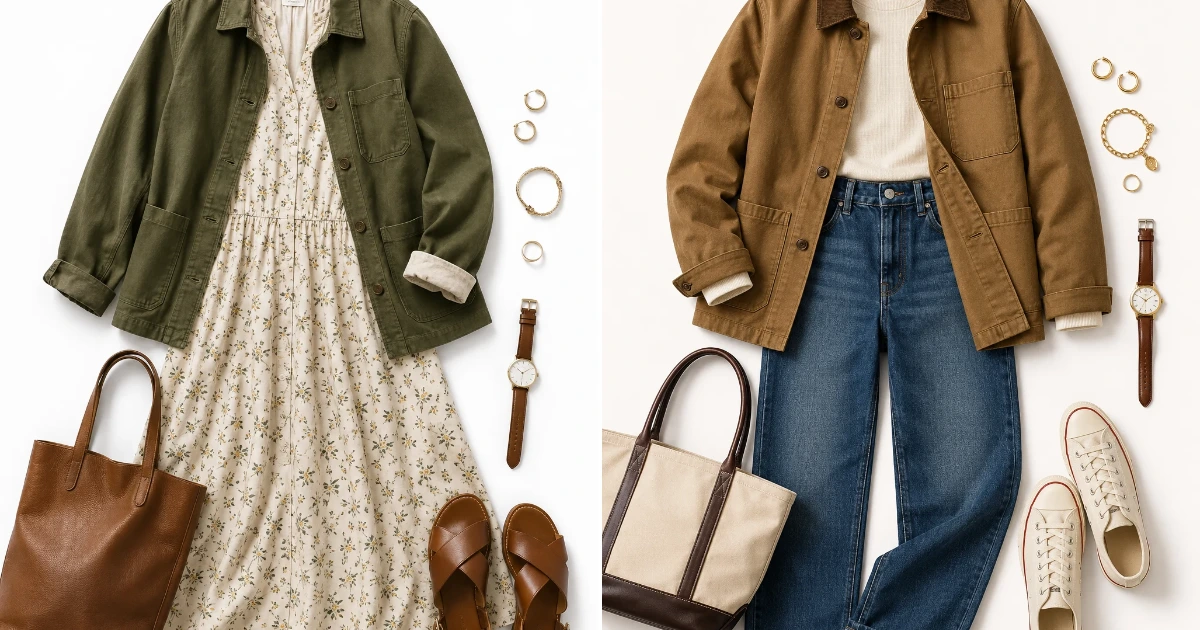
Everyday outfits women refers to practical, repeatable combinations of clothing that balance comfort, function, proportion, and personal style rather than relying on trend-heavy dressing.
The lasting appeal is easy to explain: the best everyday outfits women wear tend to be built from clothes with useful histories and proven silhouettes. A straight-leg jean, a cotton Oxford shirt, a chore jacket, a knit polo, or a simple leather loafer can move through decades because the underlying proportions work, according to Harper’s Bazaar. That is particularly relevant now, when many women are looking beyond disposable micro-trends for casual outfits women can actually wear repeatedly.
The good news is that this approach is achievable without rebuilding a wardrobe. You can find strong foundations in thrift stores and vintage shops, while heritage brands such as Levi’s, Barbour, L.L.Bean, Birkenstock, Clarks, and Dr. Martens offer established versions of familiar pieces; mainstream retailers also regularly reinterpret those shapes. One well-chosen jacket, pair of trousers, or pair of shoes can anchor an entire wardrobe.
This guide breaks down 16 distinct everyday outfits for women, each with styling guidance, key pieces to source, historical context where it genuinely matters, and practical steps for assembling the look today.
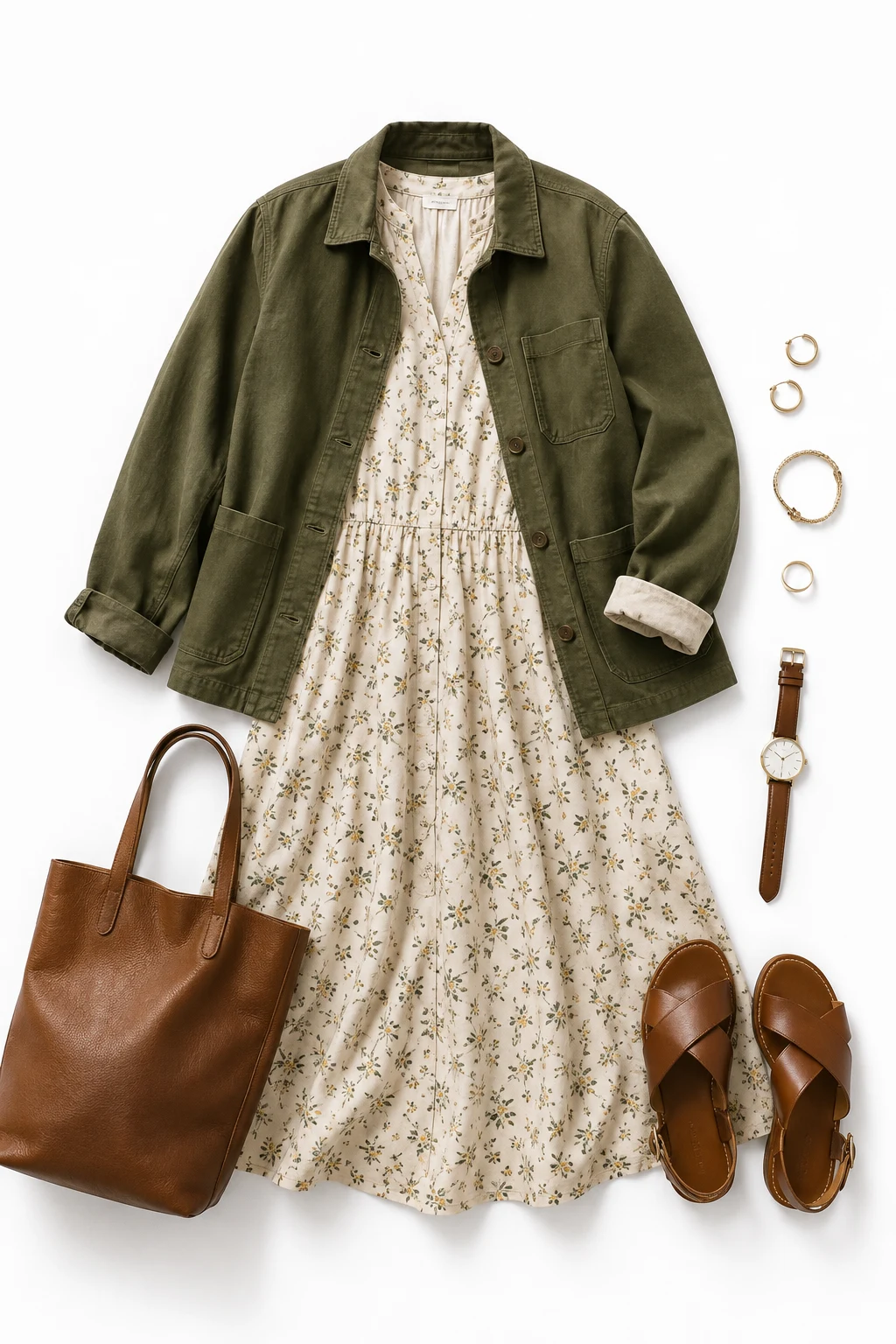
1. The Flowy Midi Dress: Cotton Dress, Leather Sandals, Chore Jacket — everyday
The Challenge It Solves
The risk with a loose midi dress is drifting into shapelessness or looking as though you bought a complete “boho” costume rather than a useful dress. The strongest version creates contrast: a fluid dress gets grounded by substantial shoes, a structured outer layer, or a practical leather accessory.
The Strategy Explained
Start with a midi dress in cotton poplin, washed linen, or a compact viscose rather than a highly glossy fabric. A small floral, faded stripe, navy, olive, tobacco, cream, or washed black gives the dress enough visual restraint to work with ordinary footwear. Add a chore jacket or cropped utility jacket to establish a waist-to-hem relationship, then use leather sandals or simple clogs rather than delicate party shoes.
The midi became a defining everyday silhouette in the late 1960s and 1970s as designers and retailers moved beyond the dominance of the mini. The dress has repeatedly returned because its length works with flat shoes and practical outerwear without requiring the wearer to dress formally.
Implementation Steps
Look for a cotton-poplin or linen-blend midi with a defined shoulder, moderate volume, and a hem around mid-calf. Uniqlo and COS are useful mainstream reference points for restrained versions.
Add a chore-style jacket in washed cotton canvas or twill. Alex Mill is a strong reference for workwear-influenced construction, while L.L.Bean is useful for durable canvas layers.
Choose leather sandals with a substantial sole rather than a narrow strappy design. Birkenstock’s Arizona is a useful benchmark for the shape and construction.
Finish with a medium leather tote or crossbody and one simple metal watch or bracelet; keep the accessories quieter than the dress.
Pro Tips
The dress should have enough volume to move but not enough to swallow your shoulders. If the skirt is very full, shorten the jacket; if the dress is narrow and column-like, a longer chore jacket can work. The modern signal comes from proportion, not from adding more “bohemian” accessories.
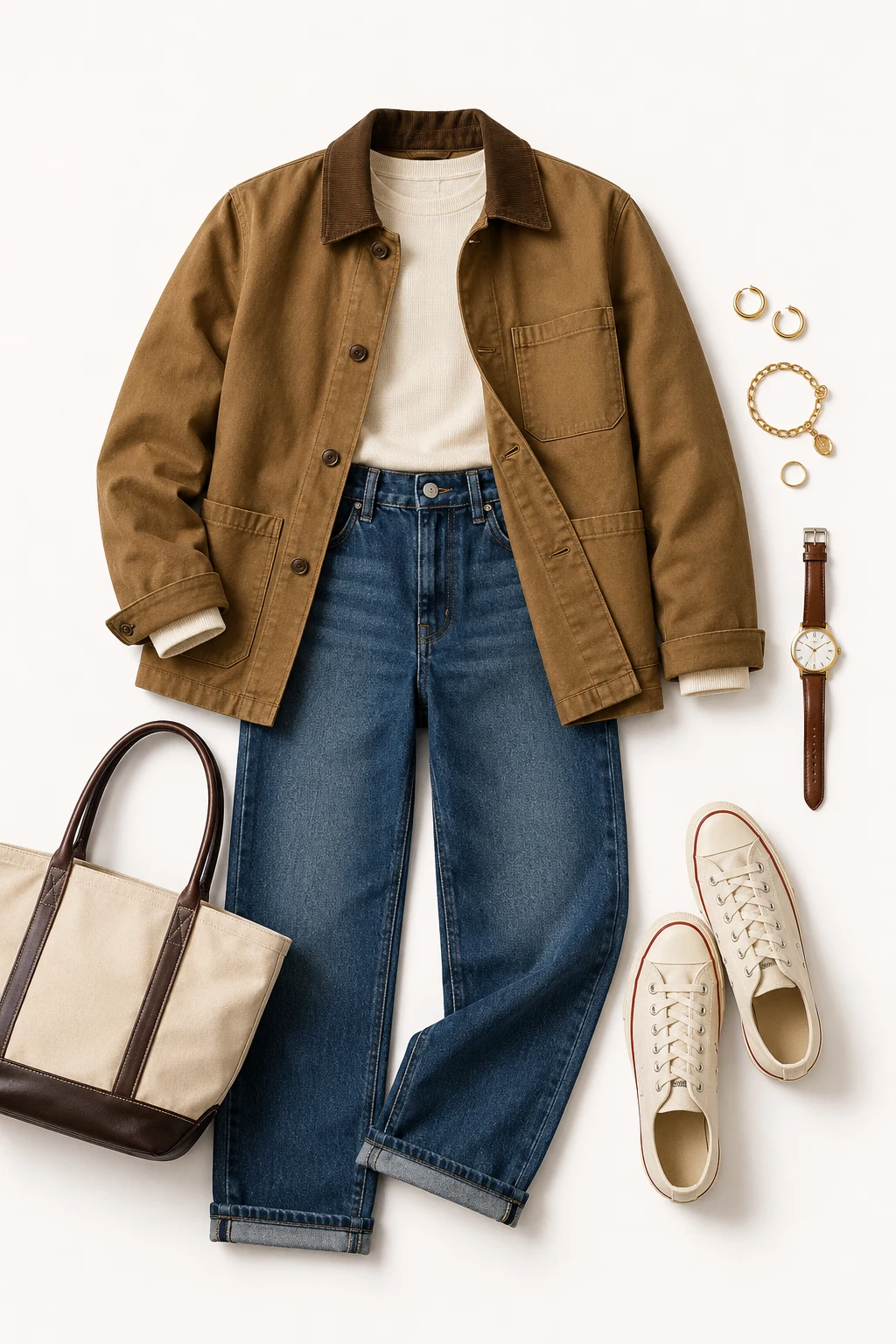
2. The American Workwear Uniform: Straight-Leg Jeans, Chore Coat, Canvas Sneakers — everyday
Workwear can become costume-like when every piece is aggressively rugged: heavy denim, engineer boots, suspenders, heritage branding, and multiple pockets at once. Everyday outfits women can wear successfully borrow the construction and proportion of workwear without reproducing an entire historical uniform.
Use a medium- or dark-wash straight-leg jean, a simple white or ecru T-shirt, and a chore coat in cotton canvas or twill. The silhouette should be relatively clean: straight jeans, a jacket ending around the hip, and low-profile sneakers. Indigo denim with ecru canvas is particularly effective because the palette comes directly from traditional workwear.
The chore coat has roots in French and European industrial clothing, while American workwear developed parallel traditions around durable denim and canvas. Levi Strauss & Co. began producing riveted work trousers in the 1870s, making denim trousers one of the most consequential garments in modern casual dress.
Source a straight or relaxed-straight jean rather than a very tapered model. Levi’s 501 and 505 are useful historical reference points for the proportions.
Find an unlined cotton chore coat in navy, ecru, faded olive, or brown. Carhartt’s traditional workwear is a genuine reference for the construction; Alex Mill offers a more fashion-oriented interpretation.
Wear a heavyweight white or cream T-shirt with enough body to hold its shape under the jacket. L.L.Bean and Uniqlo are practical places to compare weights and fits.
Add canvas sneakers such as Converse Chuck Taylor All Stars or similarly simple low-tops, keeping the sole and upper visually uncomplicated.
Pro Tips
The jeans should break lightly over the sneaker rather than stack dramatically. Avoid distressing every component: one visibly worn item, such as faded denim, is enough to make the outfit feel lived-in.
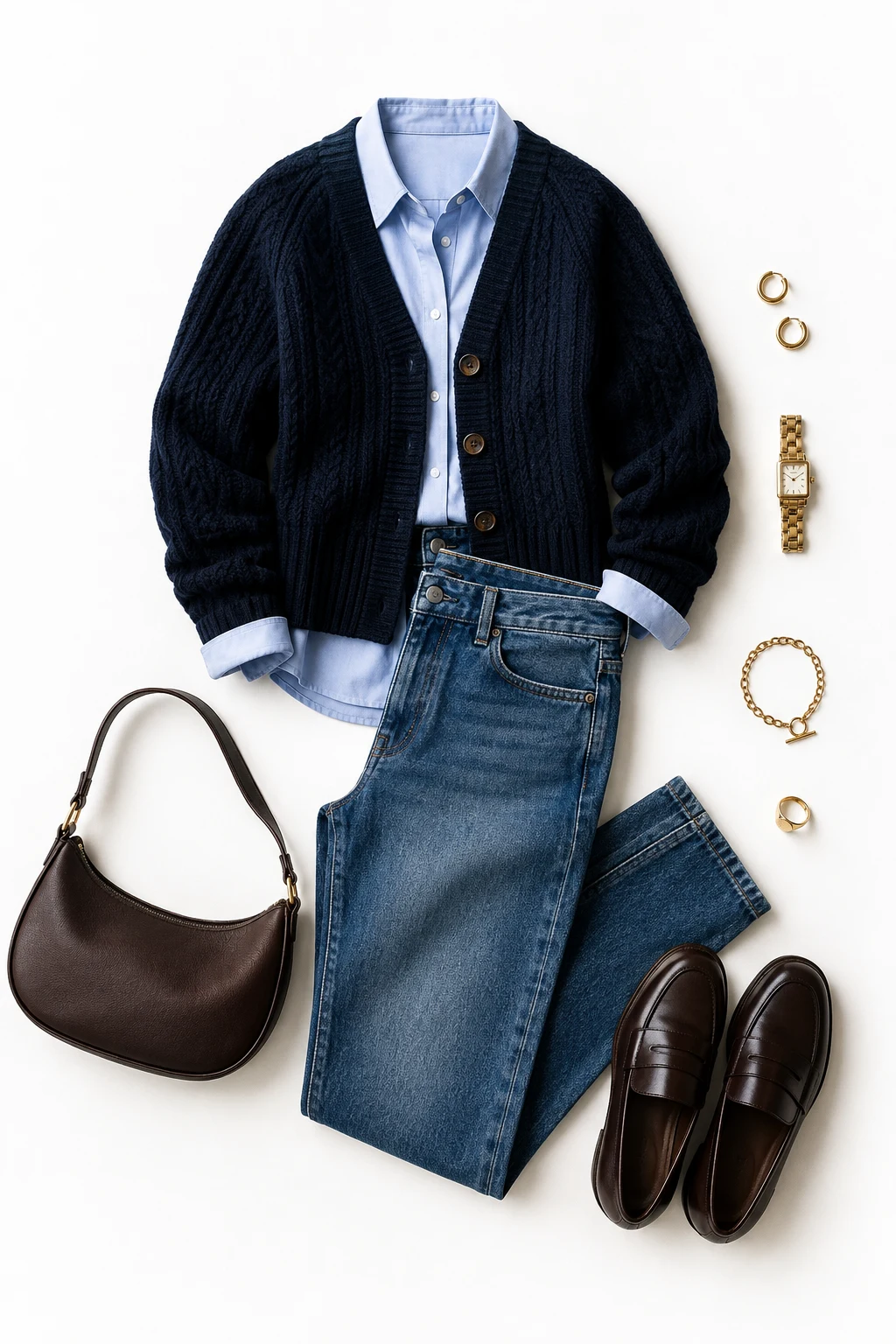
3. The Preppy Knit-and-Denim Formula: Cardigan, Oxford Shirt, Straight Jeans — everyday
Preppy dressing can quickly become overly literal when it involves a blazer, loafers, pearls, pleated skirt, and collegiate motifs simultaneously. The better everyday version keeps the vocabulary but removes the uniformity.
Layer a crisp Oxford shirt under a fine-gauge cardigan and pair both with straight-leg jeans. Keep the cardigan slightly relaxed rather than fitted like a traditional twinset. Navy, burgundy, heather gray, forest green, cream, and pale blue all sit naturally within this palette.
This look draws from the American collegiate style that developed throughout the twentieth century and was later codified for a broader audience through brands such as J.Crew and Ralph Lauren. The 1980 book The Official Preppy Handbook by Lisa Birnbach became a cultural shorthand for the phenomenon, even as the underlying clothing traditions were much older.
Buy a button-front cardigan in merino, lambswool, or cotton. Uniqlo’s knitwear is a useful accessible reference, while Ralph Lauren provides a clearer traditional benchmark.
Choose an Oxford shirt with a genuine button-down collar and slightly roomy body. Brooks Brothers is historically important here: it introduced the button-down collar to American menswear after adapting the idea from polo shirts in the early twentieth century.
Pair the top half with medium-wash straight jeans from Levi’s or Madewell rather than skinny denim.
Add loafers, ballet flats, or clean leather sneakers depending on how polished you want the outfit to feel.
Pro Tips
Let the Oxford collar sit naturally rather than forcing it perfectly flat. A cardigan with a slightly longer sleeve and a shirt cuff showing at the wrist makes the outfit feel borrowed from real wardrobes rather than assembled from a preppy costume kit.
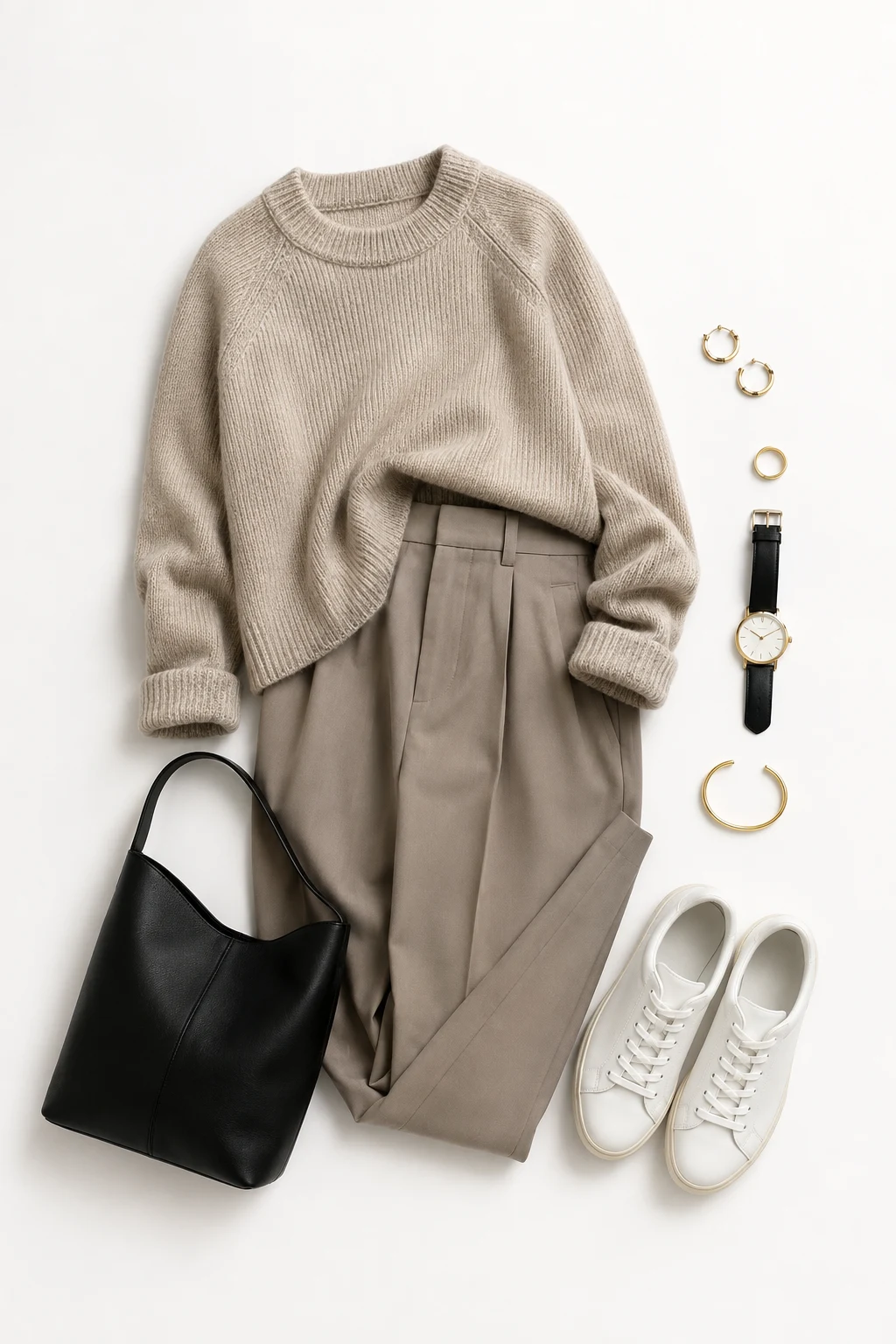
4. The Minimal Scandinavian Workday Look: Knit, Trousers, Leather Sneakers
Minimalism becomes dull when every item has the same oversized shape and the palette consists only of beige. The trick is to make texture and proportion do the visual work.
Use a fine or medium-gauge knit with tailored-but-comfortable trousers and clean leather sneakers. Choose one dominant neutral—charcoal, navy, cream, black, or taupe—and introduce a second neutral through the shoes or outer layer. A full-length trouser with a moderate break gives the outfit authority without looking formal.
The Scandinavian approach to everyday clothes women often admire is closely associated with functional design, restrained color, and practical layering rather than a single historical uniform. Danish and Swedish design traditions helped establish the broader cultural preference for useful objects with clear visual logic.
Choose straight or softly wide-leg trousers in wool, cotton twill, or a technical blend. COS and Arket are useful references for contemporary proportions.
Add a merino crewneck or mock neck in charcoal, navy, oatmeal, or black. Uniqlo’s merino range provides an accessible benchmark for fabric weight and layering.
Select minimalist leather sneakers with little visible branding. Adidas Stan Smiths are a recognizable historical reference for the clean tennis-sneaker shape.
Add a structured tote or compact crossbody in black or dark brown leather to keep the accessories architectural.
Pro Tips
Avoid making every item oversized. If the trousers are generous, keep the knit closer to the body; if the sweater is deliberately boxy, choose a straighter trouser. Minimalism depends on proportion being legible.
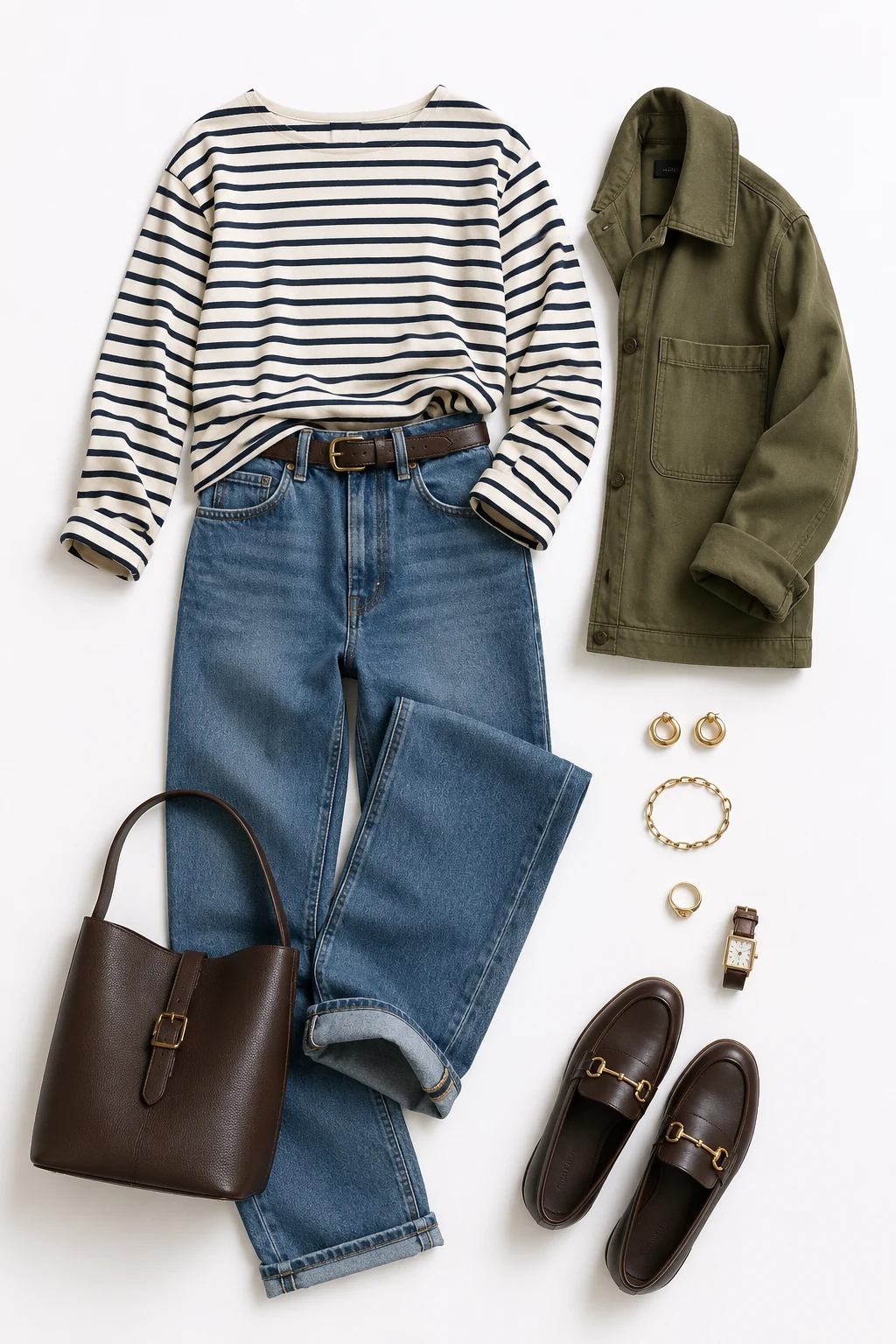
5. The French Utility Mix: Breton Stripe, Jeans, Loafers
French-inspired dressing often becomes a stereotype of stripes, berets, red lipstick, and a basket bag. That is a costume. The useful version takes one authentic French workwear reference and builds the rest from ordinary wardrobe staples.
Pair a navy-and-cream Breton-style striped top with straight denim and substantial leather loafers. Keep the rest of the palette restrained: denim blue, cream, navy, black, and dark brown. A short wool coat or navy peacoat can replace the sweater when temperatures drop.
The Breton shirt is associated with the French navy, which adopted a striped knit uniform in the nineteenth century. Saint James, founded in Normandy in 1889, remains one of the best-known references for this tradition.
Find a heavyweight striped cotton shirt with a relatively close shoulder and straight body. Saint James is the heritage benchmark; Armor-Lux is another authentic reference.
Wear it with straight-leg jeans in a medium or dark indigo. Levi’s 501 is an obvious reference because its basic proportions have remained recognizable for generations.
Add black or dark-brown leather loafers from G.H. Bass or a comparable traditionally constructed maker.
If using a handbag, choose a plain leather shoulder bag or structured tote instead of piling on stereotypically French accessories.
Pro Tips
The stripe should be the only obvious graphic element. If you already own a striped top, do not add a scarf, beret, and red shoes simply to emphasize the reference; restraint makes the historical connection feel intentional.
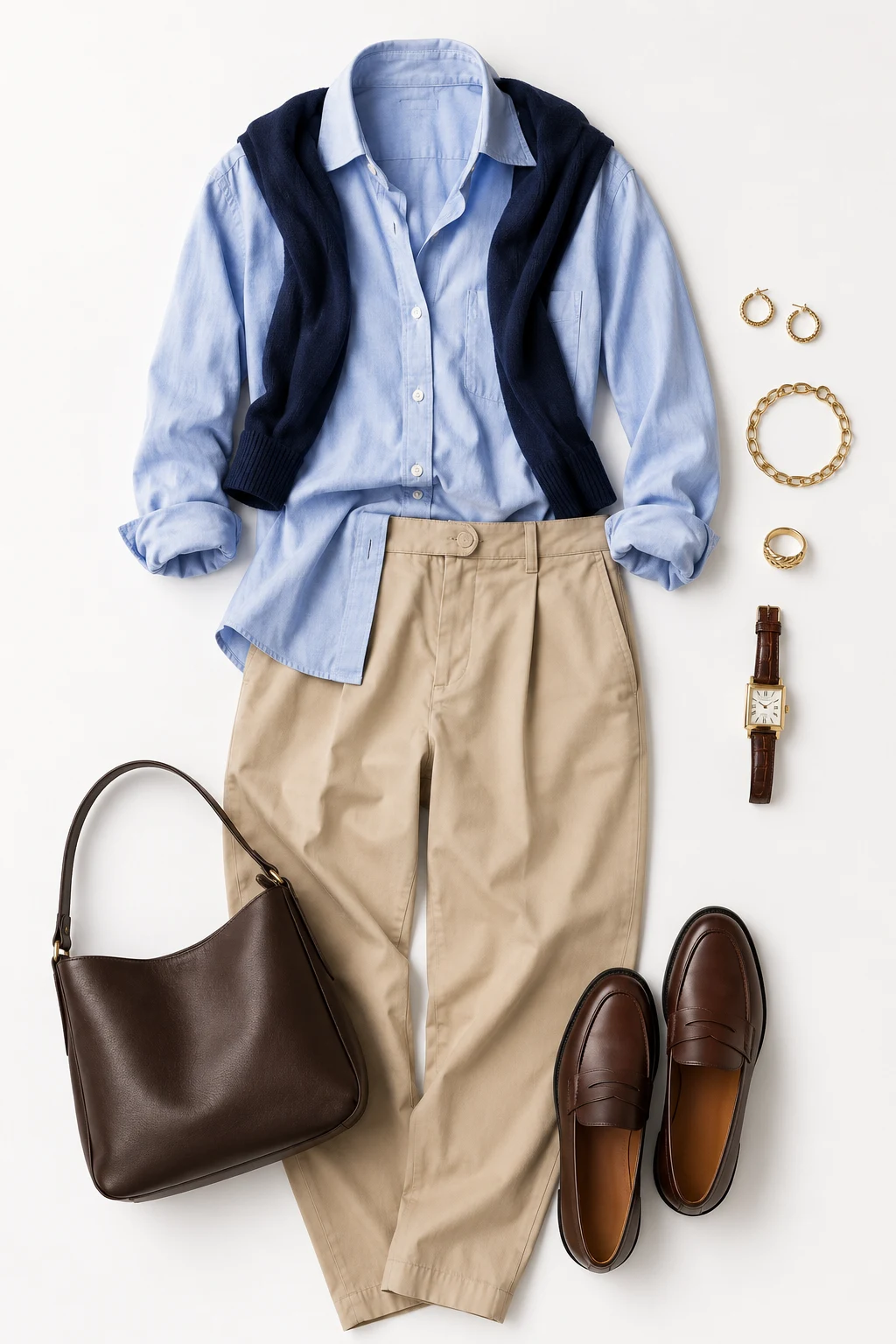
6. The Ivy-Inspired Weekend Outfit: Oxford Shirt, Chinos, Penny Loafers
Ivy style can look overly formal when every garment comes directly from a vintage reproduction. The challenge is translating its relaxed proportions into contemporary everyday outfits women can wear without looking like a historical reenactor.
Start with a soft Oxford shirt, relaxed chinos, and penny loafers. The shirt should not be aggressively slim; the trousers should sit comfortably at the natural waist or slightly below and fall straight through the leg. Navy, khaki, stone, white, and burgundy provide a classic palette.
The Ivy League look emerged from American university culture and was documented extensively by Japanese menswear writer Teruyoshi Hayashida in Take Ivy, first published in 1965. That book later became highly influential among Japanese and American enthusiasts seeking authentic collegiate proportions.
Choose a white or pale-blue Oxford shirt with a button-down collar. Brooks Brothers remains a useful historical reference.
Find chinos in stone, khaki, olive, or navy with a straight leg. J.Crew is a practical mainstream reference for the Ivy-inspired approach.
Wear penny loafers with a relatively substantial sole. G.H. Bass’s Weejuns are a longstanding reference for the style.
Add a canvas belt or simple leather belt, then stop; the restraint is part of the formula.
Pro Tips
Do not over-cuff the chinos or roll the sleeves theatrically. A natural sleeve break and a clean trouser hem look more convincing and make the outfit easier to repeat.
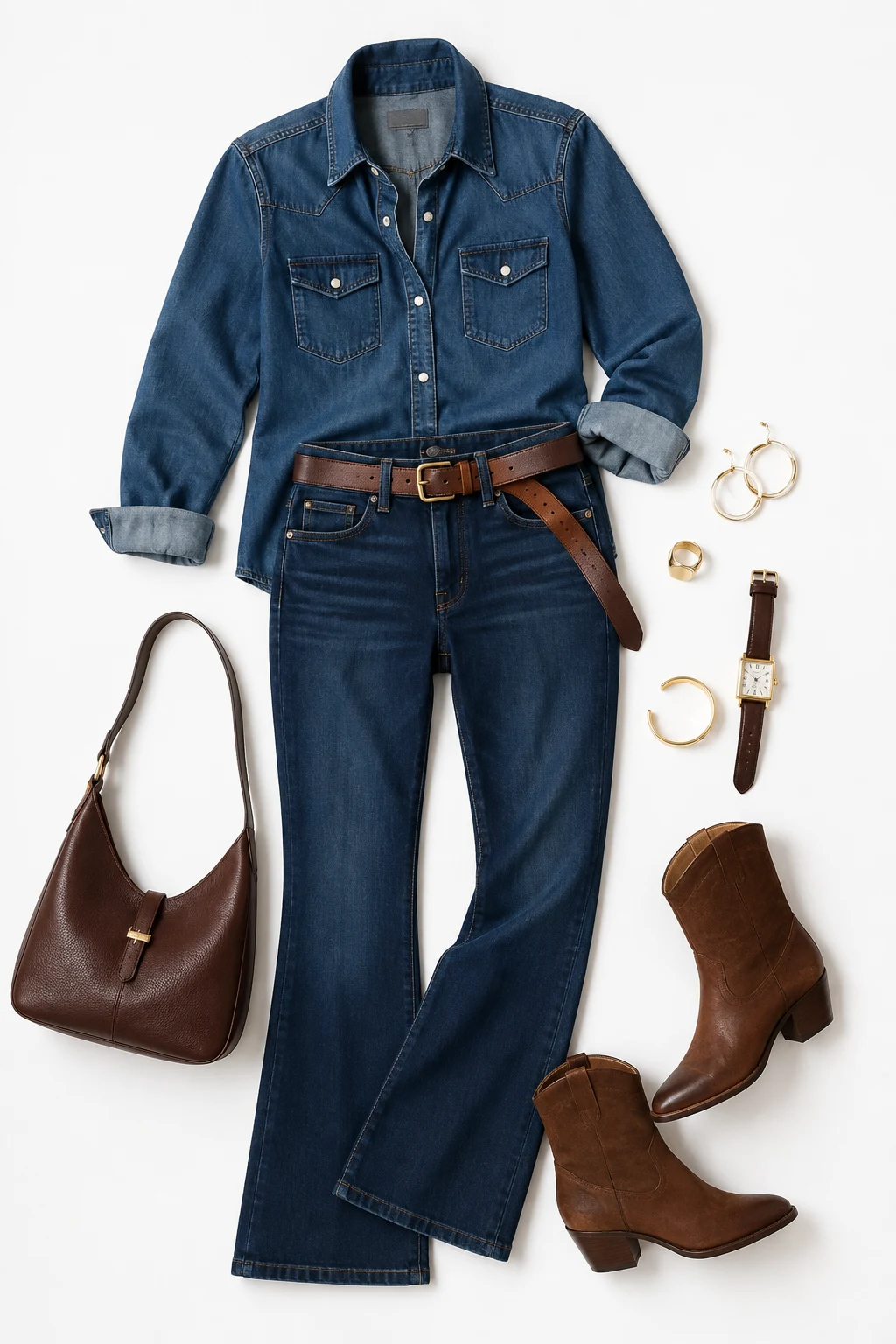
7. The Western Without the Costume: Denim Shirt, Bootcut Jeans, Leather Belt
Western dressing is one of the easiest aesthetics to overstate. Cowboy boots, turquoise jewelry, fringe, a hat, a Western shirt, and bootcut jeans all at once turn an everyday outfit into a themed costume.
Use only two Western references: a denim shirt and a bootcut or subtle flare jean. Keep the belt in plain brown leather and choose simple boots or loafers. A faded indigo shirt over a white tee is particularly effective because it retains the workwear origins without leaning into rodeo imagery.
The Western shirt’s familiar yoke and snap construction evolved from practical ranch clothing and became a major part of American popular culture through musicians and Hollywood. Levi’s helped make denim a global symbol of American casual dress, while brands such as Wrangler became strongly associated with rodeo and Western wear.
Choose a medium-weight denim shirt with a straight hem and restrained Western detailing. Wrangler and Levi’s are useful reference points.
Wear it with dark indigo or medium-wash bootcut jeans; Levi’s 517 is a classic reference for the silhouette.
Add a plain full-grain leather belt and a low-profile ankle boot from brands such as Blundstone or Frye.
Keep jewelry minimal—one silver chain or small hoops is enough if you want a Western note.
Pro Tips
The jeans should flare just enough to clear the boot. A dramatic flare changes the historical reference from practical Western wear toward 1970s fashion, so choose the silhouette according to the statement you actually want.
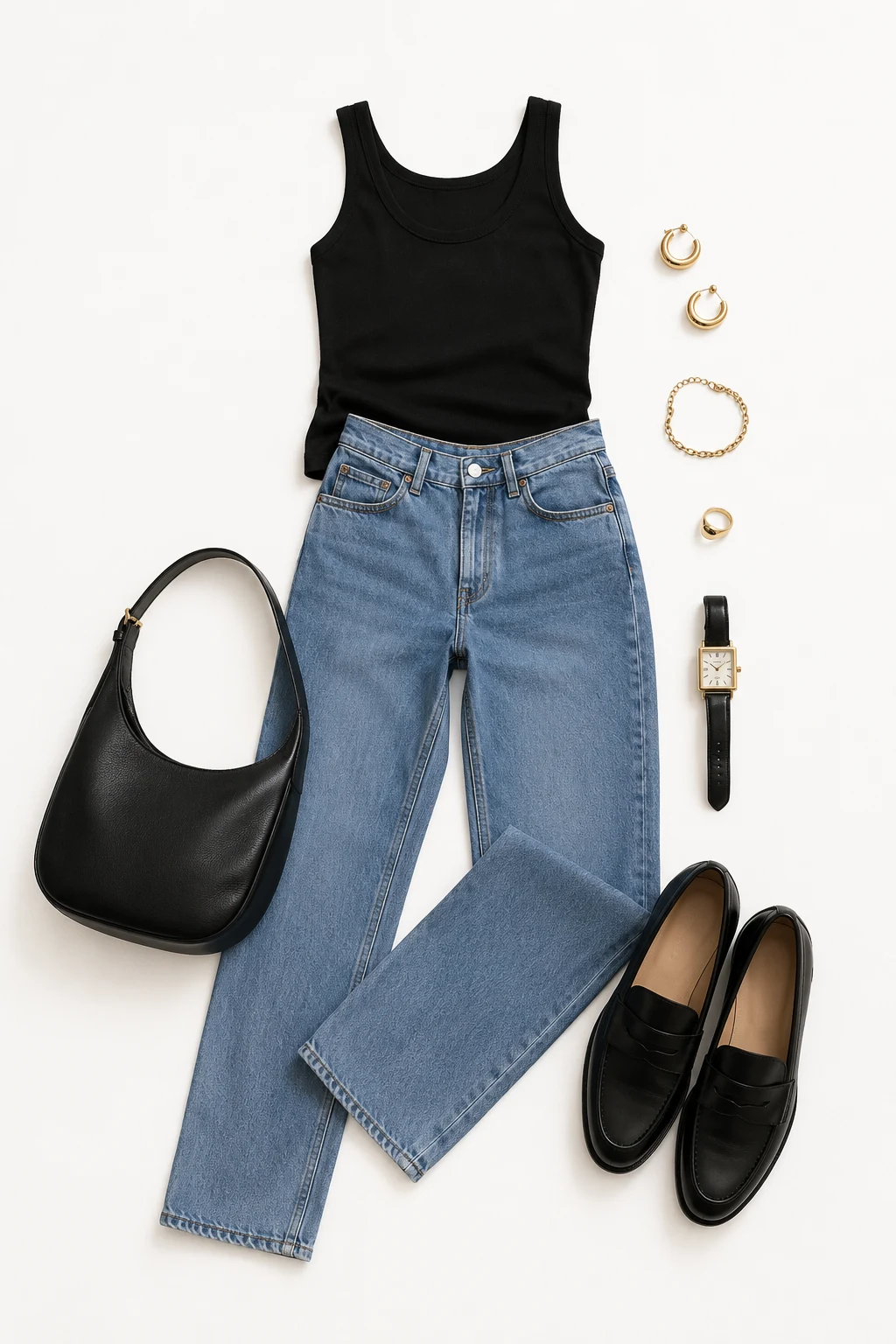
8. The 1990s Minimalist Uniform: Tank, Straight Jeans, Leather Loafers
1990s minimalism can easily become a caricature of black tank tops and tiny sunglasses. Its real strength was the reduction of unnecessary decoration while preserving precise proportion.
Use a fitted or gently relaxed ribbed tank, straight-leg jeans, and substantial leather loafers. Add a men’s-style blazer or simple cardigan only if you need another layer. Black, white, charcoal, indigo, and dark brown make the outfit easy to rotate.
The minimalist 1990s are strongly associated with designers such as Calvin Klein and Helmut Lang, who favored clean lines and stripped-back presentation. Carolyn Bessette-Kennedy also became a widely recognized cultural reference for the era’s understated American style.
Buy a ribbed cotton tank with substantial fabric rather than a thin, translucent jersey. Uniqlo and COS are useful starting points.
Choose straight-leg jeans in rigid or moderately washed denim. Levi’s 501 or Madewell’s straight fits provide useful modern references.
Add a black or dark-brown leather loafer from Vagabond or G.H. Bass.
If you need outerwear, use a single-breasted blazer with minimal padding from J.Crew or a similar retailer.
Pro Tips
The fit of the tank matters more than its brand. It should skim the torso without becoming a compression garment. The cleanest version also avoids excessive jewelry and visible logos.
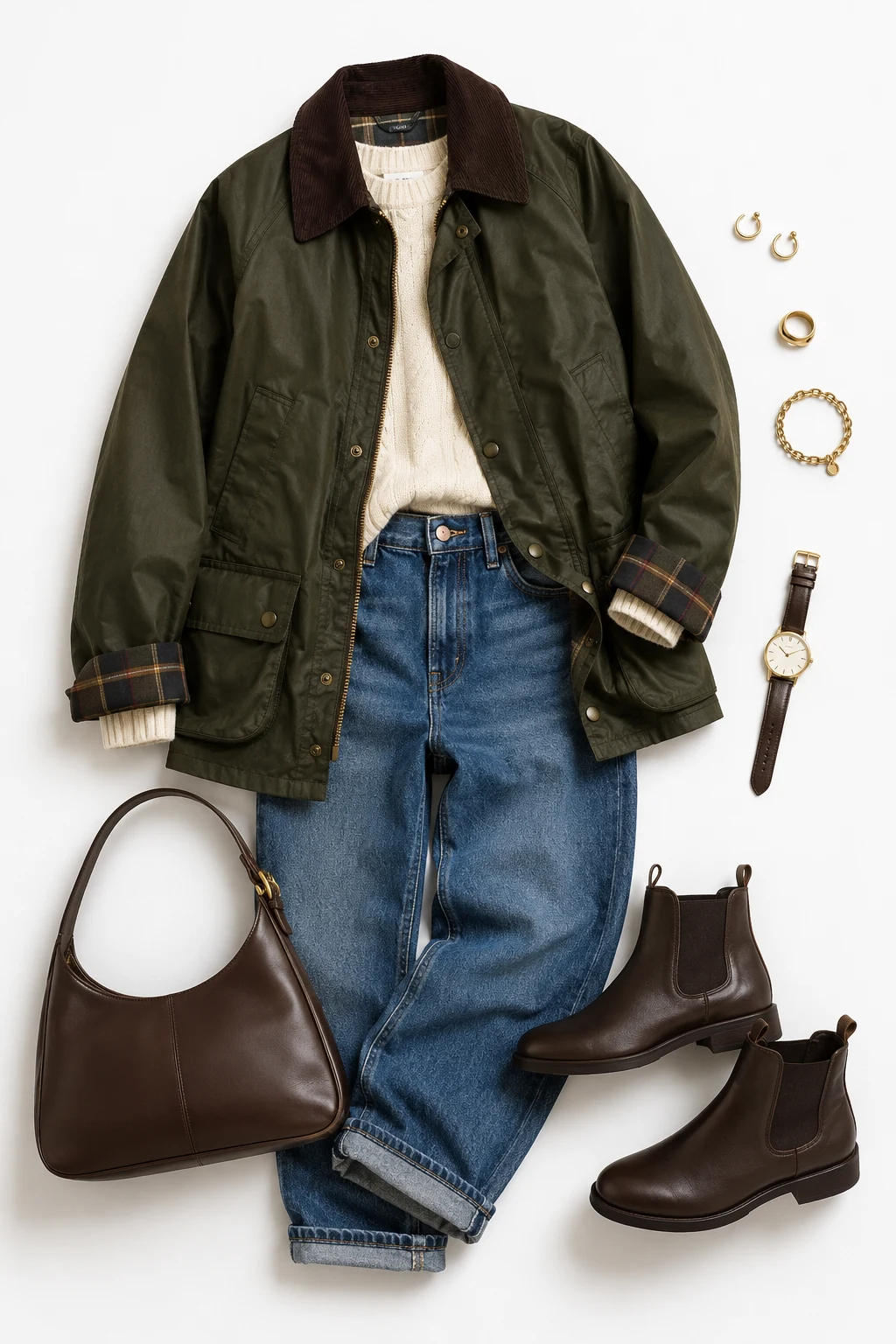
9. The Heritage Rainy-Day Uniform: Barbour Jacket, Jeans, Chelsea Boots
Waxed jackets can look overly country when paired with every traditional countryside accessory at once. The everyday version works because denim and simple boots pull the jacket back into city clothing.
Use a waxed cotton jacket over a knit or plain T-shirt, then pair it with straight jeans and weatherproof leather boots. Olive or dark brown outerwear works particularly well with indigo denim. The result should look practical first and heritage-inspired second.
Barbour was founded in South Shields, England, in 1894, and its waxed cotton jackets became associated with British country and outdoor clothing. The Bedale and Beaufort are particularly influential models whose proportions remain useful references.
Use a Barbour Bedale for a shorter silhouette or a Beaufort for a longer, roomier jacket.
Add a cream, navy, or gray crewneck sweater from L.L.Bean or a comparable heritage knitwear brand.
Wear straight indigo jeans rather than distressed denim; Levi’s and Uniqlo offer useful fits at different price points.
Finish with Chelsea or pull-on boots from Blundstone or similar makers with weather-resistant leather.
Pro Tips
Waxed cotton should look worn, not neglected. Follow the manufacturer’s care instructions and rewax when needed; the patina is part of the material’s appeal, but uncontrolled drying and cracking are not.
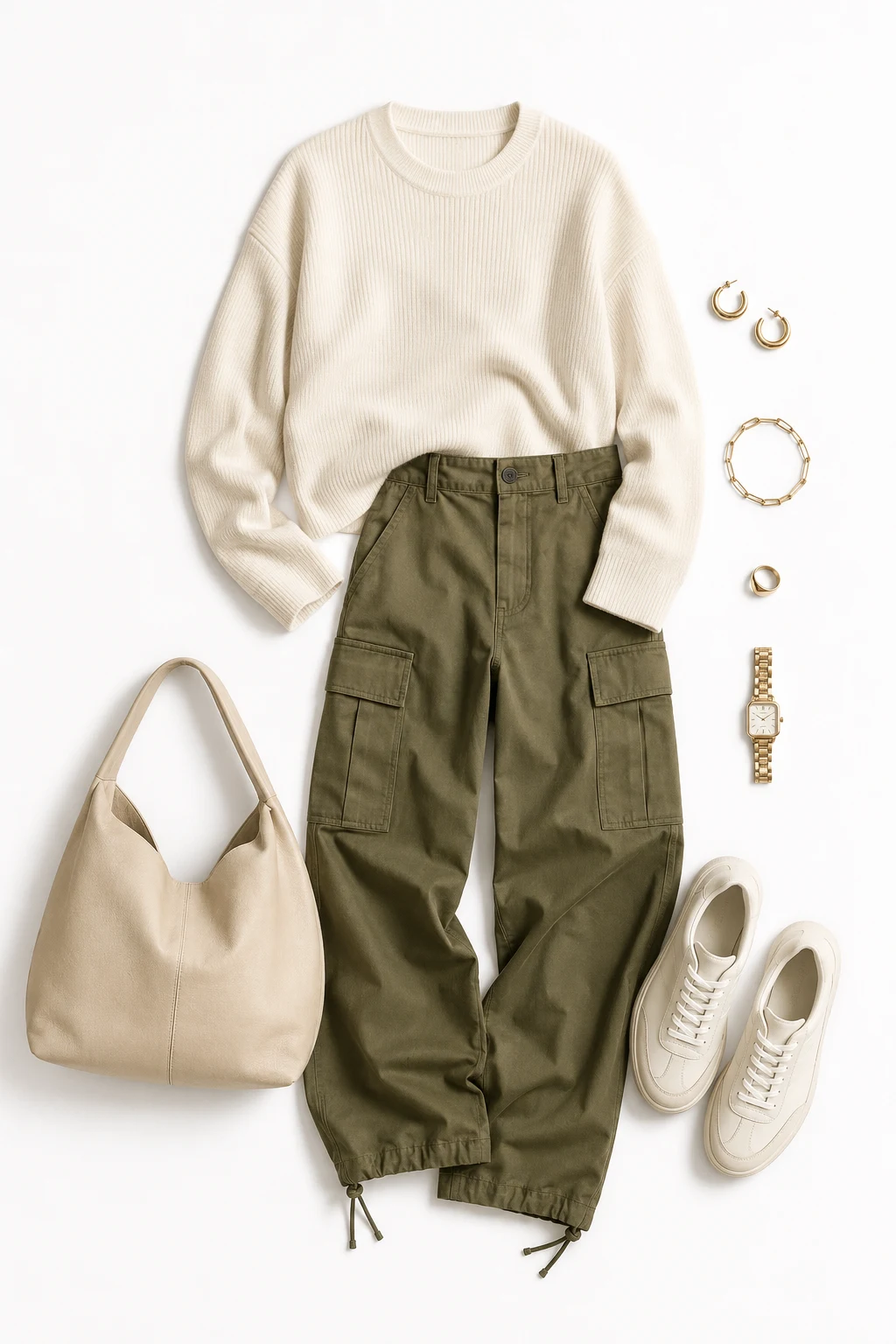
10. The Modern Utility Look: Cargo Trousers, Fine Knit, Minimal Sneakers
Cargo trousers become visually heavy when combined with oversized shirts, combat boots, and multiple utility pockets. The modern approach deliberately contrasts functional trousers with refined upper-body pieces.
Choose straight or softly wide cargo trousers in olive, charcoal, navy, or stone. Pair them with a fine-gauge knit or fitted long-sleeve top and minimalist sneakers. Keep the upper half clean so the pockets remain the only overtly utilitarian feature.
Cargo trousers have genuine military roots, with the British armed forces using pocketed utility trousers in the 1930s before similar designs spread through other military systems and civilian fashion. Their durability made the design particularly adaptable to casual clothing.
Look for cargo trousers with flat, integrated pockets rather than exaggerated tactical detailing. Uniqlo and COS are useful accessible references.
Pair them with a merino crewneck from Uniqlo or a cotton knit from J.Crew.
Choose low-profile sneakers from New Balance or Adidas rather than heavy hiking shoes.
Add a small leather shoulder bag or nylon crossbody so the trousers remain the primary utility element.
Pro Tips
The pocket placement matters. Bulky pockets sitting directly on the widest part of the thigh can distort the silhouette; flatter pockets and a straight leg are easier to wear.
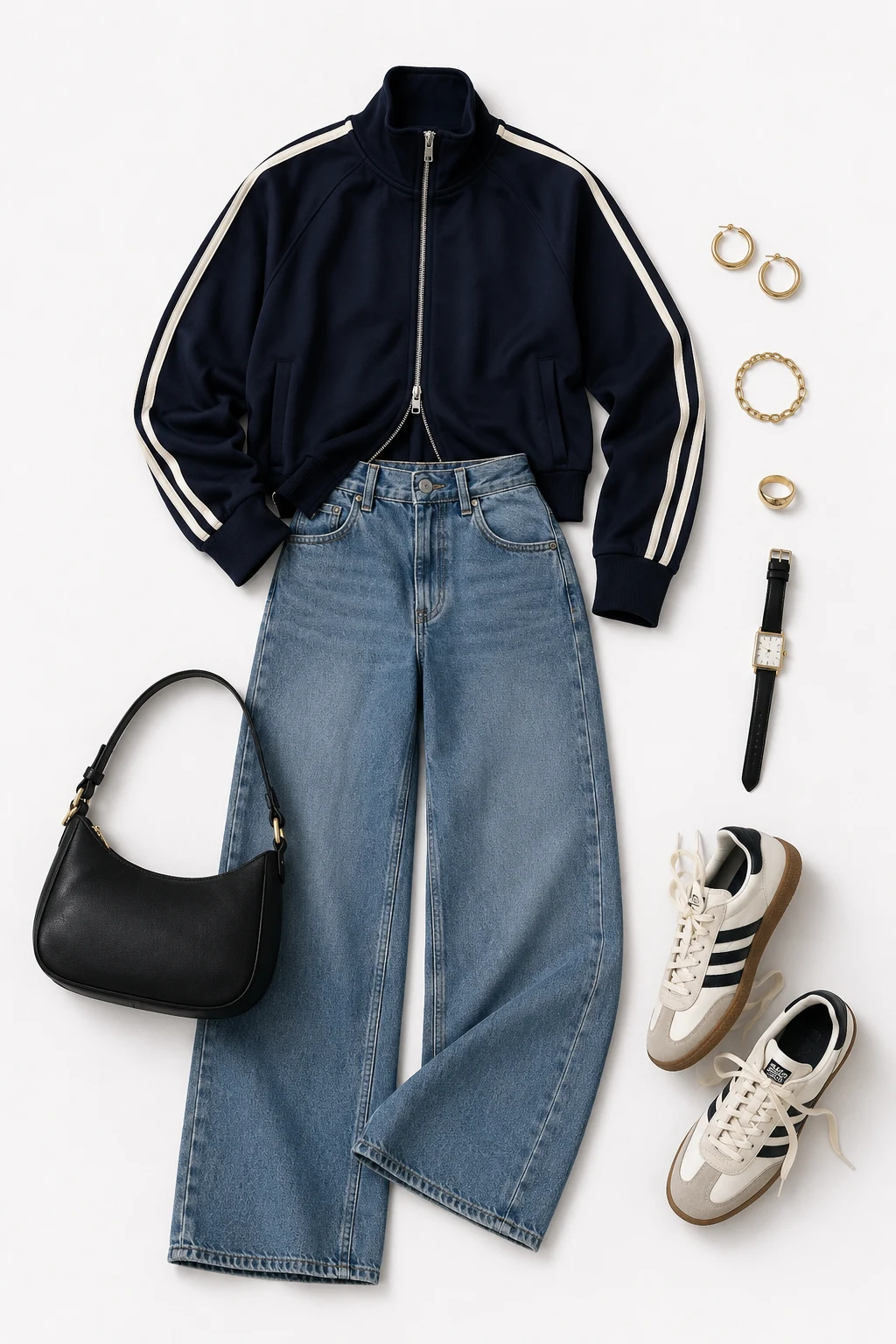
11. The Sporty Off-Duty Formula: Track Jacket, Wide-Leg Jeans, Retro Trainers
Sport-inspired dressing can look like activewear rather than everyday clothing if every component comes from a performance category. The strongest version uses one athletic reference and lets traditional casual pieces carry the rest.
Pair a zip track jacket with a plain T-shirt, wide or relaxed straight-leg jeans, and retro running-style sneakers. Navy, cream, gray, burgundy, and dark green work particularly well. The jeans should have enough volume to balance the cropped or fitted nature of many track jackets.
The modern track jacket owes much of its visual language to European sportswear and later 1970s and 1980s street culture. Adidas’s three-stripe tracksuits became especially influential as sportswear crossed into music and street style.
Choose a track jacket with a clean collar and restrained branding. Adidas Originals is an obvious reference.
Wear it with wide-leg or relaxed straight jeans from Levi’s or Abercrombie & Fitch rather than leggings.
Add retro trainers from New Balance or Adidas, keeping the shoe relatively streamlined.
Finish with a simple shoulder bag or nylon tote instead of a sports duffel.
Pro Tips
The shoe should relate to the width of the jeans. Very wide denim needs a sneaker with enough visual mass to avoid looking top-heavy, while a narrower straight leg can handle a slimmer trainer.
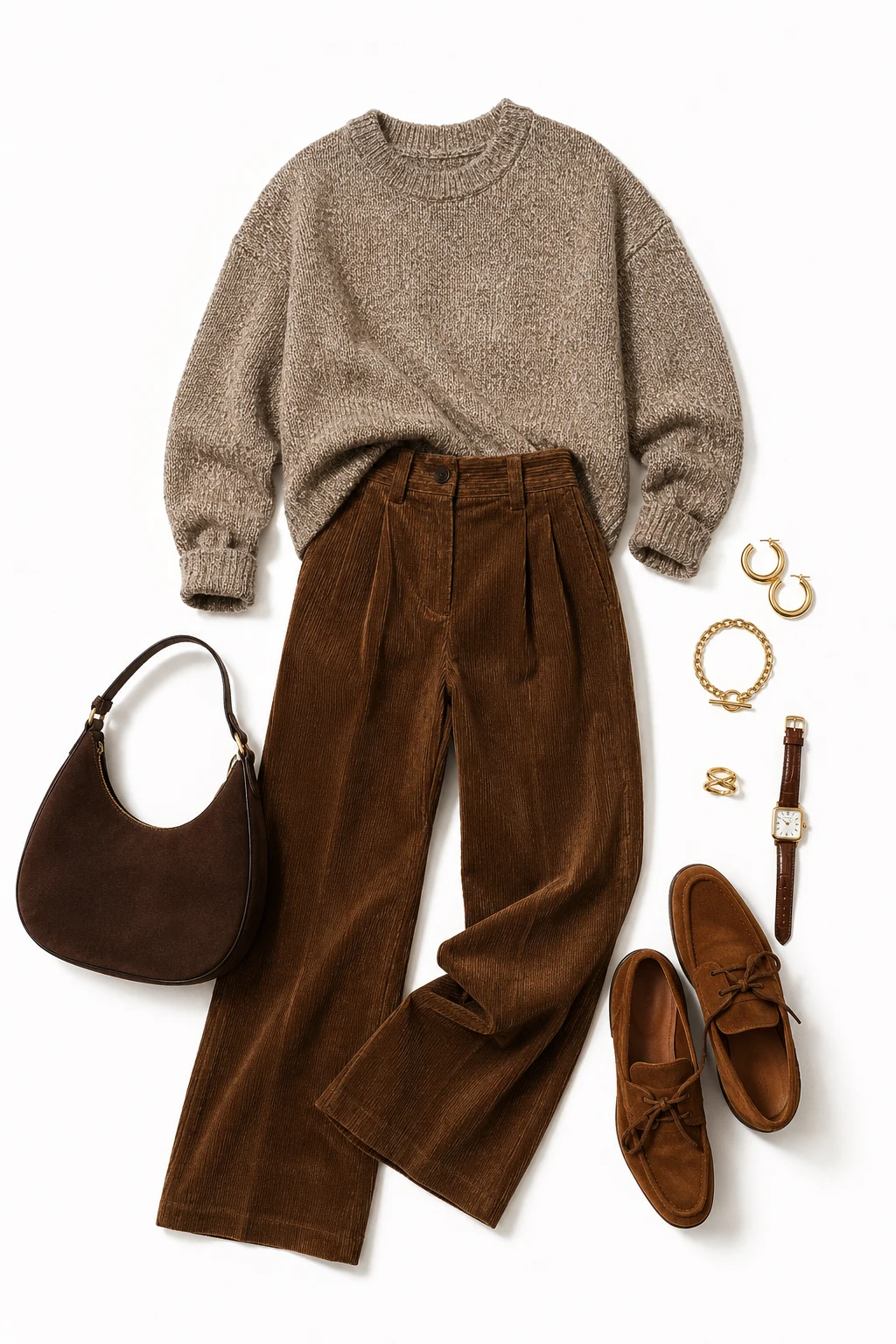
12. The 1970s-Informed Autumn Look: Corduroy Trousers, Shetland Knit, Suede Shoes
Seventies references can become theatrical through exaggerated flares, orange prints, and oversized collars. The better everyday version takes the decade’s fabric and color vocabulary while keeping contemporary proportions.
Use straight or softly flared corduroy trousers with a Shetland or lambswool sweater and suede loafers or desert boots. Tobacco, chocolate, olive, rust, cream, and navy give the outfit period character without turning it into fancy dress.
Corduroy became strongly associated with academic, outdoor, and countercultural wardrobes during the 1960s and 1970s, while brands such as L.L.Bean helped establish durable American outdoor clothing as part of everyday style. The look also reflects the broader 1970s interest in natural textures and earthy colors.
Choose medium-wale corduroy trousers in tobacco, dark brown, olive, or navy. J.Crew and L.L.Bean are useful references.
Add a Shetland-style crewneck in cream, gray, or muted green. Jamieson’s of Shetland is a genuine heritage reference for Shetland knitwear.
Wear suede loafers or desert boots from Clarks, whose desert boot originated in the early 1950s after Nathan Clark encountered similar footwear in Cairo.
Add a simple leather belt and a wool coat if temperatures require another layer.
Pro Tips
Wale size changes the character dramatically: fine wale looks more polished, while wide wale reads more rugged and vintage. For everyday wear, medium wale offers the best balance.
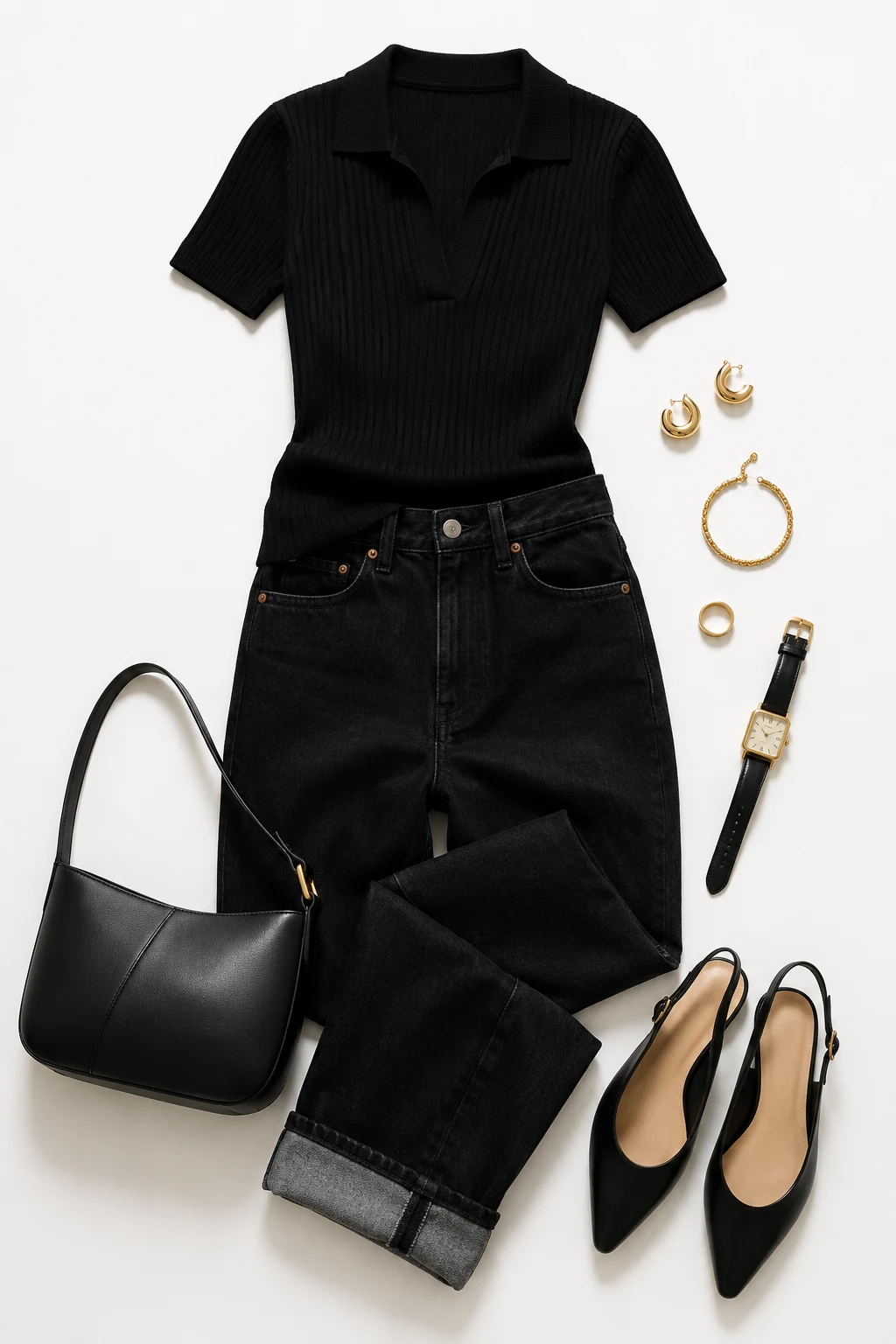
13. The Easy Date-Night Uniform: Dark Jeans, Knit Polo, Slingback Flats
Casual women’s outfits for date night often swing between overdressing and looking indistinguishable from ordinary workwear. The answer is not more decoration; it is one sharper piece against otherwise relaxed basics.
Start with dark straight-leg jeans and a short-sleeve knit polo, then add slingback flats or a low heel. Black, espresso, cream, burgundy, and dark indigo create enough contrast for evening without requiring a dress.
The knitted polo belongs to a longer sportswear history: polo shirts and tennis shirts moved from athletic clothing into civilian wardrobes during the twentieth century, while designers increasingly refined knit versions for everyday wear. This is why a knit polo can occupy the useful middle ground between a T-shirt and a blouse.
Choose dark indigo or black jeans with a clean hem. Levi’s and Madewell provide useful straight-leg references.
Find a fitted-but-not-tight knit polo in merino, cotton, or viscose. COS and J.Crew are useful places to compare silhouettes.
Add slingback flats or a low block heel from brands such as Naturalizer or Sam Edelman.
Carry a small structured shoulder bag and add one deliberate piece of jewelry rather than several competing accessories.
Pro Tips
For a stronger evening effect, change the texture rather than the number of accessories: a fine merino polo and polished leather shoes will look more intentional than adding statement jewelry to a basic T-shirt.
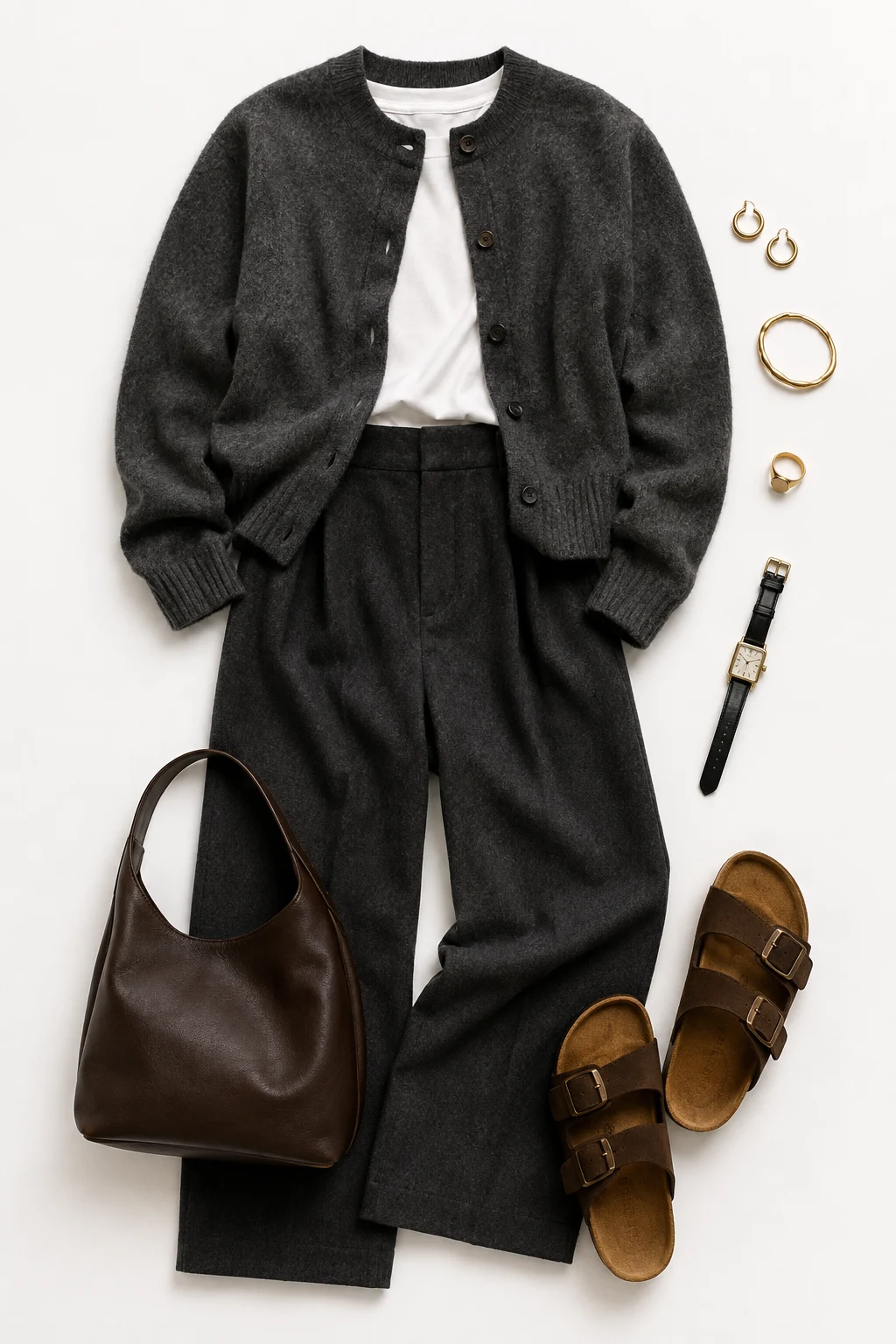
14. The German-Inspired Everyday Uniform: Wool Trousers, Knit Cardigan, Birkenstocks
German outfits women everyday searches often point toward practical, slightly severe combinations of sturdy shoes, natural fabrics, and relaxed tailoring. The risk is making the look feel overly literal or orthopedic rather than quietly functional.
Build the outfit around full-length wool or cotton trousers, a simple cardigan or crewneck, and substantial sandals or clogs. Use navy, gray, black, cream, olive, and brown rather than loud contrasts. The overall silhouette should feel useful: comfortable trousers, a practical knit, and footwear that can genuinely handle walking.
German-speaking Europe has a long tradition of functional footwear and practical outdoor clothing, while Birkenstock, founded in Germany in 1774 as a footwear company and later famous for anatomically shaped footbeds, became an international design reference rather than merely a comfort brand.
Choose straight or softly wide trousers in charcoal, navy, or taupe. COS and Arket are useful contemporary references.
Add a wool or cotton cardigan from Uniqlo or L.L.Bean, keeping the knit relatively plain.
Wear Birkenstock Arizona sandals in leather or suede, or use a similarly substantial clog when the season calls for closed footwear.
Add a canvas or leather tote rather than a highly structured handbag.
Pro Tips
The outfit works because the footwear is honest about function. Do not try to make substantial sandals look dainty; balance them with a trouser leg that has enough width and fabric weight.
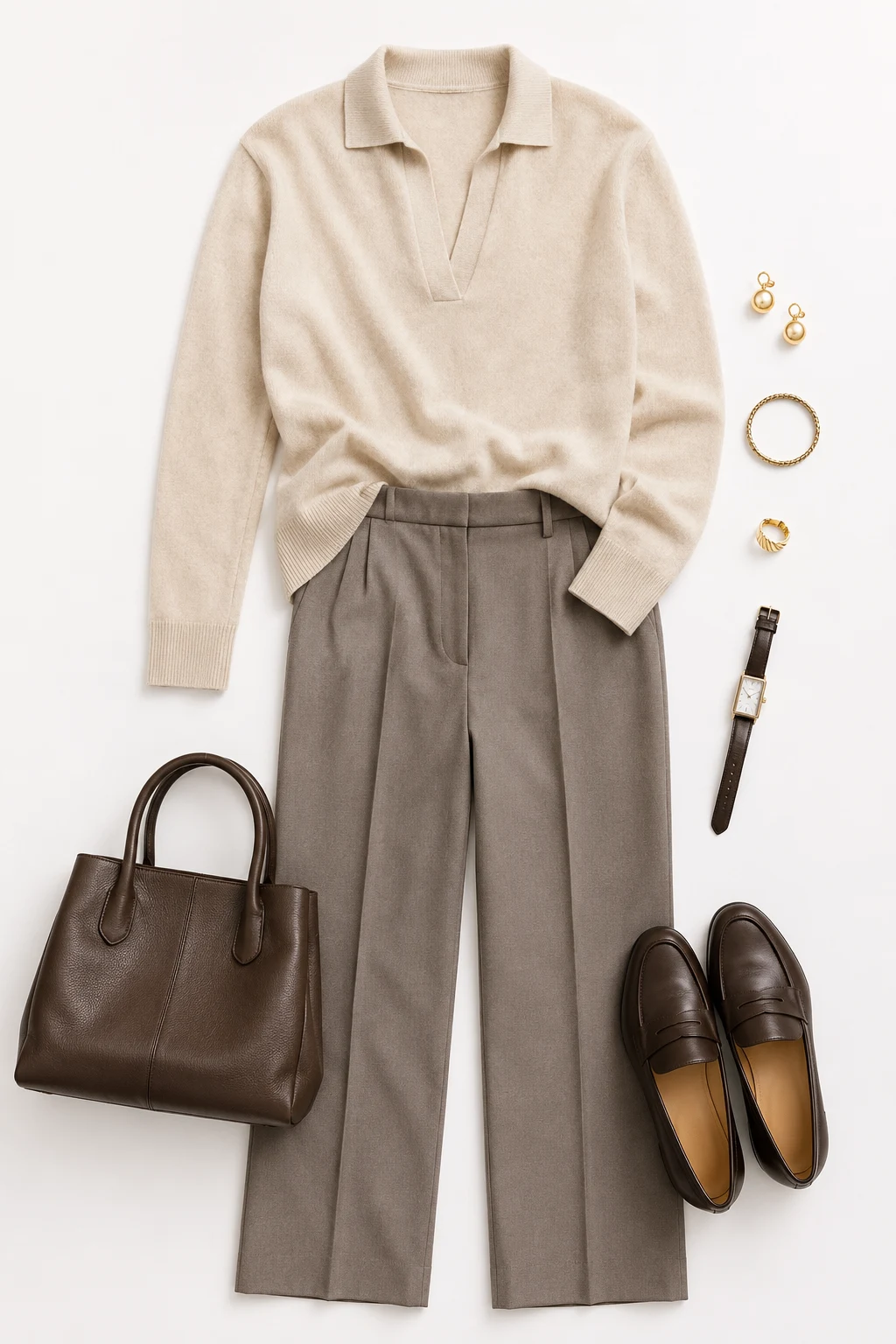
15. The Polished Over-60 Formula: Straight Trousers, Silk-Blend Knit, Loafers
Stylish everyday outfits for women over 60 often get reduced to a set of age-coded rules. That misses the real issue: excellent dressing at any age depends on proportion, fabric, and fit rather than disguising the body.
Use a straight or gently tapered trouser, a fine-gauge knit with a clean neckline, and a leather loafer or low-profile sneaker. Add a lightweight trench, cardigan, or unstructured blazer depending on the weather. Navy, camel, ivory, charcoal, burgundy, and dark green create a sophisticated palette without relying on black for every component.
The modern trouser-and-knit formula owes something to mid-century American sportswear, particularly the work of designers such as Bonnie Cashin, who emphasized practical bags, layered clothing, and functional ease. Her career helped establish the idea that practical clothing could also be highly designed.
Choose trousers with a flat front and enough ease through the hip and thigh. Eileen Fisher and COS are useful references for relaxed, sophisticated proportions.
Add a merino or silk-cotton knit in ivory, navy, burgundy, or camel. Uniqlo offers practical merino options, while Loro Piana represents the luxury benchmark for fiber and finishing.
Use leather loafers from G.H. Bass, Clarks, or a comparable comfort-oriented maker.
Add a lightweight trench or mac from Uniqlo, Burberry as the historical benchmark, or a well-cut vintage example from a thrift or consignment shop.
Pro Tips
Avoid automatically choosing oversized clothes in the name of comfort. Ease should occur where the garment needs movement; shoulders, sleeve length, and trouser hems should still be precise.
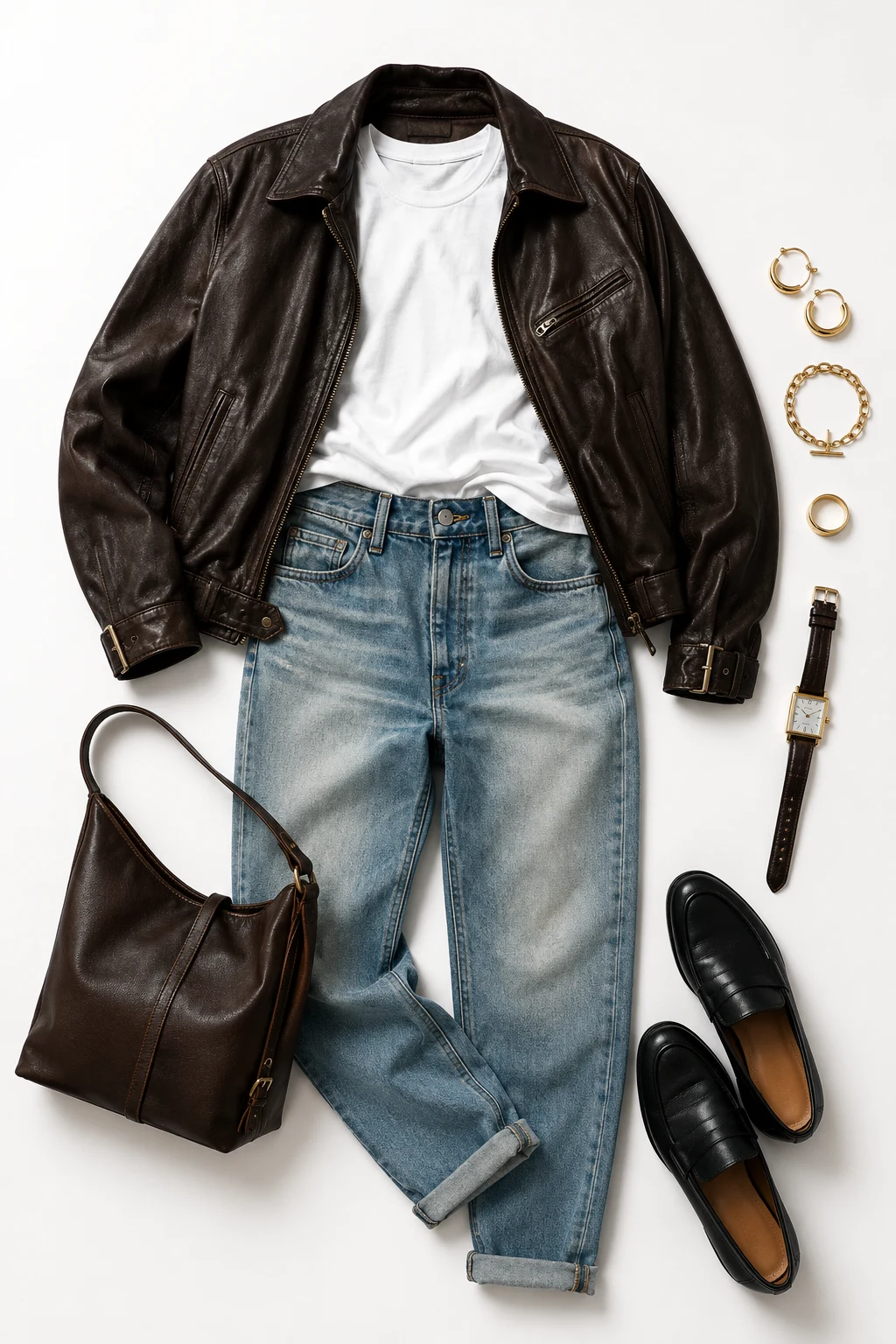
16. The Vintage Denim-and-Leather Mix: Faded Jeans, White Tee, Leather Jacket
The leather-jacket-and-jeans combination is so familiar that it can look generic. The solution is to use genuine material quality and one specific historical reference rather than piling on rebellious accessories.
Start with faded straight-leg jeans, a substantial white T-shirt, and a leather jacket with a simple shape. A café racer, minimal bomber, or clean zip jacket is easier for everyday wear than an aggressively detailed motorcycle jacket. Finish with loafers, sneakers, or ankle boots depending on the setting.
The leather jacket entered mainstream youth culture through motorcycle clothing and Hollywood, with Schott’s Perfecto, introduced in 1928, becoming one of the best-known American motorcycle jacket designs. Marlon Brando’s 1953 film The Wild One helped cement the black motorcycle jacket’s rebellious cultural image.
Find straight-leg jeans with authentic fading rather than artificial rips. Levi’s vintage 501s are a strong reference if you shop secondhand.
Choose a substantial white T-shirt with a firm collar. Uniqlo U and Lady White Co. are useful references for clean, heavyweight jersey.
Look for a simple leather jacket from Schott NYC, AllSaints, or a reputable vintage shop; prioritize leather quality and shoulder fit over decorative hardware.
Finish with clean leather sneakers, loafers, or simple ankle boots, keeping the rest of the outfit deliberately quiet.
Pro Tips
A vintage leather jacket should not fit like a modern tailored blazer. Slight room through the body gives it the correct casual attitude, but the shoulder seam should still sit in a deliberate position. One aged leather item is enough to establish character.
FAQ
What are the easiest everyday outfits women can build from clothes they already own?
Start with straight-leg jeans, a plain T-shirt or Oxford shirt, a cardigan or chore jacket, and simple leather shoes. That foundation can produce several casual everyday outfits for women simply by changing the outer layer and footwear.
How can everyday outfits women look stylish without following every trend?
Concentrate on proportion, fabric, and construction before adding trend pieces. A well-fitting pair of jeans, a substantial knit, a useful jacket, and good shoes will generally outlast seasonal novelty and can be updated with one contemporary accessory.
Why do heritage brands work so well for everyday outfits women?
Heritage brands often retain the construction logic that made their original garments useful: durable denim, waxed cotton, sturdy knitwear, leather soles, or functional pocket design. That history gives everyday clothing women can wear repeatedly a visual coherence that trend-driven pieces often lack.
📚 You Might Also Like
- Everyday Outfits for Men: 15 Expert Menswear Looks
Everyday Outfits for Men: 15 Expert Menswear Looks That Actually Work Everyday outfits for men are p…
- Classic basic outfits for women: 10 Top Looks for 2026
Classic basic outfits for women are built from a small vocabulary of enduring garments—well-cut trou…
- Crochet Outfit Ideas Free Pattern: 12 Top DIY Ideas
Crochet Outfit Ideas Free Pattern: 17 Stylish DIY Looks Crochet Outfit Ideas Free Pattern are wearab…
- Crochet outfit ideas: 7 Stunning DIY Ideas for 2026
Crochet outfit ideas are having a major fashion moment, and it’s easy to see why. Handmade tex…
The Bottom Line
The strongest everyday outfits women can build are rarely the ones with the most pieces. If you already own jeans, start with the American workwear uniform or the French stripe-and-denim combination; if your wardrobe leans toward trousers and knitwear, the Scandinavian minimalist formula or the polished over-60 approach requires very little additional shopping. For sourcing, think in three tiers: thrift and vintage stores for authentic denim, leather, knitwear, and unusual pieces with genuine wear; heritage brands for durable versions of established garments; and mainstream retailers with heritage-inspired lines for accessible entry points. The objective is not to reproduce a decade, subculture, or designer’s wardrobe exactly. It is to understand why a particular silhouette, fabric, color, or construction has survived. That understanding is what separates genuinely good everyday outfits women can wear for years from costume-like imitation. Buy fewer pieces, learn what makes them work, and let repetition become part of the style.:::
🛍️ Shop the Look — everyday outfits women
Our handpicked Amazon picks curated specifically for everyday outfits women:
As an Amazon Associate I earn from qualifying purchases.