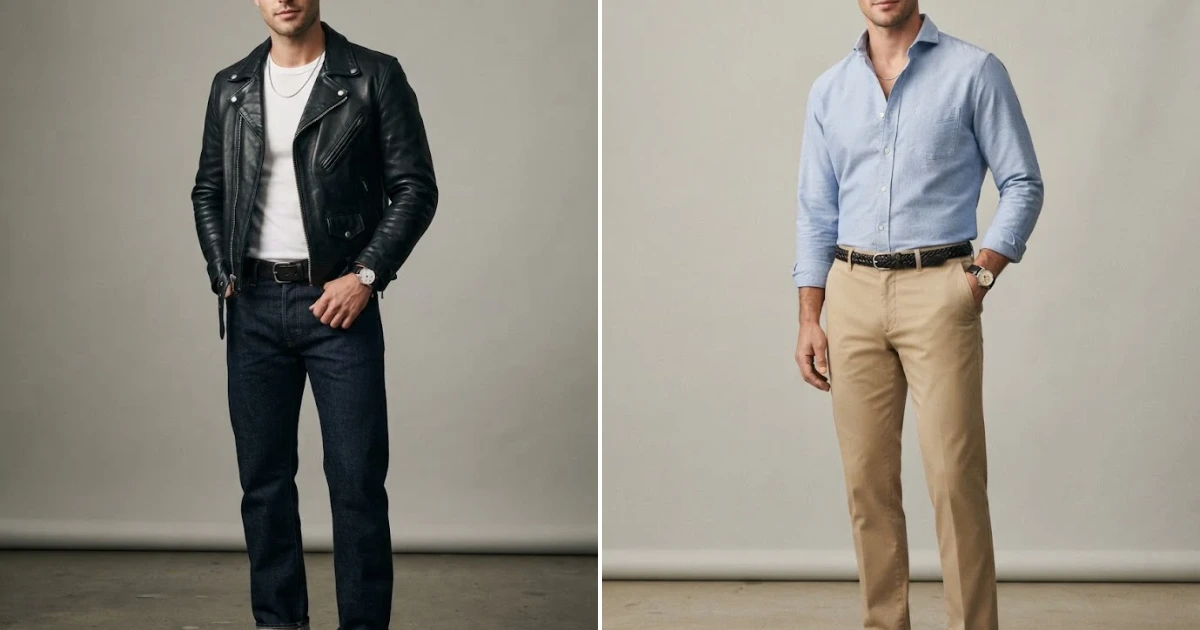
Everyday outfits for men anchor the modern wardrobe by bridging the gap between historical utility and contemporary dressing, serving as the foundational building blocks of practical style. This category of menswear endures because it relies on timeless silhouettes and honest fabrics rather than fleeting micro-trends, drawing men back to garments that age well and tell a story through wear, according to Who What Wear. Right now, a renewed appreciation for craftsmanship and authentic tailoring has driven a massive cultural surge toward these dependable daily uniforms.
Building these looks is entirely achievable through a balanced mix of thrift stores, vintage archives, mainstream retailers, and heritage labels. A single well-chosen garment—such as a heavy-gauge wool sweater, a properly broken-in leather jacket, or a clean pair of selvedge denim jeans—can anchor a whole look and elevate basic separates into something deliberate, according to Harper’s Bazaar. The key is understanding how texture, weight, and proportion interact to create effortless harmony.
This guide breaks down 20 distinct everyday outfits for men, spanning classic Americana, Ivy League traditions, rugged workwear, and smart-casual minimalism. Each profile provides precise styling guidance, key pieces to source, and practical tips to help you build everyday outfits for men that look intentional rather than accidental.
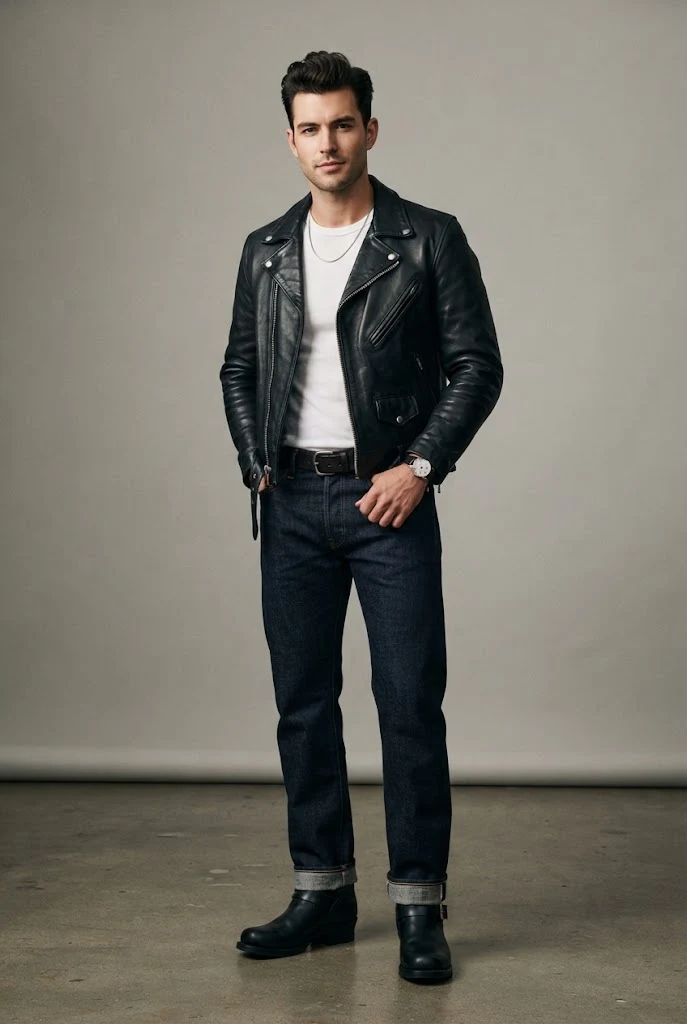
1. The 1950s Greaser: Leather Jacket, White Tee, and Dark Denim — Everyday
The Challenge It Solves
The primary risk of a leather jacket and white tee combination is looking like an ironic costume or a high school stage prop rather than an authentic modern dresser. Separating a stylish nod to mid-century rebellion from a caricature comes down to investing in clean, unembellished silhouettes and quality fabrics that avoid excessive hardware.
The Strategy Explained
This configuration relies on high-contrast textures: the heavy, stiff grain of cowhide or horsehide paired with the crisp, clean breathability of combed cotton. Historically popularized by Marlon Brando in The Wild One (1953), this uniform proved that working-class utility could become a high-impact aesthetic statement when cut with proper proportions.
Implementation Steps
- Source a mid-weight leather jacket with minimal hardware; Schott NYC makes the iconic Perfecto style, or look to vintage Aero Leather for authentic British-tan horsehide.
- Select a heavy-weight crewneck tee in stark white with a bound collar; Merz b. Schwanen produces exceptional tubular-knit cotton t-shirts without side seams.
- Pair with high-waisted, rigid dark indigo selvedge jeans; 3sixteen or Iron Heart offer rigid 14oz-plus Japanese denim that breaks in uniquely over time.
- Ground the look with black leather service boots or classic engineer boots from Red Wing Heritage.
Pro Tips
Avoid heavily distressed leather jackets straight out of the box; let the patina develop naturally through years of daily wear. Ensure your white t-shirt has enough weight to prevent it from becoming translucent in direct sunlight.
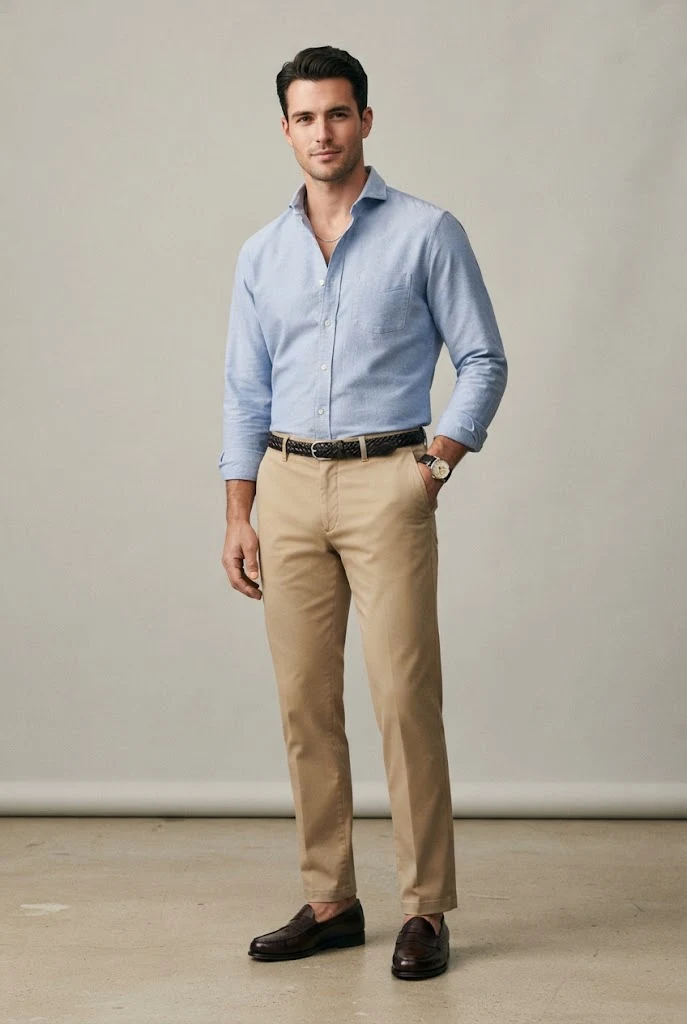
2. The Ivy League Casual: Oxford Cloth Button-Down, Chinos, and Loafers — Everyday
Preppy and collegiate dressing often flirts with looking stuffy, overly corporate, or trapped in a 1980s country club catalog. Achieving modern everyday outfits for men within this tradition requires embracing relaxed tailoring and natural fabrics that soften the formality.
Rooted in the post-WWII American East Coast collegiate style popularized by publications like Take Ivy, this look balances intellectual ease with classic tailoring codes. The secret lies in the unlined, soft-roll button-down collar paired with flat-front cotton chinos and unstructured layering.
- Acquire a classic blue-and-white striped Oxford cloth button-down (OCBD) featuring a generous collar roll; Brooks Brothers or Drake’s set the standard for traditional collar geometry.
- Add relaxed-fit, mid-weight cotton-twill chinos in British khaki or olive; Beams Plus or J.Crew’s 770 fit offer sturdy construction with a comfortable mid-rise.
- Layer with a Shetland wool crewneck sweater in oatmeal or mustard; Jamieson’s of Shetland weaves authentic, seamless Scottish wool.
- Finish with beefroll penny loafers in cordovan leather; G.H. Bass & Co. or Allen Edmonds provide reliable, timeless footwear.
Never iron the collar flat—let the “roll” of the Oxford collar curve naturally to maintain the casual, lived-in ease that defines traditional Ivy style. Keep your trousers slightly unpressed for a relaxed weekend gait.
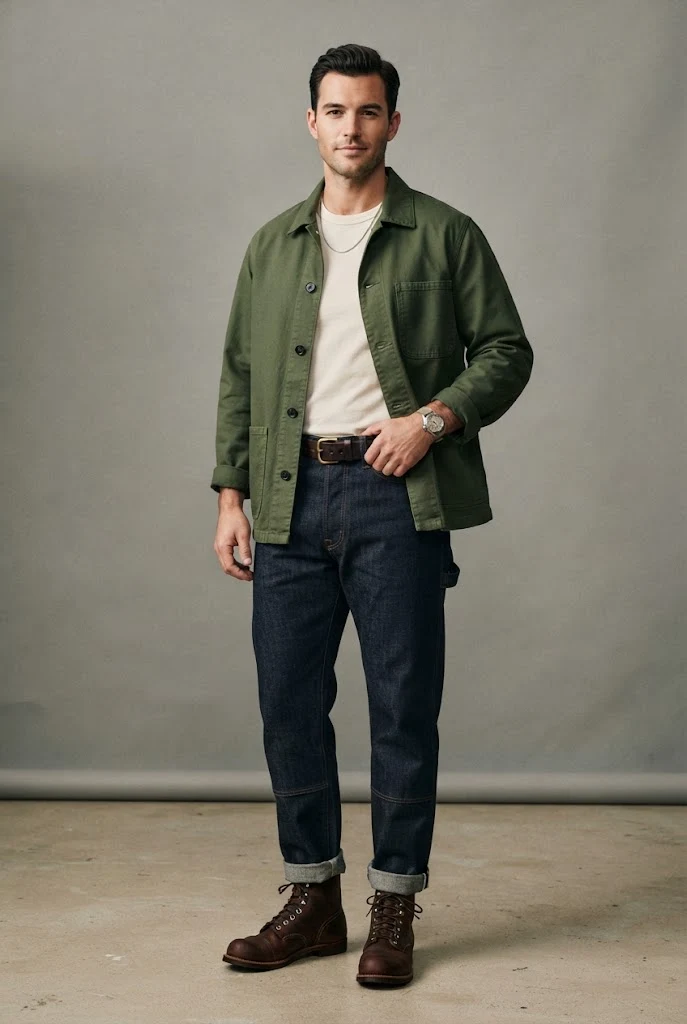
3. The Modern Workwear: Chore Coat, Heavy Tee, and Utility Pants — Everyday
Dressing in head-to-toe workwear can easily make you look like you just clocked out of a hard labor site rather than stepping out for a weekend coffee run. Balancing rugged durability with tailored urban refinement keeps the aesthetic grounded.
Originating from late 19th-century French blue-collar laborers who wore durable cotton-drill jackets (veste de travail), contemporary workwear celebrates honest manufacturing and utilitarian pockets. The strategy is to pair structured canvas or moleskin jackets with clean, tapered pants.
- Invest in a traditional French blue or sage green cotton-canvas chore coat; Vetra and Le Laboureur still manufacture these in authentic European workshops.
- Layer over a thick slub-cotton pocket tee in charcoal or navy; Buck Mason builds exceptional curved-hem tees that layer seamlessly under jackets.
- Pair with double-knee utility pants or relaxed carpenter trousers in heavy cotton duck; Stan Ray or Carhartt WIP offer durable options with modern, clean cuts.
- Slip into a pair of roughout leather moc-toe boots; Russell Moccasin or Danner provide durable footwear designed for daily traction.
Roll up your chore coat cuffs slightly to reveal the interior seams and give your arms more mobility. Contrast the stiffness of the canvas with a softer, vintage cotton t-shirt underneath.
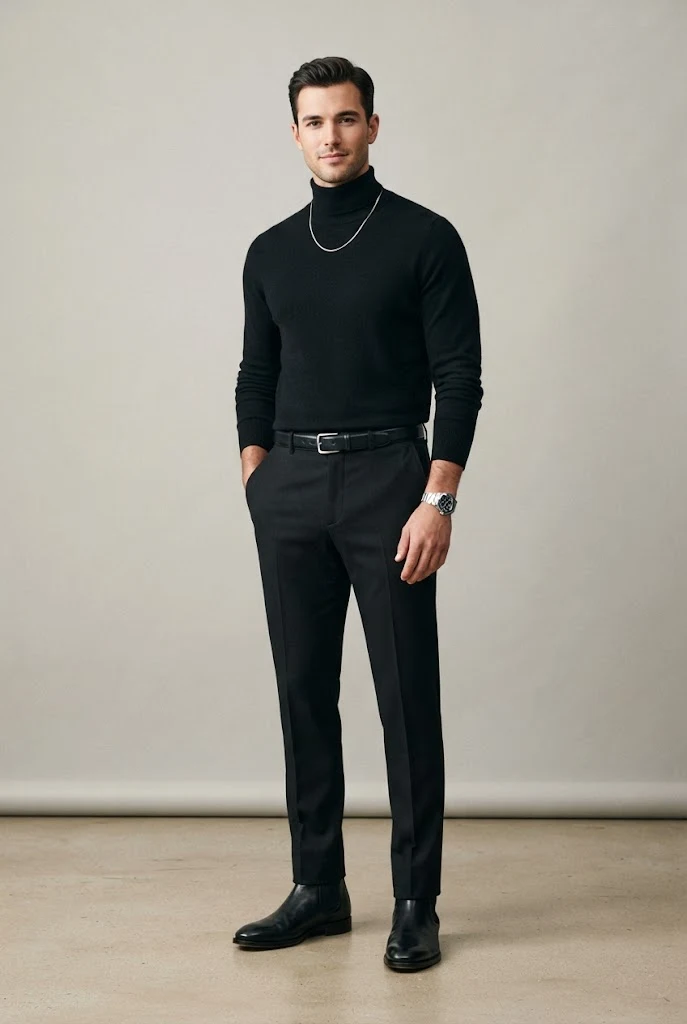
4. The Minimalist Monochrome: Black Turtleneck, Slim Trousers, and Chelsea Boots
All-black or monochromatic outfits can quickly drift into looking harsh, flat, or overly theatrical if fabric weights and textures are ignored. Success depends on playing with varying shades of charcoal, pitch black, and subtle textural depth.
Drawing inspiration from 1960s Parisian existentialists, modernist architects, and sleek mid-century tailoring, monochrome dressing relies entirely on silhouette precision. When color is removed, the cut, drape, and fabric finish of your everyday outfits for men take center stage.
- Secure a fine-gauge merino wool turtleneck; John Smedley crafts luxurious, lightweight knitwear in Lea Mills, England.
- Pair with tailored, slim-straight wool trousers in deep charcoal or black; COS or Theory provide sharp, contemporary tailoring lines.
- Step into sleek black leather Chelsea boots with a slim profile and stacked heel; RM Williams or Saint Laurent deliver impeccable sleekness.
- Layer with a minimalist trench coat or a sharp wool overcoat for cooler evening transitions.
Vary your fabric textures—pair a matte wool sweater with smooth leather boots and brushed cotton trousers to create visual depth within a single color family. Keep accessories minimal and hardware-free.
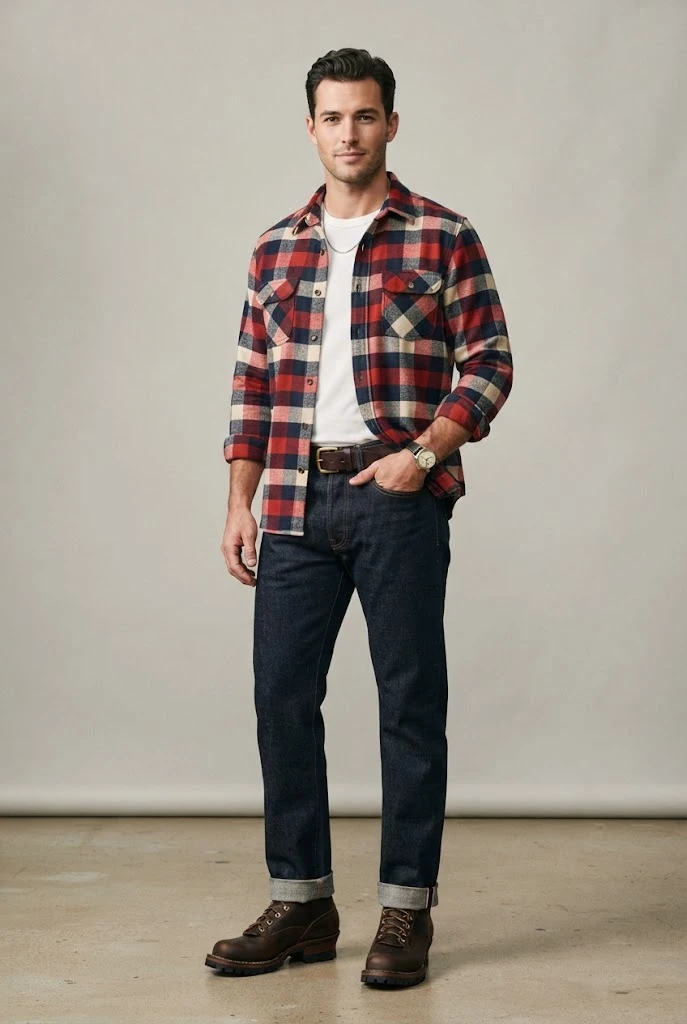
5. The Heritage Outdoorsman: Flannel Shirt, Selvedge Denim, and Logger Boots
Heavy outdoor gear can look clunky and unrefined if worn without regard for fit, turning urban everyday outfits for men into a hiking expedition parody. The fix is pairing rugged heritage pieces with modern, clean-lined denim.
Steeped in Pacific Northwest logging heritage and mid-20th century outdoor exploration, this look honors garments designed to withstand harsh elements. True heritage pieces use heavy flannel weaves and thick vegetable-tanned leather that improves with age.
- Source a heavy-duty, yarn-dyed cotton flannel shirt; Pendleton or Filson construct thick, archival buffalo-check and plaid shirts built to last decades.
- Pair with raw Japanese selvedge denim in a straight-leg, mid-rise cut; Unbranded Brand or Momotaro offer durable fabrics that mold to your body over time.
- Layer a quilted vest or down vest over the flannel; Crescent Down Works hand-builds exceptional heritage outerwear in Seattle.
- Anchor the look with Vibram-soled logger or heritage work boots; White’s Boots or Nicks Handmade Boots provide unrivaled arch support and durability.
Wash your raw denim as infrequently as possible during the first six months to develop high-contrast fading patterns unique to your daily movement. Wear your flannel untucked over a plain tee for an effortless layering effect.
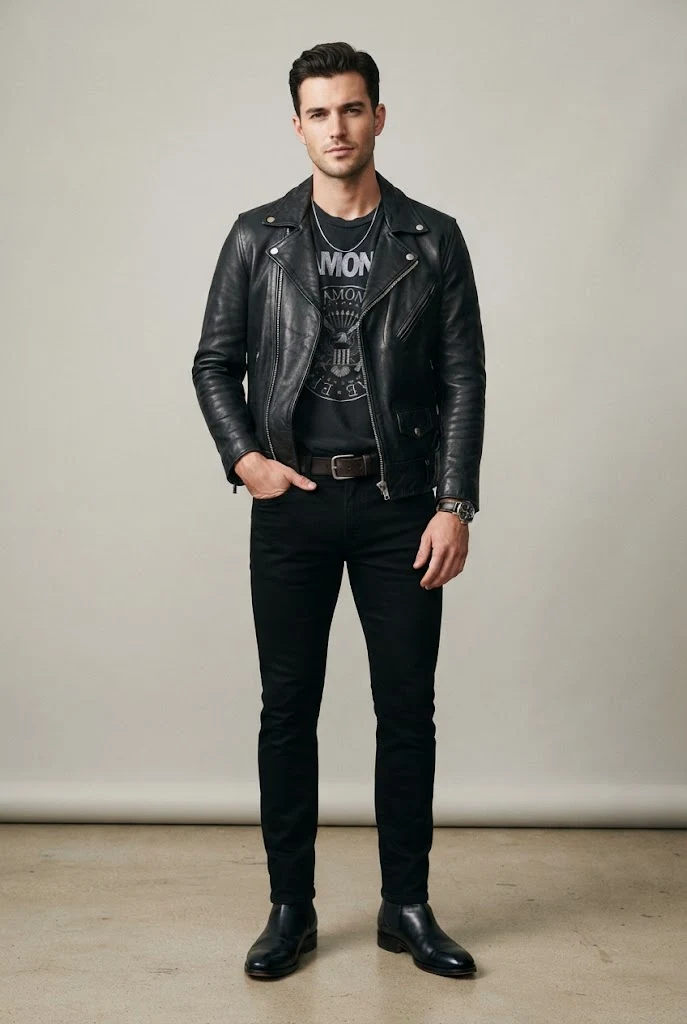
6. The Downtown Rocker: Leather Biker Jacket, Band Tee, and Slim Black Jeans
Leaning into rock-and-roll styling can easily cross the line into sloppy or adolescent if every piece looks excessively distressed or artificially aged. Precision tailoring and understated graphics separate a genuine style statement from a concert-merch cliché.
Popularized by 1970s punk icons in London and New York, this aesthetic strips fashion down to raw attitude, monochrome palettes, and motorcycle-inspired hardware. The modern approach requires keeping silhouettes lean, sharp, and intentional.
- Acquire a supple lambskin or steerhide asymmetrical leather motorcycle jacket; Acne Studios or Schott offer sleek cuts with polished zippers.
- Choose a vintage-washed, distressed cotton band tee with a faded, authentic graphic; Re/Done or vintage archive shops provide broken-in tees with character.
- Slip into slim-fit black stretch-denim jeans; APC or Nudie Jeans provide clean silhouettes that hug the frame without looking restrictive.
- Finish with Cuban-heel leather boots or harness boots; Saint Laurent or Our Legacy anchor the rocker silhouette with a sharp profile.
Keep jewelry restrained—a single silver signet ring or a thin chain necklace is plenty. Balance a slim lower half with a slightly cropped jacket length to elongate your proportions.
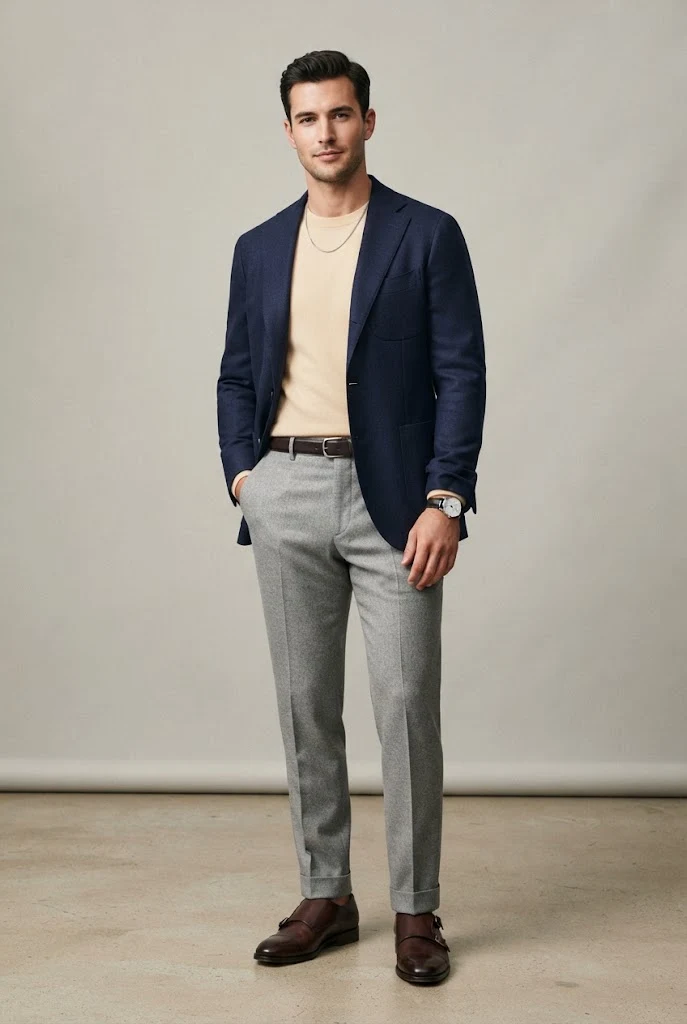
7. The Smart Casual Sharp: Unstructured Blazer, Crewneck Knit, and Tailored Trousers
Bridging the gap between corporate formality and weekend leisure is tricky; wearing a stiff business suit out to dinner looks out of place, while a plain hoodie feels too casual. The unstructured blazer solves this by offering lightweight, effortless tailoring.
Rooted in Italian sprezzatura—the art of studied nonchalance—this look discards stiff shoulder pads and heavy canvas linings in favor of soft, natural draping. It forms the backbone of versatile everyday outfits for men transitioning smoothly from daytime meetings to evening socializing.
- Invest in a navy blue unstructured blazer made from hopsack wool or cotton-linen blend; Boglioli or L.B.M. 1911 specialize in garment-dyed, unlined Italian tailoring.
- Layer a fine-gauge cashmere or merino wool crewneck sweater underneath; NN07 or Club Monaco offer clean, modern layering knits.
- Pair with contrast light grey or cream tailored trousers; SuitSupply or Todd Snyder provide sharp separates with clean breaks.
- Complete the look with minimalist suede penny loafers or clean white leather court sneakers.
Pop your blazer sleeves slightly higher if your knit cuffs are bulky, creating a relaxed, approachable silhouette. Ensure the jacket hem hits right at the middle of your thumb knuckle for classic proportions.
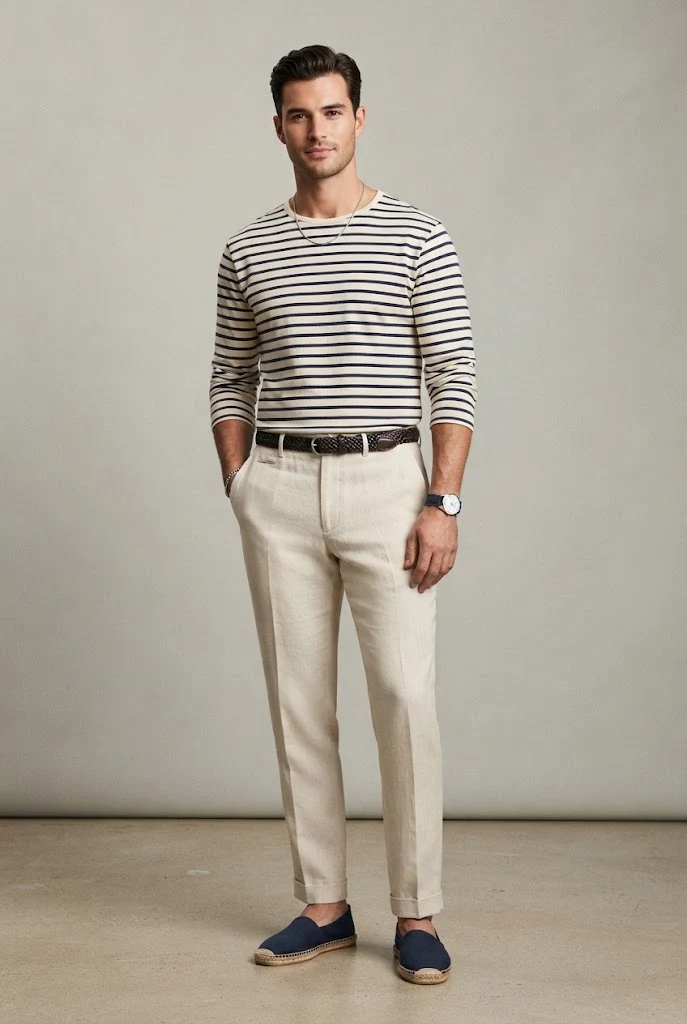
8. The Coastal Prep: Striped Breton Shirt, Linen Trousers, and Canvas Espadrilles
Nautical and coastal styles can quickly feel costumey or overly tied to a specific resort destination if not balanced with relaxed, urban-friendly tailoring. The key is sticking to classic Breton stripes and breathable, natural textiles.
Originating as the official uniform of French Navy sailors in the mid-19th century—where the 21 stripes famously represented Napoleon’s victories—the Breton shirt was later embraced by artists like Pablo Picasso and style icons like James Dean. It evokes timeless seaside leisure.
- Source an authentic heavy cotton-canvas Breton striped jersey; Saint James or Armor-Lux have been manufacturing the original French navy shirts for over a century.
- Pair with lightweight, wide-leg linen trousers in ecru or navy; Percival or Massimo Dutti offer airy, breathable summer tailoring.
- Slip into canvas espadrilles with jute soles; Castañer has crafted traditional Spanish espadrilles since 1927.
- Throw on a lightweight cotton-canvas field jacket or mac coat for breezy coastal evenings.
Never wear socks with espadrilles; let your ankles breathe to maintain the relaxed Mediterranean ethos of the look. Keep your trousers slightly cropped above the ankle bone.
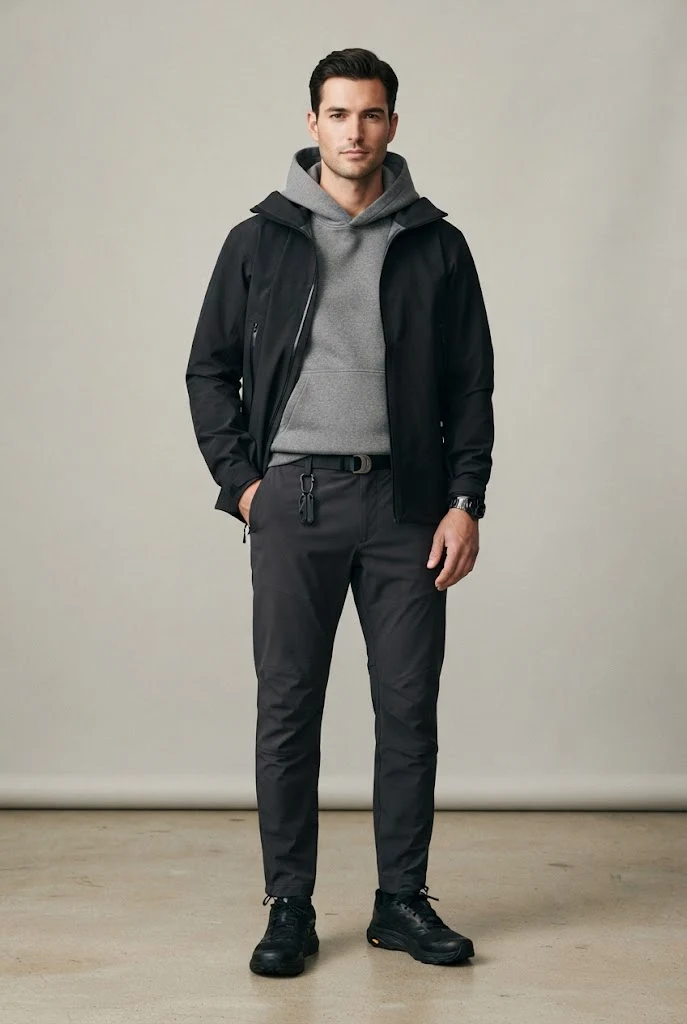
9. The Modern Urbanite: Technical Shell, Hoodie, and Technical Trousers
Technical outdoor gear worn in city environments can easily make you look like you are lost on a mountain trail rather than navigating a metropolitan commute. The trick is mixing high-performance fabrics with sleek, tailored urban silhouettes.
Rooted in “gorpcore” and contemporary technical streetwear, this style prioritizes weather-resistant materials, modular layering, and ergonomic design. Brands like Arc’teryx Veilance pioneered the transition of alpine technology into boardroom-ready urban wear.
- Invest in a minimalist Gore-Tex technical shell jacket in a matte neutral tone; Arc’teryx Veilance or Stone Island Shadow Project engineer sleek, city-proof outerwear.
- Layer a heavyweight cotton fleece hoodie without loud branding underneath; Reigning Champ or Carhartt WIP build ultra-durable, plush hoodies.
- Pair with water-repellent technical utility trousers featuring articulated knees; Outlier or Nike ACG offer superior mobility and clean lines.
- Ground the look with technical trail runners or high-end hiking sneakers; Salomon Advanced or New Balance 990 series provide athletic comfort with street credibility.
Stick to a muted, industrial color palette—charcoal, olive, black, and coyote brown—to keep technical gear looking intentional and sleek. Avoid overly shiny nylon fabrics that scream neon ski jacket.
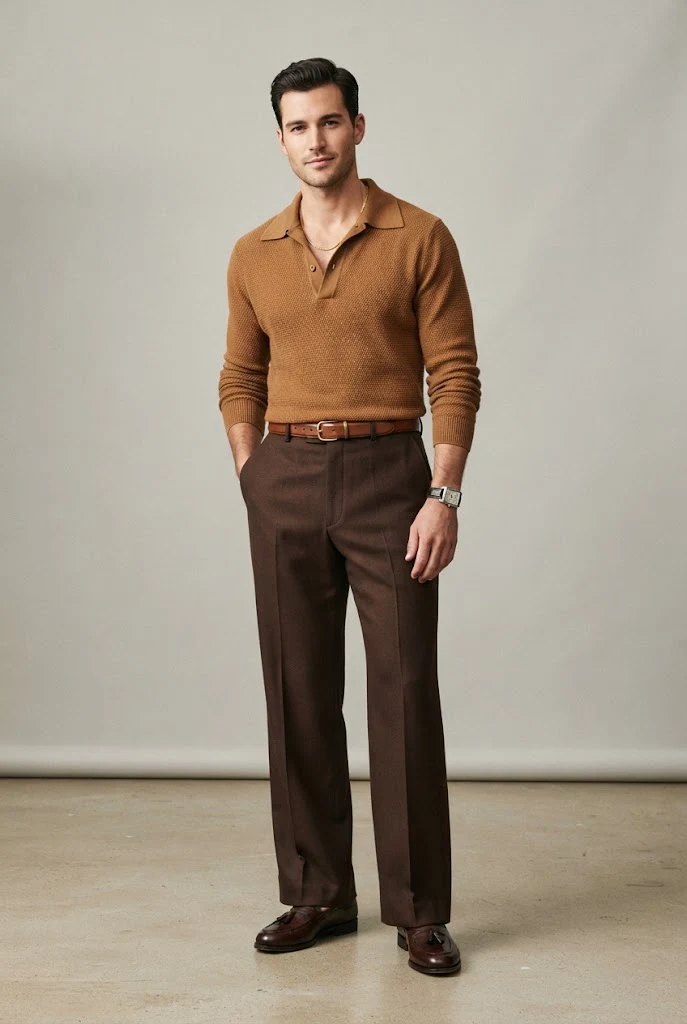
10. The 1970s Leisure Suit: Open-Collar Polo, Tailored Trousers, and Retro Loafers
Retro 1970s styling can easily drift into tacky polyester territory if fabric choices and cuts aren’t carefully curated. Modernizing this era requires leaning into rich knit textures, earthy tones, and relaxed, sophisticated tailoring.
Inspired by the relaxed elegance of 1970s European jet-setters and cinematic icons like Marcello Mastroianni, this aesthetic swaps stiff neckties for open-collar knit polo shirts worn over tailored trousers. It’s an effortless approach to warm-weather statement dressing.
- Acquire a fully-fashioned knit cotton or silk-blend polo shirt with an extended collar; Reiss or Todd Snyder offer exceptional retro knitwear.
- Pair with high-waisted pleated trousers in chocolate brown, cream, or rust; Casatlantic or Husbands Paris specialize in dramatic, vintage-inspired trouser cuts.
- Slip into woven leather huaraches or tassel loafers; Morjas or Solovair provide artisanal craftsmanship with vintage flair.
- Accessorize with vintage-tinted acetate sunglasses from Cutler and Gross or Ray-Ban.
Wear your knit polo buttoned up with the collar spread wide over your jacket lapels for an authentic 1970s Italian cinematic look. Ensure your trousers feature a deep pleat to maximize the retro drape.
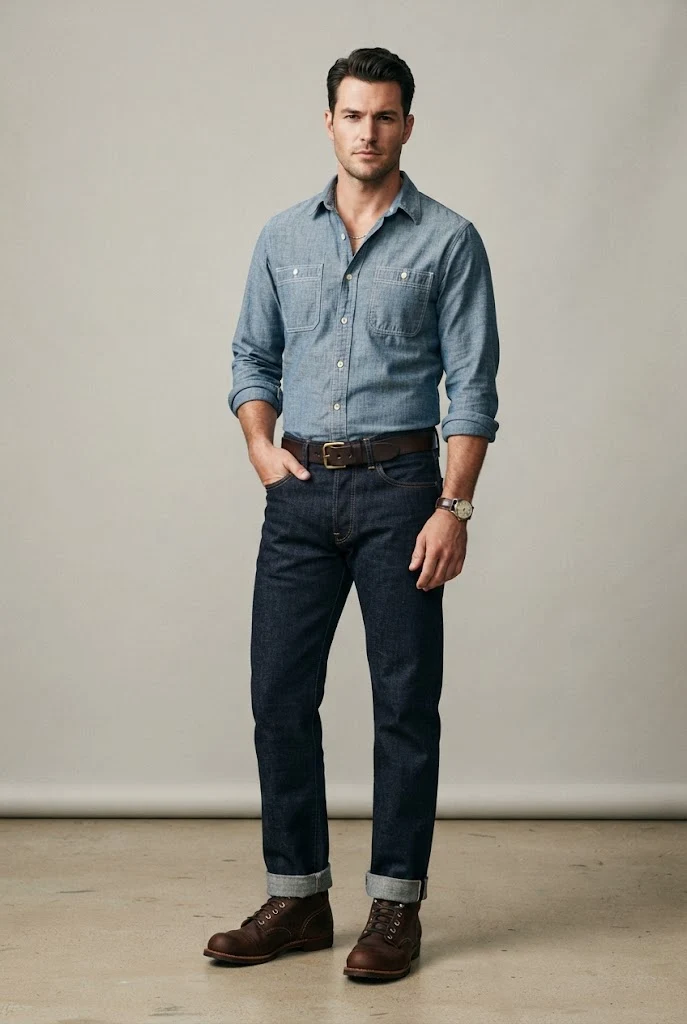
11. The Rugged Denim-on-Denim: Chambray Shirt, Raw Jeans, and Work Boots
The classic Canadian tuxedo (denim on denim) is notoriously easy to mess up if the denim washes match too closely or look stiff and uncoordinated. The golden rule is ensuring significant contrast between the top and bottom shades.
Rooted in American gold-rush workwear and mid-century cowboy culture, double denim was engineered for maximum durability under punishing labor conditions. Today, mastering it requires mixing lightweight chambray with heavyweight indigo selvedge.
- Source a vintage-washed indigo chambray or light denim work shirt; RRL (Ralph Lauren) or Stevenson Overall Co. craft exceptional vintage-reproduction shirts.
- Pair with dark, rigid raw indigo selvedge jeans; Edwin or Tellason offer robust denim that contrasts sharply with the lighter shirt.
- Layer a rugged brown waxed canvas vest or trucker jacket over the top; Barbour or Flint and Tinder add texture and break up the blue monotony.
- Step into Goodyear-welted leather moc-toe or cap-toe boots; Red Wing Iron Rangers complete the rugged silhouette.
Never wear matching indigo washes for both your shirt and jeans; always pair a light-wash top with dark-wash bottoms, or vice versa, to create visual separation.
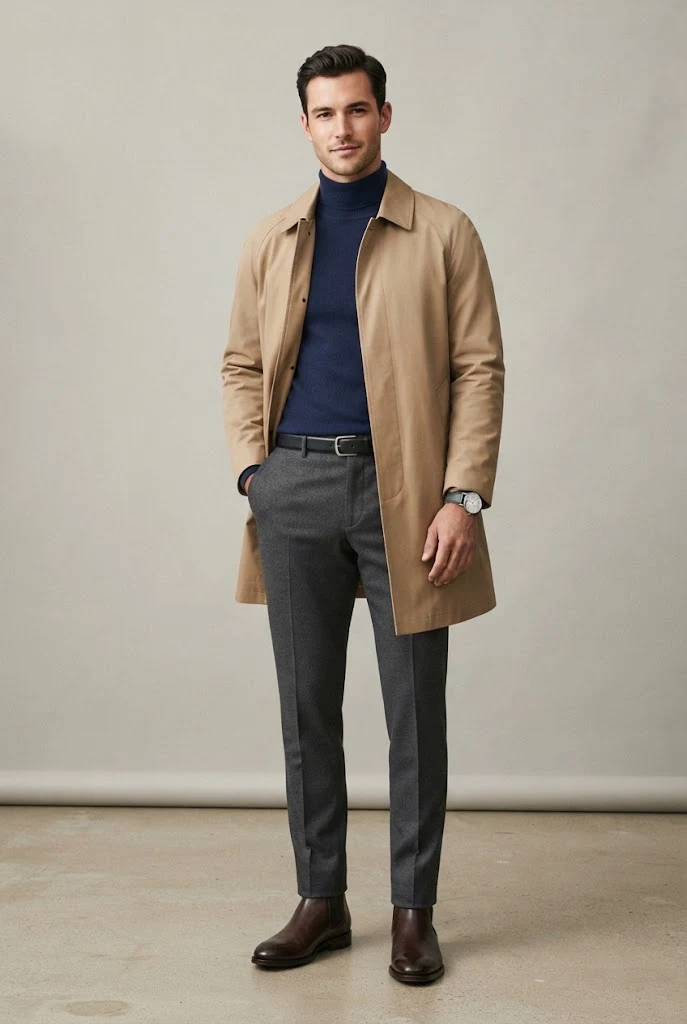
12. The Smart Transitional: Mac Coat, Merino Rollneck, and Tailored Trousers
Transitioning between shifting autumn and spring temperatures often leads to bulky, disorganized layering. A clean, wind-resistant mac coat worn over fine knitwear solves this by keeping the silhouette streamlined and weather-proof.
Originating from Scottish chemist Charles Macintosh’s 1824 invention of waterproof rubberized cotton, the mac coat became a staple of British civil servants and detectives alike. Its clean raglan sleeves and minimalist button placket offer timeless sophistication.
- Invest in a waterproof cotton-gabardine mac coat in fawn, navy, or olive; Mackintosh or Private White V.C. manufacture authentic British raincoats in historic mills.
- Layer a fine-gauge merino wool rollneck sweater underneath; Sunspel or Uniqlo U offer clean, soft knitwear that won’t overheat indoors.
- Pair with wool-blend pleated trousers and leather derby shoes; Loake or Grenson provide classic British footwear heritage.
- Carry a sturdy leather brief or minimalist canvas tote bag.
Choose a mac coat with a generous raglan shoulder cut so it drapes effortlessly over thick sweaters without pulling across your chest.
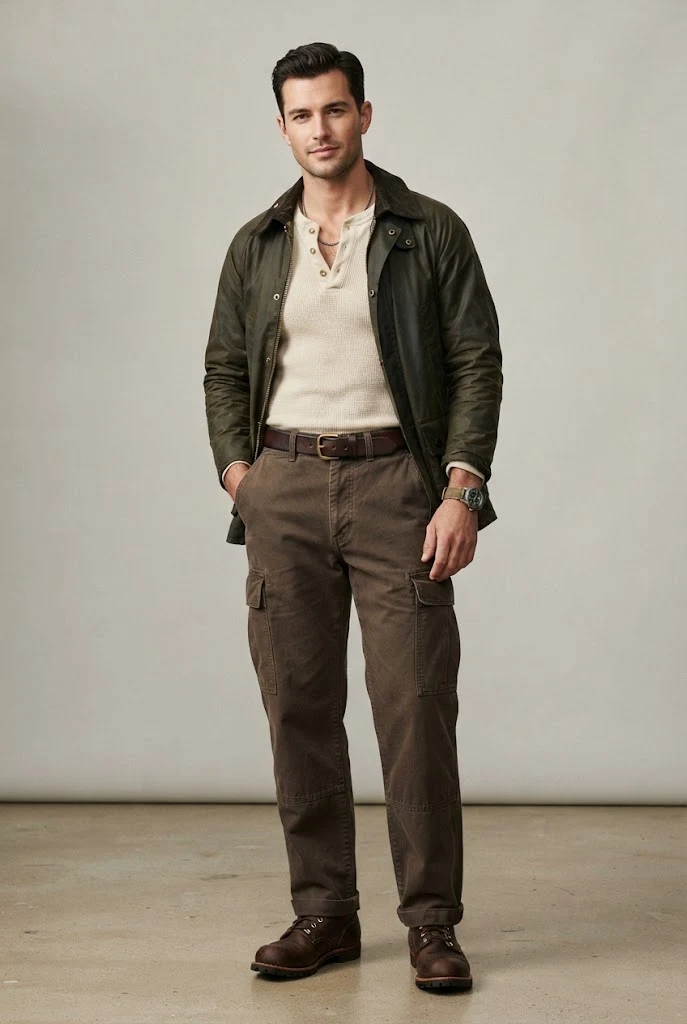
13. The Americana Heritage: Waxed Jacket, Heavy Henley, and Cargo Trousers
Outdoor heritage wear can easily look overly rugged for everyday city life if paired with hiking poles and neon gear. Grounding it with clean, neutral everyday outfits for men keeps the rugged aesthetic versatile.
Drawing from British countryside traditions and mid-century American sporting life, waxed cotton outerwear was designed to withstand torrential rain while remaining breathable. When paired with a heavyweight henley, it forms an indestructible daily uniform.
- Layer a waffle-knit heavy cotton henley in natural or olive; Knickerbocker Mfg. Co. or Rogue Territory build sturdy henleys with vintage-accurate plackets.
- Pair with relaxed-fit cotton-twill cargo pants featuring low-profile pockets; OrSlow or Engineered Garments refine utility pockets into stylish streetwear.
- Step into lug-sole leather service boots; Danner Mountain Lights or Paraboot Chateubriand bridge the gap between trail and town.
Re-wax your cotton jacket once a year with Barbour Thornproof Dressing to maintain its water resistance and develop a rich, weathered patina.
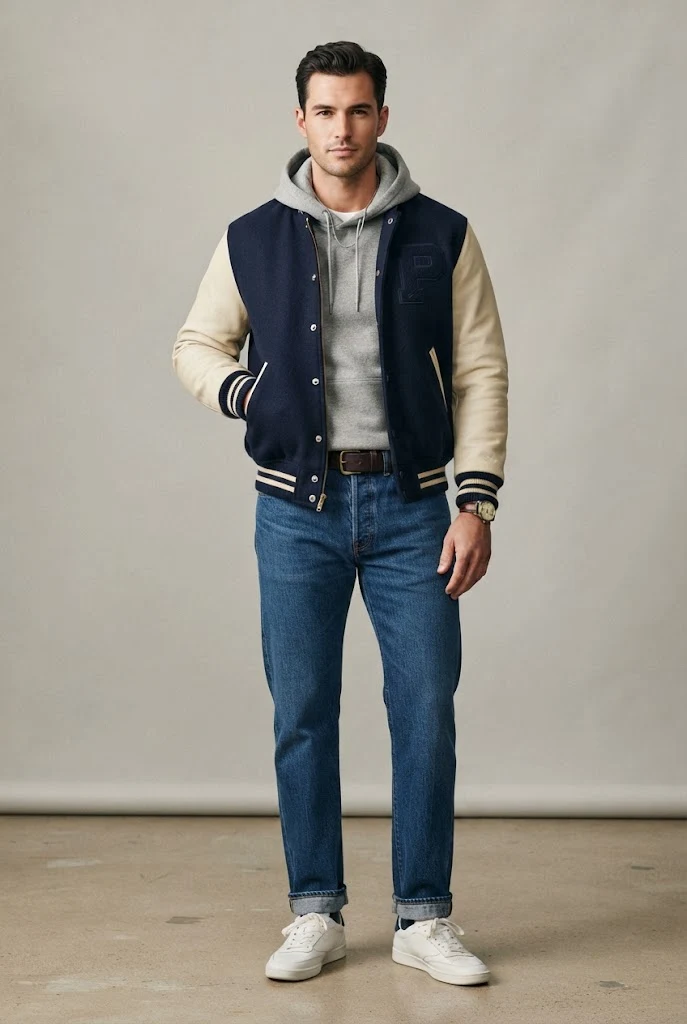
14. The East Coast Prep: Varsity Jacket, Hoodie, and Straight-Leg Denim
Varsity and letterman jackets often risk looking like a high-school sports uniform or dressing down a grown man too much. Elevating this look relies on sourcing luxury wool-and-leather materials and keeping branding minimal.
Originating at Harvard University in 1865 as baseball team sweaters before evolving into wool jackets with leather sleeves, letterman jackets represent classic American athletic prestige. Pairing them with understated hoodies creates a refined high-low streetwear balance.
- Source a premium wool body and cowhide-sleeve varsity jacket with tonal or minimal chenille lettering; Golden Bear Sportswear or Dehen 1920 still manufacture authentic wool jackets in the USA.
- Layer a loopwheel cotton hoodie in heather grey; Tenderloin or Reigning Champ provide plush, structured hoods that stand up properly.
- Pair with classic mid-wash straight-leg denim; Levi’s Vintage Clothing 1955 501s offer the exact heritage fit and wash.
- Finish with classic canvas tennis shoes or retro court sneakers; PF Flyers or Adidas Stan Smith keep the athletic heritage clean.
Opt for a varsity jacket with solid-colored wool and minimal patches if you want a cleaner, more mature aesthetic that pairs easily with diverse everyday outfits for men.
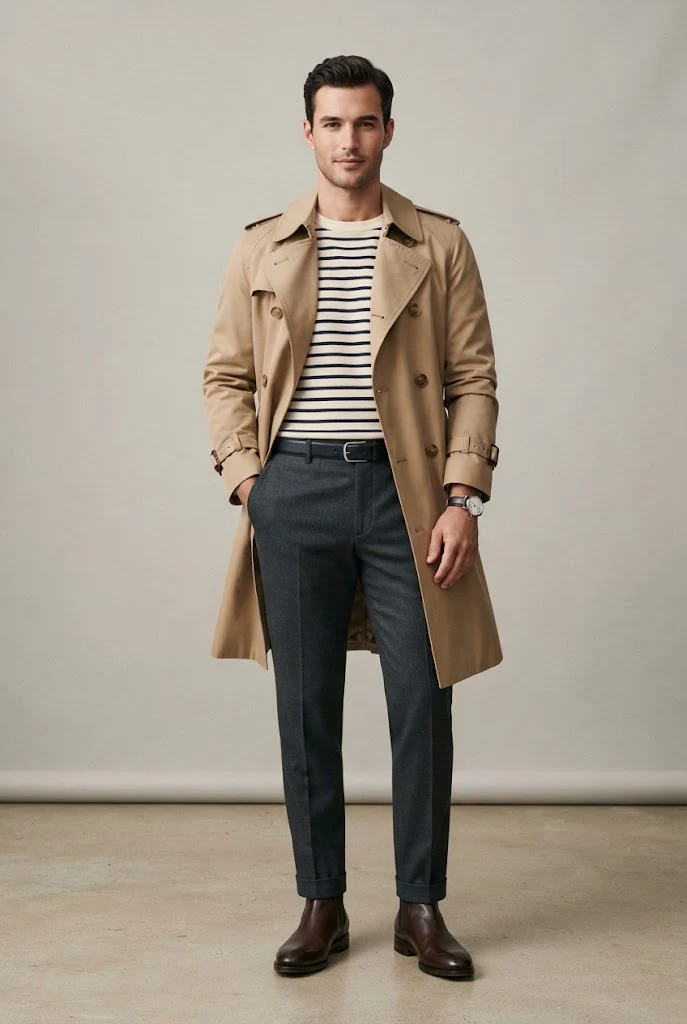
15. The Parisian Chic: Trench Coat, Striped Tee, and Tailored Trousers
French chic can easily feel pretentious or overly curated if every item looks too precious. The trick to nailing effortless Parisian style is mixing structured luxury outerwear with relaxed, unpretentious knitwear and denim.
Popularized by mid-century French film icons and Parisian intellectuals walking along the Seine, the trench coat and striped jersey combination is the epitome of effortless European elegance. It marries military practicality with artistic nonchalance.
- Invest in a double-breasted cotton-gabardine trench coat with epaulets and a waist belt; Burberry Heritage line or A.P.C. offer classic cuts.
- Layer a classic cotton Breton shirt underneath; Saint James provides the authentic article.
- Pair with dark slim-straight trousers or raw denim jeans; Officine Générale or Lemaire offer sophisticated Parisian tailoring.
- Step into sleek leather derby shoes or minimalist suede Chelsea boots.
Don’t button your trench coat all the way up; tie the belt loosely in a knot rather than buckling it for that quintessential Parisian insouciance.
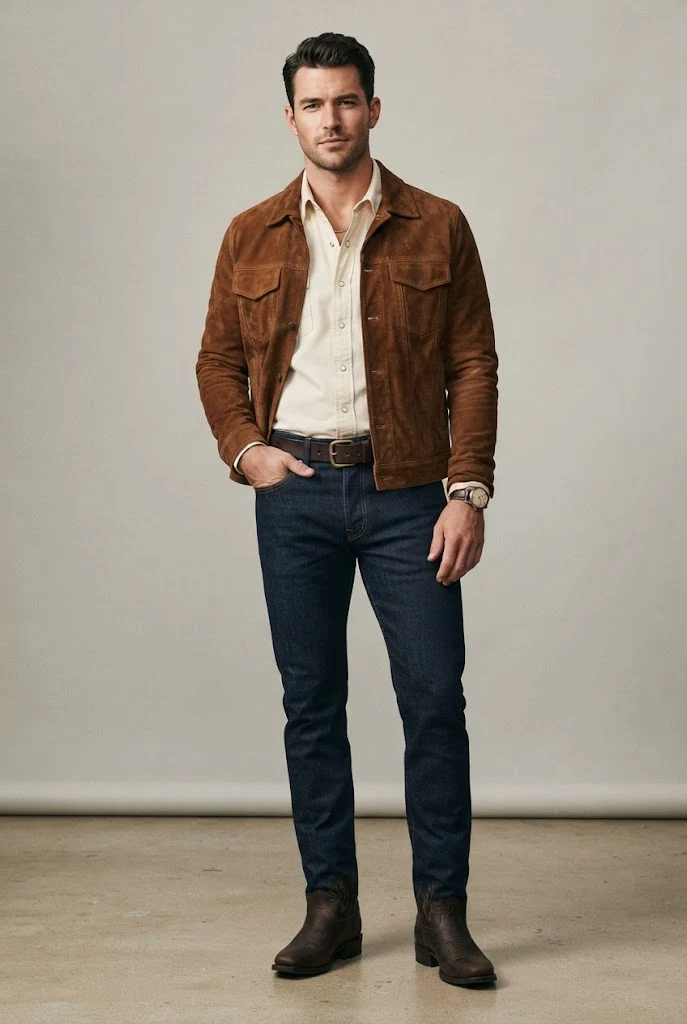
16. The Rugged West: Suede Trucker Jacket, Pearl-Snap Shirt, and Slim Denim
Western-inspired attire can easily slide into rodeo costume territory if you wear cowboy boots, a Stetson, and studded denim all at once. Select just one or two Western elements to anchor a contemporary wardrobe.
Rooted in American cattle-ranching history and popularized by mid-century Western films featuring figures like Steve McQueen and John Wayne, Western wear emphasizes durable leather, snap closures, and yoke detailing that flatters the shoulders.
- Source a premium goatskin or cowhide suede trucker jacket in tobacco brown; Ralph Lauren Purple Label or Todd Snyder craft luxurious suede outerwear.
- Add a cotton-twill western shirt featuring mother-of-pearl snaps and pointed yokes; Wrangler Retro or Levi’s Made & Crafted provide authentic details.
- Pair with dark wash slim-straight jeans and leather roper boots; Lucchese or Tecovas make exceptional roper boots with subtle toe profiles.
Suede jackets require specialized care—brush them regularly with a suede crepe brush to lift dust and maintain the nap’s velvety texture.
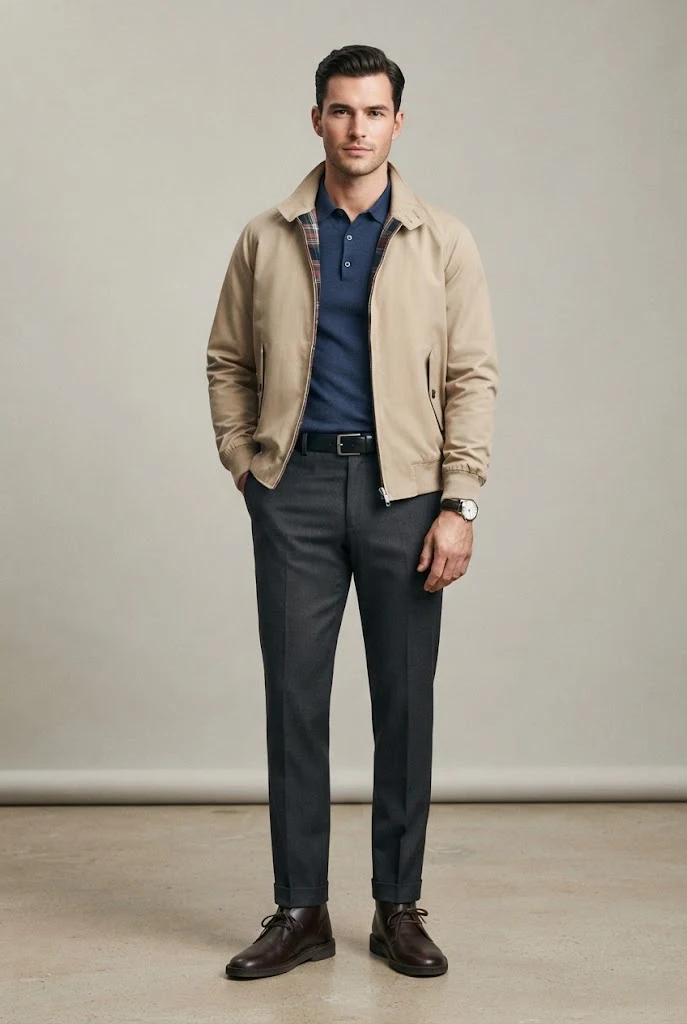
17. The British Mod: Harrington Jacket, Slim Polo, and Sta-Prest Trousers
Mod subculture looks can occasionally feel restrictive or pinned to a strict 1960s time capsule. Modernizing Mod style requires opting for clean, tailored fits and premium fabrication.
Originating in 1960s Britain among sharp-dressing youth who favored modern jazz, Italian scooters, and tailored suits, the Harrington jacket (popularized by Baracuta) became an enduring symbol of youthful rebellion and clean lines.
- Invest in an authentic Baracuta G9 Harrington jacket featuring the iconic Fraser Tartan breathable lining; Baracuta has made them in Manchester since 1937.
- Layer a fine-knit cotton polo shirt with tipping on the collar; Fred Perry M12 or Sunspel offer timeless slim-fit knits.
- Pair with crisp, crease-resistant Sta-Prest trousers or slim flat-front chinos; Ben Sherman or Levi’s vintage lines capture the sharp Mod silhouette.
- Step into leather desert boots or tassel loafers; Clarks Originals Desert Boots complete the subcultural heritage.
Zip your Harrington jacket halfway up and let the collar stand firm to frame your face correctly, embodying the signature Mod attitude.
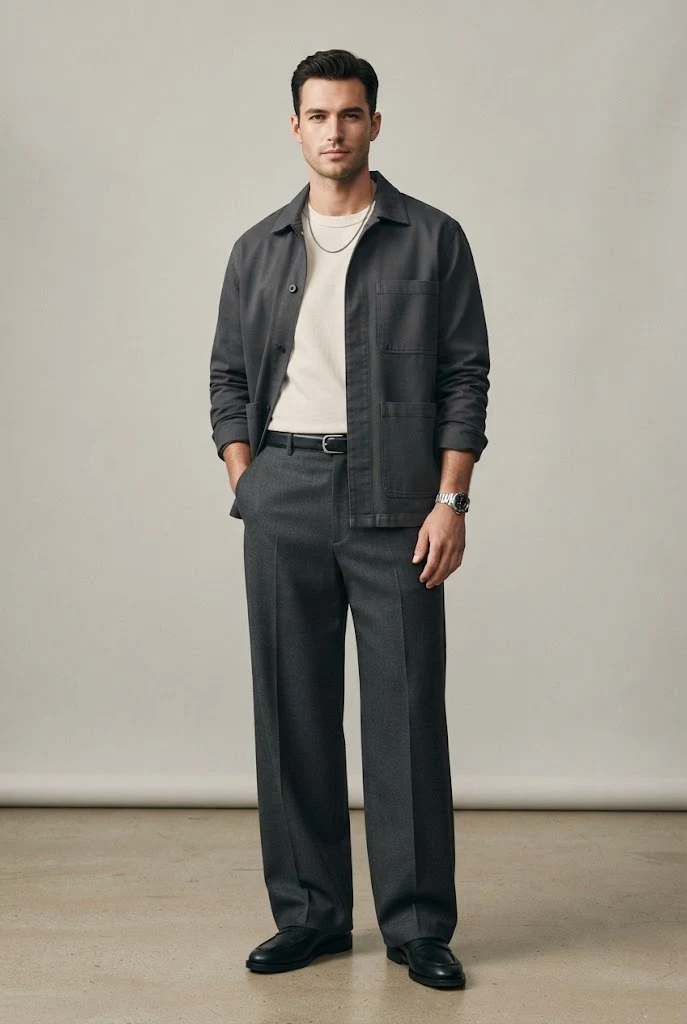
18. The Modern Minimalist: Boxy Overshirt, Tee, and Wide-Leg Trousers
Minimalist streetwear can sometimes look shapeless or lifeless if proportions and fabric weights aren’t carefully managed. The solution is balancing a structured, boxy overshirt with fluid, wide-leg trousers.
Influenced by contemporary Japanese menswear design and architectural minimalism, this look focuses on clean silhouettes, heavy drape, and a restrained, monochromatic color palette. It prioritizes comfort without sacrificing tailored sophistication.
- Source a heavy wool-blend or cotton-canvas overshirt with a clean, boxy cut; Our Legacy, Lemaire, or COS specialize in contemporary minimalist proportions.
- Layer a heavyweight organic cotton t-shirt in stark white or bone underneath.
- Pair with pleated wide-leg trousers that pool slightly over your footwear; Studio Nicholson or Universal Works craft exceptional wide silhouettes.
- Finish with chunky leather loafers or retro canvas sneakers.
Let your overshirt remain unbuttoned over a contrasting tee to accentuate the architectural drape and boxy hemline of the jacket.
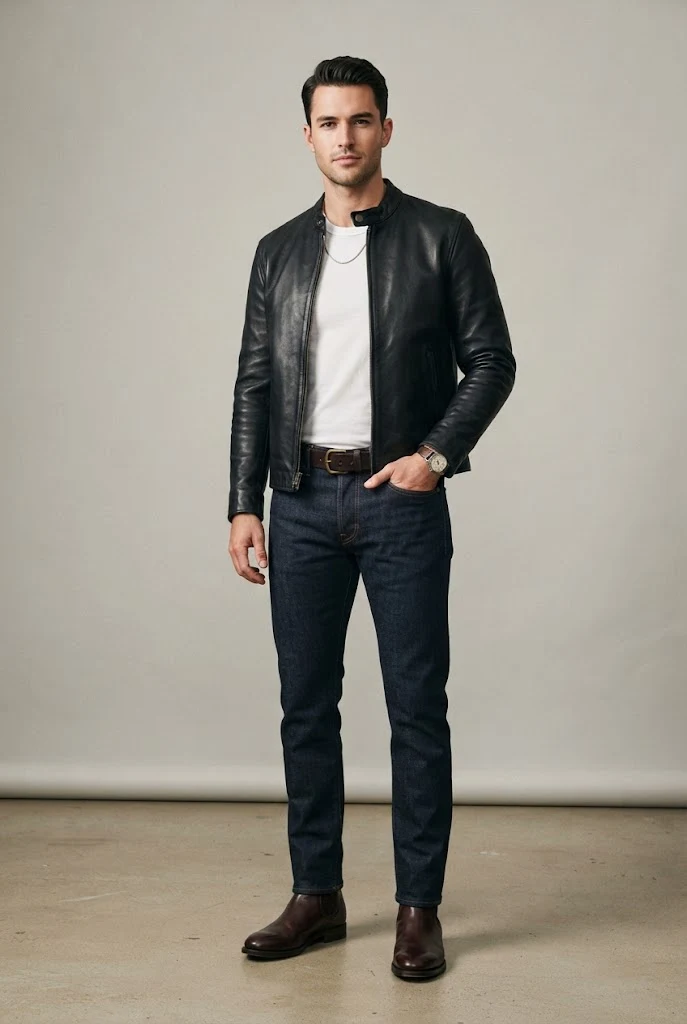
19. The Classic Biker: Cafe Racer Jacket, Plain Tee, and Slim Jeans
Unlike the asymmetric biker jacket, the minimalist cafe racer jacket can sometimes look flat or sterile if the leather is too thin or lacks character. Choosing a heavy horsehide or steerhide gives the jacket the rugged weight it needs.
Originating in post-WWII London, cafe racers were British motorcycle enthusiasts who rode stripped-down bikes between highway cafes at breakneck speeds. Their jackets needed to be streamlined, zip-front leather shields that prevented wind drag at high speeds.
- Acquire a minimalist cafe racer leather jacket with a snap-collar band and straight zip; Belstaff or Schott NYC craft legendary cafe racer models.
- Layer a vintage-washed black or white cotton crewneck t-shirt.
- Pair with slim-straight mid-wash jeans and black leather Chelsea or lace-up boots.
- Accessorize with a classic analog wristwatch on a weathered leather strap.
Break in a stiff horsehide cafe racer by wearing it indoors during cooler weather; the leather will conform to your exact shoulder shape over time.
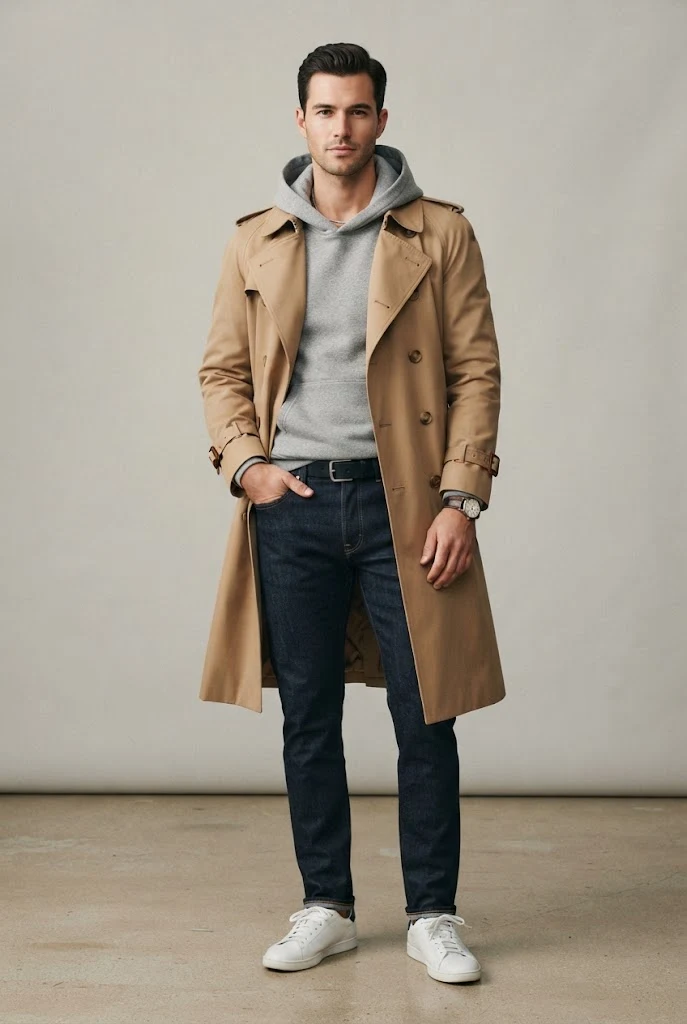
20. The Weekend Duster: Long Trench Coat, Hoodie, and Slim Jeans
Wearing a full-length coat can sometimes feel overly dramatic or theatrical for casual weekend errands. Layering it over a casual cotton hoodie grounds the formality and creates a compelling high-low contrast.
Rooted in military heritage and cinematic trench aesthetics, long outerwear commands immediate presence. Pairing it with casual athletic separates like a fleece hoodie brings the garment into the realm of modern street-smart everyday outfits for men.
- Source a calf-length wool overcoat or classic trench coat in camel or charcoal; Todd Snyder or Mackintosh provide exceptional drape and length.
- Layer a heavyweight fleece hoodie in heather grey or black underneath the coat.
- Pair with slim-fit dark denim or tailored track trousers and clean white leather sneakers.
- Complete the look with a minimalist leather backpack or canvas tote.
Ensure your coat hem falls below your knees to maintain the dramatic, sweeping proportions that make long outerwear look intentional and striking.
FAQ
- What are the best staple pieces to start building everyday outfits for men?
- How can I mix heritage workwear pieces into a modern urban wardrobe?
- Why is fabric weight and texture important when styling everyday outfits for men?
📚 You Might Also Like
- 15 Chunky Bag Crochet Ideas for a Bold, Handmade Look
Chunky bag crochet projects are the perfect way to turn thick yarn into a stylish, useful accessory…
The Bottom Line
Mastering everyday outfits for men comes down to understanding that style is not about accumulating endless micro-trends, but about investing in reliable, well-crafted pieces that tell a story. If you are looking for realistic starting points based on what you likely already own, a crisp white tee paired with dark denim or an Oxford button-down with chinos form the easiest entry points into effortless daily dressing.
To build out your wardrobe effectively, follow a simple three-tier sourcing framework: scout thrift and vintage stores for broken-in character pieces with authentic history; invest in heritage brands (like Schott, Barbour, or Red Wing) for durable, lifelong quality; and utilize mainstream retailers with heritage-inspired lines for accessible entry points. Ultimately, intentionality—knowing why a garment works, how its fabric behaves, and how its silhouette flatters your frame—is what separates a genuinely great version of men’s style from a temporary costume-like imitation. Dress with purpose, prioritize quality over quantity, and let your wardrobe work for you every single day.
🛍️ Shop the Look — Everyday Outfits for Men
Our handpicked Amazon picks curated specifically for Everyday Outfits for Men:
As an Amazon Associate I earn from qualifying purchases.