
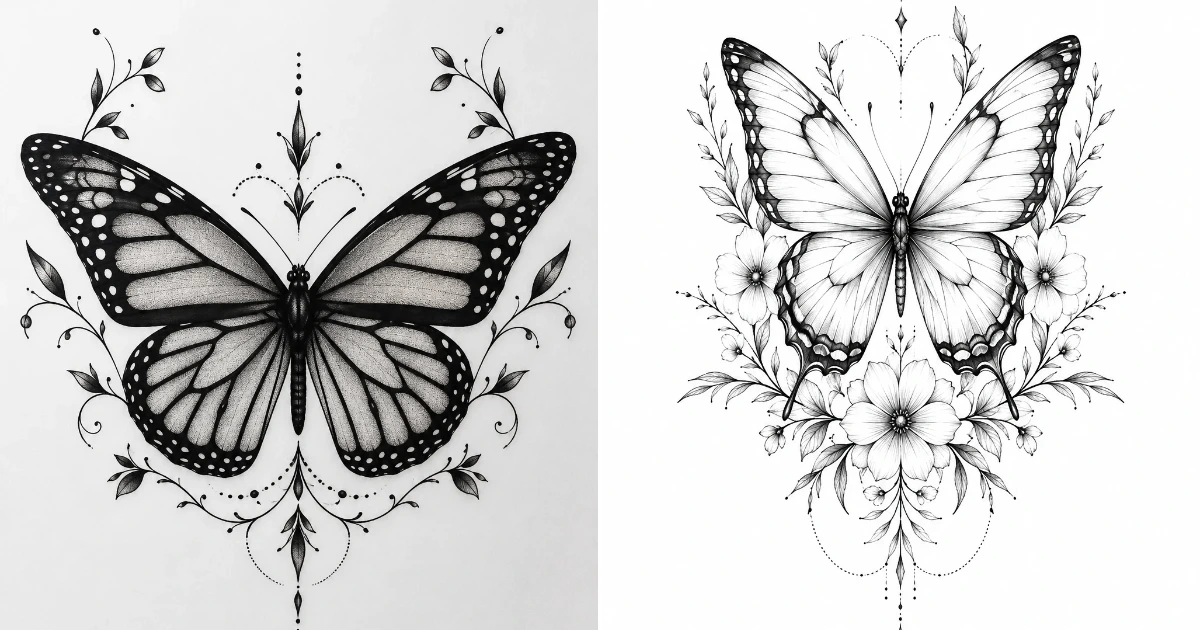
15 Butterfly Chest Tattoo Ideas That Look Stunning in 2026
A butterfly chest tattoo is a bold way to turn the center of your chest into a piece of personal artwork without making the design feel predictable. Butterfly tattoos work especially well across the chest because their wings naturally mirror the body’s shape, creating symmetry while leaving plenty of room for creative details, according to Tattoodo. From delicate blackwork to jewel-toned monarch wings, there is a style for almost every personality. You can go tiny and understated near the collarbone or choose a dramatic centerpiece that stretches across the sternum. Current tattoo trends are leaning toward fine-line detailing, realistic wings, ornamental accents, and carefully limited color palettes. Before booking, discuss placement, sizing, line weight, and healing with an experienced tattoo artist.
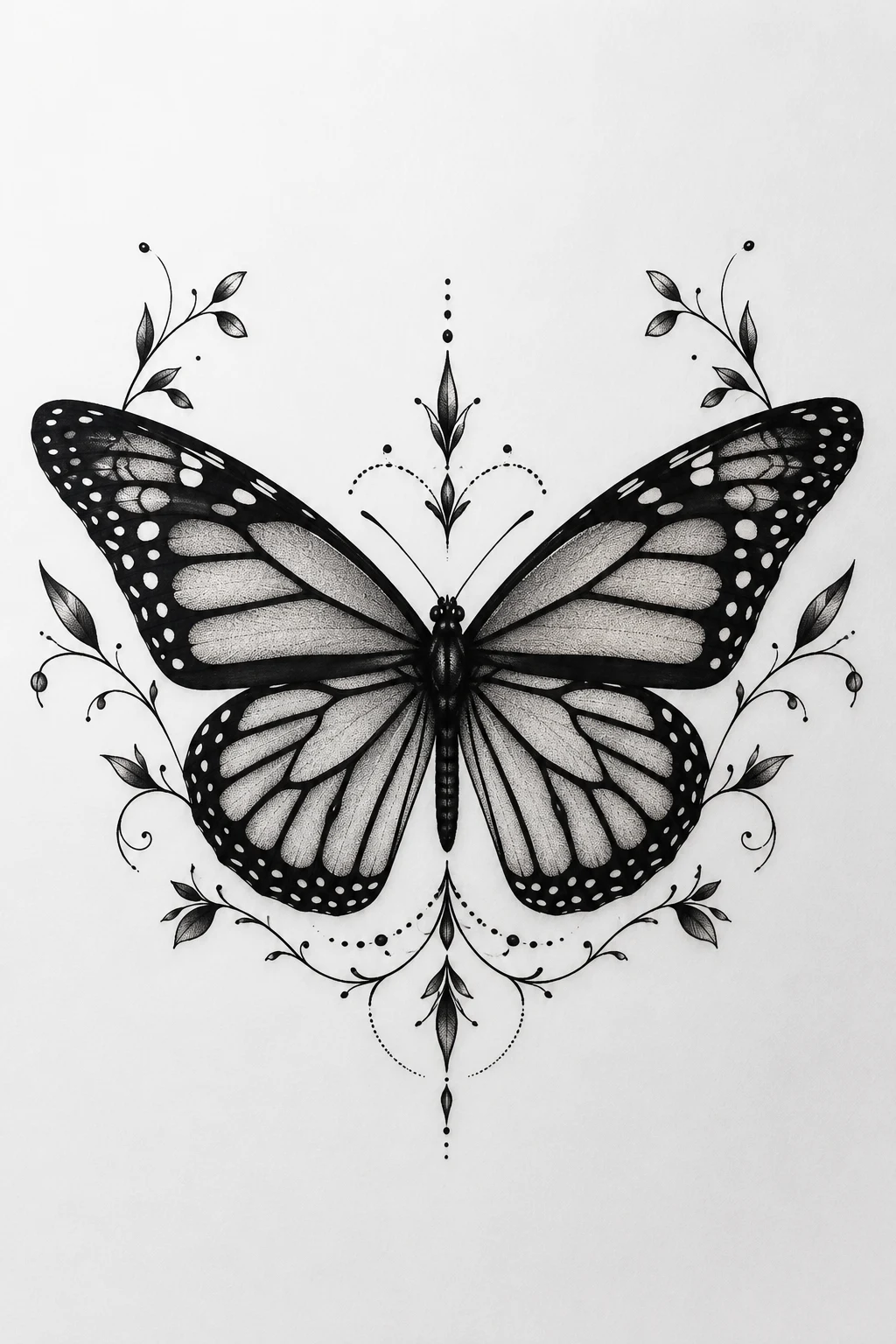
1. Blackwork Monarch Butterfly Chest Tattoo
A blackwork monarch makes a serious statement without needing a single drop of color. Picture broad wings filled with crisp black ink, geometric sections, and tiny negative-space details that keep the design readable from across the room, according to Byrdie Tattoos.
This style works beautifully over the sternum or slightly above it, especially when the wings follow the natural curve of the pectoral area. Ask your artist to vary line thickness rather than filling every section completely.
The key to this look is high-contrast blackwork that gives the monarch recognizable wing structure without turning the center of the design into one solid black shape.
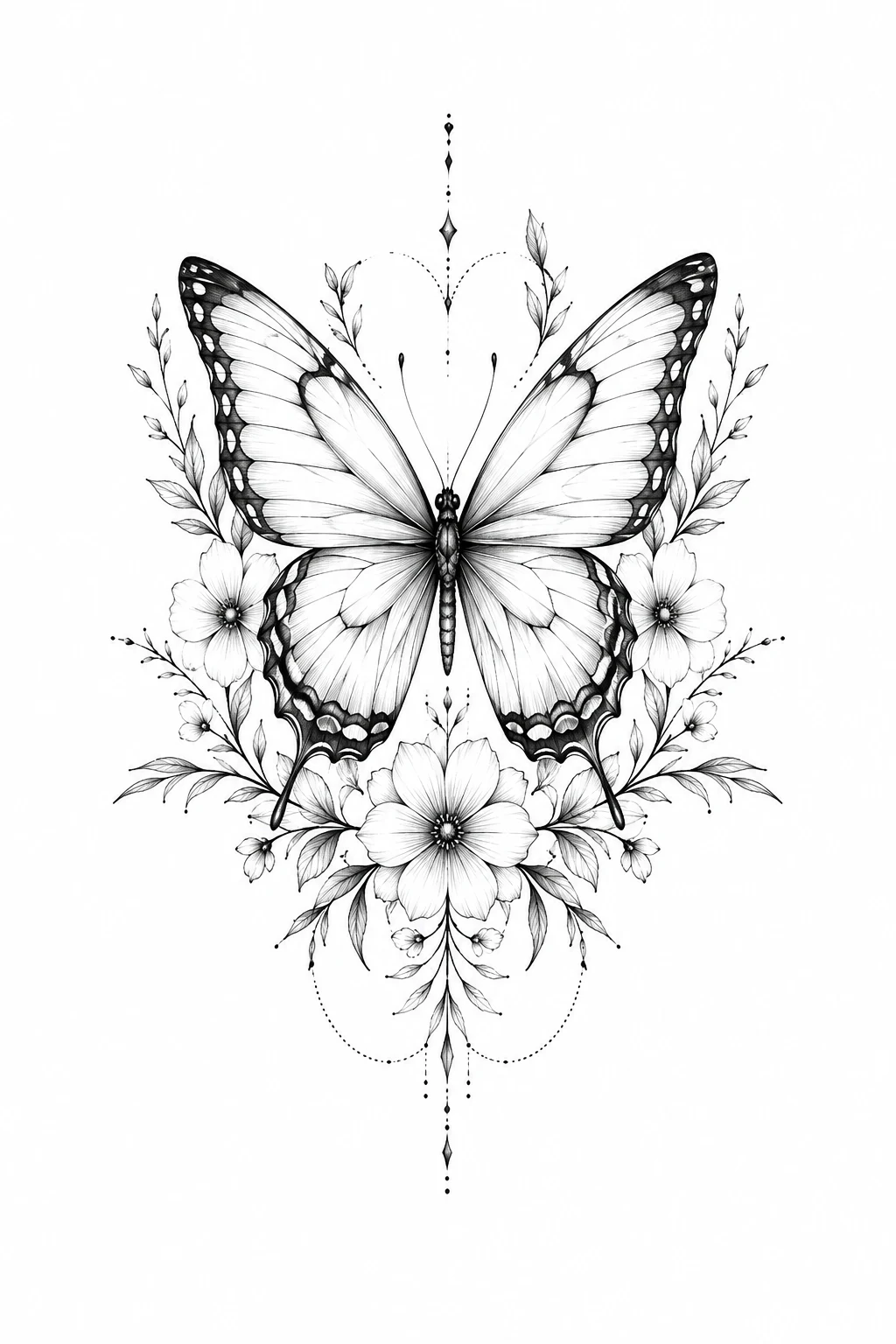
2. Fine-Line Butterfly With Floral Details
If you want something delicate, combine a fine-line butterfly with miniature roses, lavender stems, or baby’s-breath flowers. Thin outlines create an airy appearance, while tiny botanical details give the tattoo a more personalized feel.
A black-and-gray palette is ideal for this approach. A professional artist can use subtle fine-line needles and controlled shading to keep the flowers distinct as the tattoo ages.
The key to this technique is leaving enough negative space between the butterfly and flowers so every element remains legible.
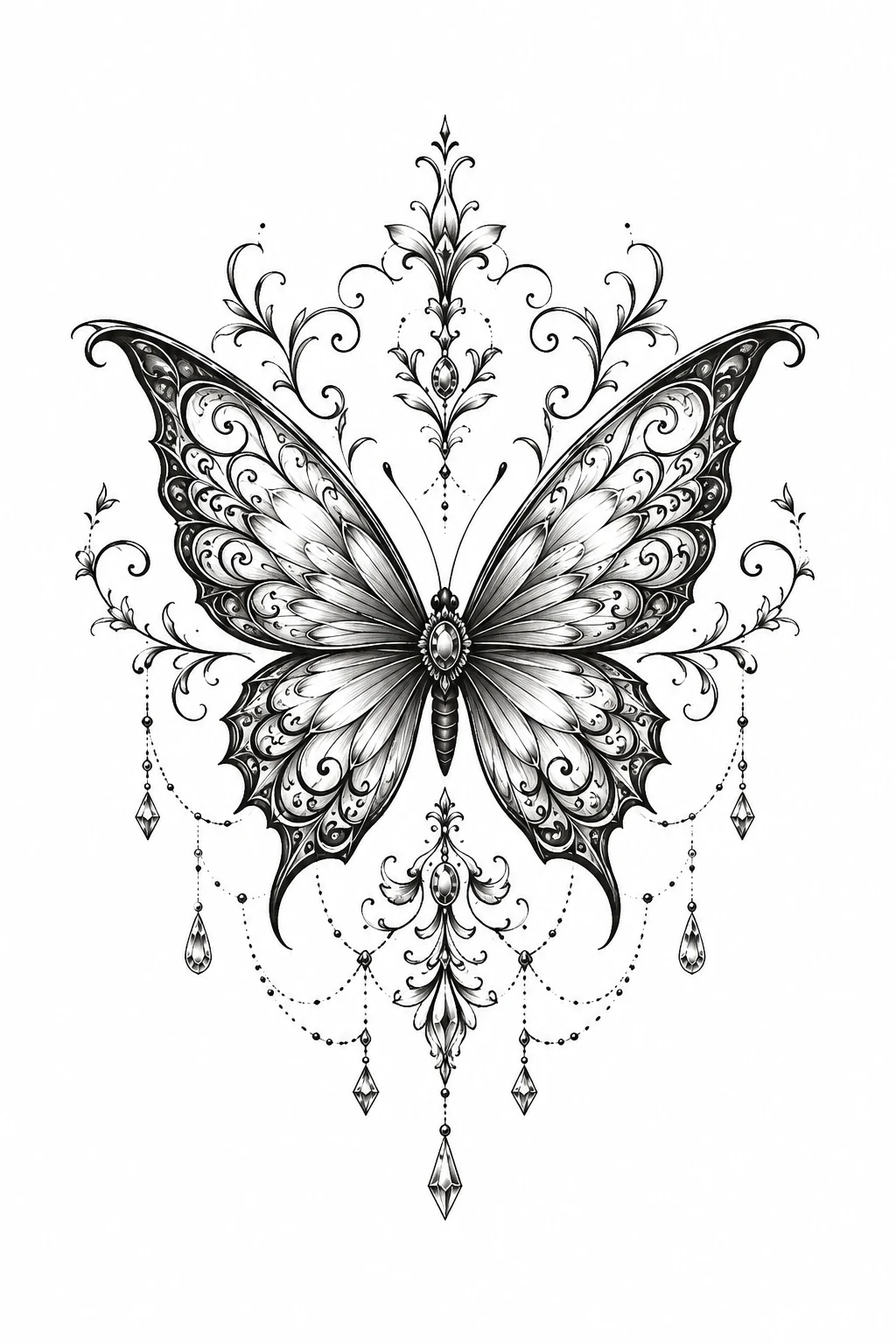
3. Ornamental Butterfly Chest Tattoo
An ornamental butterfly adds jewelry-inspired decoration to a classic butterfly silhouette. Think symmetrical wings paired with filigree, dots, teardrop shapes, and delicate mandala-inspired patterns.
This butterfly chest tattoo style is particularly striking when centered directly over the sternum. Black ink with soft gray shading creates a sophisticated effect, while tiny white highlights can emphasize the ornamental geometry.
The key to this look is symmetry: the left and right sides should feel intentionally balanced without looking mechanically identical.
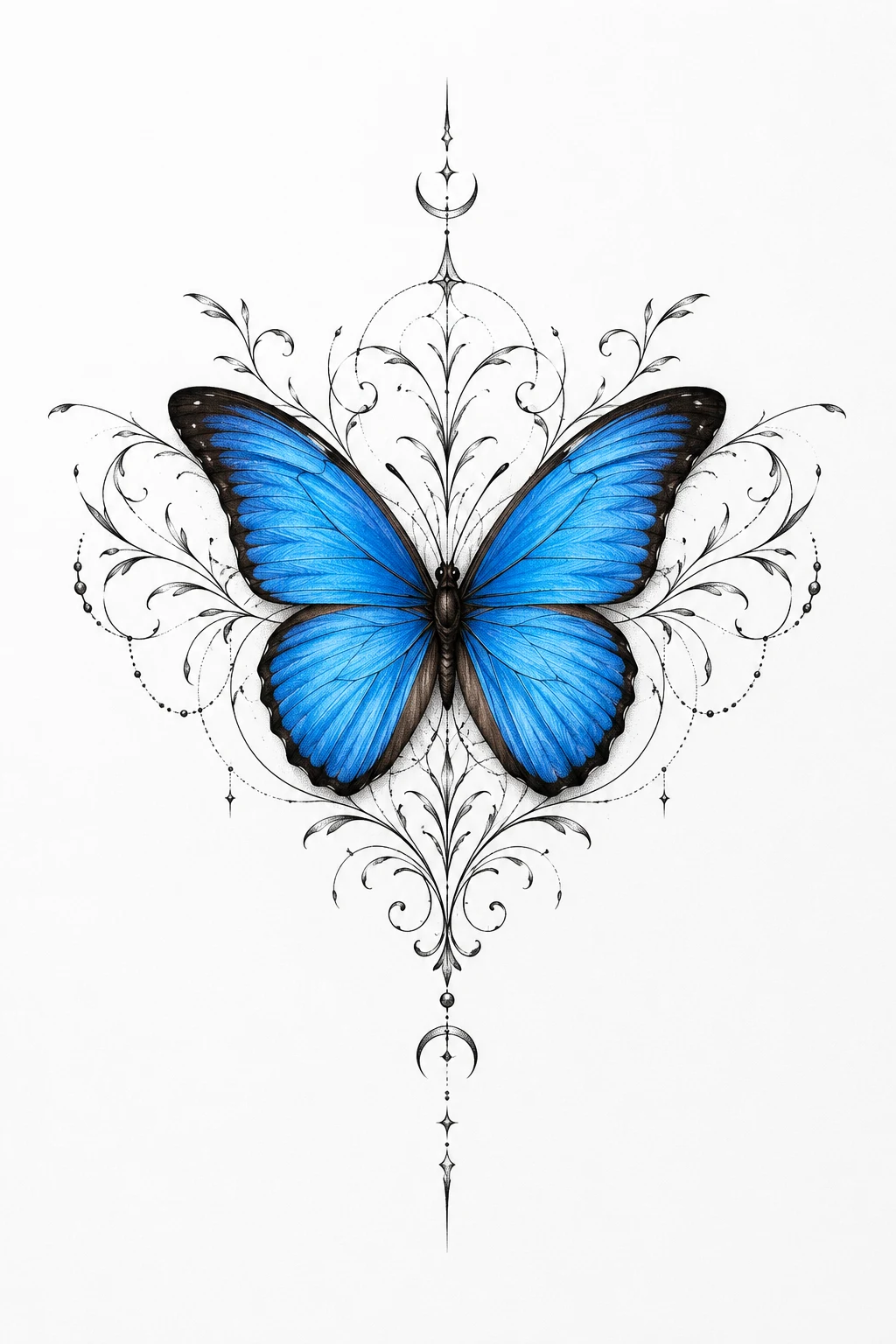
4. Blue Morpho Butterfly
Want color without creating a rainbow on your chest? A blue morpho is an excellent choice. Its electric blue wings can transition from deep navy at the edges to vivid cobalt toward the center.
Artists can use blue tattoo pigments with black outlines to create definition while preserving the luminous appearance associated with morpho wings. This works particularly well during summer when colorful tattoos tend to stand out against lighter clothing.
The key to this look is using blue strategically, with darker outlines and controlled gradients preventing the wings from becoming visually flat.
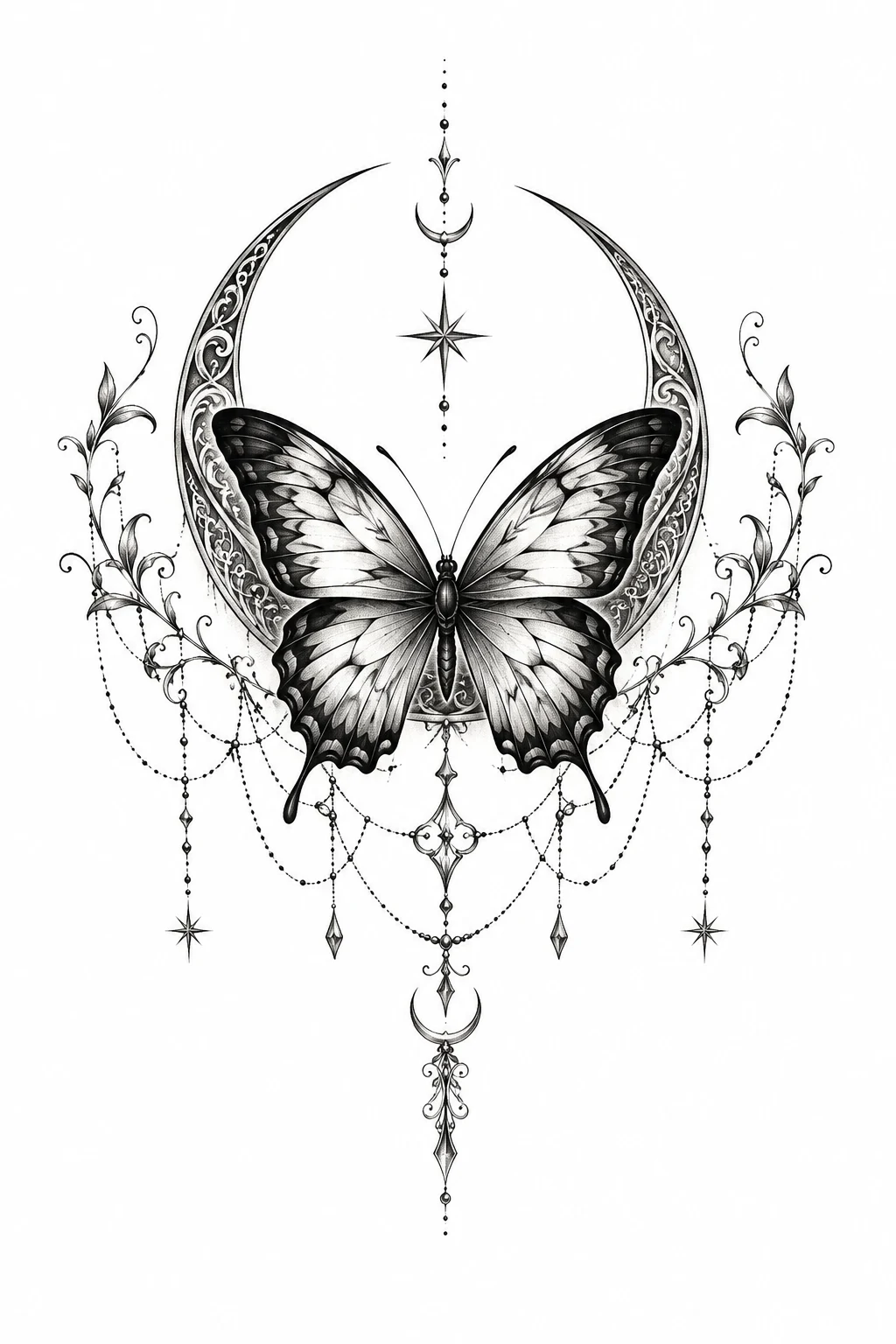
5. Butterfly and Crescent Moon
Pairing a butterfly with a crescent moon creates a celestial composition that feels elegant rather than overly complicated. Position the moon above the butterfly, or tuck a tiny crescent between the wings for a more integrated design.
Silver-gray shading, black ink, and a few tiny stars can create a nighttime palette. If you want color, deep violet or midnight blue adds dimension without overwhelming the butterfly.
The key to this technique is hierarchy: make the butterfly the hero and keep the moon and stars small enough to support it.
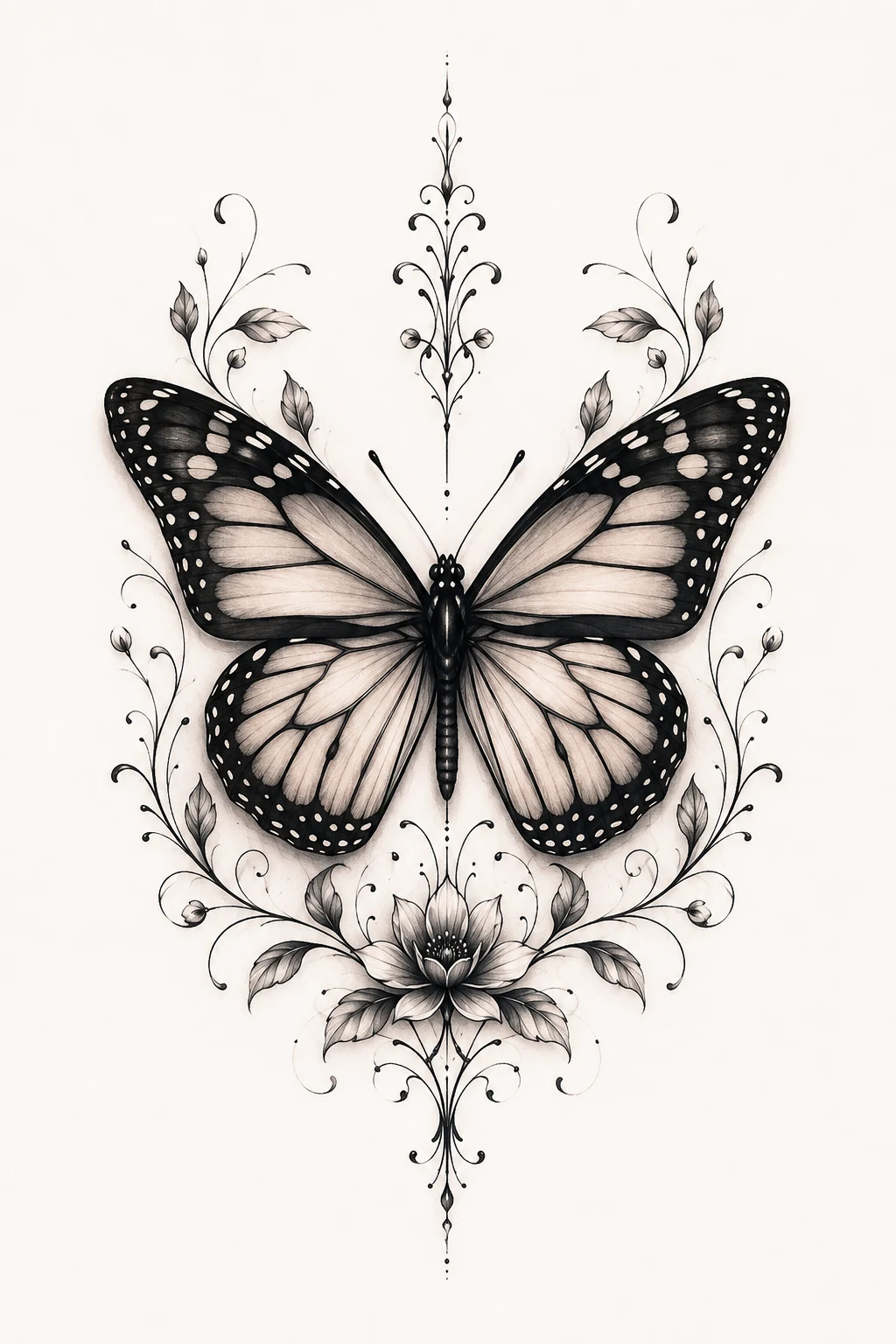
6. Realistic Monarch With Soft Shading
For maximum realism, choose a monarch butterfly with carefully rendered veins, layered wings, and subtle orange gradients. A skilled realism artist can make the wings appear almost three-dimensional.
The center chest provides enough space for realistic detailing, but sizing matters. Going too small can cause intricate wing patterns to blur together over time. Ask your artist about a size that allows the details to breathe.
The key to this look is realistic shading that follows the actual structure of butterfly wings rather than relying on random gradients.
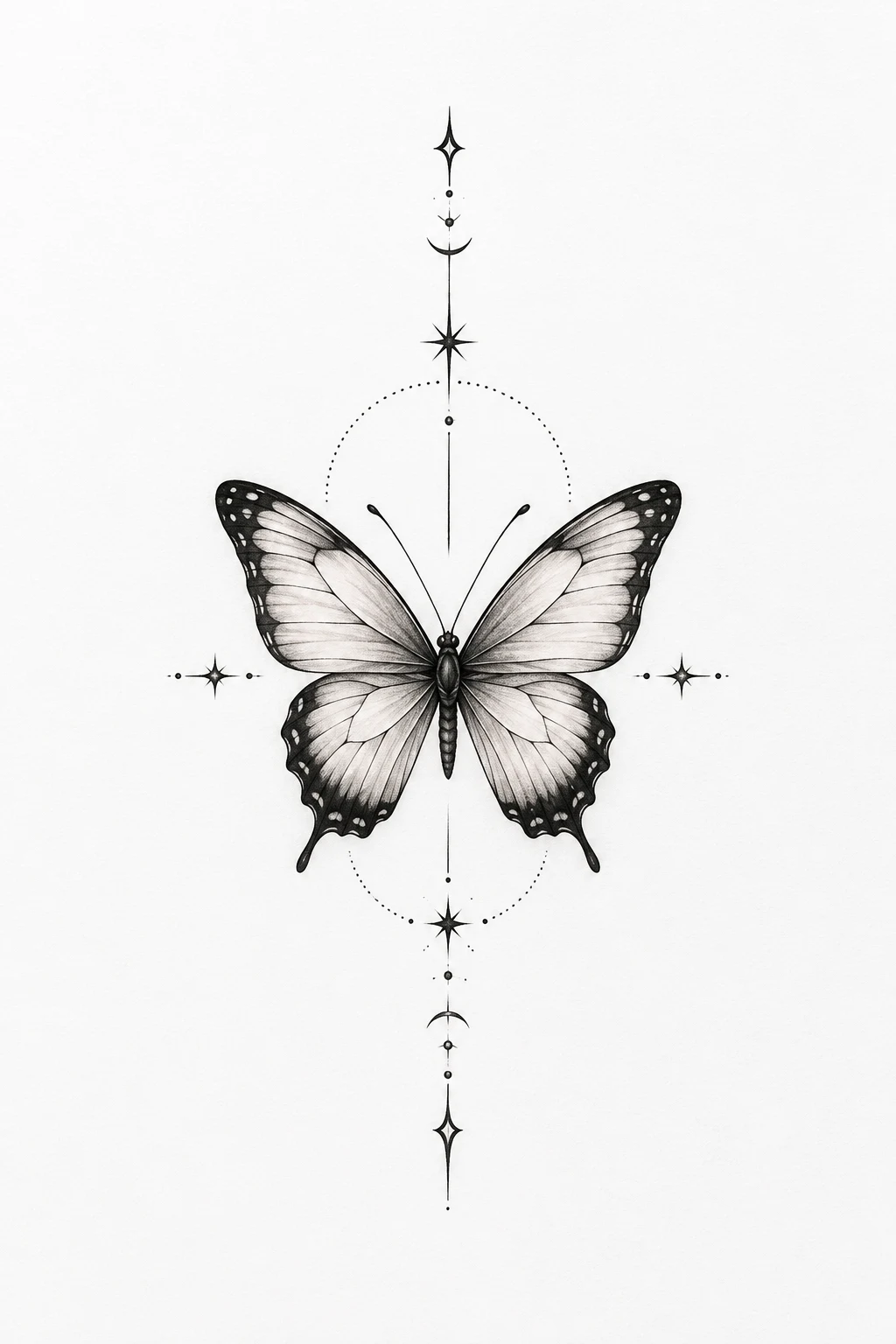
7. Minimalist Butterfly Sternum Tattoo
Minimalism proves that a chest tattoo doesn’t have to dominate the entire area. A tiny symmetrical butterfly positioned directly along the sternum can look understated while still feeling intentional.
Use a simple black outline, two or three interior lines, and plenty of untouched skin. This design suits people who prefer discreet tattoos that can disappear beneath a button-down shirt.
The key to this look is simplicity—every line needs a purpose because there is nowhere for unnecessary detail to hide.
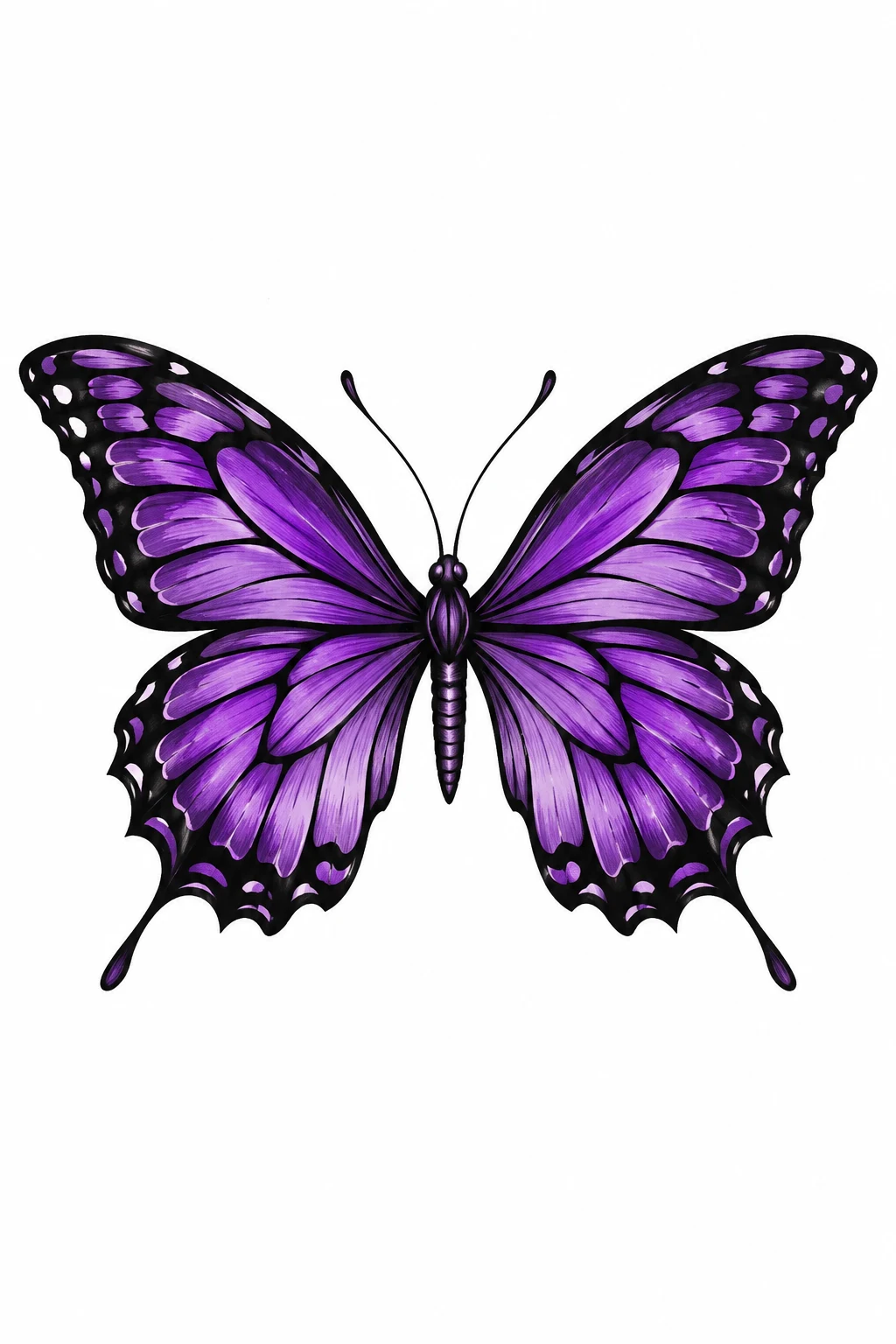
8. Purple Butterfly With Black Outline
Purple gives a butterfly chest tattoo a dramatic twist without going overboard. Combine violet, plum, and soft lavender inside clearly defined black wing outlines for a rich jewel-tone effect.
This palette works particularly well with symmetrical designs because the saturated color immediately draws attention toward the center of the chest. A small amount of pink can create a softer transition between shades.
The key to this look is using layered purple pigments rather than one flat color, creating depth while keeping the butterfly recognizable.
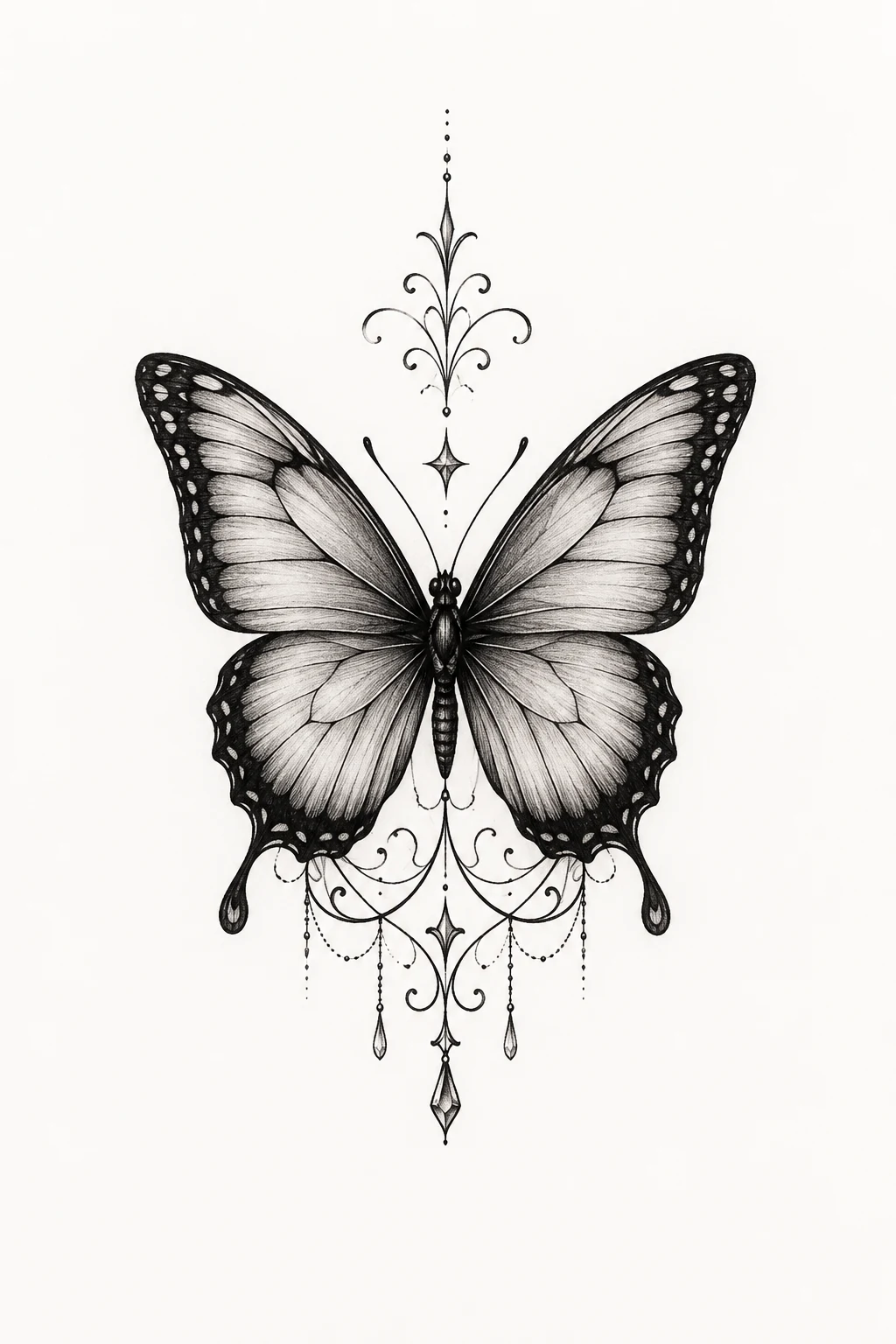
9. Butterfly With Name or Initials
A butterfly can become deeply personal when you incorporate a name, initials, or meaningful date. Instead of placing text randomly across the wings, consider a small inscription beneath the butterfly or subtly integrated into the body.
Choose a clean fine-line script and keep the lettering large enough to remain readable. Your artist should also explain how much spacing the text needs to age well.
The key to this technique is treating the lettering as part of the composition, not an afterthought added underneath the finished butterfly.
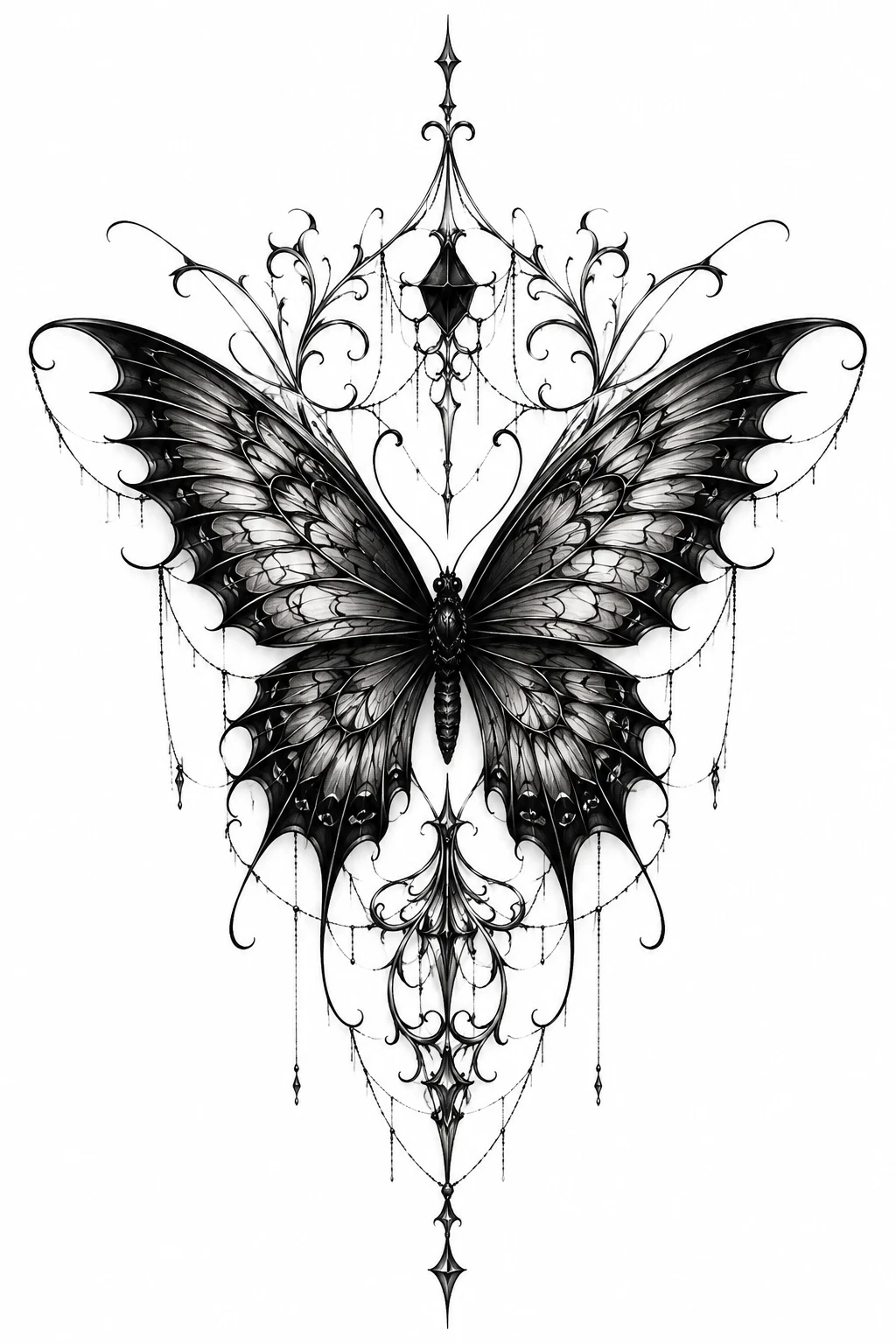
10. Gothic Butterfly Chest Tattoo
For a darker aesthetic, combine a butterfly with gothic elements such as thorny roses, black petals, ornamental crosses, or pointed wing shapes. Black-and-gray shading makes the design especially dramatic.
A gothic butterfly can stretch from one side of the chest toward the sternum or remain centered with decorative elements extending downward. This is a great opportunity to use black-and-gray realism for texture.
The key to this look is balancing dark elements with negative space so the tattoo feels gothic rather than simply overfilled.
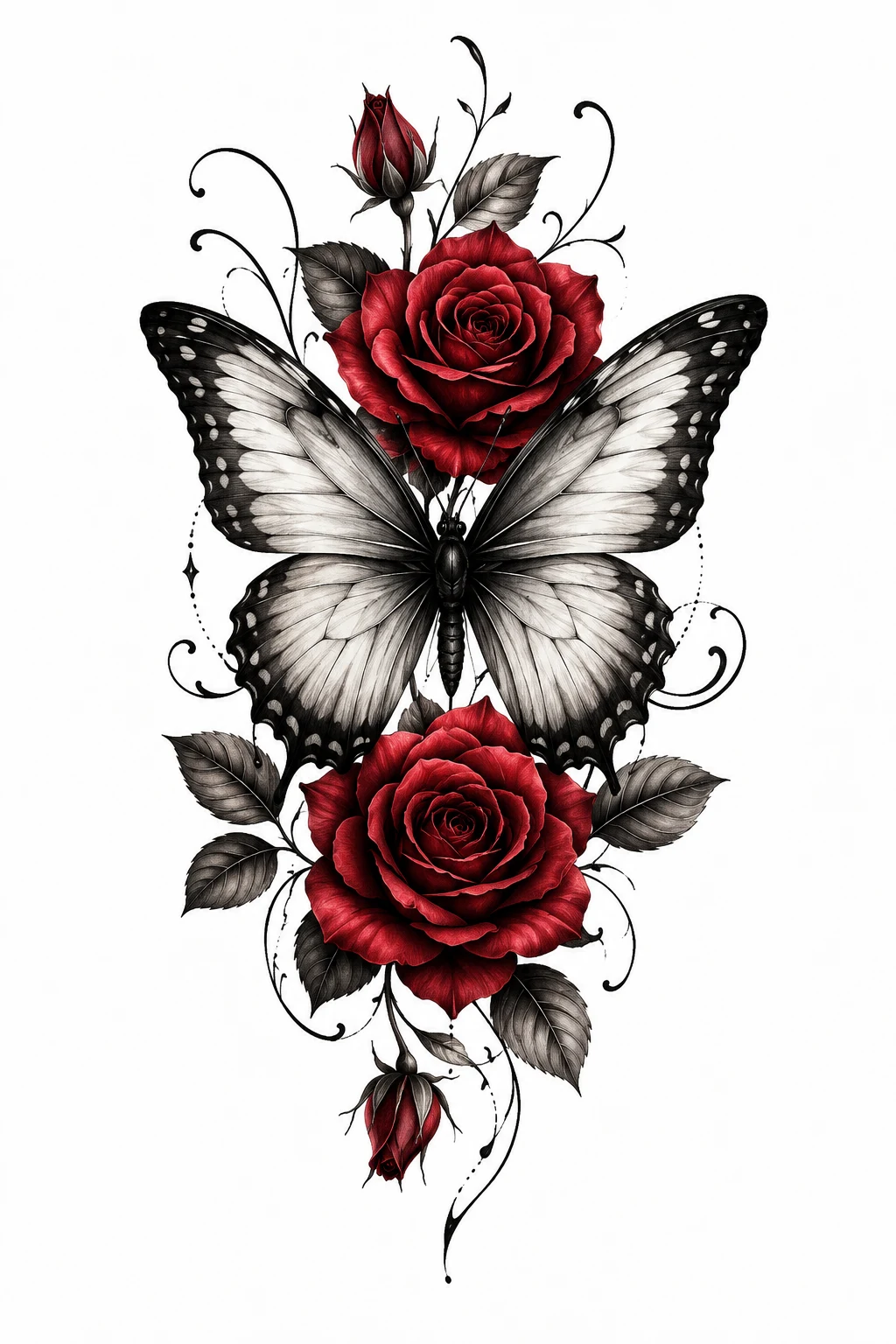
11. Butterfly With Red Roses
Red roses and butterflies create a classic tattoo pairing with plenty of visual contrast. Use deep crimson petals around a black-and-orange butterfly, or make the butterfly monochrome and let the roses provide the color.
For a chest placement, roses can frame the wings while leaves create a natural transition toward the shoulders. A professional artist can use red and black tattoo ink to establish strong visual depth.
The key to this look is controlling the color ratio: saturated red should complement the butterfly instead of competing with it.
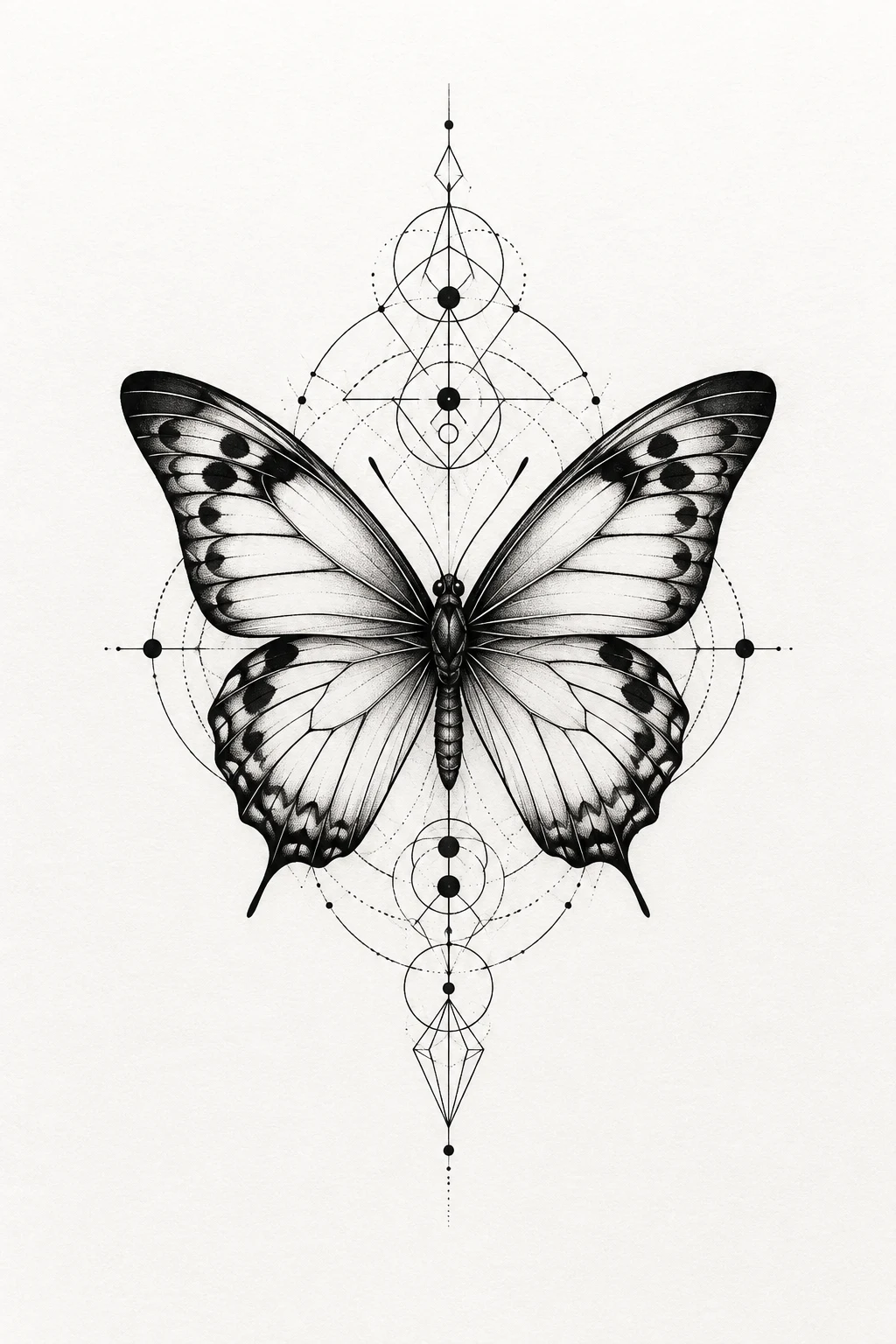
12. Geometric Butterfly
A geometric butterfly combines organic wings with precise triangles, circles, lines, and polygonal sections. The contrast between natural anatomy and mathematical shapes gives the design a contemporary feel.
Black ink is the safest starting point, although subtle blue or gray accents can make certain geometric sections pop. Use a tattoo artist experienced in geometric linework, because uneven spacing becomes obvious in symmetrical designs.
The key to this technique is precision: clean spacing and consistent line weight make the geometry look deliberate.
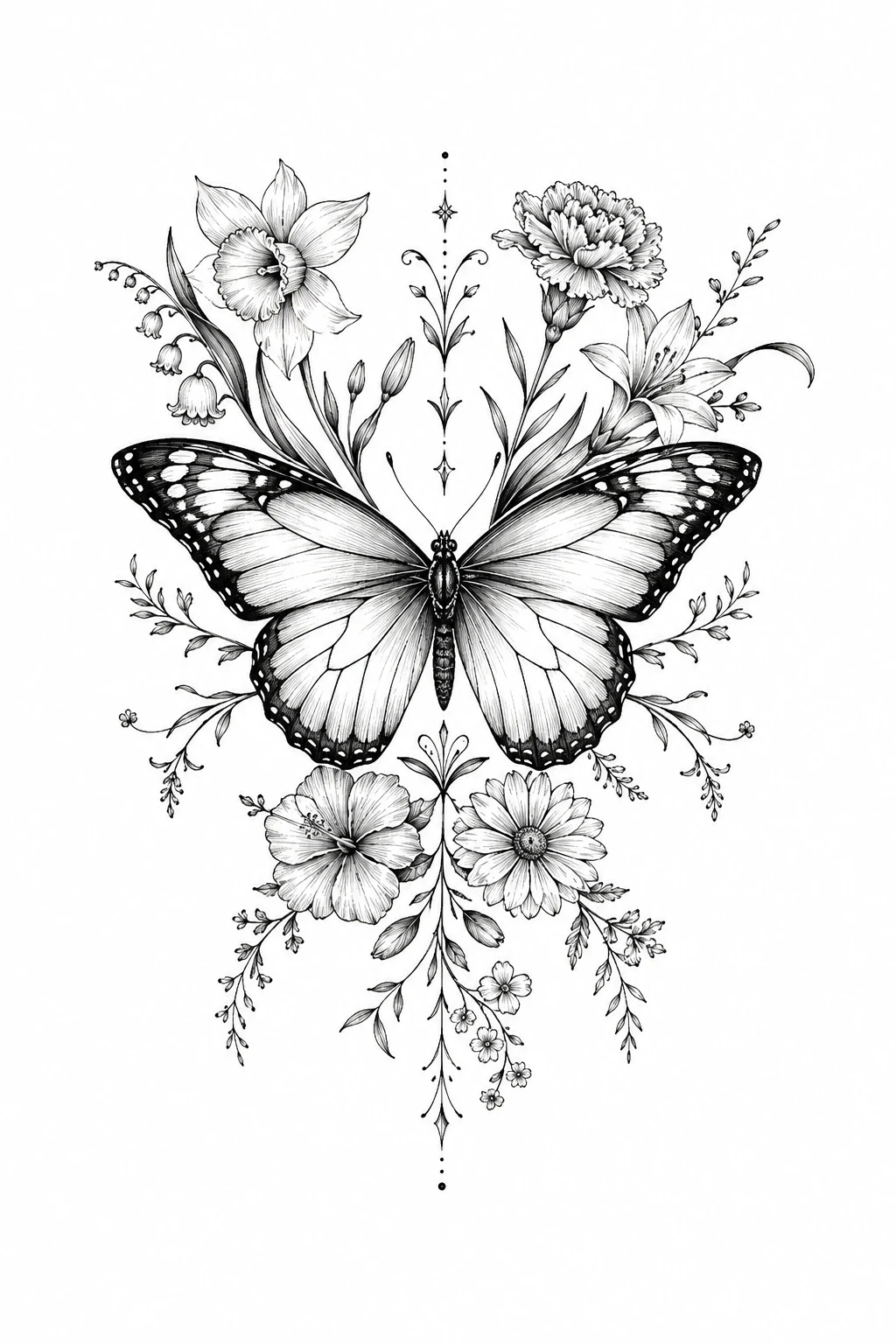
13. Butterfly Chest Tattoo With Birth Flowers
Personalize your butterfly by adding flowers associated with a birth month. For example, January can feature carnations, April can feature daisies, and June can incorporate roses.
This approach gives you a meaningful design without relying on generic symbolism. Keep the butterfly central and use the flowers as framing elements across the chest.
The key to this look is botanical accuracy, so choose an artist who can reproduce the distinctive shapes of your selected birth flowers.
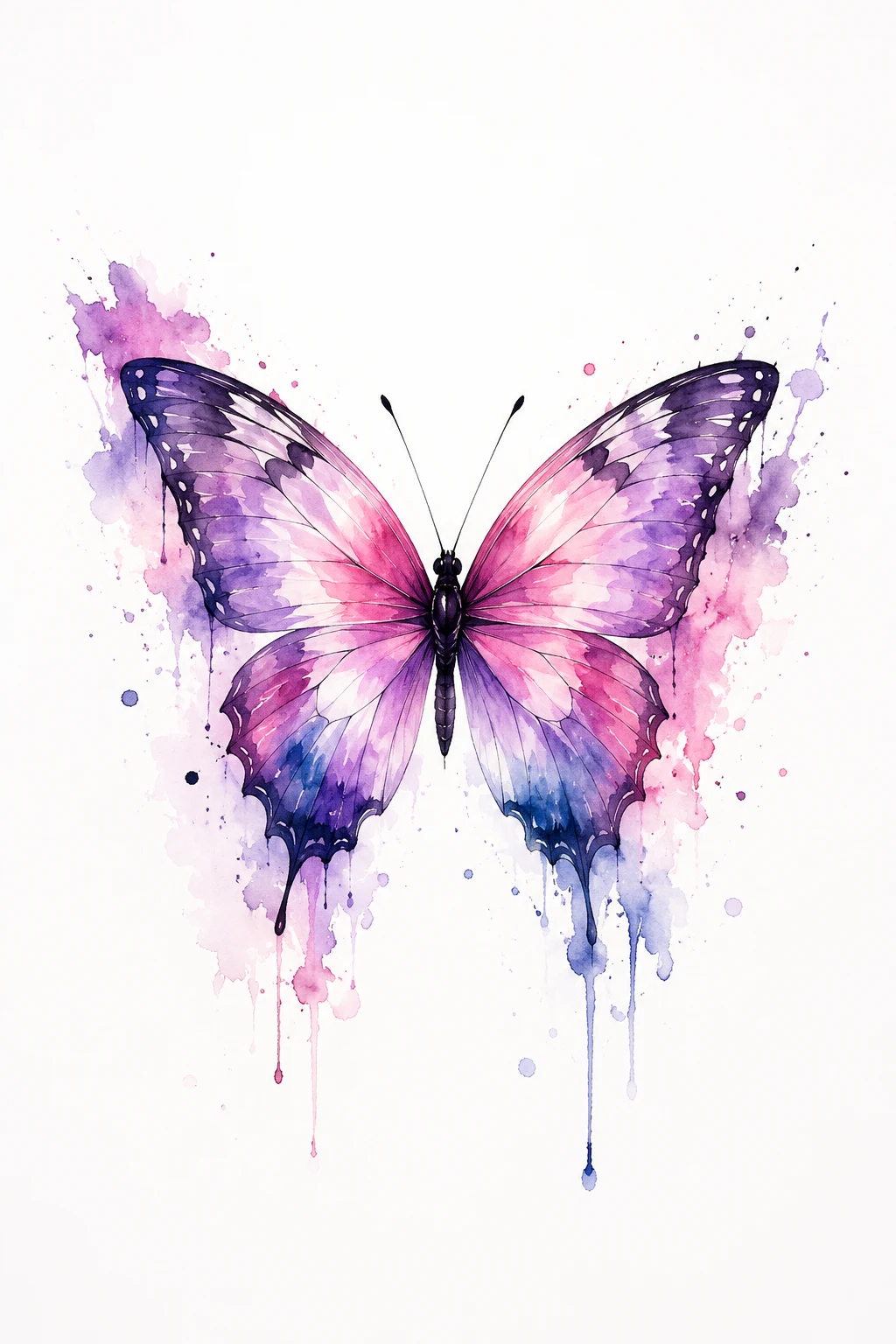
14. Watercolor Butterfly
A watercolor butterfly uses loose color transitions, soft edges, and splashes of pigment to mimic the appearance of painted artwork. Teal, magenta, purple, and blue can create an especially vibrant combination.
Because watercolor-style tattoos depend heavily on color placement, choose an artist with a strong portfolio in this specific technique. A clean black outline can also help preserve definition.
The key to this look is controlled color blending rather than random splashes; the butterfly should still have a recognizable silhouette.
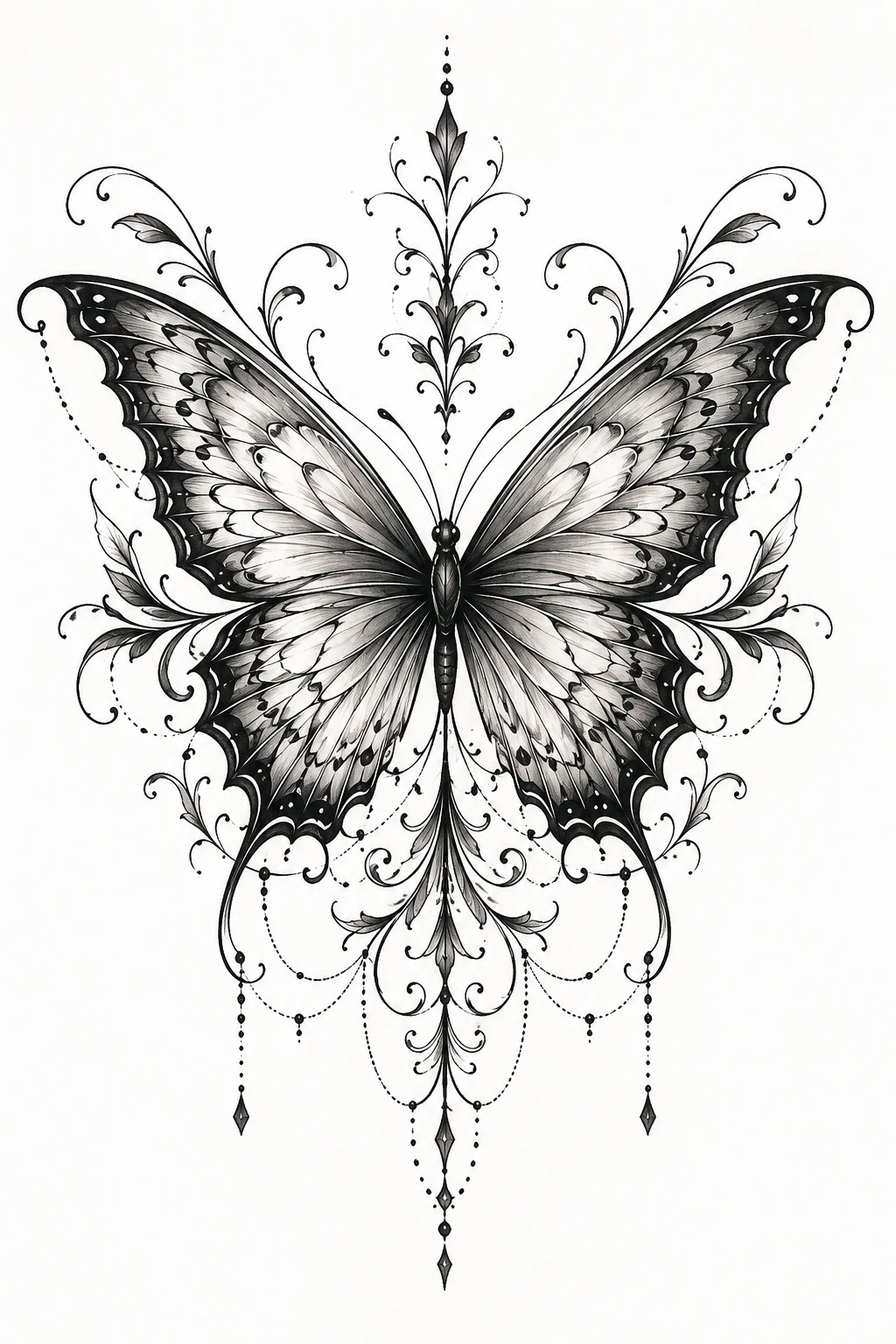
15. Large Symmetrical Butterfly Centerpiece
If you want the tattoo to become the main visual feature of your chest, go large with a symmetrical centerpiece. The wings can extend toward the upper chest while the body follows the sternum, creating a natural architectural frame.
You can combine several techniques here: blackwork outlines, realistic shading, ornamental details, and restrained color. This is one of the strongest options for someone who wants a statement tattoo rather than a small accent.
The key to this look is professional placement planning—your artist should stencil the design on your body first and adjust the wings to follow your natural proportions.
FAQ
What is the best placement for a butterfly chest tattoo?
The sternum is one of the most popular placements because the butterfly’s natural symmetry works beautifully with the center of the chest. Larger designs can extend toward the collarbones or upper pectoral area.
How painful is a butterfly chest tattoo?
Chest tattoos can feel more intense around the sternum and areas with less cushioning. Pain varies considerably, so discuss breaks, positioning, and session length with your tattoo artist before starting.
Why choose a butterfly for a chest tattoo?
Butterflies offer natural symmetry, countless color possibilities, and flexible sizing. Their wings can also incorporate flowers, moons, geometric patterns, names, or ornamental details without making the composition feel forced.
📚 You Might Also Like
- Butterfly remembrance tattoo: 12 Stunning Tattoo Ideas
15 Butterfly Remembrance Tattoo Ideas A butterfly remembrance tattoo is a tattoo that combines butte…
- Butterfly effect tattoo: 15 Beautiful Tattoo Ideas
15 Butterfly Effect Tattoo Ideas That Turn Small Details Into Stunning Ink Butterfly effect tattoo d…
- Floral butterfly tattoo design: 15 Stunning Tattoo
15 Floral Butterfly Tattoo Design Ideas That Feel Personal, Feminine, and Fresh A floral butterfly t…
- Flower and butterfly tattoo: 16 Best Tattoo Ideas
16 Flower and Butterfly Tattoo Ideas That Feel Fresh and Personal A flower and butterfly tattoo comb…
- Gothic butterfly tattoo: 15 Beautiful Tattoo Ideas
15 Gothic Butterfly Tattoo Ideas With Dark, Dramatic Style A gothic butterfly tattoo combines the de…
The Bottom Line
A butterfly chest tattoo gives you plenty of creative territory, whether you prefer a tiny minimalist outline or an elaborate centerpiece covering the sternum. Fine-line butterflies suit understated styles, while monarchs, blue morphos, gothic designs, and geometric patterns offer more visual impact. Before booking, prioritize an experienced artist, especially for symmetry, realism, lettering, or saturated color. A useful expert tip is to judge the design on a stencil first rather than falling in love with it on a screen. Your chest has curves, movement, and proportions that digital mockups cannot fully predict. Choose the artwork that fits your anatomy—not just your Pinterest board.
🛍️ Shop the Look — butterfly chest tattoo
Our handpicked Amazon picks curated specifically for butterfly chest tattoo:
As an Amazon Associate I earn from qualifying purchases.