If your handmade wardrobe is craving a cozy new layer, these fifteen fresh crochet ideas sweater projects are exactly what your yarn stash ordered. Crocheted sweaters have moved far beyond basic granny squares into sophisticated, stylish territory, offering endless possibilities for customization. Whether you are an absolute beginner looking for your first chunky pullover challenge or an advanced stitcher ready to tackle intricate lace, this list covers the entire spectrum of modern crochet. Stop scrolling through endless inspiration photos and start hooking your next favorite garment with these unique, trending patterns.

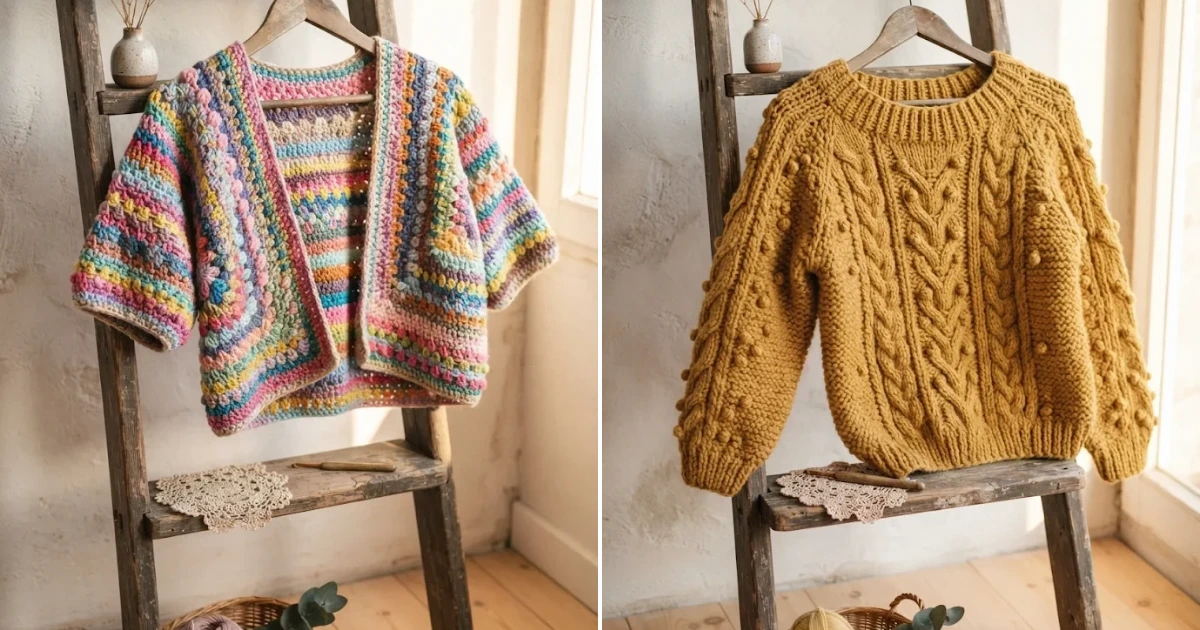
1. The Ultimate Scrap-Yarn Shrug — crochet
A scrap-yarn shrug is a cropped, open-front cardigan constructed from joined motifs, perfect for using up leftover yarn balls in a riot of color. The key to this look/technique is embracing planned pooling or random color placement to create an intentional boho-chic aesthetic.
Gather your assorted worsted weight yarn remnants, a trusty 5mm (H) crochet hook, and your tapestry needle for endless ends. This project is highly portable, making it a great travel make.
A pro tip for joining motifs: try the “join-as-you-go” method instead of sewing them all at the end to save significant finishing time.
2. Chunky Cabled Pullover — crochet
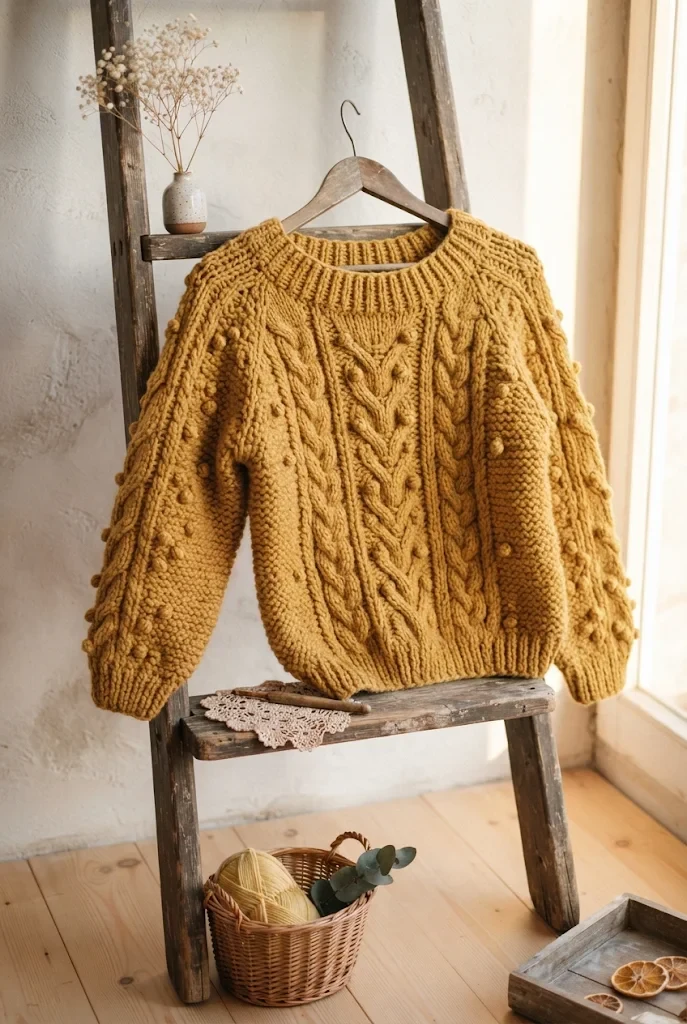
A chunky cabled pullover is a heavy-duty, textured sweater that uses post stitches to mimic traditional knitted cables, providing incredible warmth for winter. The key to this look/technique is mastering front post treble crochet (FPtr) and back post treble crochet (BPTr) stitches around previous posts.
You will need super bulky weight wool-blend yarn—perhaps in a rich mustard yellow—and a large 10mm (N/P) crochet hook to achieve a dense, squishy fabric that still has drape.
For crisp cables, focus on your tension; looser tension can make the cables look muddy rather than defined.
📺 Video tutorial: Chunky Cabled Pullover
3. Oversized Granny Square Cardigan — crochet
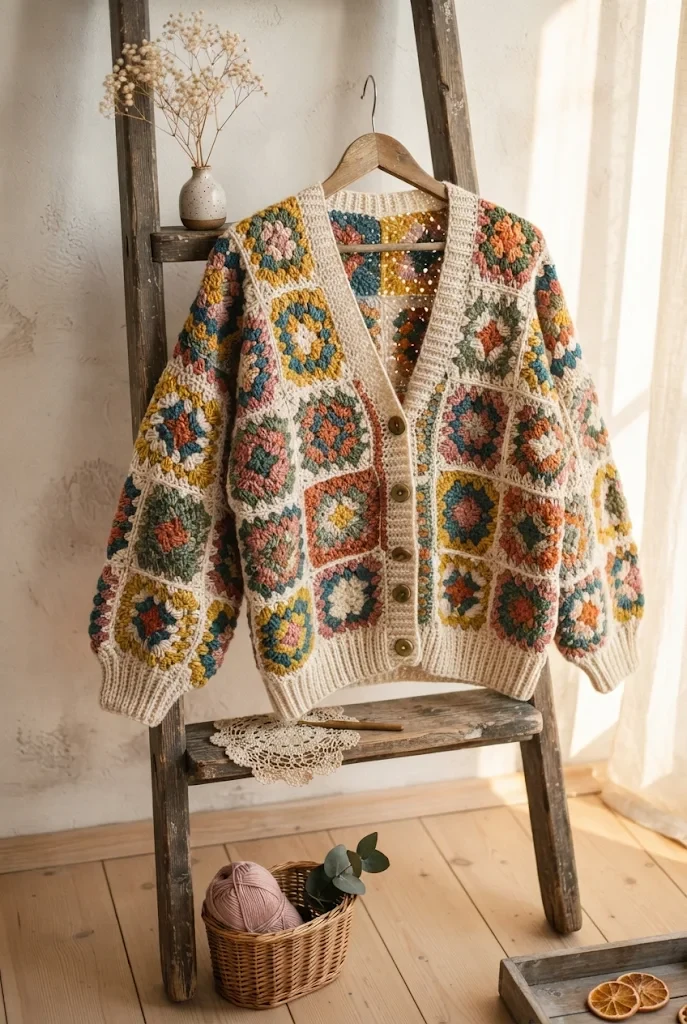
The oversized granny square cardigan is a modern take on a vintage icon, typically made from one massive square for the back and four smaller squares for the fronts and sleeves. The key to this look/technique is accurate seaming to ensure the sleeves don’t drag and the shoulders sit correctly.
Use a muted palette of five complementary colors in DK weight cotton, working with a 4mm (G) hook for a lighter-weight, year-round layering piece.
A fun pro tip: block your individual squares before assembling them. It makes the seaming process infinitely easier and the final garment shape more professional.
📺 Video tutorial: Oversized Granny Square Cardigan
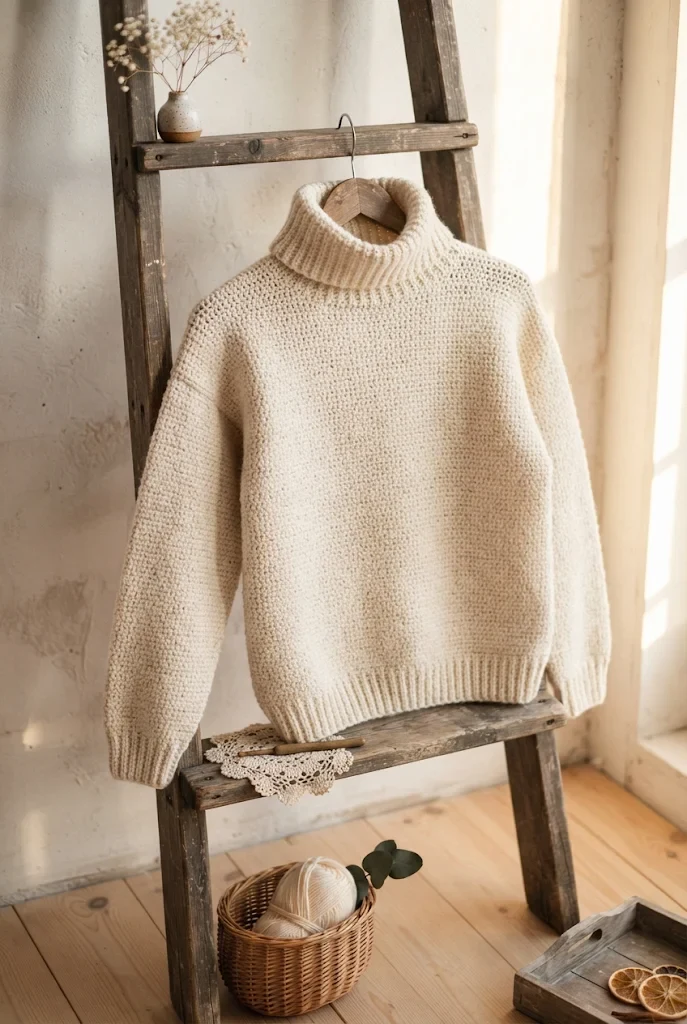
4. Minimalist Turtleneck
A minimalist turtleneck focuses on clean lines, simple single crochet or half double crochet stitches throughout the body, and a cozy, high neck. The key to this look/technique is achieving perfect fit through accurate gauge swatching, as there are no complex stitch patterns to hide mistakes.
Select a luxurious merino wool or alpaca yarn in a sophisticated solid color like charcoal grey. A 3.5mm (E) hook will create a fabric that is warm but not bulky around the neck.
When seaming the turtleneck collar, use a mattress stitch for an invisible seam that stretches with your head.
📺 Video tutorial: Minimalist Turtleneck

5. Lacy Mohair Blouse
A lacy mohair blouse is an airy, delicate pullover worked with fine-weight yarn and larger hooks, creating an ethereal fabric perfect for transitional weather. The key to this look/technique is using a significantly larger hook than recommended on the ball band to create the signature drape.
You’ll need lace-weight mohair-silk blend yarn and a 5mm (H) crochet hook. The fabric is sheer, so plan your layering pieces accordingly.
A major pro tip when working with mohair: it does not frog well. The fibers will lock together, making it nearly impossible to unravel without breaking. Measure twice, cut once.
📺 Video tutorial: Lacy Mohair Blouse
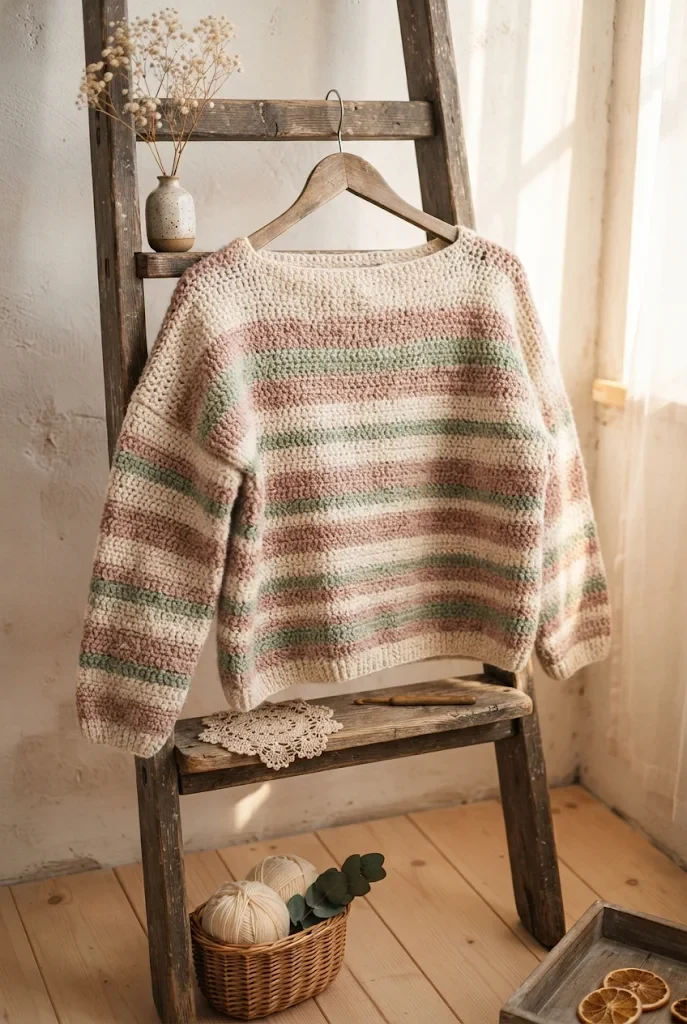
6. Striped Drop-Shoulder Sweater
A striped drop-shoulder sweater is a beginner-friendly design featuring wide, horizontal stripes and a relaxed, boxy fit where the sleeve attaches lower than the natural shoulder. The key to this look/technique is managing clean color changes at the end of rows, especially when carrying unused colors up the side seam.
Choose two high-contrast worsted weight cotton yarns, like cream and navy blue. A 5.5mm (I) hook will work up quickly and produce a comfortable fabric.
To keep color changes invisible on the edge, work the last pull-through of the old color with the new color before turning your work.
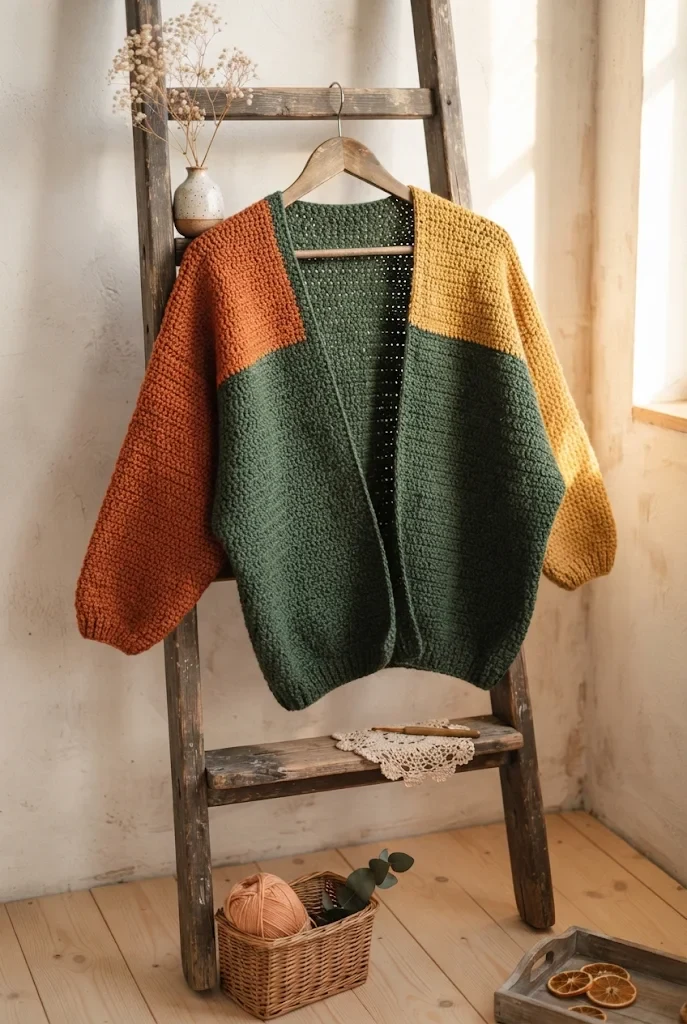
7. Color-Blocked Batwing Cardigan
A color-blocked batwing cardigan is a dramatic, flowing garment with wide, triangular sleeves that taper at the wrist, created without traditional armhole shaping. The key to this look/technique is sewing the side seams and sleeve openings precisely to maintain the intended drape.
Use three tonal shades of bulky-weight acrylic yarn for a cozy, blanket-like feel. A 9mm (M/N) hook is necessary for the required speed and drape.
A helpful hint for this design: try it on before sewing the final seams to ensure the batwing effect hits at the right spot on your torso.
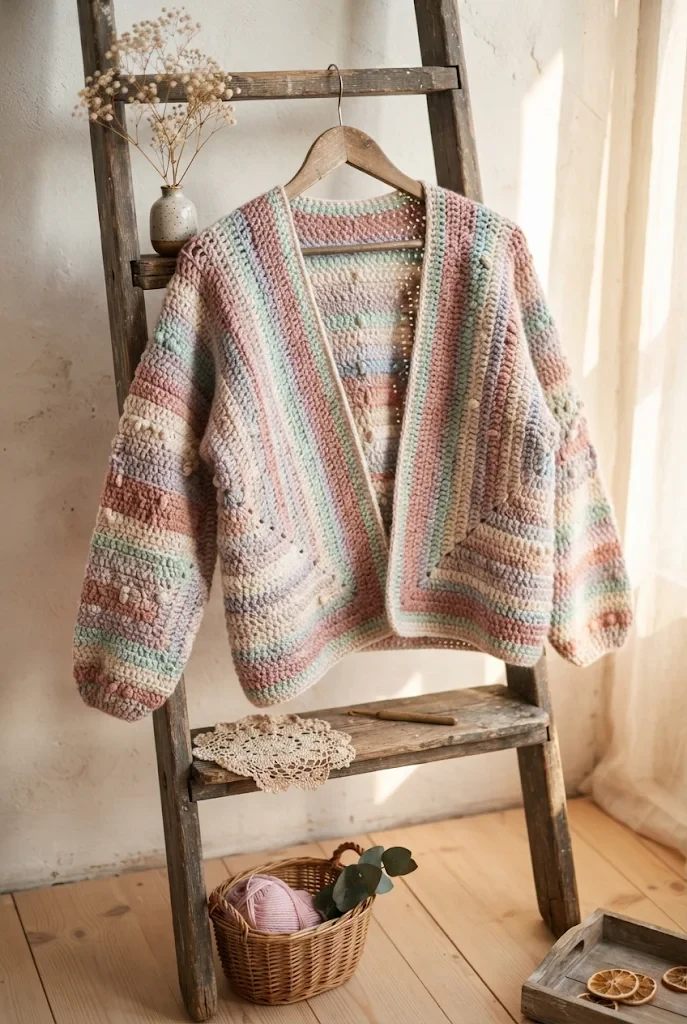
8. Hexagon Cardigan
The viral hexagon cardigan is constructed from two identical large hexagons that are folded and seamed together to instantly form the back, front, and sleeves of a cozy sweater. The key to this look/technique is counting your starting chain and subsequent rows perfectly on both hexagons to ensure sleeve length consistency.
This pattern is fantastic for self-striping variegated yarn; let the yarn do the color work while you focus on the simple double crochet stitches. A 5mm (H) crochet hook is standard.
To achieve the perfect fit, add extra rounds around the neck opening and the bottom hem until it reaches your desired length and size.
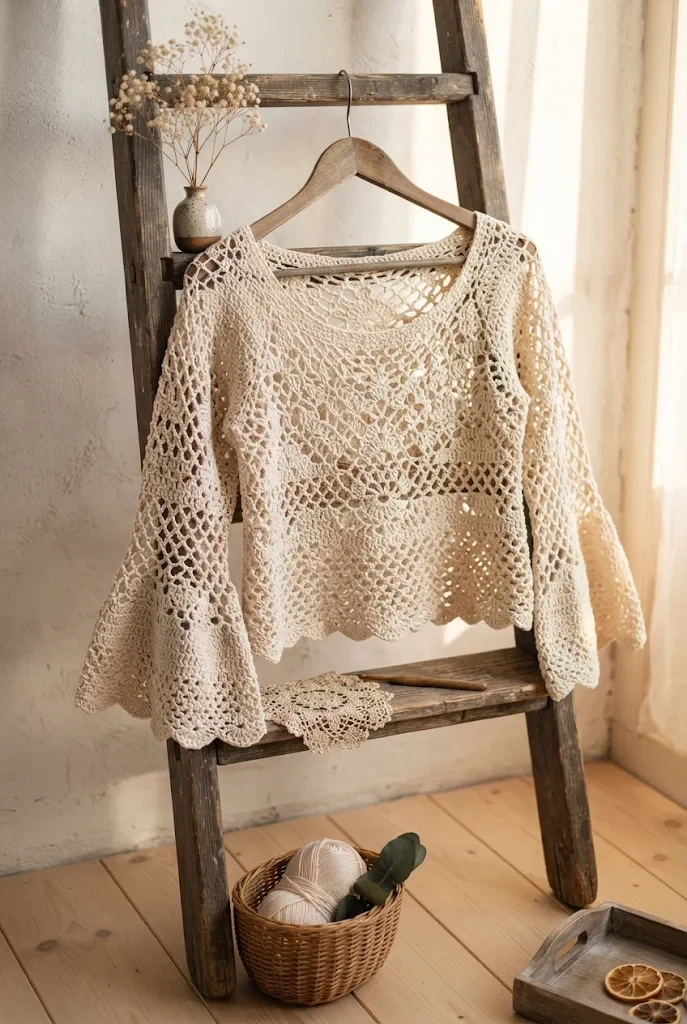
9. Mesh Pullover with Bell Sleeves
A mesh pullover with bell sleeves is a ’70s-inspired, bohemian top featuring an open stitch pattern throughout the body and dramatically flared cuffs. The key to this look/technique is counting your chain spaces in the mesh pattern meticulously, as an added or dropped stitch will ruin the geometry.
Use a bamboo or linen blend yarn in an earthy tone like rust or olive green. A 4mm (G) crochet hook works well to give the linen stitch definition.
When making the bell sleeves, increase evenly every few rows to ensure the flare is smooth rather than ruffled abruptly.
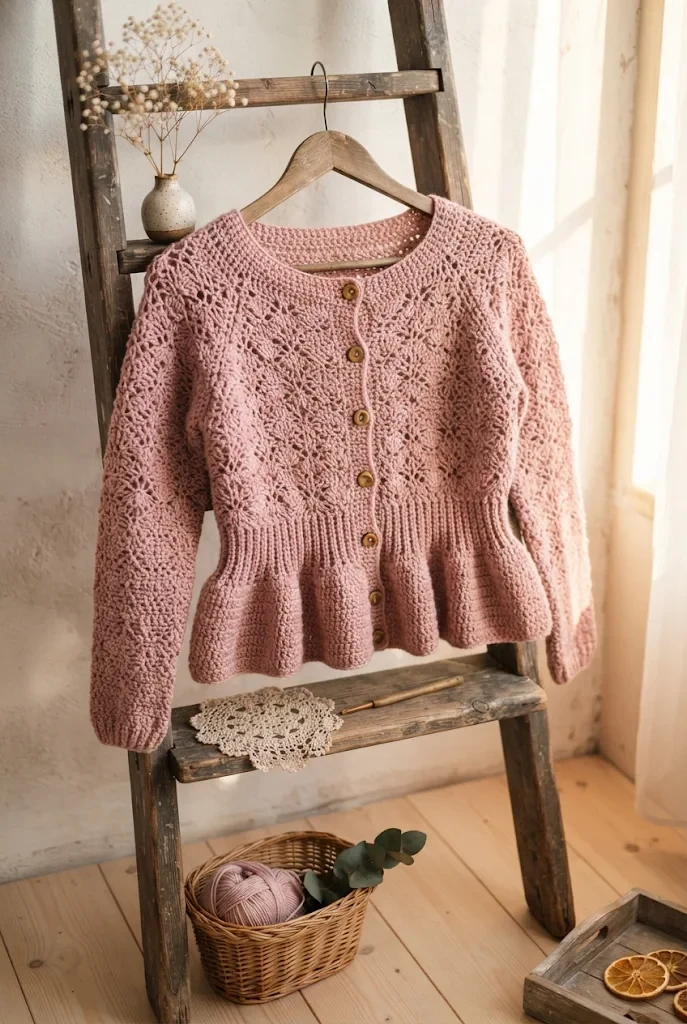
10. Peplum Waist Cardigan
A peplum waist cardigan is a fitted, feminine sweater that cinches at the natural waist before flaring out into a ruffled lower section. The key to this look/technique is executing clean increases or switching to a smaller hook to achieve the structured waist shaping.
Opt for a fine wool-silk blend DK yarn in a soft pastel like lavender. A 4mm (G) crochet hook is ideal for achieving subtle stitch definition.
For a polished finish, add a decorative edging, like a picot stitch, along the cardigan’s opening and the peplum hem.
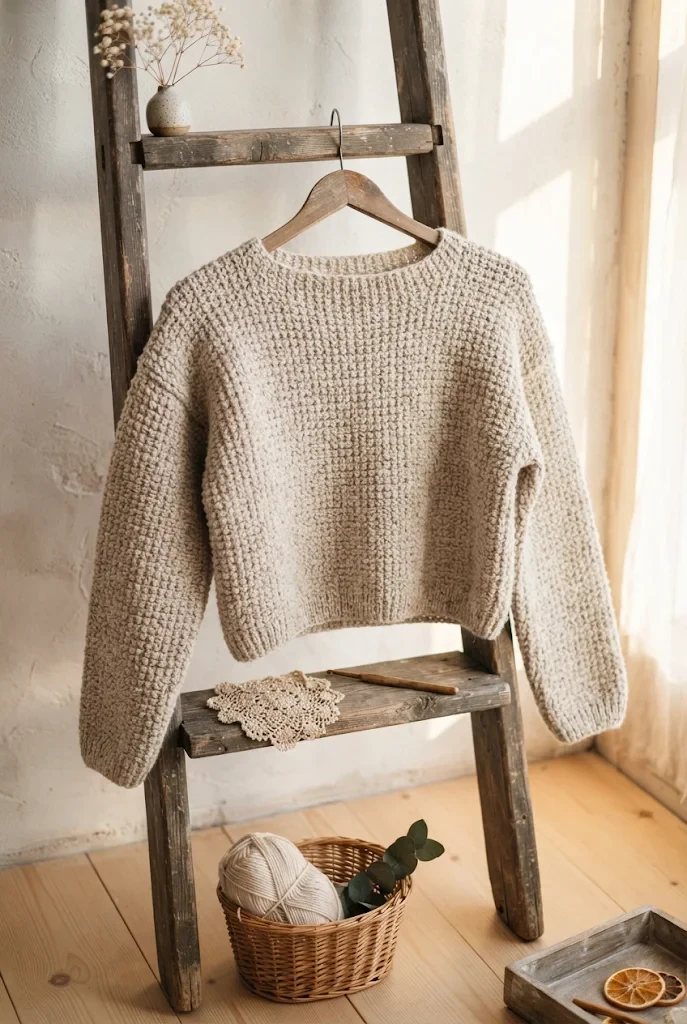
11. Tunisian Crochet Cropped Sweater
A Tunisian crochet cropped sweater utilizes a unique technique that merges knitting and crochet, resulting in a dense, woven-like fabric with very little stretch. The key to this look/technique is using a long Tunisian hook (cable hook) to hold all the stitches of a row and maintaining even tension on the forward and return passes.
You’ll want a smooth, plied worsted-weight yarn—wool or a wool blend works best—and a 6mm (J) Tunisian hook.
A credibility signal: Tunisian crochet is having a major moment on the crafting trend scene right now, so this proves you’re on the pulse.
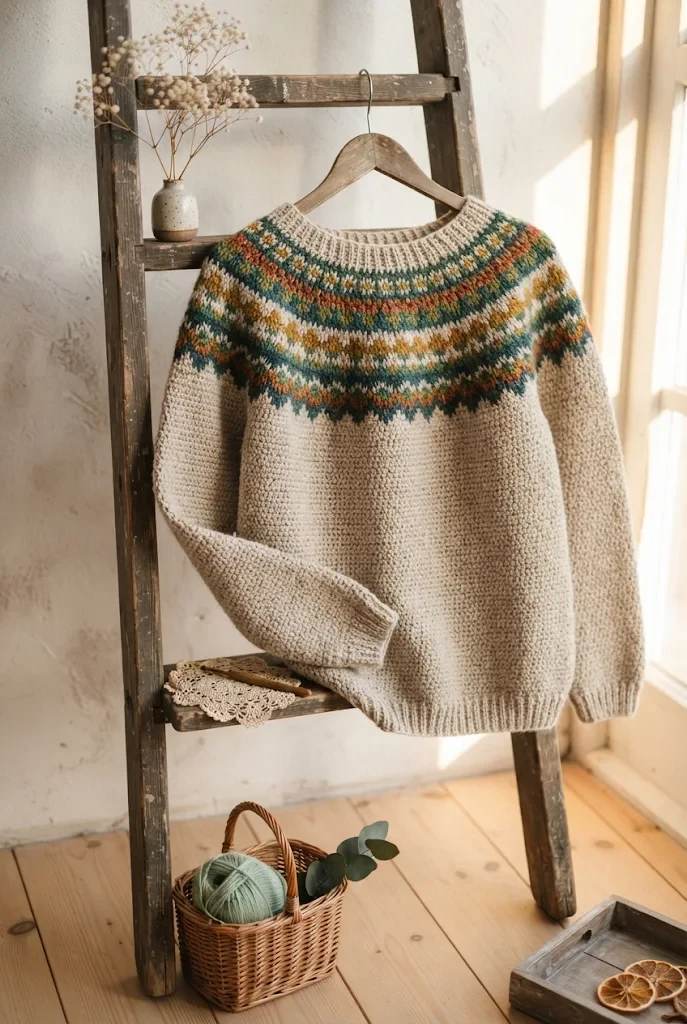
12. Fair Isle Yoke Pullover
A Fair Isle yoke pullover mimics stranded knitting by using colorwork techniques in the round around the upper chest and shoulders. The key to this look/technique is managing two or more colors simultaneously, carrying the unused color loosely across the back of the work (the “float”) so it doesn’t pucker.
Choose a base Worsted weight superwash wool and four high-contrast, jewel-toned accent colors. A 4mm (G) hook will create the tighter gauge needed for stranded colorwork.
A pro tip: practice your floats on a large swatch first to get a feel for the tension. If your floats are too tight, the yoke of your sweater will be stiff and won’t fit over your head.
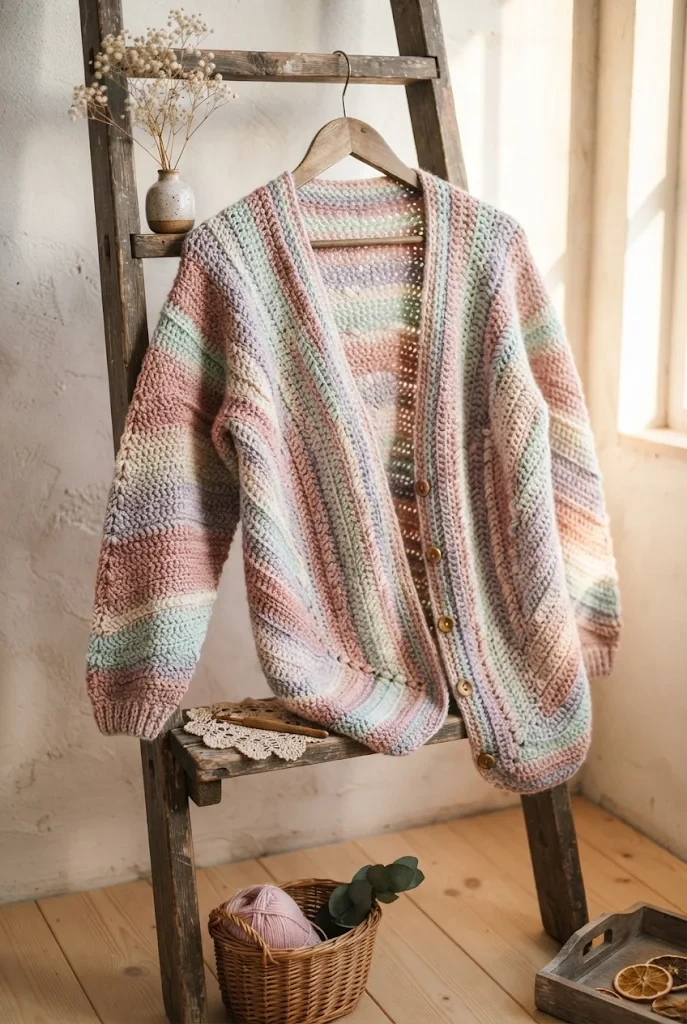
13. Chevron Stitch Cardigan
A chevron stitch cardigan uses wavy, ripple-stitch patterns to create dynamic stripes and a visually interesting texture that naturally contours the body. The key to this look/technique is precisely executing the increases at the peaks and decreases at the valleys of each wave to keep the stitch count consistent.
This pattern is excellent for transitioning between three or four different colors of DK weight cotton blend. A 4.5mm (7) hook is perfect.
To avoid confusing counting, place a stitch marker at every peak and valley for the first few repeats.
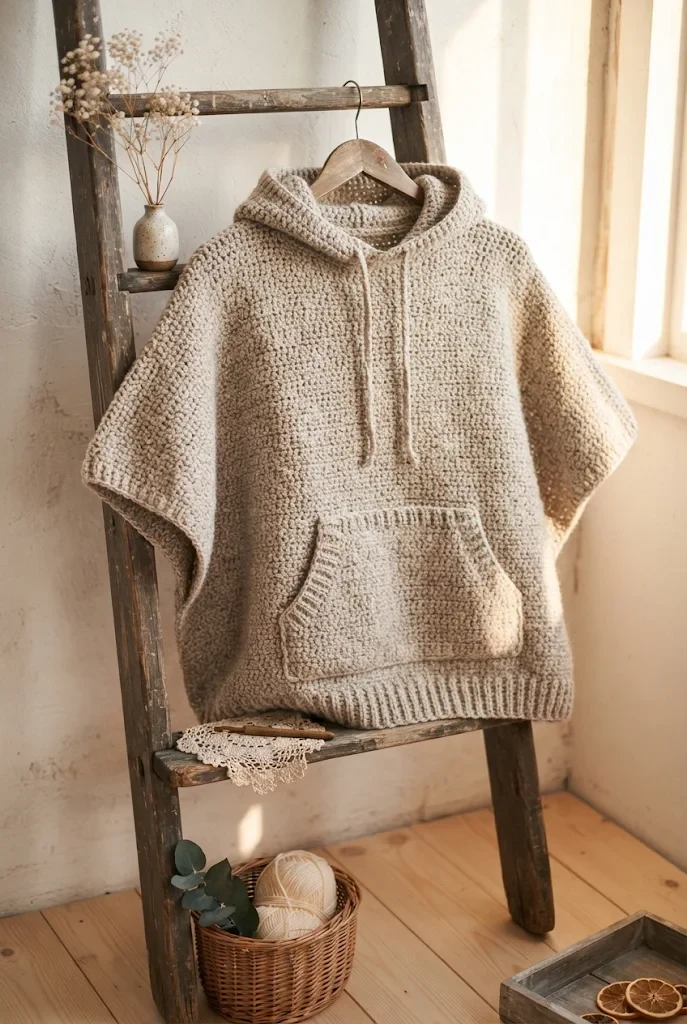
14. Hooded Pocket Poncho-Sweater
A hooded poncho-sweater is a hybrid garment that provides the ease and coverage of a poncho with the arm structure and coziness of a sweater. The key to this look/technique is securing the hood base cleanly and attaching large, functional wooden buttons or toggles for a rustic touch.
Use a lofty, textured yarn in a neutral oat-colored tweed. A large 10mm (N/P) hook creates a fabric that is substantial and protective against the elements.
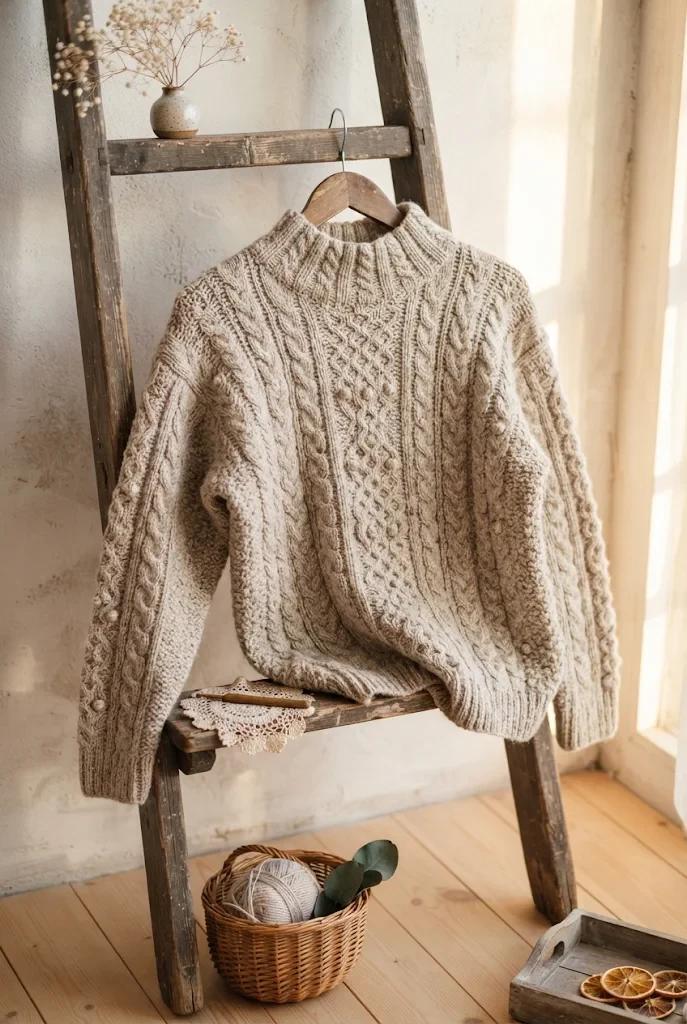
15. Mock-Neck Cable-Knit Look Sweater
A mock-neck cable-knit look sweater uses complex post-stitch patterns across the entire garment to replicate the look of expensive knitwear, but executed entirely with a crochet hook. The key to this look/technique is patience, as intricate post-stitch cabling requires concentration and time.
Select a high-quality, round merino wool yarn that shows off stitch definition brilliantly. A 4mm (G) hook will yield the professional, tailored look you are aiming for.
FAQ
- Are crochet sweaters easy for beginners? Projects like a striped drop-shoulder top or a granny square cardigan are perfect for those new to garments. They rely on basic stitches and minimal shaping.
- Which yarn is best for a first-time crochet sweater? A smooth, plied, worsted-weight acrylic or wool blend in a light color is ideal. Avoid dark colors (hard to see stitches), fuzzy yarns like mohair (hard to frog), and novelty yarns.
- How do I determine my size when crocheting a sweater? Always check the pattern’s schematic. Measure your bust, add your desired amount of positive ease, and compare that total to the finished garment measurements provided in the pattern.
📚 You Might Also Like
- Crochet star sweater: 15 Easy DIY Ideas for 2026If you have been searching for the ultimate handmade statement piece to elevate your wardrobe, craft…
- Crochet sweater: 20 Amazing DIY Ideas for 2027A handmade crochet sweater is a bespoke textile garment crafted using a hook and yarn to interlock l…
- Crochet granny square sweater pattern: 15 IdeasA crochet granny square sweater pattern is a creative way to turn colorful crochet motifs into a coz…
- Vintage crochet patterns: 15 Chic DIY Ideas for 2026Rediscovering vintage crochet patterns offers a delightful bridge to the craftsmanship of the past,…
- Crochet backpack pattern: 15 Best DIY Ideas for 2026If you are looking for a practical yet stylish project to hook up this weekend, a crochet backpack p…
The Bottom Line
Creating your own sweater is one of the most satisfying experiences in crochet. This list proves that whether you’re looking for a simple summer top or a challenging winter layer, there is a pattern to suit your skill level and aesthetic. Gather your quality crochet hooks, select your favorite soft yarn, and take the leap into garment making. Once you complete your first piece, you’ll never look at your handmade wardrobe the same way again. Happy hooking!
🛍️ Shop the Look — Best Sellers for crochet ideas sweater
Our handpicked Amazon best sellers curated specifically for crochet ideas sweater:
🔥 See More Best Sellers on Amazon →
As an Amazon Associate I earn from qualifying purchases.