
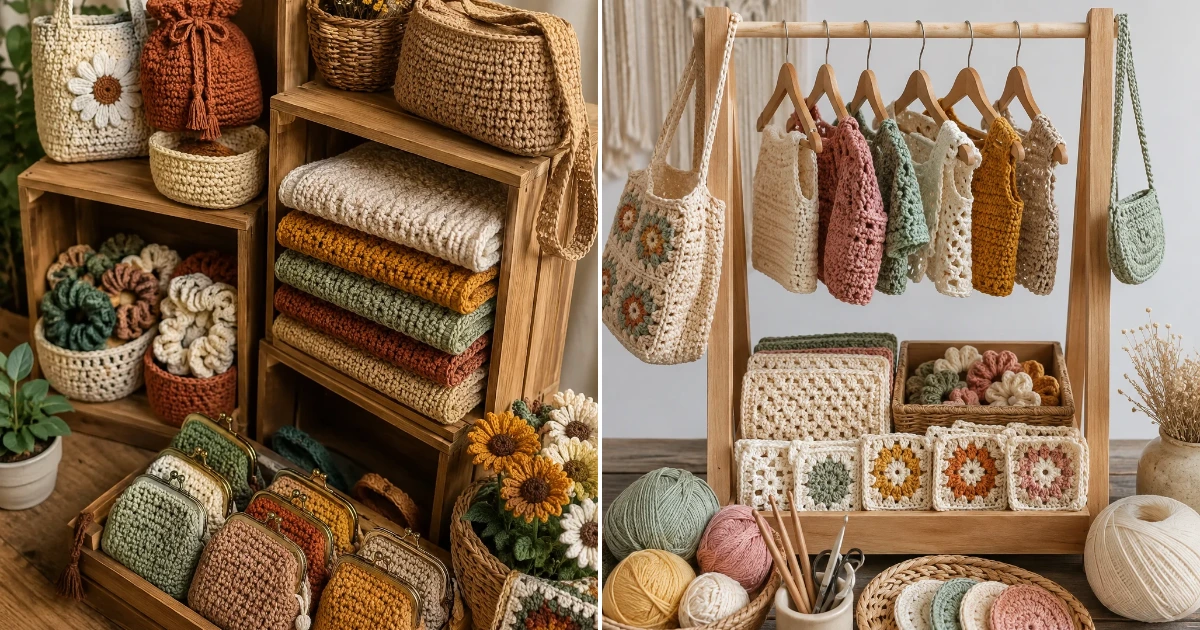
19 Crochet Stall Display Ideas to Make Your Market Booth Stand Out
Crochet stall display ideas are creative ways to arrange handmade crochet products so shoppers can see, touch, and understand what makes each piece special. A smart stall does more than hold products—it creates a tiny shopping experience that encourages people to stop, browse, and buy, according to The Spruce Crafts. Whether you’re selling at a Christmas craft fair, summer makers’ market, or weekend artisan event, your setup can make a huge difference. The best displays combine height, color, clear pricing, and practical storage without making your table look crowded. From wooden crates and pegboards to baskets and mini clothing racks, these crochet stall display ideas will help you turn a simple market table into an inviting handmade shop.
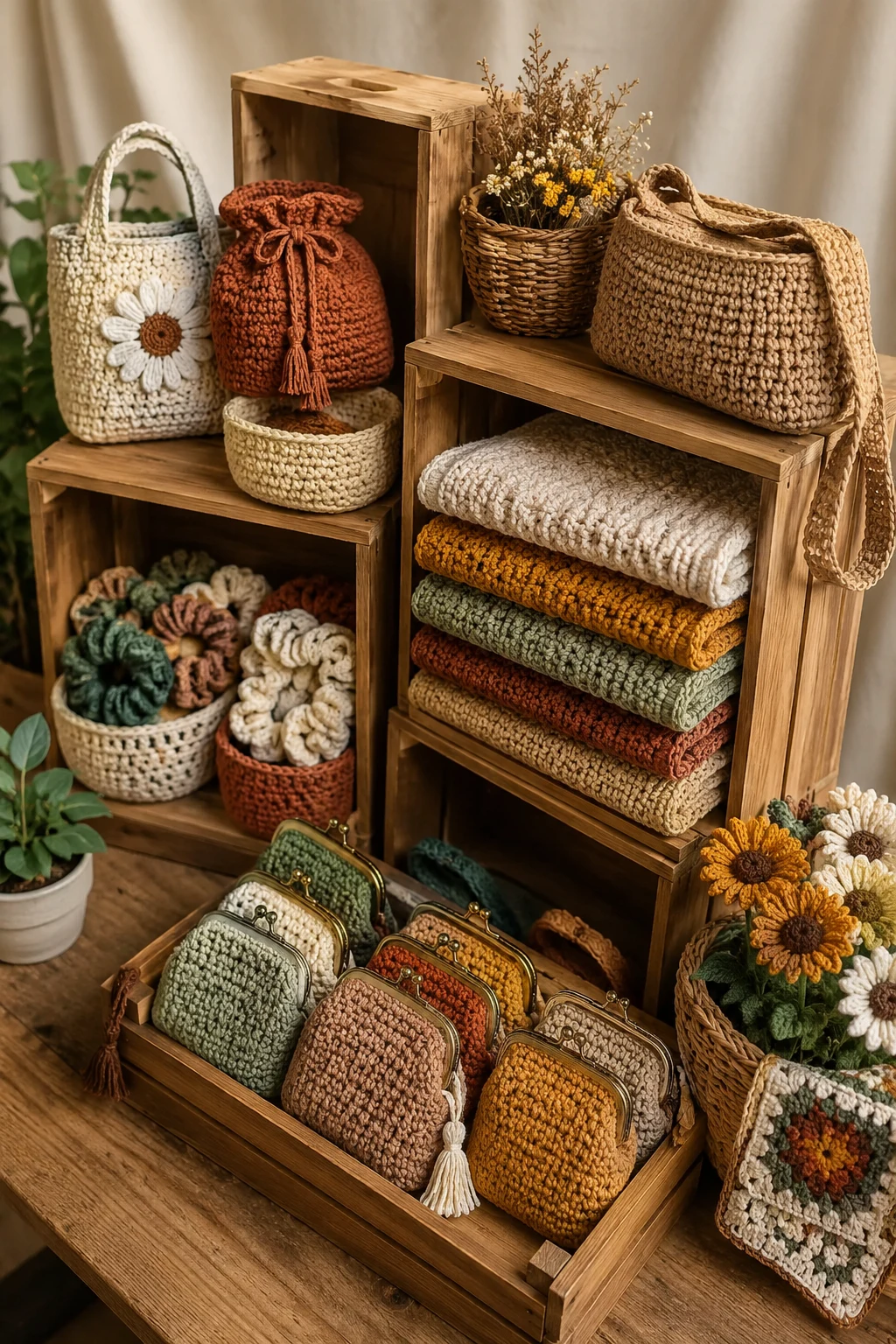
1. The Wooden Crate Staircase — crochet
Stack wooden crates at different heights to create instant tiers for crochet beanies, handbags, baskets, and folded scarves. Place the tallest crates toward the back and lower ones toward the front so shoppers can see everything without digging through piles.
Try natural wood with cream, sage green, terracotta, or dusty pink crochet pieces for a cozy artisan-market palette. Add a small price card to each level rather than one giant sign.
The key to this look is creating three distinct heights so every product gets its moment.
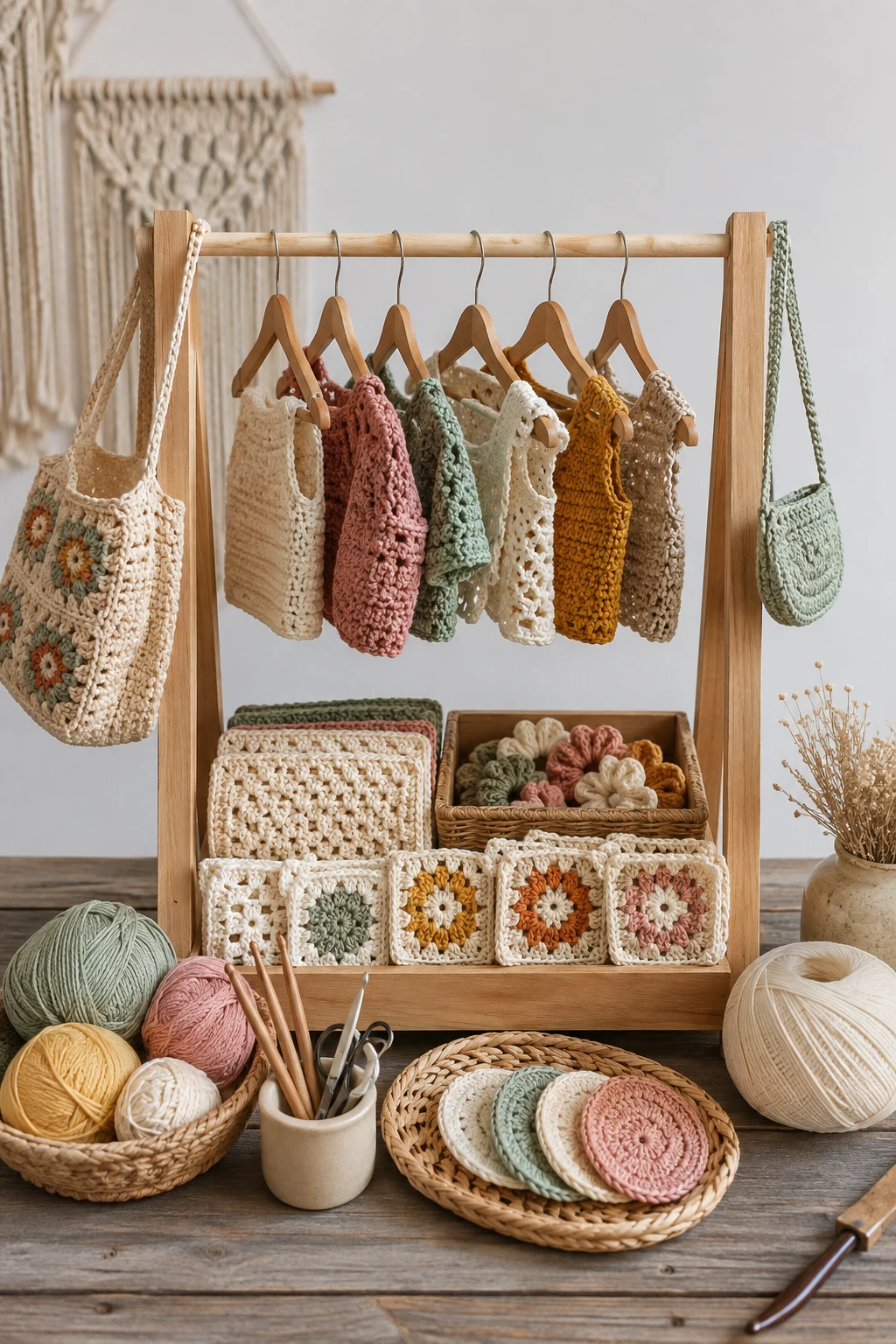
2. Crochet Stall Display Ideas With a Mini Clothing Rack
A small freestanding clothing rack can completely change how shoppers experience wearable crochet pieces. Hang cardigans, ponchos, oversized scarves, and crochet vests instead of folding them into an easily forgotten pile.
Use matching wooden hangers and arrange garments by color or category. A cream cardigan beside a rust-orange vest creates an especially inviting autumn market display.
The key to this look is getting bulky wearable pieces off the table and into shoppers’ eye line.
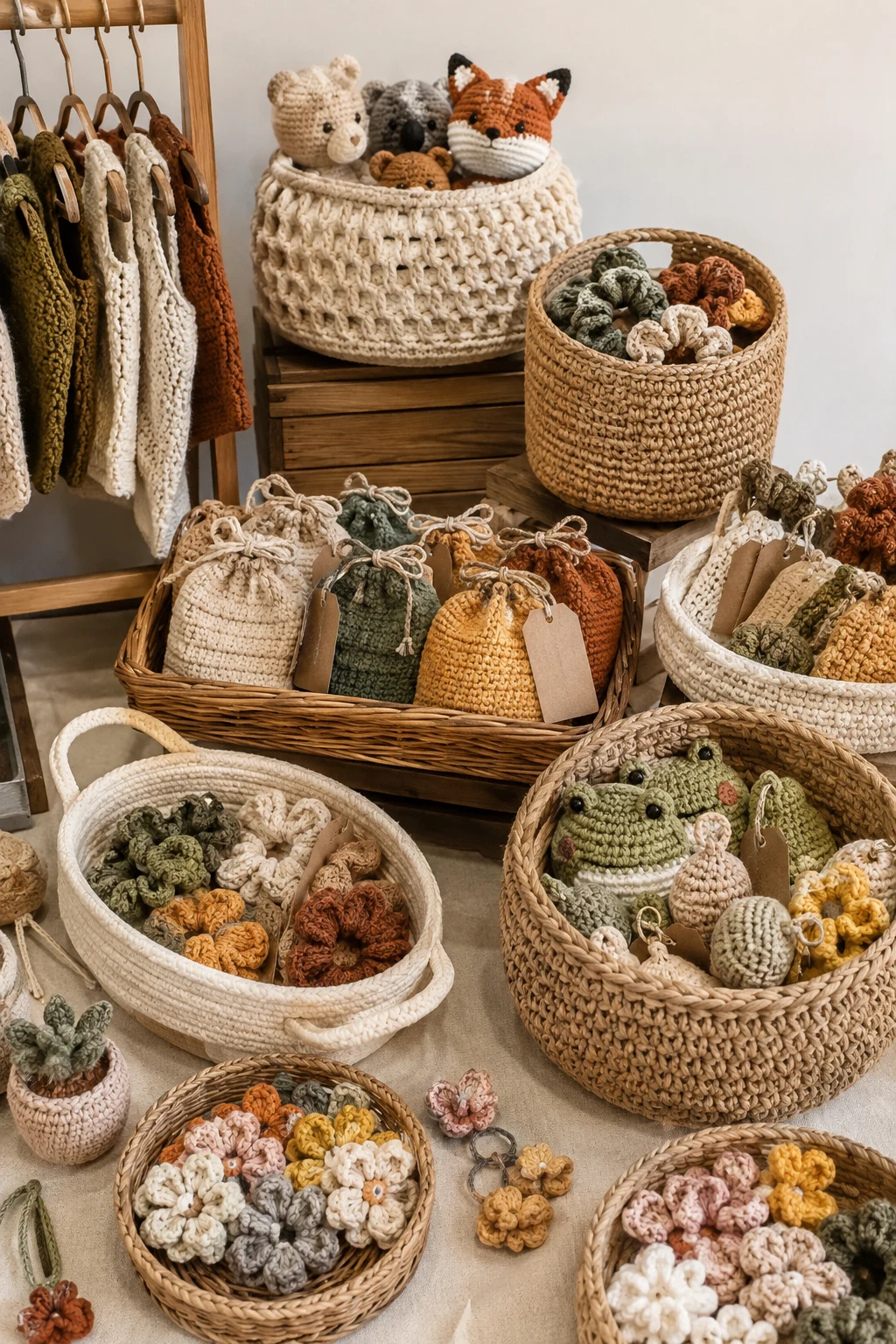
3. The Basket Collection — crochet
Large woven baskets work beautifully for crochet market stalls because they reinforce the handmade aesthetic while keeping smaller products organized. Use one basket for headbands, another for scrunchies, and another for small purses, according to Martha Stewart Crafts.
Add simple labels such as “Hair Accessories,” “Mini Bags,” or “Under $15.” This is also a useful answer to the question of how to display crochet items for sale when you have dozens of small products.
The key to this look is giving every product category its own clearly labeled home.
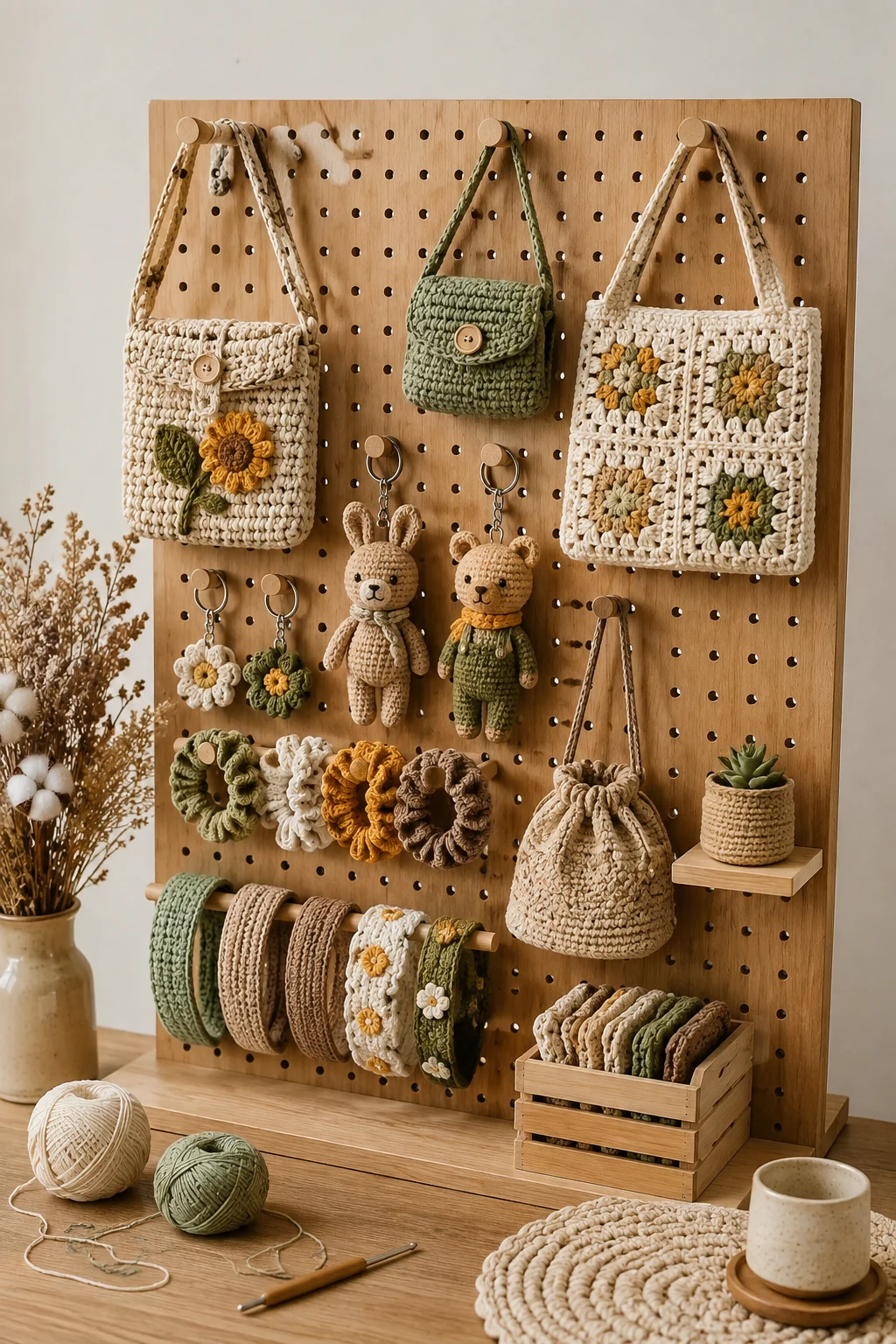
4. A Pegboard Product Wall
A wooden pegboard gives your stall vertical storage without consuming much table space. Attach hooks for crochet keychains, plant hangers, mini bags, and decorative pieces.
Paint the board warm white or leave it natural depending on your brand. Small baskets attached to the lower section can hold scrunchies and other tiny items.
The key to this look is using vertical space to make a compact booth feel much larger.
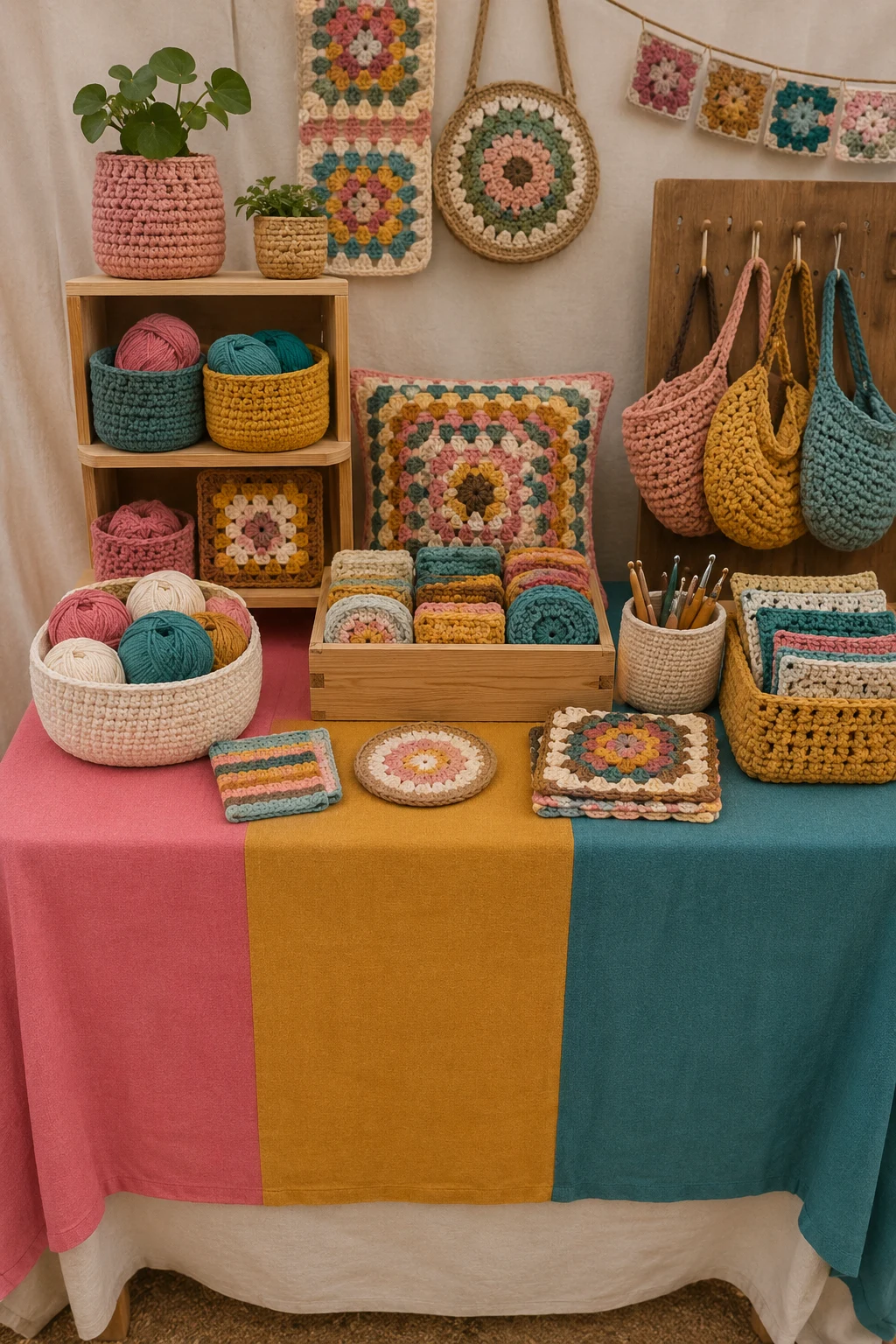
5. The Color-Blocked Table
Instead of organizing everything by product type, organize crochet pieces by color. Create sections using cream and beige, dusty blue, sage green, and terracotta.
This approach works particularly well for Instagram-friendly craft stalls because the table looks intentional from several feet away. Keep each color family together rather than scattering similar shades around the booth.
The key to this look is limiting your palette to four or five coordinated colors.
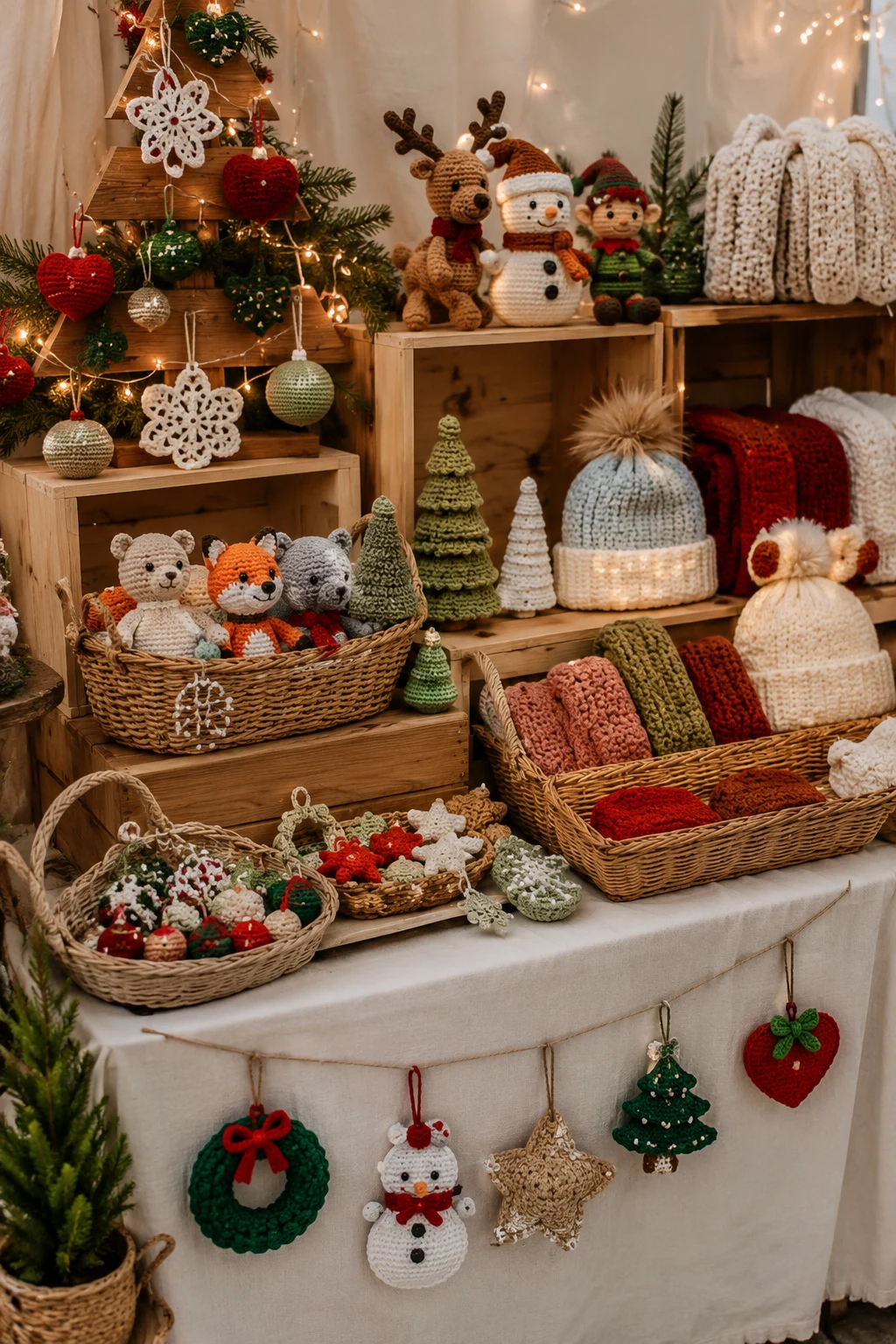
6. Crochet Stall Display Ideas for a Christmas Market
For a December craft fair, build a festive display around crochet ornaments, stockings, snowflake decorations, gift sets, and winter hats. Use pine branches, kraft-paper signs, and warm-white battery lights for seasonal atmosphere.
Avoid covering the entire stall in Christmas decorations. Your crochet should remain the star, especially when shoppers are comparing handmade gifts.
The key to this look is using seasonal accents sparingly so products remain visually dominant.
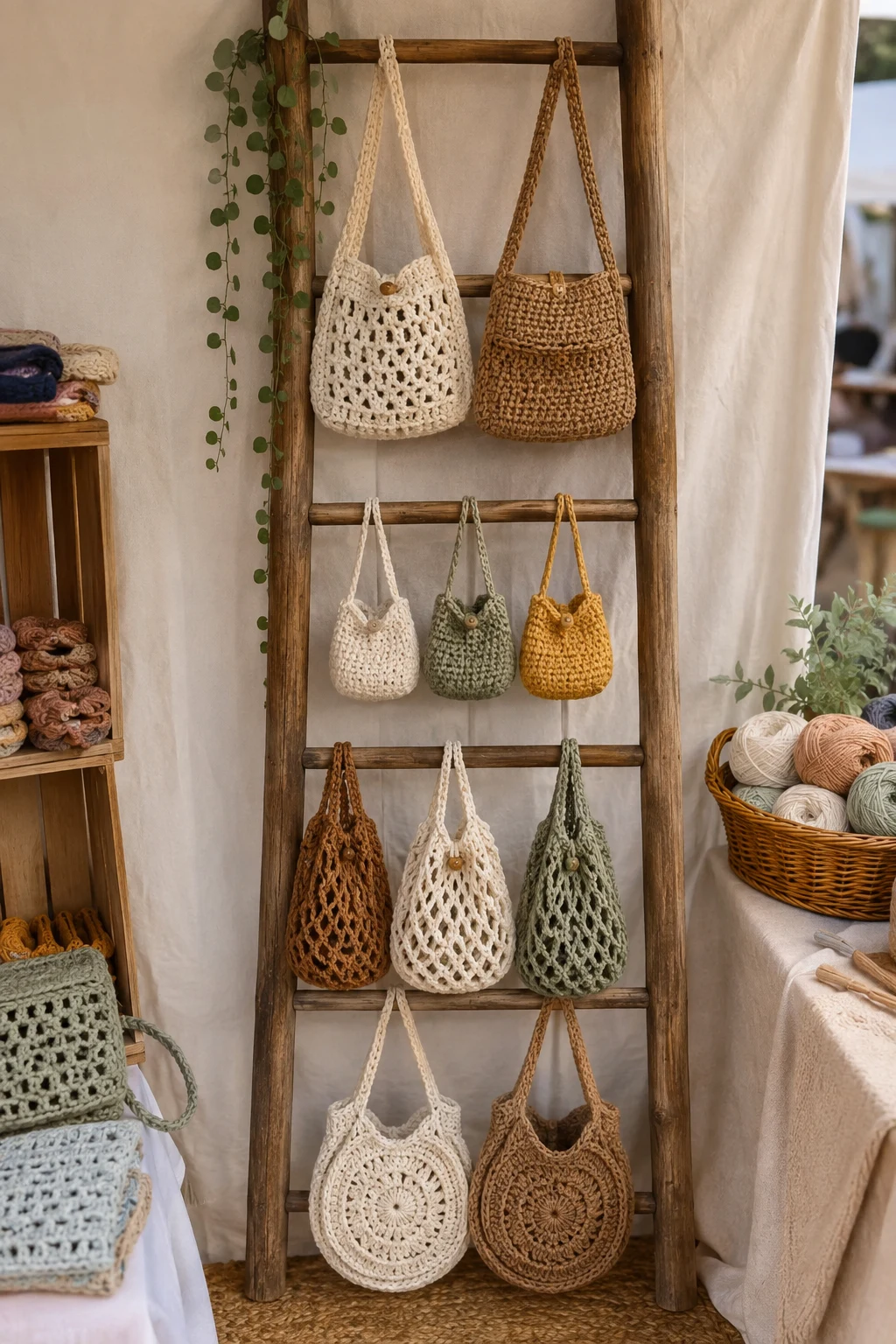
7. The Hanging Ladder Display
Lean a wooden ladder behind your table and use it as a vertical display for scarves, blankets, market bags, and lightweight shawls. Drape one or two hero pieces across the rungs while keeping the rest neatly folded.
The key to this look is displaying only your most eye-catching textiles on the ladder instead of turning it into a storage rack.
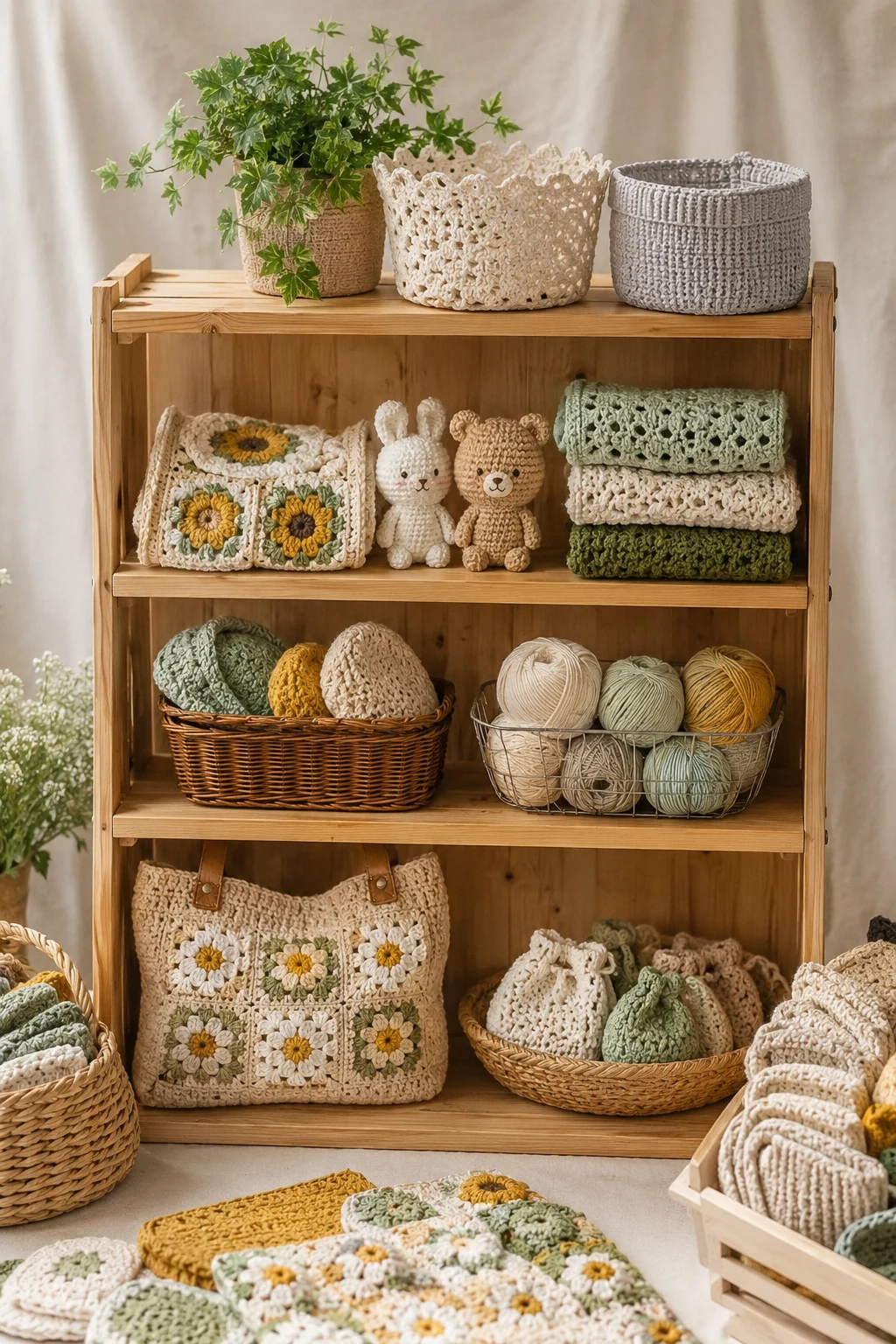
8. The “Styled Shelf” Setup
Create a miniature shop window using floating-style shelves or narrow wooden shelving. Put your best-selling crochet products at eye level, then arrange supporting products underneath.
For example, display a mustard-yellow crochet bag on the top shelf, matching coin purses beneath it, and coordinating keychains on the lowest level.
The key to this look is building small product stories instead of displaying unrelated items side by side.
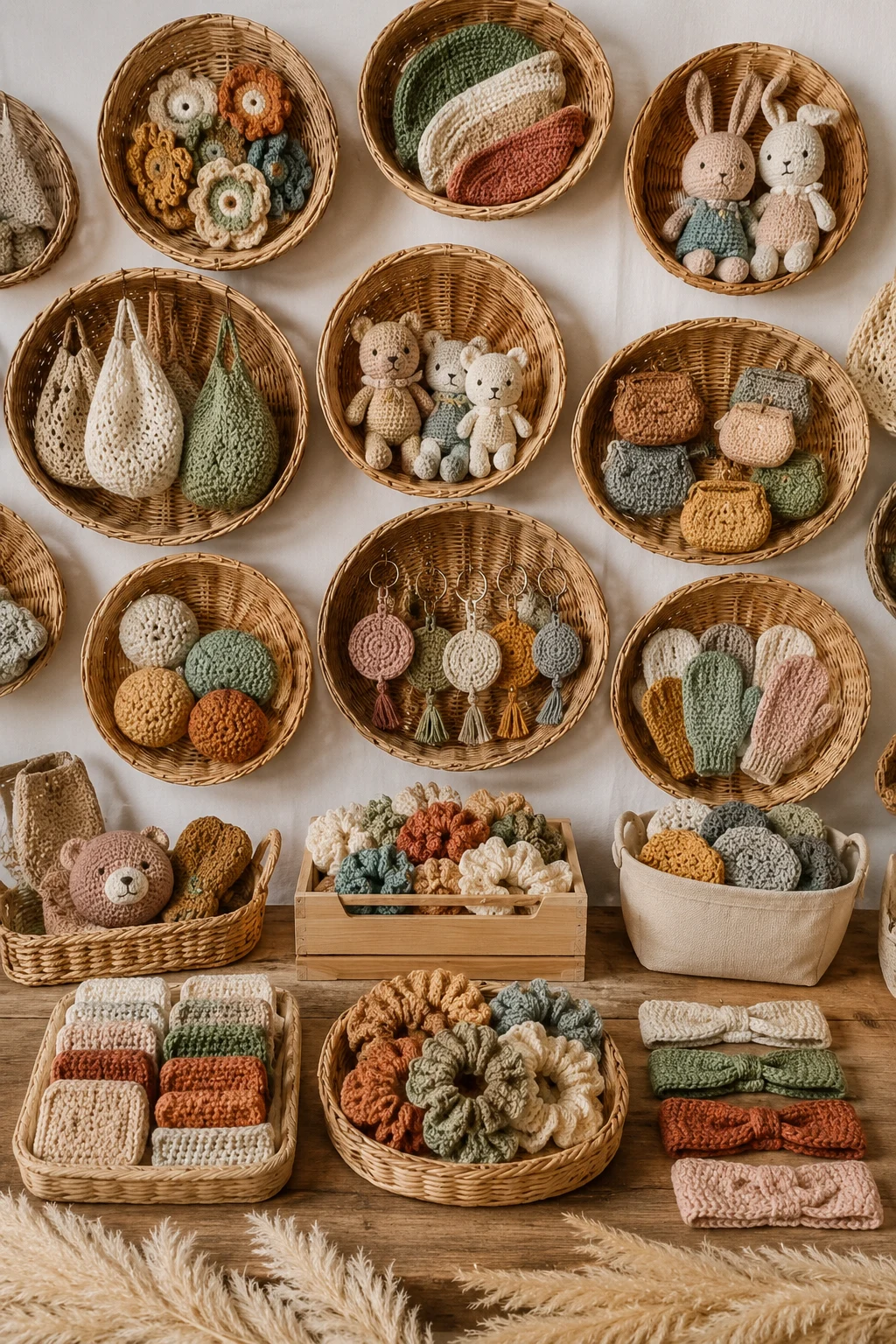
9. The Signature Basket Wall
Turn several matching baskets into a recognizable visual feature. Mount shallow baskets onto a sturdy backing board or use freestanding basket shelves behind the table.
This works especially well for crochet home décor such as coasters, plant pots, storage baskets, and wall hangings. Keep the basket colors neutral so the crochet colors stand out.
The key to this look is repeating one display material throughout the stall for a cohesive brand identity.
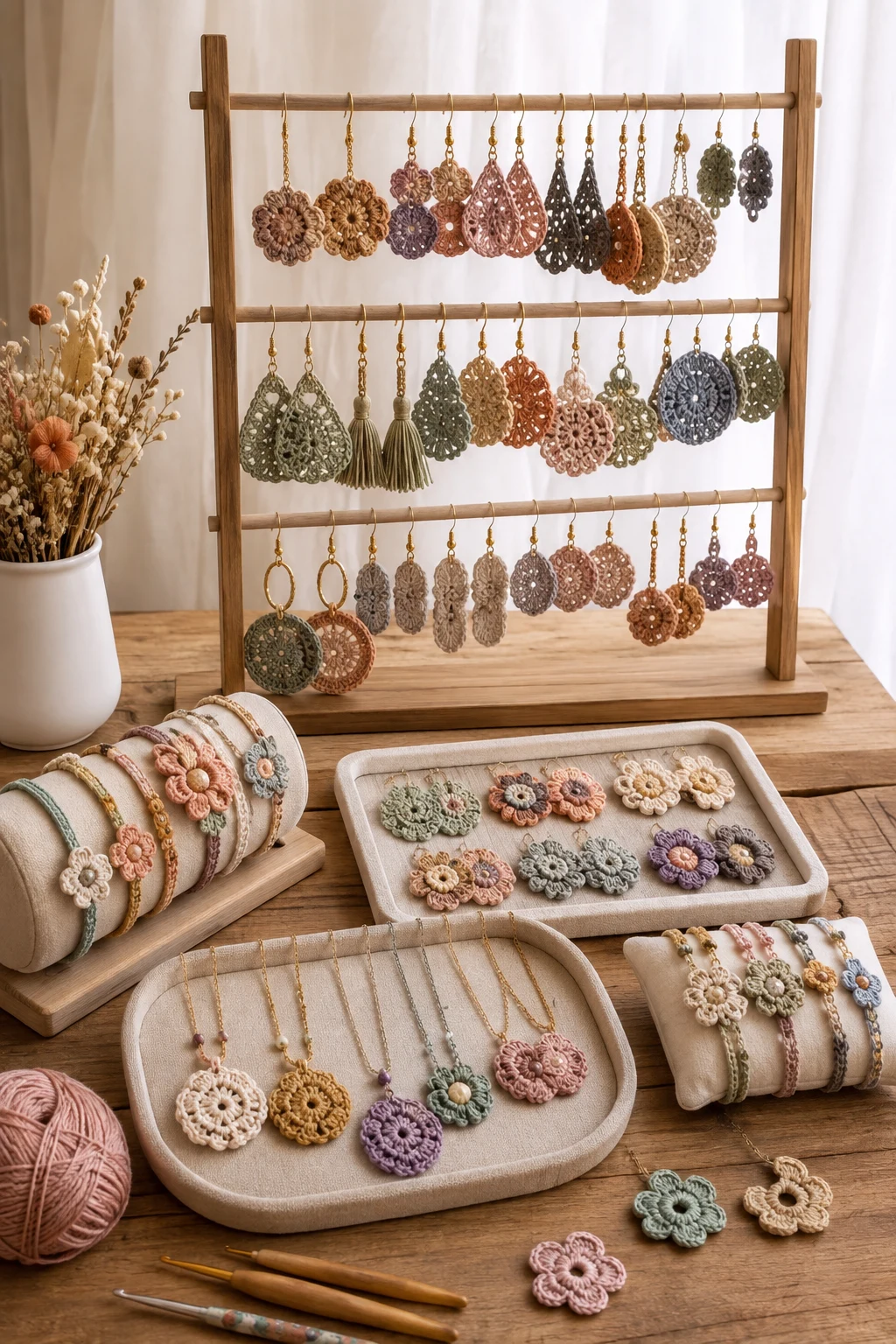
10. The Jewelry-Style Crochet Display
Tiny crochet products can borrow techniques from jewellery stall display ideas. Use tiered trays, small stands, and shallow wooden boxes to present crochet earrings, flower clips, bracelets, brooches, or miniature accessories.
Place premium pieces on individual stands rather than grouping everything into one tray. A little breathing room makes inexpensive accessories feel more special.
The key to this look is treating small crochet pieces like boutique accessories rather than loose craft supplies.
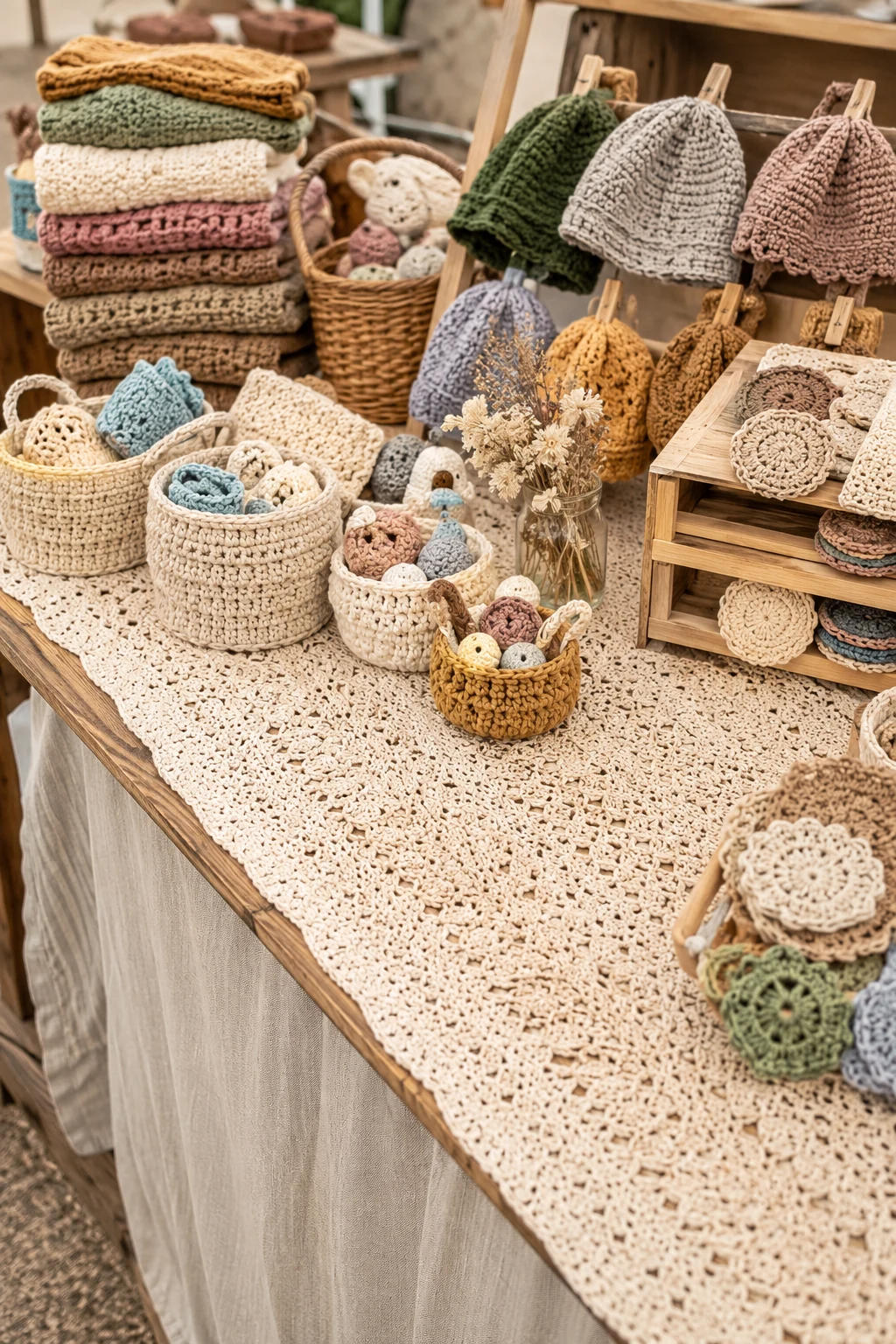
11. The Table Runner Trick
A simple linen table runner can visually anchor your entire display. Choose oatmeal, charcoal, ivory, or another neutral shade that complements your crochet collection.
Instead of covering the entire table with fabric, leave some tabletop visible. The contrast helps baskets, trays, and products stand out while keeping the setup practical.
The key to this look is using fabric as a visual frame rather than hiding the whole table underneath it.
12. The “One Hero Piece” Display
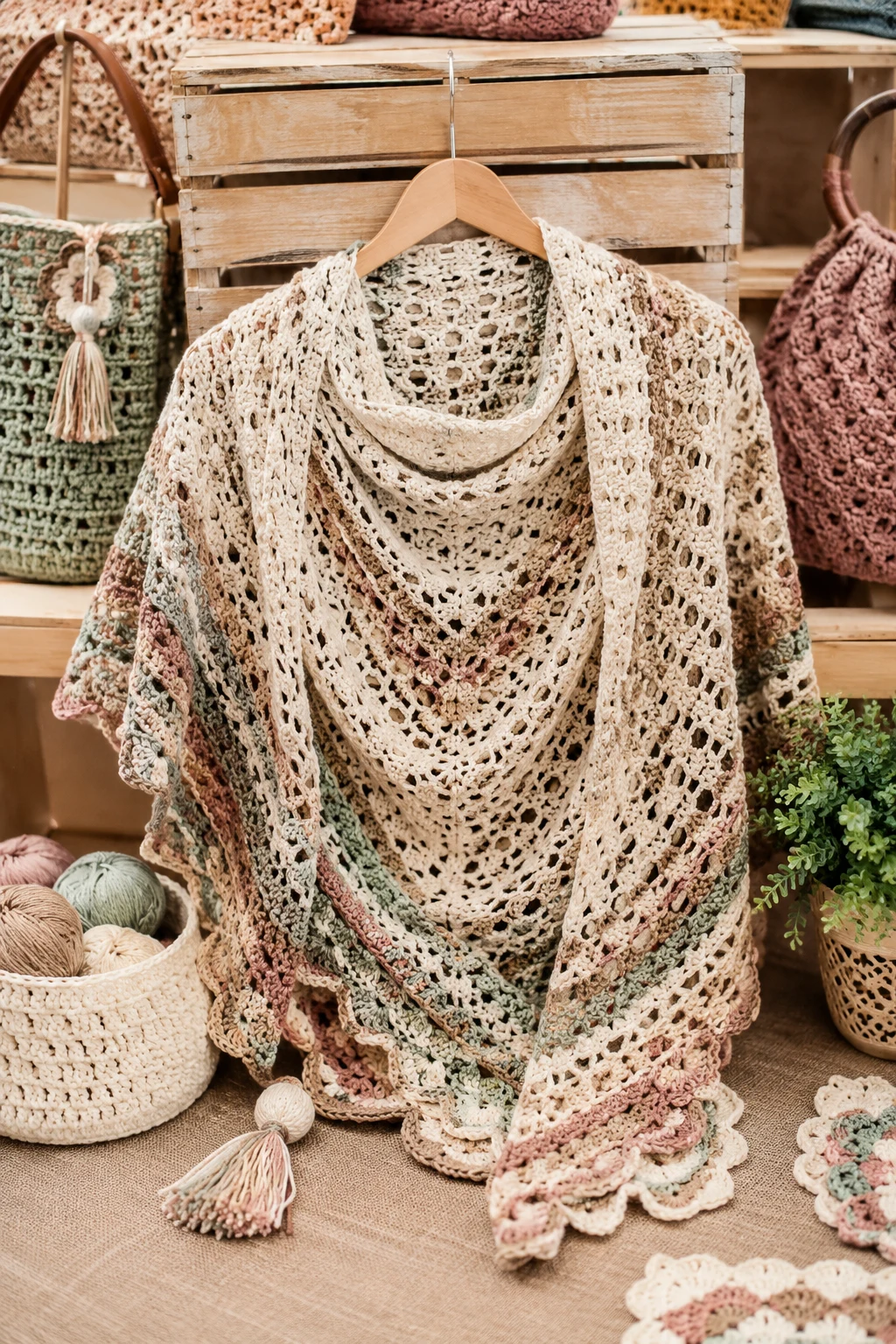
Choose one spectacular crochet blanket, oversized bag, statement cardigan, or textured wall hanging as your hero product. Position it where people approaching from the aisle can immediately see it.
Surround the hero piece with smaller products that share its colors or stitch details. This creates a natural visual path from attention-grabbing item to affordable impulse purchase.
The key to this look is giving shoppers one unforgettable focal point instead of competing with ten different statement pieces.
13. The Market Stall Display Ideas Ladder of Sizes
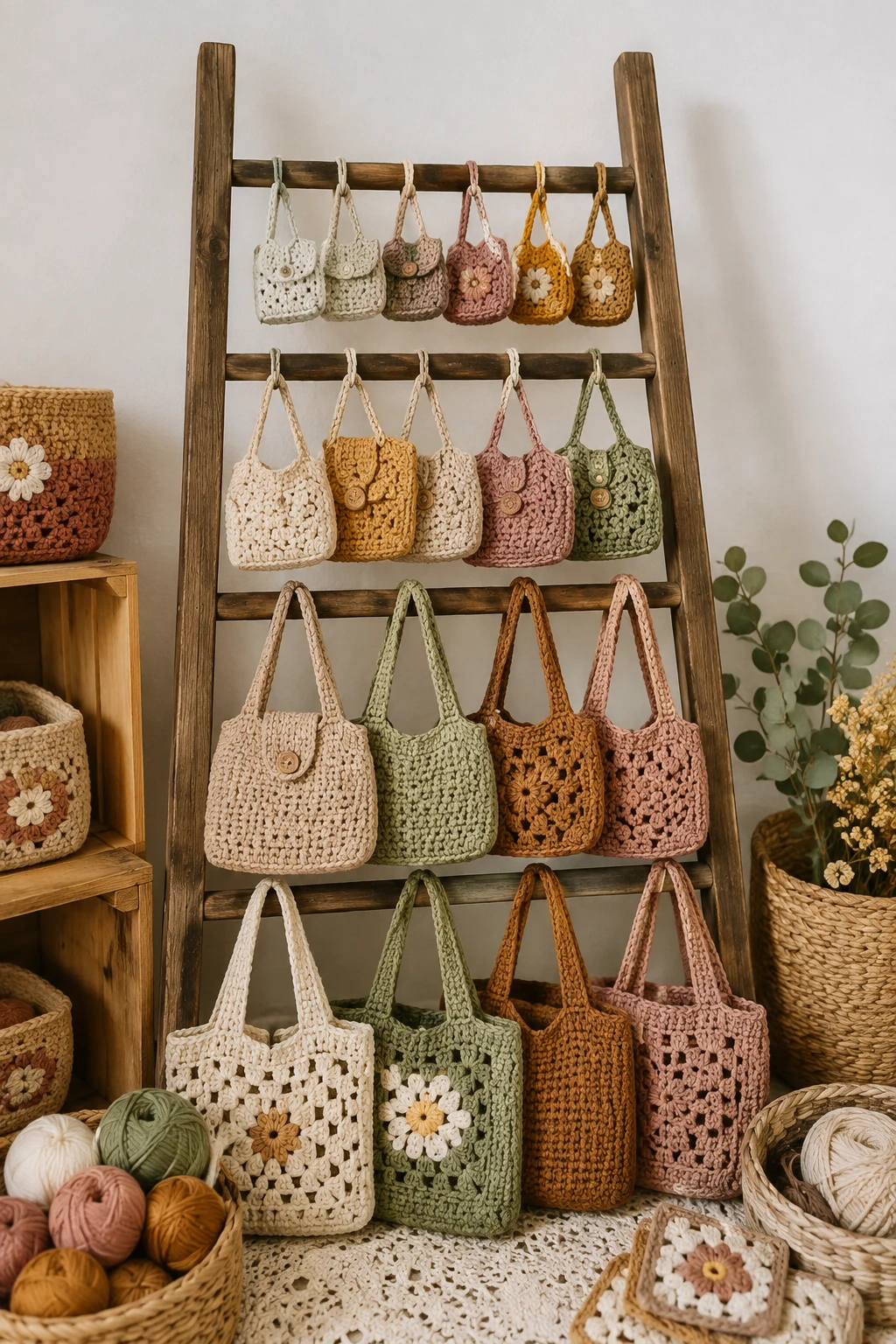
Use small risers, boxes, and stands to create a stepped arrangement across the tabletop. Put tiny products at the front, medium pieces in the middle, and larger bags or baskets toward the back.
This simple structure follows a principle experienced market sellers often use: products should remain visible even when shoppers are standing close to the table.
The key to this look is arranging products from low to high so nothing disappears behind another item.
14. The “Gift Ready” Station
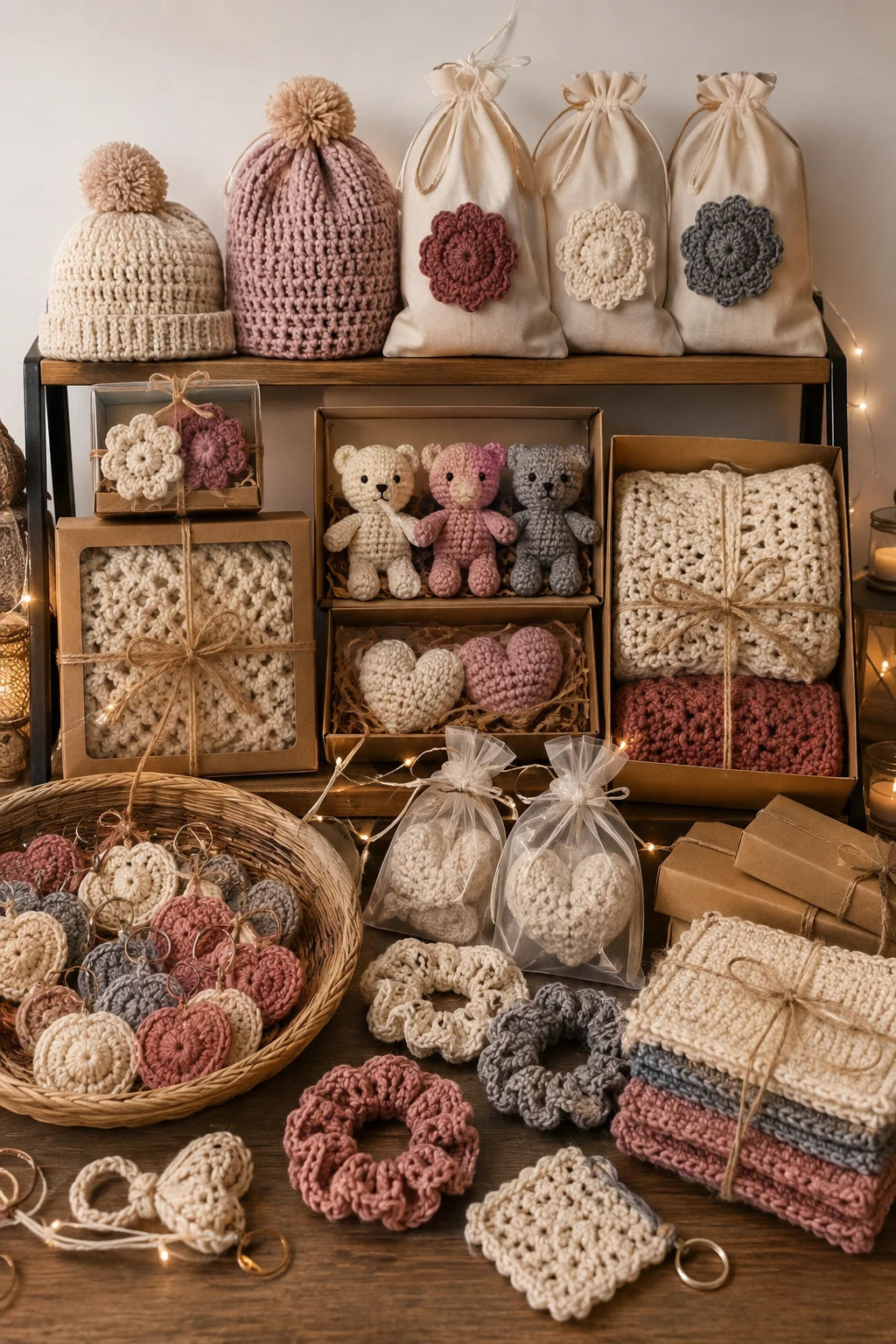
Create a dedicated gift section featuring crochet gift sets, handmade cards, ribbon, and simple kraft packaging. Pair items naturally, such as a crochet mug cozy with a coaster or a baby hat with matching booties.
A clear sign reading “Ready-to-Gift Sets” immediately communicates the buying occasion. This is especially useful around Mother’s Day, Christmas, Valentine’s Day, and baby showers.
The key to this look is selling a complete gifting solution instead of asking shoppers to assemble one themselves.
15. The Mirror-and-Crochet Corner
Add a small full-length mirror or tabletop mirror if you sell wearable crochet items. Shoppers can immediately see how a cardigan, bucket hat, scarf, or vest looks on them.
Keep the mirror slightly angled toward the aisle rather than flat against a wall. A small plant or wooden stool nearby can make the area feel like a miniature boutique fitting corner.
The key to this look is removing hesitation by letting customers visualize the product before buying.
16. The Neutral Boutique Booth
Use white shelving, pale wood, cream linen, and black handwritten-style signs to create a clean boutique atmosphere. Then let vibrant crochet colors—cobalt blue, cherry red, mustard, or emerald—provide the visual energy.
This approach is particularly effective when your products already have bold colors or intricate stitches.
The key to this look is keeping the display neutral so colorful crochet remains the main attraction.
17. The Hanging Grid
A metal grid panel offers flexible display space for bags, decorations, keychains, and accessories. Add S-hooks, small baskets, and clips so you can change the arrangement for different markets.
Black grid panels work well with colorful crochet, while white grids create a softer look for pastel collections.
The key to this look is making the display modular so you can quickly adapt it to different stall sizes and product ranges.
18. The Seasonal Story Table
Build your entire table around one specific occasion. For spring, feature crochet flowers, pastel bags, baby accessories, and floral decorations. For autumn, switch to pumpkin decorations, rust-colored hats, and chunky scarves.
Seasonal merchandising can make your stall feel fresh even when you sell many of the same core products throughout the year. Current handmade-market trends also favor coordinated, giftable collections over random assortments.
The key to this look is giving shoppers a clear seasonal reason to buy now.
19. The Boutique Checkout Basket
Finish your setup with a small checkout basket containing affordable impulse purchases such as crochet keychains, scrunchies, coasters, bookmarks, and mini flowers.
Place it near your payment area with a friendly sign such as “Little Handmade Extras.” These low-cost items can be easy add-ons for customers who already chose a larger purchase.
The key to this look is making your final buying opportunity simple, affordable, and impossible to miss.
FAQ
What are the best crochet stall display ideas for a small table?
Use vertical solutions such as pegboards, small shelving units, wooden crates, and hanging grids. They increase display space without covering the entire tabletop.
How do you display crochet items for sale without making a stall look cluttered?
Group products by type, color, or occasion and create different heights with risers and crates. Keep a few standout pieces fully visible while storing extra inventory underneath the table.
Why do crochet stall display ideas matter for sales?
A well-organized stall helps shoppers understand your products quickly, find prices easily, and notice more items. Clear merchandising can also encourage impulse purchases and make a handmade brand feel more professional.
📚 You Might Also Like
- Crochet purse ideas: 10 Amazing DIY Ideas for 2026
16 Crochet Purse Ideas for Stylish DIY Accessories Crochet purse ideas are creative ways to turn yar…
- Crochet pillow ideas: 15 Ultimate DIY Ideas for 2026
15 Crochet Pillow Ideas to Cozy Up Your Space Crochet pillow ideas are creative ways to turn yarn, s…
- Cool crochet ideas: 9 Perfect DIY Ideas for 2026
Cool crochet ideas are creative crochet projects that combine practical function, eye-catching desig…
The Bottom Line
The best crochet stall display ideas don’t require an expensive booth makeover. A few wooden crates, baskets, neutral fabrics, vertical shelving, and smart product groupings can transform a basic market table into a memorable mini shop. Think about what shoppers see first, what they can reach easily, and which products deserve the spotlight. For your next market, choose two or three techniques from these crochet stall display ideas rather than trying everything at once. A cleaner layout, stronger focal point, and easy-to-read categories can make your handmade crochet collection much easier—and much more fun—to shop.