
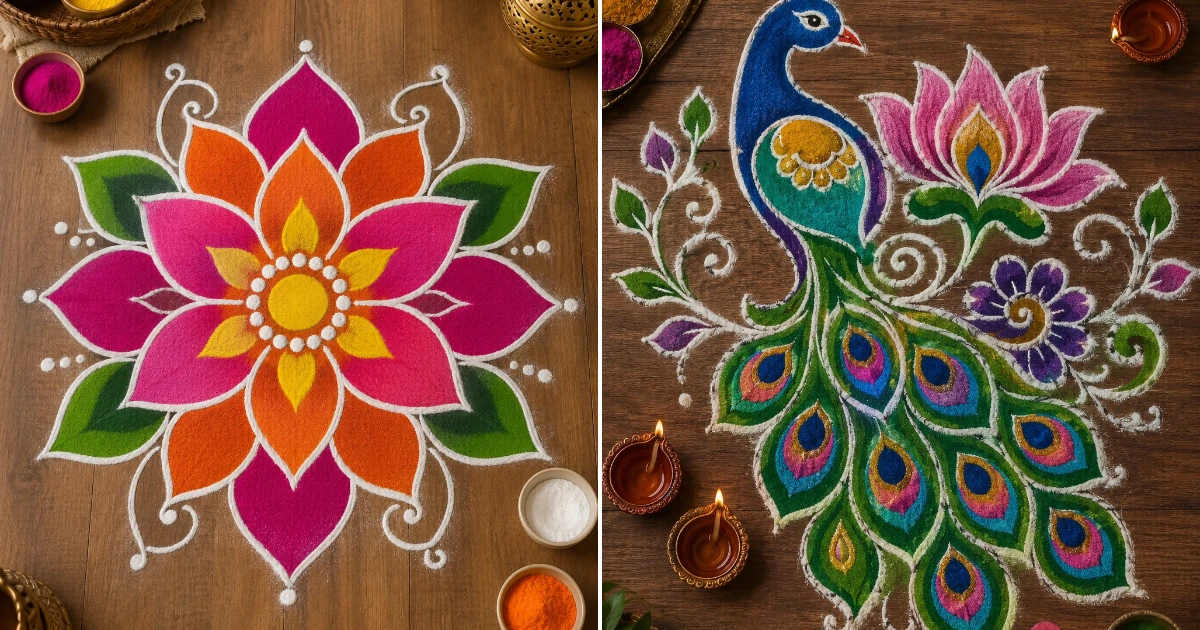
15 Free Hand Rangoli Designs With Colours for Beautiful DIY Decor
Free hand rangoli designs with colours are hand-drawn decorative patterns created directly on the floor using coloured powders, rice, flower petals, or other festive materials. No stencil is required, and that is exactly what makes them so satisfying: you can sketch, improvise, add colour, and create a design that feels completely your own. According to Martha Stewart Crafts,
Whether you’re decorating for Diwali, a wedding, a housewarming, Navratri, or simply want a cheerful entrance for the weekend, these ideas make rangoli approachable. You don’t need perfect geometry or years of practice. A steady hand, a simple outline, and a thoughtful colour palette can do plenty of heavy lifting.
These free hand rangoli designs with colours range from tiny everyday patterns to elaborate festive displays. Pick one based on your skill level, available space, and how much time you want to spend before someone inevitably walks across it.
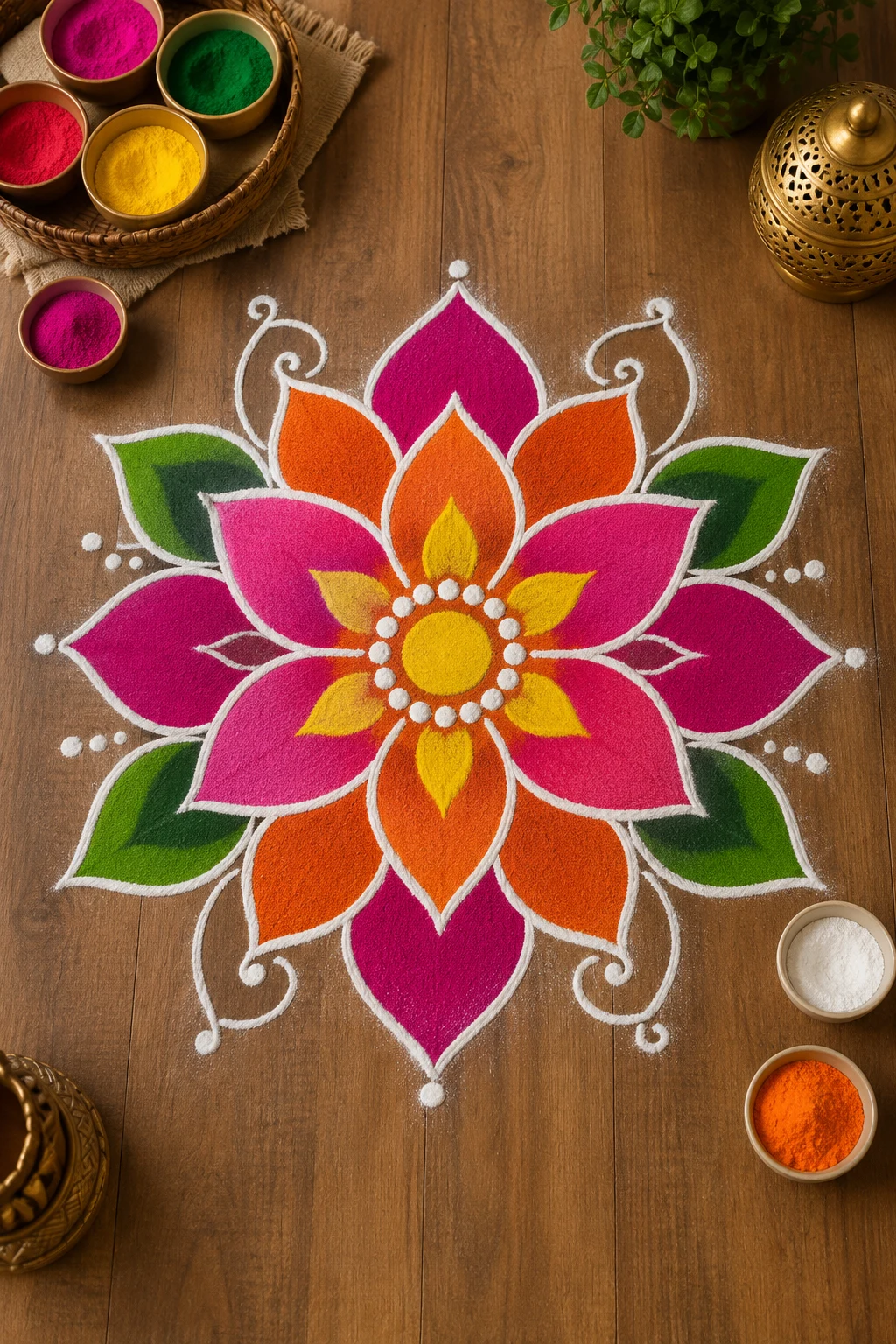
1. Classic Lotus Glow — free
A lotus is one of the easiest motifs to draw freehand because its petals naturally radiate from a central point. Start with a small circle, sketch six to eight pointed petals around it, then add a second layer of slightly larger petals.
Use rangoli powder in pink, magenta, orange, and yellow for a traditional Diwali palette. Add tiny white dots between the petals and a few green leaves around the outside. For extra definition, outline the flower with white powder before filling each section.
The key to this look is symmetry without overthinking it—slightly varied petals can actually make the handmade design more charming.
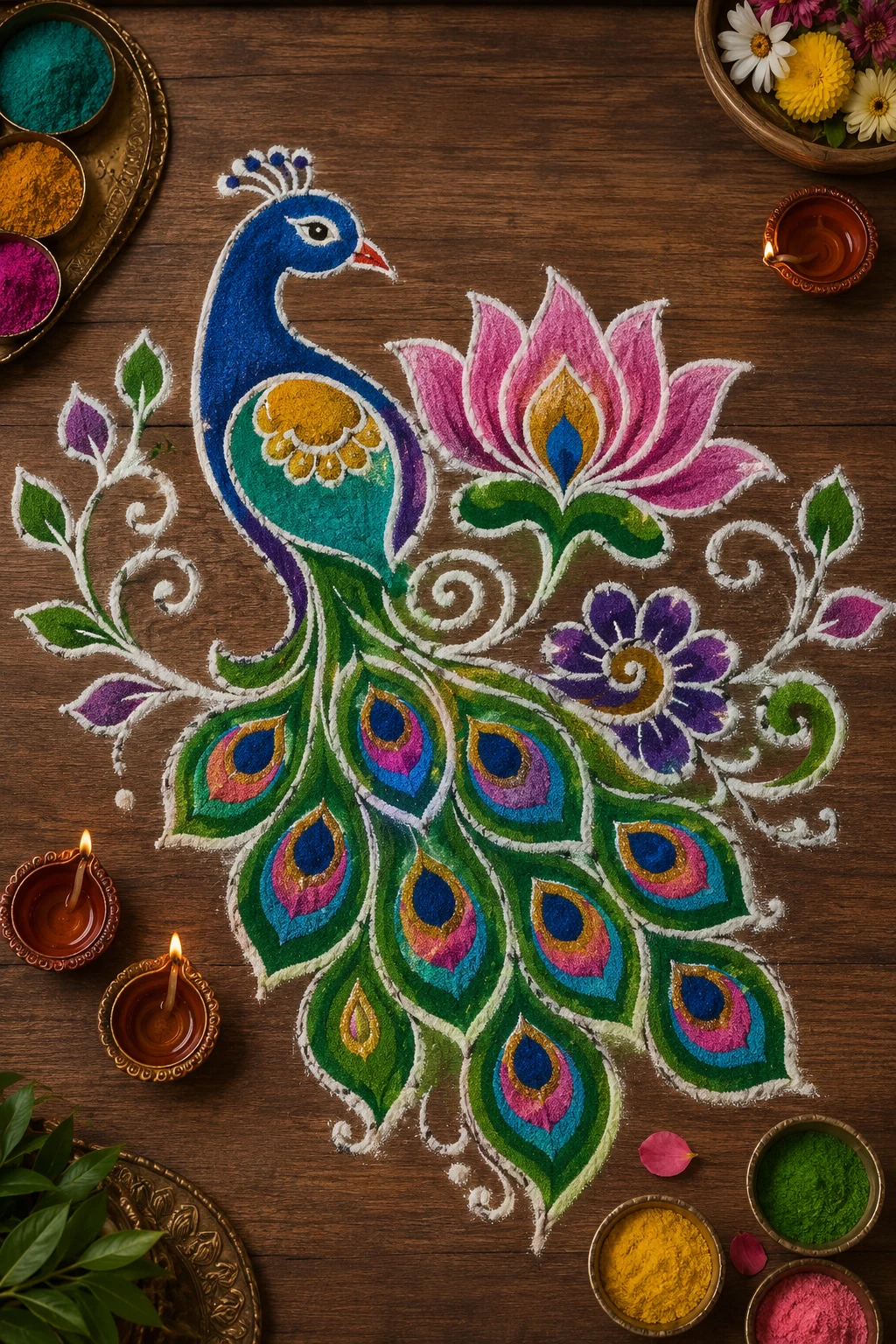
2. Peacock Jewel Rangoli — free
Peacocks instantly give rangoli a decorative, celebratory personality. Draw the bird’s curved neck first, then build a fan-shaped tail using repeating teardrop and feather shapes. Keep the outline simple so the colours become the star.
Try turquoise, royal blue, emerald green, purple, and touches of gold or yellow. Coloured rangoli powder works beautifully for the larger sections, while white powder creates crisp feather details.
The key to this look is layering the tail colours from dark to light, creating the illusion of depth without complicated shading.
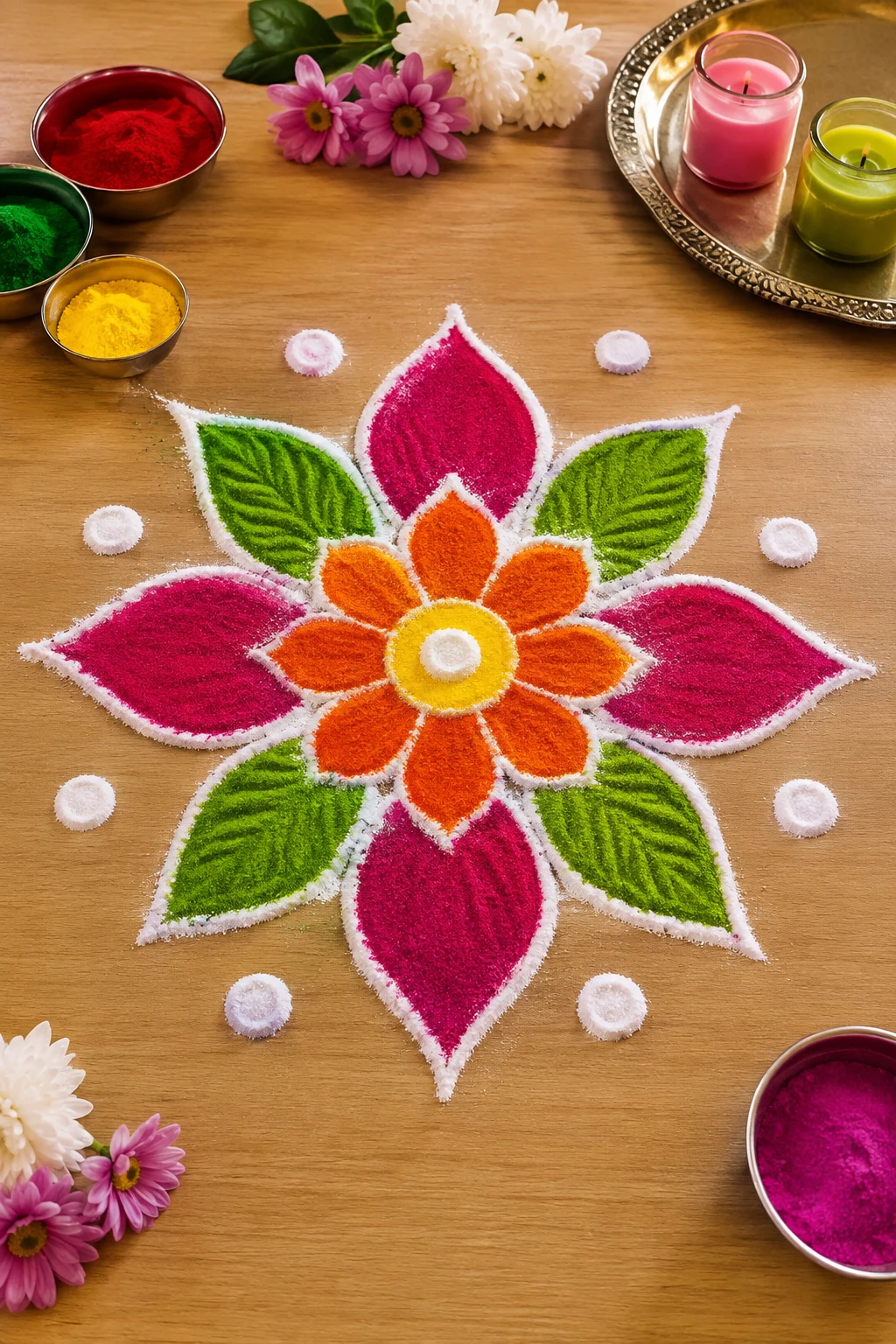
3. Simple Free Hand Rangoli With Colours
Short on time? This is where simple free hand rangoli designs with colours earn their keep. Draw a central flower, surround it with four curved leaves, and finish with small dots or miniature paisley shapes around the border.
Choose three colours instead of ten: blue, white, and pink; orange, yellow, and green; or purple, white, and red. This approach makes the design faster and prevents the entrance from looking like a colour explosion.
The key to this technique is limiting your palette to three or four colours so the pattern remains clean and easy to reproduce.
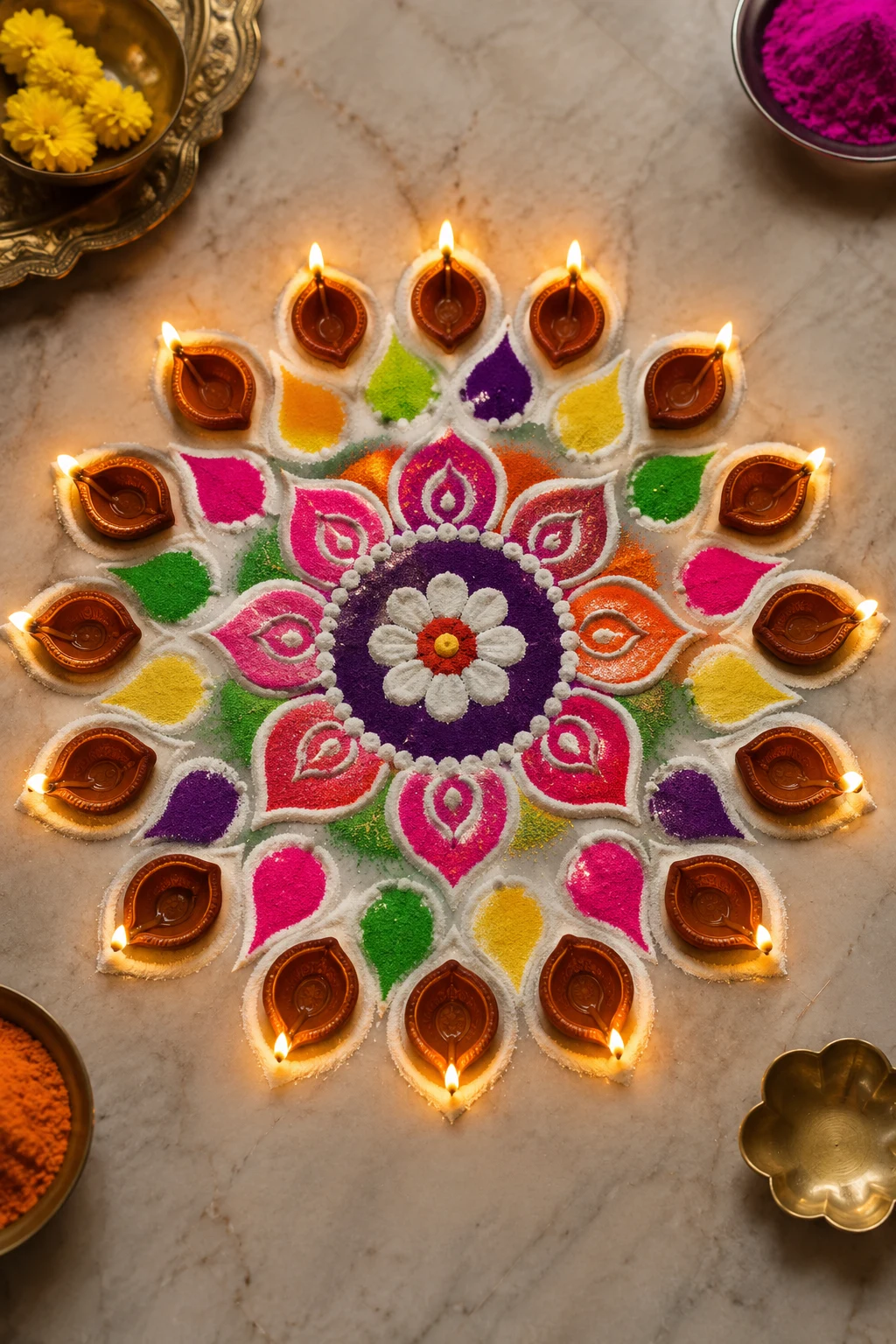
4. Diwali Diya Circle
Turn the traditional diya into the focal point of your rangoli. Draw a large circular border, place a diya shape in the middle, and surround it with curved flame motifs and tiny decorative dots.
For Diwali, use saffron orange, bright yellow, red, and white. You can also add small LED tealights around the finished rangoli if the area is safely away from loose powder and foot traffic.
The key to this look is making the flame shapes point outward, which gives the entire rangoli a radiant, starburst effect.
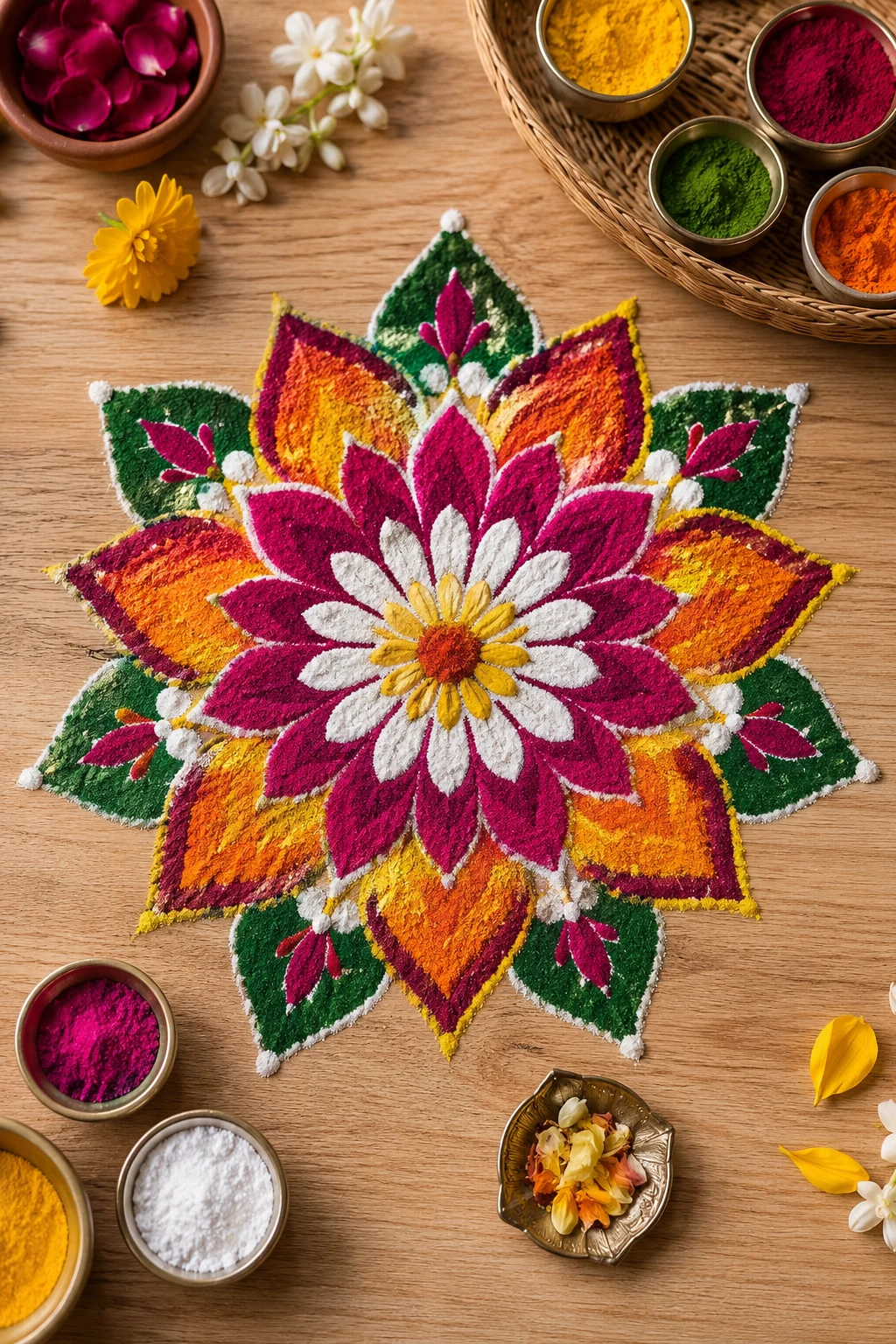
5. Floral Petal Mandala
For a softer design, create a mandala using flower-like rings. Begin with a tiny centre, then draw overlapping petals in increasingly larger circles. You can make each ring different instead of trying to repeat one complicated pattern.
Use pink, coral, lavender, white, and yellow rangoli powder. Fresh marigold petals can be scattered around the outer edge for texture and fragrance.
The key to this look is repeating one simple petal shape consistently rather than attempting complicated details in every section.
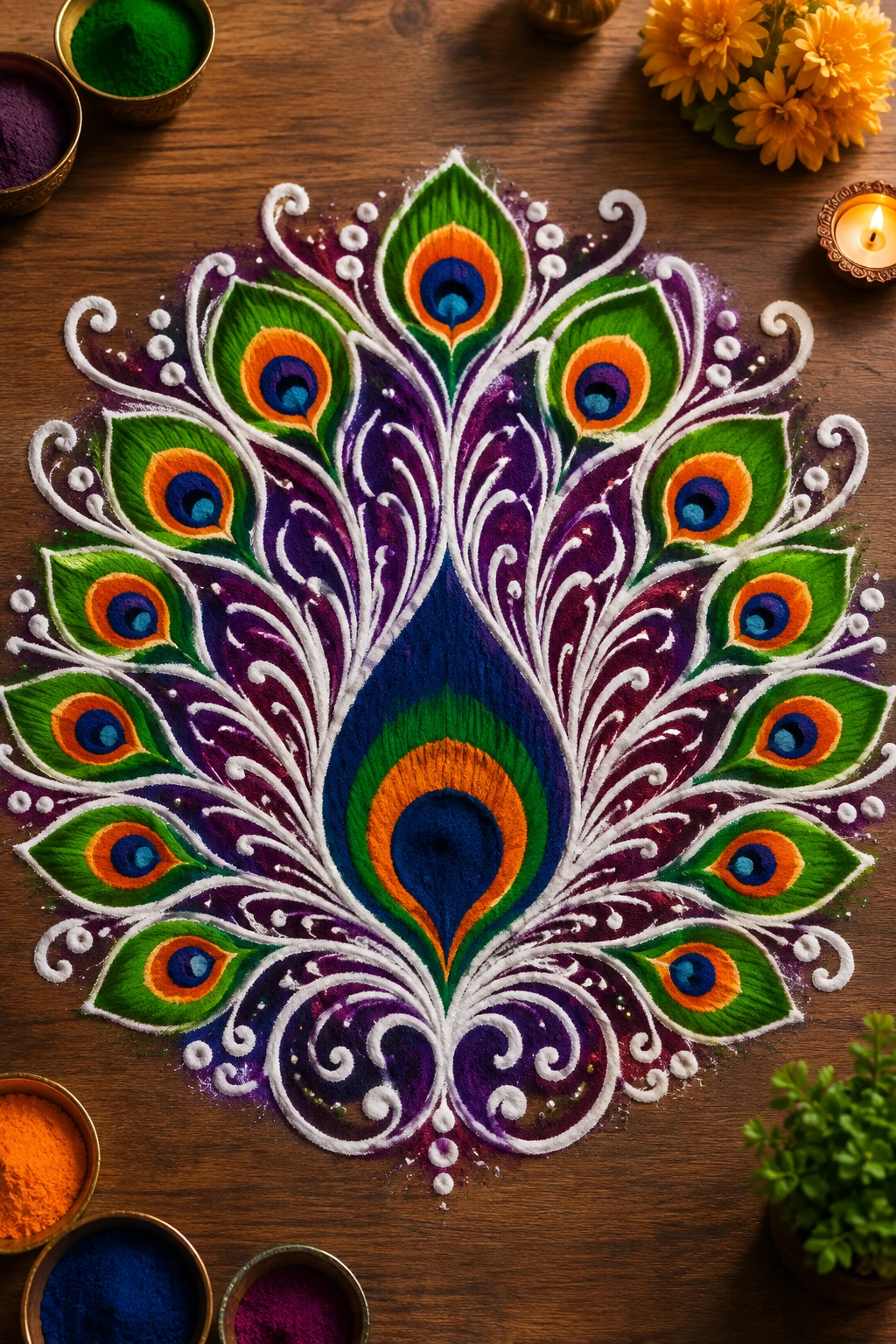
6. Peacock Feather Burst
If a full peacock feels ambitious, borrow just its most recognizable feature: the feather. Draw five to seven large feather shapes radiating from the centre and fill each with layered teardrops.
Try navy blue, teal, green, violet, and turquoise, with a small yellow or white circle inside every “eye.” These free hand rangoli designs with colours look especially striking on a pale floor because the jewel tones stand out immediately.
The key to this technique is keeping the feather “eyes” similar in size so the finished pattern looks intentional.
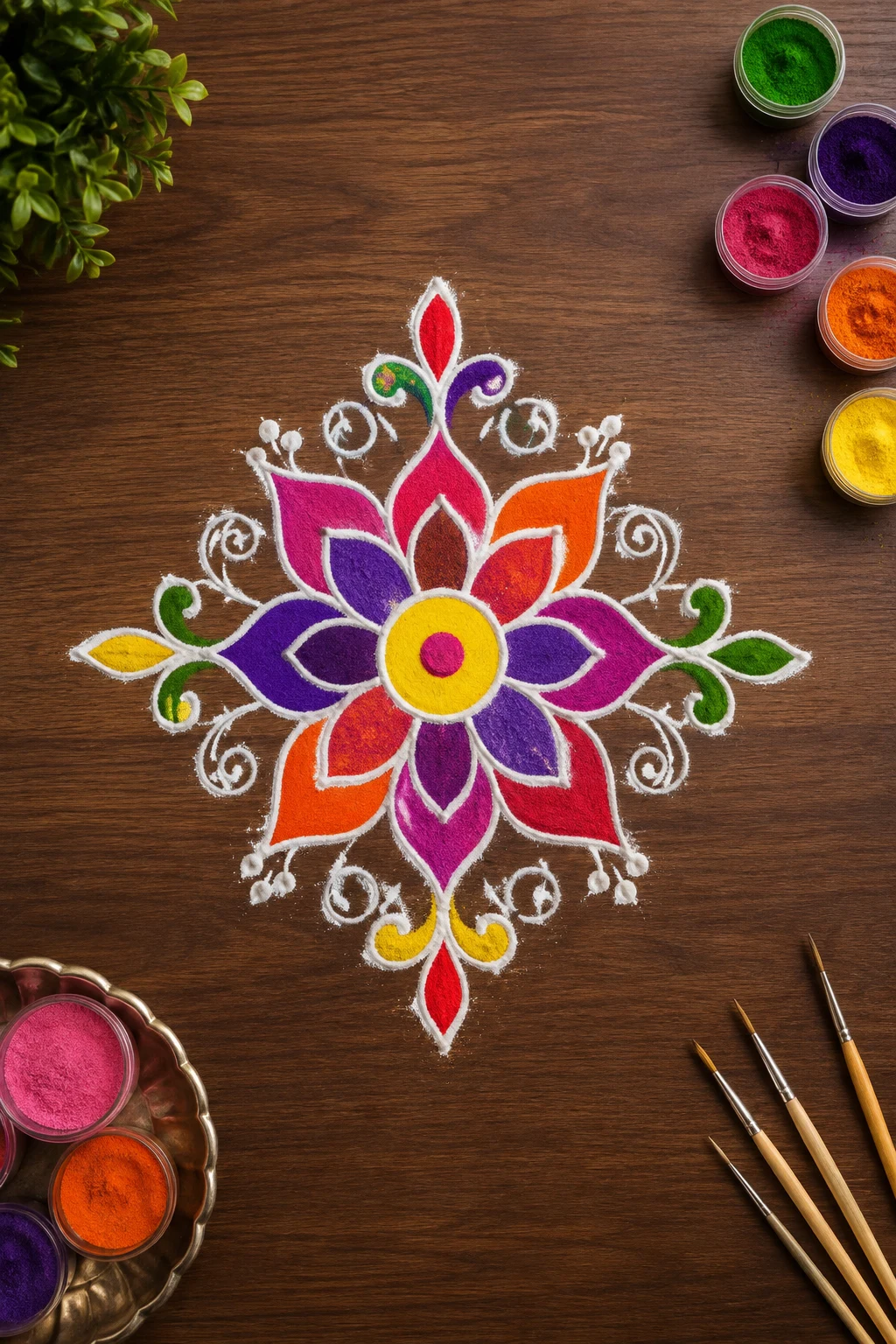
7. Free Hand Rangoli Designs With Colours for Kids
Kids can absolutely join the fun with simplified designs. Give them a large flower, sun, butterfly, heart, or star outline and let them fill the sections with child-friendly coloured powders or dry flower petals.
For younger children, use broader shapes and fewer tiny details. A paper plate can even help them practise circular patterns before they work on the floor. This is one of the most accessible free hand rangoli designs with colours for kids because there is no pressure to achieve perfect lines.
The key to this technique is choosing large, recognizable shapes that allow children to focus on colour placement and creativity.
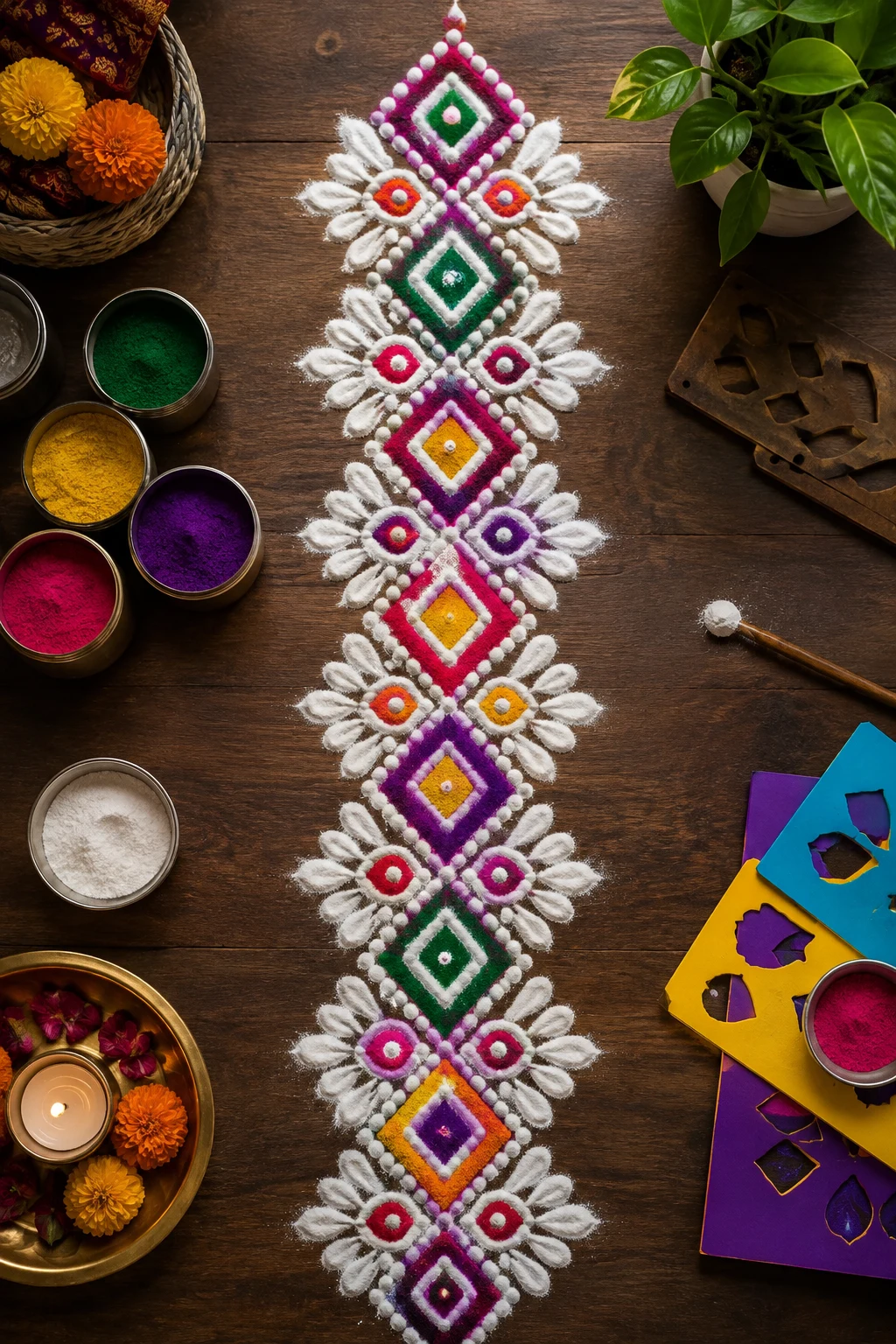
8. Geometric Diamond Border
Love a cleaner, more modern look? Draw a central diamond and surround it with smaller diamonds, triangles, dots, and curved lines. This design works particularly well beside a contemporary front door.
Use white as the outlining colour and fill the geometric sections with mustard yellow, terracotta, deep blue, and pink. A small funnel cone can make narrow powder lines easier to control.
The key to this look is repeating the same geometric shape around the centre to create rhythm and visual balance.
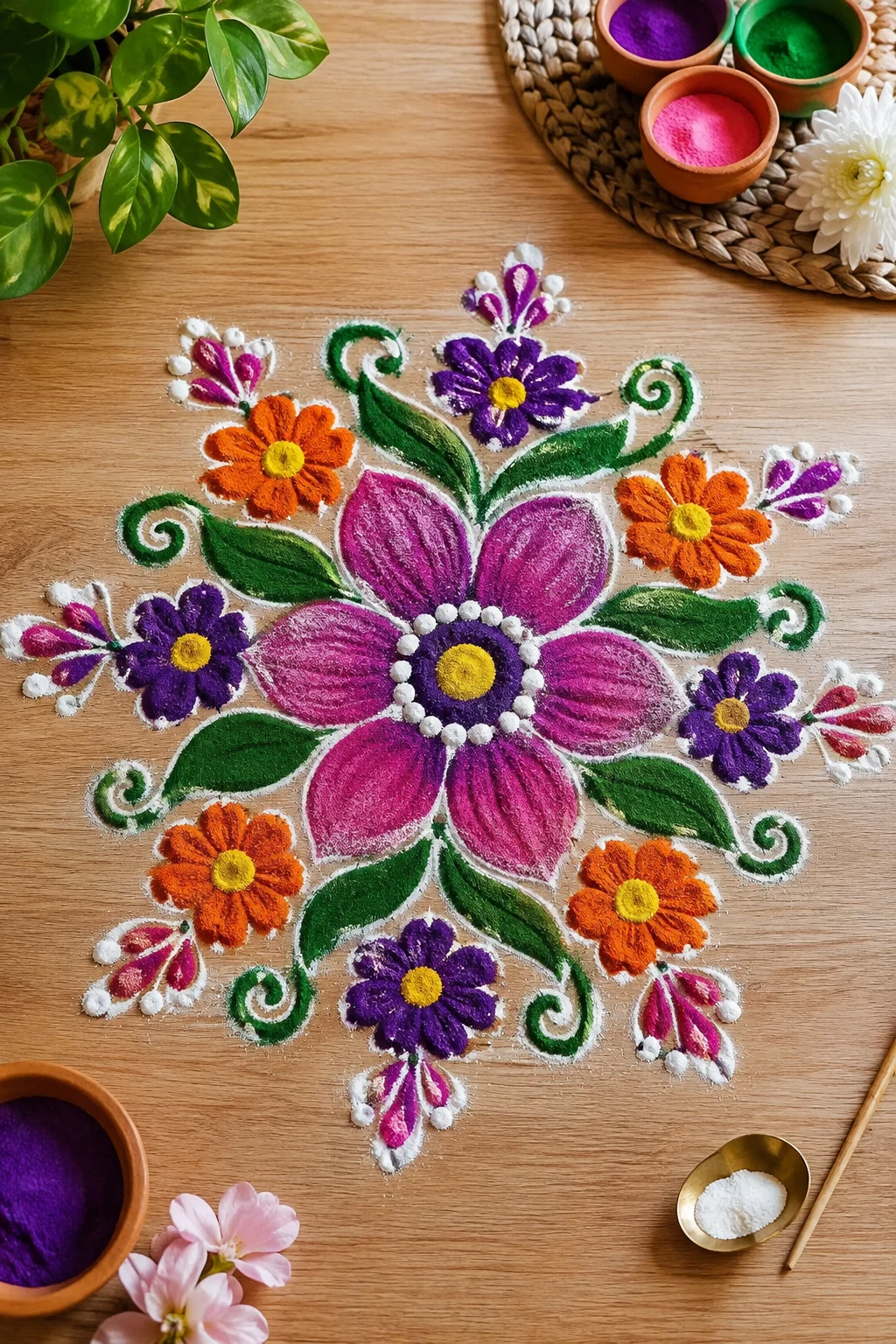
9. Free Hand Flower Rangoli With Colours
Combine several flowers instead of making one oversized bloom. Sketch a central marigold, then add small roses, daisies, leaves, and curling vines around it. The result feels like a miniature garden drawn directly onto the floor.
For a spring celebration or daytime gathering, choose yellow, peach, pink, white, and leafy green. These free hand flower rangoli designs with colours also work beautifully for weddings and mehndi ceremonies.
The key to this look is varying flower sizes so the composition feels natural rather than like a row of identical icons.
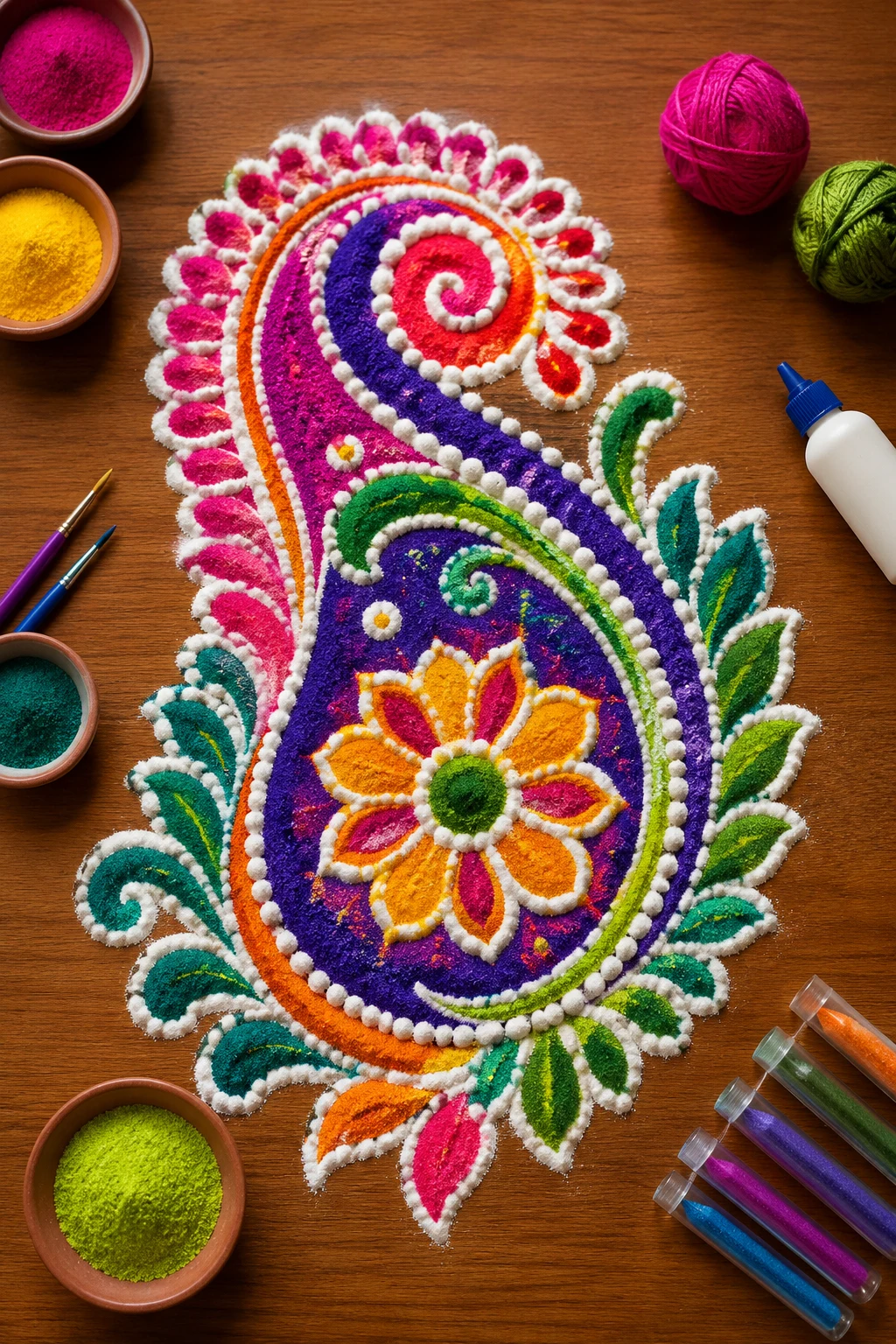
10. Paisley Party Design
Paisleys are wonderfully forgiving because their curved shape doesn’t require perfect symmetry. Draw one large comma-shaped paisley, then decorate it with smaller leaves, dots, scallops, and teardrops.
Try fuchsia, orange, purple, yellow, and white for a lively festive arrangement. Repeat three or five paisleys around a centre circle if you have a larger area to fill.
The key to this technique is starting with the outer paisley silhouette before adding interior decorations; otherwise, the design can quickly become crowded.
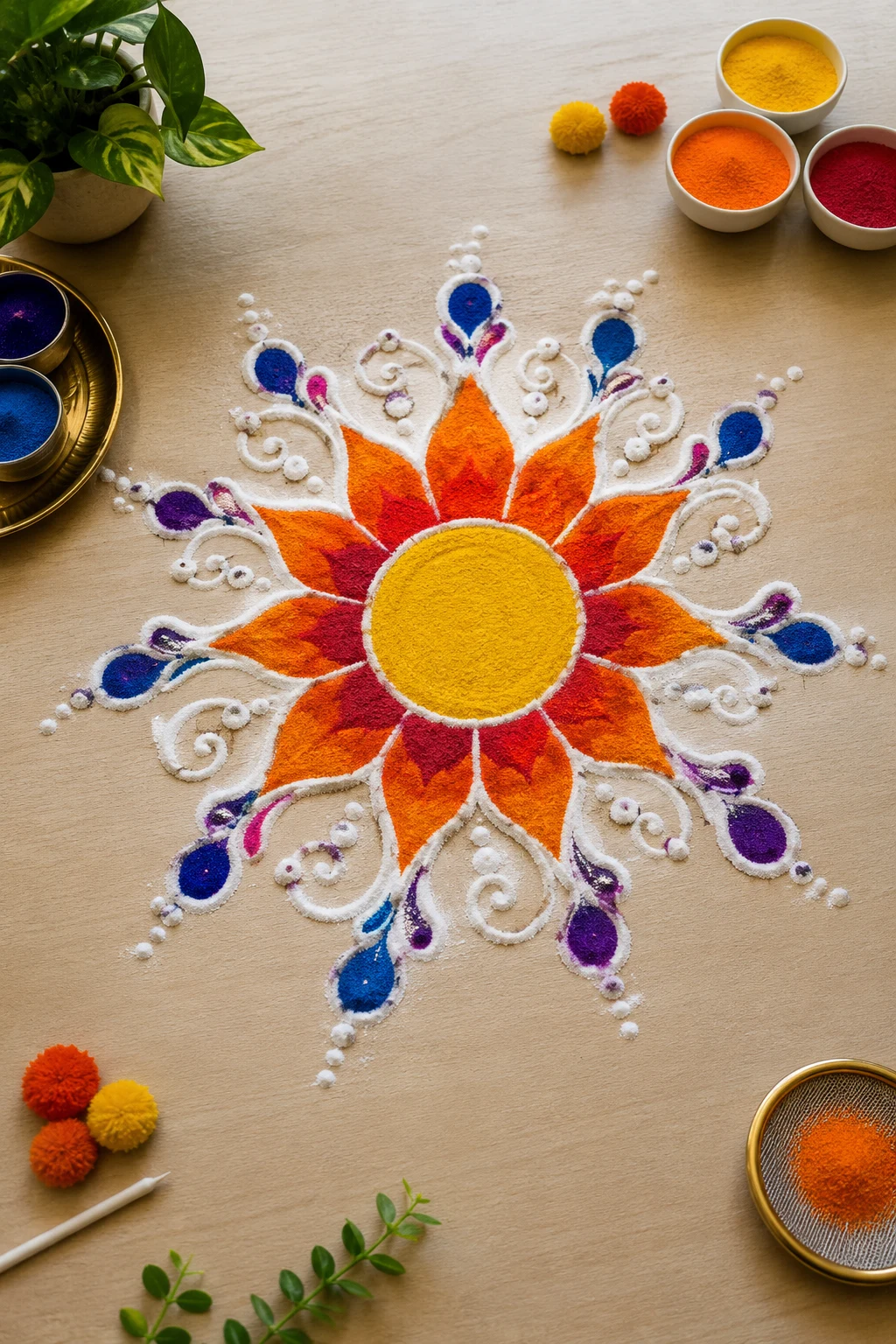
11. Rangoli Sunburst
A sunburst is ideal when you want something bold without spending hours drawing tiny motifs. Start with a circle, then create long and short rays alternating around it. Add dots between the rays for a polished border.
Orange and yellow naturally create a sunny effect, while red, pink, or purple can add contrast. For free hand rangoli easy with colours, this design is hard to beat because its basic structure is simple enough for beginners.
The key to this look is alternating ray lengths to create movement instead of making every line identical.
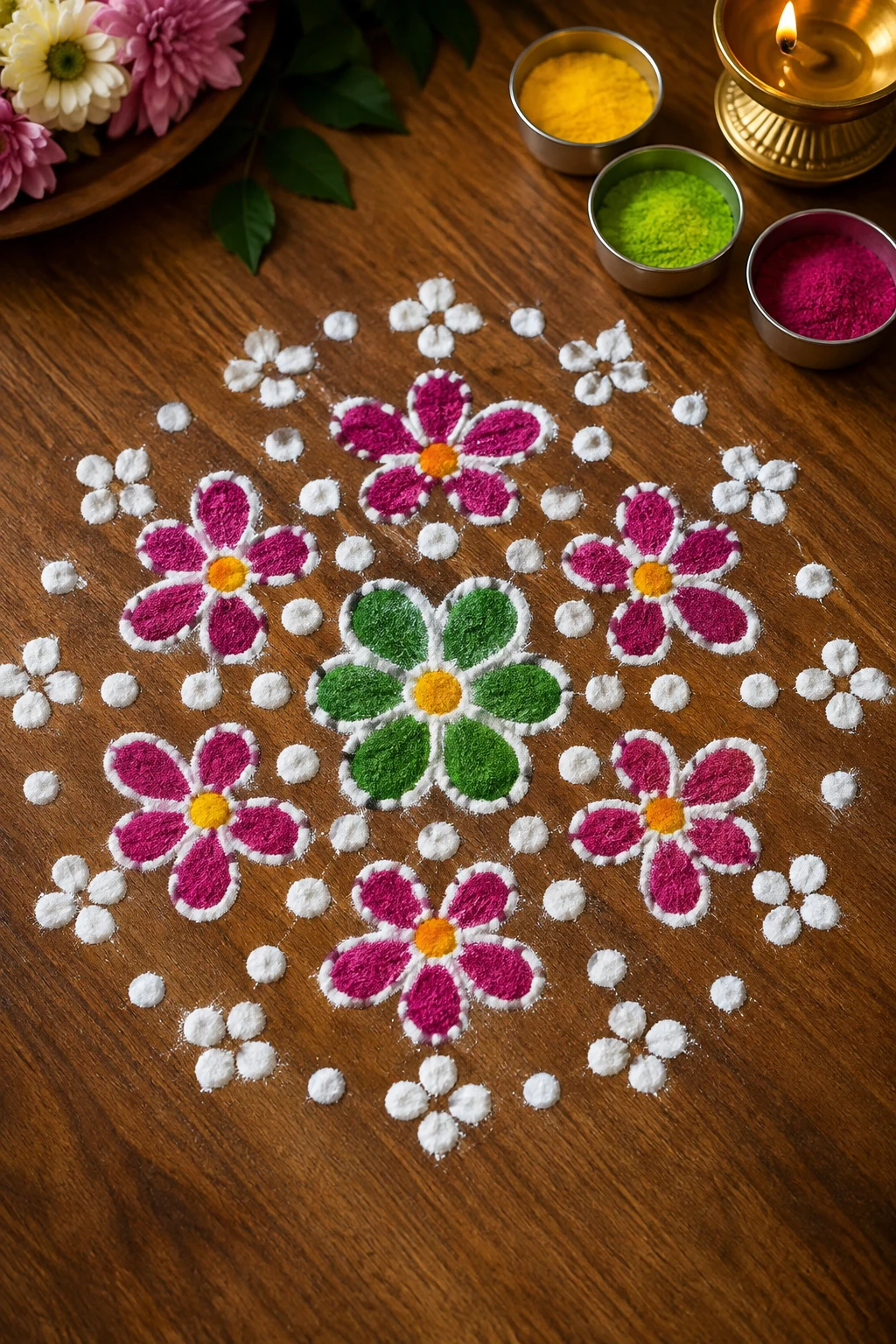
12. Everyday Dot-and-Flower Rangoli
You don’t need a festival to make rangoli. For a daily entrance decoration, create a compact design using a few dots, curved lines, four petals, and small leaves. It can take only a few minutes once you’re comfortable with the basic shapes.
White, yellow, and one accent colour are enough for a neat everyday pattern. This style fits especially well beside a doorway, balcony, prayer area, or kitchen entrance.
The key to this technique is keeping the design compact so daily rangoli stays practical rather than becoming a full morning project.
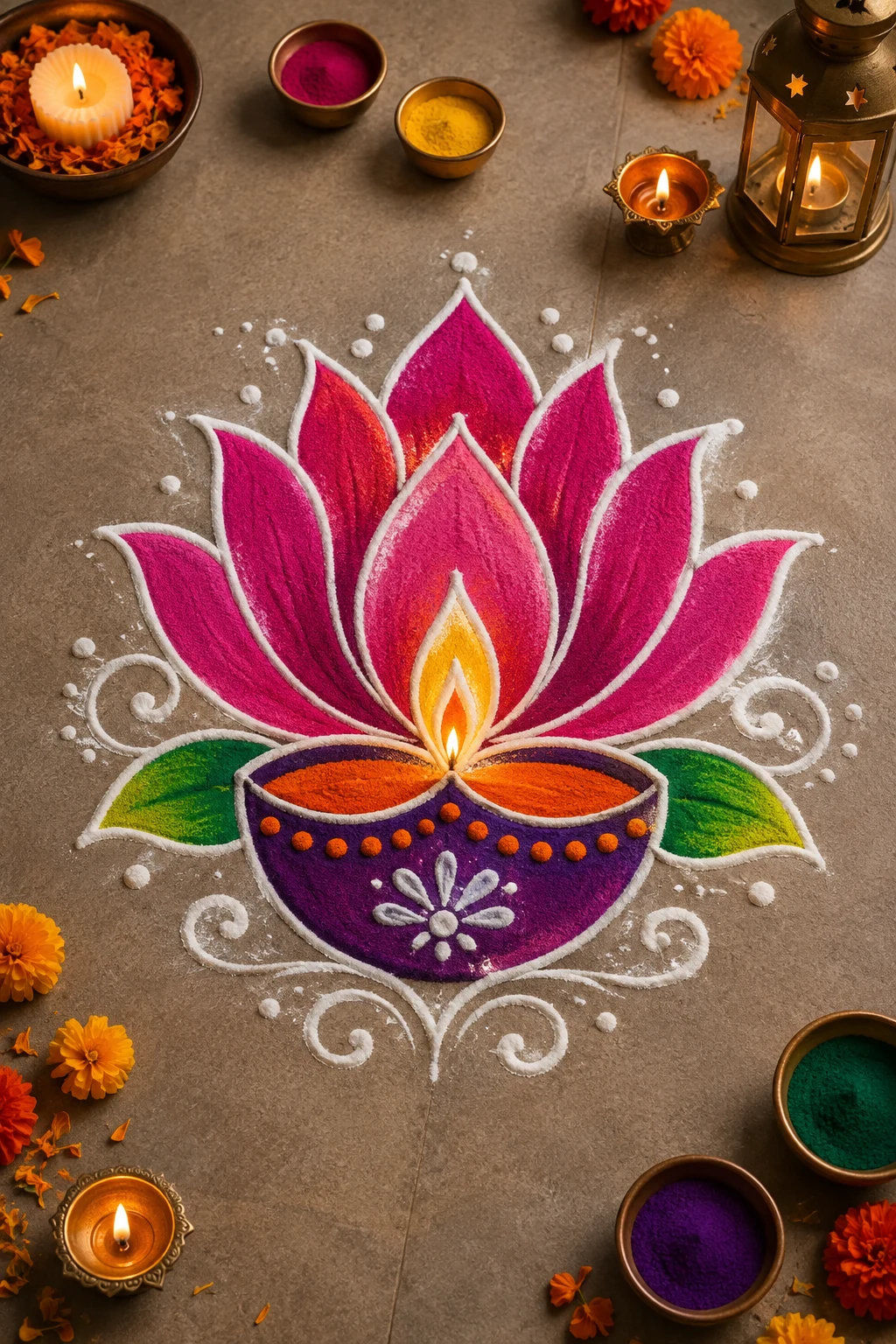
13. Free Hand Diwali Lotus and Diya
Combine two classic Diwali symbols in one composition: a lotus around the centre and small diyas around the perimeter. Draw the lotus first, then position four or eight tiny lamps between the petals.
Use pink and red for the lotus, yellow and orange for the flames, green for leaves, and white for outlines. Among diwali rangoli freehand designs with colours, this combination is especially effective because every element has a clear role.
The key to this look is leaving small gaps between motifs, allowing each flower and diya to remain visually distinct.
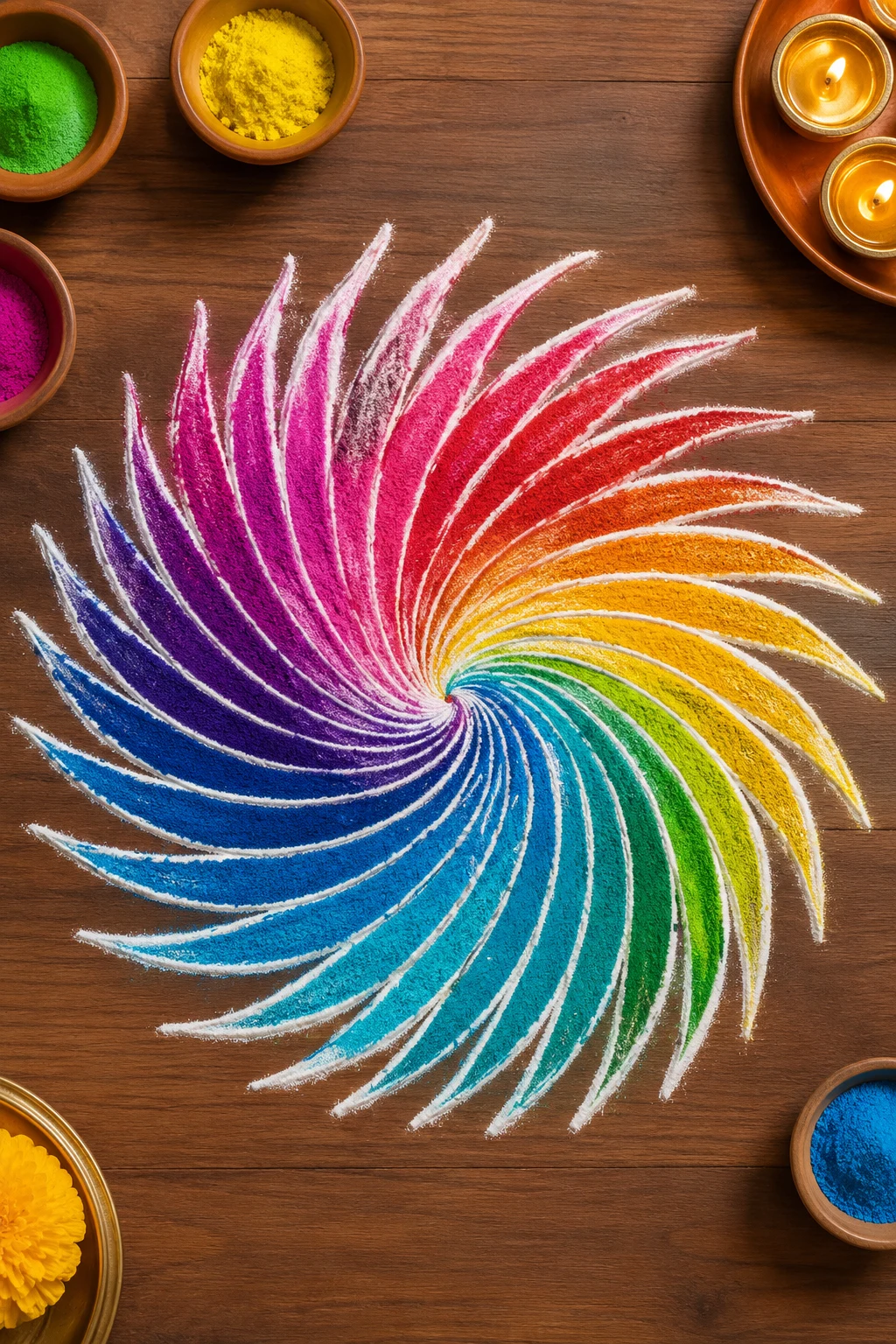
14. Rainbow Spiral Rangoli
For something playful, draw a large spiral from the centre outward and divide it into curved sections. Fill each section with a different colour, moving gradually through pink, orange, yellow, green, blue, and purple.
Add white dots along the spiral line for contrast. This is also a fun design to practise after browsing free hand rangoli images with colours for inspiration, because the basic spiral can be adapted into many shapes.
The key to this technique is placing contrasting colours beside one another so each spiral section remains easy to see.
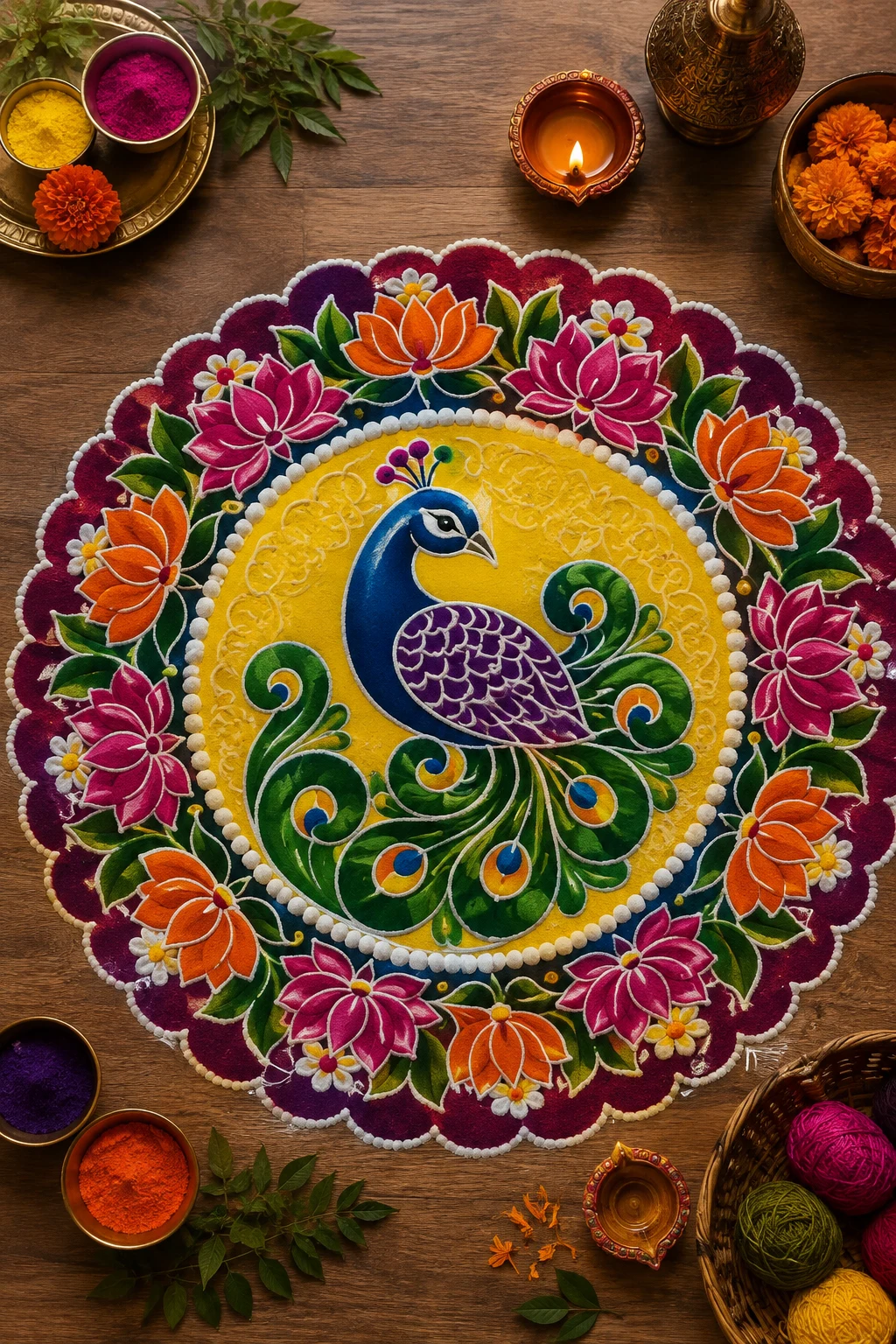
15. Grand Floral Peacock Circle
Ready for a showpiece? Combine a central flower, curved peacock-inspired feathers, leaves, dots, and a wide decorative border. Sketch the entire composition lightly first, then work from the centre outward.
Use royal blue, emerald green, magenta, orange, yellow, and white. For a professional finish, an experienced rangoli artist would typically establish the main proportions before filling colour; that same principle makes beginner designs look much more controlled.
The key to this look is building the composition in layers—centre, petals, feathers, border, then tiny accents—instead of trying to complete one section at a time.
FAQ
What are the easiest free hand rangoli designs with colours for beginners?
Start with flowers, diyas, sunbursts, dots, and simple geometric circles. These designs use repeatable shapes and don’t require advanced freehand drawing skills.
How do you make free hand rangoli designs with colours last longer?
Work on a clean, dry surface, use finely milled rangoli powder, and avoid placing the design directly in a busy walking path. For outdoor designs, sheltered areas generally help reduce wind and moisture damage.
Why are free hand rangoli designs with colours popular for Diwali?
They combine creativity, tradition, and festive decoration in one activity. The handmade quality also allows families to personalize patterns, colours, and symbols for their own celebration.
The Bottom Line
Free hand rangoli designs with colours don’t need to be complicated to look impressive. Start with a flower, diya, paisley, peacock feather, or geometric centre, then build outward with repeating shapes and a controlled colour palette. For everyday decorating, keep things small and practical; for Diwali, weddings, and housewarmings, go bigger with layered motifs and richer colours. The best pro tip is simple: sketch the structure first and fill the powder second. Your rangoli doesn’t need mathematical perfection—it needs a confident design, cheerful colours, and a little personality.
🛍️ Shop the Look — free hand rangoli designs with colours
Our handpicked Amazon picks curated specifically for free hand rangoli designs with colours:
As an Amazon Associate I earn from qualifying purchases.