
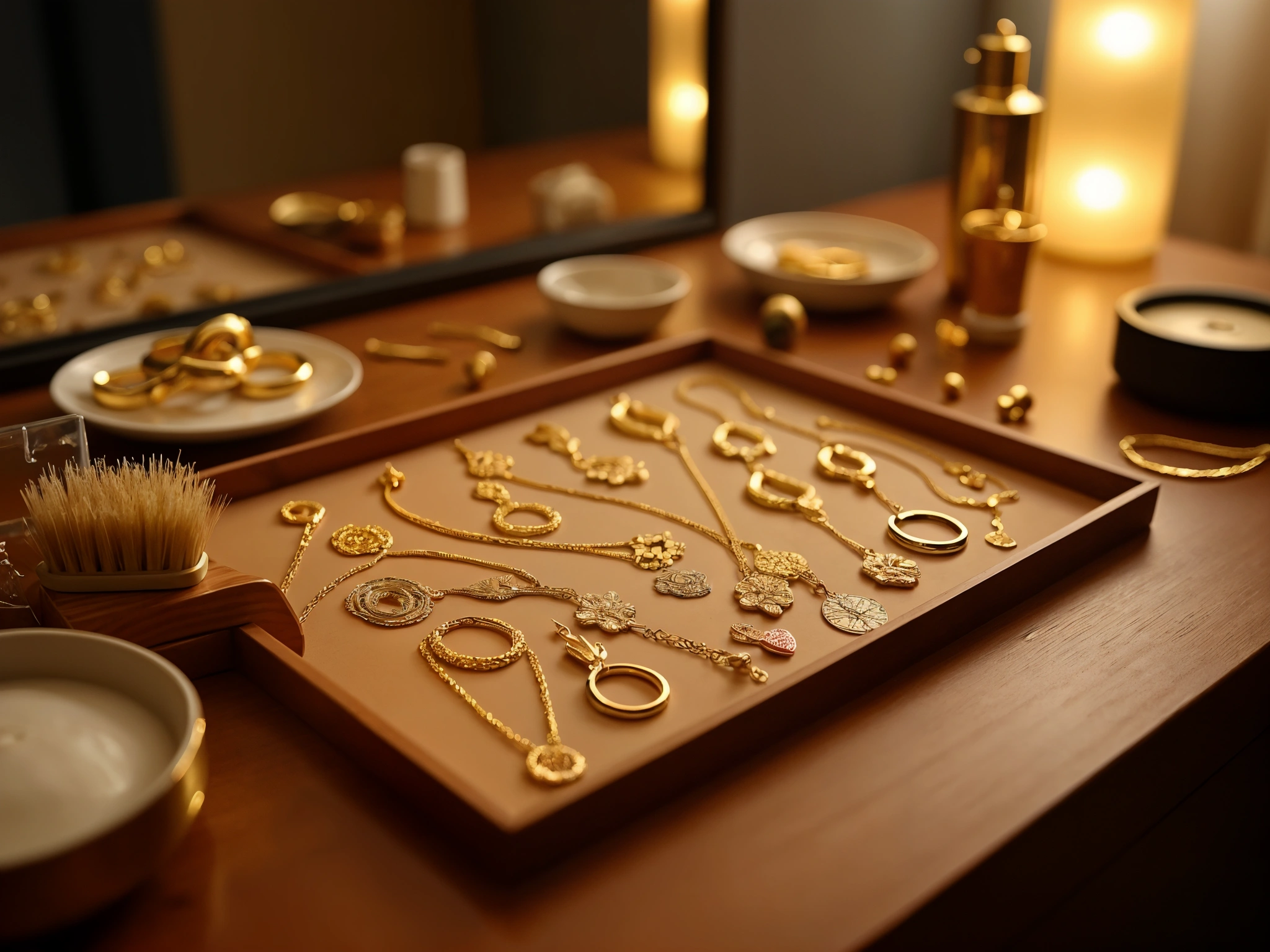
Do you love the way your favorite accessories catch the light? Over time, even the most precious items can lose their luster. This is due to oils, lotions, and daily wear. Learning how to clean gold jewelry at home is a simple way to keep your collection looking brand new.
You don’t need expensive professional services to restore that brilliant glow. With a few basic household items, you can safely remove grime and buildup in just minutes. Consistency is the secret to maintaining the beauty of your cherished pieces for years to come.

This guide provides effective methods to help you clean gold jewelry without causing damage. Follow these easy steps to ensure your accessories remain as radiant as the day you bought them.
Key Takeaways
- Regular maintenance prevents long-term buildup and dullness.
- Gentle household solutions are often safer than harsh chemicals.
- Avoid using abrasive materials that can scratch soft metal surfaces.
- Proper drying techniques prevent water spots and mineral deposits.
- Consistent care extends the lifespan of your favorite accessories.
Understanding Gold Purity and Why Jewelry Tarnishes
To clean gold jewelry right, you need to know about its purity and how it interacts with its environment. Pure gold is soft, so it’s mixed with other metals to make it last longer. This mix decides the karat rating and how your jewelry will look as time goes by.

The difference between 10k, 14k, and 18k gold
The karat system shows how much pure gold is in the mix. Higher karat gold is softer and more likely to get scratched. But, it’s also more valuable. Lower karat gold is harder and lasts longer, but it might tarnish faster because of more alloy metals.
| Karat | Pure Gold Content | Durability | Tarnish Risk |
|---|---|---|---|
| 10k | 41.7% | High | Moderate |
| 14k | 58.3% | Balanced | Low |
| 18k | 75.0% | Low | Very Low |
Common environmental factors that cause dullness
Even the most expensive jewelry can lose its shine in harsh conditions. Humidity and pollution can react with the metals in your jewelry, causing oxidation. Also, sweat with its salts and acids can make it dull, more so in hot weather.
Why oils and lotions affect your gold’s luster
Our daily beauty routines might be making our jewelry dull. Things like body lotions, perfumes, and hairsprays leave a sticky film on jewelry. This film traps dust and dirt, hiding the metal’s natural shine. Cleaning your gold jewelry regularly can remove these layers and bring back its original glow.
Essential Supplies to Clean Gold Jewelry Safely
To safely clean gold jewelry, you need to pick your supplies carefully. The wrong materials can scratch or dull your favorite pieces. With a few simple items from your home, you can keep your jewelry shining for years.

Choosing the right mild dish soap
When cleaning gold jewelry, the key item is a gentle, pH-neutral dish soap. Stay away from strong detergents with degreasers or phosphates. They can harm delicate metal surfaces. A clear, simple soap is best for removing oils and dirt without leaving a residue.
The importance of using soft-bristled brushes
Small designs can trap dirt in tight spots that cloths can’t reach. A soft-bristled brush, like a baby toothbrush, is ideal. Its soft bristles clean without scratching the gold, unlike stiffer brushes.
Why you should avoid harsh chemicals and abrasive cleaners
Many people use bleach or ammonia to brighten their jewelry. But these can damage the metal and remove protective finishes. Also, never use abrasive powders or scouring pads. They can leave marks on your gold. Use mild solutions to keep your jewelry looking great.
Preparing Your Workspace for a Deep Clean
Creating a safe and tidy space is key to a stress-free cleaning routine at home. A messy area can lead to accidents. So, take a few minutes to set up properly to avoid trouble. This way, your valuable items stay safe during the cleaning process.

Setting up a safe cleaning station
Use a flat, well-lit area like a kitchen or bathroom counter as your main station. A stable surface keeps your items from falling. Make sure you have enough light to see any hidden dirt on your pieces.
Preventing loss by plugging your drains
When cleaning gold jewelry, it’s vital to protect against loss. Always close the sink stopper or cover the drain with a fine-mesh screen. Small items can easily go down the drain, causing heartbreaking losses that can be prevented.
Organizing your jewelry by metal type and stone setting
Sorting your jewelry before cleaning makes the process more efficient. Different materials need different care. Here’s how to organize:
- Solid Gold: Pieces without stones that can handle a standard soak.
- Gemstone-Embedded: Items requiring extra caution to protect delicate settings.
- Antique or Vintage: Jewelry that may have fragile prongs or porous materials.
By sorting your items, you can clean gold jewelry with confidence. Each piece gets the right care to shine. This method keeps your cleaning smooth and protects your collection.
Step-by-Step Guide to Clean Gold Jewelry at Home
Bringing back the shine of your favorite accessories is simpler than you think. By cleaning gold jewelry right, you keep its value high and its look fresh for years. This easy guide helps you clean your collection at home, saving you from expensive professional services.

Mixing the perfect cleaning solution
Begin by filling a small bowl with warm water. Mix in a few drops of mild dish soap for a gentle yet effective cleaner. Stay away from harsh detergents, as they can harm the jewelry’s surface or leave a residue.
Soaking your pieces to loosen debris
Submerge your jewelry in the soapy water and let it soak for 15 to 20 minutes. This time is enough to break down oils, lotions, and daily dirt. Remember, patience is key here, as the soak does most of the work.
Gently scrubbing hard-to-reach crevices
After soaking, use a soft-bristled toothbrush to clean hard spots. Gently scrub the back of settings and around clasps where dirt often hides. Be gentle to avoid scratching the gold.
Rinsing thoroughly to remove soap residue
After scrubbing, rinse each piece under lukewarm water. Make sure to remove all soap residue, as it can attract dust. Dry your jewelry with a soft, lint-free cloth to complete the cleaning.
| Step | Action | Key Benefit |
|---|---|---|
| Preparation | Mix soap and warm water | Safe, non-abrasive base |
| Soaking | Wait 15-20 minutes | Loosens deep-set grime |
| Scrubbing | Use soft-bristled brush | Cleans tight crevices |
| Rinsing | Use lukewarm water | Prevents soap buildup |
Specialized Techniques for Gemstone-Embedded Gold
Caring for gold jewelry with gemstones needs special techniques. This ensures both the metal and stones stay in top condition. When cleaning gold jewelry with detailed designs, you must consider each material’s unique needs. A general cleaning method can harm or dull the jewelry.

Cleaning diamonds and hard stones safely
Diamonds, sapphires, and rubies are tough, making them easy to clean at home. Use a mild soap and a soft brush to clean gold jewelry with these stones. Make sure the brush is soft to avoid scratching the gold while cleaning behind the stone.
Handling porous stones like pearls and opals
Porous stones like pearls, opals, and turquoise need extra care. They can soak up chemicals or liquids, causing permanent damage. When cleaning gold jewelry with these stones, just use a soft, damp cloth on the metal. Avoid touching the stones.
Avoiding damage to delicate settings
Always check your jewelry for loose stones or bent prongs before cleaning. If a stone moves, don’t scrub it to avoid losing it. It’s safer to have such pieces professionally cleaned to secure the setting first.
| Gemstone Type | Cleaning Method | Risk Level |
|---|---|---|
| Diamond/Sapphire | Mild soap and soft brush | Low |
| Pearl/Opal | Damp cloth only | High |
| Emerald/Tanzanite | Gentle wipe, no soaking | Medium |
How to Remove Stubborn Tarnish and Grime
When soap and water don’t work, you need to do more. Stubborn tarnish can stick to detailed designs. It’s important to know how to clean gold jewelry well when it gets dirty.
Identifying when a deeper clean is necessary
Look for signs that your jewelry needs more than a simple wash. If a dark film or sticky residue stays after washing, it’s time for a deeper clean. Visible grime in settings or chain links means oils and pollutants have built up.
Using ultrasonic cleaners at home with caution
Ultrasonic cleaners use sound waves to clean hard-to-reach areas. But, they can be risky for some jewelry. Avoid them on pieces with loose stones or soft gemstones.
Always read the instructions before using an ultrasonic cleaner on gold jewelry. If unsure, it’s safer to avoid it. Caution is your best friend with delicate or heirloom items.
Safe alternatives for heavy buildup
If you don’t want to use machines, there are home solutions. A mix of warm water and a little ammonia can remove oils from solid gold. But, use it carefully and avoid pearls or porous stones.
Another safe choice is a soft-bristled toothbrush to gently remove debris after soaking. Being patient and consistent helps keep your gold jewelry shining for years.
Drying and Polishing Your Pieces for Maximum Shine
The secret to a mirror-like finish is in the drying and polishing steps after washing. These steps make your clean gold jewelry shine brightly. Taking extra time to dry and polish keeps your jewelry looking great for longer.
The best cloths for buffing gold
It’s important to use the right cloth to avoid scratching your gold. Always use ultra-soft, lint-free cloths for safe buffing. Microfiber cloths are great because they remove oils without scratching.
- Microfiber cloths: Perfect for daily maintenance and gentle buffing.
- Jewelry polishing cloths: Often treated with non-toxic compounds to restore shine.
- Soft cotton flannel: A great, gentle alternative if you do not have a dedicated polishing cloth.
Ensuring your jewelry is completely dry before storage
Moisture can harm your jewelry. Storing wet items can cause dullness or skin irritation. Always dry your jewelry with a clean cloth before storing.
Air drying is safe and effective if you’re not in a hurry. Lay your jewelry on a soft towel in a well-ventilated area. Wait until all moisture is gone. This simple step is key to cleaning gold jewelry at home.
Techniques for a streak-free finish
For a streak-free shine, use light and consistent pressure when polishing. Move your cloth in gentle circular motions to buff evenly. This removes water spots and soap residue missed during rinsing.
If streaks appear, lightly breathe on the gold to add moisture. Then buff again. This trick brings back a brilliant shine. By following these steps, your clean gold jewelry will stay in top condition for years.
Professional Maintenance and When to Seek Expert Help
Knowing when to visit a jeweler is as important as knowing how to clean gold jewelry at home. Routine care keeps your pieces looking bright. But, professional eyes can spot hidden issues before they become costly problems. Expert maintenance ensures your heirloom pieces remain secure and beautiful for generations.
Signs that your jewelry needs a professional inspection
You should bring your items to a professional if you notice any physical changes. Worn prongs are a major red flag, as they may no longer hold your gemstones securely in place. If you hear a faint rattling sound when you shake a ring, it is a clear sign that a stone has loosened.
Also, check your clasps and hinges for signs of fatigue or stiffness. If a necklace clasp feels loose or a bracelet hinge does not snap shut firmly, it is time for a repair. Addressing these issues early prevents the heartbreak of losing a precious stone or an entire piece of jewelry.
The benefits of steam cleaning at a jeweler
Professional jewelers use high-pressure steam to reach areas that are impossible to access with a soft brush. This method effectively removes stubborn oils and debris that accumulate behind settings. It is a highly effective way to clean gold jewelry without the risk of scratching delicate surfaces.
Steam cleaning also restores the original brilliance of your metal by removing microscopic layers of grime. This process is often part of a standard inspection, providing a deep, restorative shine that is difficult to replicate at home. Your jewelry will look brand new after a professional steam treatment.
How often to schedule professional maintenance
Most experts recommend a professional checkup at least twice a year. This frequency allows a jeweler to monitor the wear and tear on your settings and clasps. Regular visits are the best way to maintain the integrity of your collection over time.
| Service Type | Frequency | Primary Benefit |
|---|---|---|
| Home Maintenance | Weekly/Monthly | Surface shine |
| Professional Inspection | Every 6 Months | Structural safety |
| Deep Steam Clean | Annually | Deep grime removal |
By following this schedule, you ensure that you always clean gold jewelry safely while keeping it in top condition. Consistent professional care is the ultimate investment in your jewelry’s longevity.
Conclusion
Your gold pieces are more than accessories. They are personal treasures that need care to stay bright. Now, you know how to clean gold jewelry easily with items you have at home.
Regular care stops oils and pollutants from dulling your jewelry. A soft cloth wipe after each wear keeps them looking new. This simple step helps keep your collection’s value high.
We encourage you to share your cleaning results or storage tips with others. Keeping a regular cleaning schedule makes your jewelry shine for years. Begin your care routine today to keep your gold sparkling.
FAQ
How often should I clean gold jewelry to maintain its original luster?
For daily wear, like a Cartier Love Bracelet or a wedding band, clean once a month. This stops oils and lotions from building up. It keeps your clean gold jewelry looking great.
Why does my 10k or 14k gold jewelry seem to tarnish faster than my 18k pieces?
10k and 14k gold has more alloy metals like copper and silver. These metals react with humidity and oxygen. 18k gold, with more gold, resists tarnish but is softer and needs careful handling.
What is the safest soap to use when I clean gold jewelry at home?
Use a mild, pH-neutral dish soap. Dawn Ultra is good because it cuts grease without harsh chemicals. It won’t damage your precious metal accessories.
Can I use a regular toothbrush to scrub my gold rings and necklaces?
Only use a soft-bristled brush, like an Oral-B sensitive toothbrush. Regular toothbrushes can scratch gold. Scrub gently, focusing on crevices.
Is it safe to clean gold jewelry with gemstones like pearls or opals using the soaking method?
No, for porous stones like pearls and opals, avoid soaking. Use a soft, damp cloth to clean the gold parts. This prevents damage to the stones.
What should I do if my gold jewelry has heavy tarnish or stubborn buildup?
For tough tarnish, try Connoisseurs Precious Jewelry Cleaner. Home ultrasonic cleaners like Magnasonic can also work. But be careful not to damage delicate settings.
Why is it important to plug the drain before I start to clean gold jewelry?
It’s a safety step! Small items can slip down the drain when soapy. Clean in a bowl or use a rubber sink stopper to keep your clean gold jewelry safe.
How can I achieve a streak-free, professional-looking shine at home?
Dry your jewelry with a lint-free microfiber cloth after rinsing. Use a Sunshine Polishing Cloth for extra shine. This removes water spots and makes your jewelry look new.
When is it time to stop DIY cleaning and visit a professional at Zales or Kay Jewelers?
Get a professional check-up at least once a year. If you hear a “clicking” sound or see thin prongs, a jeweler can help. They use steam cleaners and make repairs to keep your jewelry safe.