
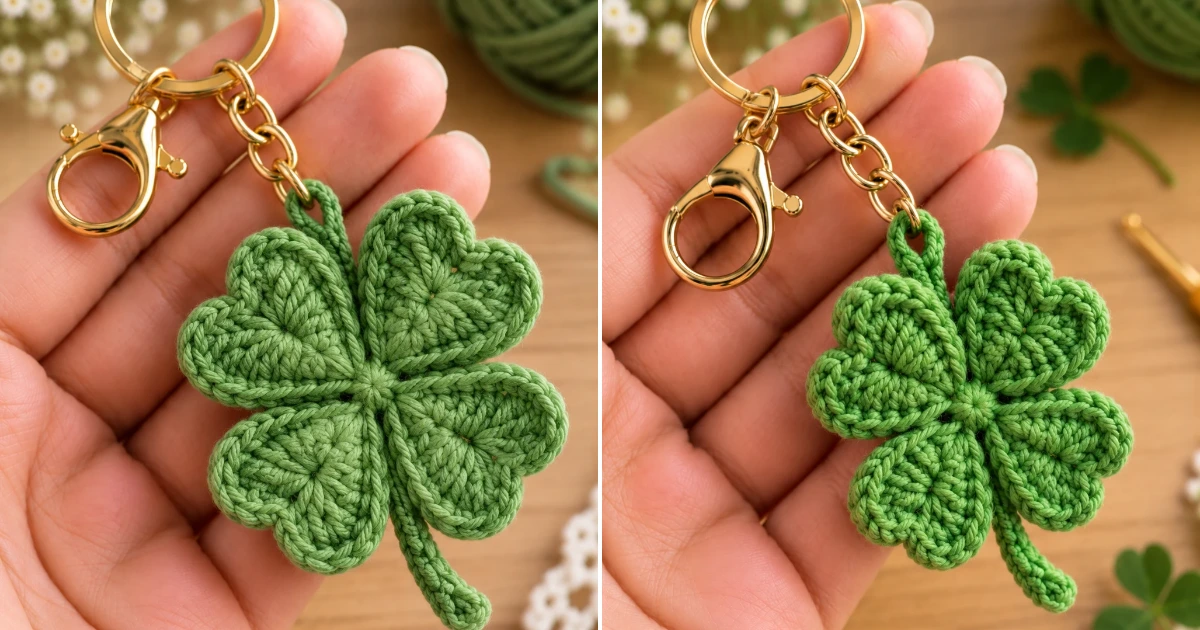
If you want to learn how to make crochet clovers, these tiny handmade treasures can turn leftover yarn into adorable gifts, accessories, and festive decorations. Crochet clovers are small yarn motifs shaped like three- or four-leaf clovers, created with simple stitches, rounded loops, and a little creative flair, according to The Spruce Crafts. They’re perfect for beginners who want quick with charming results, especially around St. Patrick’s Day, spring celebrations, or whenever a little luck feels welcome. You can attach them to keychains, decorate tote bags, embellish hair clips, or string several together into a cheerful garland. With basic crochet supplies, a few shades of green, and these 17 creative ideas, you can make crochet clovers that look polished without spending hours on a single project.
1. Classic Four-Leaf Crochet Clover — how
A timeless beginner-friendly project
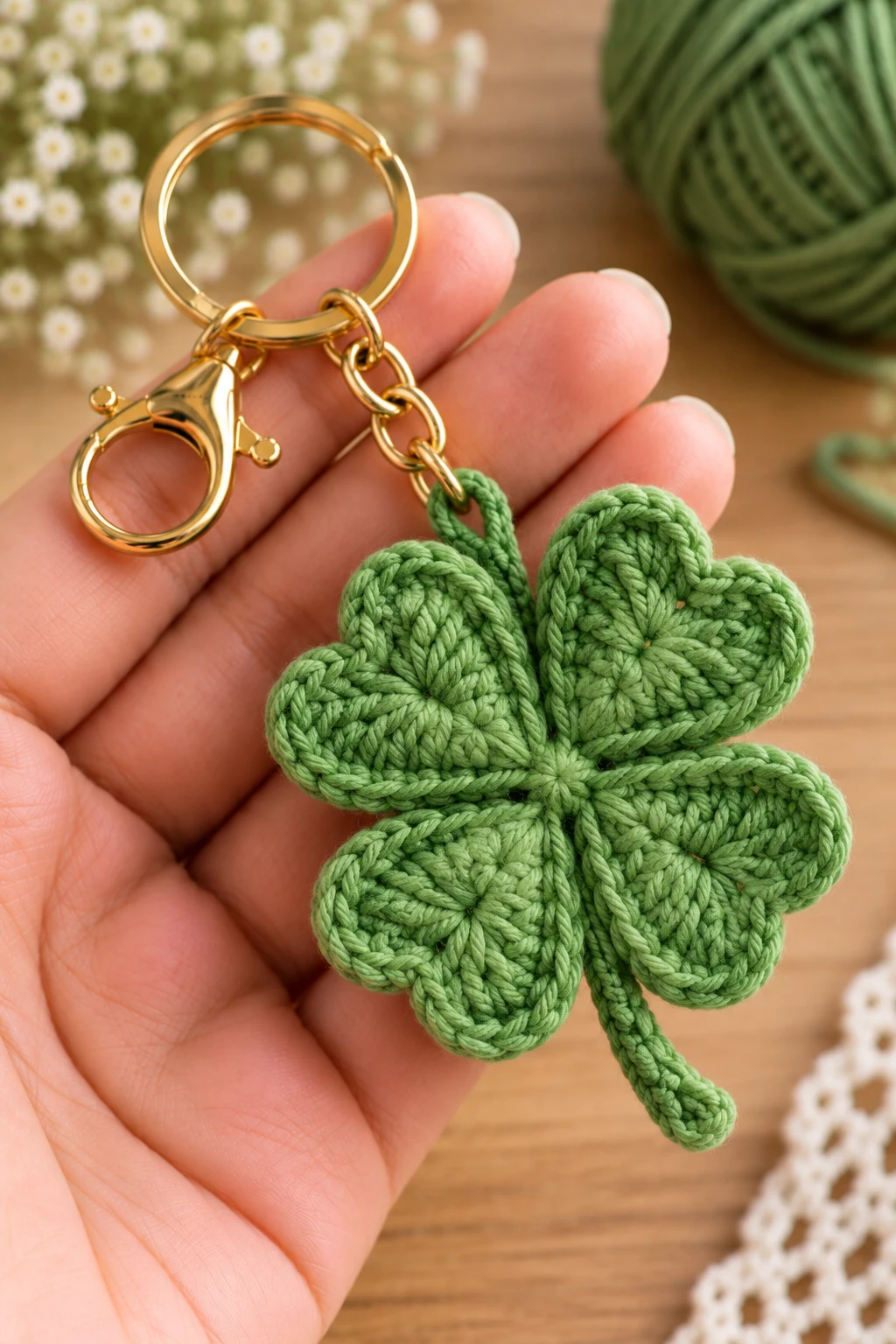
The classic four-leaf clover is an excellent starting point when learning how to make crochet clovers. Choose emerald green cotton yarn, a 2.5–3.5 mm crochet hook suited to your yarn, and a tapestry needle. Create four small rounded leaves around a central point, using chains and stitches such as half double crochet and double crochet to build each leaf. Finish with a short stem and weave in the loose ends.
For a neat result, make each leaf the same size and arrange them evenly before tightening the center. You can use the finished motif as a coaster embellishment, brooch, or small decorative patch.
The key to this look is keeping all four leaves balanced around the center so the clover reads clearly as a lucky charm.
2. Mini Crochet Clover Keychain — how
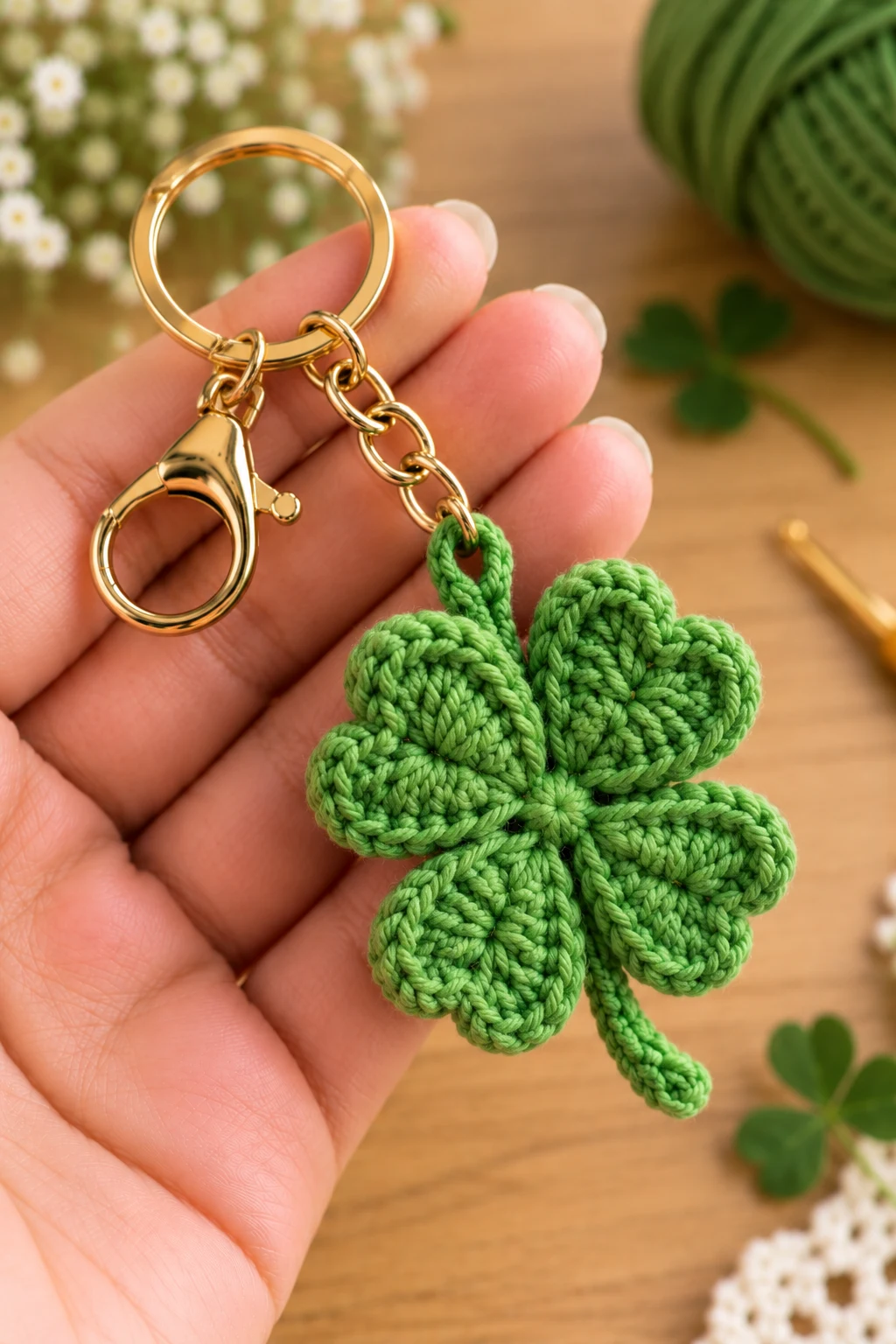
Turn your clover into a practical accessory by attaching it to a metal split ring, lobster clasp, or swivel keychain. Use lightweight cotton yarn so the finished charm holds its shape without becoming bulky, according to Martha Stewart Crafts. A small four-leaf motif works especially well on keys, backpacks, pencil cases, and handbags.
If you’re exploring how to make crochet clovers for gifts, consider making several in forest green, mint, and sage. Secure the hardware through a sturdy stitch or reinforced yarn loop rather than attaching it to a loose tail.
The key to this look is choosing a compact motif and securing the keychain hardware firmly enough to withstand everyday handling.
3. Puffy Amigurumi Clover — how
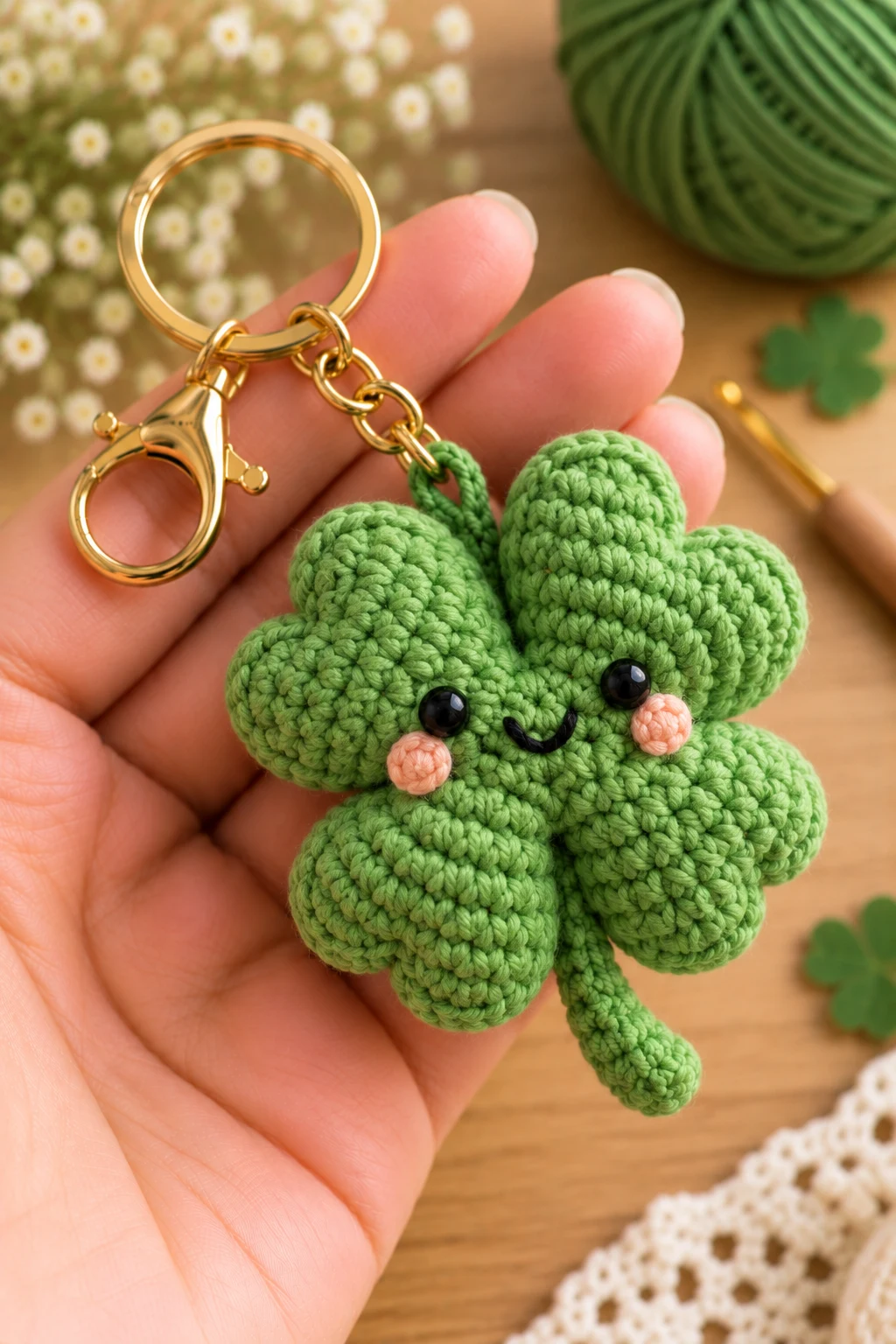
For a softer, three-dimensional design, crochet two matching clover shapes and join them around a small amount of polyester fiberfill. Use tight stitches to prevent stuffing from escaping, and keep the stuffing light so the leaves remain rounded rather than lumpy.
This version works beautifully as a small desk decoration, a plush bag charm, or a cute handmade gift. Beginners can use single crochet stitches and simple increases to shape each leaf. A contrasting green stem adds definition.
The key to this look is using consistent tension and small amounts of stuffing to create soft, rounded leaves without stretching the stitches.
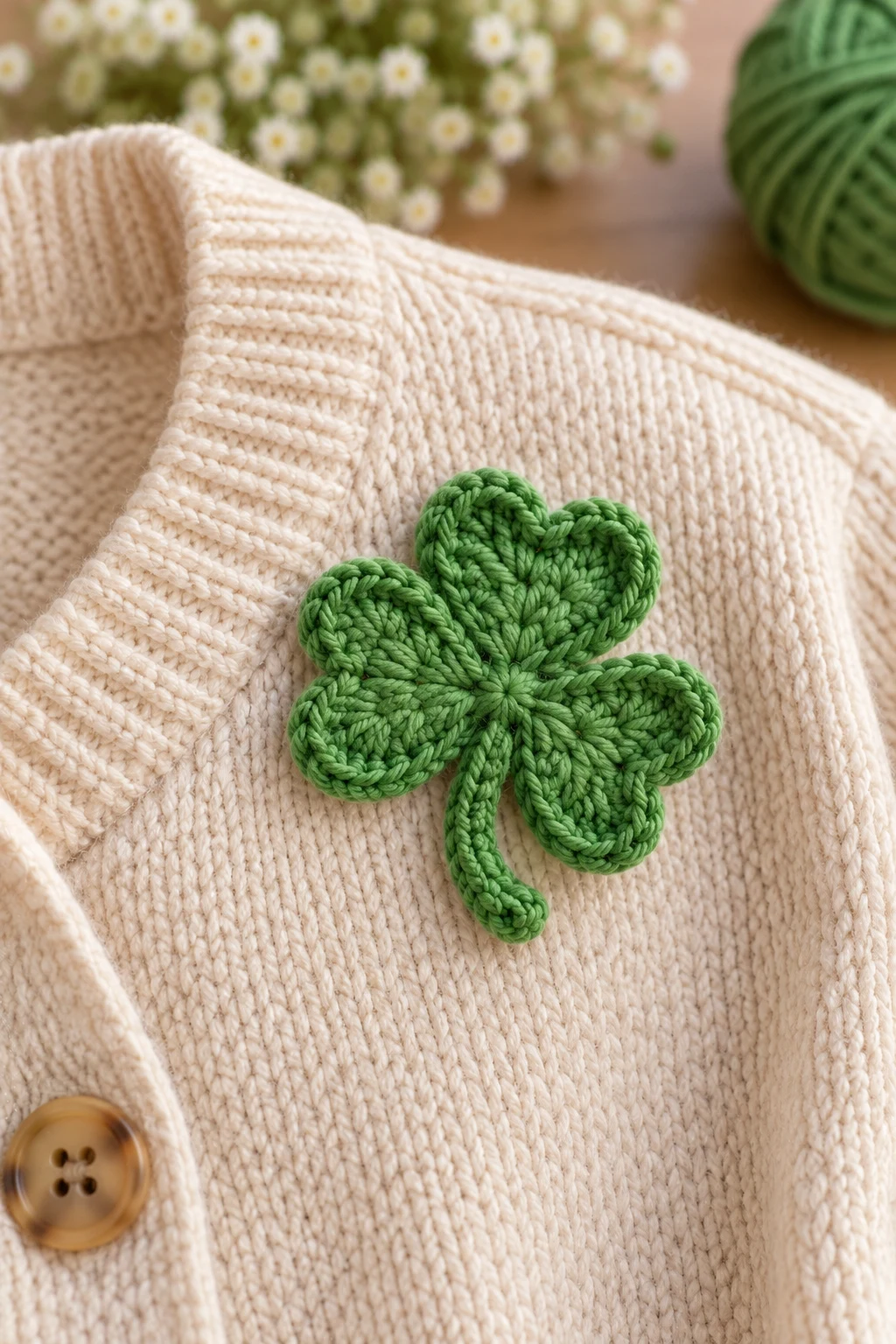
4. Tiny Clover Appliqué for Clothing
A flat crochet clover can refresh an ordinary sweatshirt, cardigan, denim jacket, or canvas tote. Work the motif in smooth cotton yarn, then sew it onto the fabric with a matching sewing thread or yarn. Smaller appliqués look particularly charming along a pocket edge or near a collar.
If you’re learning how to make crochet clovers as wearable decorations, check the back of the fabric before sewing to avoid catching unwanted layers. For garments that need regular washing, attach the motif securely and follow the yarn’s care instructions.
The key to this look is keeping the appliqué flat and using discreet stitches around its edges so it blends naturally with the garment.
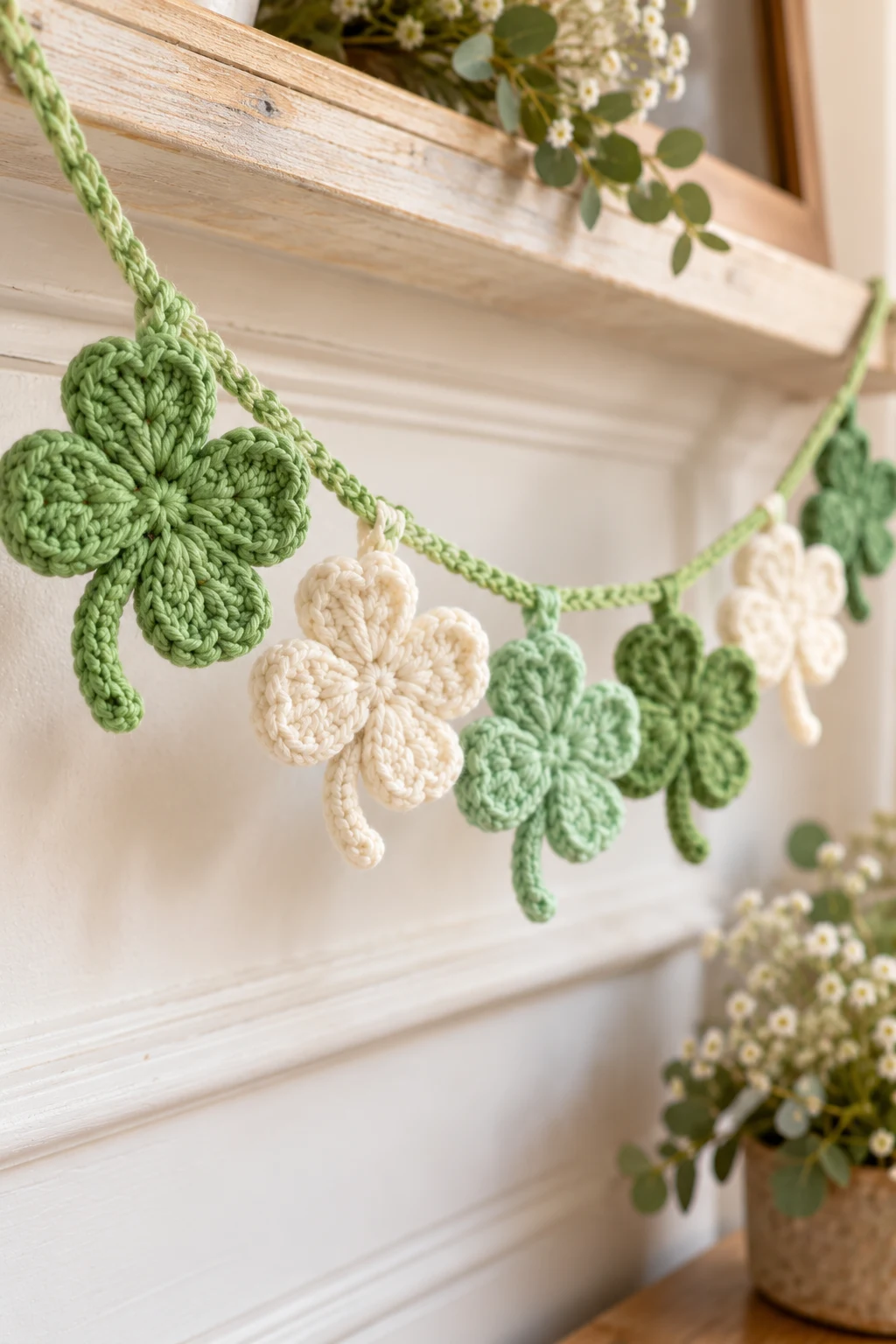
5. Pastel Clover Garland
A string of pastel clovers makes a sweet decoration for a nursery, craft room, spring party, or seasonal mantel. Crochet several small motifs in sage green, pistachio, mint, and cream, then attach them to a long chain using evenly spaced slip stitches or yarn ties.
You can make the garland short for a shelf or longer for a party backdrop. Alternate the green clovers with small white flowers or simple crocheted hearts to add variety without making the design look crowded.
The key to this look is repeating a consistent color pattern and leaving equal spaces between motifs for a tidy, balanced garland.
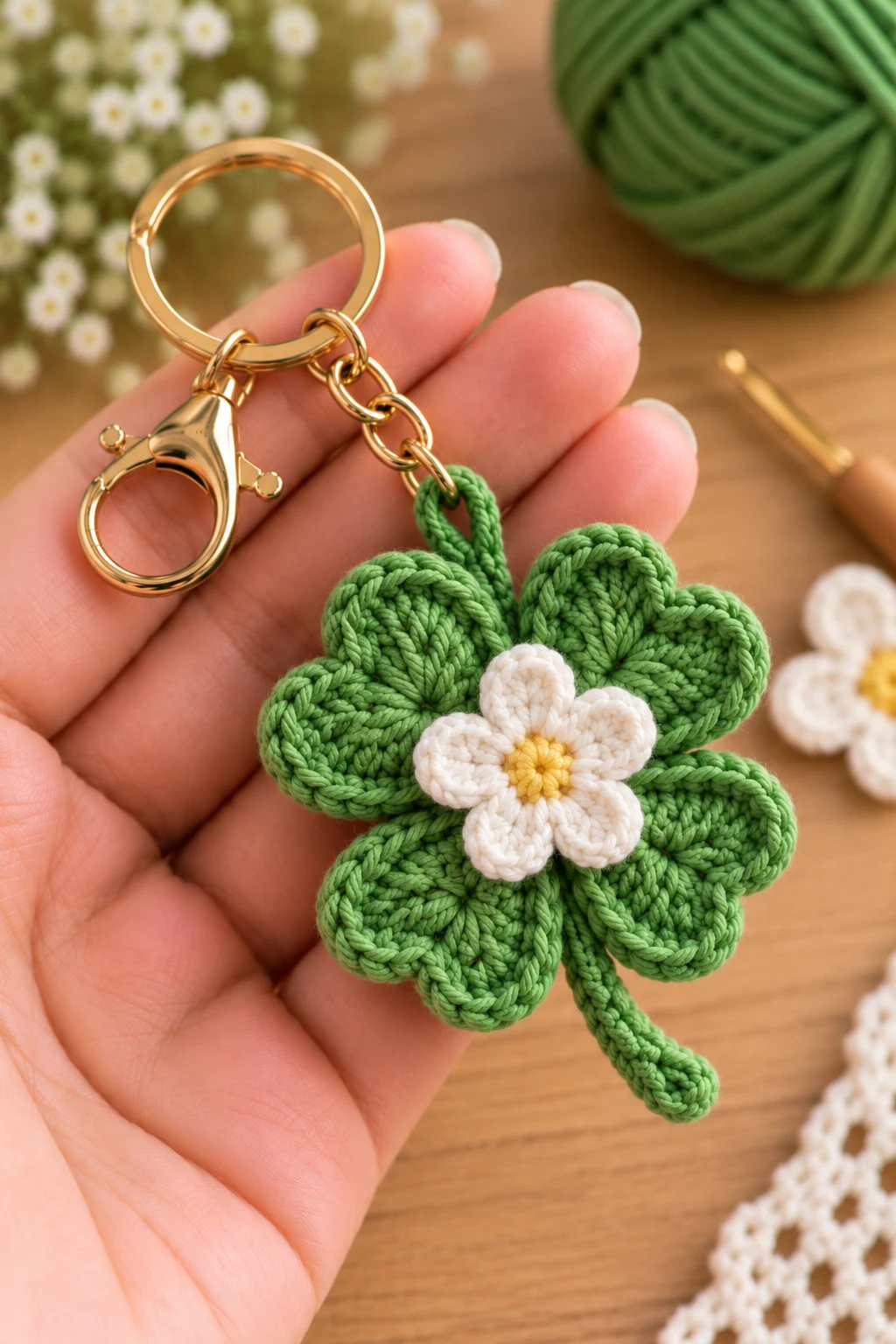
6. Crochet Clover Flower Charm
Combine a clover and a flower for a playful charm that works throughout spring. Create a green four-leaf base and add a small cream or butter-yellow crochet flower in the center. A few embroidered stitches can define the petals without adding unnecessary bulk.
This design is useful when practicing how to crochet a flower charm alongside clover motifs. Attach it to a zipper pull, mini pouch, or gift bag. Keep the flower small enough that the green leaves remain visible.
The key to this look is using contrasting colors and a compact flower center so the clover and floral details complement each other.
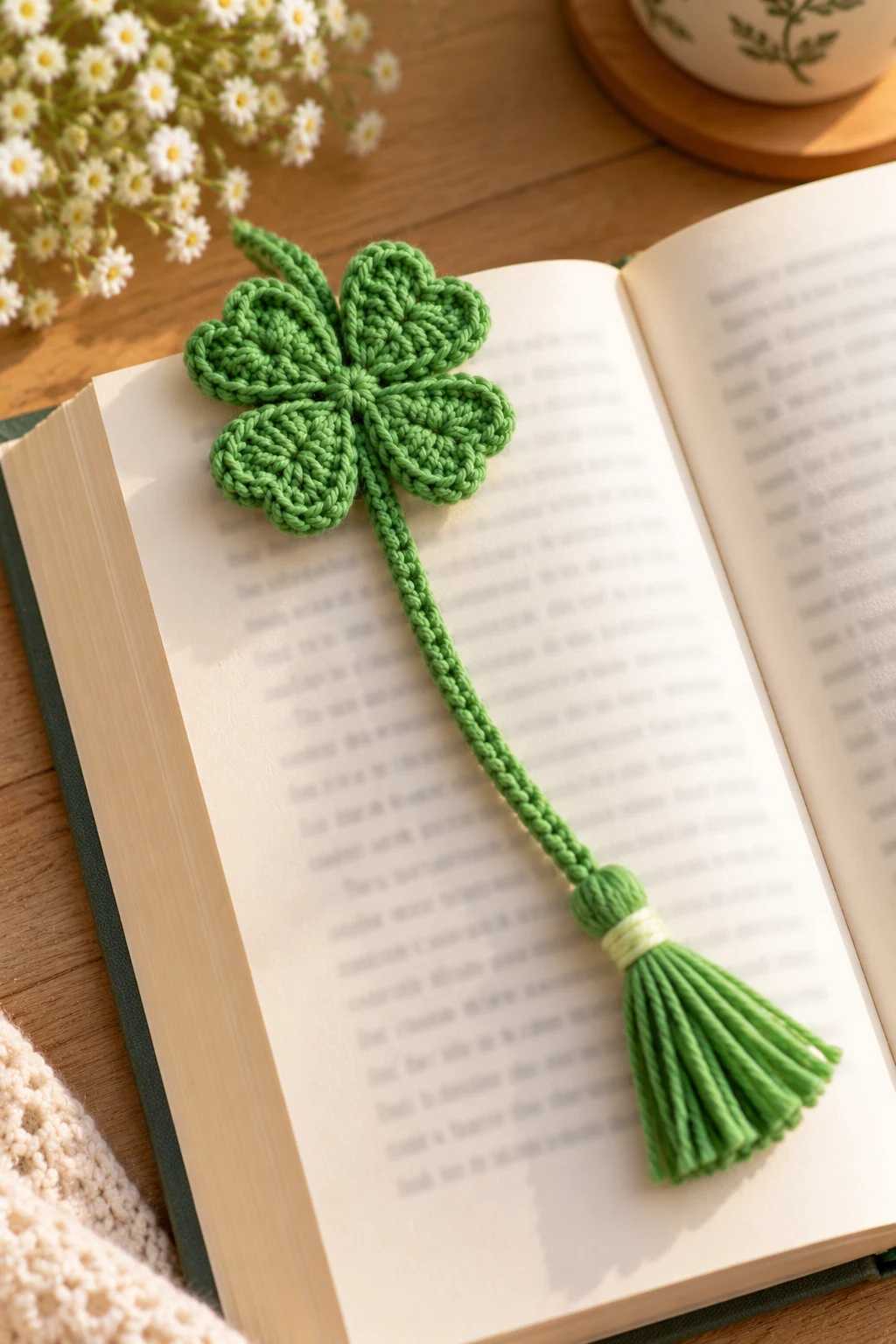
7. Lucky Clover Bookmark
Book lovers can turn a flat clover into a charming bookmark accent. Crochet a small motif in deep green cotton yarn, then connect it to a long chain or narrow crocheted strip that slips between the pages. Add a tiny tassel at the opposite end for a polished finish.
The key to this look is using lightweight yarn and a flat motif that won’t create a noticeable bump inside a closed book.
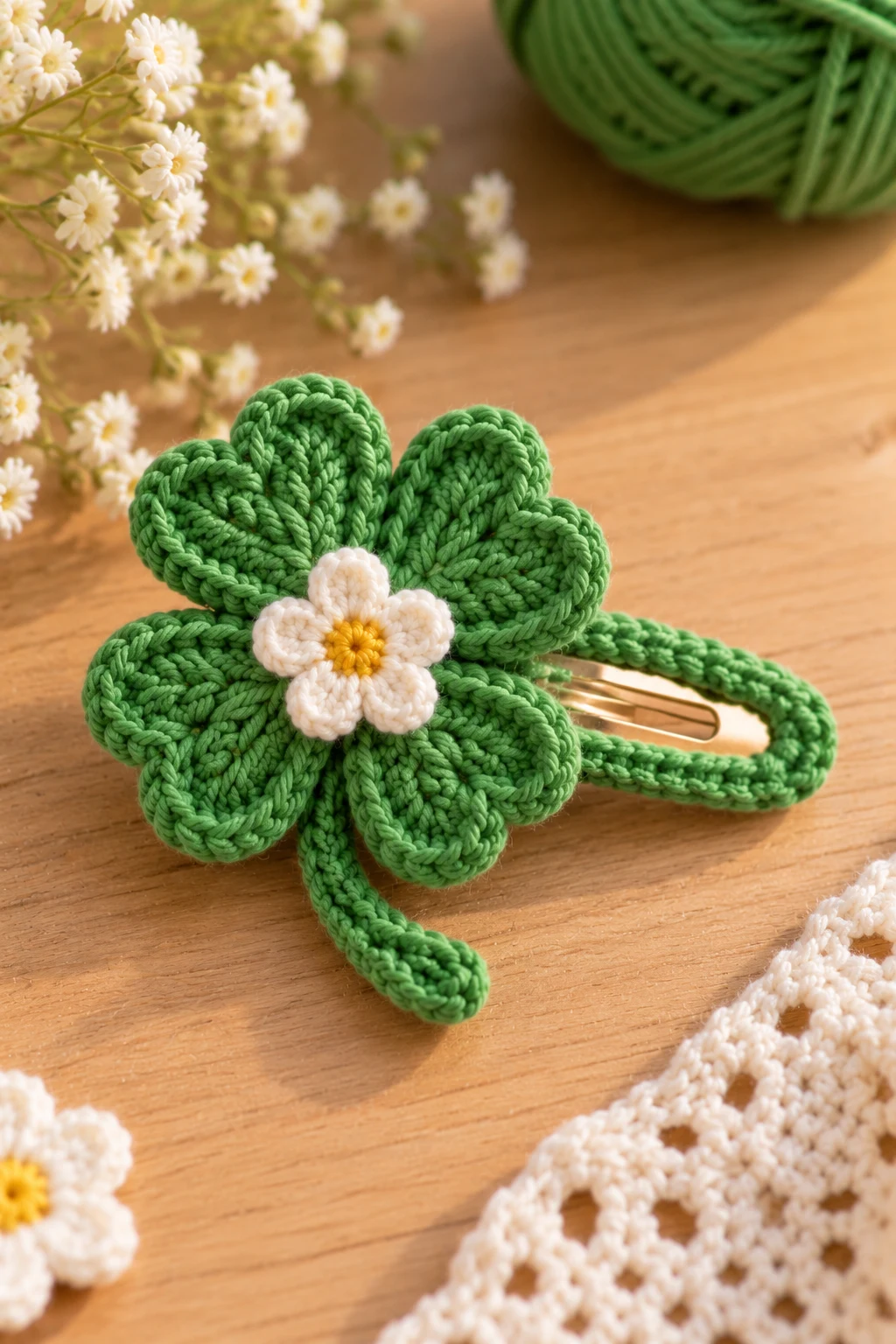
8. Clover Hair Clip
A crochet clover makes a charming hair accessory for a spring outfit or St. Patrick’s Day celebration. Crochet a small flat motif using soft cotton yarn, weave in every end, and stitch it securely onto a lined metal hair clip or snap clip.
For a subtle look, use sage green and a small cream center. For a festive design, choose bright shamrock green. Avoid placing hard embellishments where they could scratch the scalp, and check that the clip remains comfortable to wear.
The key to this look is using a lightweight clover and attaching it securely to a clip that opens and closes smoothly.
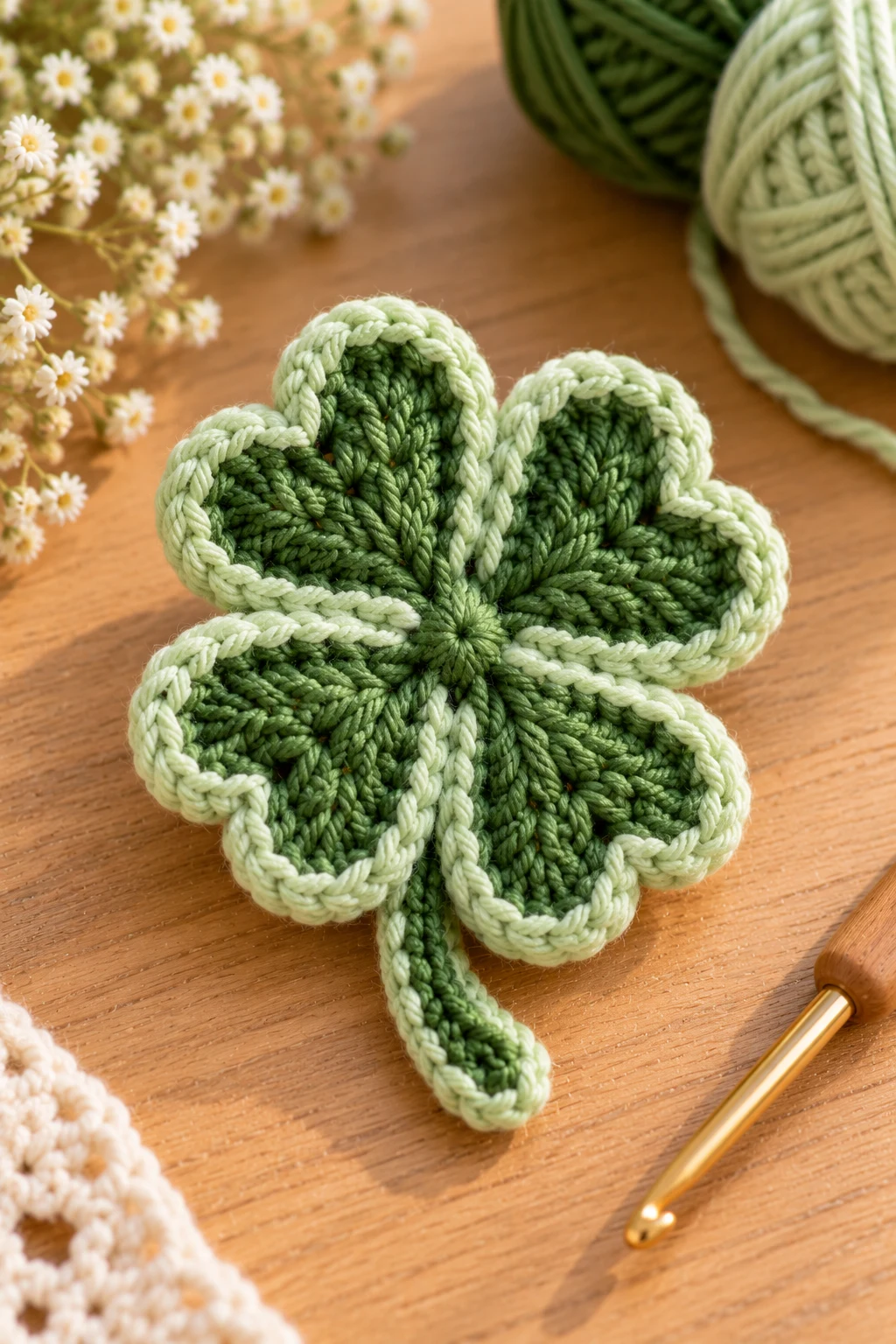
9. Two-Tone Clover With Contrasting Edges
Two-tone clovers add visual interest without requiring a complicated pattern. Work the leaves in forest green yarn and outline them with mint or cream using slip stitches or surface crochet. You can also make two leaves in one shade and two in another for a color-blocked effect.
This idea is especially useful when practicing color changes and finishing techniques. Keep the border consistent across all four leaves, and avoid pulling the contrasting yarn too tightly, which can curl the edges.
The key to this look is choosing colors with enough contrast to highlight the outline while maintaining an even border around every leaf.
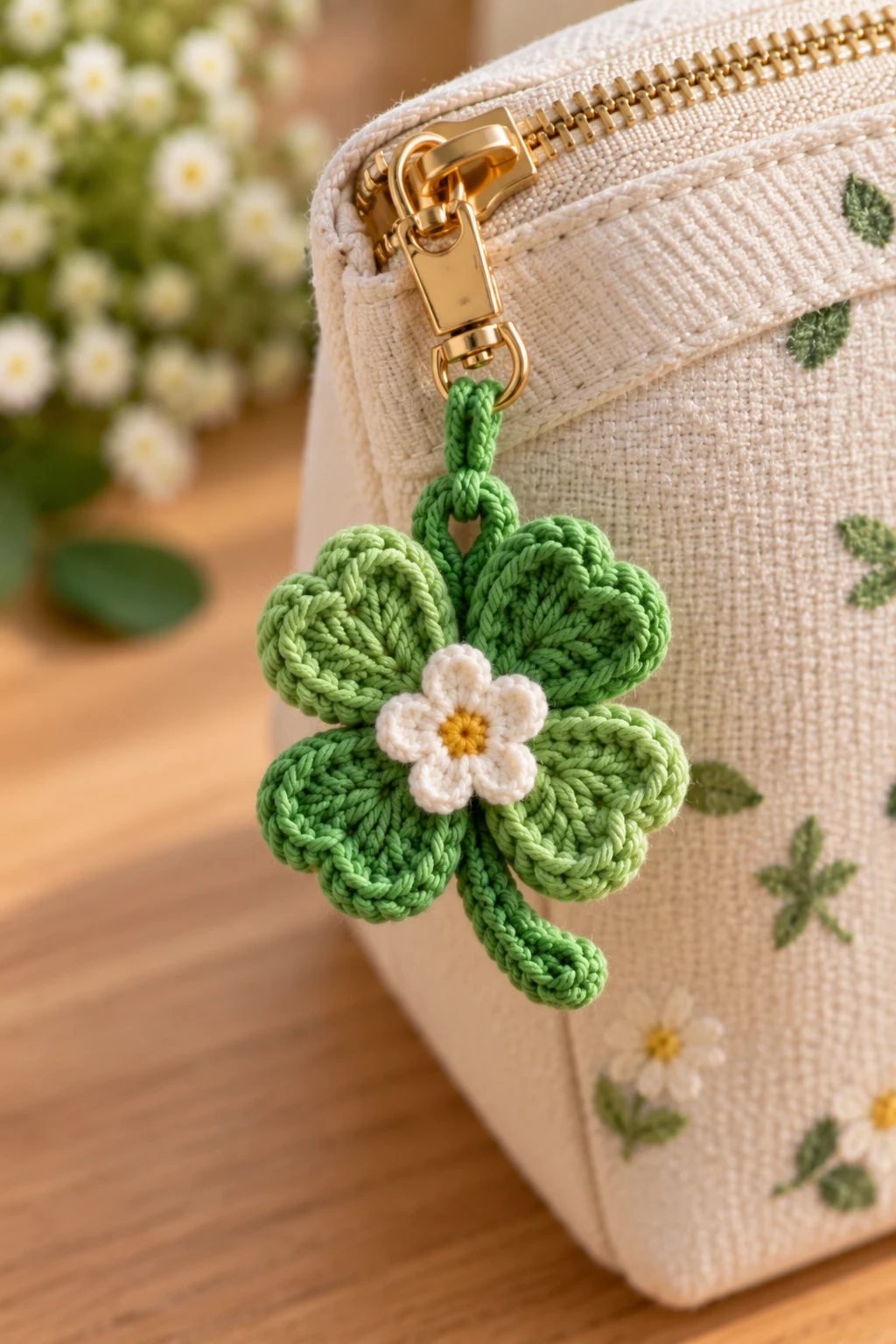
10. Mini Clover Zipper Pull
A small crochet clover can make a backpack, pencil pouch, or travel organizer easier to recognize. Use durable cotton yarn and a small hook to create a firm, flat motif. Attach it to a zipper pull with a metal lobster clasp or a short reinforced yarn loop.
If you are researching how to make crochet clovers for everyday accessories, prioritize durability over extra decorations. Avoid loose beads or delicate attachments on items that receive frequent handling, particularly children’s bags.
The key to this look is keeping the motif compact and reinforcing the attachment point so the charm stays secure during daily use.
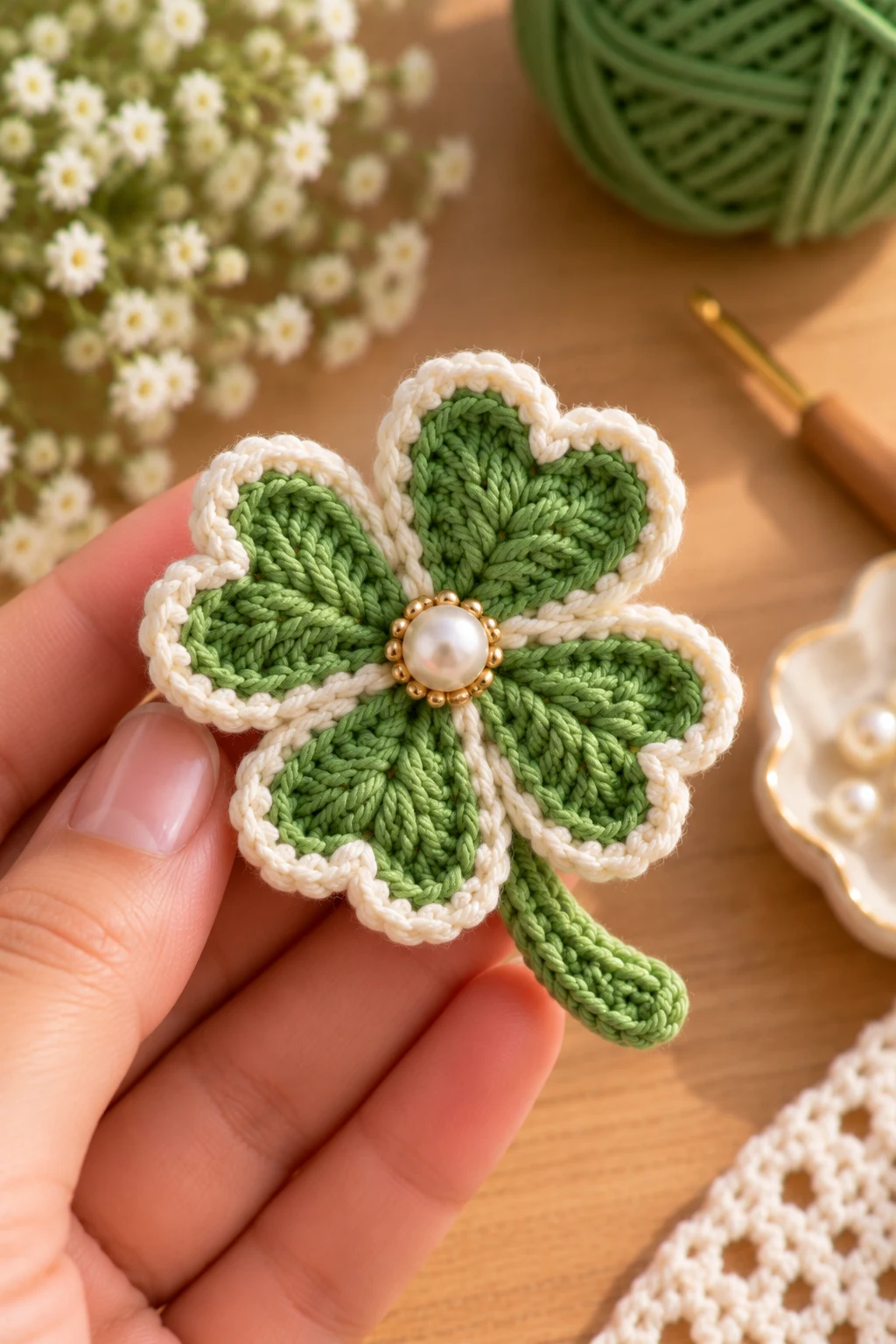
11. Clover With a Pearl Center
For a elegant style, make a four-leaf clover in sage green or muted olive yarn and add one small faux pearl at the center. This design works well as a brooch, gift topper, or embellishment for a handmade pouch.
Choose a lightweight pearl and secure it with sewing thread rather than relying on glue alone. If the item is intended for a young child, skip the pearl because small decorations can pose a choking hazard.
The key to this look is using one understated center accent instead of several embellishments that compete with the delicate crochet leaves.
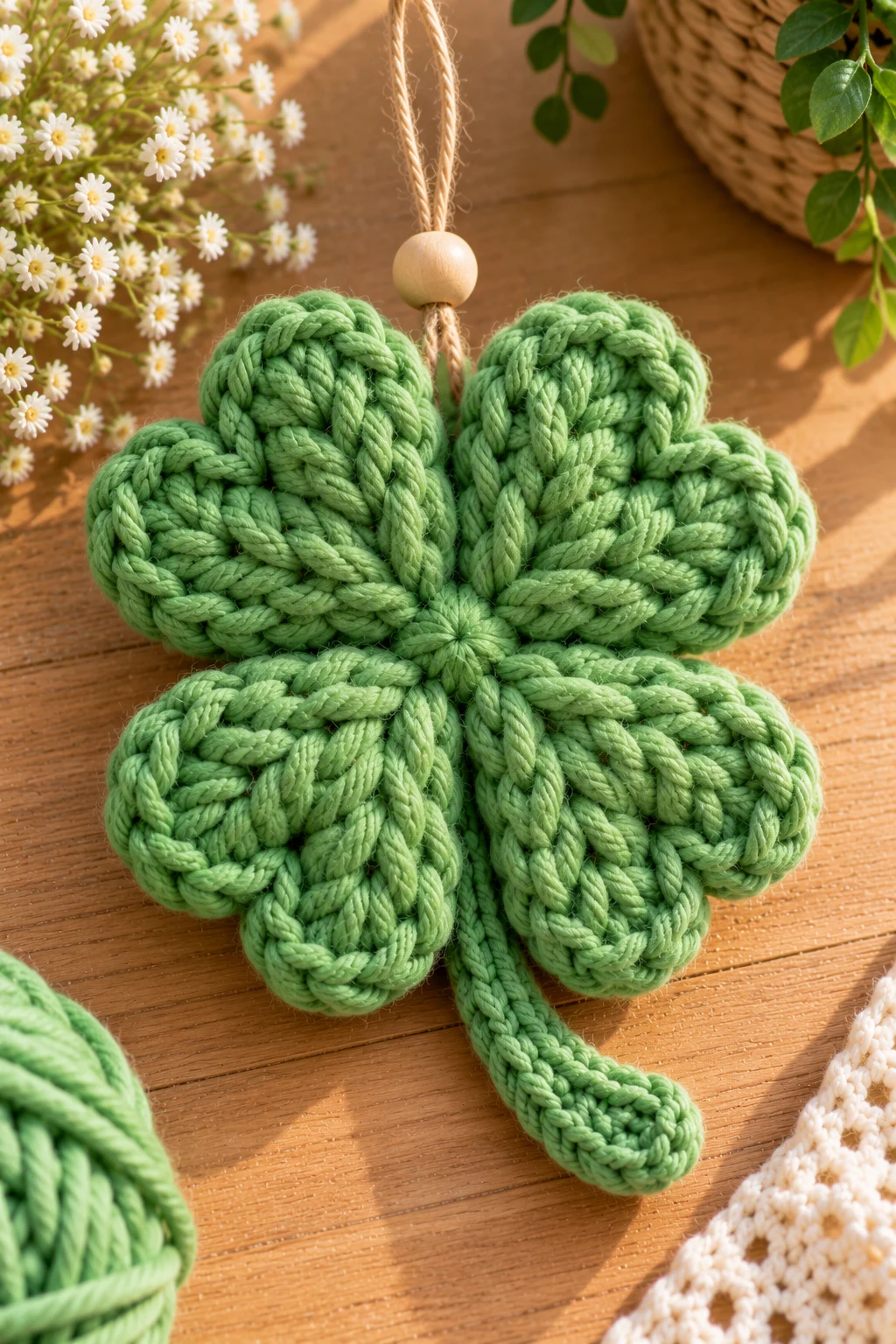
12. Chunky Yarn Clover Decoration
A chunky clover creates a bold, tactile decoration for baskets, wreaths, and seasonal displays. Choose bulky green yarn and a hook appropriate for its label, then work broader leaves with simple stitches. Because thick yarn naturally creates a larger motif, you can use fewer stitches to achieve a substantial shape.
This project is a good way to use leftover yarn from blankets or cushions. Make sure the leaves lie flat, and lightly shape them by hand before displaying the finished piece.
The key to this look is selecting a yarn with enough body to define the leaves without making the center too heavy.
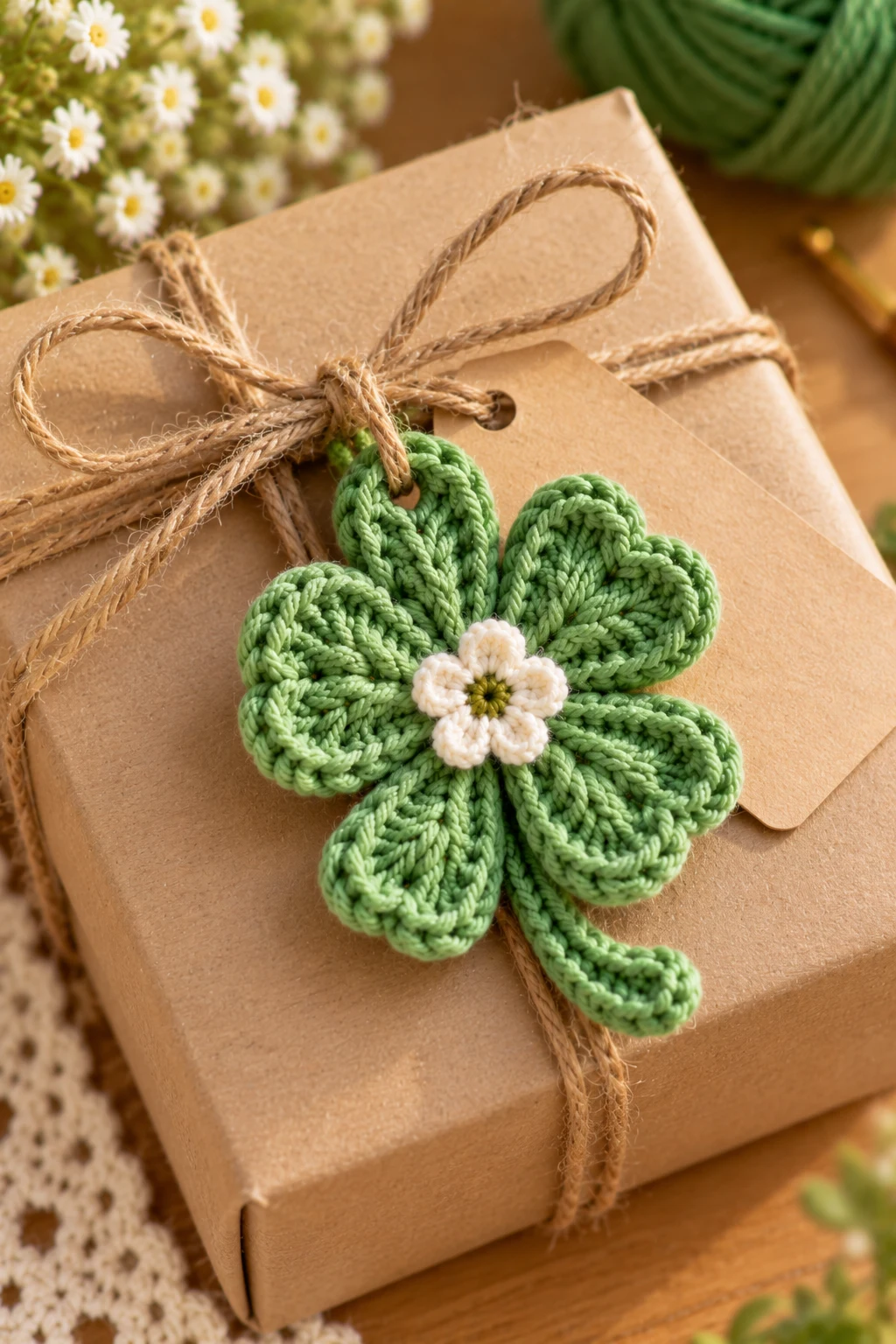
13. Crochet Clover Gift-Tag Embellishment
Add a handmade touch to birthday gifts, party favors, or spring gift baskets with a miniature clover attached to a paper tag. Crochet the motif in mint or shamrock green, then sew it to a cardstock tag or tie it on with narrow ribbon.
This idea combines fiber crafts with paper crafting, making it ideal for handmade packaging. You can also create matching paper clovers for larger decorations, while keeping the crocheted versions as reusable keepsakes.
The key to this look is keeping the motif small enough for the tag and using a neat attachment that doesn’t cover the message.
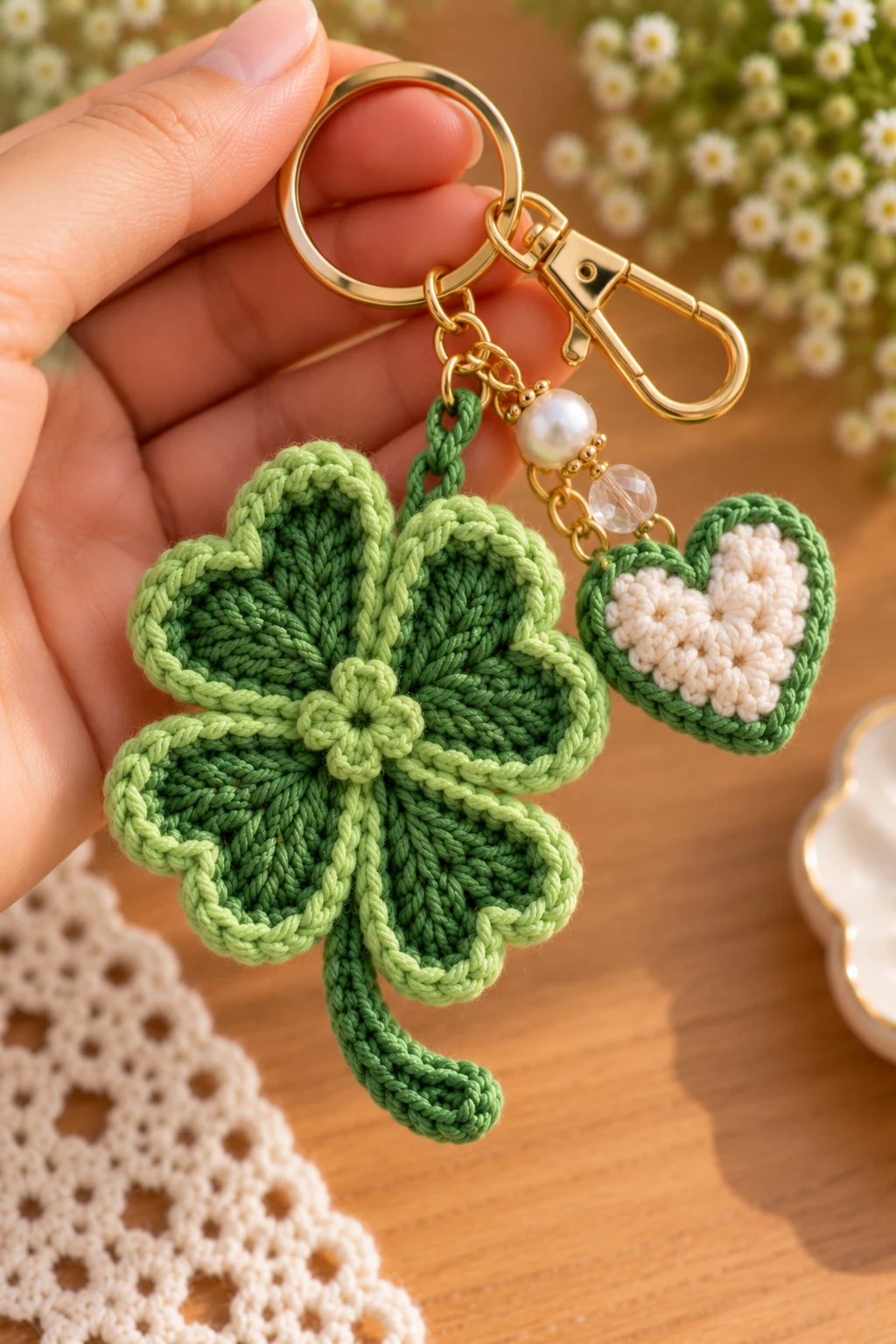
14. Clover-and-Heart Keychain
Combine a tiny clover with a small crochet heart to create a meaningful charm for a friend. Use green cotton yarn for the clover and pink, cream, or red for the heart. Attach both to one key ring, or connect them with a short chain so they move independently.
This project gives you a chance to practice two small motifs in one sitting. Make the heart slightly smaller than the clover so the design feels balanced, and use matching hardware for a coordinated finish.
The key to this look is limiting the palette to two or three colors and varying the motif sizes to keep the charm visually balanced.
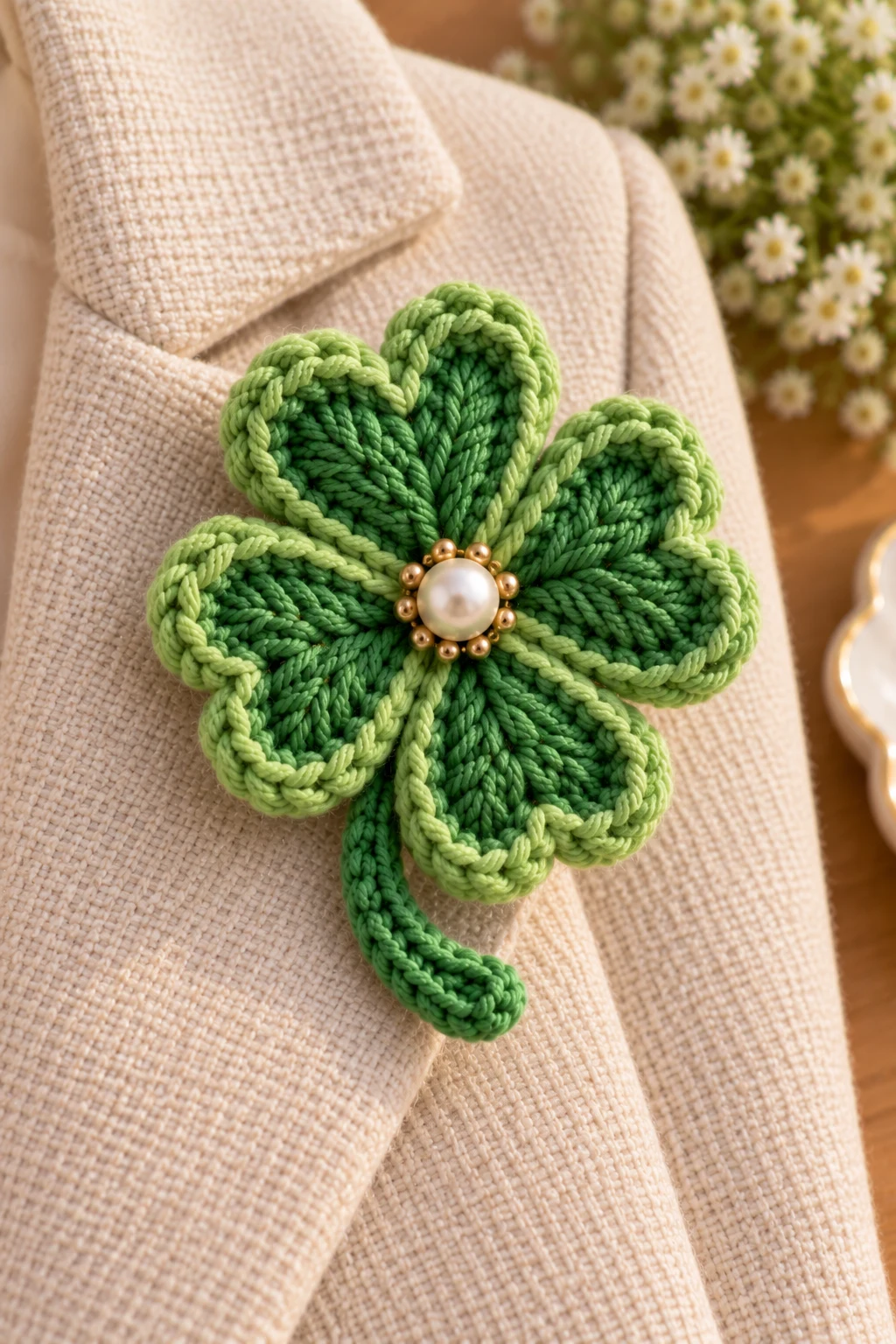
15. Crochet Clover Brooch
A handmade clover brooch can decorate a blazer, scarf, coat, or fabric tote. Use firm cotton yarn and create a flat four-leaf motif with a slightly thicker center. Sew a brooch pin onto a small felt backing, then attach the backing to the clover’s reverse side.
This construction helps the pin sit neatly and reduces strain on the crochet stitches. Before wearing it, test the pin on a scrap of similar fabric to check that it closes securely and doesn’t snag the material.
The key to this look is adding a stable backing so the brooch stays flat and the fastening doesn’t pull on individual stitches.
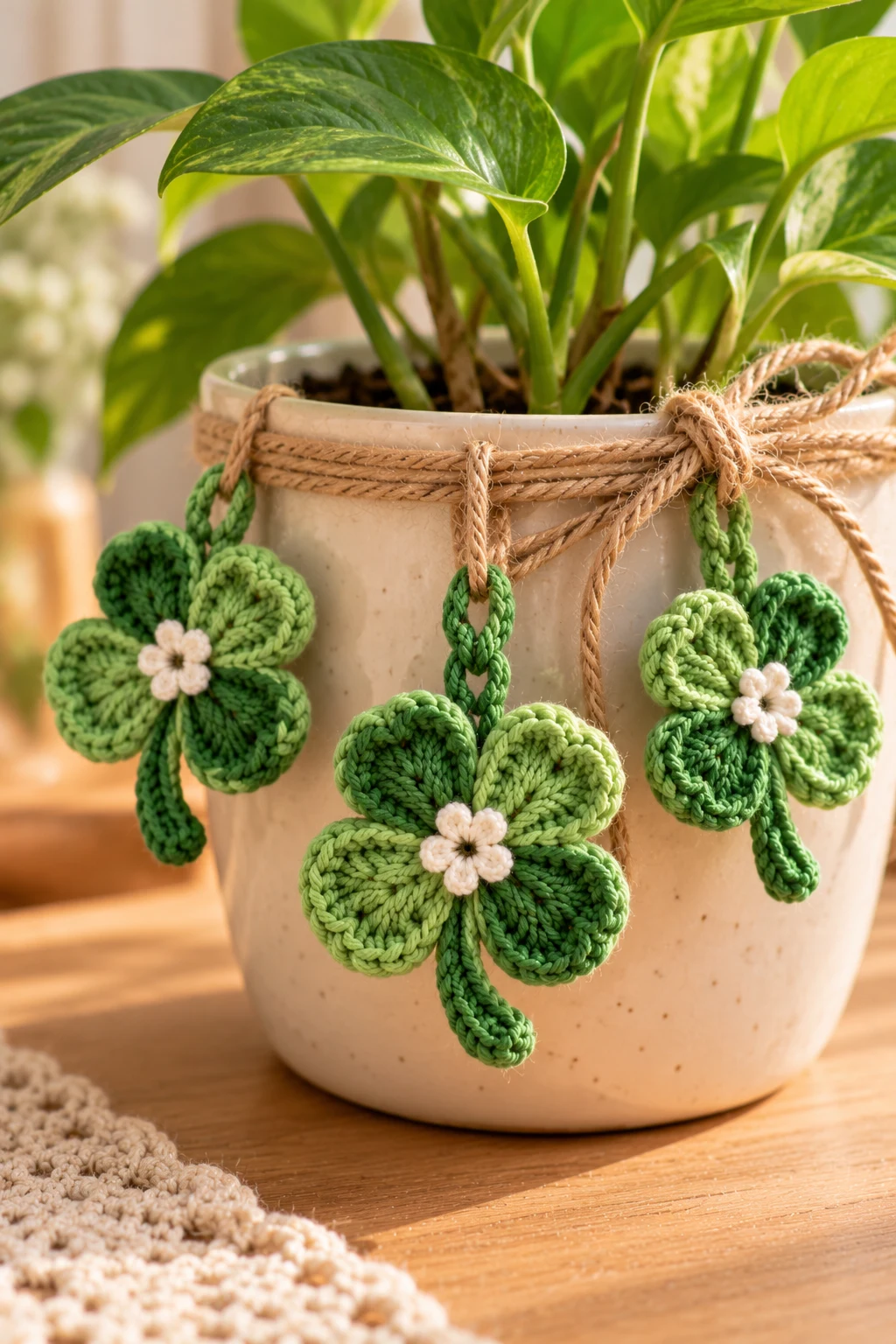
16. Mini Clover Plant Pot Decoration
Bring a little crochet greenery to a desk or windowsill with a small clover attached to a wooden skewer or floral wire. Crochet the motif in two shades of green, secure it to the support with yarn, and place it in a miniature pot filled with decorative stones or craft foam.
The key to this look is supporting the stem discreetly while keeping the crocheted leaves visible from the front.
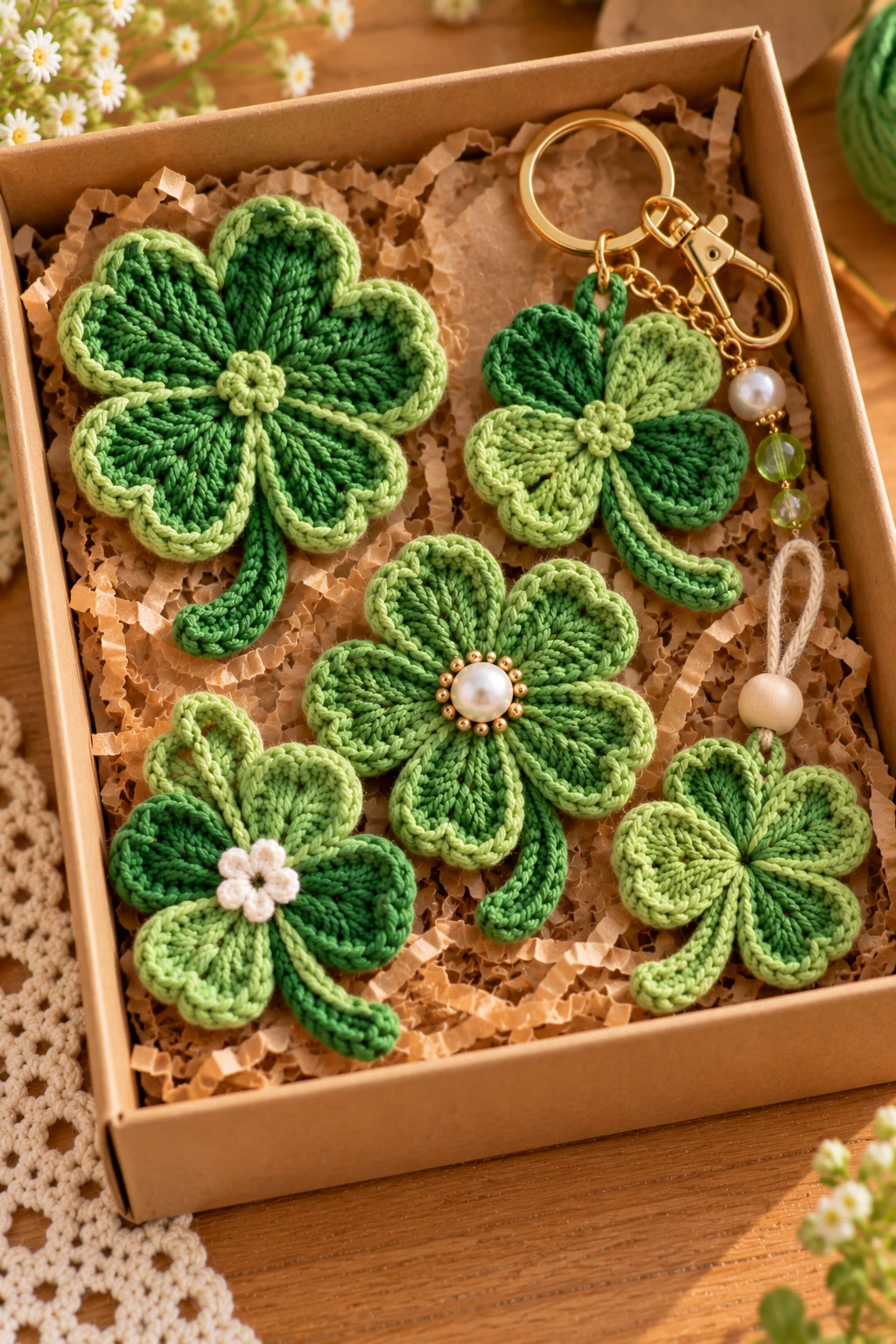
17. Mini Crochet Clover Gift Set
Turn your practice pieces into a coordinated gift set with three or four small clovers in different green shades. Include a keychain charm, flat appliqué, and tiny decorative motif, then package them in a kraft gift box with tissue paper and a handwritten note.
The key to this look is repeating a consistent color palette and varying the purpose of each clover so the set feels coordinated rather than identical.
FAQ: How to Make Crochet Clovers
What supplies do you need to make crochet clovers?
You need yarn, a suitable crochet hook, scissors, and a tapestry needle for weaving in ends. Optional supplies include key rings, clasps, fiberfill, felt, and brooch pins, depending on your chosen project.
How do you crochet a four-leaf clover for beginners?
Start with a small center ring or chain, then form four rounded leaves using basic stitches and chains. Keep the leaves similar in size, add a short stem, and weave in the ends securely.
Why do crochet clovers curl or look uneven?
Uneven tension, inconsistent leaf sizes, or too many stitches in one area can make clovers curl. Count stitches where possible, use the same method for every leaf, and gently shape the finished motif before attaching it to an accessory.
The Bottom Line
Learning how to make crochet clovers is a fun way to turn small amounts of yarn into thoughtful, useful decorations. Start with a classic four-leaf motif, then experiment with keychains, flower charms, garlands, brooches, and gift embellishments. Cotton yarn, a suitable hook, and consistent stitch tension will help your clovers keep their shape. Remember that the best design depends on how you plan to use it: choose flat motifs for clothing and bookmarks, and slightly padded versions for plush charms. Make a few in different shades of green, and you’ll have handmade gifts ready for spring celebrations, lucky-day surprises, and everyday crafting.
📚 You Might Also Like
- How to crochet a flower keychain: 15 Ultimate DIY
Mastering how to crochet a flower keychain is the absolute fastest way to turn scrap yarn into viral…
- Crochet toy keychain: 12 Perfect DIY Ideas for 2026
A crochet toy keychain is a miniature handmade amigurumi toy that attaches to keys, backpacks, purse…
- Blue keychain crochet: 12 Best DIY Ideas for 2026
Blue keychain crochet are small handmade accessories created with blue yarn, crochet stitches, and k…
- 17 Cute Crochet Ideas Keychain Designs You’ll Want to
Cute crochet ideas keychain designs are small handmade accessories created with yarn, crochet hooks,…
- Crochet keychain ideas for boys: 11 Chic DIY Ideas for
Crochet keychain ideas for boys are small, handmade crochet designed to turn favorite animals, sport…