
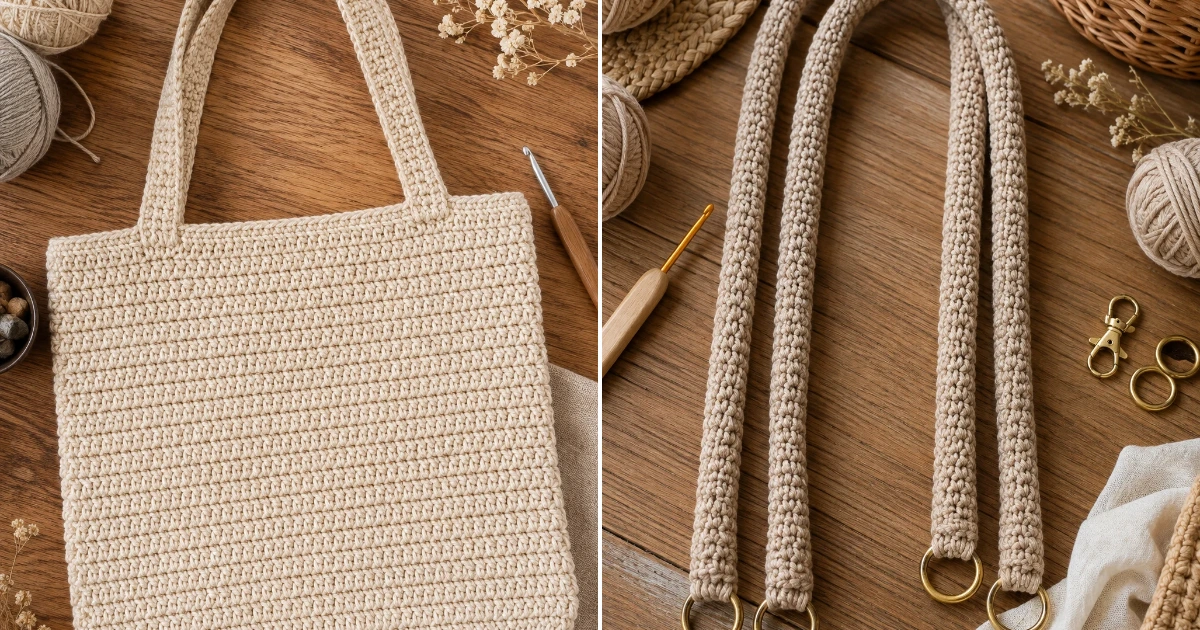
16 Crochet Bag Handles Ideas That Make Handmade Bags Look Polished
Crochet bag handles are the detail that can turn a simple handmade tote into a bag you actually want to carry everywhere. They are the bridge between function and style, giving a crochet project its shape, comfort, and personality, according to The Spruce Crafts. Whether you are making a summer market bag, a structured handbag, or a tiny evening purse, the right handle can completely change the finished piece. From sturdy crocheted straps to wooden handles, braided cords, leather-inspired loops, and colorful statement designs, there are plenty of ways to customize your bag. The best part? You do not need complicated techniques to get a professional result. These 16 crochet bag handles ideas cover beginner-friendly options, clever construction methods, and stylish combinations for every season.
1. Classic Single-Crochet Strap
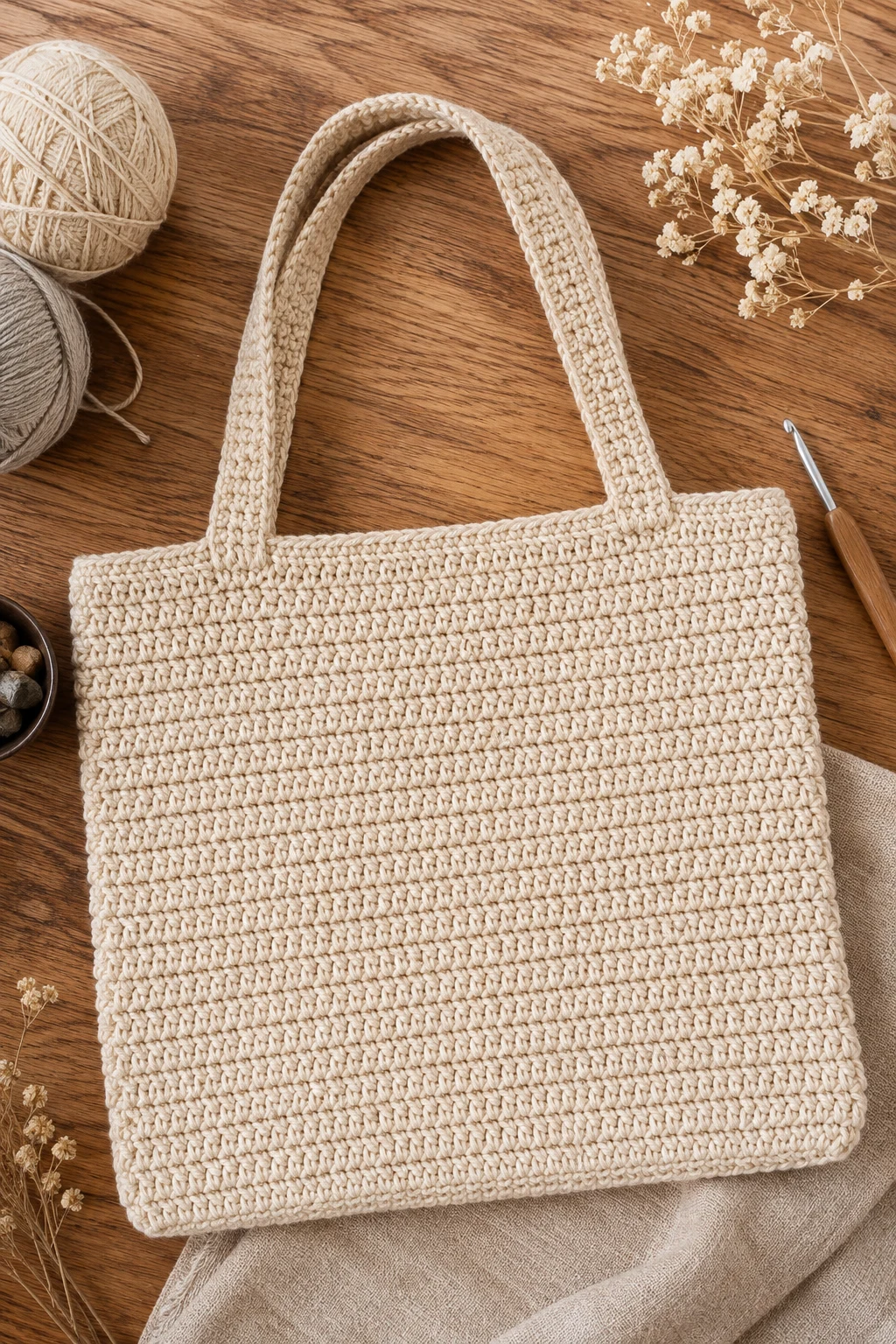
A classic single-crochet strap is one of the easiest ways to make crochet bag handles from the same yarn as your bag. Crochet a long, narrow strip using tight single crochet stitches, then sew both ends securely to the bag. Cotton yarn in cream, black, terracotta, or sage green works especially well for everyday totes.
For extra durability, crochet the strap several rows wider than you initially think you need. A dense stitch structure also helps the handle resist stretching when you fill the bag with books, groceries, or craft supplies, according to Martha Stewart Crafts.
The key to this look is: Use tight single crochet stitches and reinforce both attachment points with multiple rows of stitching.
2. Tubular Crochet Handles
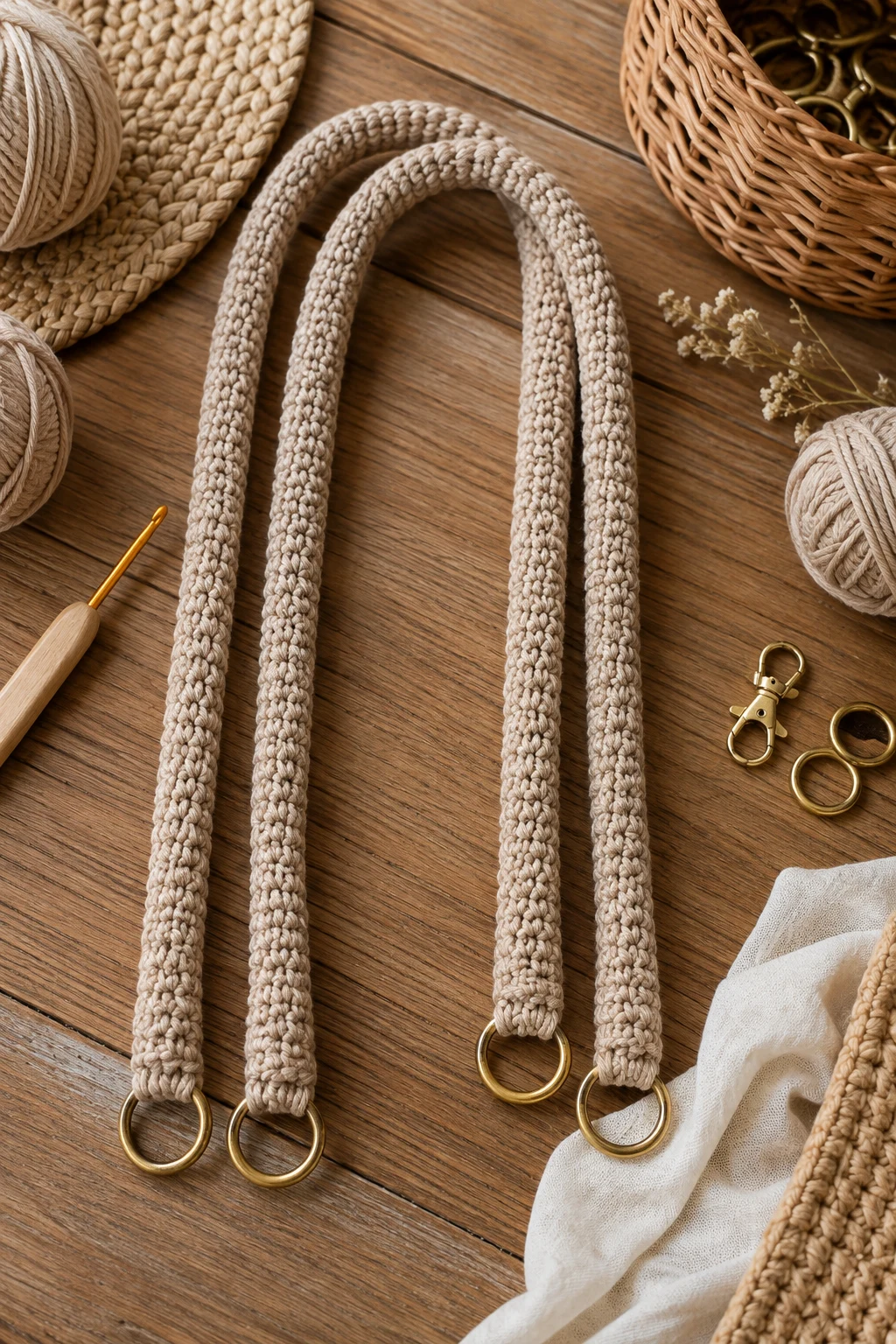
Tubular handles create a rounded, cord-like finish that feels more polished than a flat strap. They work beautifully on handbags made with chunky cotton or recycled yarn because the rounded shape gives the finished bag a boutique-style appearance.
You can create the tube around a cord or crochet a narrow cylindrical handle separately before attaching it. Choose chocolate brown for an autumn handbag or ivory for a clean spring design.
The key to this technique is: Keep your tension consistent so the tubular handle maintains an even diameter from end to end.
3. Crochet Handles That Don’t Stretch
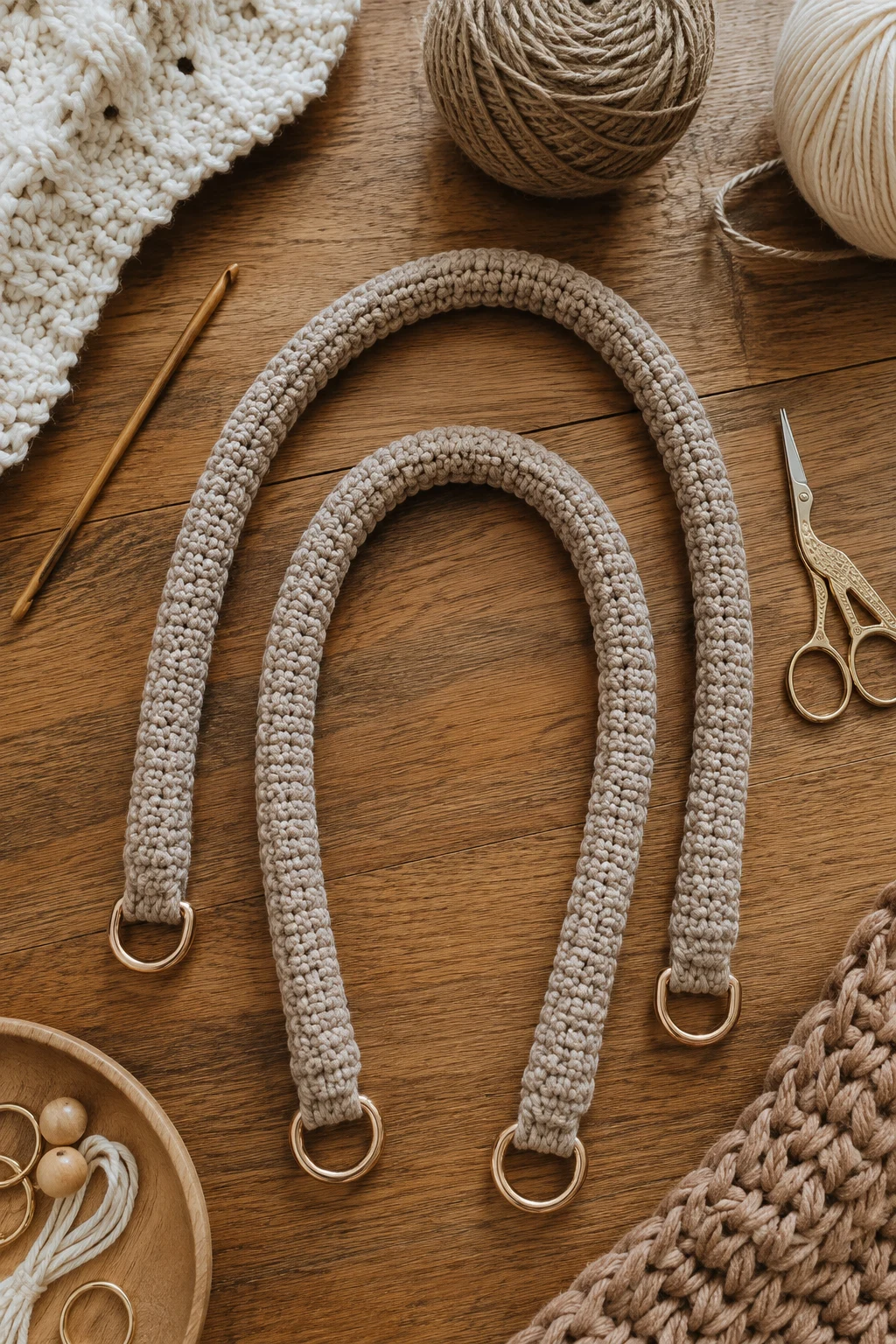
If you have ever made a gorgeous bag only to discover that the handles became suspiciously long after one grocery trip, this technique is for you. Crochet bag handles that don’t stretch usually rely on dense stitches, reinforced construction, or an internal stabilizer.
Try crocheting around a strong cotton cord, nylon cord, or narrow webbing. The hidden support takes the strain while the crochet creates the decorative finish.
The key to this technique is: Add a non-stretch core inside the crocheted strap before attaching it to the bag.
4. Braided Three-Strand Handles
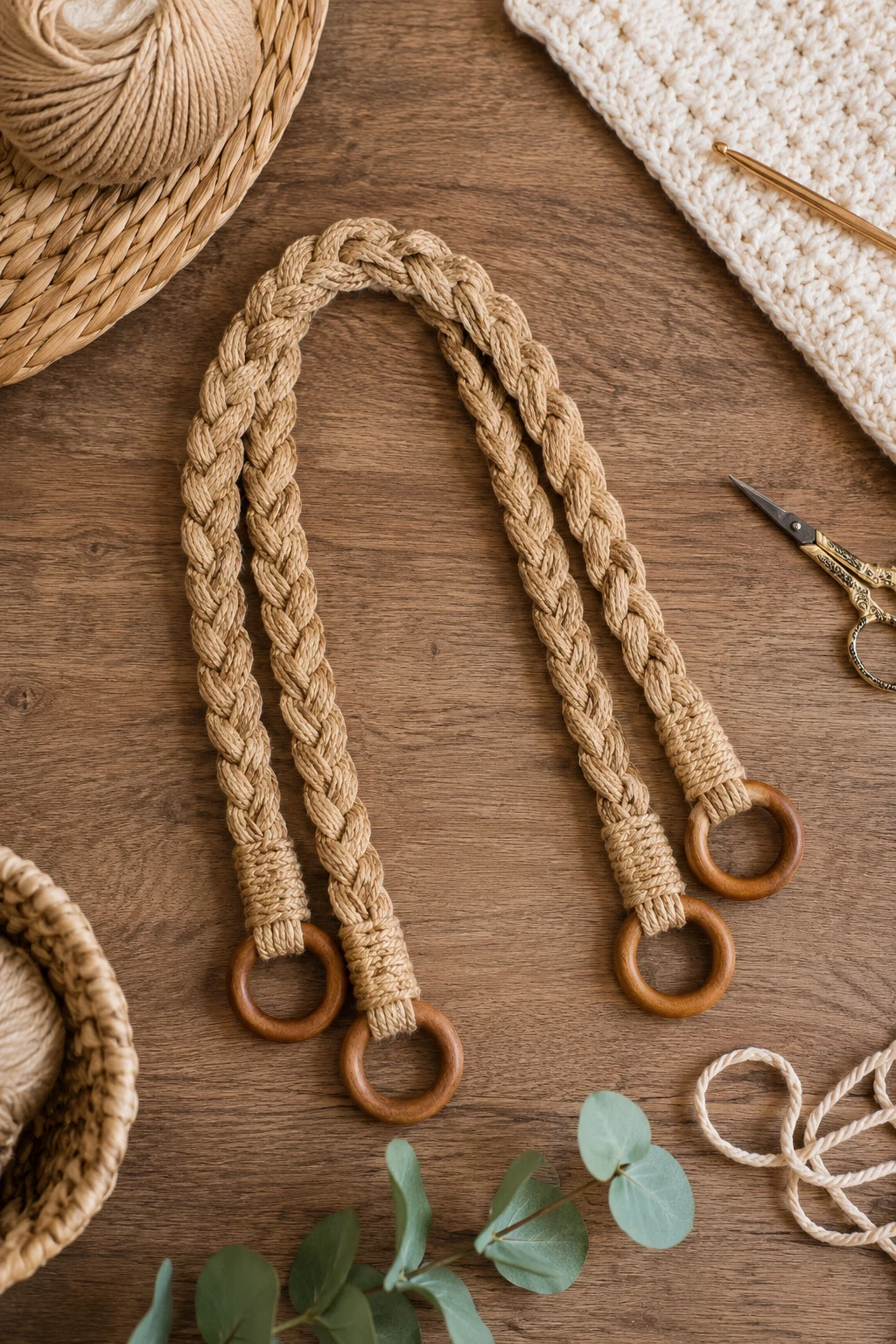
Give a simple tote a playful upgrade with three crocheted cords braided together. Make each cord in the same color for a refined monochrome look, or combine cream, dusty pink, and burgundy for a more noticeable design.
The key to this look is: Braid three evenly sized cords tightly enough to create structure without making the handle stiff.
5. Crochet Bag Handles With Wooden Rings
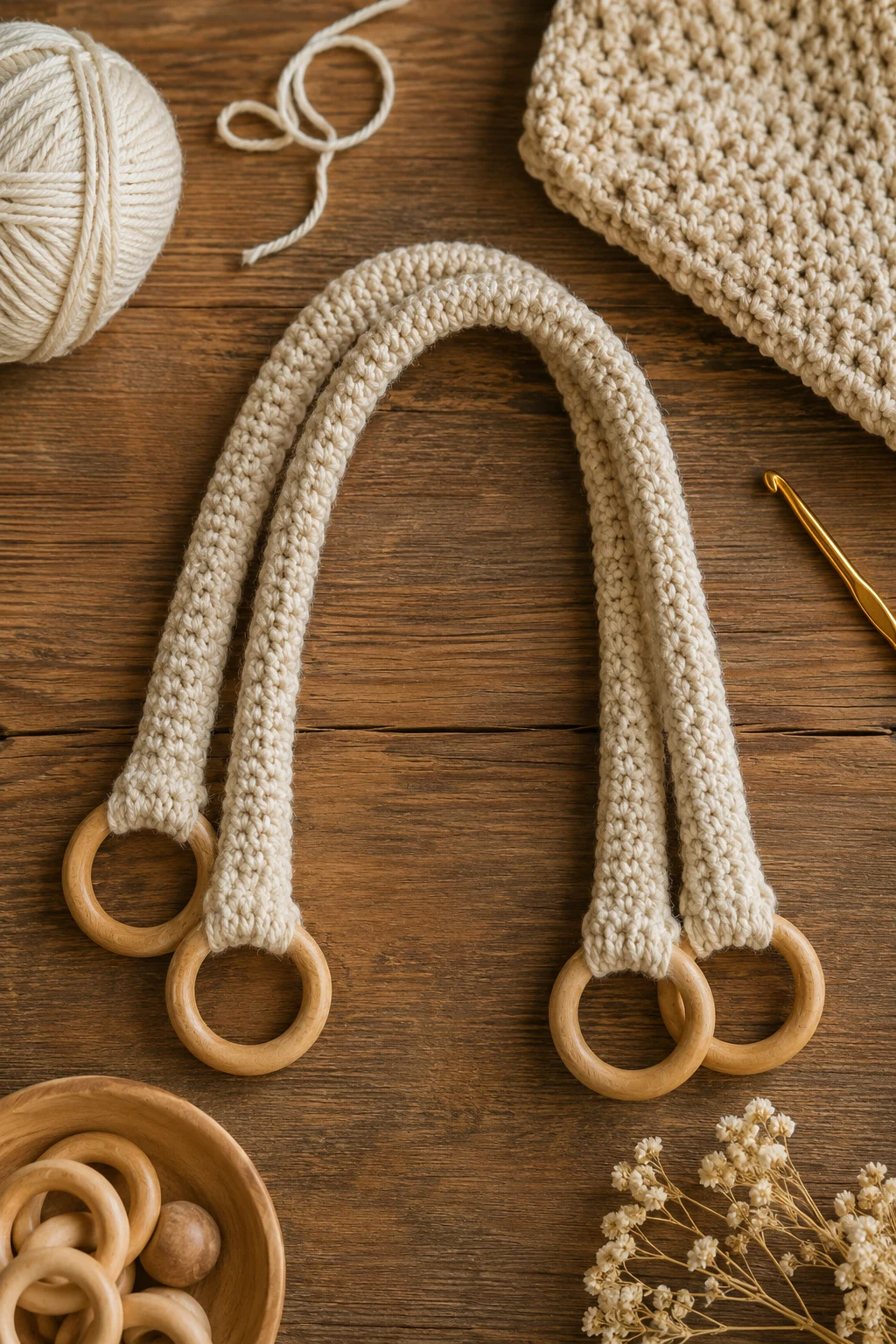
Wooden rings bring a natural, handcrafted feel to crochet handbags. Look for smooth unfinished beech, bamboo, or birch rings and crochet directly around them with cotton yarn. Natural wood paired with mustard yellow or rust-colored yarn creates an especially attractive fall combination.
These handles work wonderfully for bohemian market bags and relaxed summer totes. Choose large rings for a statement silhouette or smaller rings for compact shoulder bags.
The key to this look is: Match the ring size to the bag proportions so the wooden hardware feels intentional rather than oversized.
6. Leather-Style Tab Handles
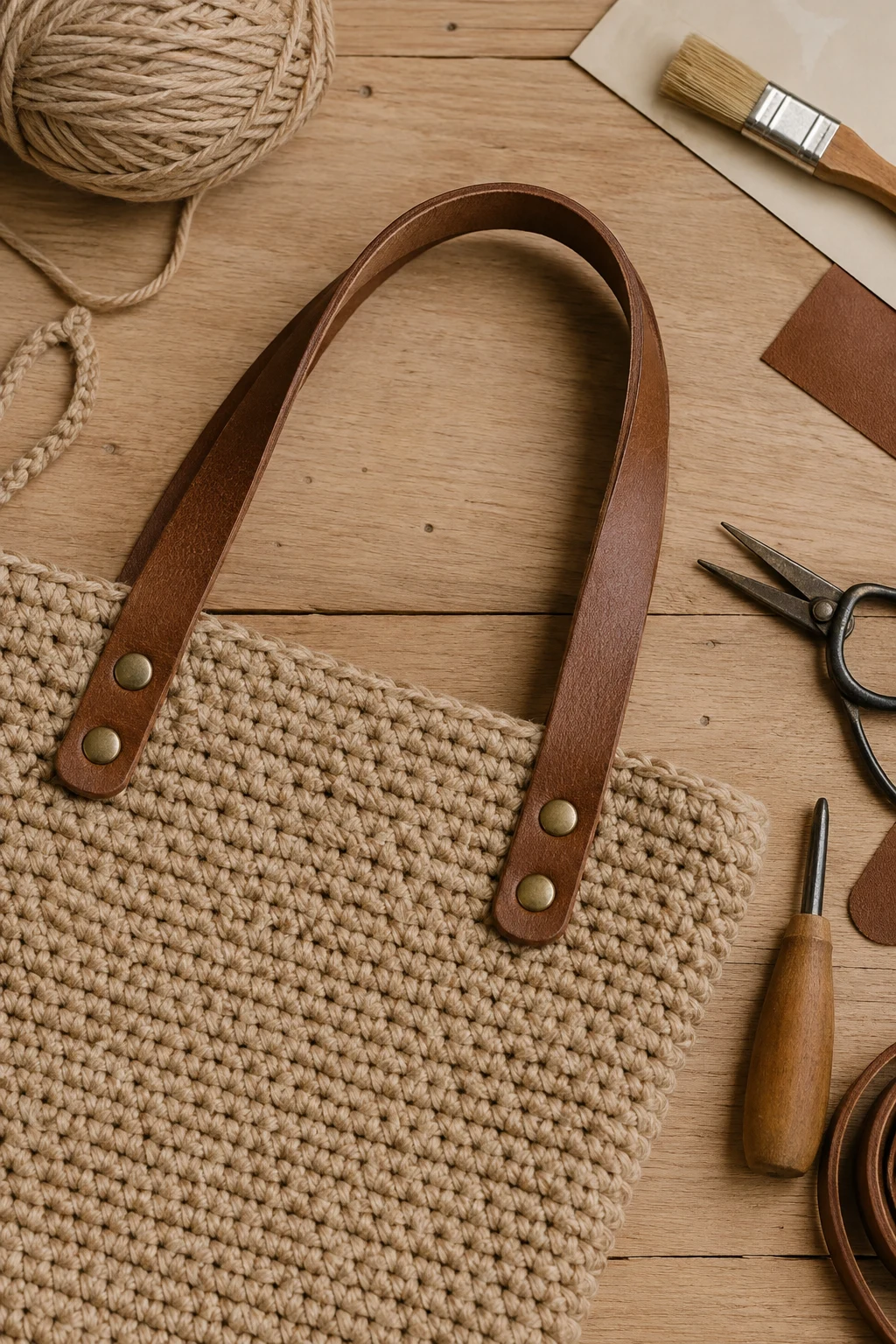
For a modern handbag, create crocheted attachment tabs that mimic the look of leather hardware. Crochet short rectangular tabs, fold them around a strap or ring, and secure them firmly to the bag.
Black, camel, espresso, and deep burgundy yarn make this technique look particularly sophisticated. Add small metal rivets or decorative buttons if you want a more structured handbag aesthetic.
The key to this technique is: Keep the attachment tabs short, dense, and heavily reinforced because they carry most of the bag’s weight.
7. Color-Block Statement Handles
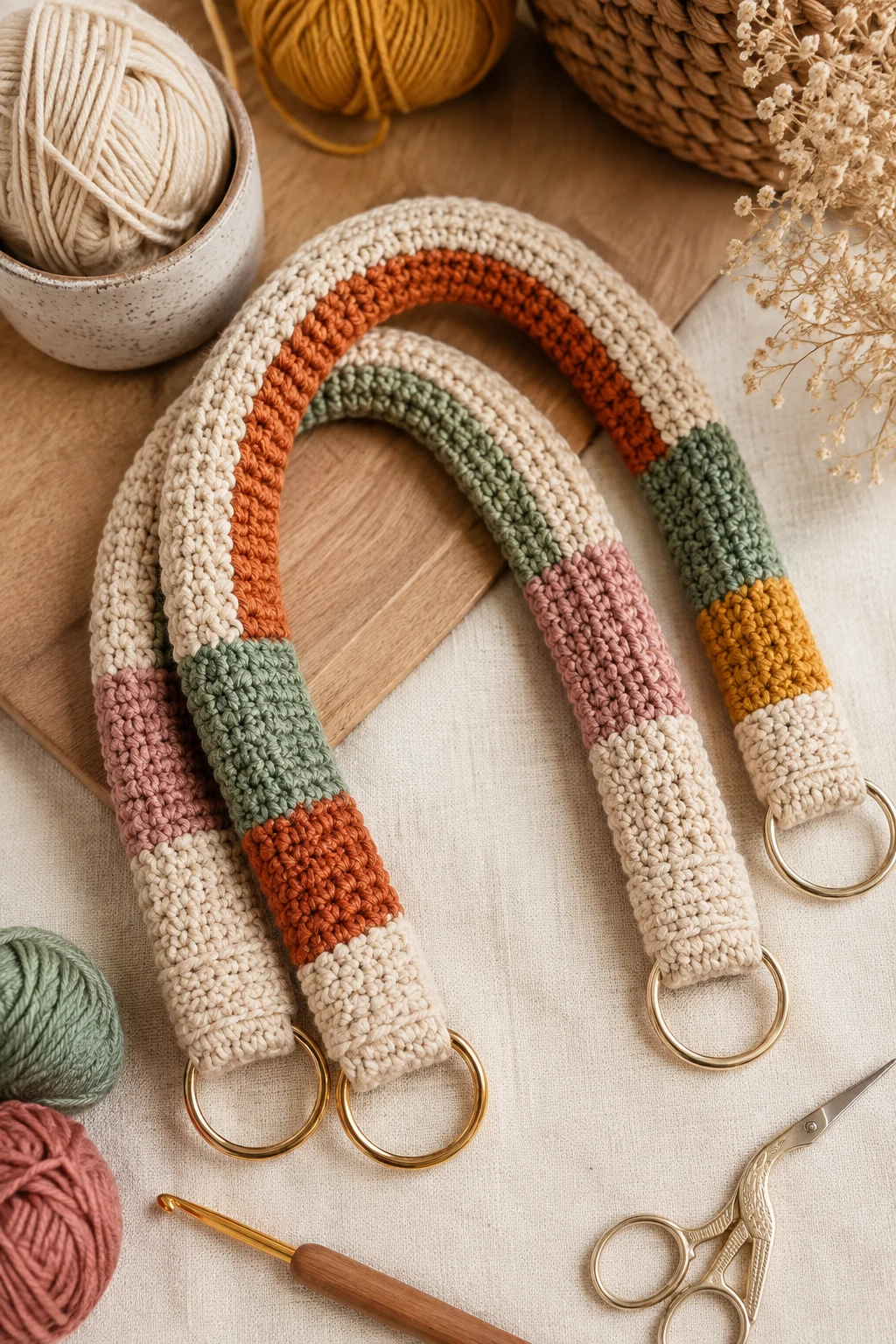
Who says the handle has to match the bag? Use contrasting colors to make the handle the star. A cobalt blue bag with coral handles, a cream tote with olive green handles, or a lavender purse with cherry-red straps can create a surprisingly stylish result.
Color blocking is especially useful for simple bags where you want visual interest without adding complicated stitch patterns.
The key to this look is: Choose one strong contrasting color and repeat it in a small detail elsewhere on the bag for visual balance.
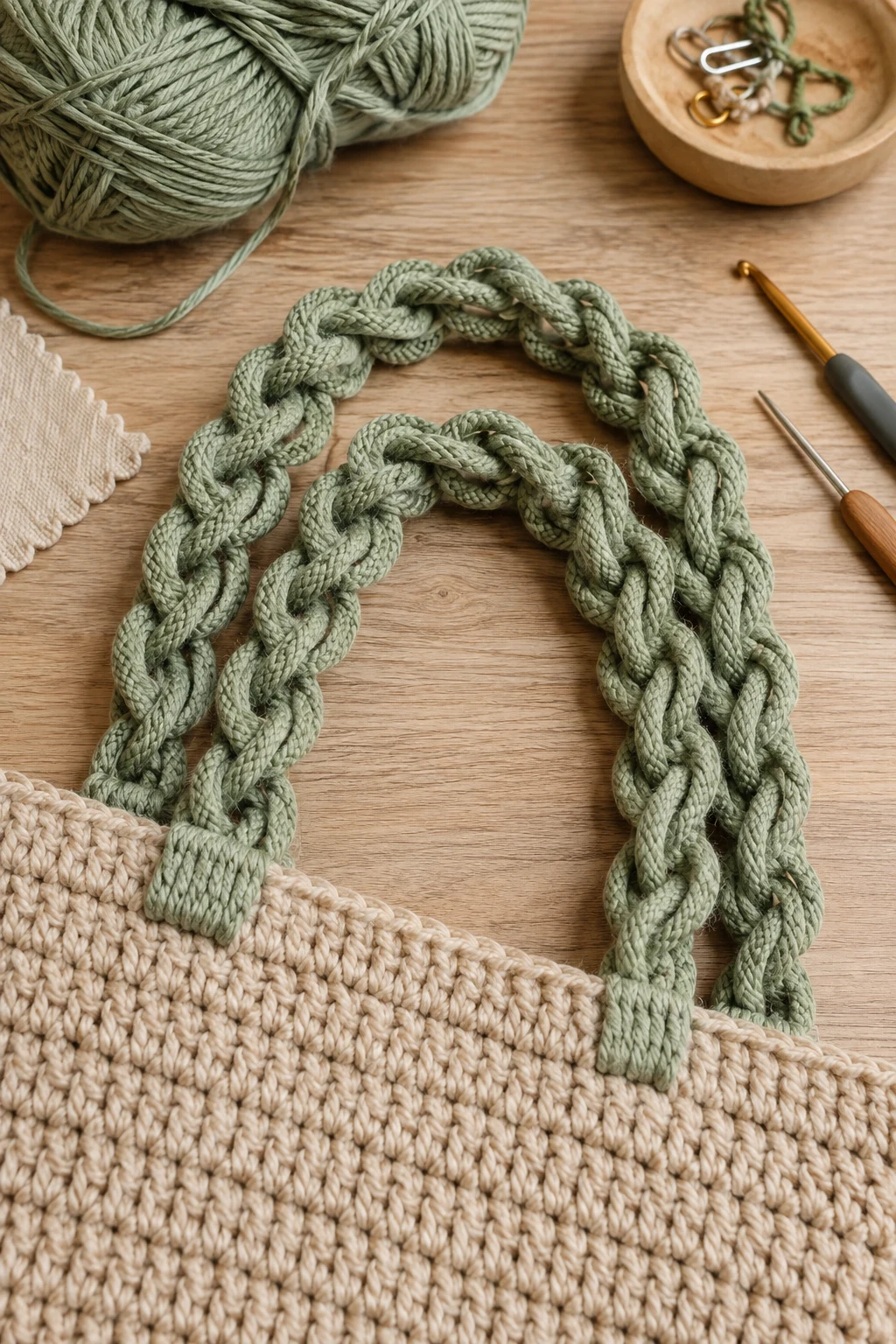
8. Chain-Style Crochet Handles
Chain-style handles imitate the look of a decorative chain while keeping the softness of crochet. Use a metallic yarn, silky ribbon yarn, or tightly crocheted cotton cord to create a series of linked sections.
This design suits small evening bags particularly well. Champagne, silver, black, or deep navy can give the bag a dressier finish for weddings, dinners, or holiday parties.
The key to this technique is: Keep every chain section approximately the same size to create a clean, jewelry-inspired rhythm.
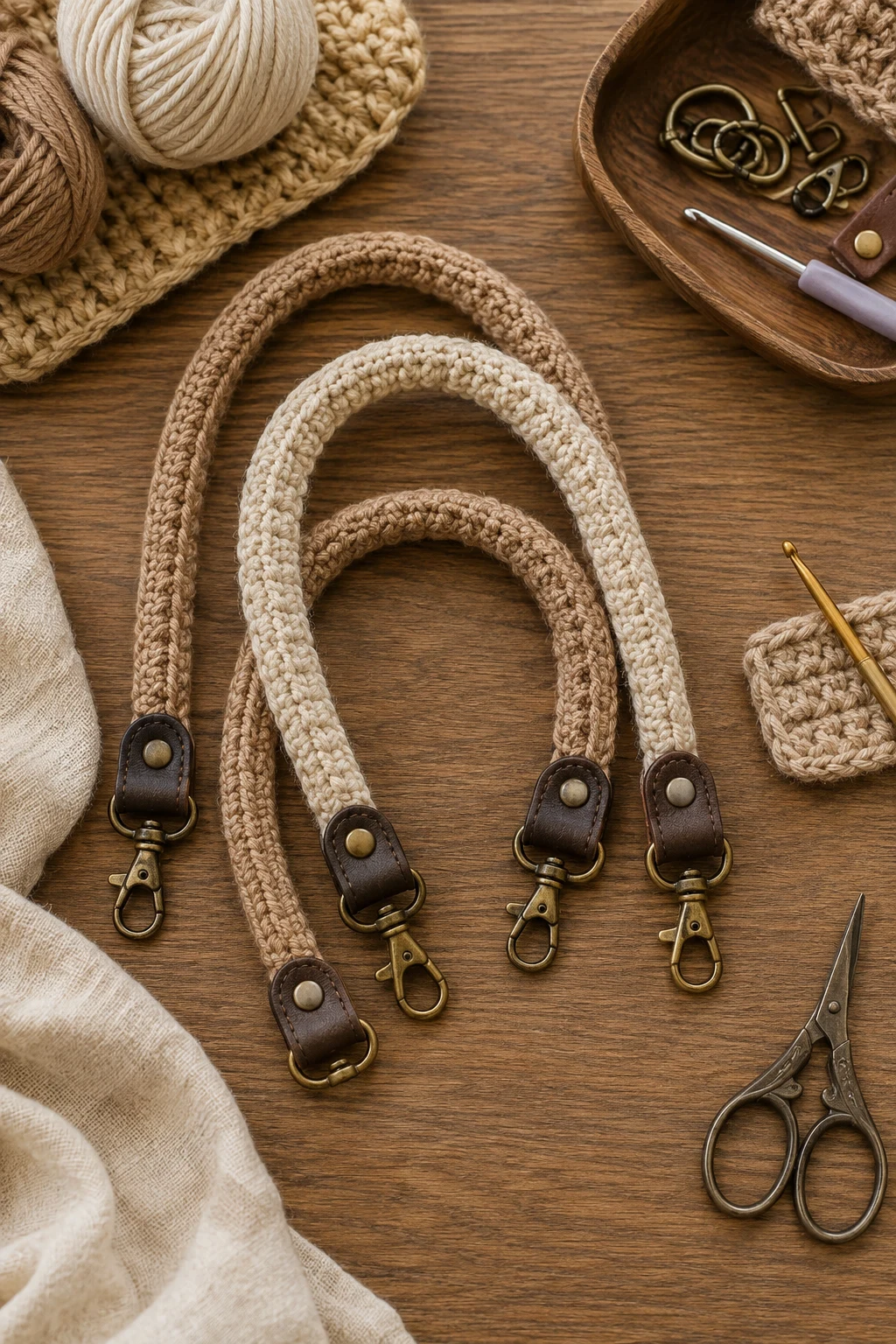
9. Crochet Bag Handles for Handbags
Structured handbags benefit from short, sturdy handles positioned close to the top edge. Instead of making a long shoulder strap, crochet two compact handles that allow the bag to sit neatly in your hand.
For a polished handbag, try mercerized cotton in black, cream, or forest green. Add interfacing or cord inside the handles if the bag needs extra stability.
The key to this look is: Keep handbag handles relatively short and firm so the bag maintains its structured silhouette.
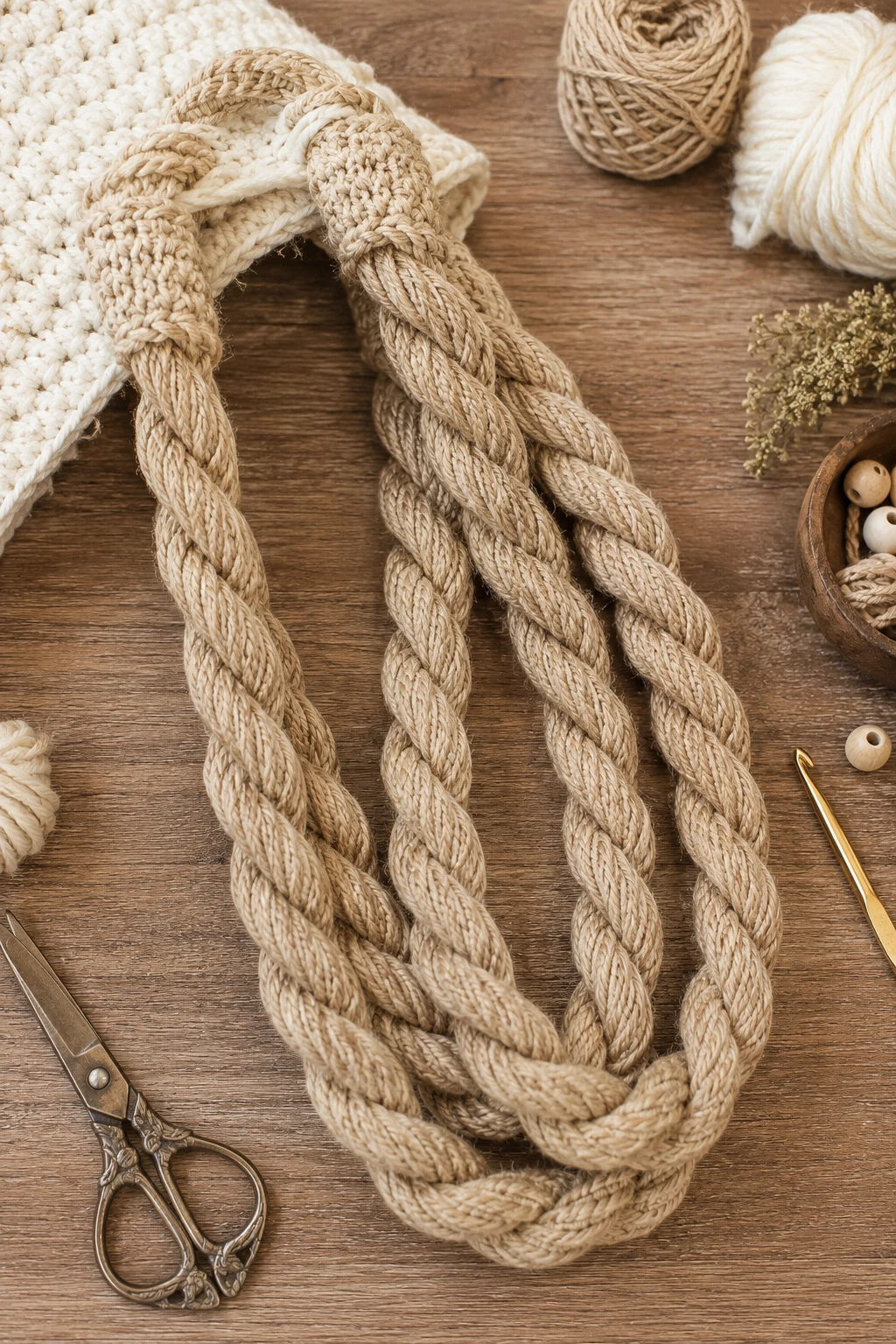
10. Twisted Rope Handles
Twisted rope handles give handmade bags a relaxed nautical character. Crochet several long cords, twist them together, and secure the ends before attaching them to the bag.
This design looks fantastic on beach totes, especially when you combine natural beige yarn with navy, seafoam, or coral accents. It is also a practical crochet bag handles tutorial concept for beginners because each component is simple.
The key to this technique is: Twist the cords evenly in the same direction before securing the ends to prevent uneven tension.
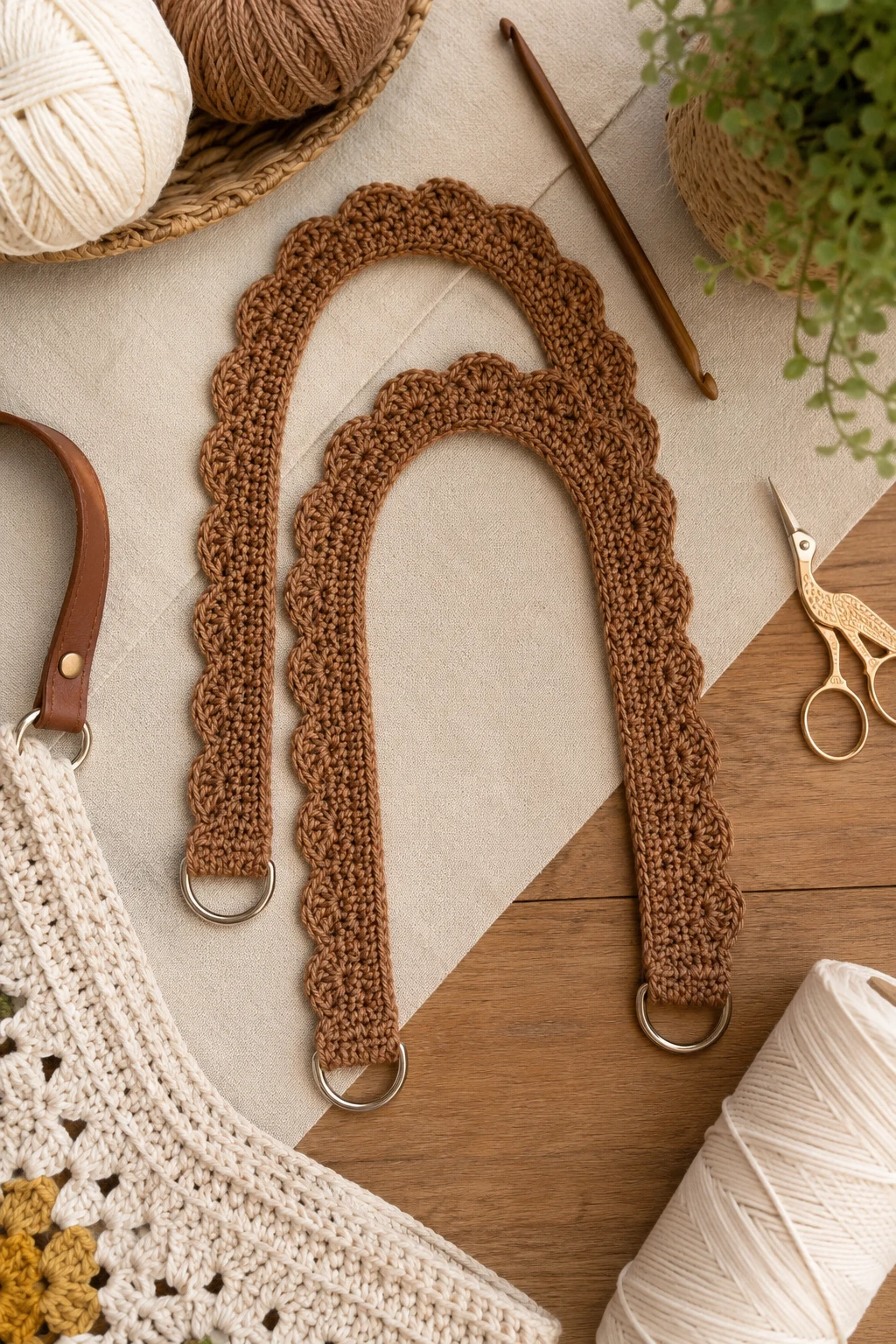
11. Scalloped Edge Handles
Add a feminine detail by working small scallops along the outer edge of a flat crocheted handle. The result feels decorative without requiring an elaborate stitch pattern throughout the bag.
Try a pale pink or butter-yellow handle on a white summer purse, or use cream scallops against a chocolate-brown bag for a vintage-inspired autumn accessory.
The key to this look is: Keep the scallops shallow and evenly spaced so they decorate the handle without compromising its strength.
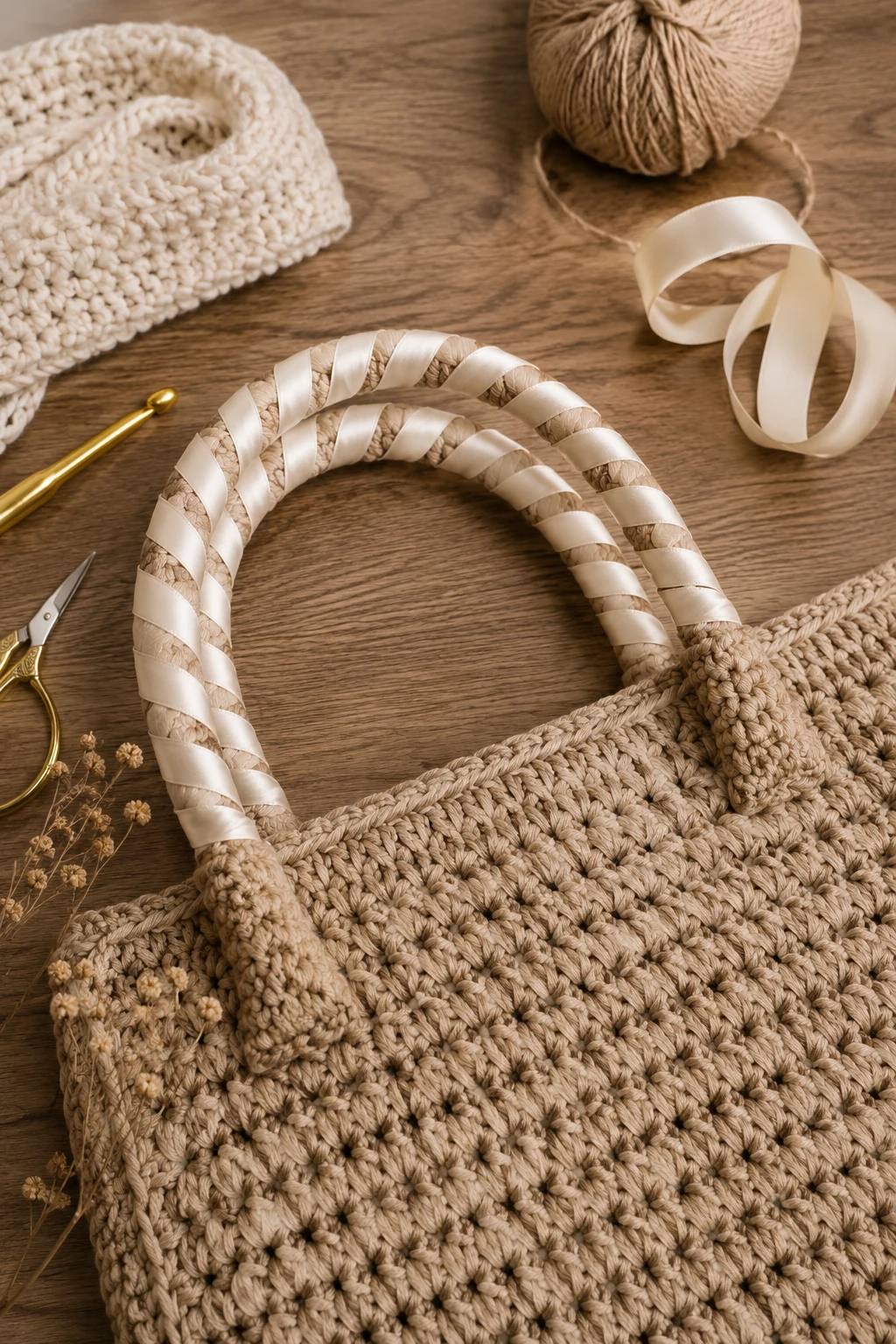
12. Ribbon-Wrapped Crochet Handles
Satin ribbon can completely change the texture of a crochet handle. Crochet a sturdy base first, then wrap it with narrow ribbon, securing the ribbon discreetly at the ends.
This technique works especially well for romantic handbags and special-occasion purses. Champagne satin with ivory crochet creates an elegant wedding accessory, while black satin adds a sleek evening finish.
The key to this technique is: Wrap the ribbon tightly and evenly, overlapping each turn slightly so the crochet base does not show through.
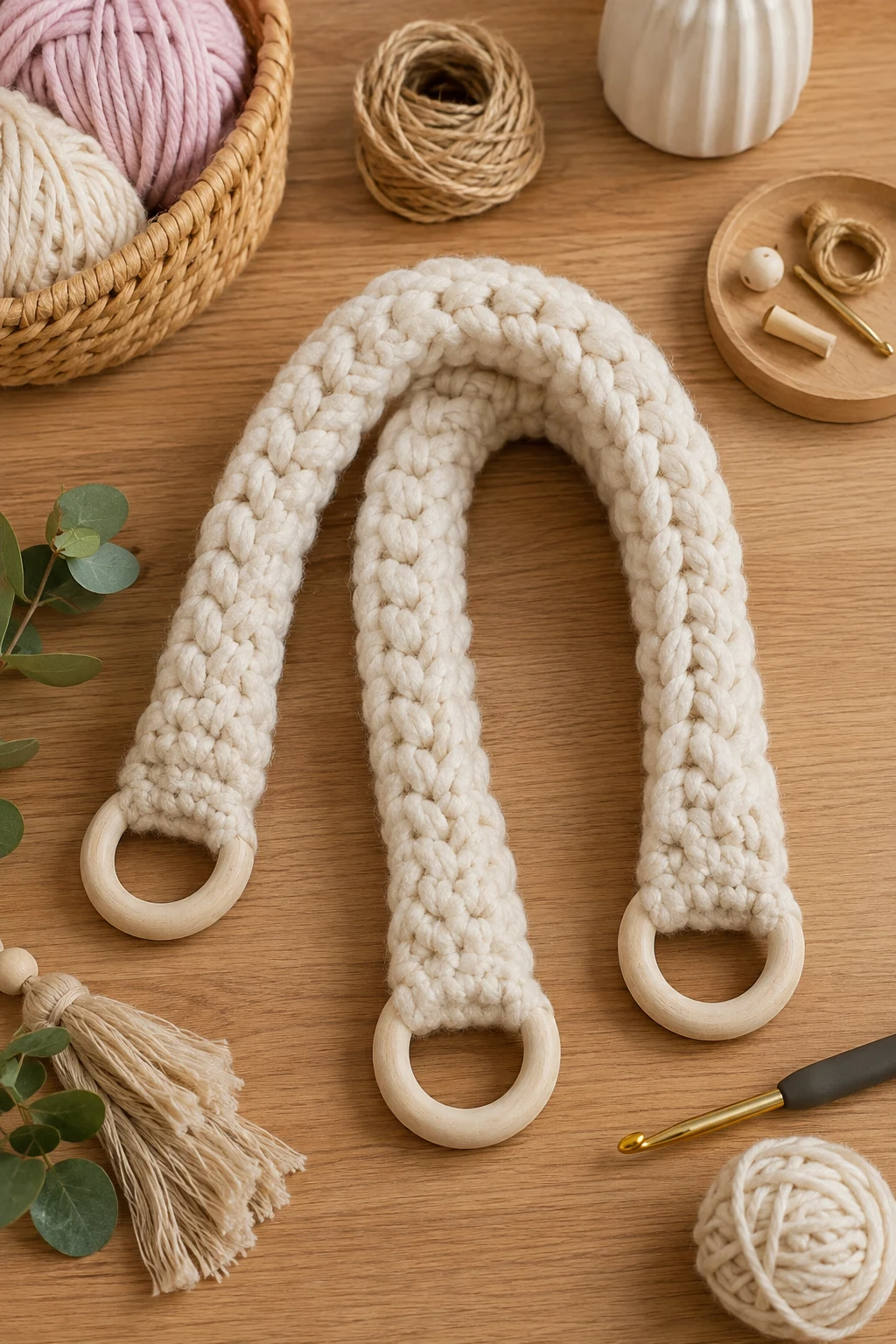
13. Chunky Oversized Handles
For a fashion-forward tote, go deliberately oversized. Thick yarn and a dense crochet stitch can create substantial handles that become part of the bag’s visual identity.
This approach works best with simple bag bodies because the oversized handle already provides plenty of drama. Try cream chunky yarn for a minimalist winter tote or burnt orange for a statement autumn accessory.
The key to this look is: Balance the oversized handle with a relatively simple bag body so the design does not become visually crowded.
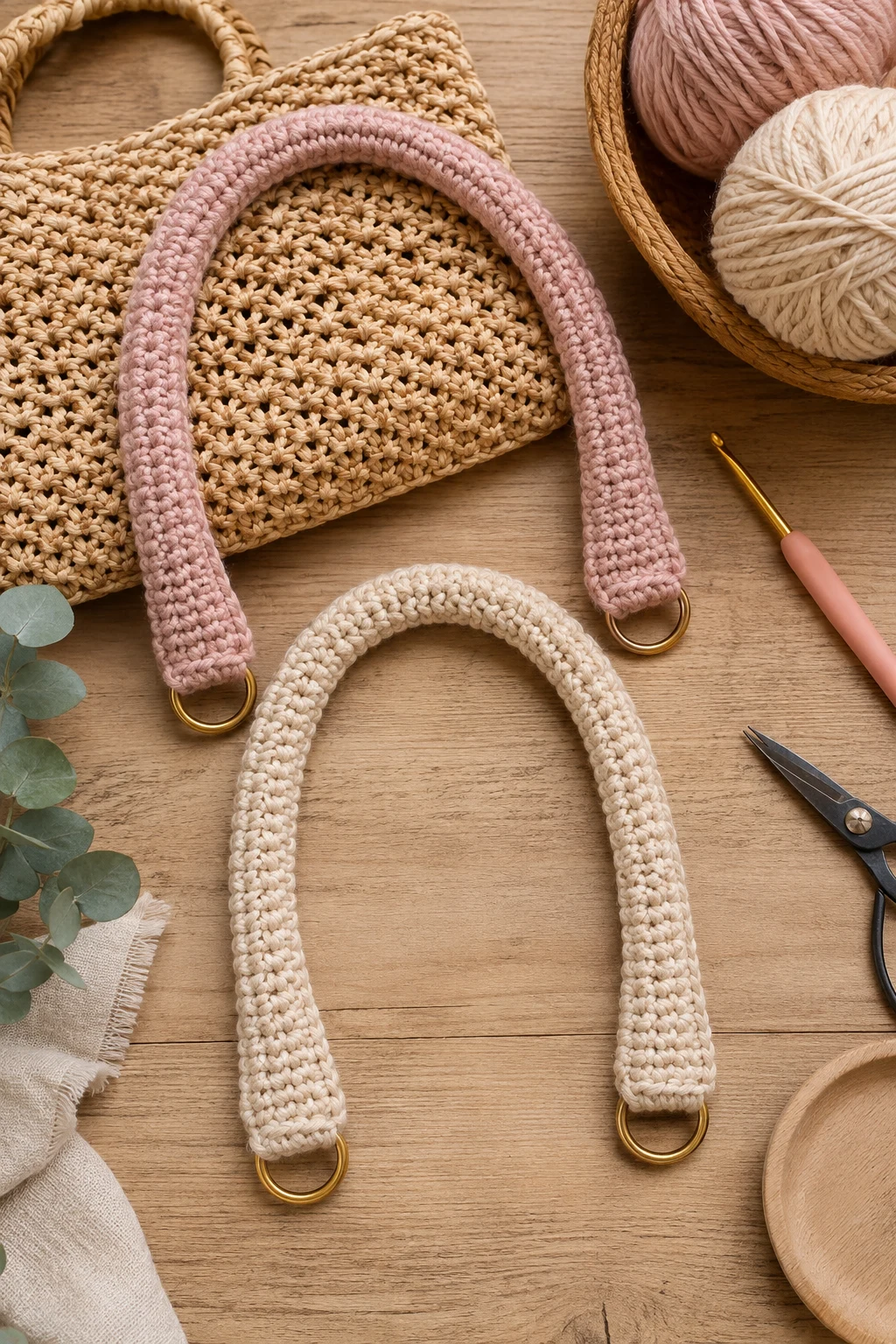
14. Crochet Bag Handles for Beginners
If you are new to bag making, start with a simple two-row strap. Chain the required length, work single crochet across, turn, and repeat until the handle reaches the desired width.
The key to this technique is: Choose a straightforward stitch and spend more time reinforcing the attachment points than decorating the strap.
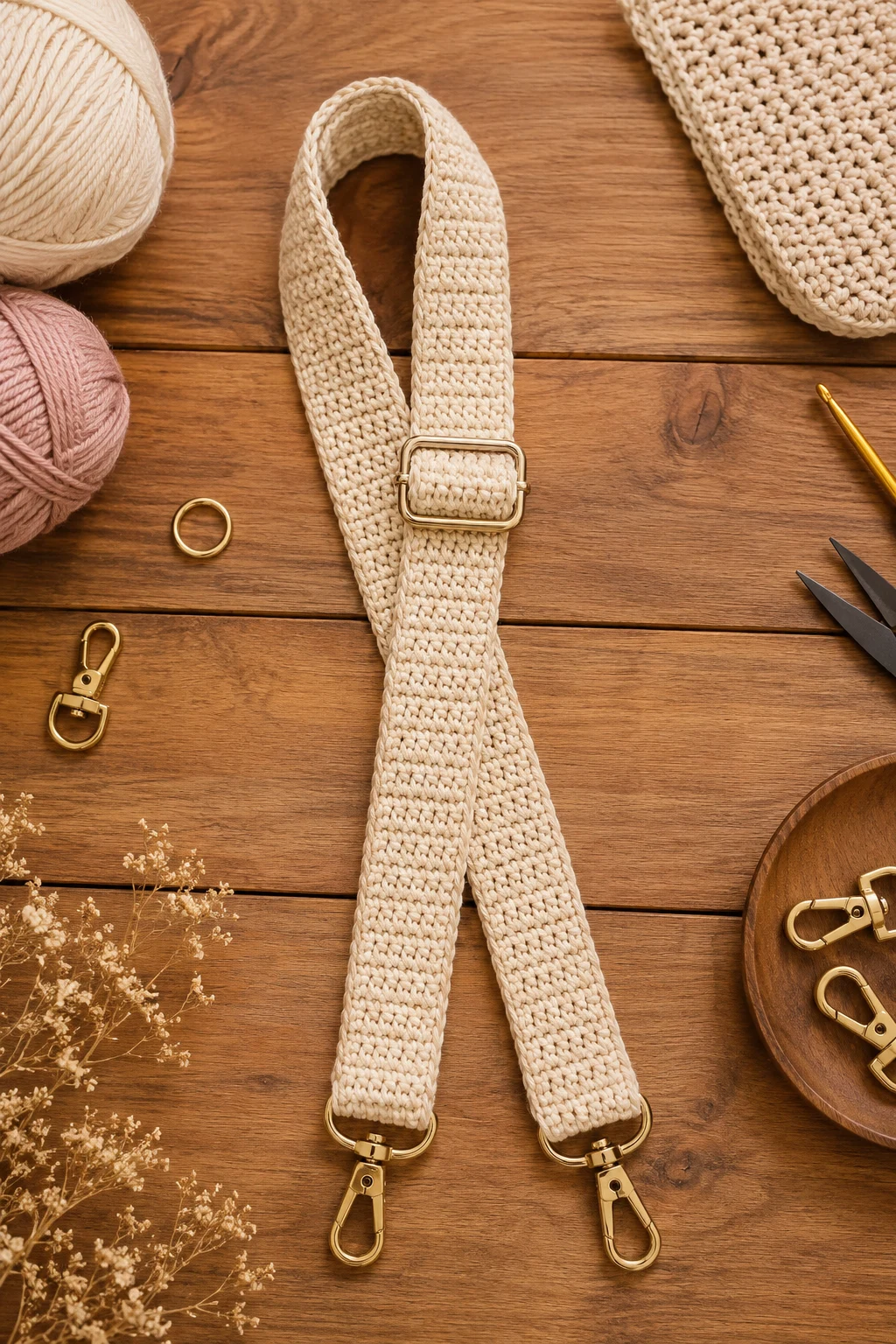
15. Adjustable Crochet Shoulder Strap
Make your bag more versatile with an adjustable shoulder strap. Crochet a long reinforced strap and connect it to two metal or wooden loops using removable hardware.
An adjustable design lets one bag work as a shoulder bag or crossbody. It is particularly useful for travel bags because you can shorten the strap when carrying the bag by hand and lengthen it when you need both hands free.
The key to this technique is: Use strong hardware and reinforce every point where the strap connects to the adjustment mechanism.
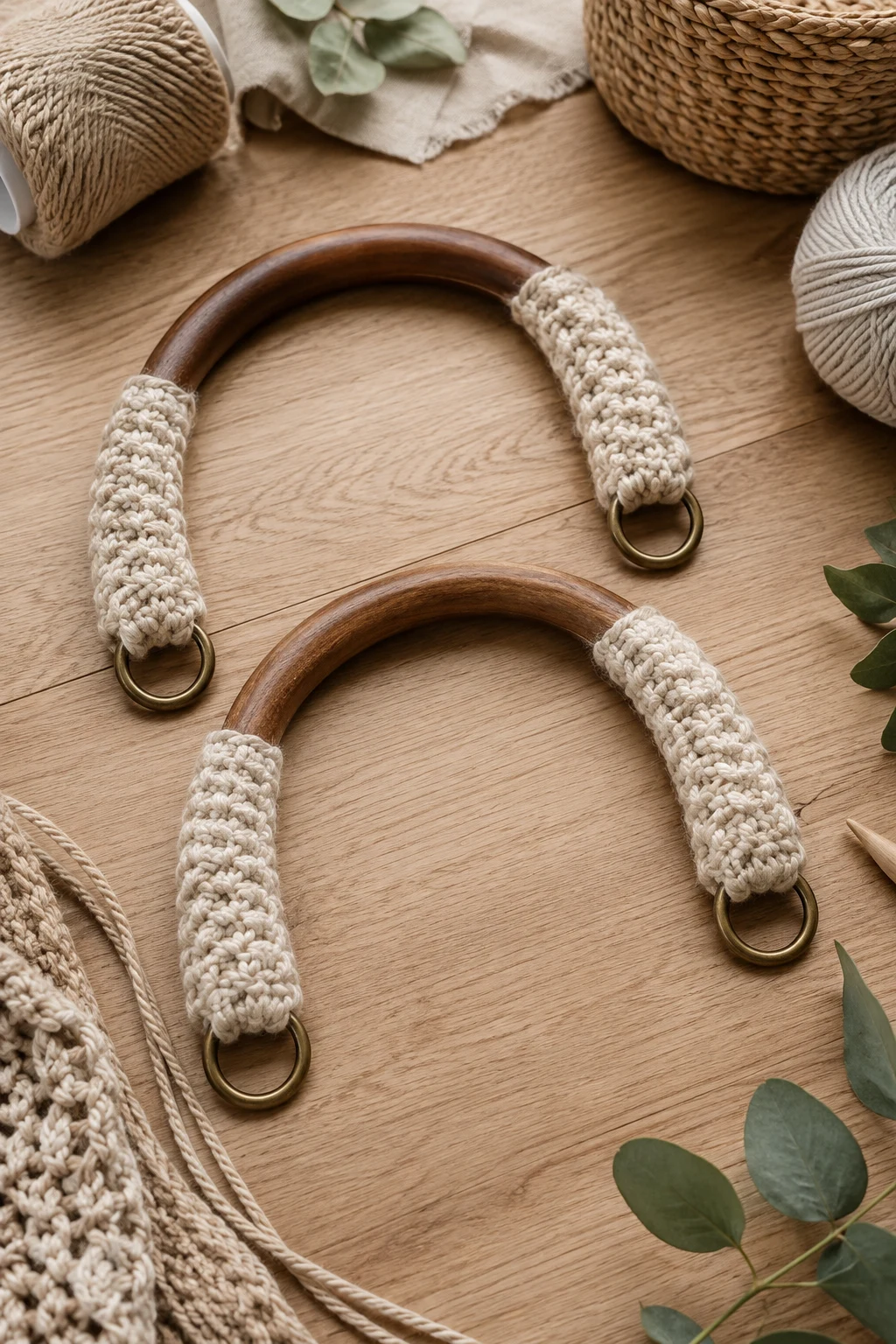
16. Mixed-Material Statement Handles
Combine crochet with wood, cord, ribbon, or metal hardware for a custom designer-style finish. For example, attach a crocheted bag body to rounded wooden handles, or pair a dense crocheted strap with gold-tone rings.
Mixed materials create contrast, which can make a handmade bag look more sophisticated without requiring complicated crochet work. This is also a great way to personalize a basic crochet bag handles pattern.
The key to this look is: Limit yourself to two or three complementary materials so the finished bag looks curated rather than overloaded.
FAQ
What are the best crochet bag handles for beginners?
Flat single-crochet straps are the easiest starting point because they require basic stitches and simple construction. A dense cotton yarn also makes the handle easier to control.
How do you make crochet bag handles that don’t stretch?
Use dense stitches and reinforce the handle with cotton cord, nylon cord, or narrow webbing inside the crochet. Attaching the handle through several layers of fabric also reduces strain.
Why do crochet bag handles stretch?
Crochet naturally has some flexibility, and long straps can stretch further when supporting a heavy bag. Loose tension, soft yarn, and insufficient reinforcement make the problem more noticeable.
📚 You Might Also Like
- Crochet ribbon bag: 7 Perfect DIY Ideas for 2026
16 Creative Crochet Ribbon Bag Ideas Crochet ribbon bags are handmade bags crocheted with ribbon-sty…
- Crochet rose bag: 10 Top DIY Ideas for 2026
16 Crochet Rose Bag Ideas That Look Handmade and High-End A crochet rose bag is a handmade bag that…
- Crochet drawstring bag: 16 Perfect DIY Ideas for 2026
16 Stylish Crochet Drawstring Bag Ideas You’ll Want to Make A crochet drawstring bag is a handmade f…
- Crochet bucket bag: 16 Top DIY Ideas for 2026
16 Crochet Bucket Bag Ideas for Stylish DIY Projects A crochet bucket bag is a soft, structured hand…
- Crochet granny square bag: 16 Gorgeous DIY Ideas
16 Crochet Granny Square Bag Ideas for Stylish DIY Projects A crochet granny square bag is a handmad…
The Bottom Line
The best crochet bag handles do more than hold your bag—they help define its entire personality. A simple cotton strap works for an everyday market tote, while wooden handles, braided cords, satin ribbon, or chunky statement straps can transform the same basic bag into something completely different. Current handmade-accessory trends continue to favor natural fibers, tactile textures, and visible craftsmanship, making these techniques especially useful for seasonal crochet projects. Pick your yarn, decide how much structure you need, and choose one handle design that fits the occasion. Your bag does not need complicated stitches to look impressive; sometimes, the handle does all the talking.
🛍️ Shop the Look — crochet bag handles
Our handpicked Amazon picks curated specifically for crochet bag handles:
As an Amazon Associate I earn from qualifying purchases.