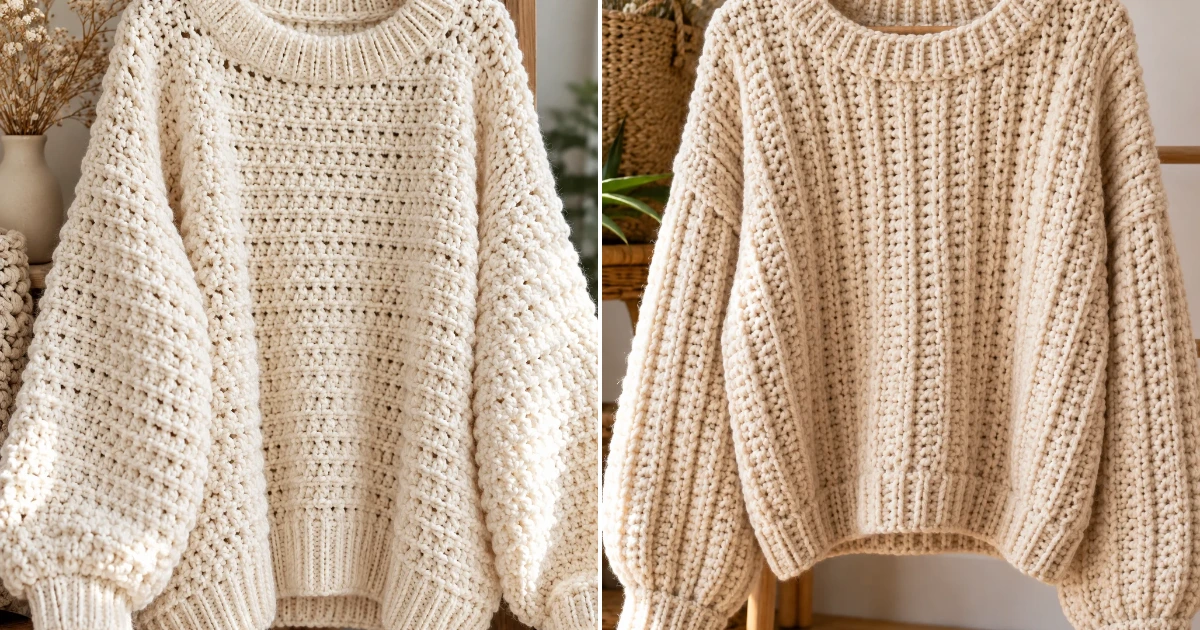
A crochet comfy sweater is a handmade garment designed for warmth, softness, and everyday style, using crochet stitches and yarn to create a comfortable fit. Whether you love oversized winter layers, lightweight autumn pullovers, or relaxed cardigans for chilly mornings, crocheting your own sweater lets you choose the colors, textures, and silhouette that suit your wardrobe, according to The Spruce Crafts. The best part? You don’t need years of experience to make something you’ll actually want to wear. From chunky cream sweaters to colorful striped designs, there are plenty of inspiring for beginners and experienced crocheters alike. With the right yarn, a well-fitting pattern, and a little patience, you can create a cozy favorite that feels personal, looks stylish, and makes every chilly day a little better.
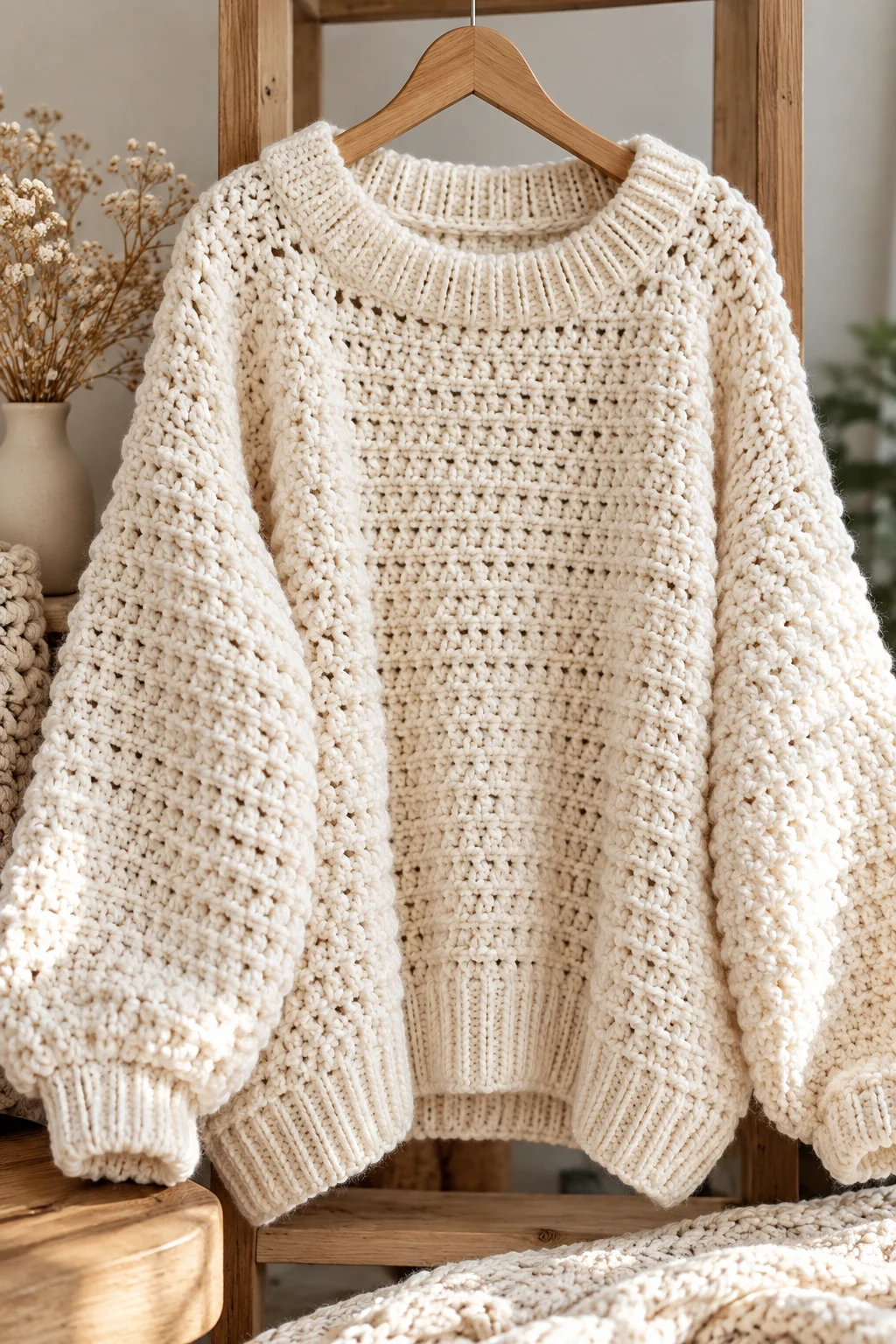
1. The Classic Oversized Cream Sweater — crochet
An oversized cream sweater is a timeless choice for anyone who loves relaxed outfits with a handmade touch. Use bulky-weight ivory yarn and simple double crochet stitches to create a loose silhouette with dropped shoulders, according to Martha Stewart Crafts. The neutral color makes this design easy to pair with blue jeans, leggings, or a long satin skirt.
For a beginner-friendly project, choose a soft acrylic-wool blend that feels comfortable against the skin and holds its shape. A slightly wider neckline adds an effortless, slouchy finish, while ribbed cuffs keep the sleeves from swallowing your hands.
The key to this look/technique is choosing a soft, washable yarn and checking your gauge before making the oversized body panels.
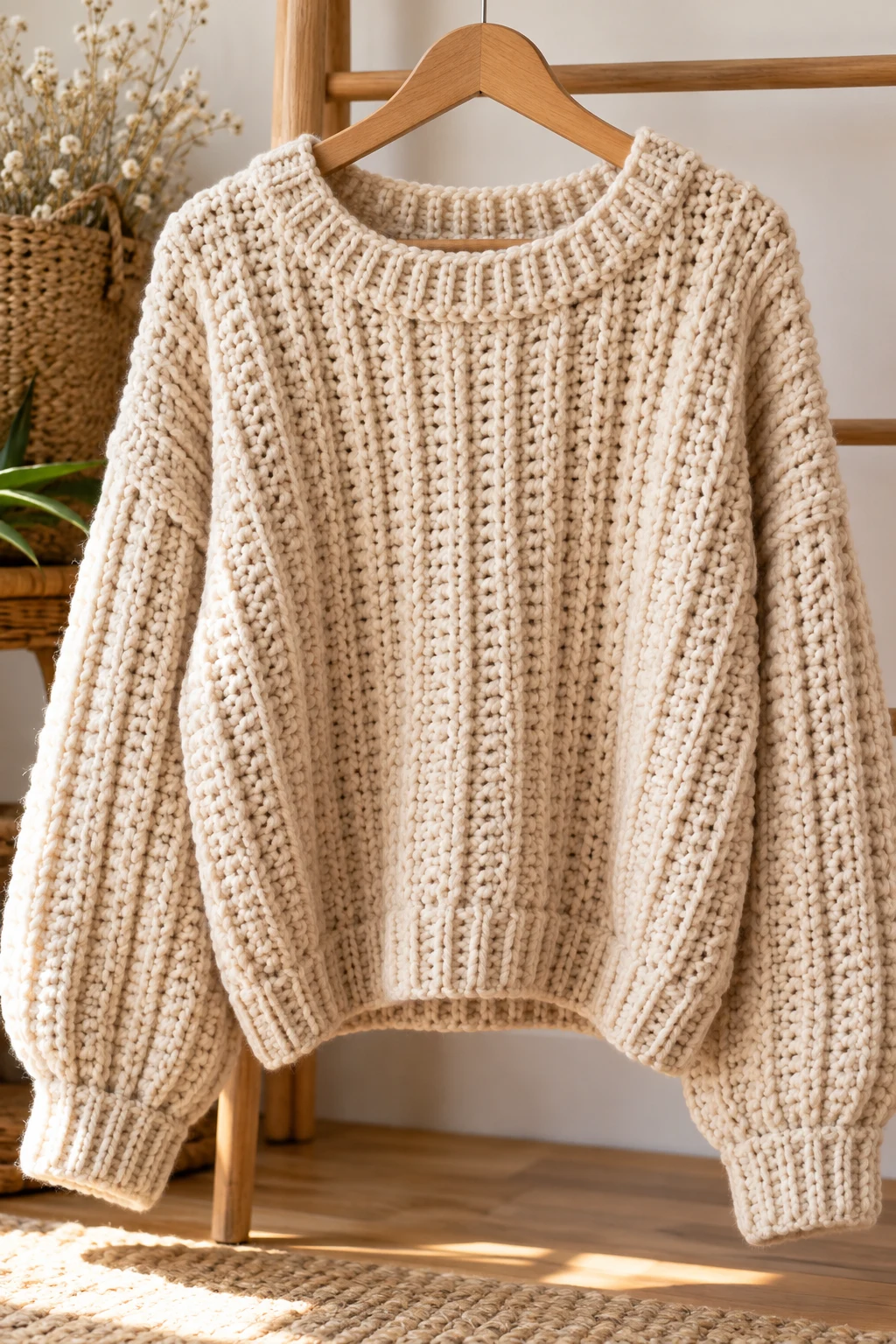
2. The Chunky Ribbed Crochet Comfy Sweater
If you want a sweater that looks plush and feels wonderfully warm, try a chunky ribbed design. Alternating front-post and back-post double crochet stitches can create a raised texture that resembles classic knitted ribbing. Choose oatmeal, warm taupe, or chocolate brown for a rich autumn and winter palette.
A bulky yarn and a suitable large crochet hook help you work faster while producing a substantial fabric. Keep the sleeves slightly tapered so the finished sweater feels cozy without becoming unnecessarily heavy.
This crochet cozy sweater is ideal for weekend coffee runs, movie nights, and layering over a fitted long-sleeve top.
The key to this look/technique is maintaining consistent raised stitches and avoiding fabric that’s so dense it becomes stiff or uncomfortable.
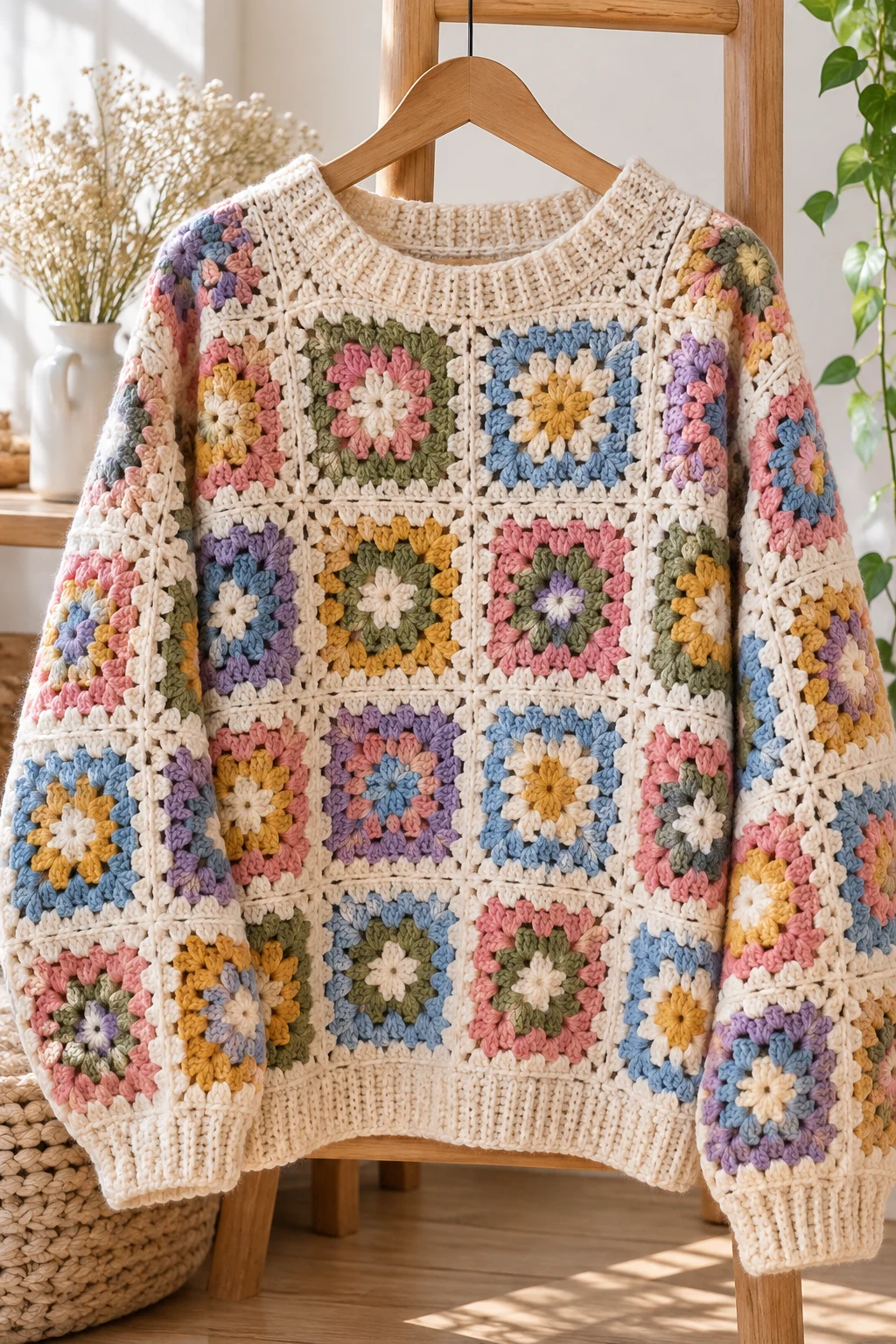
3. The Beginner-Friendly Granny Square Sweater — crochet
Granny squares turn a sweater into a colorful patchwork project. Crochet individual squares in lavender, butter yellow, dusty pink, sage green, and cream, then join them into panels for the body and sleeves. This construction lets you work on small sections whenever you have a few spare minutes.
A granny square pattern, medium-weight yarn, and stitch markers are useful essentials. Keep the color palette coordinated for a modern finish, or mix leftover yarn shades for a playful, vintage-inspired look.
The modular construction can make sizing adjustments easier because you can add or remove squares before joining the pieces.
The key to this look/technique is keeping your squares uniform in size and arranging the colors before sewing the panels together.
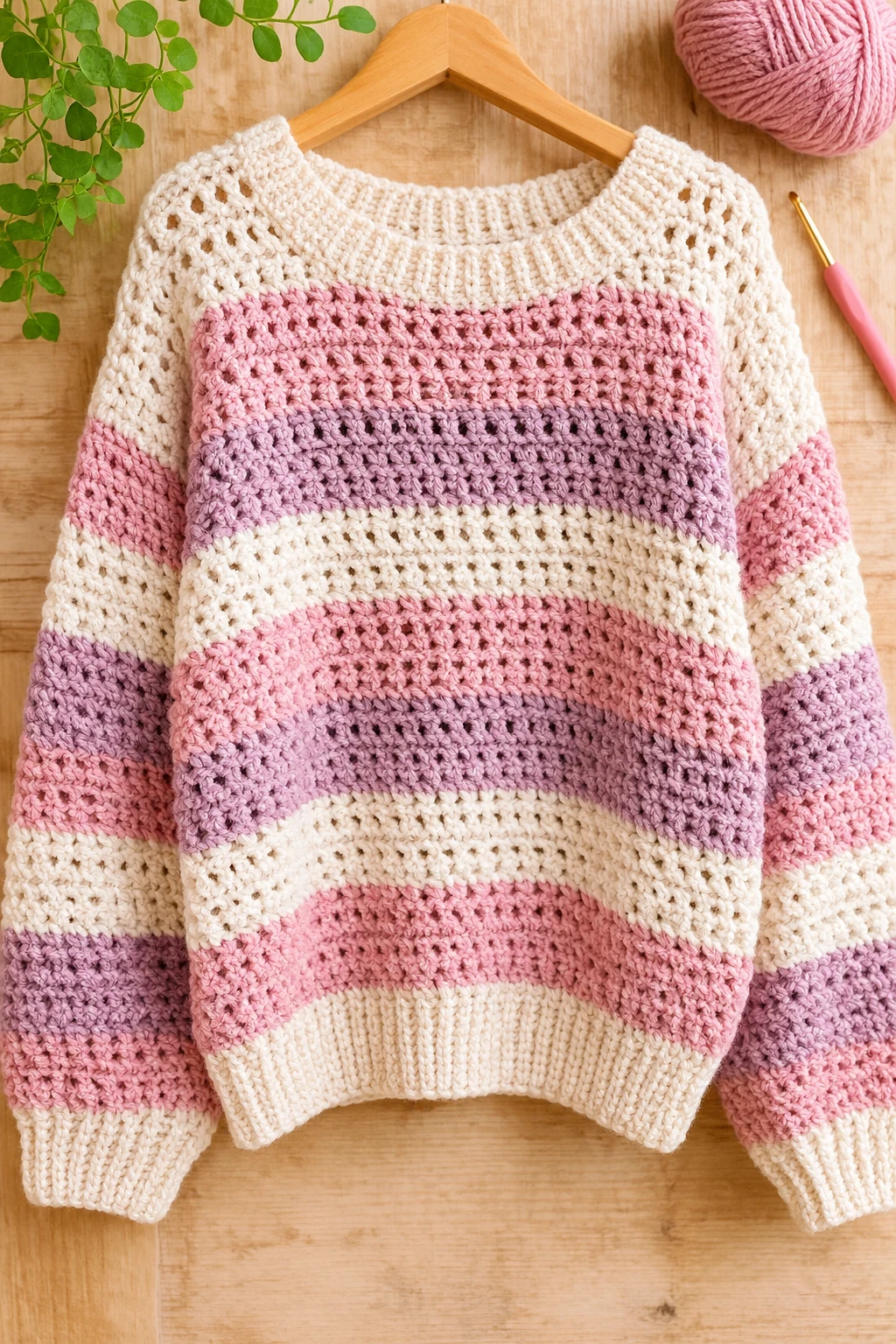
4. The Relaxed Drop-Shoulder Pullover
A drop-shoulder pullover is a smart option if you prefer a relaxed fit without complicated shaping. The body usually consists of simple rectangular panels, while the sleeves attach lower on the shoulder to create that casual, roomy silhouette.
Choose sage green, dusty blue, or warm beige yarn for an understated design. A medium-weight cotton-acrylic blend can provide softness and enough structure for everyday wear. Work the body in half-double crochet for a fabric that’s compact than traditional double crochet but still flexible.
This style works beautifully with straight-leg jeans, canvas sneakers, and a simple crossbody bag.
The key to this look/technique is measuring the shoulder drop and sleeve opening carefully so the sweater feels relaxed rather than bulky.
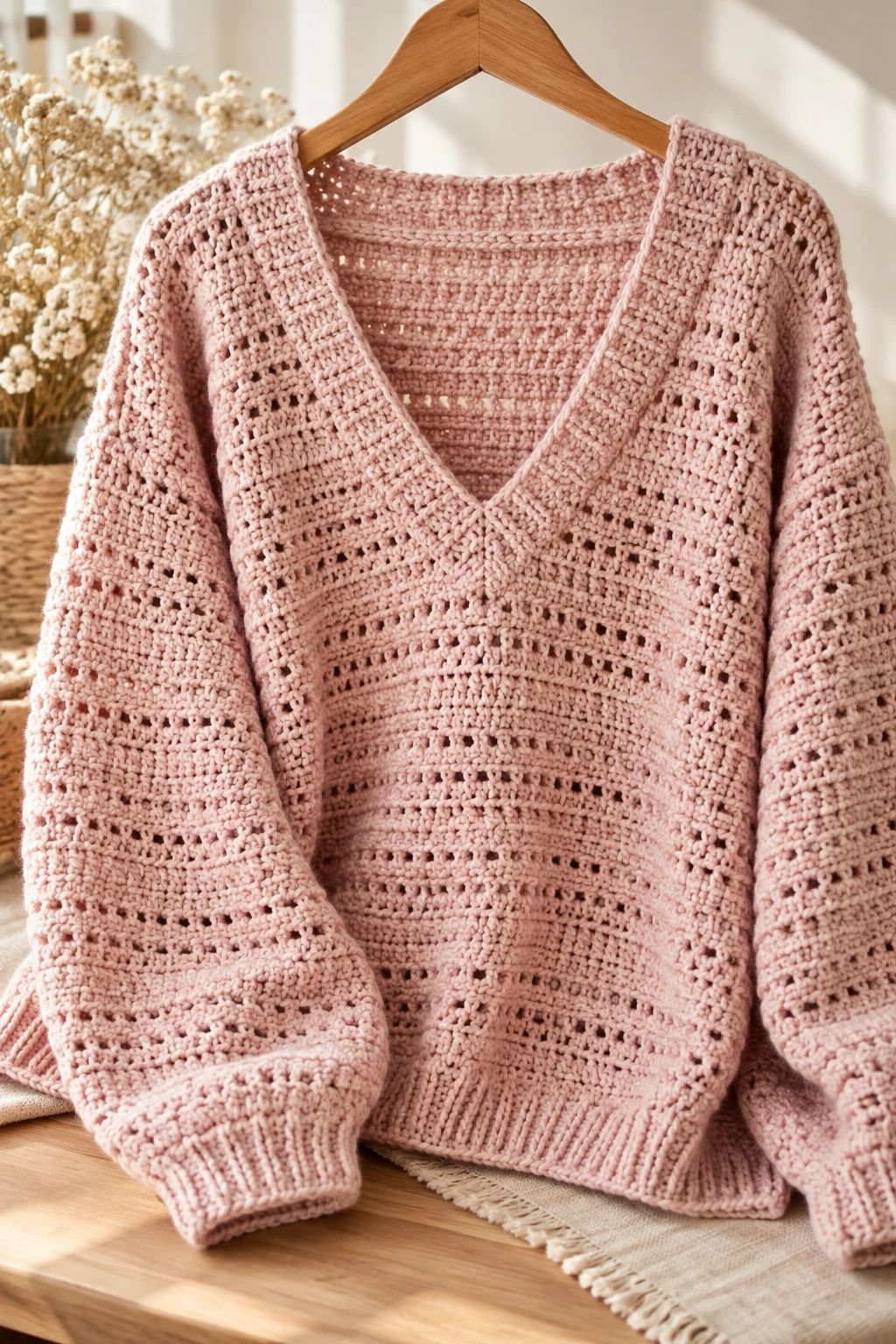
5. The Soft V-Neck Crochet Sweater
A V-neck sweater brings a slightly polished feel to a handmade wardrobe. The neckline looks lovely in dusty blue, muted plum, forest green, or classic ivory. Pair it with a collared shirt for a preppy outfit or wear it over a camisole when the weather is mild.
To create the neckline, shape the upper front panels gradually rather than leaving a straight opening. A V-neck crochet sweater pattern with clear shaping instructions can help beginners understand decreases and shoulder construction.
Use smooth, medium-weight yarn so the neckline sits neatly instead of stretching out after several wears.
The key to this look/technique is creating symmetrical neckline decreases and finishing the V with an even border that maintains its shape.
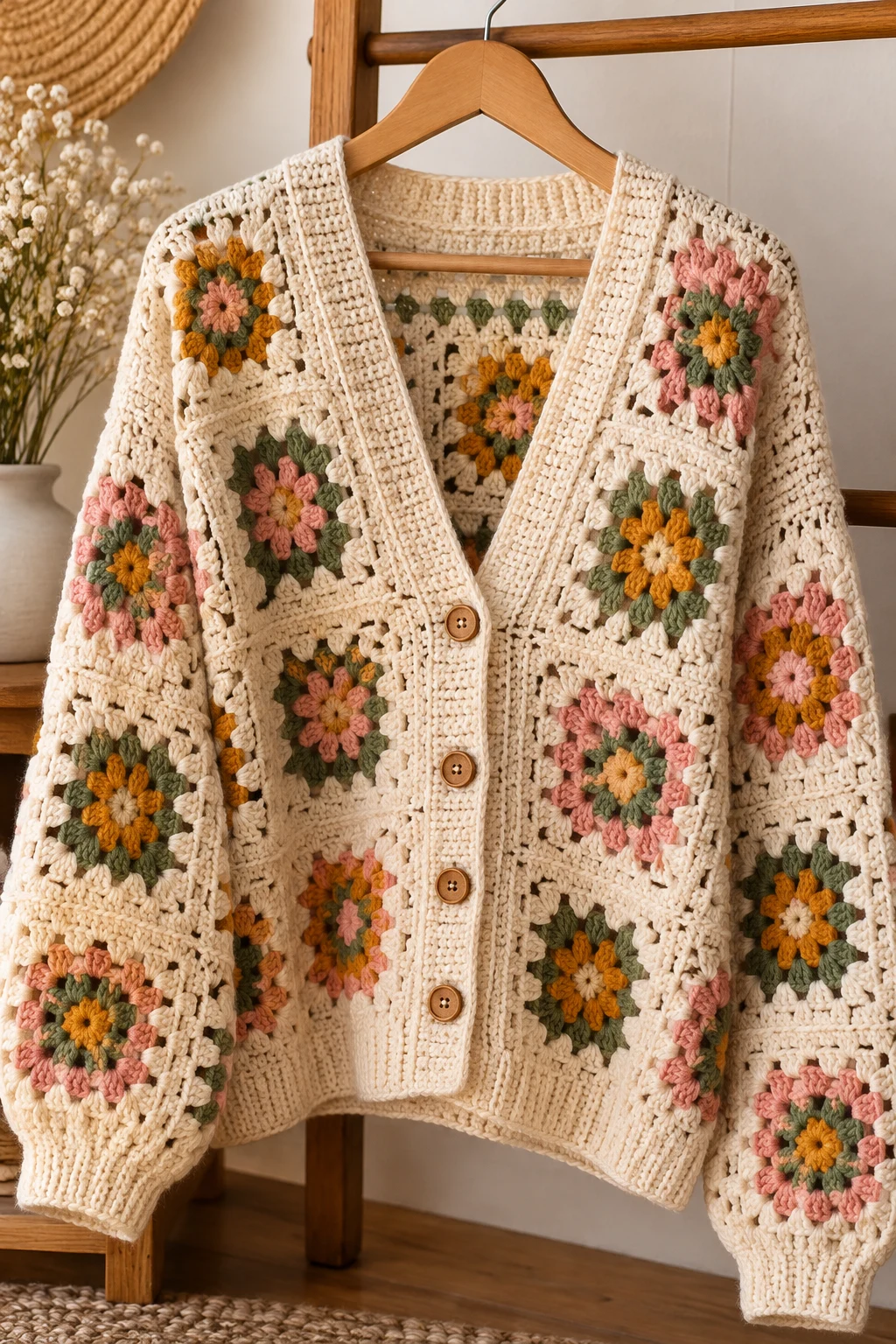
6. The Cozy Crochet Cardigan
Sometimes the most useful sweater is the one you can throw on and take off without disturbing your outfit. A cozy crochet cardigan delivers exactly that. Create a relaxed open-front style in cream, caramel, or charcoal, then add wooden buttons if you prefer a structured finish.
A crochet comfy cardigan is particularly practical for transitional weather because you can layer it over T-shirts, dresses, and lightweight blouses. Simple panels, a ribbed hem, and roomy sleeves keep the construction manageable.
If you’re new to garment-making, choose a pattern with minimal shaping and a clearly explained assembly method.
The key to this look/technique is making the front panels equal in width and reinforcing the button band to prevent stretching.
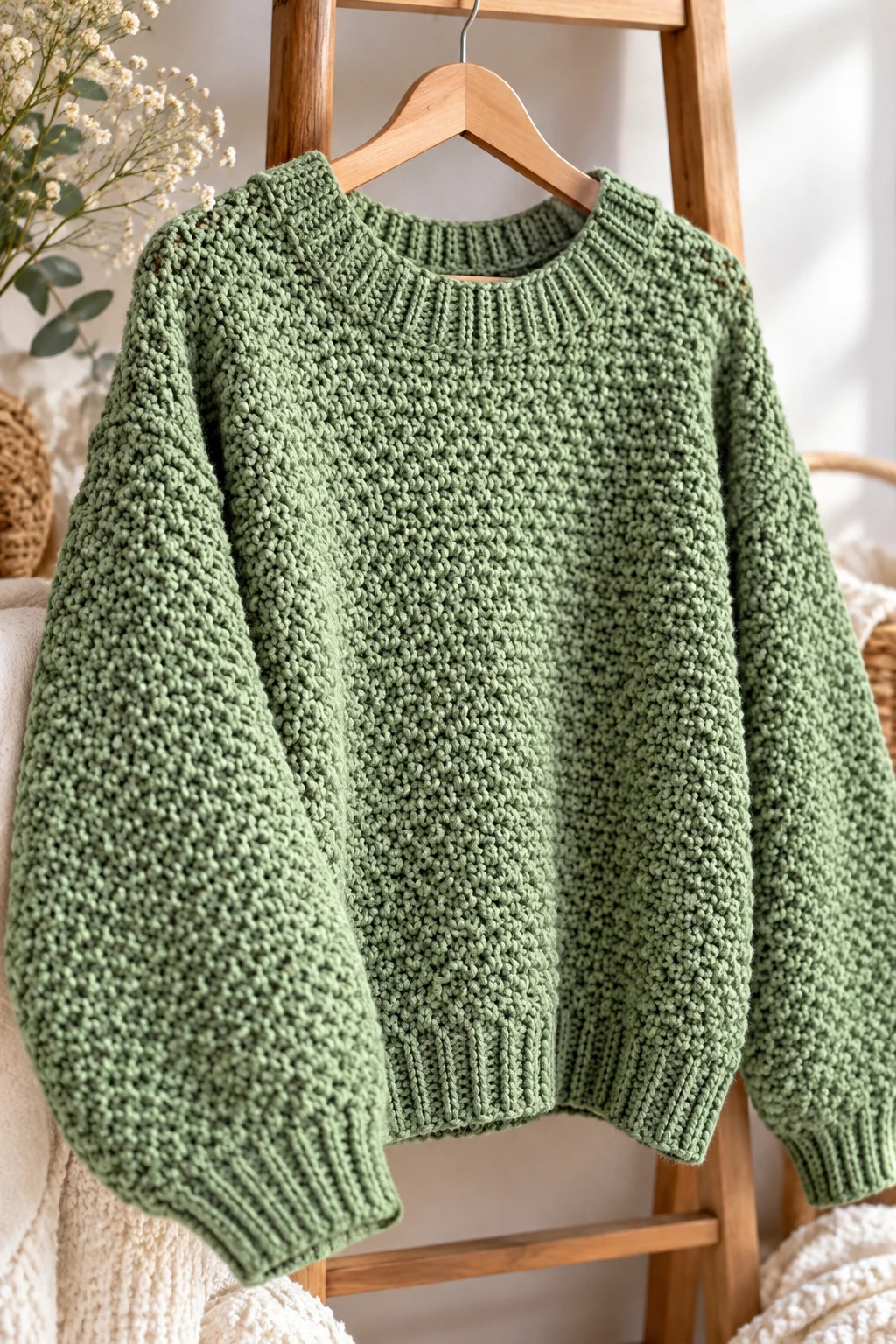
7. The Textured Moss Stitch Sweater
The moss stitch creates a subtle woven texture using alternating single crochet stitches and chain spaces. It looks sophisticated without requiring complicated stitch combinations, making it a lovely choice for crocheters who want something interesting than plain fabric.
Try dusty rose, eucalyptus green, or soft lilac for a sweater that feels fresh during spring and autumn. A smooth DK-weight yarn highlights the stitch definition, while a comfortable hook size helps prevent the fabric from becoming too tight.
Because the texture is relatively compact, this design can work well as a standalone sweater or a layering piece beneath a coat.
The key to this look/technique is keeping your chain spaces consistent so the moss stitch forms an even, woven-looking surface.
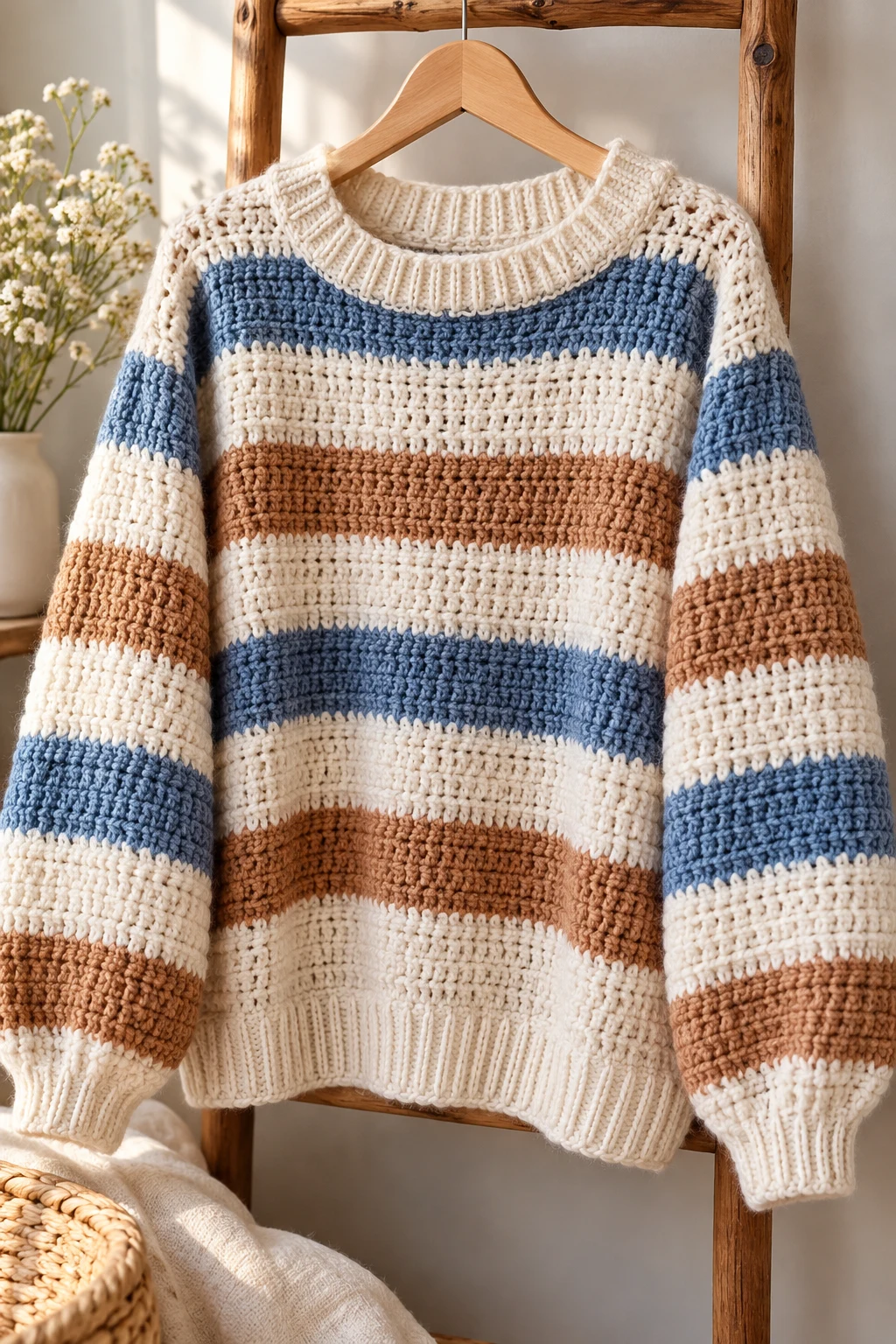
8. The Striped Weekend Sweater
A striped sweater is an easy way to add personality without relying on complicated stitches. Combine cream with rust, navy with oatmeal, or chocolate brown with dusty pink. Wider stripes create a bold retro look, while narrow stripes feel subtle and classic.
Use two or three coordinated yarn colors and change shades at the same point in each row. Carrying yarn neatly along the edges or weaving in the ends carefully helps the finished sweater look professional.
For a contemporary autumn design, pair warm rust stripes with dark denim and ankle boots.
The key to this look/technique is planning your stripe sequence in advance and keeping color changes neat to minimize visible joins.
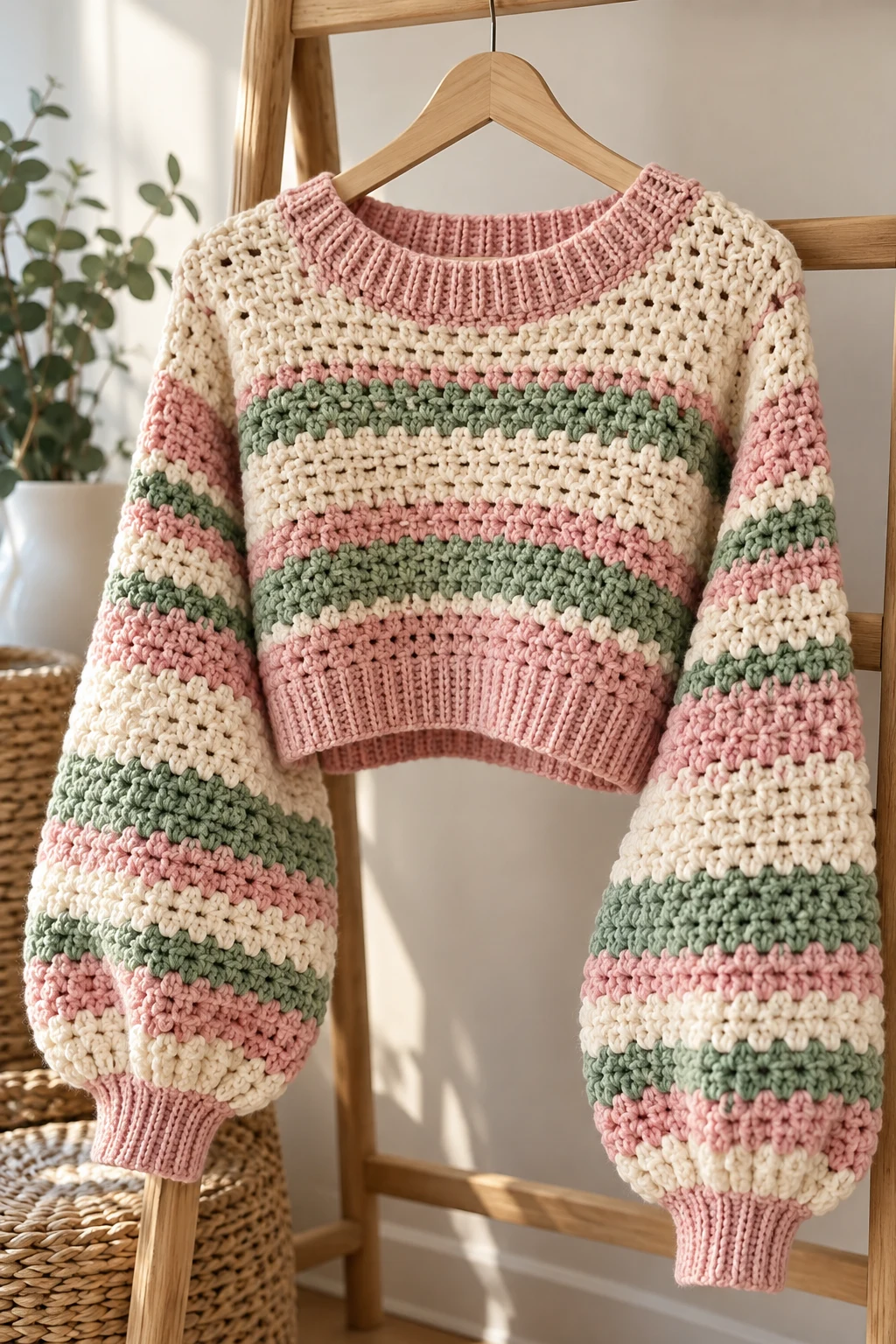
9. The Cropped Cozy Sweater
A cropped crochet sweater feels modern, especially when you combine a boxy body with slightly oversized sleeves. It works well with high-waisted jeans, wide-leg trousers, and pleated skirts. Choose butter yellow for spring or deep burgundy for a richer fall look.
The shorter length also means you’ll use less yarn than you would for a full-length pullover. A crochet sweater pattern with a ribbed waistband helps the hem sit comfortably without rolling upward.
Measure the desired length against a favorite top before beginning, because even a few extra rows can change the overall silhouette.
The key to this look/technique is balancing the cropped body with comfortable sleeve proportions and a waistband that isn’t overly tight.
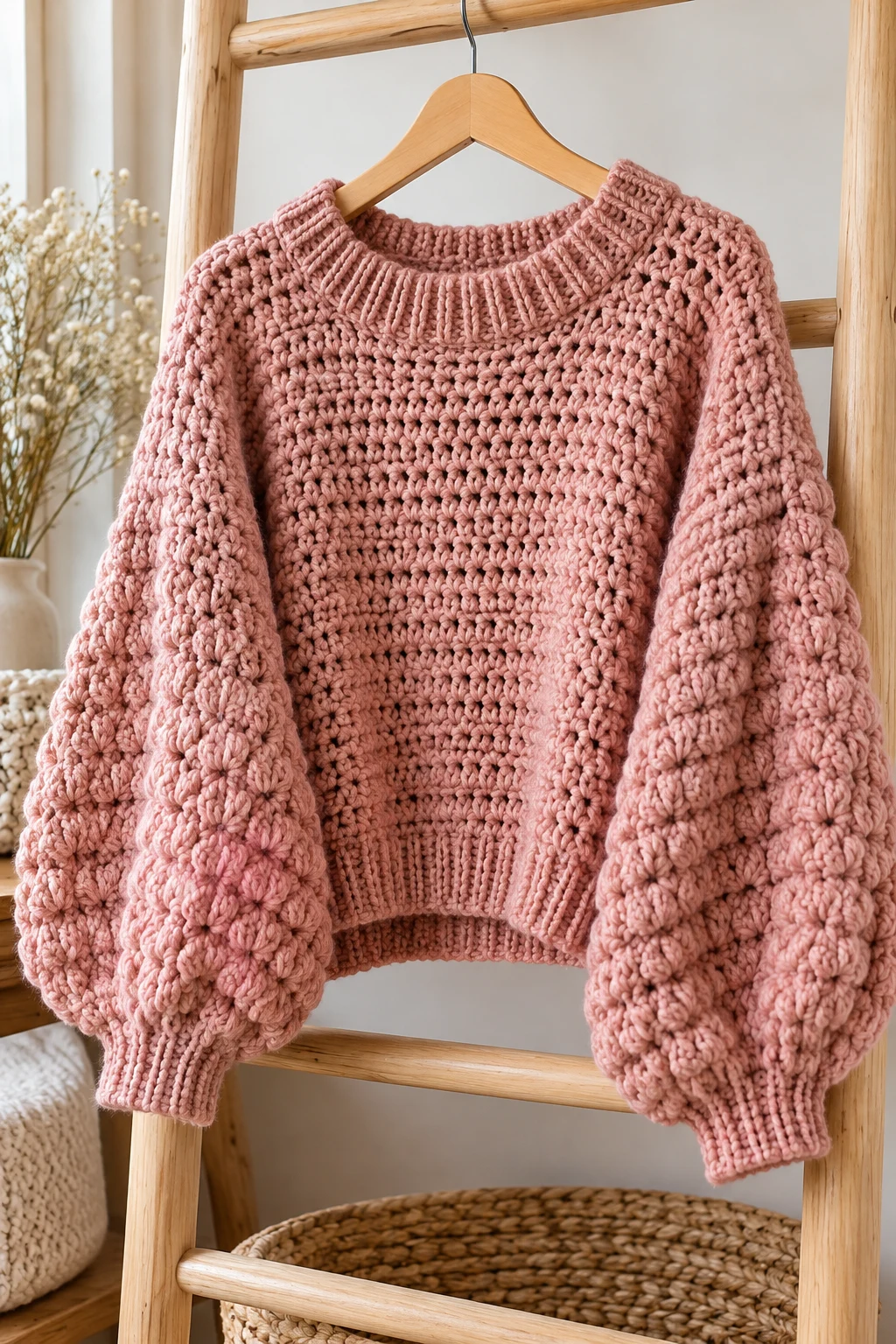
10. The Chunky Balloon-Sleeve Sweater
Balloon sleeves add drama to a simple sweater without requiring elaborate stitchwork. Keep the body relatively straight, increase the sleeve width toward the middle, and gradually decrease near the cuffs. The result feels stylish while remaining comfortable enough for everyday outfits.
Choose cream, dusty mauve, or deep forest green yarn. Soft bulky yarn and fitted ribbed cuffs create a pleasing contrast between the generous sleeves and the wrists.
If your yarn is heavy, avoid making the sleeves excessively long or wide, since the extra weight can pull down the shoulder seams.
The key to this look/technique is distributing sleeve increases evenly and using firm cuffs to support the voluminous shape.
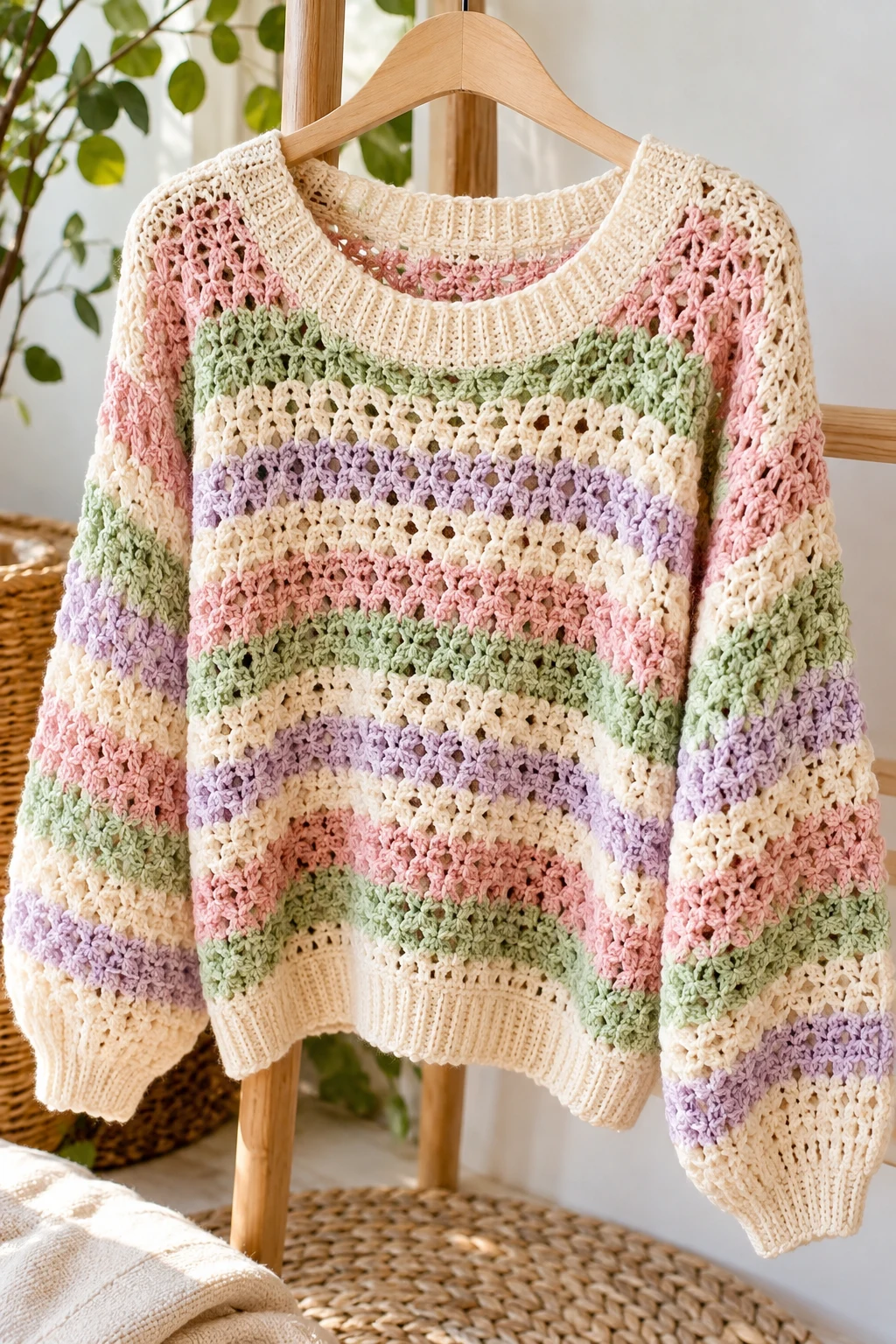
11. The Lightweight Spring Crochet Sweater
Not every crochet sweater needs to feel like a winter blanket. A lightweight spring pullover uses finer yarn and breathable stitch patterns to create a comfortable layer for cool mornings and breezy evenings.
Try pale butter yellow, sky blue, or soft mint. Cotton or cotton-blend yarn offers a crisp finish and can feel pleasant against the skin, although cotton may weigh than some synthetic alternatives. Open stitch patterns add airflow, but keep the openings modest if you want to wear the sweater without a separate layer underneath.
This style pairs nicely with linen trousers, denim shorts, and flowing midi skirts.
The key to this look/technique is choosing breathable yarn and a stitch pattern that provides airflow without sacrificing the coverage you need.
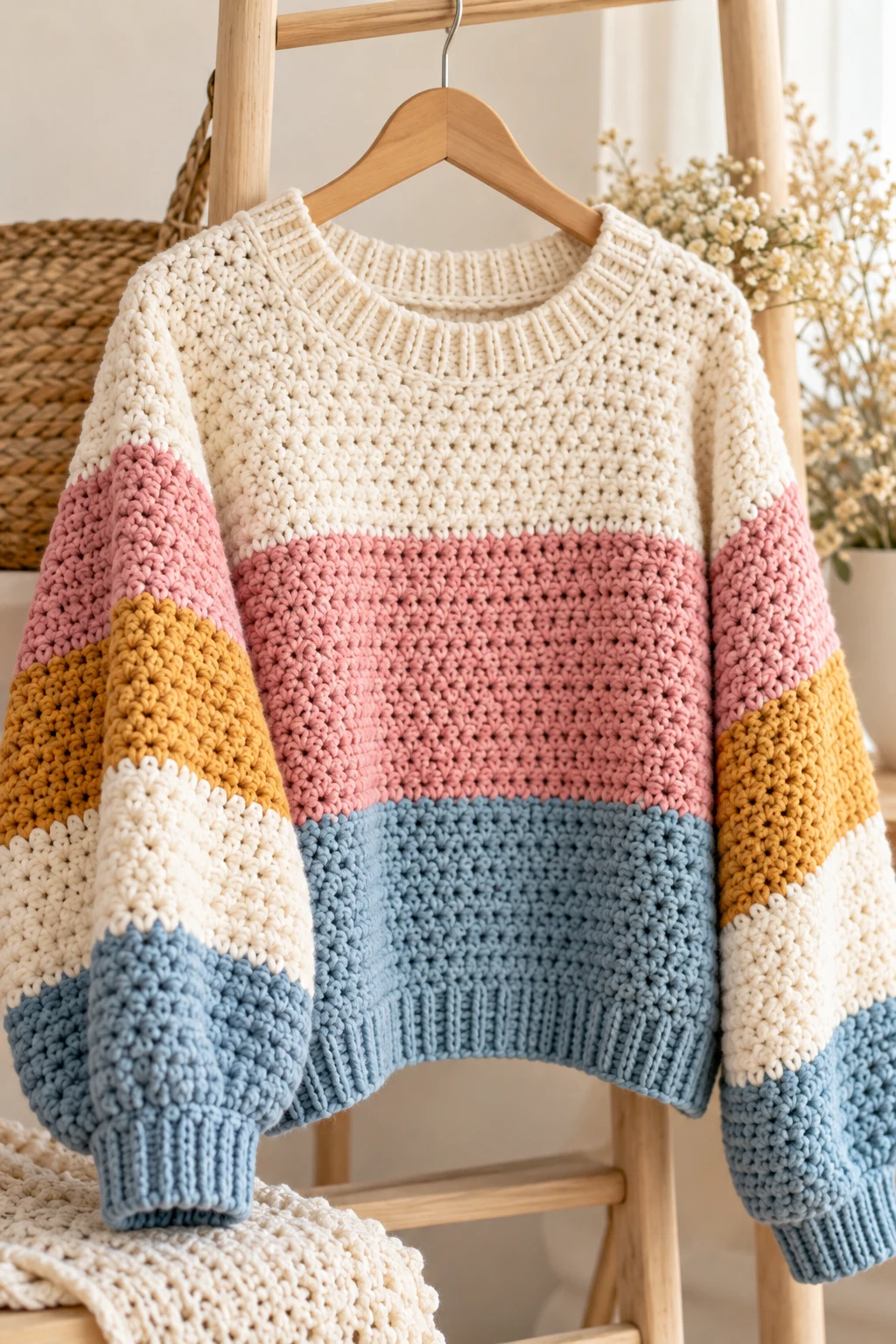
12. The Color-Block Statement Sweater
Color blocking gives a handmade sweater a graphic, contemporary appearance. Combine cobalt blue with orange and cream, or choose a softer palette of lavender, mint, and pale yellow. Large blocks of color make the design stand out even when you use simple stitches.
Sketch your color placement before starting, then assign each shade to a body panel, sleeve, or shoulder section. A coordinated yarn collection and a written color chart make it easier to repeat the same arrangement on both sides.
This project is ideal for using leftover yarn, provided the different yarns have similar thickness and care requirements.
The key to this look/technique is balancing bold colors across the body and sleeves so the finished garment feels intentional rather than random.
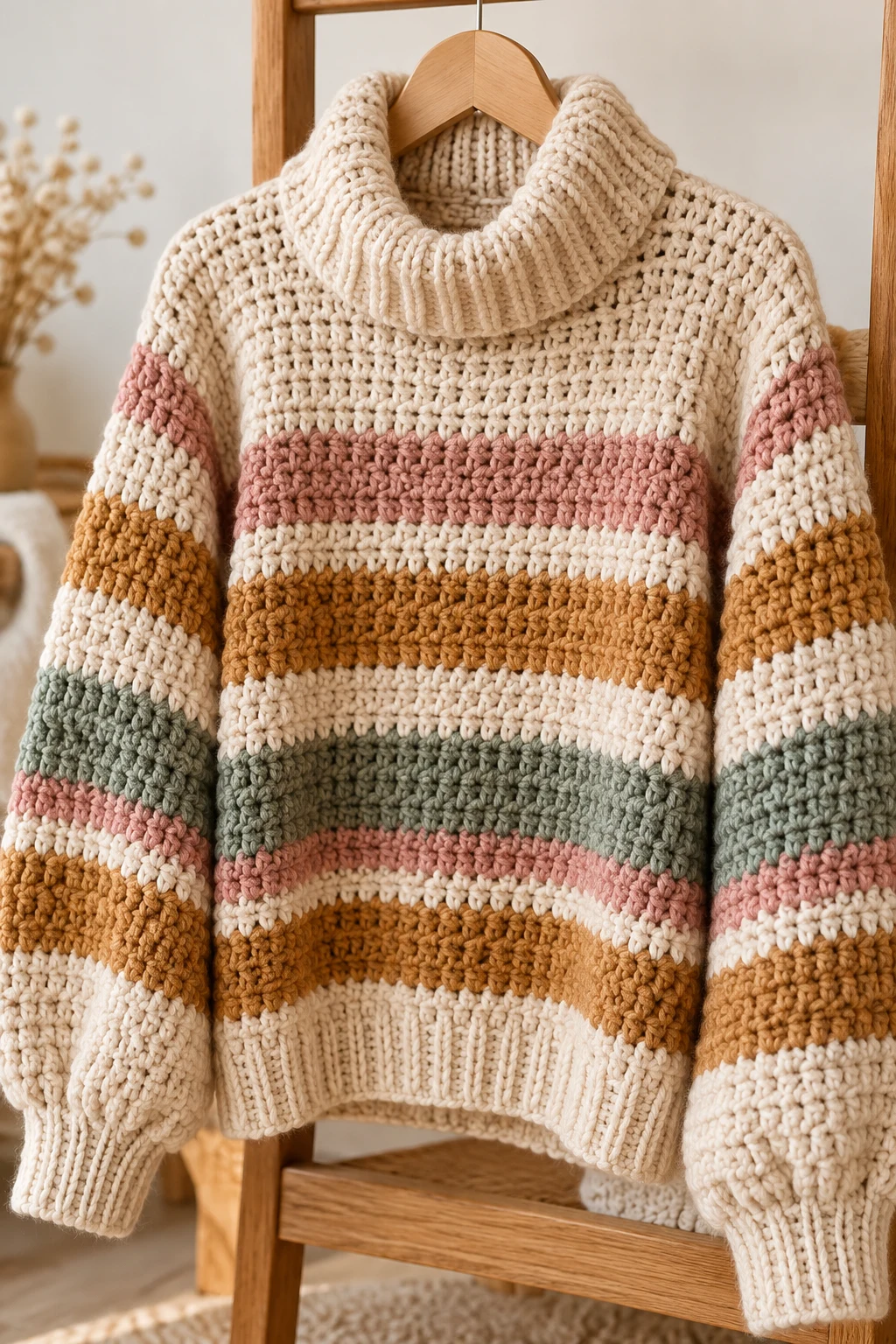
13. The Cozy Turtleneck Sweater
A turtleneck sweater is perfect for chilly winter mornings when you want extra coverage around your neck. An oatmeal or camel design looks timeless, while burgundy and deep green offer a richer seasonal alternative.
Crochet the body using half-double crochet or a textured stitch, then add a tall ribbed collar. Soft worsted-weight yarn can provide warmth without the excessive bulk of some super-chunky yarns. Make the collar wide enough to fold comfortably, and avoid tight ribbing if you dislike restrictive necklines.
This style looks great beneath long wool coats and alongside tailored trousers.
The key to this look/technique is creating a flexible collar with enough stretch to pull over your head without feeling restrictive.
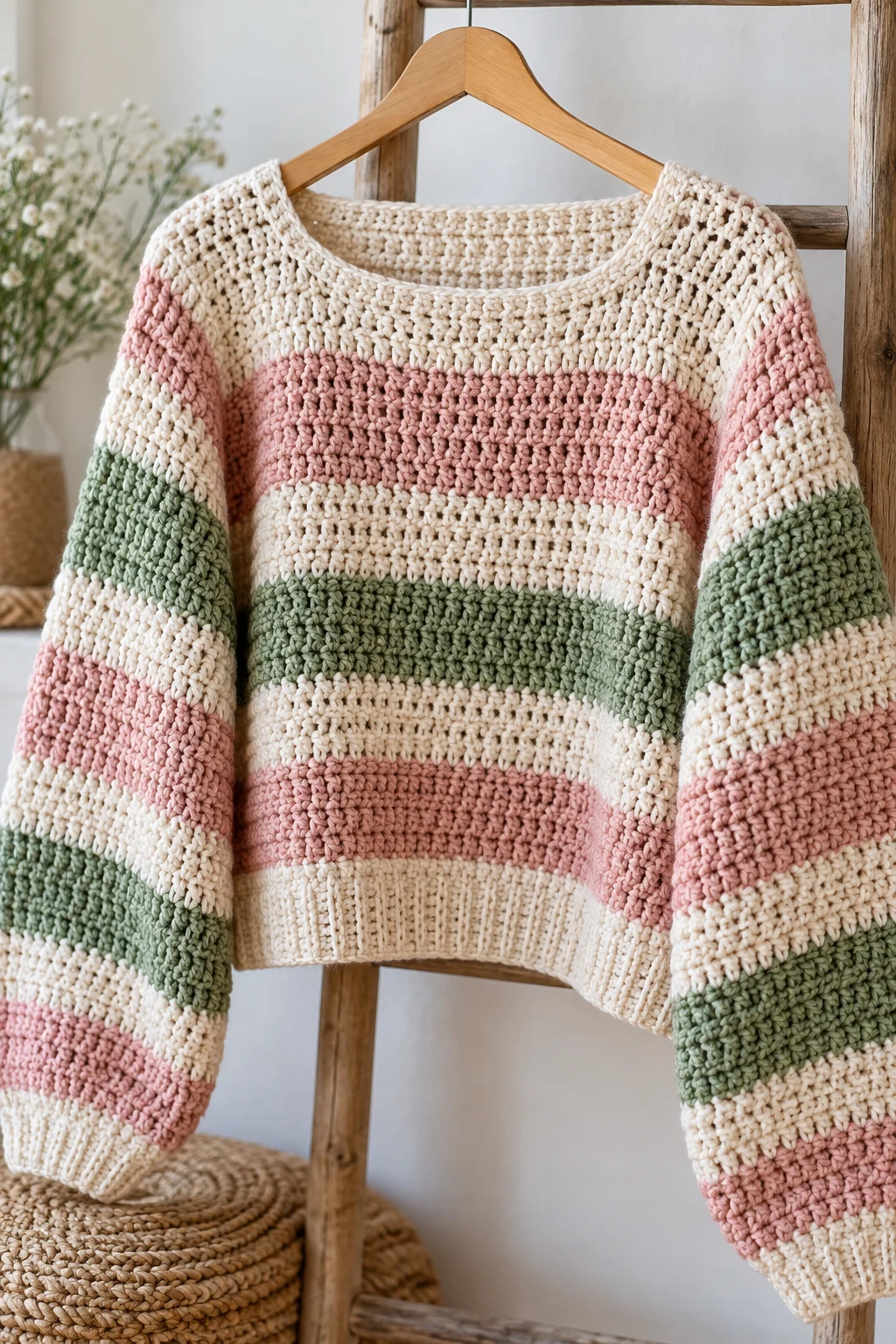
14. The Easy Rectangle Sweater
If garment shaping makes you nervous, the rectangle sweater is a wonderful starting point. The basic construction uses two large body panels and two sleeve panels, which you seam together after crocheting. You can use single crochet, half-double crochet, or double crochet depending on the texture and drape you prefer.
A beginner crochet sweater pattern, measuring tape, and stitch markers are helpful tools. Choose a smooth worsted-weight yarn in oatmeal, charcoal, or muted sage, and check the finished measurements against a sweater you already own.
This design is often among the easiest clothing to crochet because it limits complicated shaping. Still, good measurements matter: simple construction doesn’t automatically guarantee a good fit.
The key to this look/technique is making accurate rectangular panels, checking sleeve placement, and leaving enough room for comfortable movement.
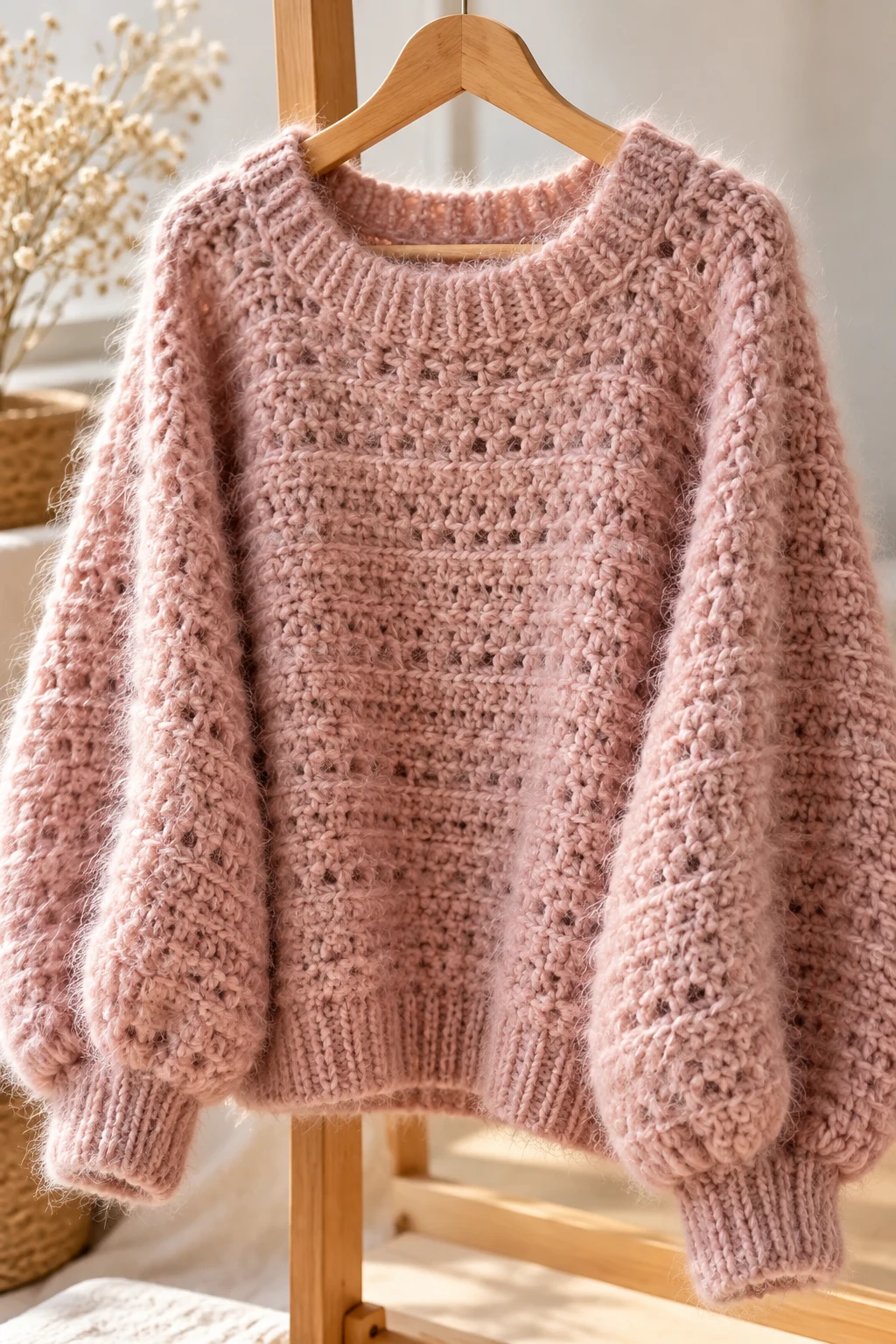
15. The Dreamy Fuzzy Crochet Sweater
For a softer, romantic finish, try a fuzzy sweater in lavender, blush pink, or winter white. A yarn with a gentle halo gives the garment a cloudlike appearance, making it perfect for relaxed evenings, chilly dates, and cozy weekend outfits.
Choose brushed acrylic, a mohair blend, or another soft fuzzy yarn depending on your budget and sensitivity to fibers. Because fuzzy yarn can hide individual stitches, beginners may find it harder to count rows and identify mistakes. A smooth companion strand in a matching shade can improve stitch visibility and add structure.
Use simple stitches rather than elaborate textures so the yarn remains the star of the design.
The key to this look/technique is choosing a comfortable, manageable fuzzy yarn and keeping the stitch pattern simple enough to work without constant unpicking.
Frequently Asked Questions About a Crochet Comfy Sweater
What is the easiest sweater to crochet?
A rectangle-style pullover or a simple drop-shoulder sweater is often the easiest option because it uses basic panels and minimal shaping. Choose a beginner-friendly pattern with clear measurements and a medium-weight yarn.
How do you make a crochet comfy sweater soft and comfortable?
Select yarn that feels pleasant against your skin, check your gauge, and make sure the garment has enough ease around the chest, shoulders, and arms. Wash and dry a swatch according to the yarn’s care instructions before committing to the full project.
Why does a crochet sweater sometimes turn out too big or too small?
Differences in crochet tension, hook size, yarn thickness, and pattern measurements can all affect fit. A gauge swatch and regular measurements help you catch sizing problems before you finish the entire sweater.
The Bottom Line
A crochet comfy sweater can be as simple or creative as you want, whether you prefer an oversized cream pullover, a colorful granny square design, or a fuzzy lavender statement piece. Beginners can start with rectangular panels and basic stitches, while experienced crocheters can experiment with balloon sleeves, textured ribbing, and custom color combinations. Before choosing a pattern, consider your climate, preferred fit, yarn budget, and the amount of time you want to spend crocheting. One expert tip worth following in every season: make a gauge swatch and measure as you work. Your finished sweater will fit better, feel comfortable, and earn a regular place in your wardrobe.
📚 You Might Also Like
- Ideas a crochet granny square pattern: 20 Ultimate DIY
ideas a crochet granny square pattern can turn a few balls of yarn into everything from a colorful b…
- 20 Crochet Baby Shoes Design Ideas
Crochet baby shoes design ideas are handmade little shoes created by crocheting yarn into soft, wear…
- Baby crochet ideas clothes: 17 Beautiful DIY Ideas for
17 Baby Crochet Ideas Clothes for Handmade Outfits Baby crochet ideas clothes are handmade garments…