
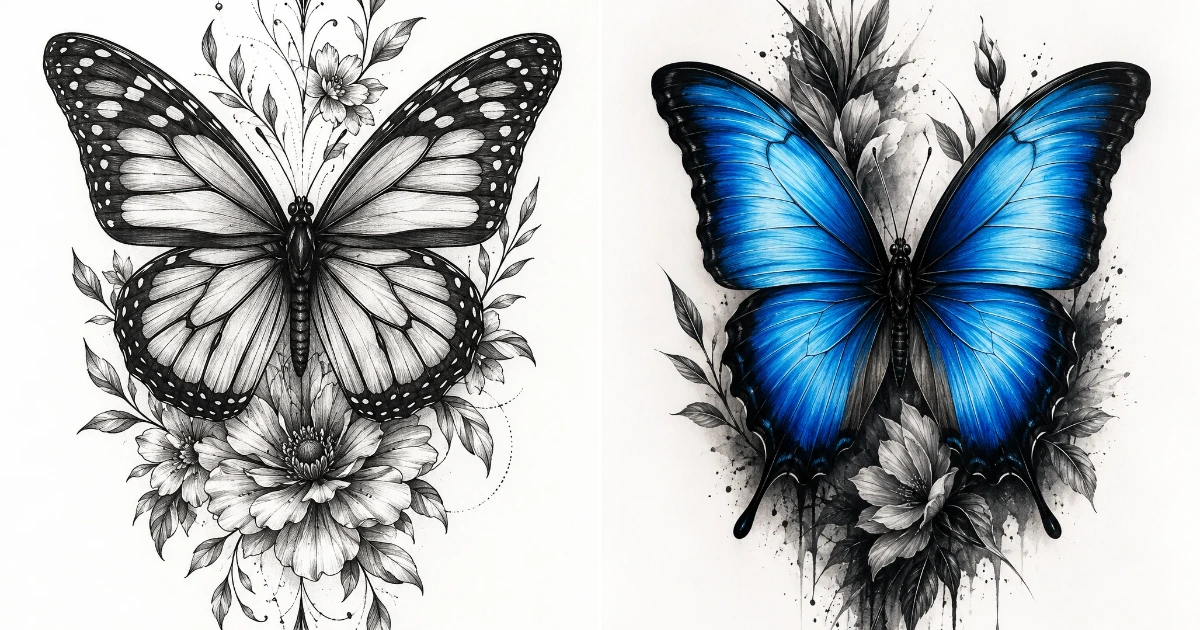
A butterfly cover up tattoo is a tattoo design that uses butterfly wings, shading, color, and surrounding details to conceal or transform an older tattoo. Butterflies work especially well for cover-ups because their layered wings can hide awkward lines, faded lettering, small symbols, and uneven patches without making the finished piece look like a giant block of ink, according to Tattoodo. From black-and-gray monarchs to jewel-toned watercolor wings, there are plenty of butterfly cover up tattoo ideas that feel intentional rather than obviously corrective. A skilled artist can use wing placement, saturated pigments, stippling, florals, and strategic negative space to turn yesterday’s questionable decision into something you’d happily show off. Here are 15 designs worth saving for your next tattoo consultation.
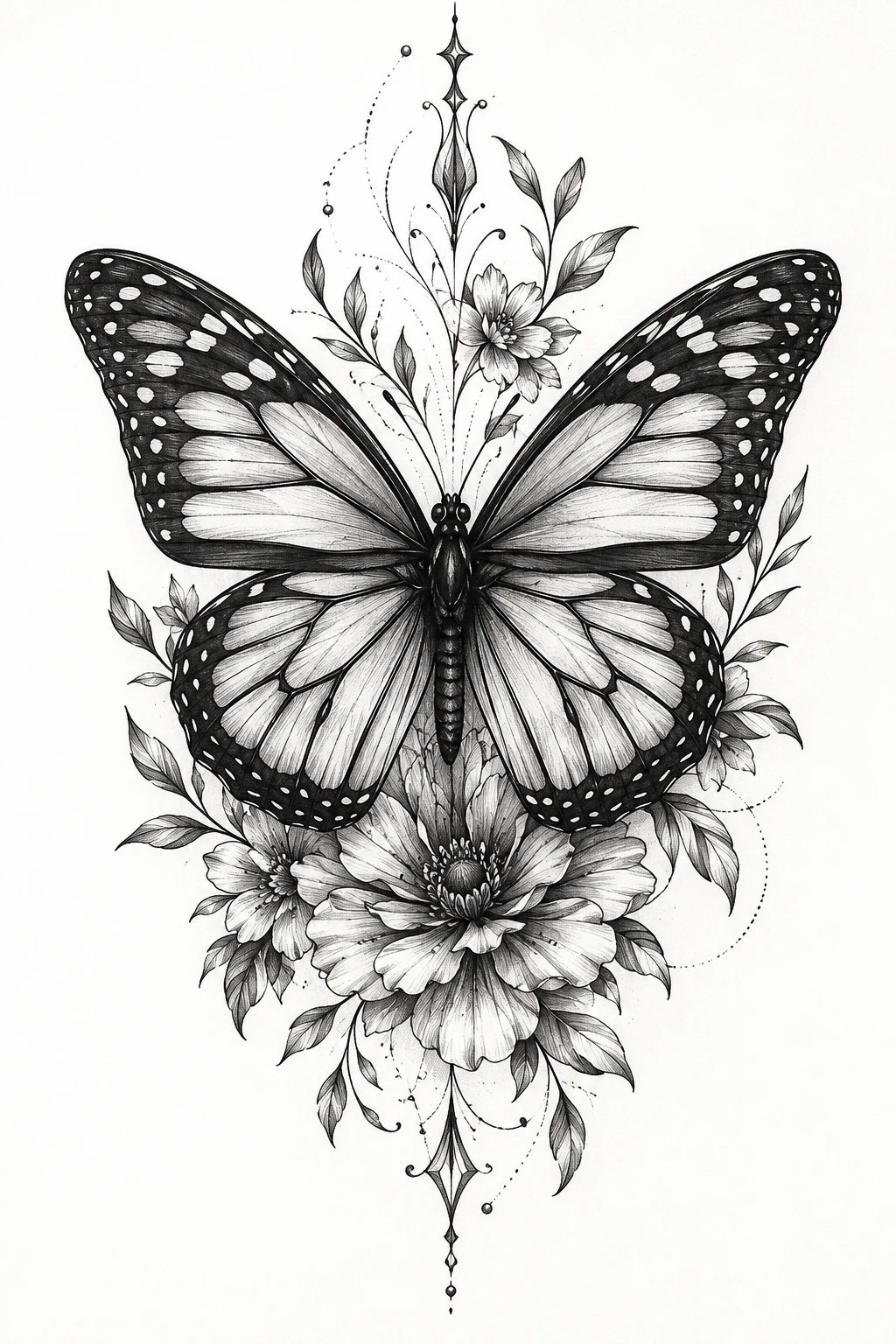
1. Blackwork Monarch Butterfly Cover Up Tattoo
A blackwork monarch is practically built for covering stubborn old ink. Its recognizable wings contain naturally dark sections that an artist can position directly over lettering, tiny symbols, or faded linework, according to Byrdie Tattoos. Instead of fighting the existing tattoo, those areas become part of the new wing structure.
Ask your artist about solid black pigment, whip shading, and carefully spaced negative areas. A blackwork monarch works particularly well as a butterfly cover up tattoo arm design because the wings can follow the natural curve of the upper arm or forearm.
The key to this look is positioning the darkest sections of the monarch over the darkest parts of the original tattoo.
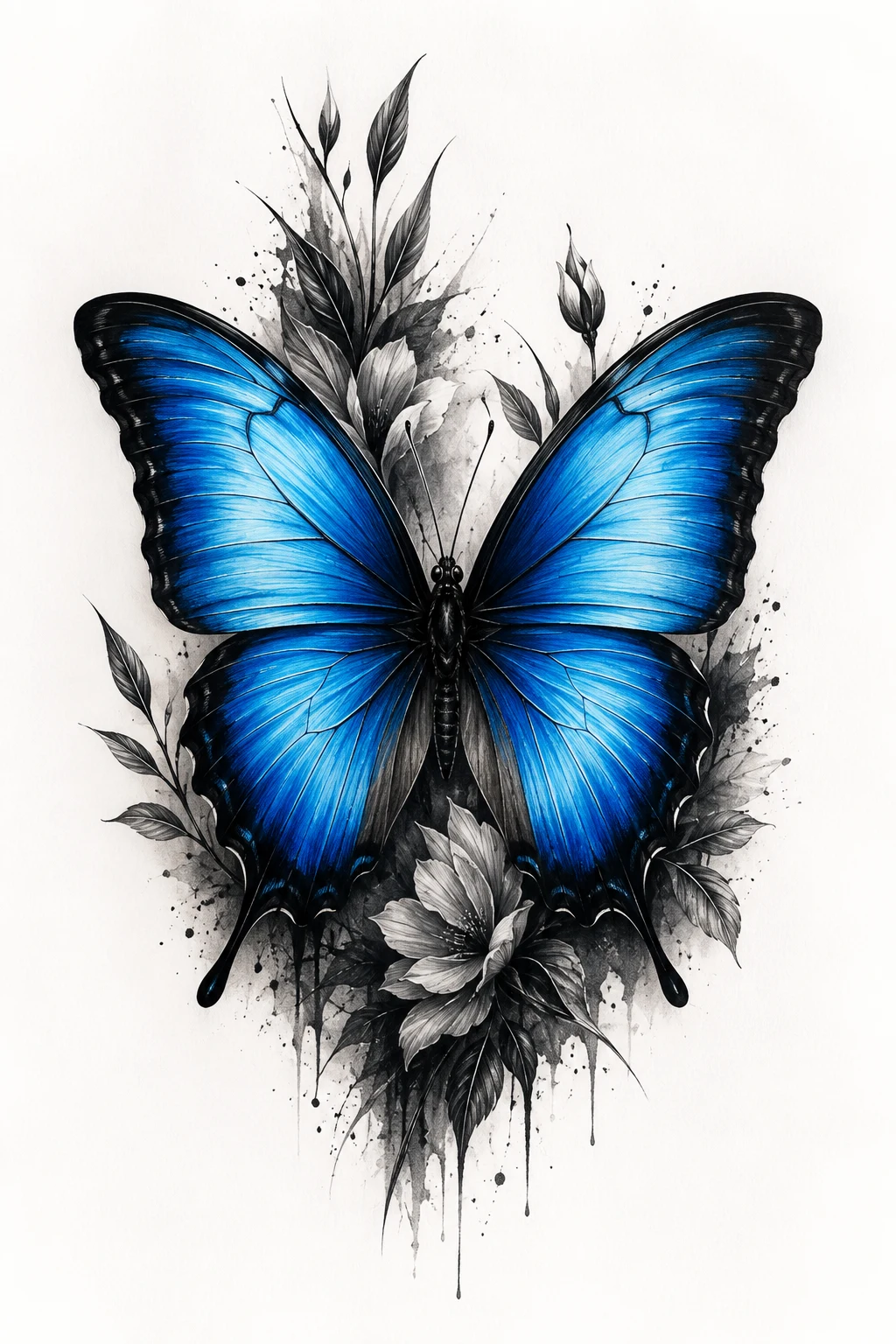
2. Blue Morpho Butterfly With Deep Shading
Want color without sacrificing coverage? A blue morpho butterfly combines cobalt, navy, turquoise, and near-black edges, giving an artist plenty of saturated pigment to work with.
This style can transform faded black ink while creating a striking result. Cobalt blue ink, midnight shading, and crisp black borders make the wings appear luminous rather than heavy. It’s an especially strong option among butterfly cover up tattoos for women who want noticeable color without a pastel finish.
The key to this look is using deep navy around the wing edges and brighter turquoise toward the center.
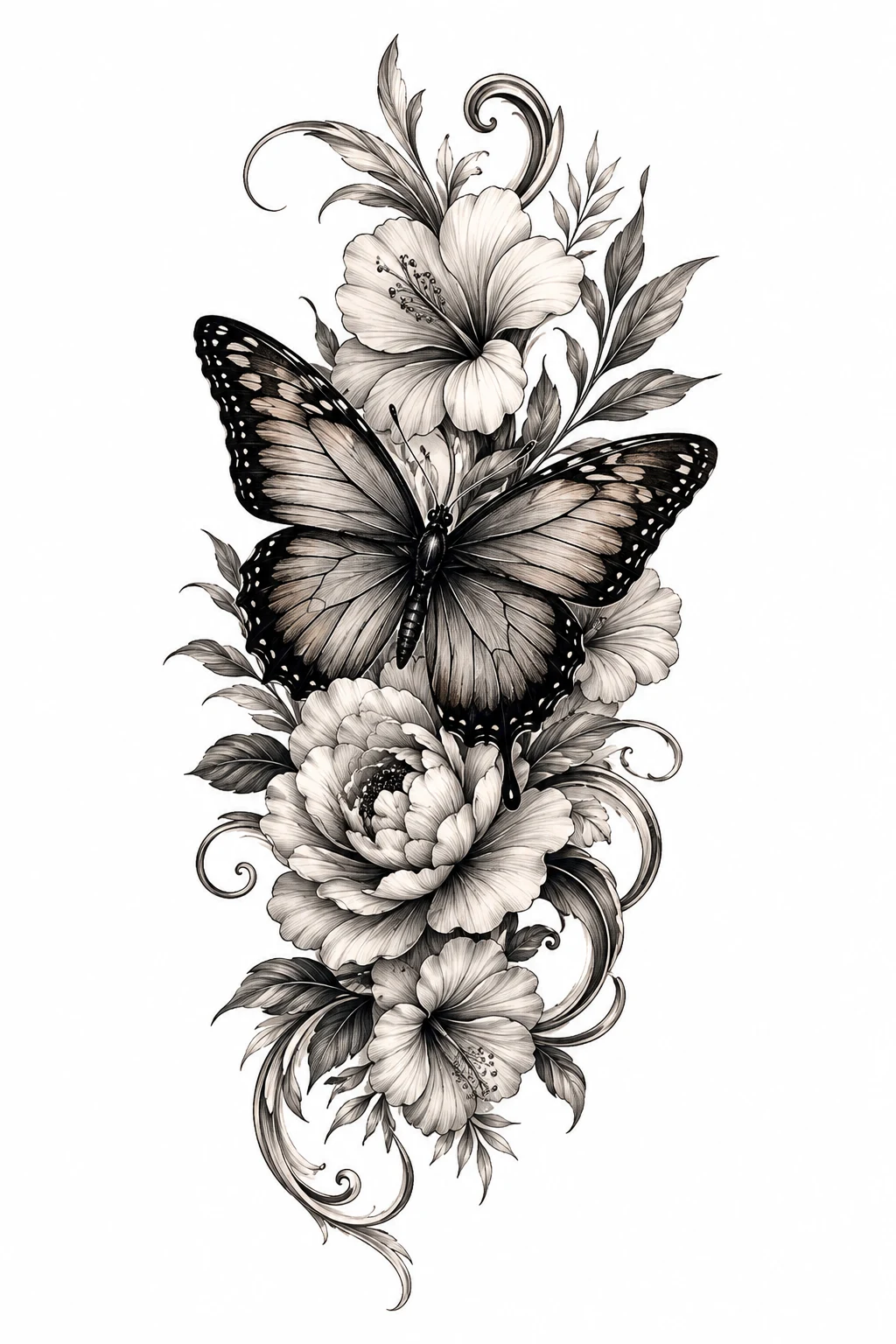
3. Floral Butterfly Cover Up Tattoo
Flowers aren’t just pretty extras—they’re useful camouflage. Combining a butterfly with peonies, chrysanthemums, or roses gives your artist additional shapes for hiding parts of an existing tattoo that extend beyond the wings.
A burgundy peony can conceal a dark patch while black-and-gray leaves cover stray lines. Meanwhile, the butterfly remains the focal point. This is one of the most adaptable butterfly cover up tattoo designs for the shoulder, thigh, upper arm, or back.
The key to this look is allowing the flowers and foliage to participate in the cover-up instead of expecting the butterfly to hide everything alone.
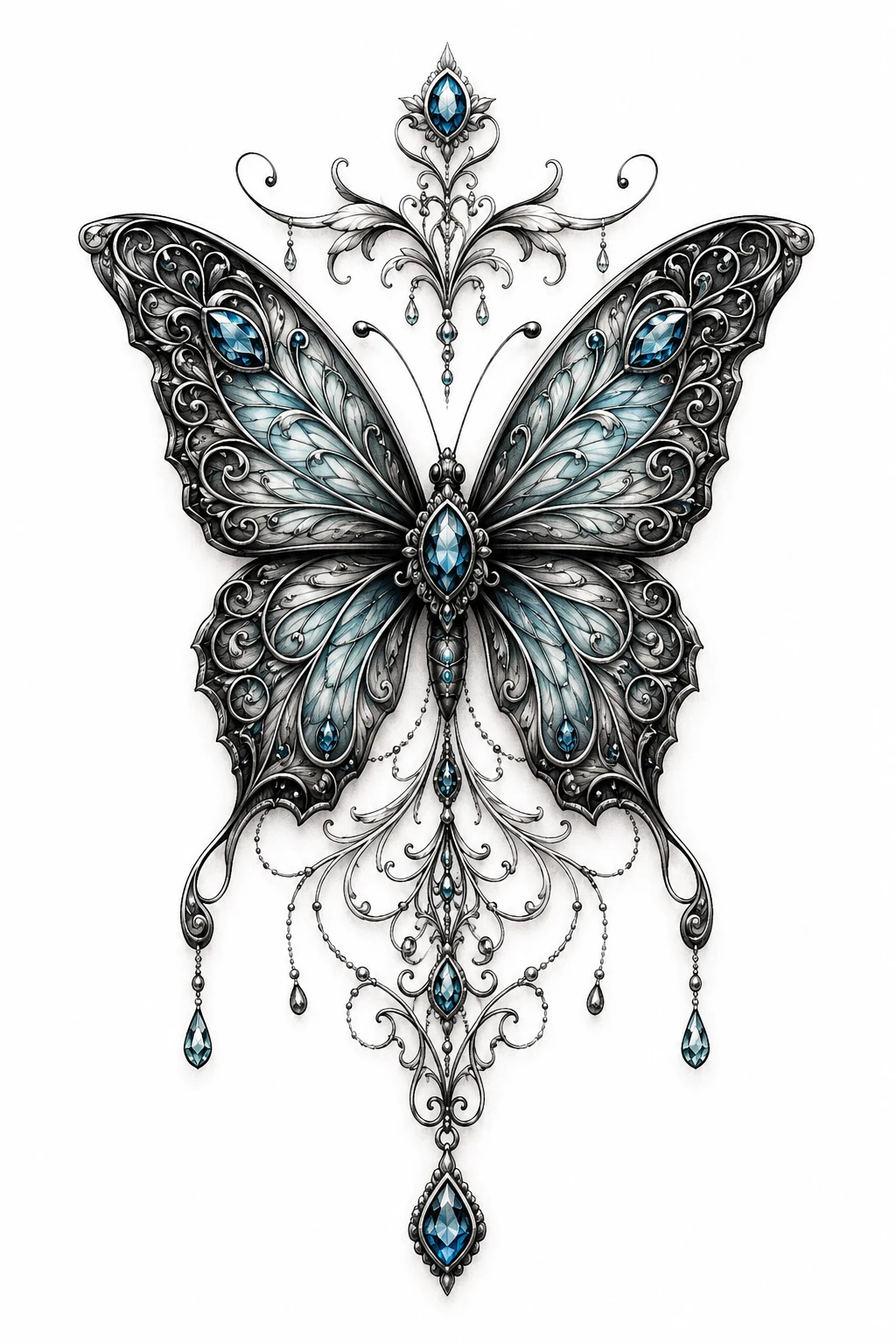
4. Ornamental Butterfly With Jewel Details
An ornamental butterfly turns an old tattoo into something that resembles wearable jewelry. Think symmetrical wings, dangling chains, tiny diamonds, filigree, and a central gemstone rendered in emerald green or ruby red.
Those decorative details have a practical job. Ornamental linework, dotwork, and strategically shaded gems can disguise remaining pieces of the original design while making the larger composition feel deliberate.
This butterfly cover up tattoo female style works beautifully on the sternum, upper thigh, shoulder blade, or lower back.
The key to this look is balancing decorative fine lines with enough dark shading to genuinely conceal the old ink.
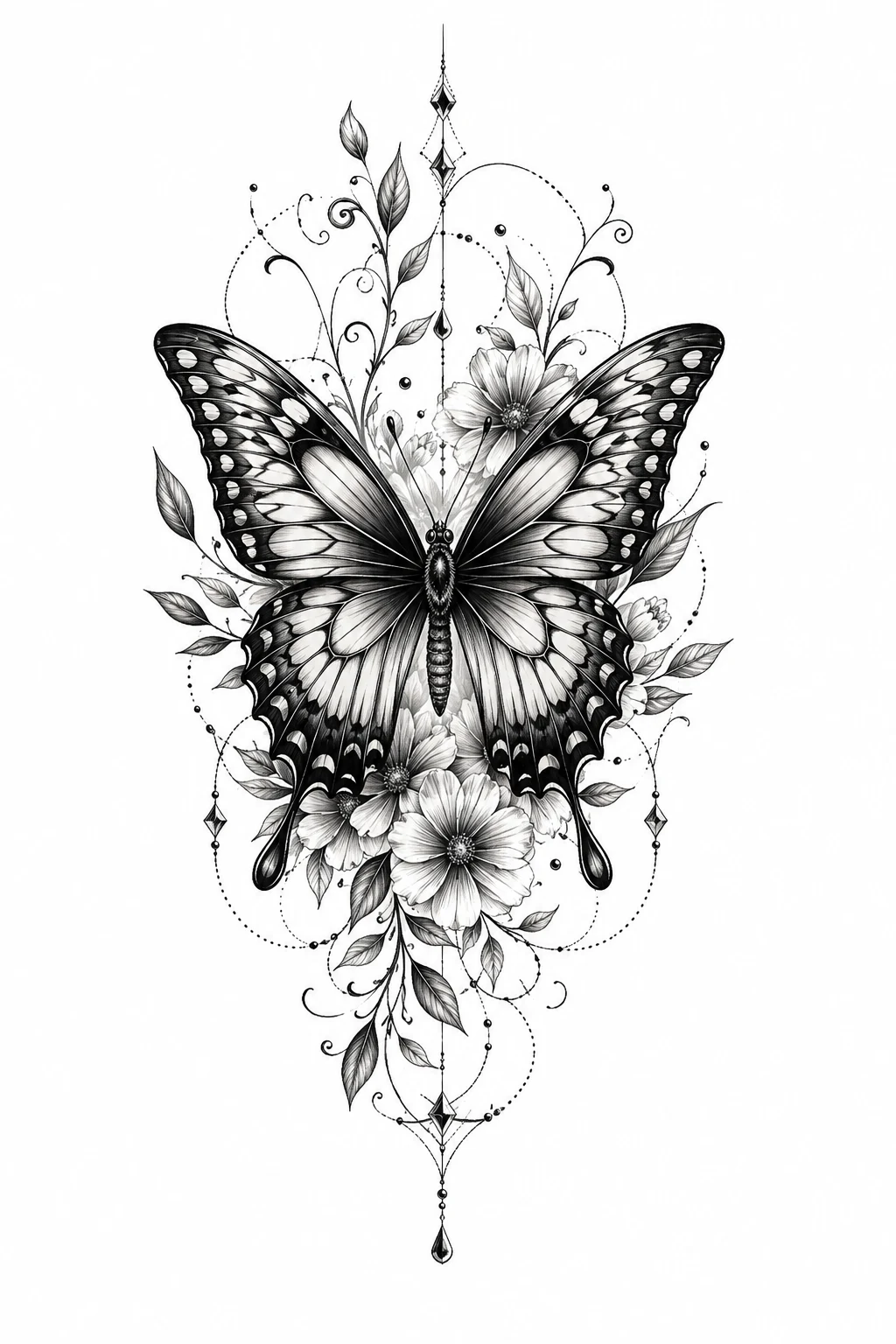
5. Butterfly Cover Up Tattoo on Wrist
The wrist can be tricky because there isn’t much room to dramatically enlarge a design. A compact butterfly with angled wings can cover small initials, tiny hearts, faded infinity symbols, or minimalist tattoos surprisingly well.
Consider blackwork wing edges with plum, burgundy, or dark teal interiors. Positioning the butterfly diagonally rather than straight across the wrist can provide additional coverage while making the composition feel more natural.
For a butterfly cover up tattoo on wrist placement, an experienced cover-up artist matters more than squeezing in extra decorative details.
The key to this technique is keeping the butterfly large enough to conceal the existing tattoo without overcrowding the wrist.
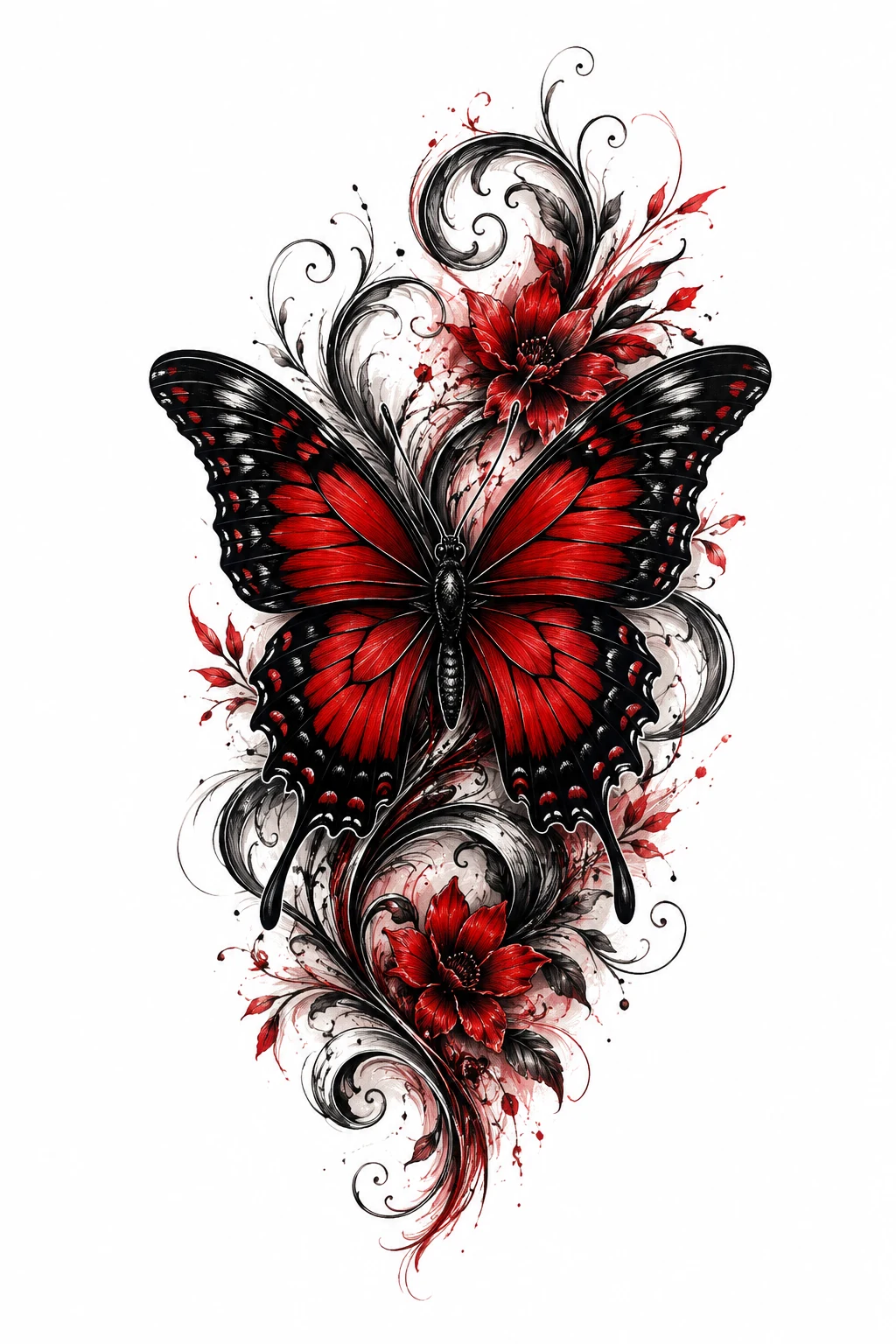
6. Red and Black Butterfly Cover Up Tattoo
Red and black create serious visual impact while providing useful saturation. Imagine scarlet upper wings fading into burgundy before meeting dramatic black edges.
An artist can place carbon-black shading over the darkest existing lines and introduce crimson pigment where lighter coverage is possible. The result feels bold, graphic, and intentional.
This combination works especially well for an upper-arm or thigh butterfly cover up tattoo where there is enough space for broad wings.
The key to this look is building the darkest pigment around the old tattoo rather than applying equally heavy shading everywhere.
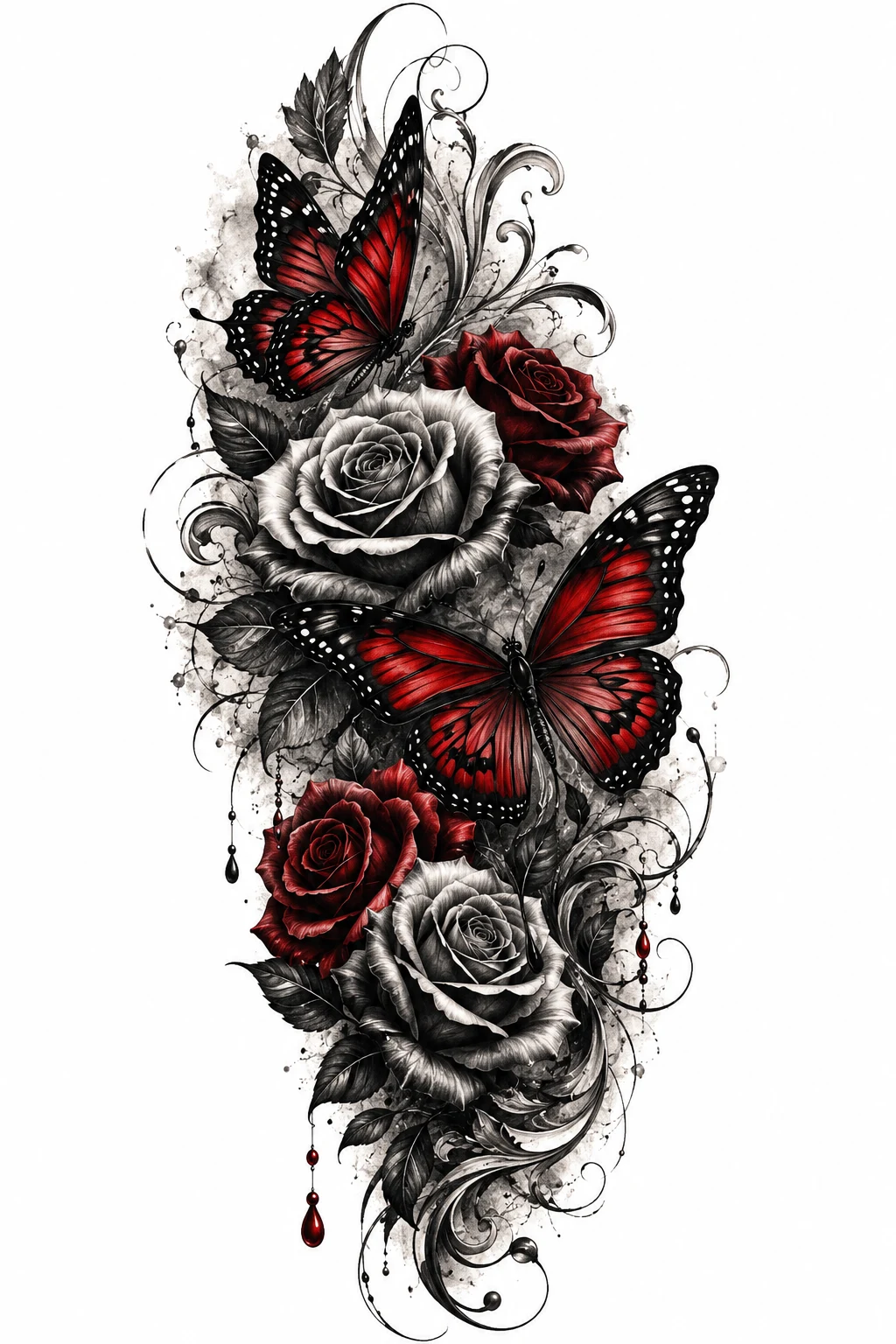
7. Butterfly and Rose Arm Cover Up
A butterfly hovering above a deep red rose makes an excellent butterfly cover up tattoo arm composition because it provides multiple overlapping elements. The rose can handle dense old ink while the butterfly introduces movement and keeps the piece from becoming visually heavy.
Try burgundy rose petals, charcoal leaves, black wing outlines, and subtle gray shadows. On the upper arm, the design can wrap slightly toward the shoulder instead of looking like a flat sticker.
The key to this look is using overlapping petals, leaves, and wings to break up the recognizable shape of the previous tattoo.
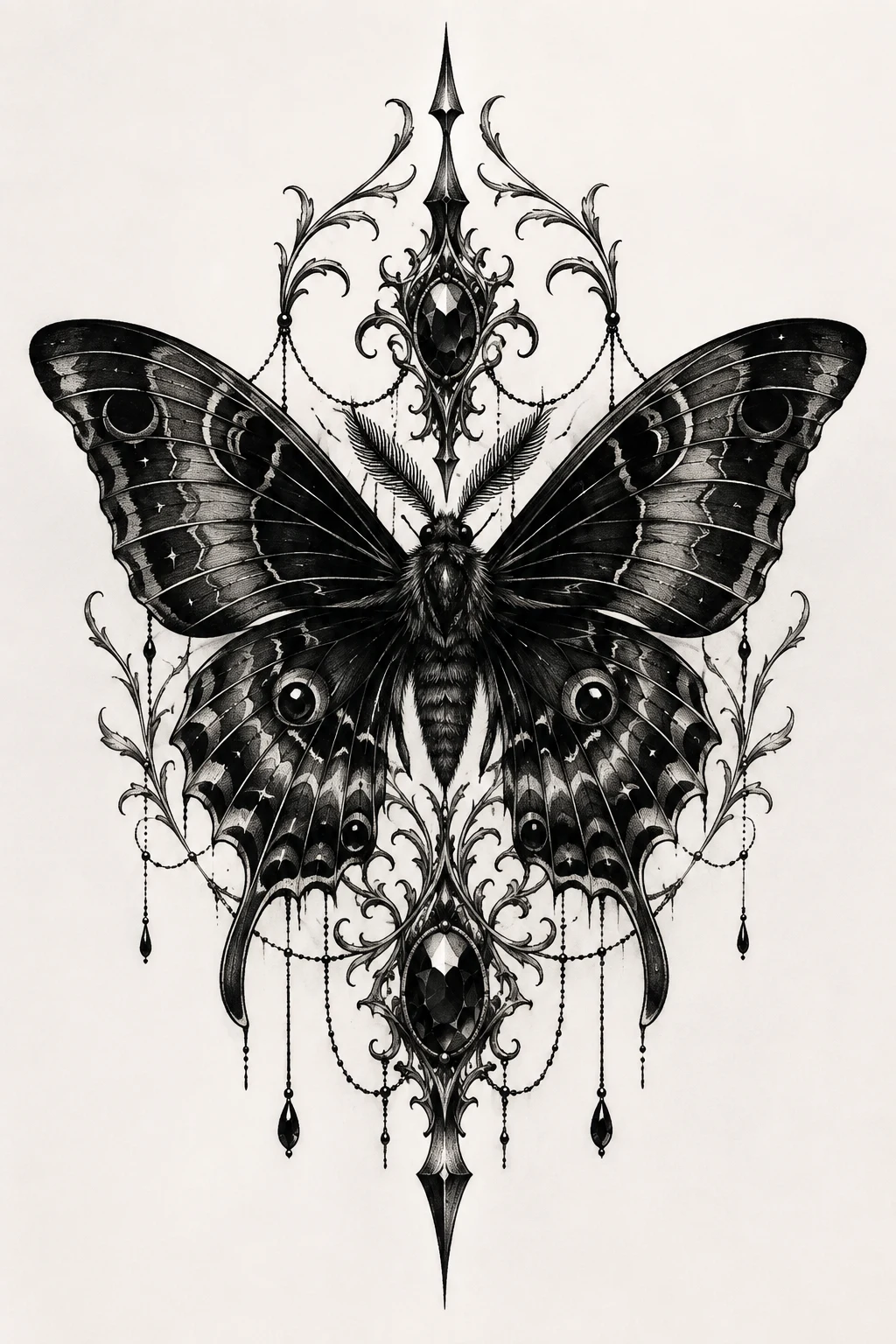
8. Gothic Moth-Butterfly Hybrid
Not every butterfly needs delicate pastel wings. A gothic hybrid can feature elongated wings, charcoal shading, ornamental markings, crescent moons, and subtle Victorian-inspired details.
Because the aesthetic welcomes deeper tones, black ink, graphite-gray shading, dark violet accents, and stippling can disguise dense existing work. It’s particularly effective when the tattoo being covered is too dark for a traditional fine-line butterfly.
Ask a cover-up specialist whether the old tattoo needs laser fading first if large areas remain extremely saturated.
The key to this look is embracing darker visual weight instead of forcing a light design over heavy existing ink.
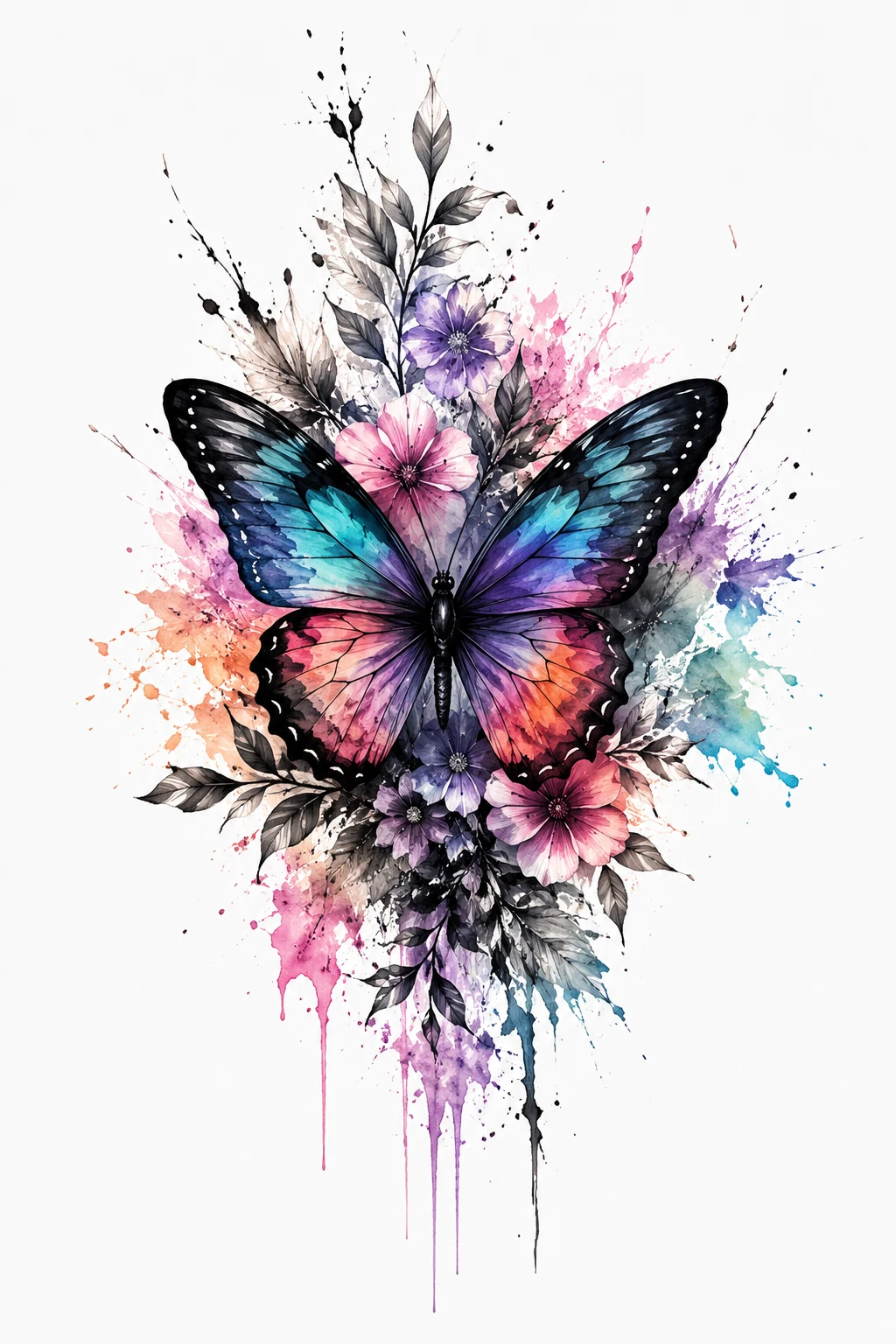
9. Watercolor Butterfly Cover Up Tattoo
Watercolor can work for a cover-up—but the structure underneath matters. Rather than relying entirely on pale splashes, use a strongly outlined butterfly surrounded by watercolor accents in sapphire, violet, magenta, and indigo.
The dark wing framework handles the actual concealment, while brighter pigments create the watercolor effect. This approach produces a more convincing cover-up than trying to bury black ink beneath translucent yellow or pale pink.
It’s a colorful butterfly cover up tattoo idea for the shoulder blade, thigh, or upper arm.
The key to this look is combining saturated dark coverage with controlled watercolor effects rather than using light color alone.
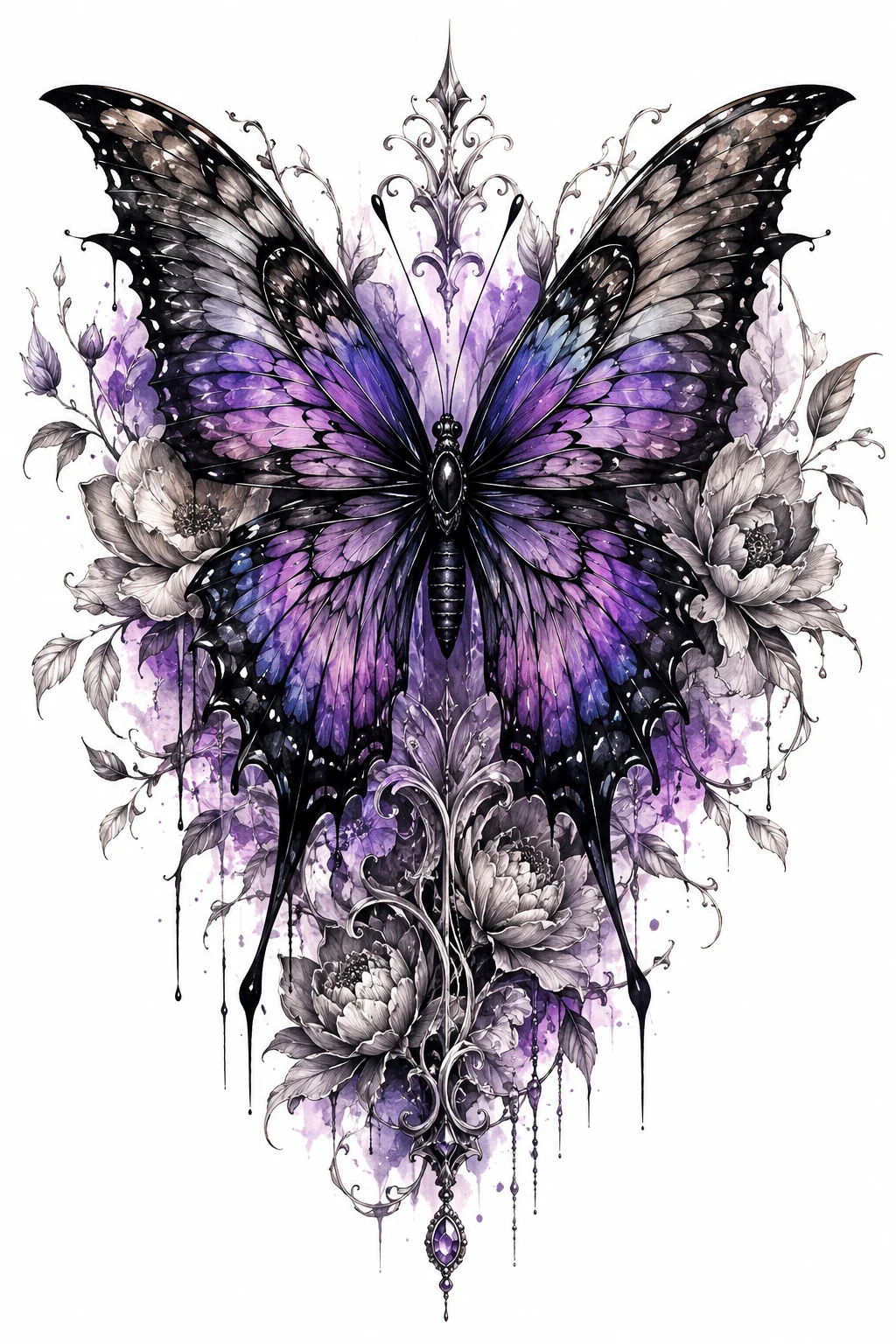
10. Large Butterfly Cover Up Tattoos on Back
The back gives an artist one major advantage: space. Instead of forcing a small butterfly over a larger old tattoo, you can build an expansive design with open wings, flowers, leaves, and ornamental flourishes.
For butterfly cover up tattoos on back placements, consider a monarch or swallowtail stretching across one shoulder blade. Layered black-and-gray shading can hide old linework while warm burnt orange, rust, or burgundy adds dimension.
A large butterfly tattoo on back placement also gives the artist freedom to position details according to the existing ink rather than following a rigid template.
The key to this look is designing around the old tattoo’s shape instead of simply placing a larger butterfly directly on top.
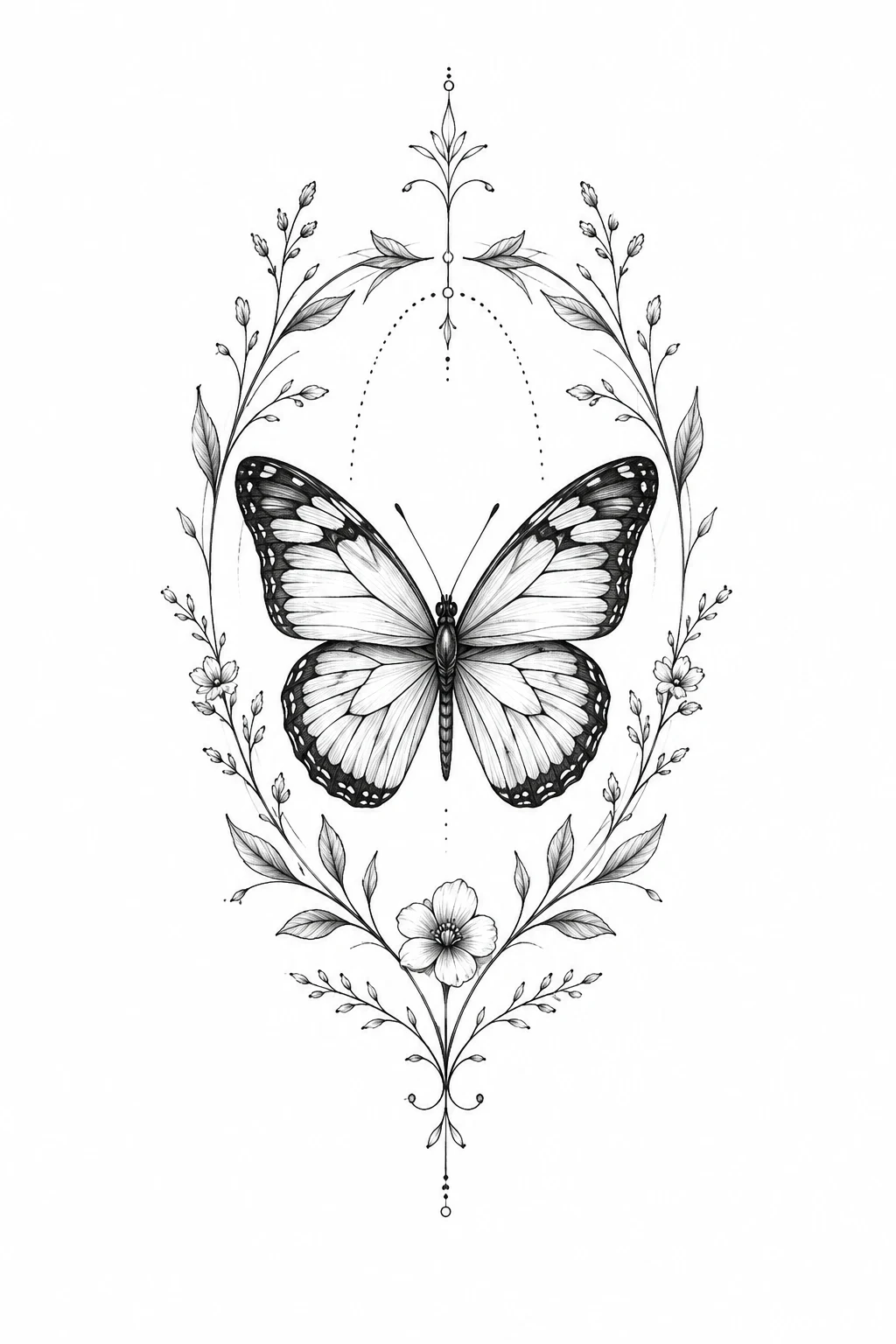
11. Fine-Line Butterfly With Botanical Framing
Fine-line tattoos and cover-ups aren’t always natural friends, but botanical framing can make the combination more practical. A butterfly with detailed wings can sit beside eucalyptus, fern leaves, lavender stems, or small wildflowers.
The butterfly itself handles part of the original ink, while botanical shading conceals surrounding marks. Darker leaves can be positioned wherever extra coverage is required.
Tattoo artists increasingly combine fine-line aesthetics with selective heavier shading, giving clients a lighter-looking finished composition without pretending dark old ink has magically disappeared.
The key to this technique is concentrating heavier shading exactly where coverage is required and keeping untouched areas visually lighter.
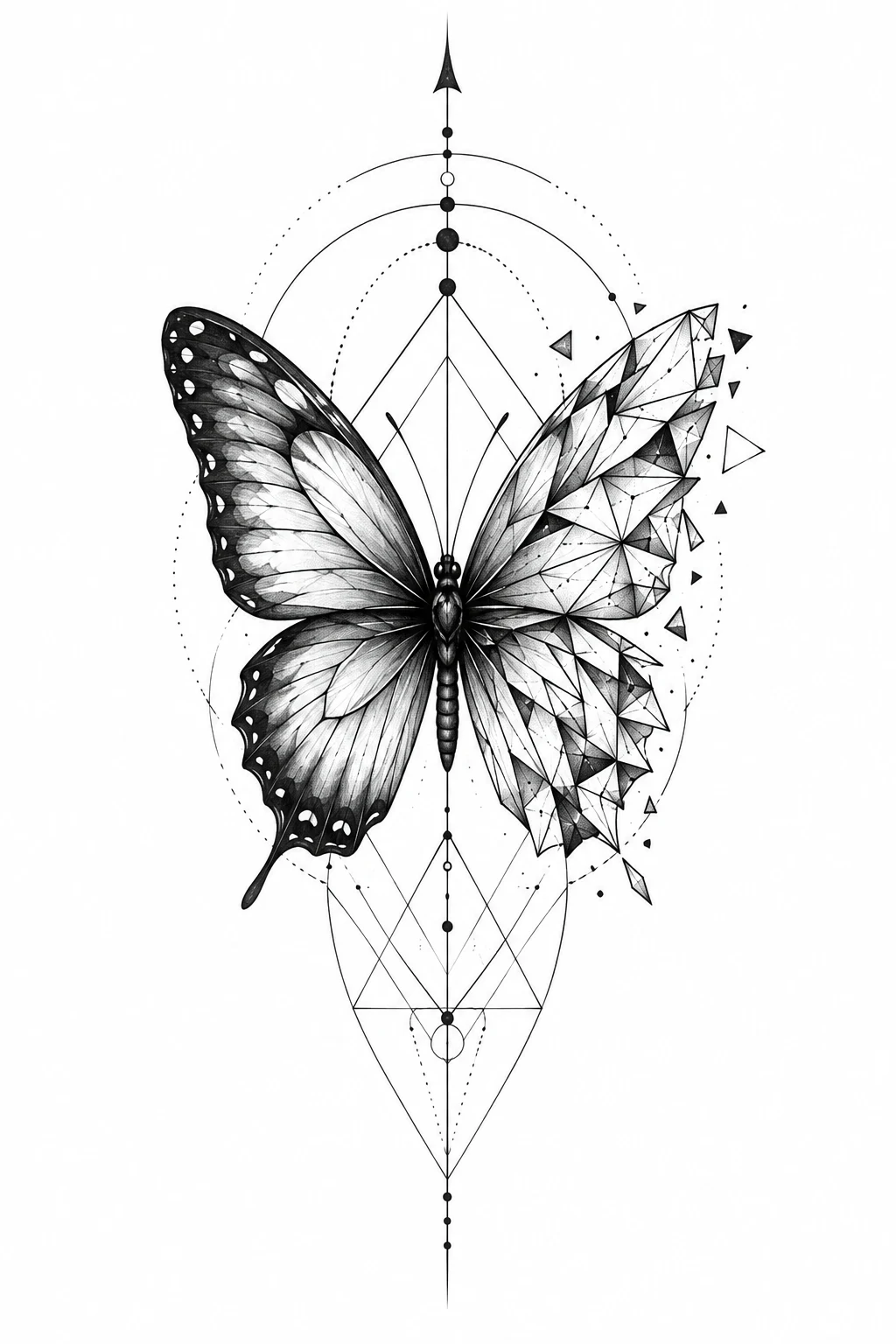
12. Geometric Butterfly Transformation
A geometric butterfly offers an organized solution for covering awkward symbols and angular tattoos. Hexagons, diamonds, triangles, and symmetrical wing patterns naturally accommodate straight lines that might otherwise remain visible.
Use black geometric panels, dot shading, and precise linework alongside the organic shape of the wings. The contrast creates a modern design that looks planned from day one.
This butterfly cover up tattoo style can work particularly well on the forearm, calf, or upper arm where vertical geometry follows the body’s shape.
The key to this look is incorporating existing straight lines into new geometric structures whenever possible instead of merely hiding them.
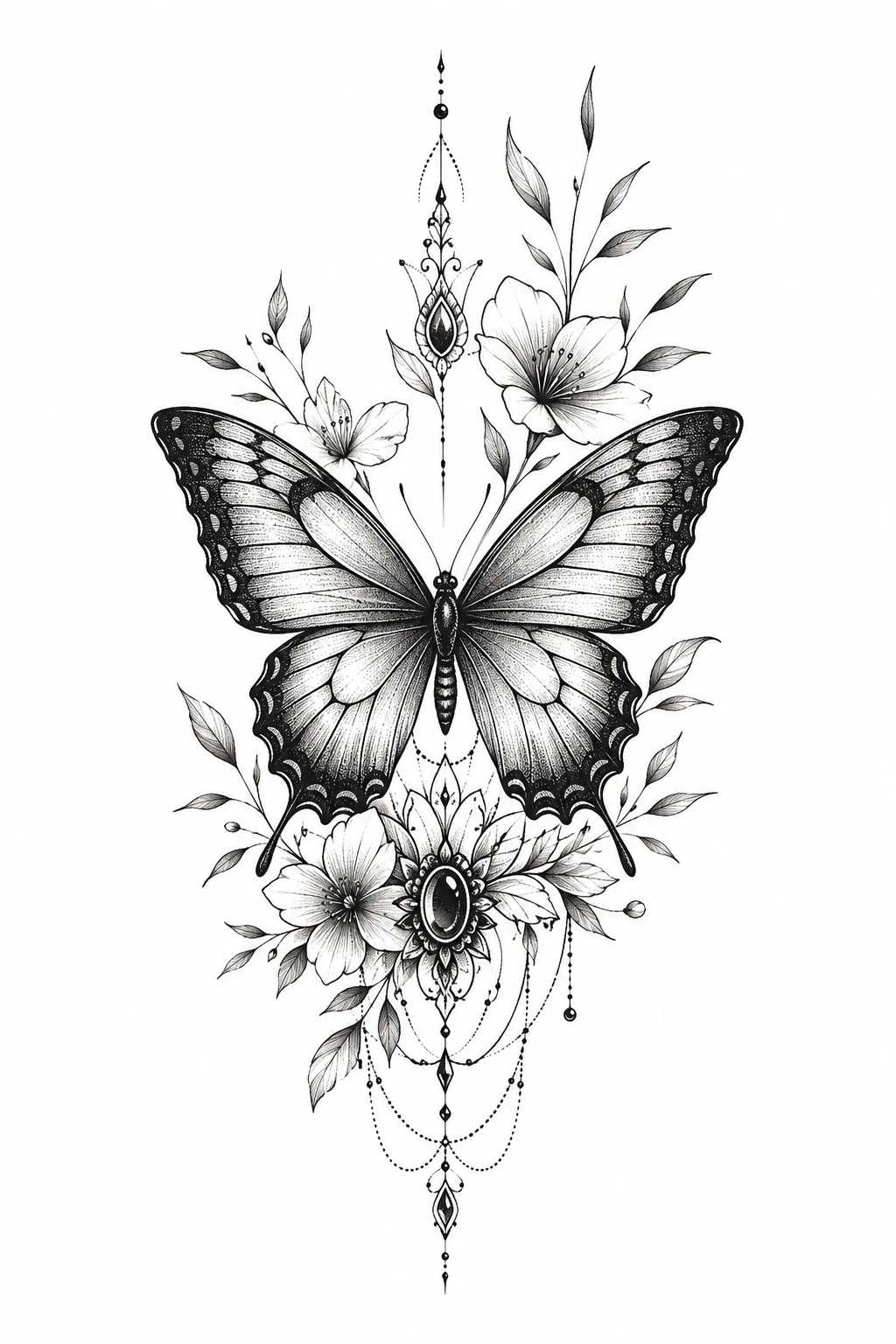
13. Butterfly Cover Up Tattoo on Hand
A butterfly cover up tattoo on hand requires careful planning because hand tattoos face frequent sun exposure, washing, friction, and movement. Coverage also needs to work within a relatively small area.
A compact butterfly using bold black outlines, charcoal shading, and dark blue or burgundy wing details can transform a small symbol near the thumb or back of the hand. Avoid stuffing ten decorative concepts into five centimeters of space—the butterfly deserves room to breathe.
Discuss healing expectations and long-term touch-ups with an artist experienced specifically in hand tattoos.
The key to this technique is choosing strong, readable shapes that can remain recognizable as the tattoo ages.
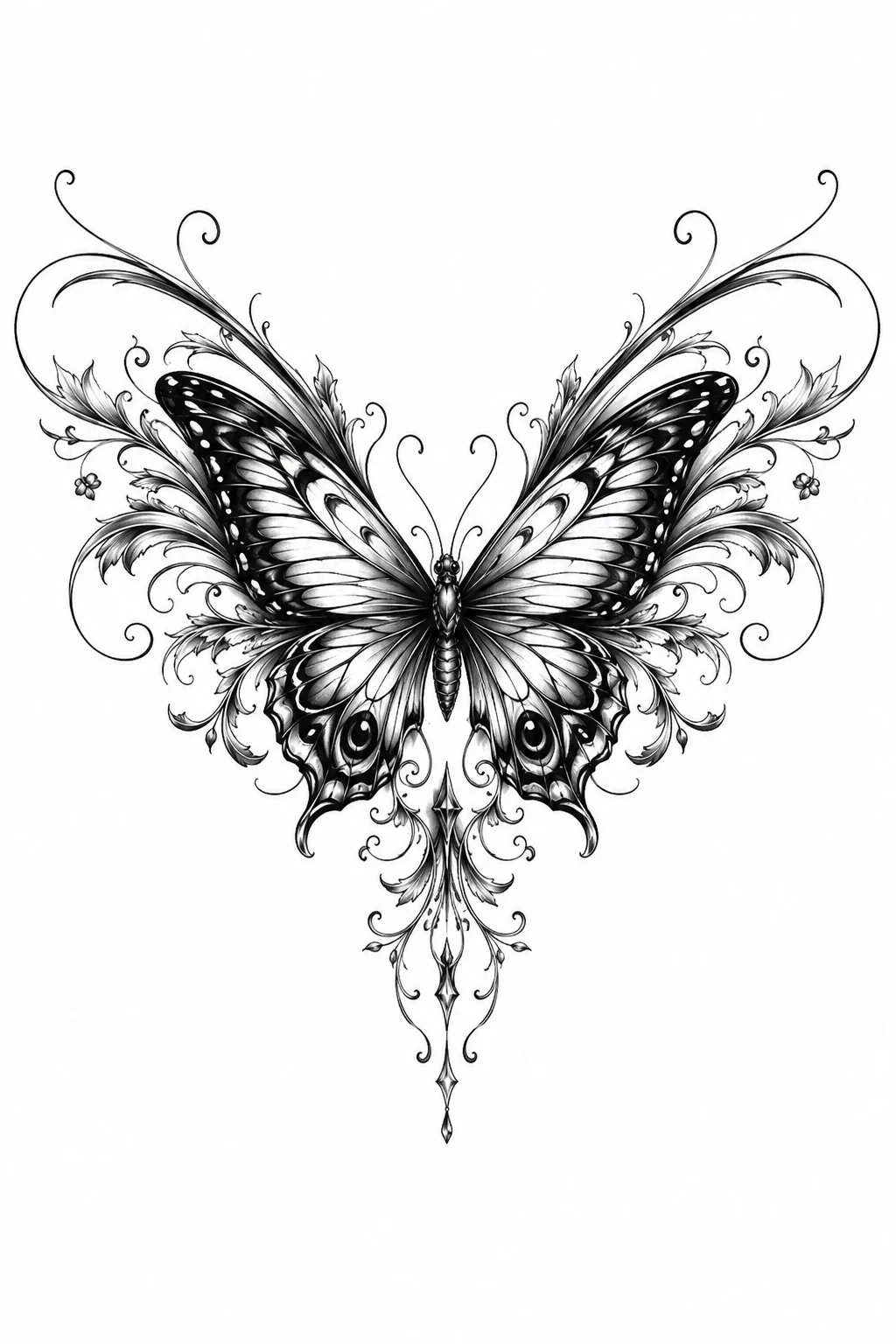
14. Butterfly Chest Cover Up With Ornamental Wings
A butterfly cover up tattoo on chest placement can transform old lettering, small symbols, or an outdated central design into a symmetrical statement piece.
Try extended wings with black filigree, smoky gray shading, tiny ornamental chains, and ruby or emerald accents. An artist can adjust each wing independently to accommodate uneven existing ink while preserving the appearance of symmetry from a distance.
For sternum or upper-chest placement, book a consultation before committing to a reference image because anatomy dramatically influences how the wings should spread.
The key to this look is adapting the butterfly’s symmetry to the body while strategically hiding asymmetrical old ink.
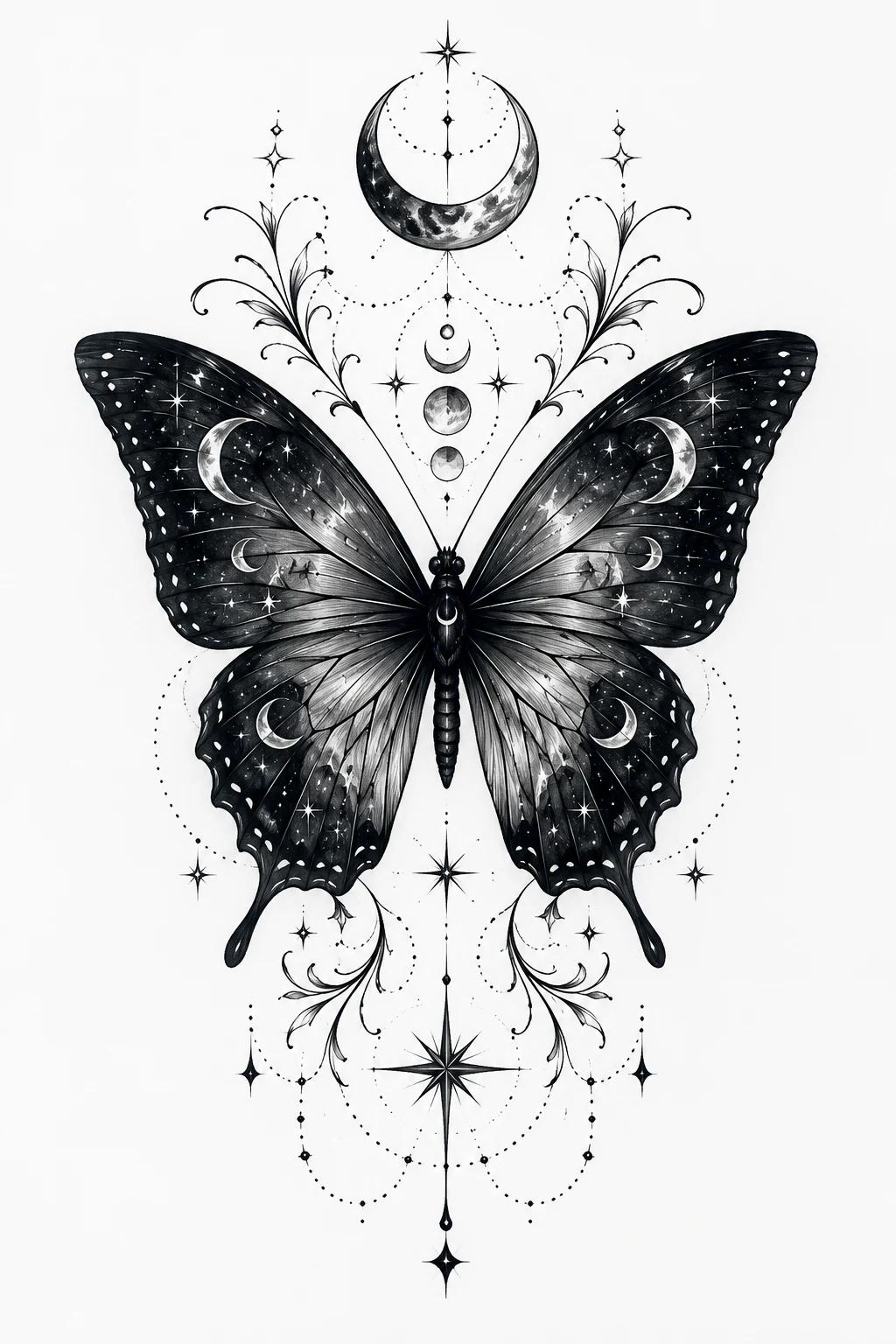
15. Midnight Butterfly With Celestial Details
For the final butterfly cover up tattoo idea, go dramatic with midnight blue wings surrounded by tiny stars, crescent moons, and smoky black botanical details.
A celestial composition provides lots of clever hiding places. Midnight-blue pigment, charcoal shadows, black stars, and dotted constellations can absorb remnants of an older tattoo without requiring every centimeter of the new piece to be solid black.
This design is especially effective on the shoulder, thigh, back, or upper arm and pairs beautifully with silver-gray highlights.
The key to this look is using celestial details as functional camouflage while keeping the butterfly as the clear focal point.
FAQ
What makes a butterfly good for a cover-up tattoo?
Butterfly wings contain natural sections, patterns, outlines, and shading that artists can manipulate around existing ink. This makes a butterfly cover up tattoo more adaptable than many small, rigid designs.
How does an artist design a butterfly cover up tattoo over dark ink?
The artist evaluates the old tattoo’s pigment, density, age, and shape, then positions darker wing sections or surrounding elements over the hardest areas to conceal. Very dense tattoos may benefit from professional laser fading before the cover-up session.
Why should a butterfly cover-up usually be larger than the original tattoo?
Extra space allows the artist to redirect attention and create believable wing proportions instead of packing excessive black pigment into the exact boundaries of the old design. Slightly larger butterfly cover up tattoo designs usually provide more creative flexibility.
📚 You Might Also Like
- Butterfly finger tattoo: 10 Top Tattoo Ideas for 2026
15 Butterfly Finger Tattoo Ideas: Delicate, Edgy & Meaningful Designs A butterfly finger tattoo…
- Butterfly hip tattoo: 9 Stunning Tattoo Ideas for 2026
15 Butterfly Hip Tattoo Ideas for a Beautiful, Personal Look A butterfly hip tattoo is a tattoo desi…
- Purple butterfly tattoo: 9 Ultimate Tattoo Ideas for
15 Purple Butterfly Tattoo Ideas A purple butterfly tattoo is a butterfly-inspired tattoo that uses…
- Butterfly tattoo on hand: 7 Gorgeous Tattoo Ideas for
15 Butterfly Tattoo on Hand Ideas A butterfly tattoo on hand is body art placed on the fingers, knuc…
- Butterfly chest tattoo: 10 Best Tattoo Ideas for 2026
15 Butterfly Chest Tattoo Ideas That Look Stunning in 2026 A butterfly chest tattoo is a bold way to…
The Bottom Line
A butterfly cover up tattoo works best when the new artwork is designed specifically around what’s already on your skin. Monarch wings, blue morphos, roses, ornamental jewels, botanical details, and celestial elements all provide opportunities to disguise old lines while creating something worth showing off.
Don’t choose a design based solely on how it looks on Pinterest. Bring your favorite references to an experienced cover-up tattoo artist and let them evaluate the existing pigment, placement, and available space. The smartest butterfly cover up tattoo doesn’t simply bury old ink—it uses strategic shading, saturated color, strong composition, and thoughtful placement to make the previous tattoo visually irrelevant.
🛍️ Shop the Look — butterfly cover up tattoo
Our handpicked Amazon picks curated specifically for butterfly cover up tattoo:
As an Amazon Associate I earn from qualifying purchases.