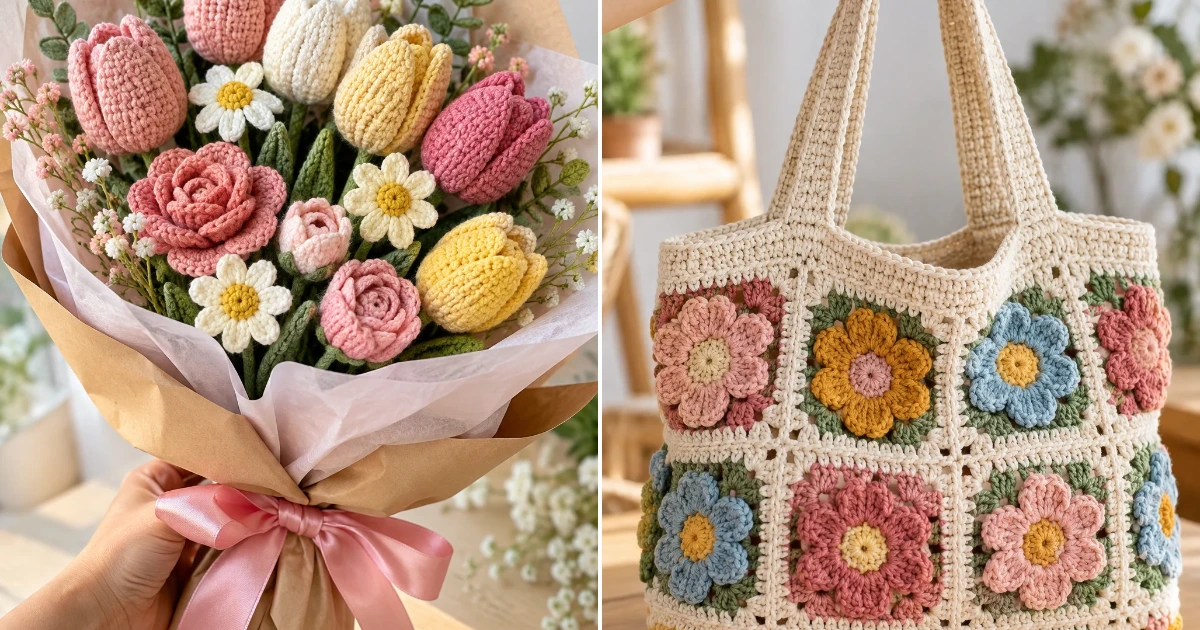
A crochet business is a small creative venture that sells handmade crochet products, patterns, or related services to customers who appreciate unique, handcrafted items. If you love turning colorful yarn into beautiful bags, cozy blankets, adorable plushies, or stylish accessories, you can transform that hobby into an income-generating brand, according to The Spruce Crafts. The best part? You can start small, work from home, and grow at a pace that fits your schedule. From trendy crochet flowers to personalized gifts, there are plenty of crochet business ideas for beginners and experienced makers. The secret is choosing products people genuinely want, pricing your work fairly, and creating a recognizable style that makes customers remember your shop.
1. Trendy Crochet Flower Bouquets
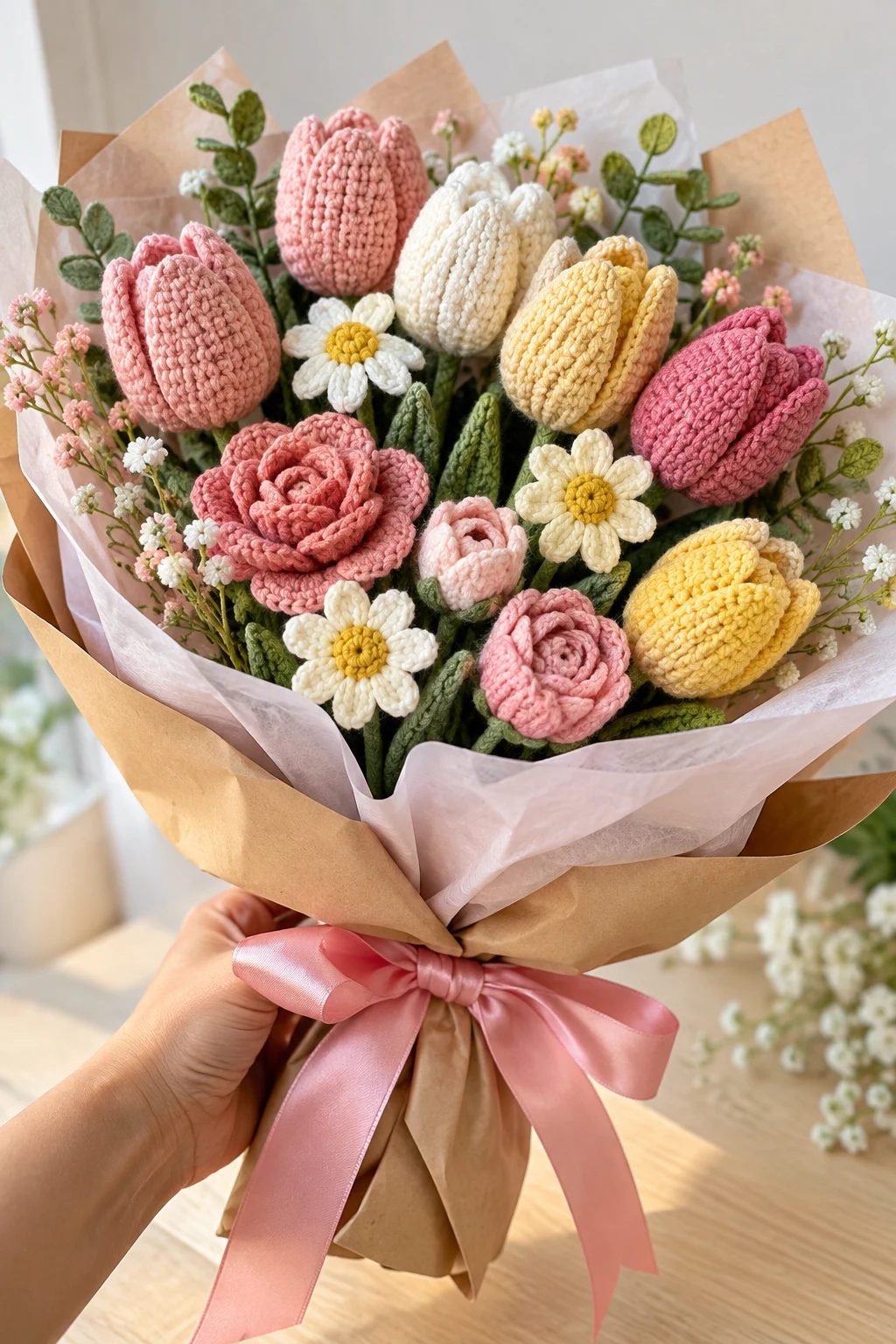
Crochet flower bouquets are a charming product for birthdays, anniversaries, Mother’s Day, Valentine’s Day, and weddings. Unlike fresh flowers, these colorful creations can last for years, making them attractive gifts for customers who want something memorable. Start with crochet tulips, roses, daisies, and sunflowers in coordinated colors.
Use cotton yarn for crisp petals and green yarn for stems. Wrap each bouquet in kraft paper or pastel floral packaging, then finish it with a satin ribbon. Offer mini bouquets alongside larger arrangements to accommodate different budgets.
Pro tip: Create seasonal collections in blush pink, butter yellow, lavender, and sage green, then photograph them against a neutral background for Pinterest and Instagram.
The key to this look/technique is consistent flower sizing, neatly shaped petals, and coordinated colors that make every bouquet feel gift-ready.
2. Stylish Crochet Tote Bags
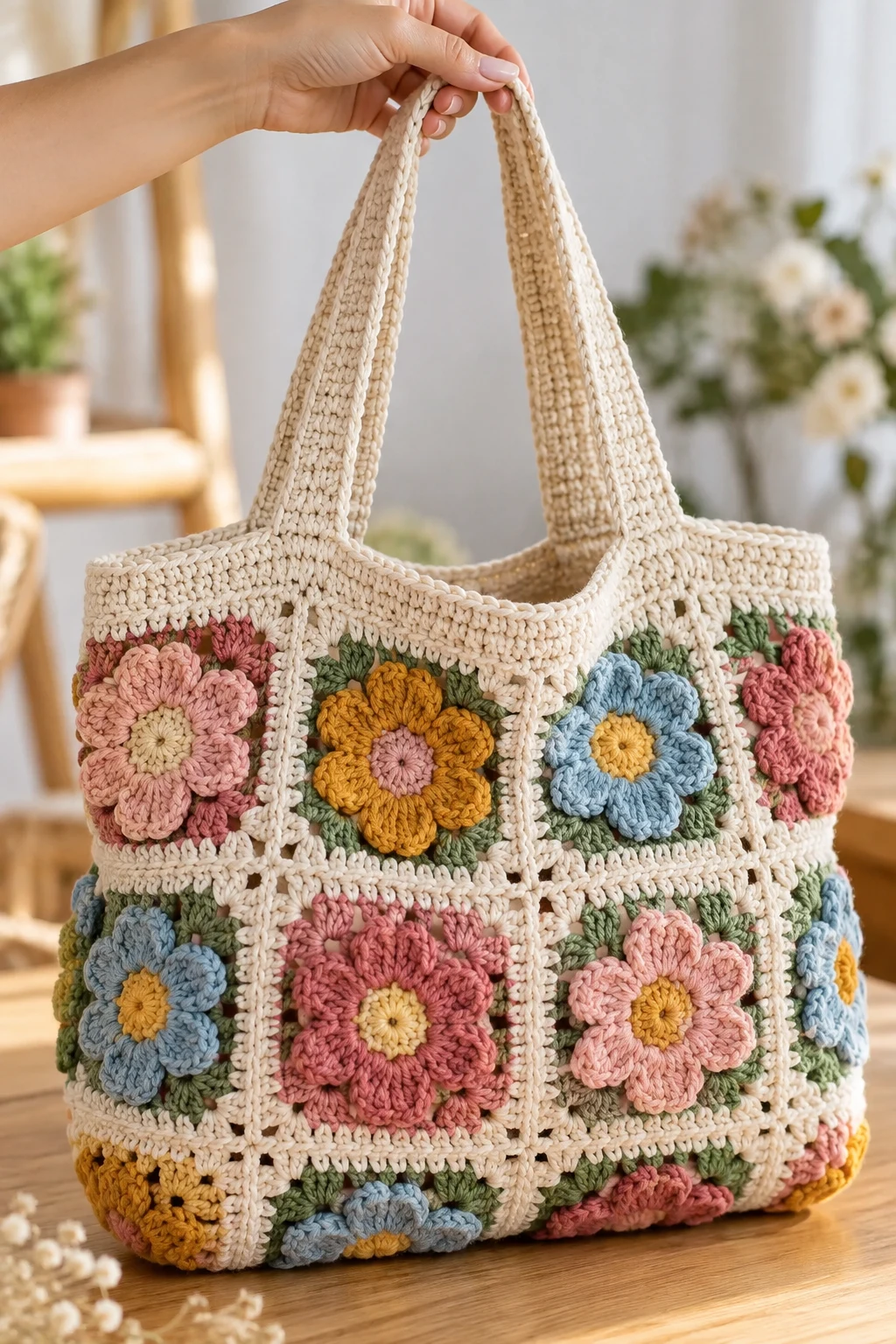
Crochet tote bags are practical products for everyday errands, beach trips, farmers’ markets, and casual outfits. They also provide plenty of room for creativity. Sell striped market bags, granny-square totes, colorful checkerboard designs, or minimalist cream bags with sturdy handles.
Choose durable cotton yarn and tight stitches to help bags hold their shape. Reinforce the handles and consider adding a fabric lining or an interior pocket. Offer customization with initials, contrasting borders, or favorite colors.
A useful business strategy is to create three sizes: mini, everyday, and oversized. This encourages customers to choose a bag that fits their needs without requiring you to invent an entirely new product each time.
The key to this look/technique is balancing attractive stitch patterns with strong handles, durable yarn, and practical dimensions.
3. Adorable Crochet Plushies and Amigurumi
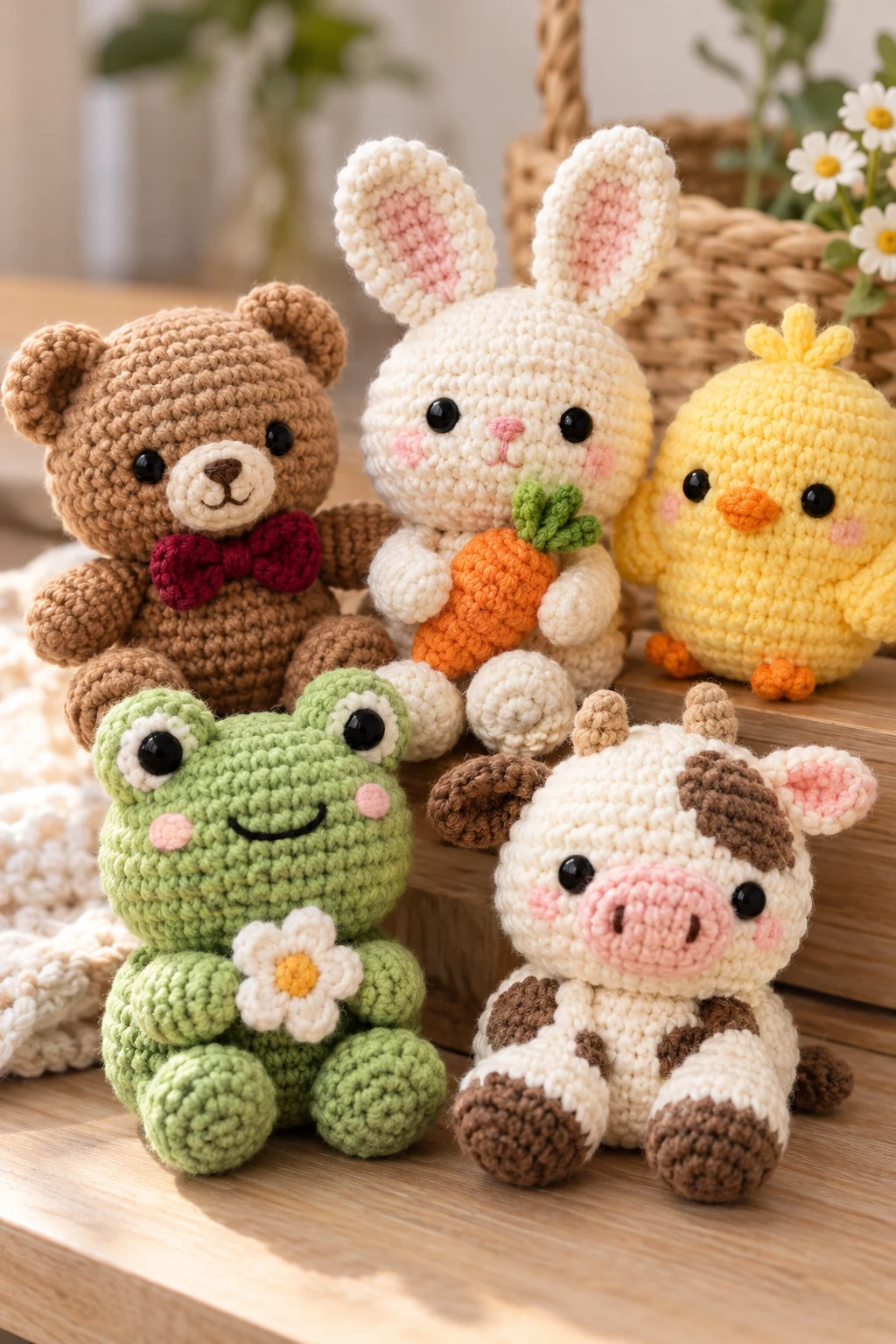
Amigurumi, the Japanese-inspired art of crocheting small stuffed figures, is an excellent niche for a crochet business. Popular products include tiny bunnies, sleepy cats, teddy bears, frogs, whales, and miniature food characters.
Use smooth yarn, safety eyes where appropriate, and washable stuffing. You can also embroider facial features for a softer finish. Create a recognizable collection by giving every character a name, personality, or signature accessory.
For example, a collection of sleepy woodland animals could include a fox with a tiny scarf, a bear holding a crochet heart, and a rabbit wearing a flower crown. Sell individual figures or themed gift sets.
If you make toys for young children, carefully consider age suitability, securely attached components, labeling, and applicable product-safety requirements.
The key to this look/technique is consistent shaping, securely constructed details, and charming character designs customers can recognize.
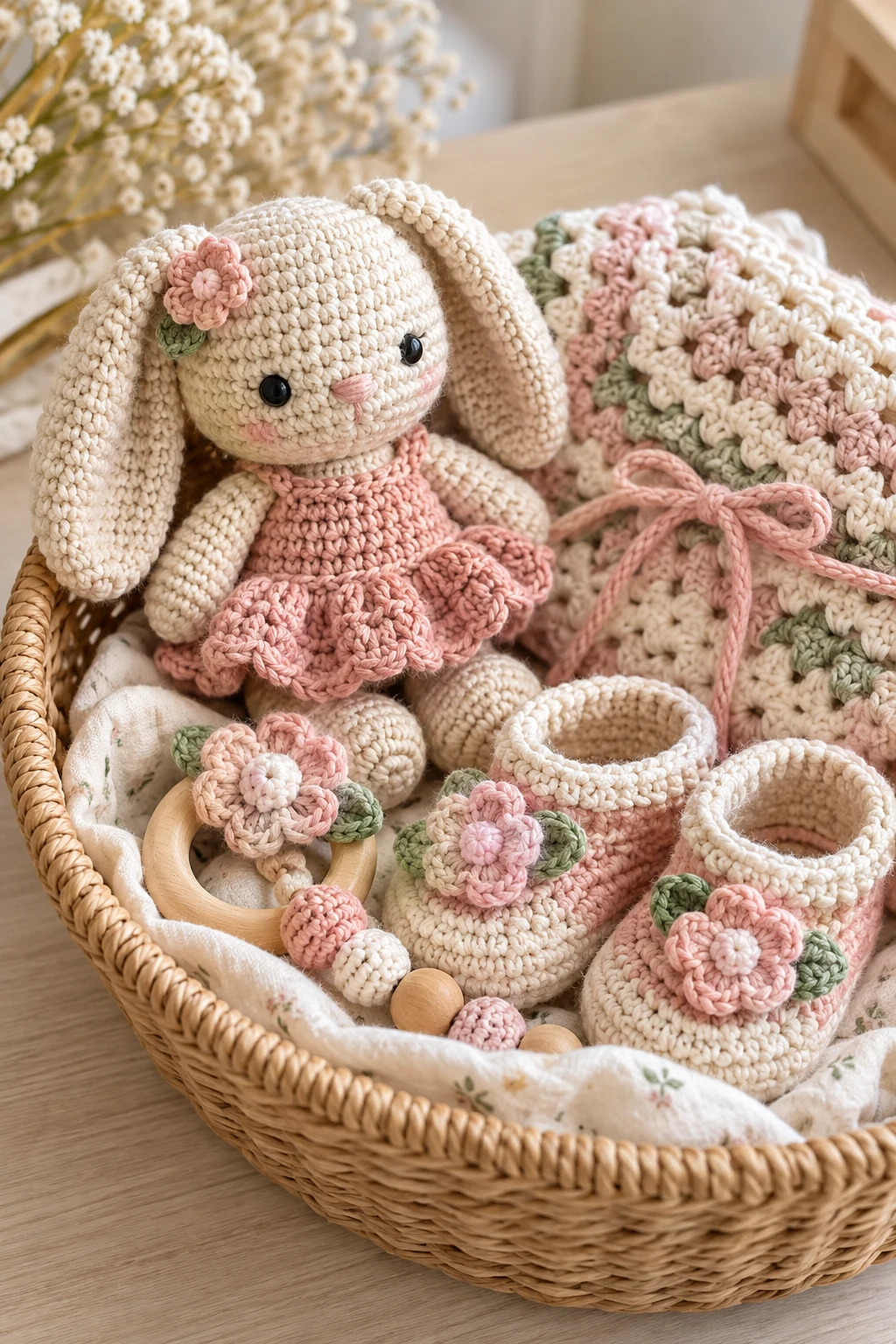
4. Personalized Crochet Baby Gifts
Newborn gifts, baby showers, and first birthdays offer opportunities for beautifully coordinated handmade products. Consider selling crochet baby blankets, bonnets, booties, nursery decorations, and small keepsake baskets., according to Martha Stewart Crafts
Soft cream, dusty blue, sage green, blush pink, and warm beige are versatile colors for modern baby gift collections. Offer gift packaging and optional personalization, such as embroidered names on suitable accessories.
Keep designs simple and practical, and choose yarn appropriate for frequent washing. Avoid small detachable pieces on products intended for infants, and follow applicable safety guidance.
Bundle complementary items into ready-to-gift sets to increase the average order value without making every order completely custom.
The key to this look/technique is soft, appropriate materials, tidy finishing, coordinated colors, and careful attention to baby-product safety.
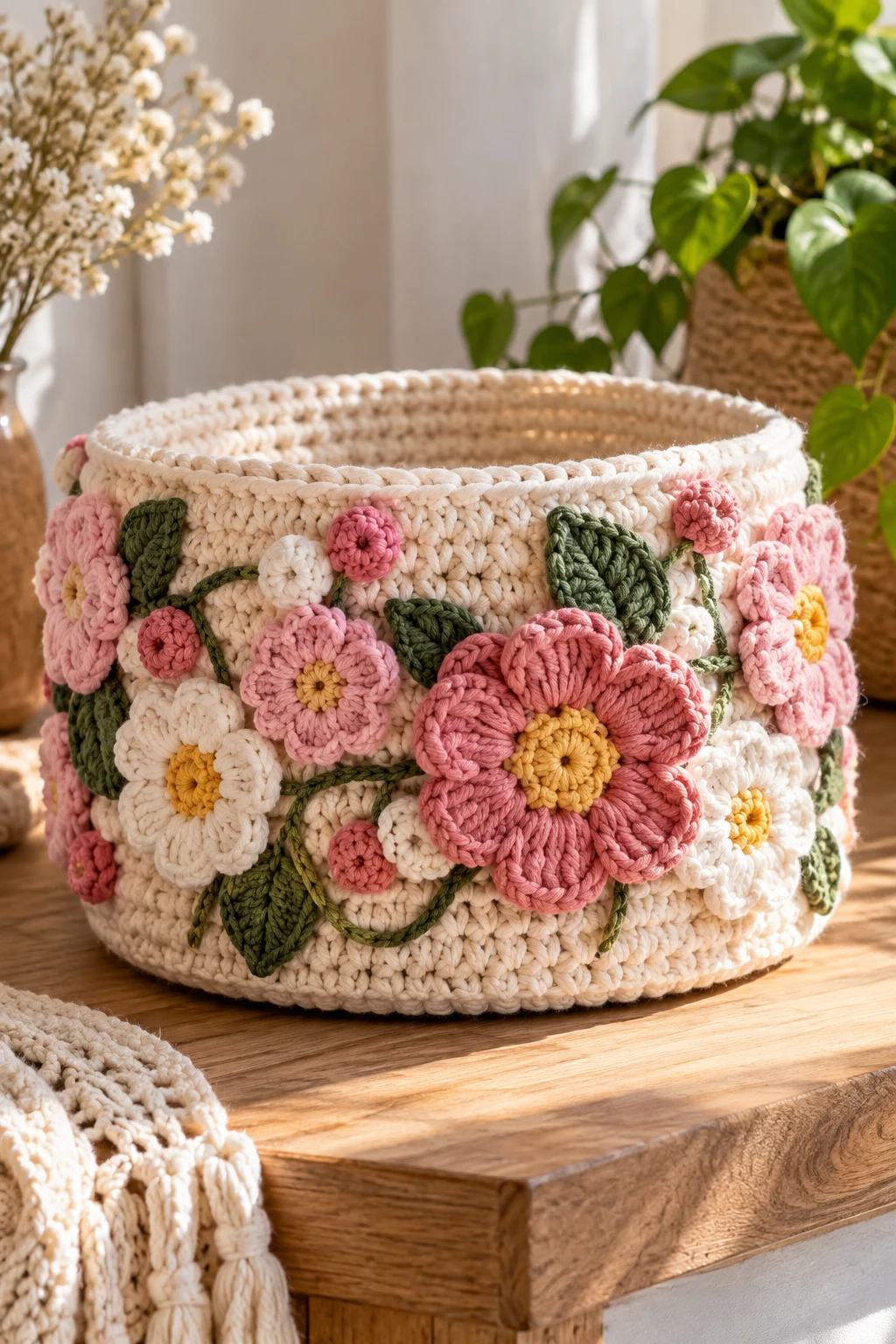
5. Crochet Business Ideas for Home Decor
Home decor allows you to sell crochet products to customers who want handmade touches without changing their entire interior. Think textured cushion covers, plant hangers, table runners, wall hangings, coasters, and decorative baskets.
Build collections around specific interior styles. A modern neutral collection could feature oatmeal cushions and cream coasters, while a bohemian collection might include rust-colored wall hangings and mustard plant holders.
Measure each item carefully and provide dimensions in your product descriptions. For cushion covers, explain whether the listing includes the insert or just the cover. Clear details help customers understand exactly what they are buying.
Expert tip: Textural home accessories work especially well in autumn and winter marketing, although lightweight plant hangers and coasters can sell throughout the year.
The key to this look/technique is combining functional shapes, complementary textures, and a consistent color palette that fits real homes.
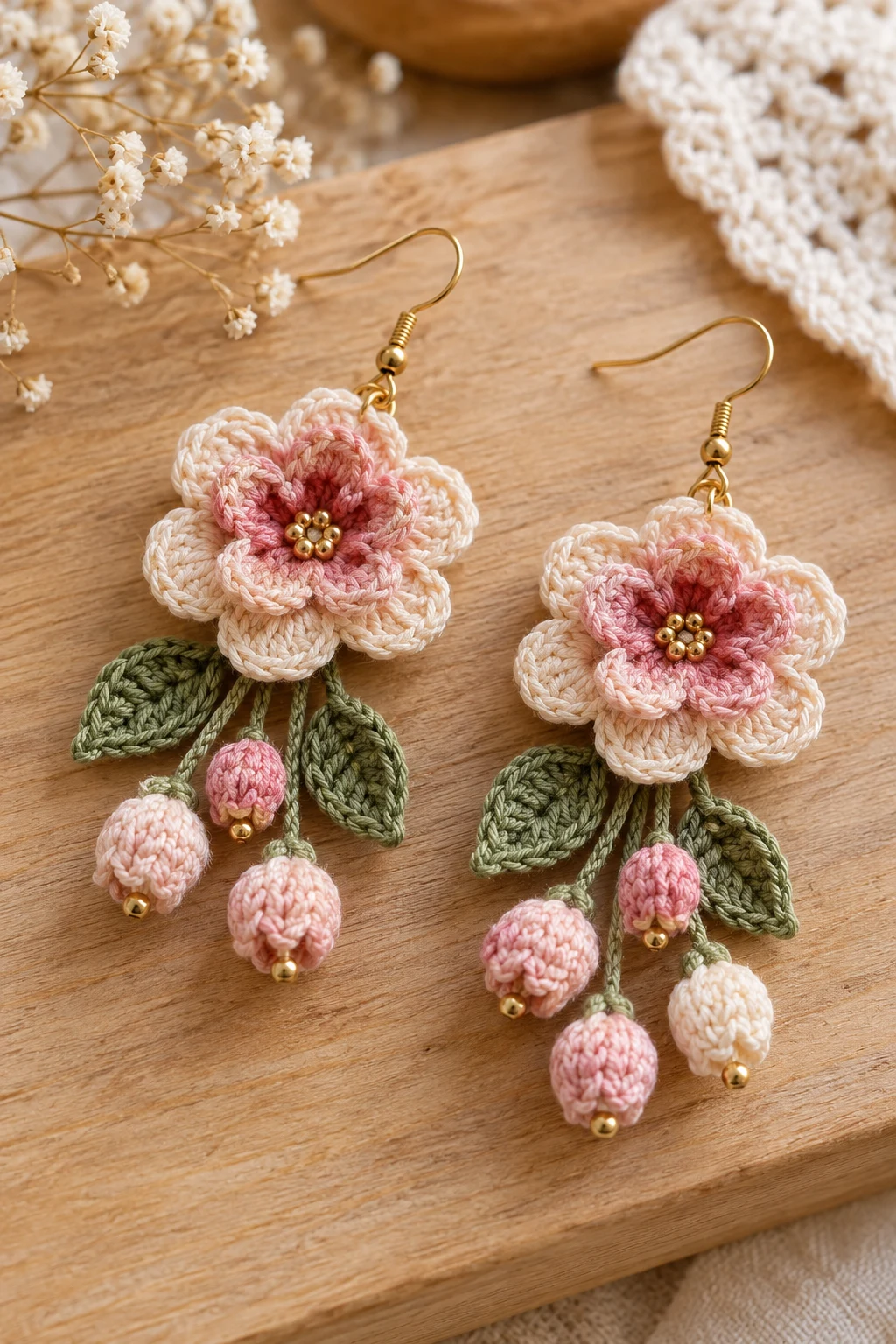
6. Crochet Earrings and Lightweight Jewelry
Small crochet accessories are ideal if you want products that use relatively little yarn and are easy to package. Try daisy earrings, miniature floral pendants, colorful hoop covers, and delicate crocheted charms.
Cotton thread works well for detailed designs because it produces defined stitches. Pair your crochet pieces with suitable jewelry findings, and clearly disclose materials such as stainless steel, plated metal, or other components.
Offer matching colors for spring weddings, summer festivals, and everyday outfits. Lightweight products can also make attractive add-ons when customers purchase a larger item.
Photograph earrings close up so shoppers can see the stitch detail, scale, and finishing. Include a size reference to prevent confusion about how large the pieces are.
The key to this look/technique is fine yarn, precise stitches, lightweight construction, and carefully selected jewelry components.
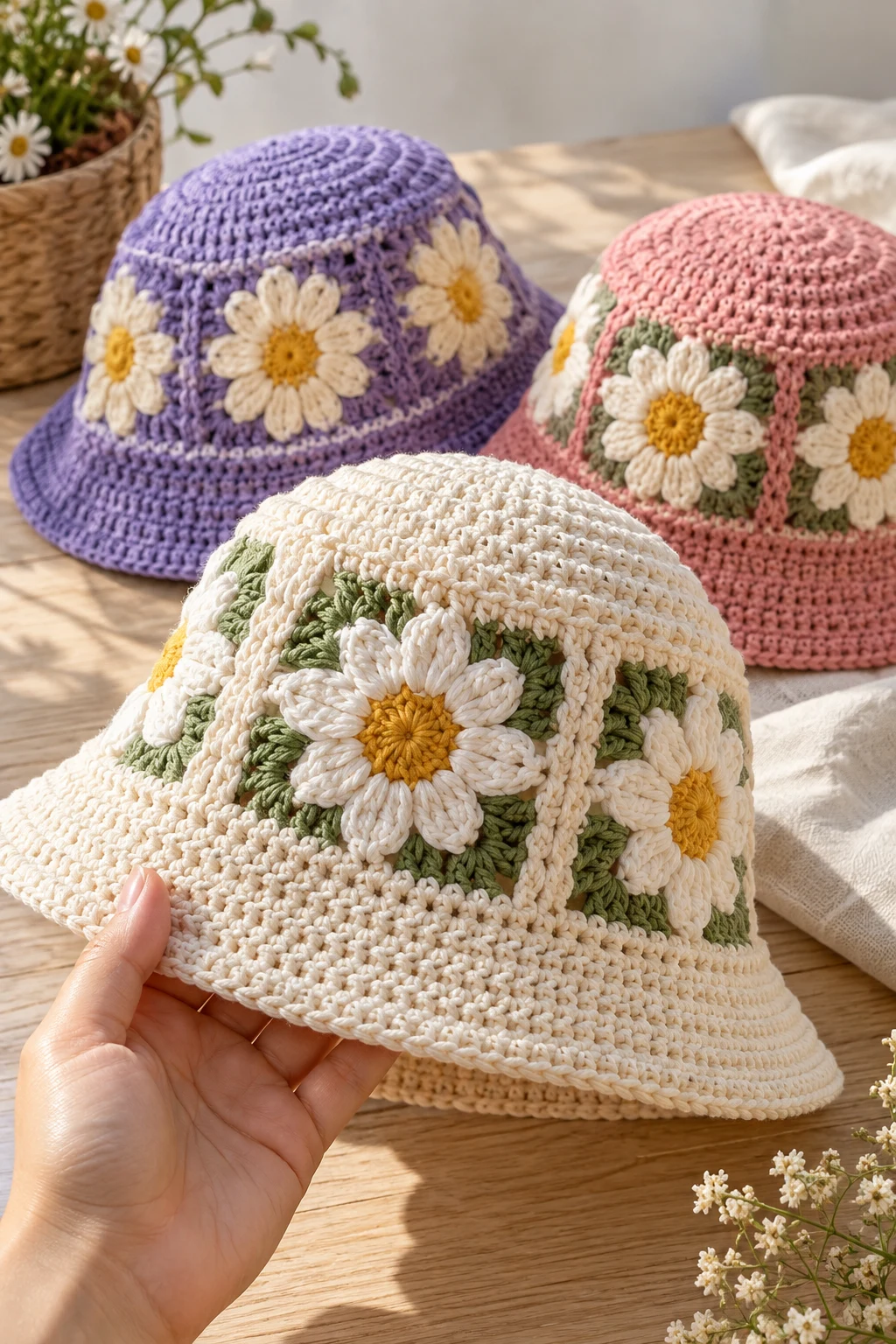
7. Handmade Crochet Bucket Hats
Crochet bucket hats combine fashion and practicality, making them a strong option for a seasonal accessories collection. Sell striped summer hats, checkerboard styles, neutral festival hats, and playful designs with flower appliqués.
Use breathable cotton yarn for warm weather, and test the fit on different head sizes before listing your products. Include a sizing guide and explain whether the hat has a flexible or structured brim.
Create a small launch collection with three designs and a limited number of colors. This makes inventory easier to manage while allowing you to see which styles customers prefer.
You can also offer matching mini bags or hair accessories to create coordinated looks.
The key to this look/technique is a well-shaped crown, an even brim, comfortable sizing, and yarn suited to the intended season.
8. Crochet Baby Blankets and Throws
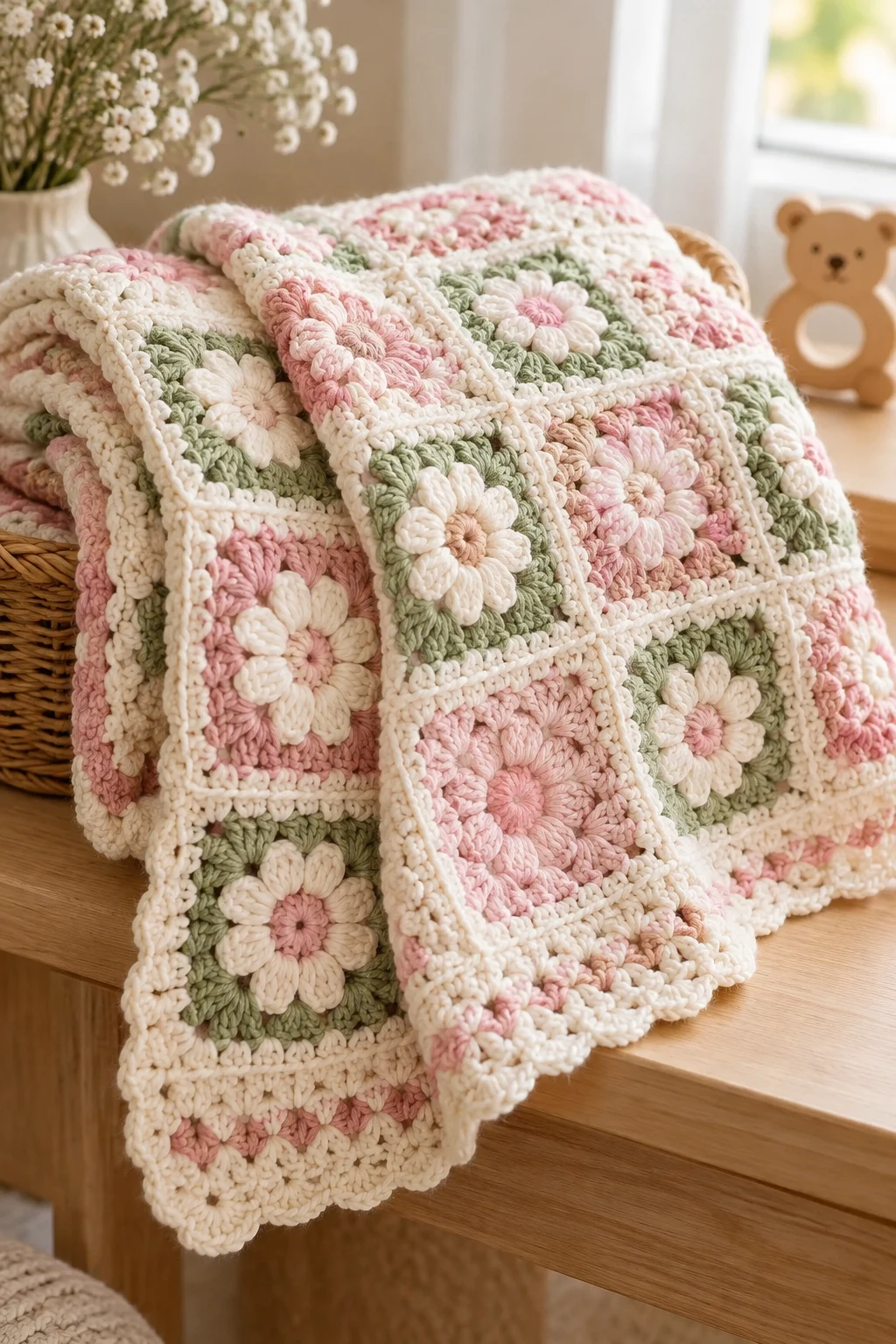
Blankets are classic handmade products that can become signature items in your crochet business. Offer stroller blankets, crib-sized decorative blankets, lap throws, and larger sofa blankets.
Choose a manageable selection of stitch patterns, such as moss stitch, granny stitch, waffle stitch, or simple stripes. A signature pattern helps customers associate a particular texture or color combination with your brand.
Because blankets require substantial time and yarn, calculate your costs before setting prices. Track the number of hours needed for each size and avoid pricing a large blanket as though it were a quick accessory.
Photograph the entire blanket as well as a close-up of the stitches. Customers should understand its scale, thickness, and texture.
The key to this look/technique is consistent tension, a practical size chart, reliable yarn estimates, and pricing that accounts for your labor.
9. Crochet Bags With Granny Squares
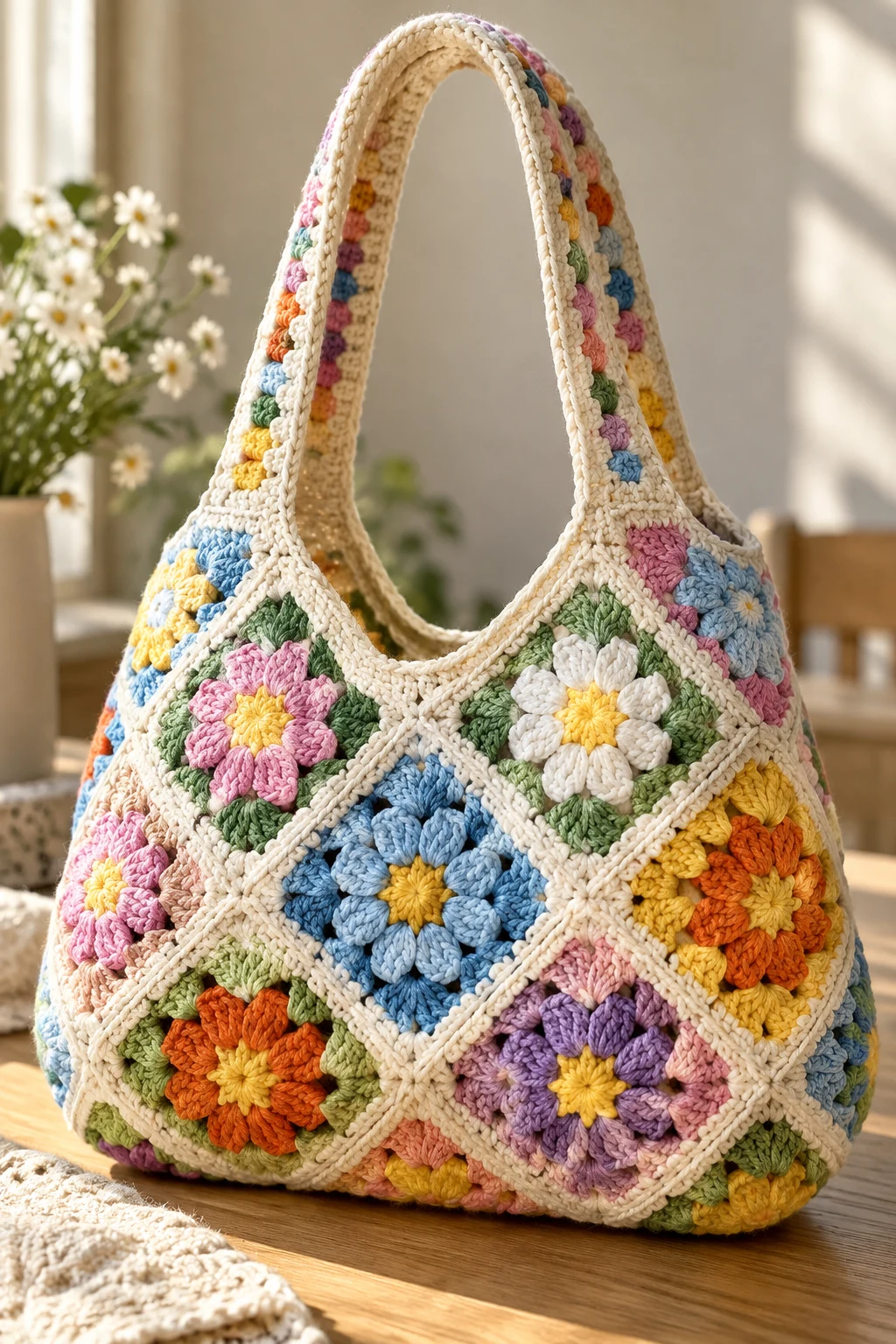
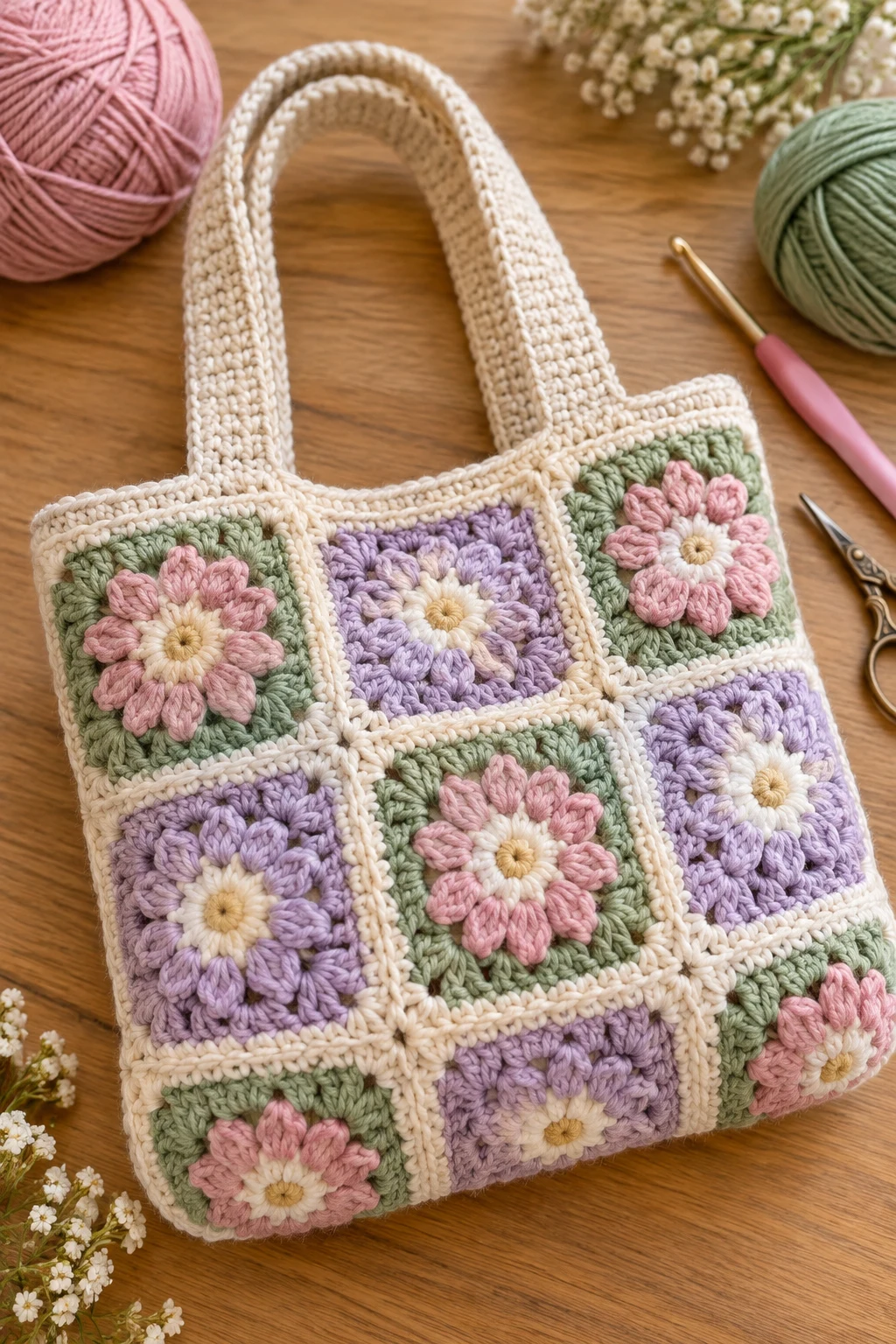
Granny-square bags turn traditional crochet motifs into modern accessories. Each square can feature a different color combination, allowing you to create playful shoulder bags, crossbody bags, and roomy totes.
Try combinations such as lavender and butter yellow, cherry red and cream, or forest green and pink. Keep the palette consistent across a collection so the designs look intentional rather than random.
Pay attention to joining methods because loose seams can affect durability. Add a lining when appropriate, reinforce the straps, and consider a magnetic closure or zipper for everyday use.
Granny-square are also helpful for using leftover yarn, provided the colors and fibers work well together.
The key to this look/technique is uniform square sizing, secure joining, balanced color placement, and durable bag construction.
10. Crochet Business Names and Branding
A memorable brand makes your handmade products easier to recognize. When brainstorming crochet business names, choose something easy to spell, pronounce, and remember. Examples include The Cozy Loop, Little Yarn Studio, Daisy Chain Crochet, and The Happy Stitch.
If you want crochet business names with your name, you could use formats such as “Emma’s Crochet Studio” or “Crochet by Emma.” Before committing, check business registries, domain availability, and social media handles to avoid conflicts.
Create a simple crochet business logo using one or two colors, a readable typeface, and a small yarn or hook motif. Repeat the branding on packaging, product tags, and social profiles.
The key to this look/technique is a distinctive name, consistent visual identity, and branding that remains readable on small labels and mobile screens.
11. Crochet Keychains and Bag Charms
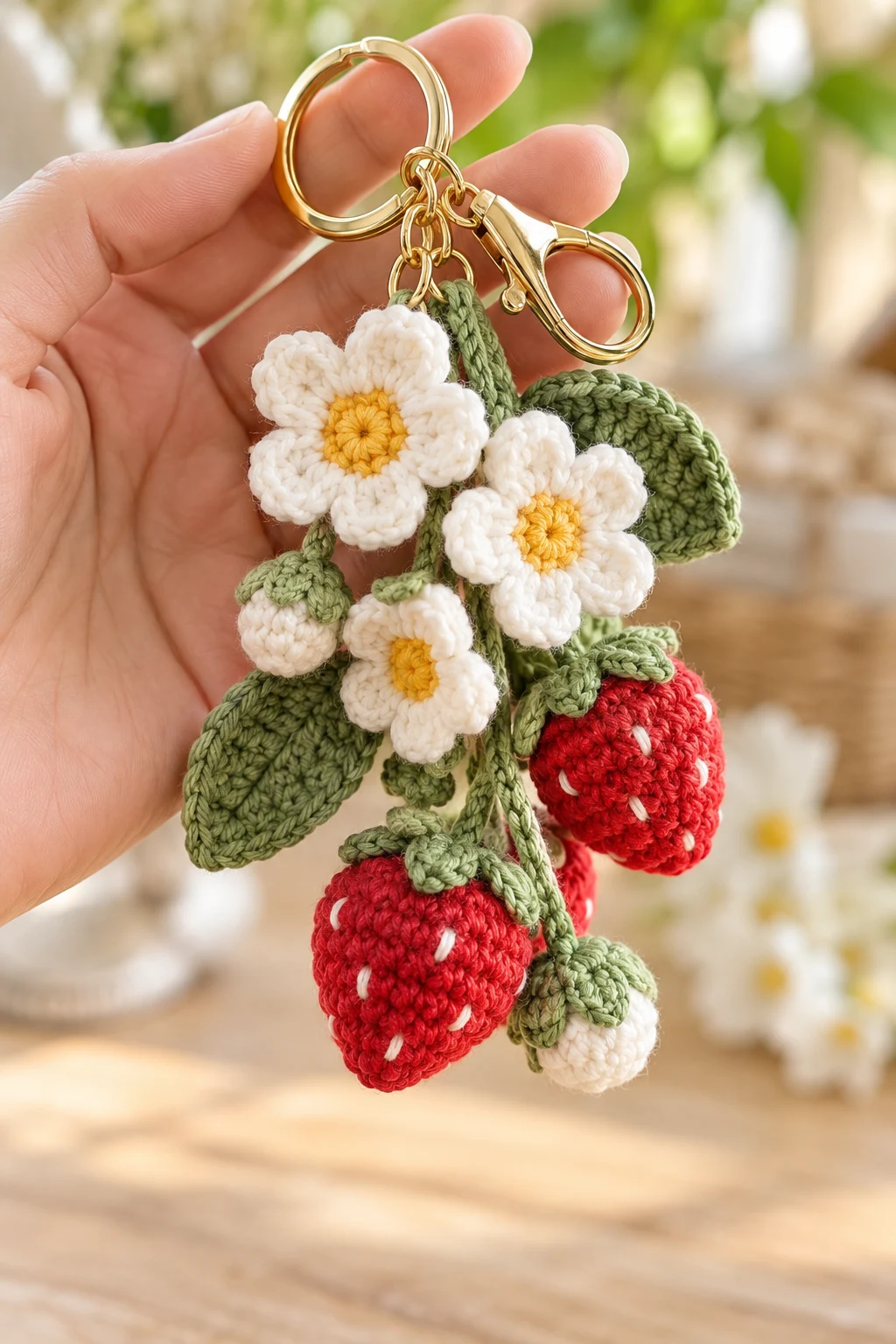
Crochet keychains are compact, giftable products that work well for craft fairs, online shops, and impulse purchases. Popular designs include strawberries, tiny flowers, hearts, mushrooms, stars, and miniature animals.
These can use leftover yarn and relatively little material. Attach suitable key rings or clasps securely, and check the finished product for loose ends and weak connections.
Offer bundles of three charms in coordinated colors or themes. For example, a cottagecore set might include a mushroom, a daisy, and a tiny strawberry. A pastel set could feature lavender, pink, and mint green.
Describe the size clearly and photograph each charm beside a familiar object for scale.
The key to this look/technique is miniature shaping, secure hardware, clean finishing, and designs that look appealing even at a small size.
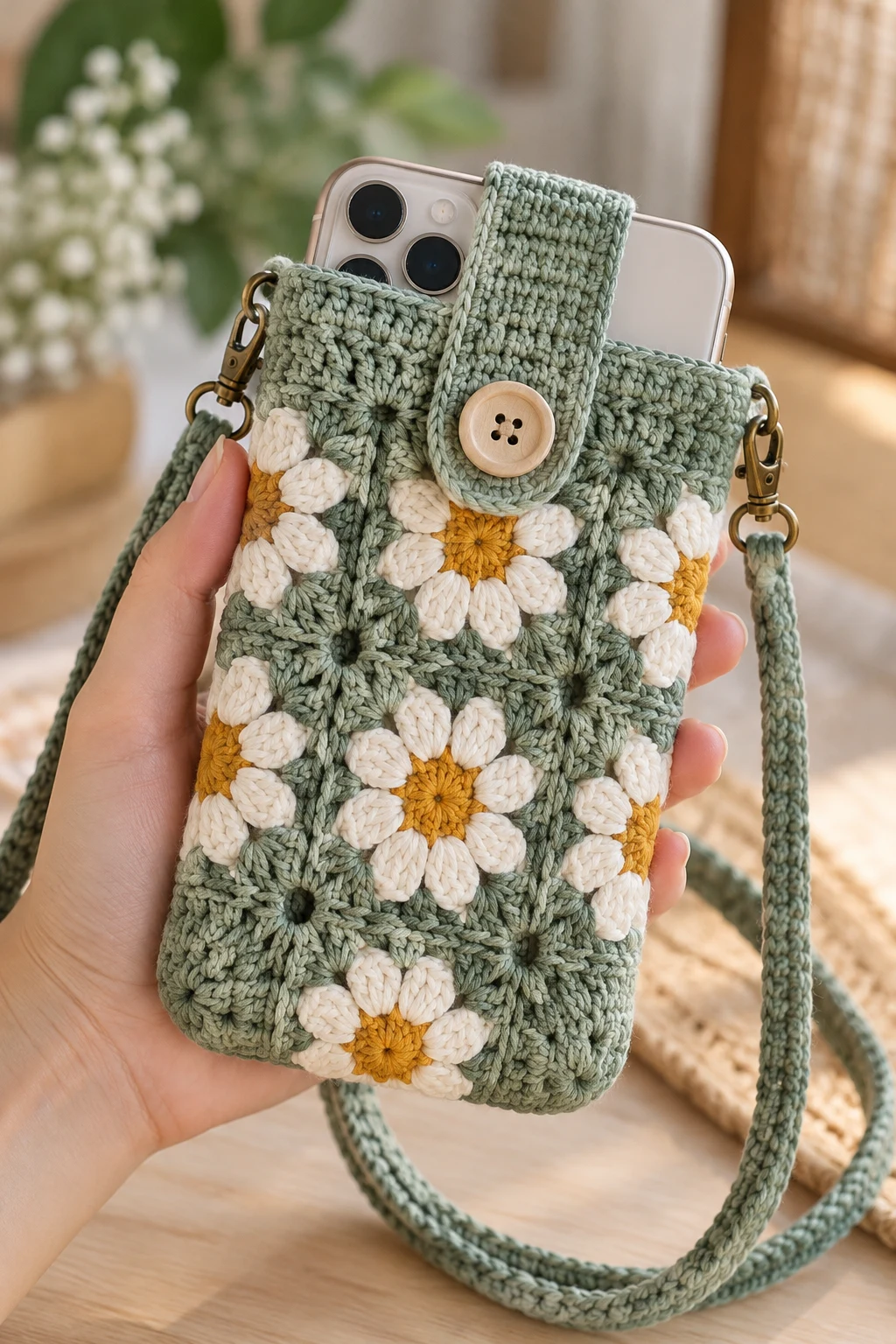
12. Crochet Phone Pouches and Tech Accessories
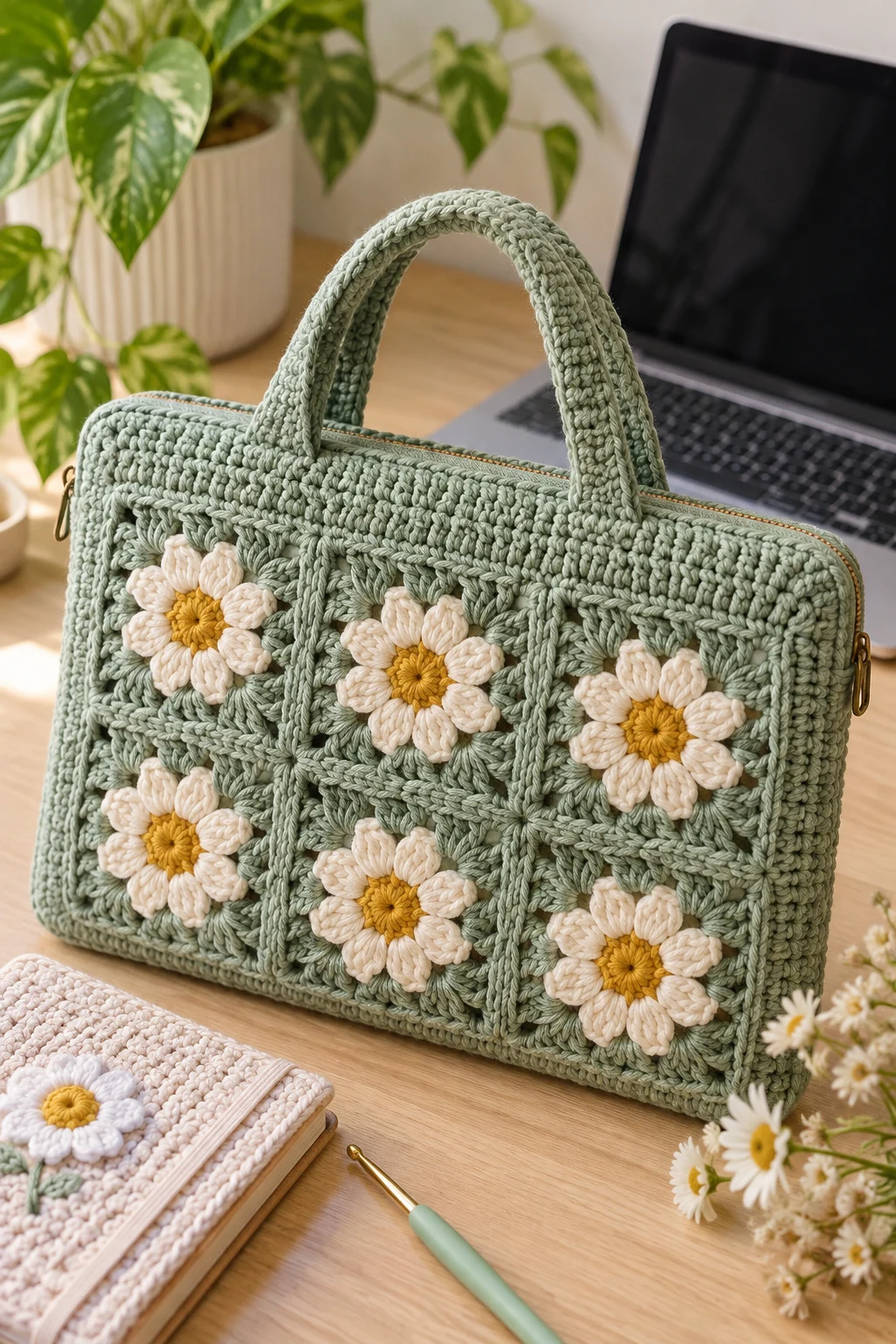
Phone pouches, tablet sleeves, earbud cases, and laptop covers give practical shoppers a reason to buy handmade accessories. They can also attract customers who appreciate colorful alternatives to mass-produced tech accessories.
Measure common device dimensions and explain that customers should confirm their device measurements before ordering. Use dense stitches to reduce stretching, and consider a soft fabric lining for extra protection.
Add button closures, drawstrings, or simple flaps, depending on the design. Offer neutral options for work and brighter striped versions for everyday use.
For larger sleeves, make sure the finished item has enough room for the device without being so loose that it slips out easily.
The key to this look/technique is accurate sizing, dense fabric, secure closures, and a comfortable fit around the intended device.
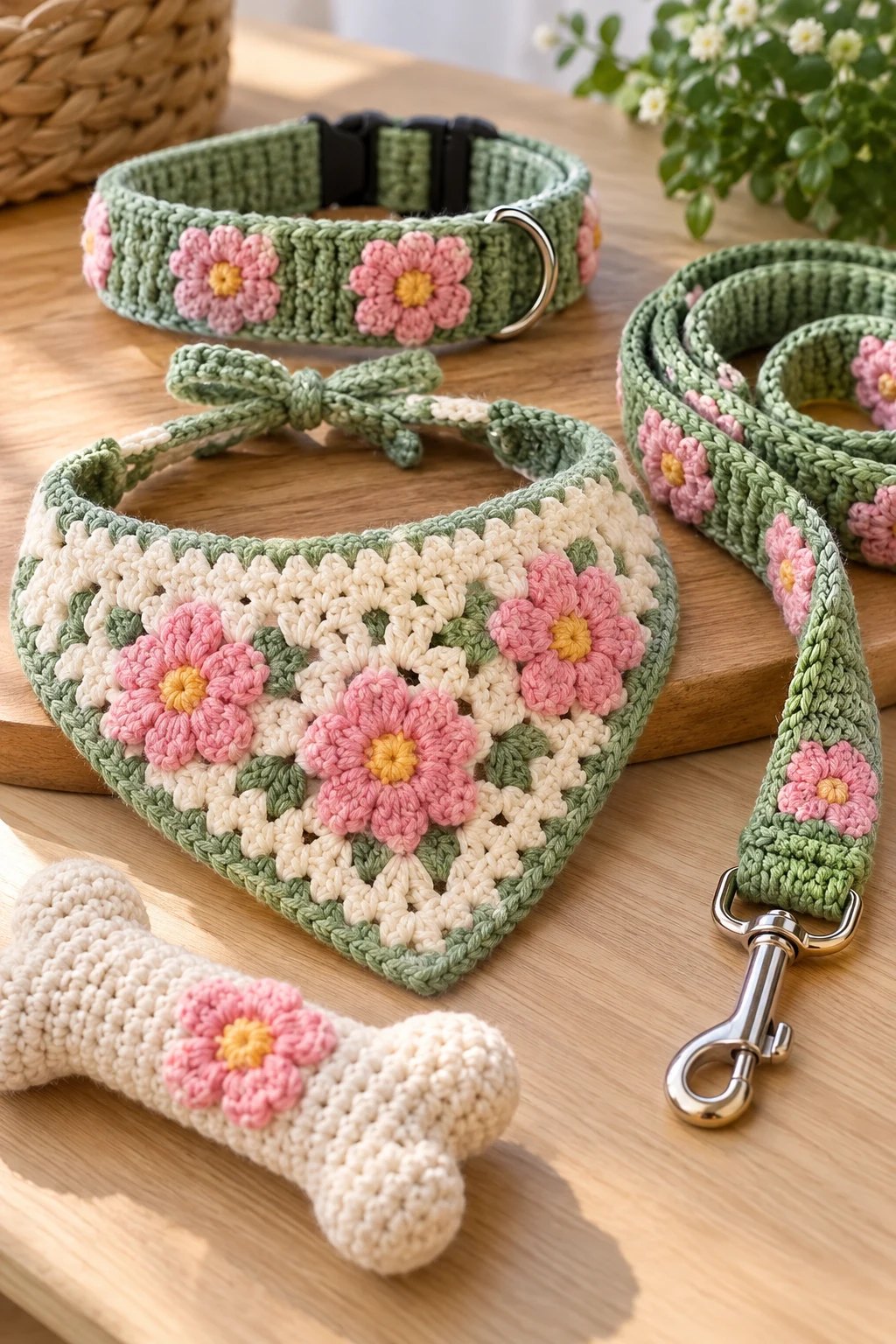
13. Crochet Pet Accessories
Pet lovers often enjoy buying personalized accessories for their furry companions. Consider crochet-inspired pet bandanas, decorative bows, photo-prop accessories, and themed gifts for pet birthdays.
Start with products that are easy to size and photograph. Offer seasonal colors such as red and green for winter celebrations, orange for autumn, or pastel shades for spring portraits.
Pet products require extra care because animals may chew, swallow, or become entangled in loose materials. Avoid small detachable parts and potentially hazardous constructions, and clearly state when an item is decorative rather than suitable for unsupervised wear.
You can also sell pet-themed keychains or amigurumi portraits as alternatives for owners who want a keepsake.
The key to this look/technique is careful construction, clear sizing, appropriate materials, and thoughtful consideration of animal safety.
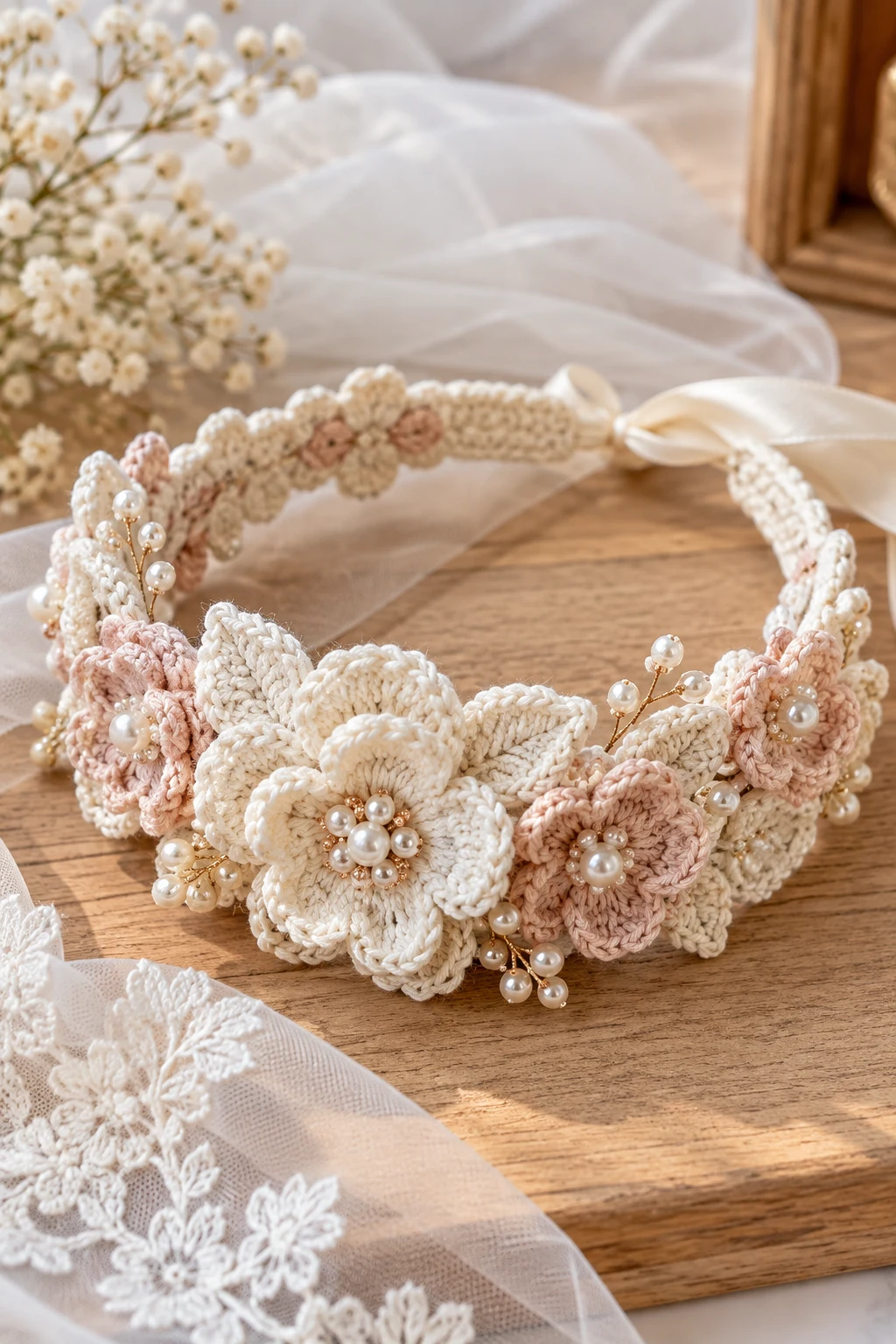
14. Crochet Wedding and Bridal Accessories
Weddings create opportunities for delicate handmade accessories, especially for brides who want personal details that feel different from mass-produced pieces. Consider ivory shawls, lace clutches, bridal hair flowers, bouquet wraps, and gifts for bridesmaids.
Use fine cotton yarn or suitable lace-weight fibers for lightweight designs. Cream, champagne, ivory, and dusty rose can complement many wedding palettes.
Because wedding dates are fixed, establish realistic production times and communicate deadlines clearly. Ask customers to order well ahead of the event, especially for personalized pieces or larger projects.
Photograph accessories with neutral styling and close-ups that show the craftsmanship. A coordinated bridal collection can also encourage customers to purchase matching pieces.
The key to this look/technique is delicate stitchwork, refined finishing, accurate color descriptions, and dependable delivery planning.
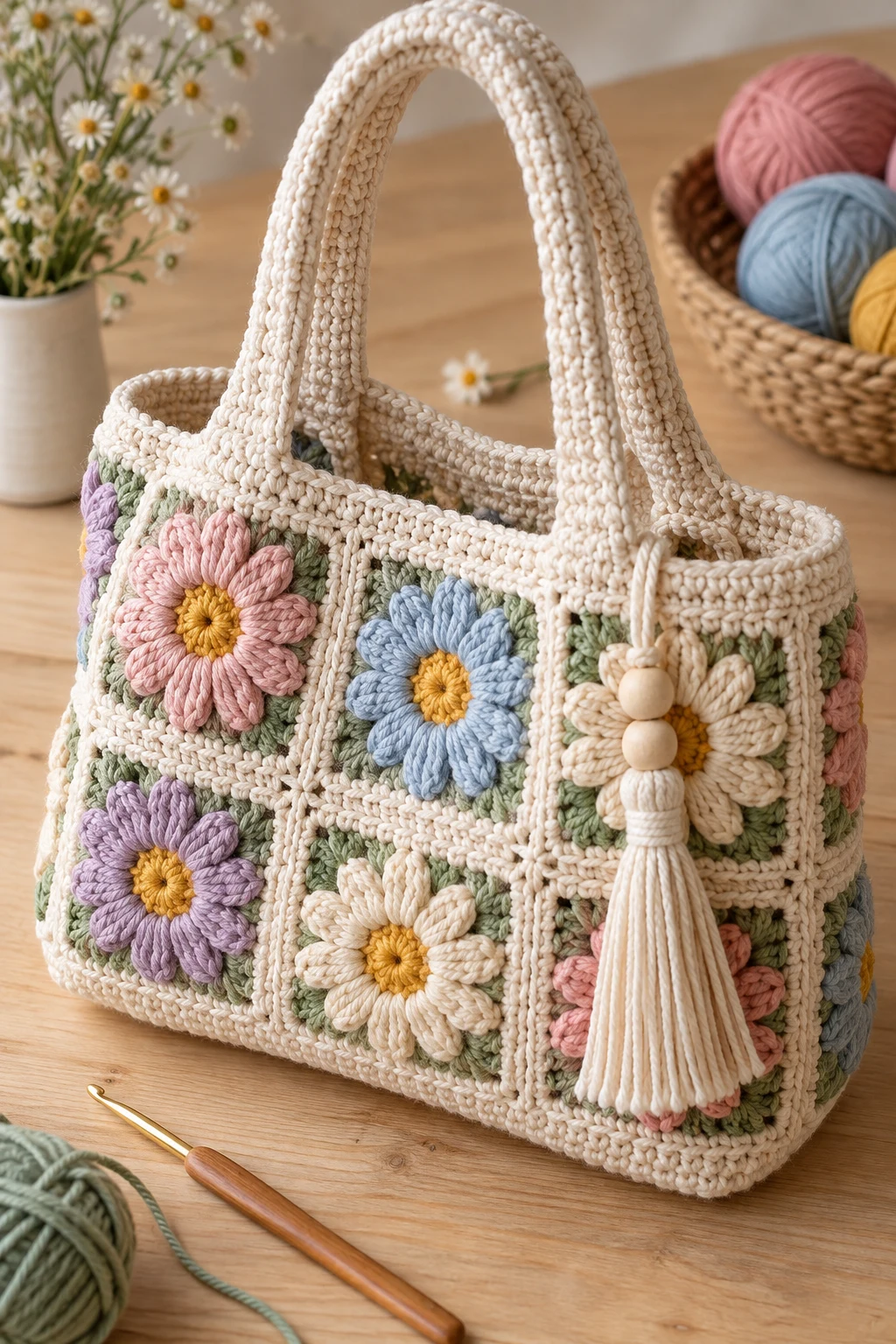
15. Sell Original Crochet Patterns
Selling digital crochet patterns is an alternative to producing every item by hand. Once you create an original pattern, you can sell copies repeatedly without crocheting a new finished product for each order.
Possible products include granny-square bags, flower bouquets, amigurumi animals, headbands, and seasonal decorations. Write instructions in a clear sequence, define abbreviations, and include stitch counts, material requirements, gauge information where relevant, and photographs of important steps.
Test every pattern by making the project yourself and, ideally, asking another crocheter to follow the instructions independently. This helps identify confusing directions before customers encounter them.
Include clear terms explaining what buyers may do with the pattern and whether selling finished items is permitted.
The key to this look/technique is accurate instructions, tested construction, helpful photographs, and a well-organized digital download.
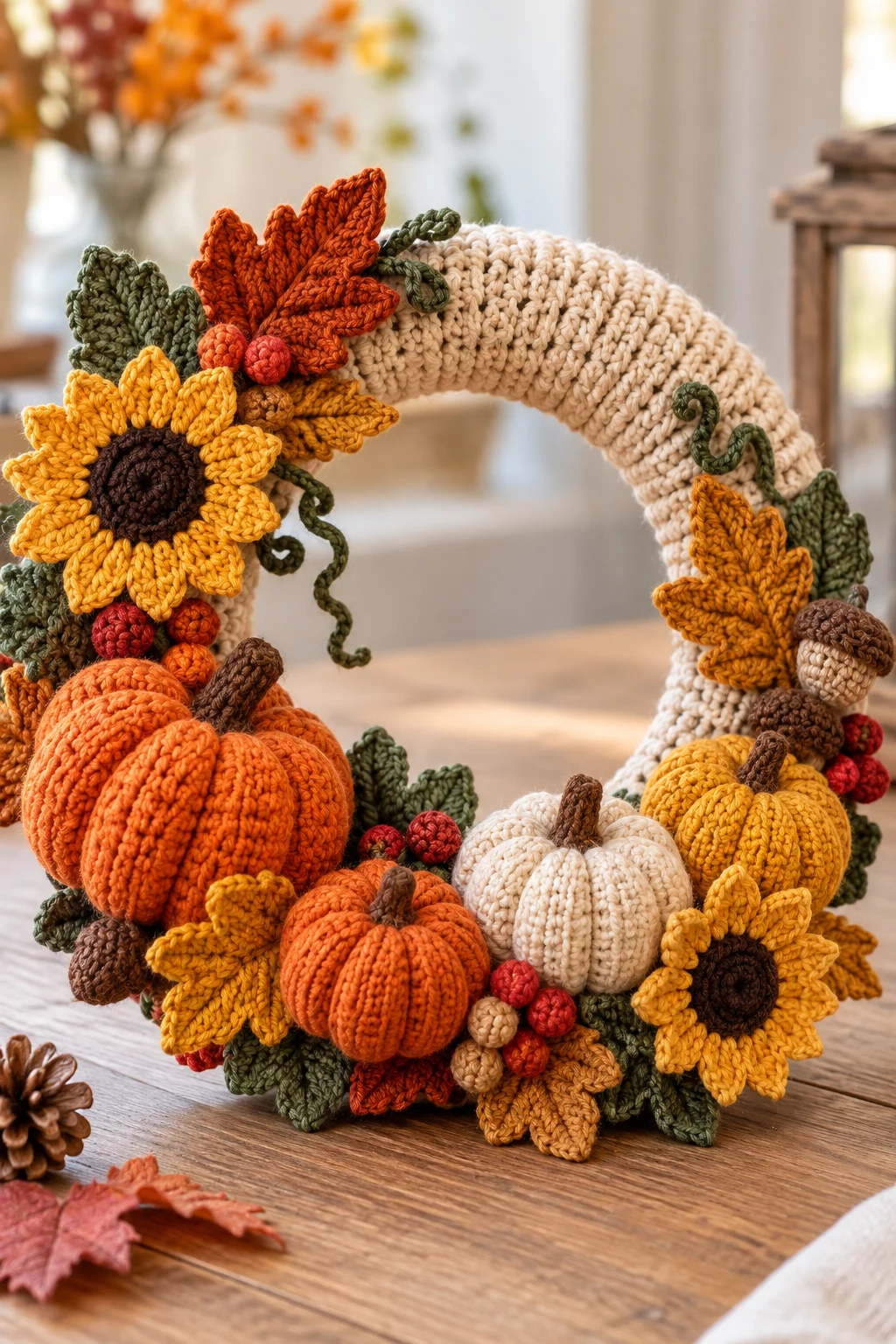
16. Crochet Seasonal Decorations
Seasonal products can give your crochet business fresh collections throughout the year. Make crochet pumpkins and leaves for autumn, snowflakes and stars for winter, hearts for Valentine’s Day, and pastel eggs or flowers for spring.
Plan your launches several weeks or months before the relevant holiday so customers have time to discover your products and receive their orders. Start with small items such as ornaments, garlands, table decorations, and gift toppers.
Reuse core patterns in different colorways to simplify production. For example, a crochet star can become a winter ornament in cream yarn, a summer decoration in bright yellow, or a nursery accent in muted sage.
Keep track of which items sell best each season so you can adjust production next year.
The key to this look/technique is timely launches, reusable patterns, seasonal color palettes, and manageable production quantities.
17. Crochet Kits for Beginners
Not every customer wants to buy a finished crochet item. Some want to learn the craft themselves, which creates an opportunity to sell beginner-friendly crochet kits.
Include the yarn, an appropriately sized hook, stitch markers, a tapestry needle, and printed or digital instructions. Choose simple such as coasters, a small flower, a headband, or a basic granny square.
Clearly state the skill level, finished dimensions, and what the kit includes. A QR code linking to your own demonstration video can make the learning experience approachable.
You can also develop themed kits for birthdays, holiday gifts, or relaxing weekend projects. Make sure the contents genuinely support the advertised project.
The key to this look/technique is beginner-friendly instructions, suitable quantities of yarn, useful tools, and a project customers can realistically finish.
18. Build a Crochet Business Website and Online Shop
A dedicated online shop gives your crochet business a central place to display products, explain your process, and accept orders. You can start with a marketplace or social storefront and develop a standalone website as your catalog grows.
Organize products into clear categories such as bags, home decor, gifts, patterns, and seasonal collections. Write descriptive product titles, include multiple high-quality photos, and explain materials, dimensions, processing times, shipping, and returns.
A simple crochet business plan can help you estimate startup expenses, calculate hourly labor, set monthly sales goals, and identify your target customer. Track material costs, packaging, marketplace fees, payment processing, shipping, and taxes where applicable.
Use consistent product photography and a clear checkout process to make buying easy. Crochet business cards with your shop URL or QR code can also help turn craft-fair visitors into returning online customers.
The key to this look/technique is a user-friendly shop, accurate product information, clear pricing, and a consistent process for fulfilling orders.
FAQ: Starting a Crochet Business
What is the best crochet business for beginners?
Small, repeatable products such as flower keychains, crochet coasters, hair accessories, and simple bags are good starting points because they let beginners practice consistent construction without committing to large projects.
How do you start a crochet business from home?
Choose a focused product category, calculate your costs and labor, create a small collection, photograph your products, and start selling through an online marketplace, social media, or a simple website. Track orders and customer feedback before investing heavily in supplies.
Why do crochet businesses struggle to make a profit?
Underpricing labor, buying too much inventory, offering too many custom options, and overlooking selling fees can reduce profits. Calculate the full cost of each product and set prices that compensate you for both materials and working time.
The Bottom Line
A successful crochet business starts with products you enjoy making and customers who value your creativity. You don’t need a giant inventory or dozens of patterns on day one. Choose two or three related products, test them with real buyers, and refine your designs based on feedback. Build a recognizable brand, calculate your prices carefully, and use clear photos to show the quality of your work. Whether you sell crochet flowers, plushies, stylish bags, or digital patterns, consistency matters than trying to make everything. Start small, keep learning, and give your handmade creations the professional presentation they deserve.
📚 You Might Also Like
- Crochet business: 10 Amazing DIY Ideas for 2026
ChatGPT said: Crochet Business: 15 Ideas to Start Selling Handmade Crochet Crochet Business: 15 Crea…
- Crochet flower keychain with yarn: 17 Gorgeous DIY
A crochet flower keychain with yarn is a small handmade accessory featuring a crocheted flower attac…
- 13 Crochet Toiletry Bag Ideas for Stylish Travel &
Crochet toiletry bag designs are handmade pouches that use crochet stitches to create a practical co…
- Trendy crochet bag: 15 Top DIY Ideas for 2026
15 Trendy Crochet Bag Ideas You’ll Want to Make Right Now A trendy crochet bag is a handmade purse,…
- Crochet coaster ideas: 16 Beautiful DIY Ideas for 2026
16 Crochet Coaster Ideas That Make Every Coffee Table Cutier Crochet coaster ideas are creative ways…