
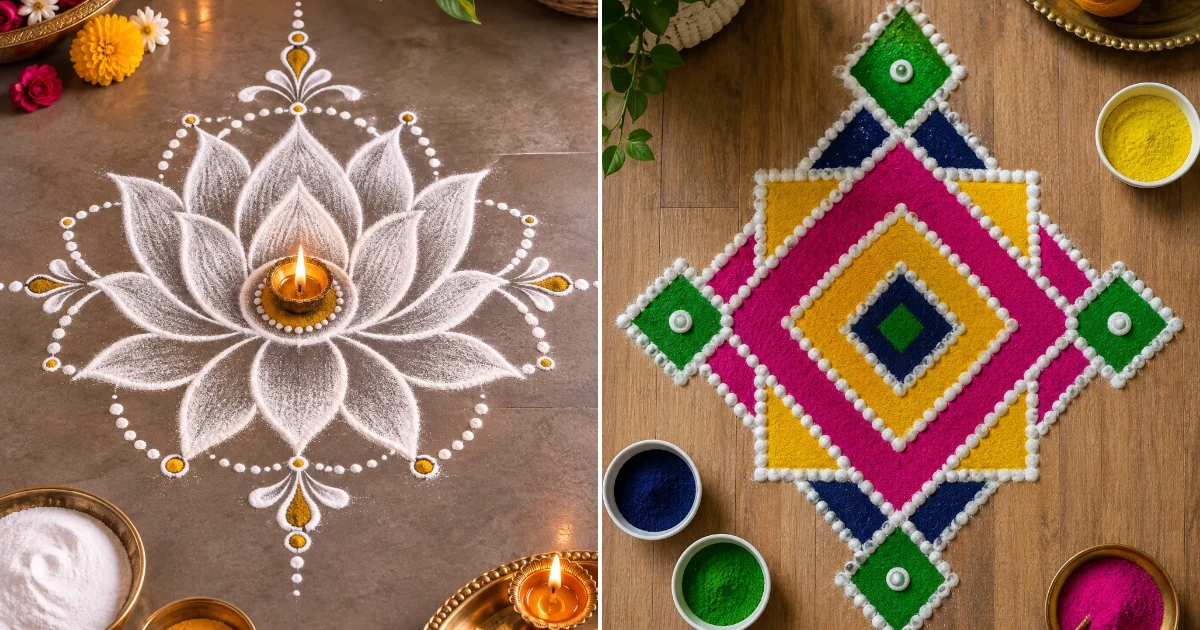
15 Modern Rangoli Designs to Try at Home
Modern rangoli designs are contemporary floor-art patterns that combine traditional Indian rangoli techniques with clean geometry, fresh color palettes, minimalist motifs, and creative materials. They can turn an entryway, living-room corner, balcony, or festival space into an eye-catching feature without requiring professional-level artistic skills. According to Martha Stewart Crafts,From sleek monochrome mandalas to colorful floral explosions, there is plenty of room to experiment. The best part? You can adjust the size, colors, and level of detail to suit your home. These ideas also work beautifully for Diwali, Sankranthi, weddings, housewarming celebrations, and rangoli competitions. Grab your chalk, powders, petals, or stencils, and prepare to make your floor look suspiciously more impressive than your last DIY project.
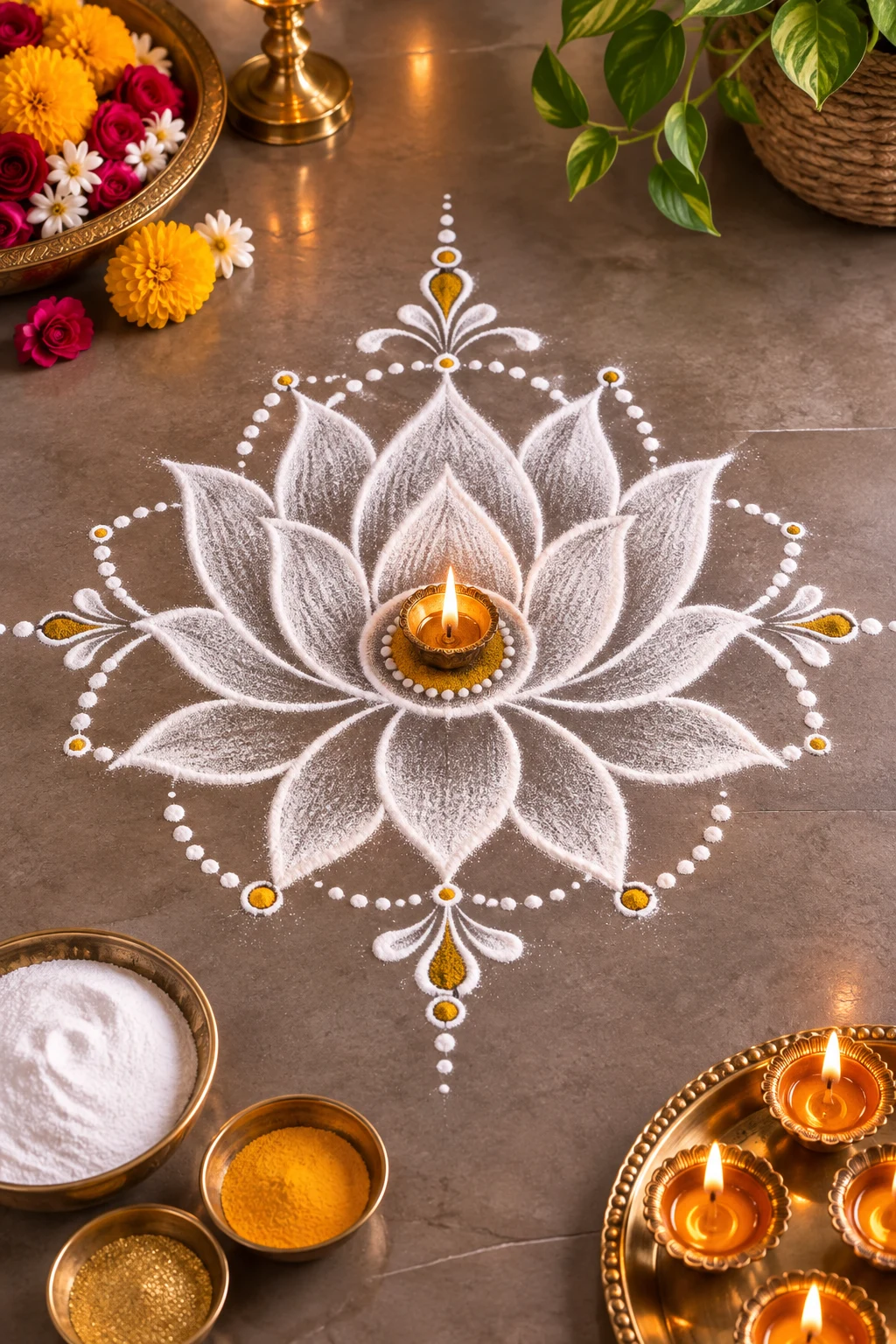
1. Minimalist White Lotus — modern
For a polished entryway, start with a large white lotus drawn against a terracotta, charcoal, or natural stone floor. Use white rangoli powder for the petals and a thin chalk pencil to sketch the symmetry before filling everything in.
Add tiny gold dots around the flower for a refined festive finish. Keep the surrounding space mostly empty so the lotus becomes the star rather than getting lost in a sea of decoration.
The key to this look is controlled spacing: fewer elements and crisp outlines make the design feel contemporary.
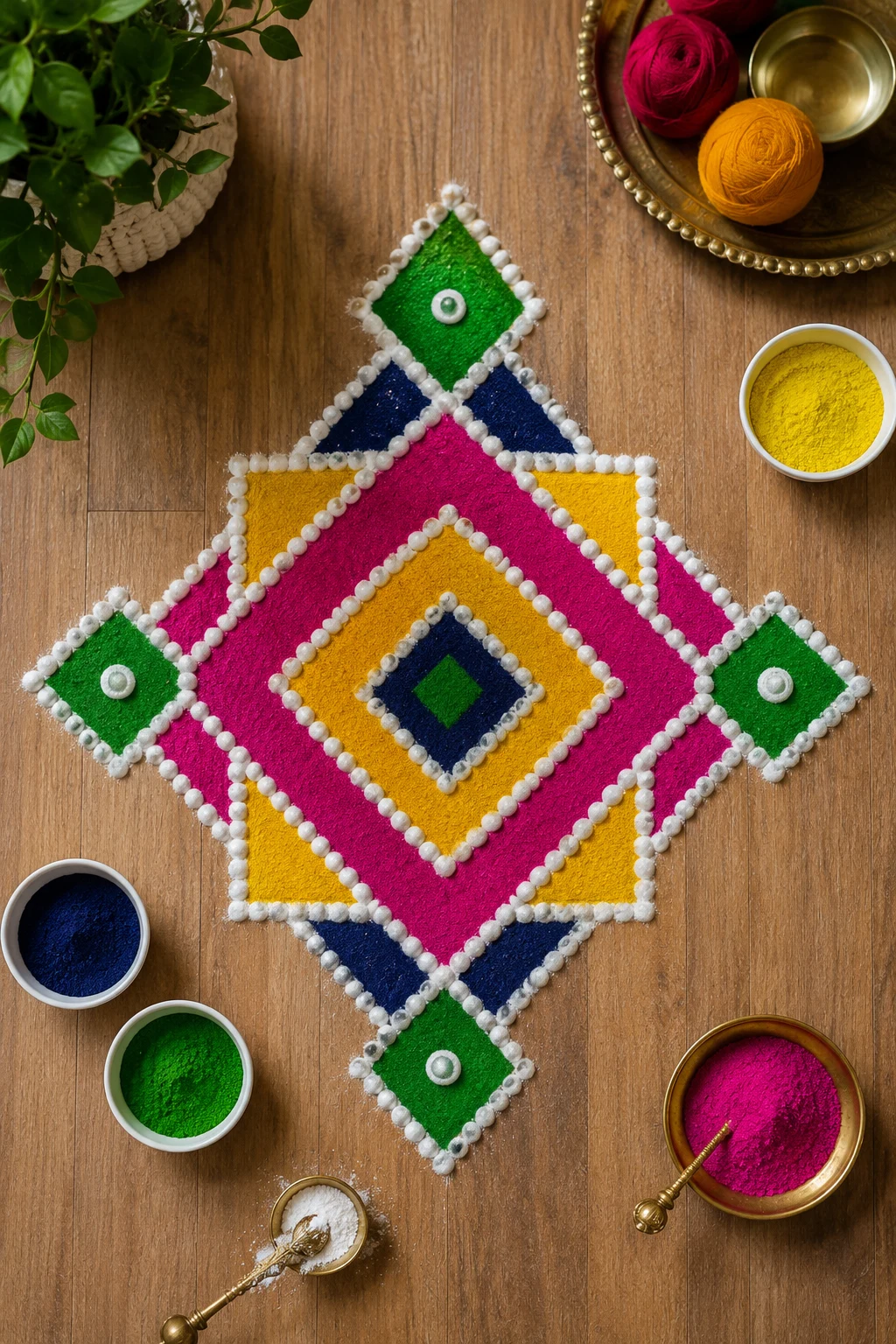
2. Modern Rangoli Designs With Geometric Diamonds
Diamonds, triangles, and interlocking lines instantly give rangoli a modern architectural feel. Create a central diamond and repeat smaller diamonds outward to form a balanced border.
Use colored rangoli powder in navy, mustard, ivory, and rust for a sophisticated palette that works particularly well in modern homes. A metal rangoli stencil can help maintain consistent shapes if freehand geometry makes your brain file a formal complaint.
The key to this look is repetition—repeat the same geometric unit at predictable intervals for a professional finish.
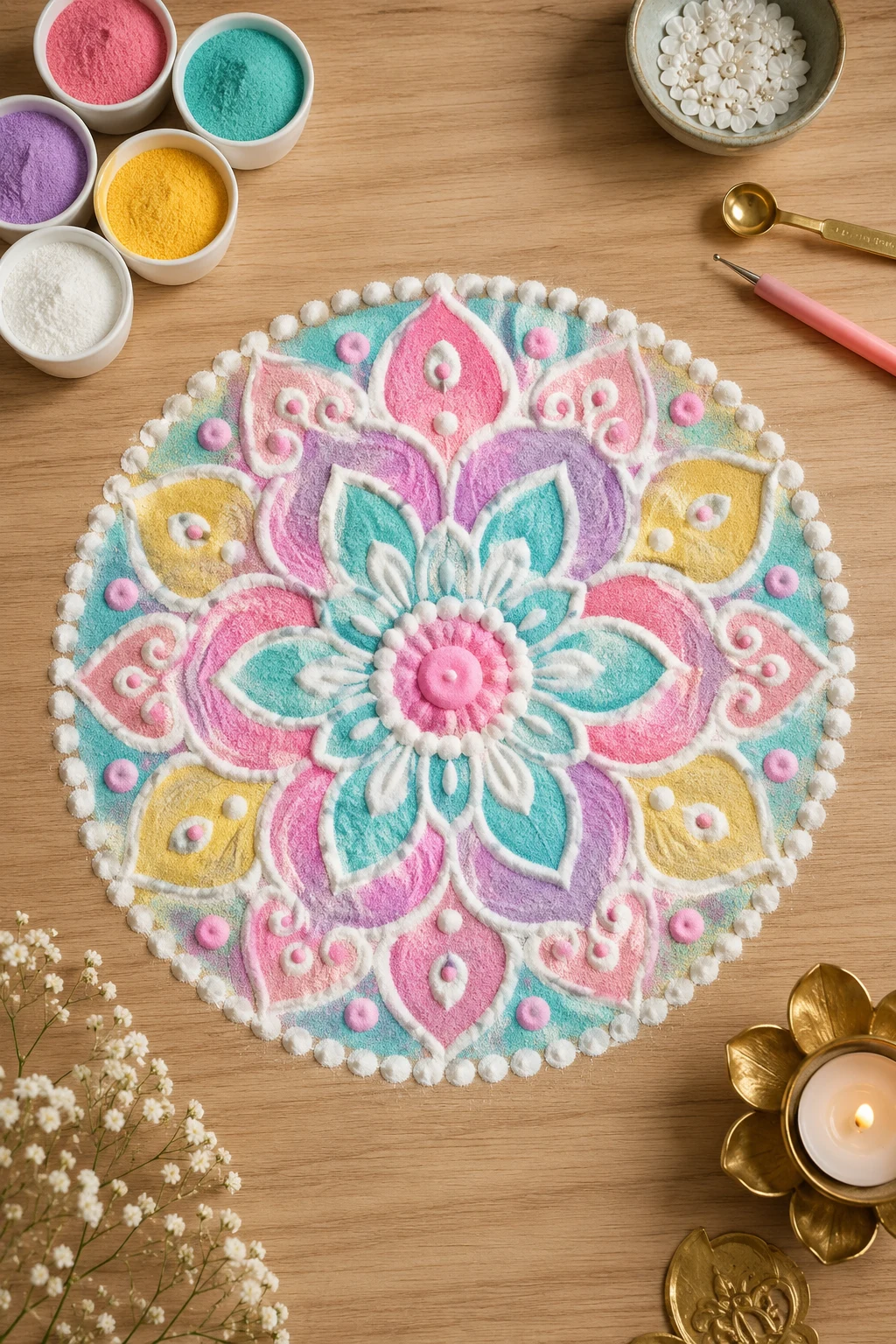
3. Pastel Mandala Magic — modern
For a softer take on new rangoli designs for home, create a circular mandala using blush pink, lavender, mint green, cream, and peach. Begin with a small central flower, then build outward with petals, dots, scallops, and curved rings.
Use fine-tip rangoli cones to create delicate outlines and pastel rangoli colors for smooth transitions between sections. This design works beautifully for baby showers, intimate celebrations, and daytime gatherings.
The key to this look is layering light colors from the center outward so every ring remains visually distinct.
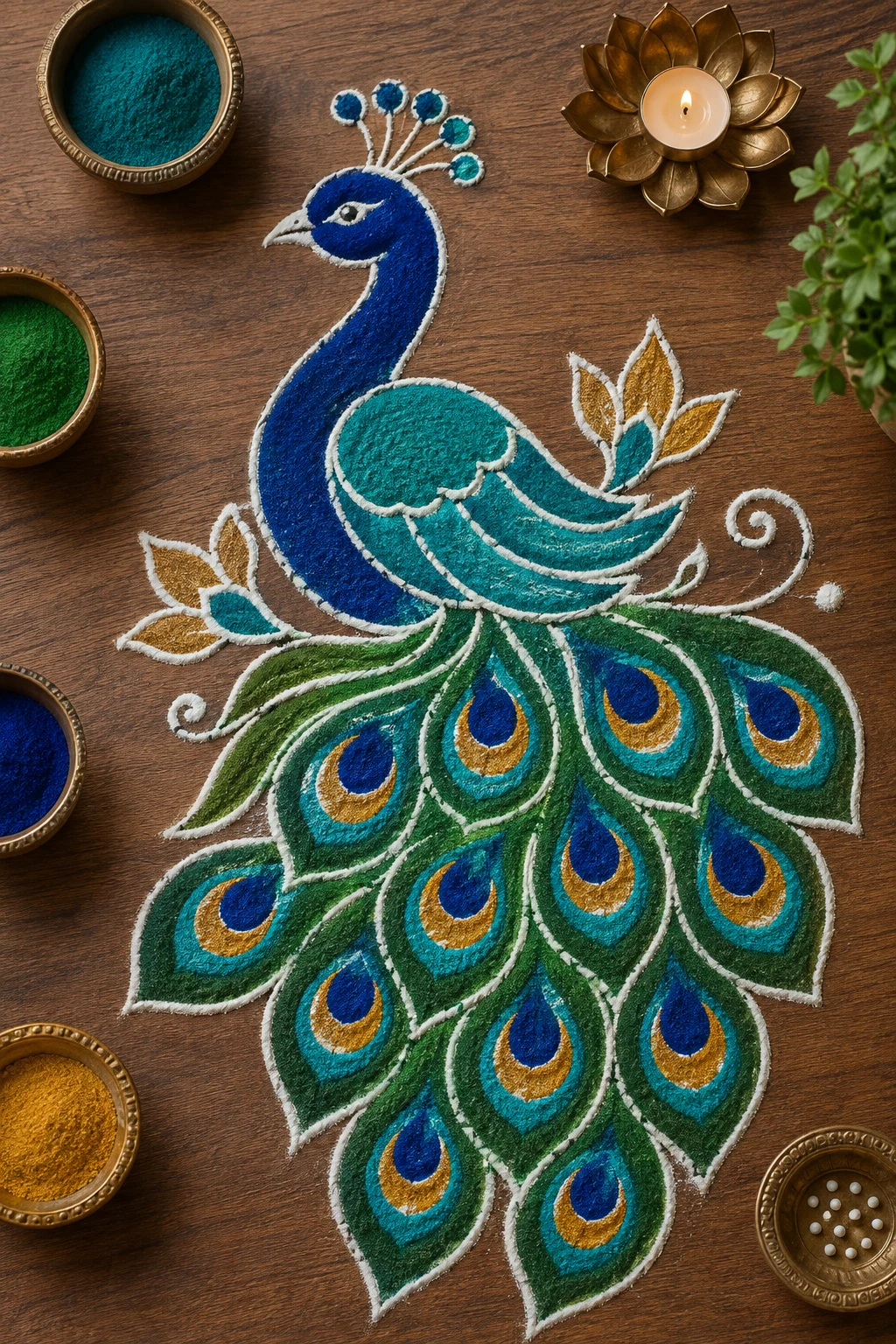
4. Peacock in Jewel Tones
The peacock remains a fantastic rangoli subject, but a contemporary palette can make it feel completely fresh. Draw a simplified peacock using sweeping feather shapes rather than intricate traditional detailing.
Choose emerald green, royal blue, turquoise, violet, and a few touches of gold. Metallic rangoli powder around the feather tips adds sparkle without overwhelming the composition.
The key to this look is simplification: emphasize the recognizable peacock silhouette instead of filling every inch with detail.
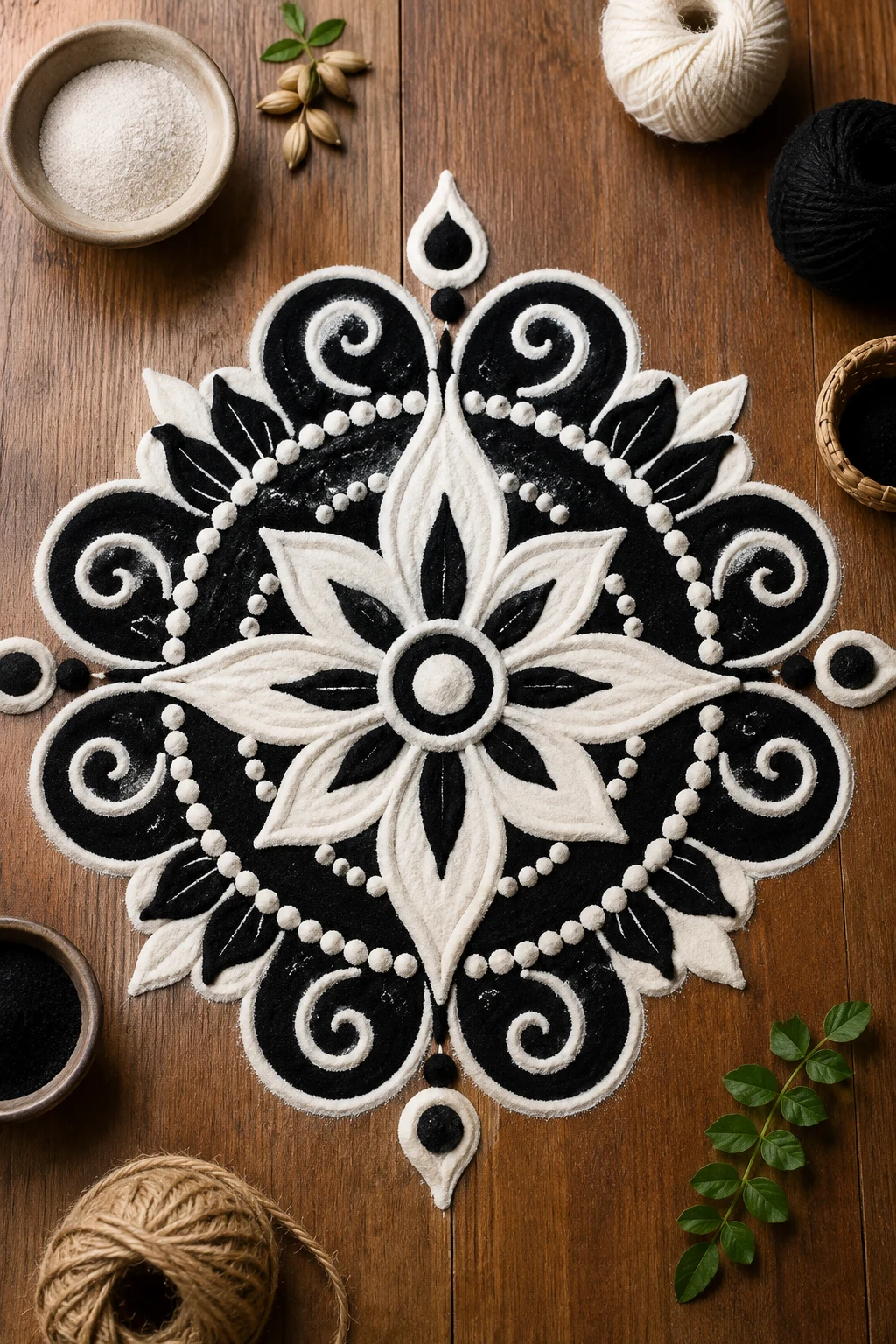
5. Black-and-White Statement Rangoli
Black-and-white rangoli can look surprisingly dramatic. Start with a symmetrical circular pattern featuring bold petals, curved lines, and small dots, then fill alternating sections with black rangoli powder and white rangoli powder.
Place a few brass diyas around the outside to introduce warmth and contrast. This design is excellent for minimalist interiors where too many colors might compete with existing décor.
The key to this look is high contrast; keep the pattern bold enough to remain readable from several feet away.
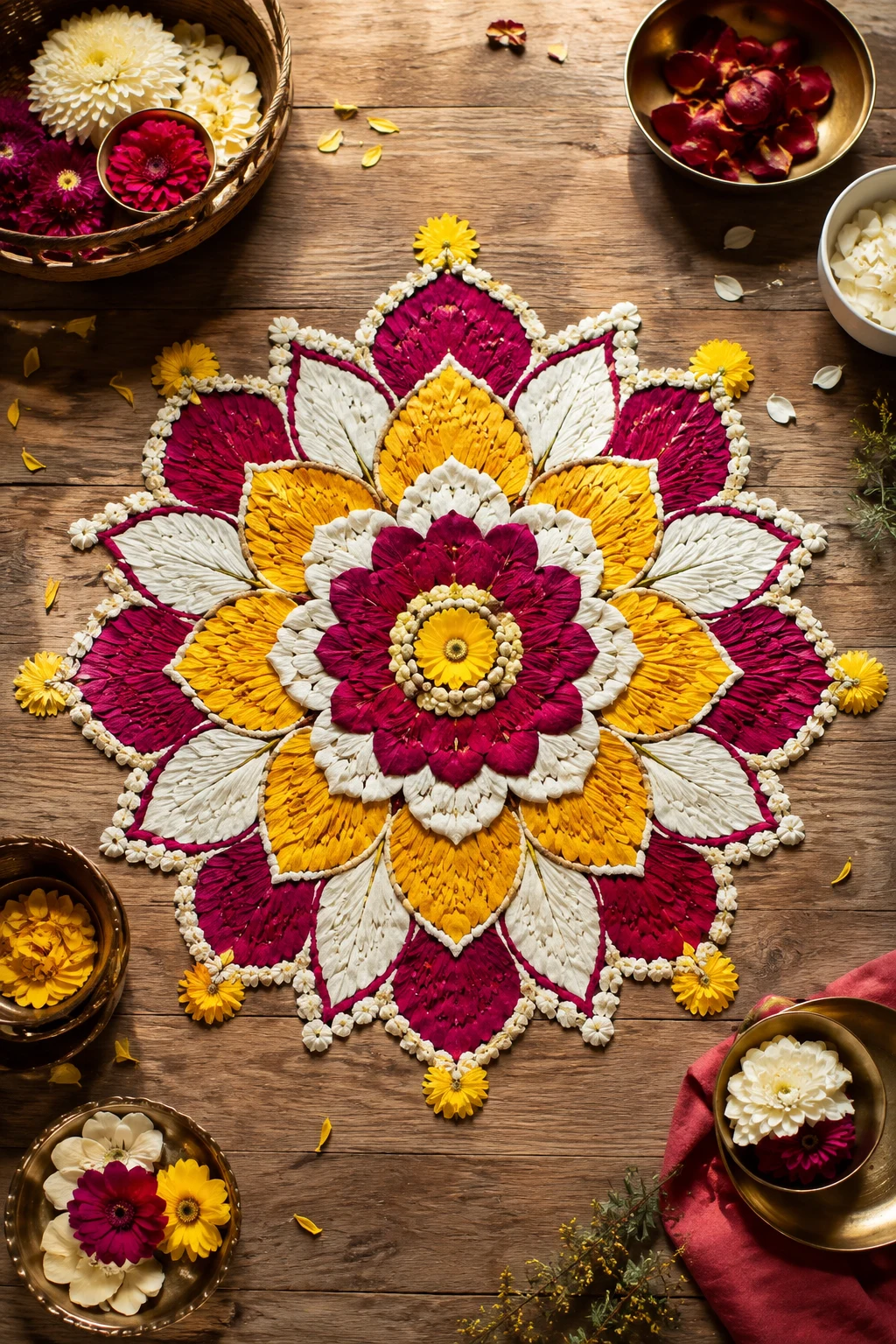
6. Floral Petal Rangoli
Skip the powder and create a luxurious design using fresh flower petals. Marigold, rose, chrysanthemum, and jasmine petals can be arranged into concentric circles, leaves, stars, or lotus-inspired motifs.
Use fresh marigold petals for orange sections, rose petals for pink or red accents, and jasmine flowers for white details. A few small diyas placed around the perimeter complete the composition.
This technique is one of the easiest modern rangoli designs for beginners because petals naturally hide tiny imperfections.
The key to this look is color blocking: group similar petals together instead of mixing every flower into one giant floral confetti situation.
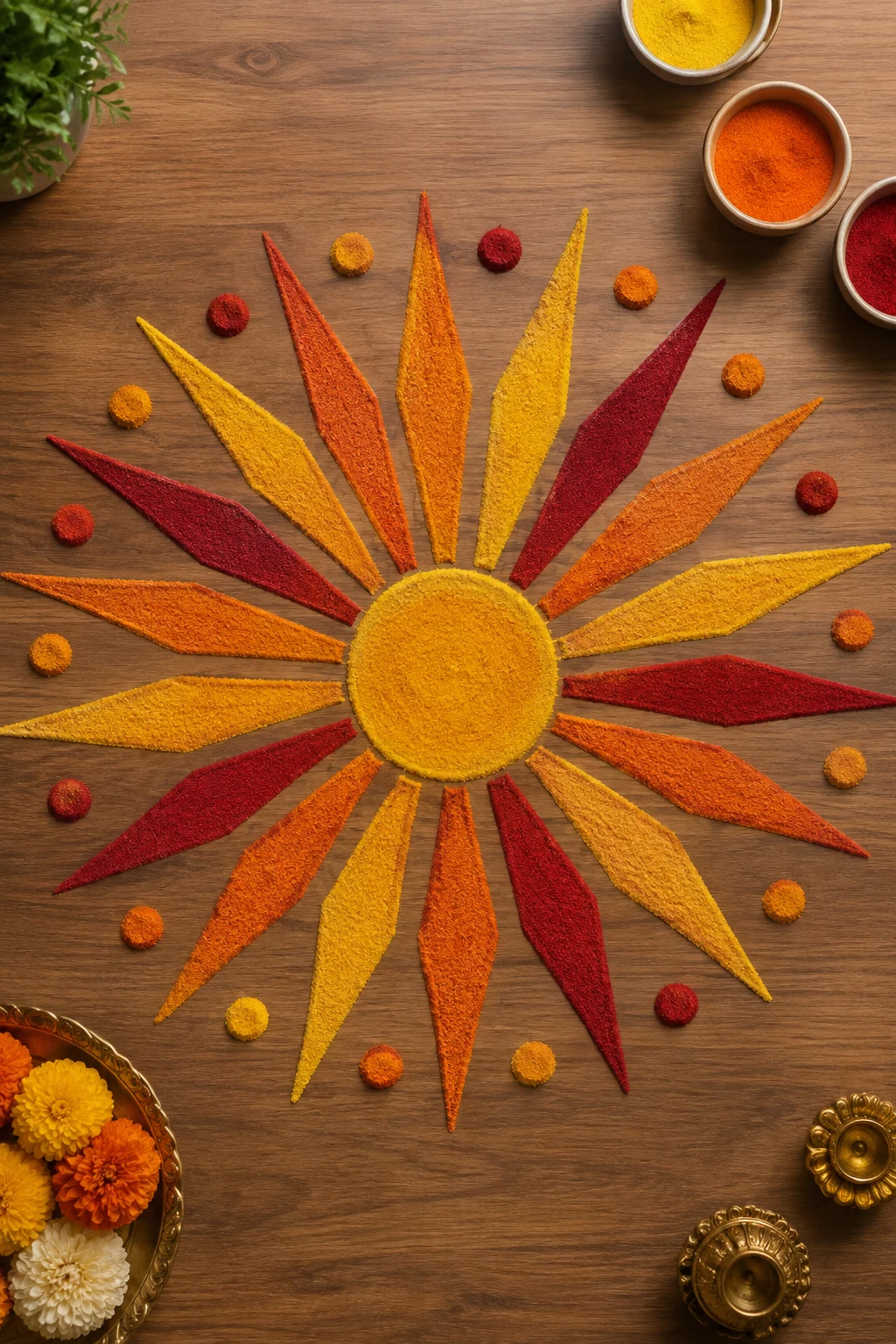
7. Modern Rangoli Designs With a Sunburst
A sunburst design brings instant energy to a doorway or courtyard. Draw a small central circle and surround it with evenly spaced triangular rays, then alternate colors between the sections.
Try saffron, coral, mustard, turquoise, and deep pink for a festive combination. Rangoli powder applicator bottles make narrow rays easier to fill without creating accidental mountains of powder.
This idea is also strong for modern rangoli designs for competition because the silhouette is easy to recognize from a distance.
The key to this look is radial symmetry—mark the main divisions first, then decorate each section.
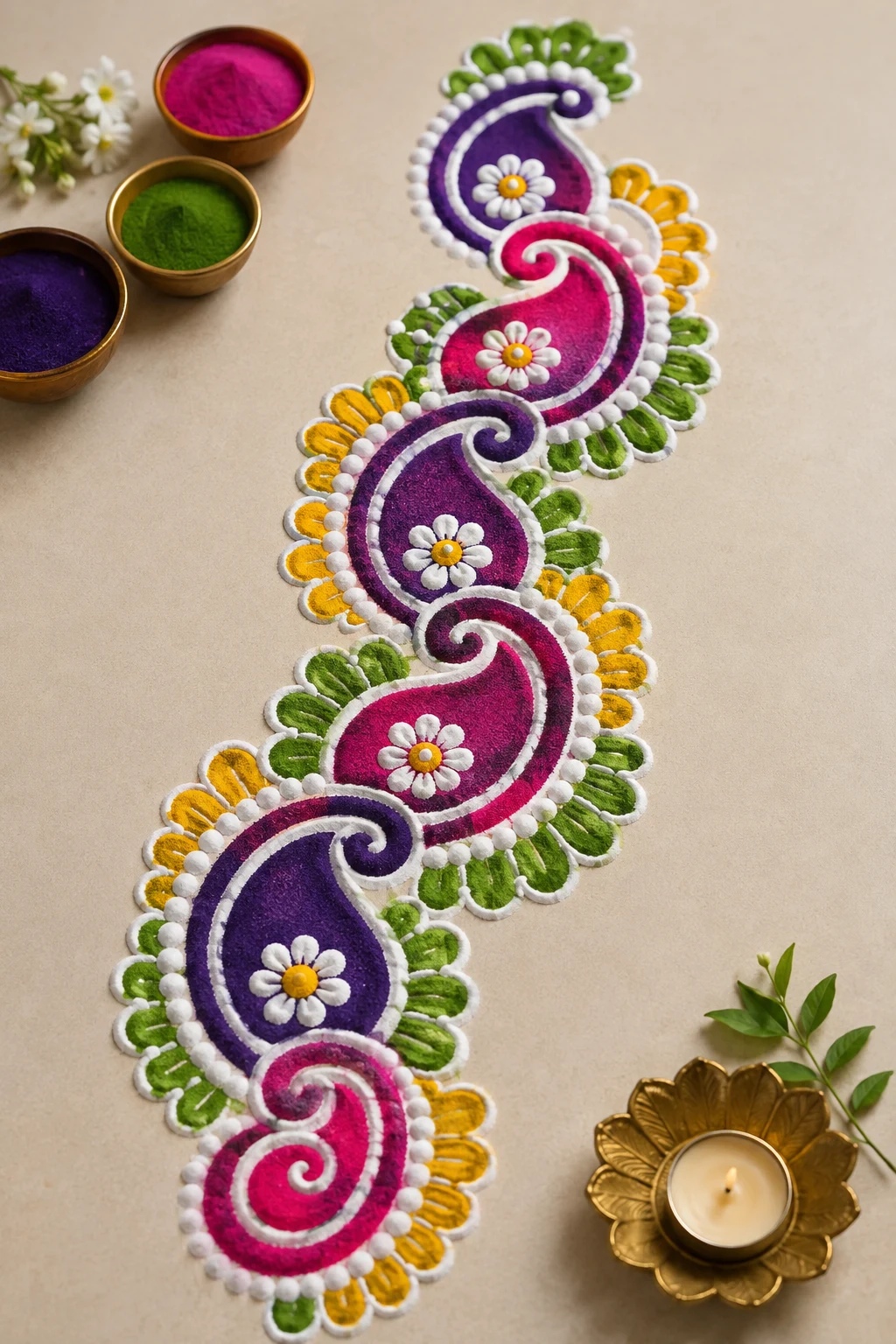
8. Paisley Border
Instead of creating one huge centerpiece, build a sophisticated paisley border along a doorway, staircase, or balcony. Repeat medium-sized paisley shapes and fill each with dots, leaves, tiny flowers, or curved lines.
Use rangoli design stencils if you want identical paisleys throughout the border. Pair terracotta with cream and olive green for an earthy look, or choose cobalt blue and saffron for a bolder festival palette.
The key to this look is consistent scale; keeping every paisley approximately the same size creates a designer-quality rhythm.
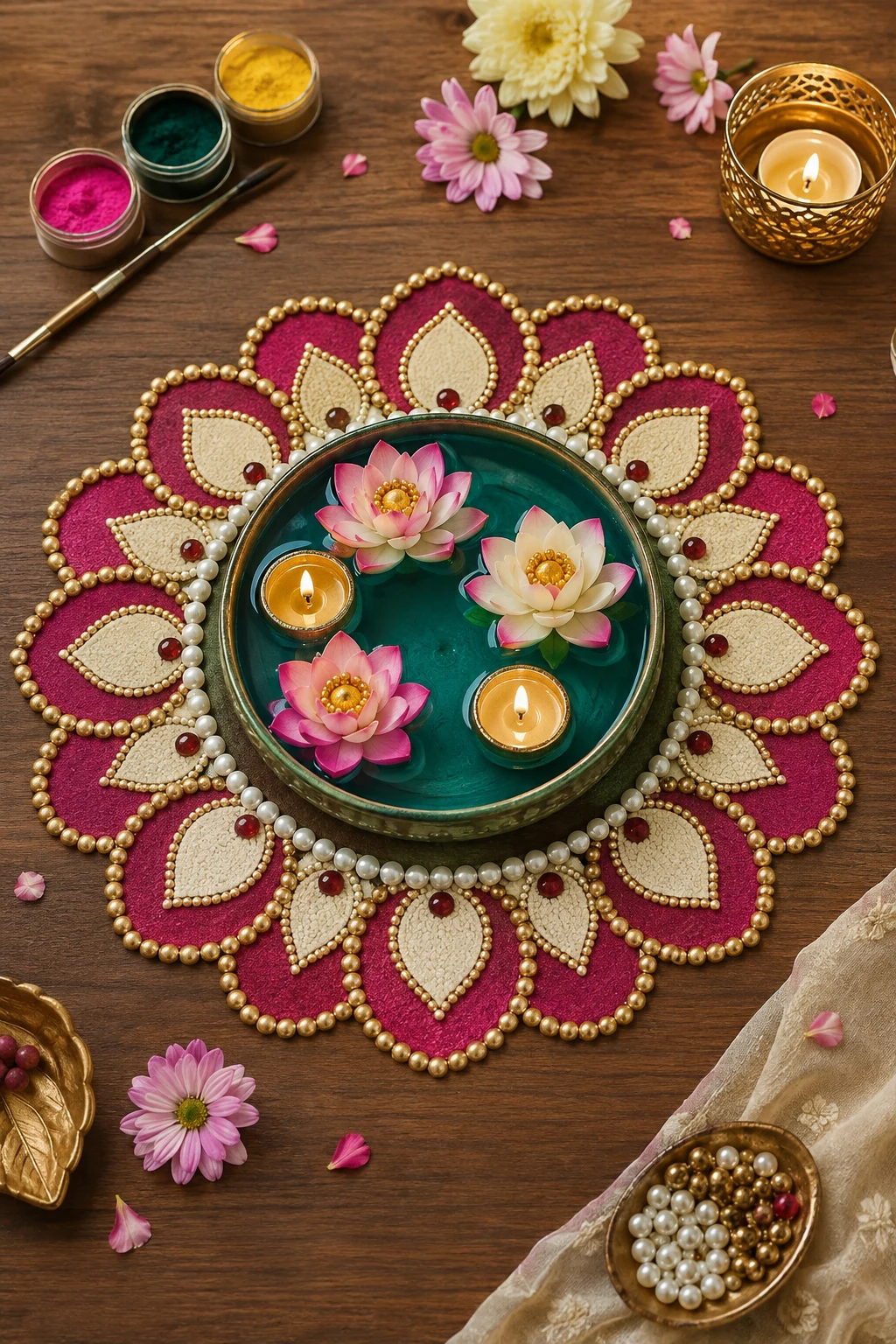
9. Floating Lotus and Diya Centerpiece
Create a circular centerpiece with a lotus at its heart and small diya motifs around the perimeter. Keep the lotus petals in pink and coral, then use yellow and orange for the flame details.
A rangoli stencil set can help with the circular framework, while LED tealights offer a safer alternative when the design is placed near curtains, children, or busy walkways.
This design is particularly suitable for Diwali gatherings and makes an attractive focal point beneath a console table or near an entrance.
The key to this look is one clear focal point: make the central lotus larger and more detailed than every surrounding element.
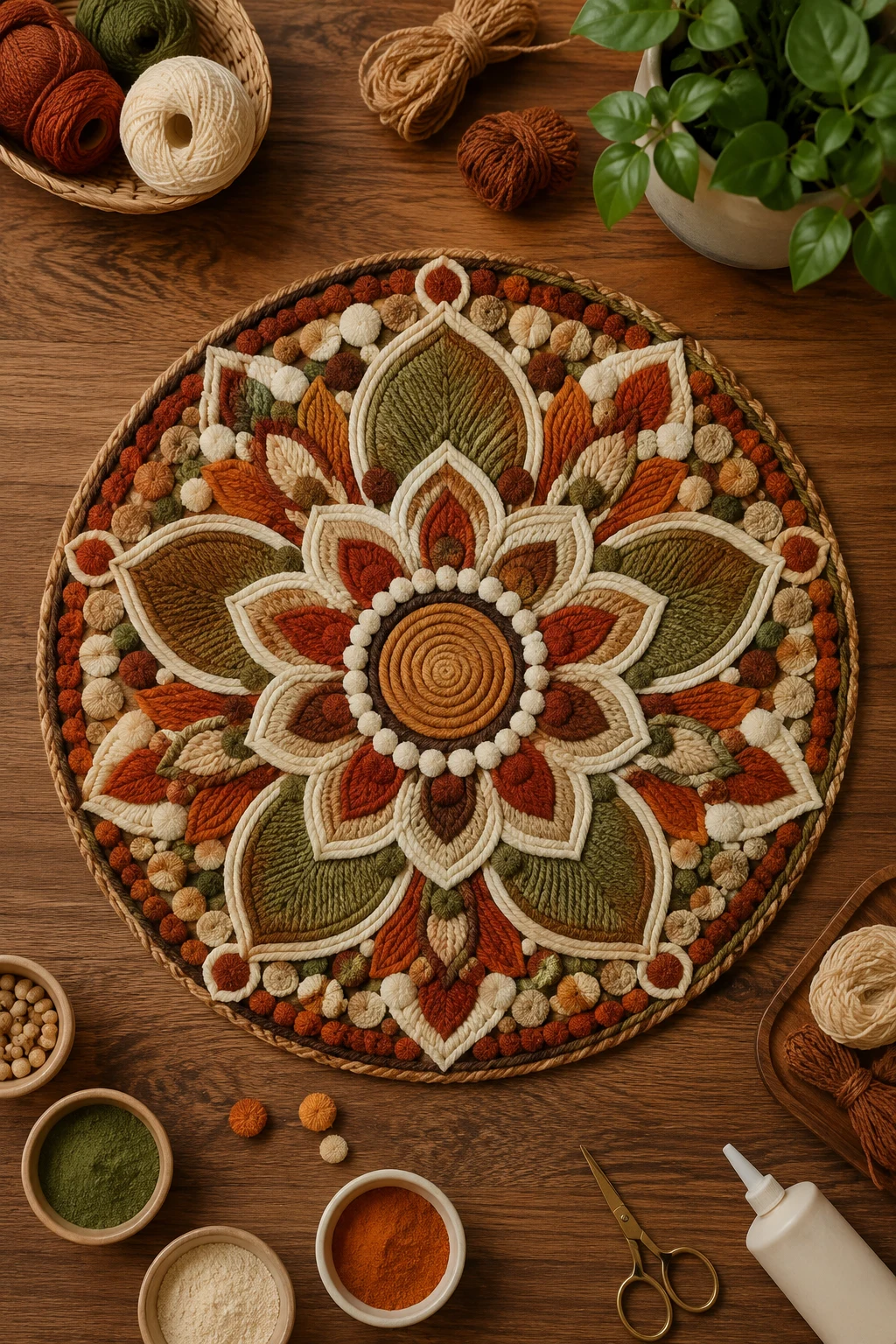
10. Modern Rangoli Designs in Earthy Tones
Modern interiors often benefit from quieter palettes, so try a rangoli using terracotta, beige, olive, muted yellow, and chocolate brown. Build a simple floral or geometric pattern with generous negative space.
Use natural rangoli powders where available and outline sections with a fine white border. The result feels festive without fighting with wood furniture, woven baskets, clay décor, or neutral walls.
A useful expert tip is to test your palette on a small piece of paper before committing to the floor. Colors can look dramatically different under indoor lighting.
The key to this look is color restraint—four or five coordinated shades are plenty.
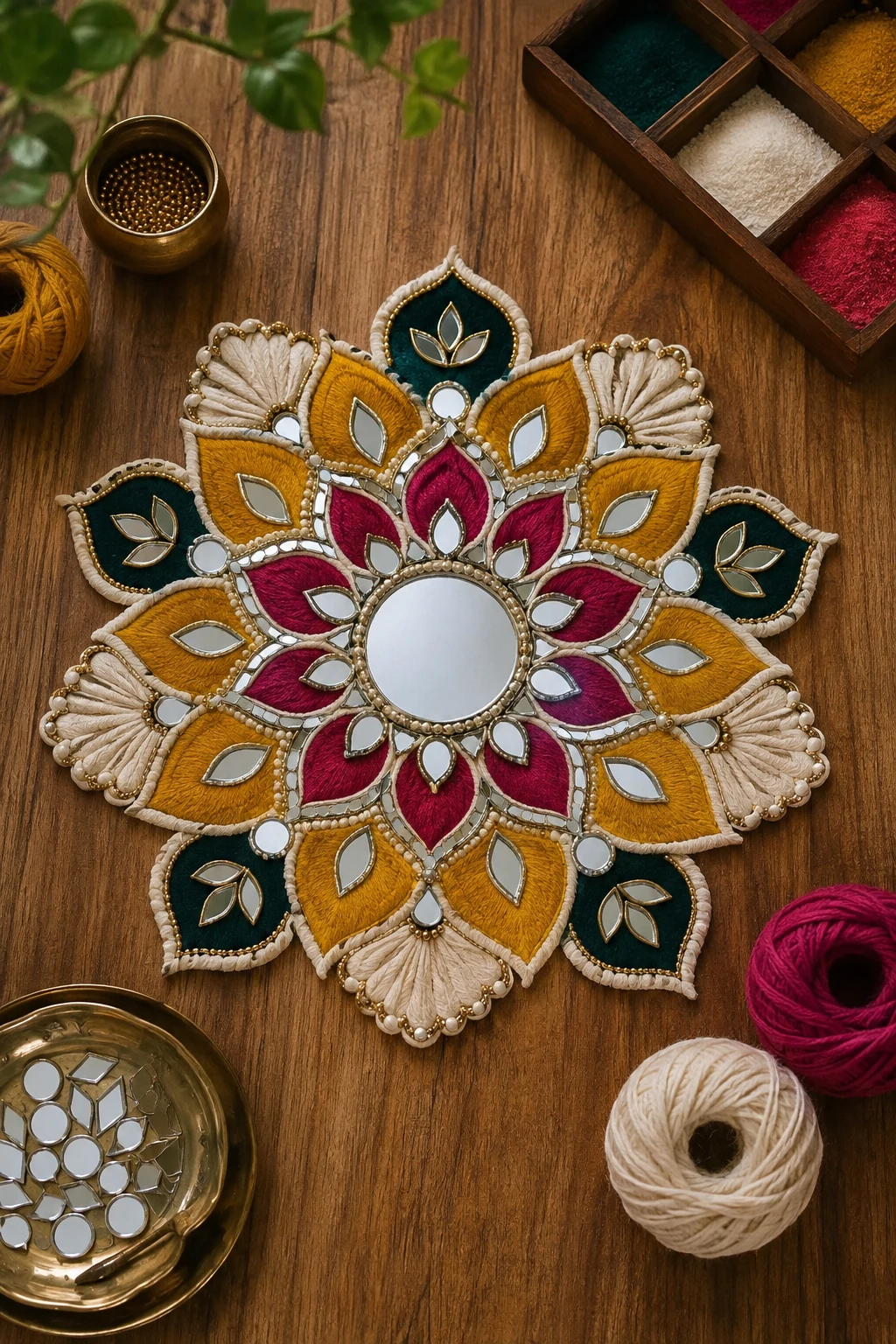
11. New Rangoli Designs With Mirror Details
For extra sparkle, incorporate small reflective pieces into a geometric rangoli. Create a central mandala, then place tiny mirrors or reflective embellishments at selected intersections.
Use rangoli mirror embellishments and fine white powder to create a clean framework around each reflective accent. Keep the mirrors evenly spaced so they look intentional rather than randomly sprinkled.
This design works beautifully for evening celebrations because candlelight or warm LEDs bounce off the reflective details.
The key to this look is strategic sparkle: use mirrors as accents, not as the entire decoration.
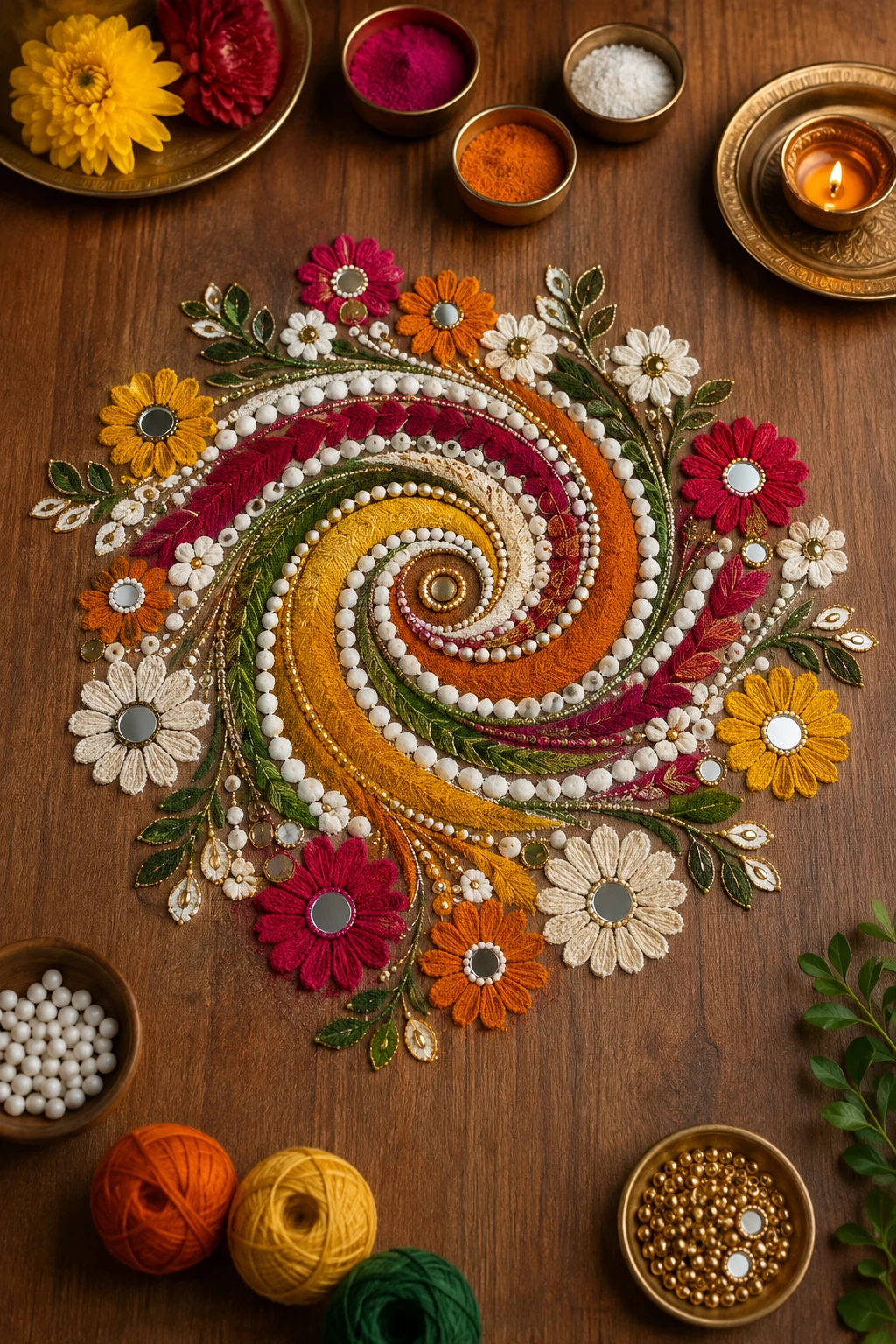
12. Floral Spiral Rangoli
A spiral creates movement without requiring complicated motifs. Begin at the center and draw a continuous curved line outward, adding petals, leaves, and dots along the path.
Try coral, magenta, orange, purple, and white for a lively festival palette. Precision rangoli cones are especially useful for creating smooth, narrow spiral lines.
For new rangoli designs 2026, this kind of flowing pattern fits the broader preference for expressive designs that feel handcrafted rather than overly rigid.
The key to this look is one continuous visual flow; avoid adding unrelated motifs that interrupt the spiral.
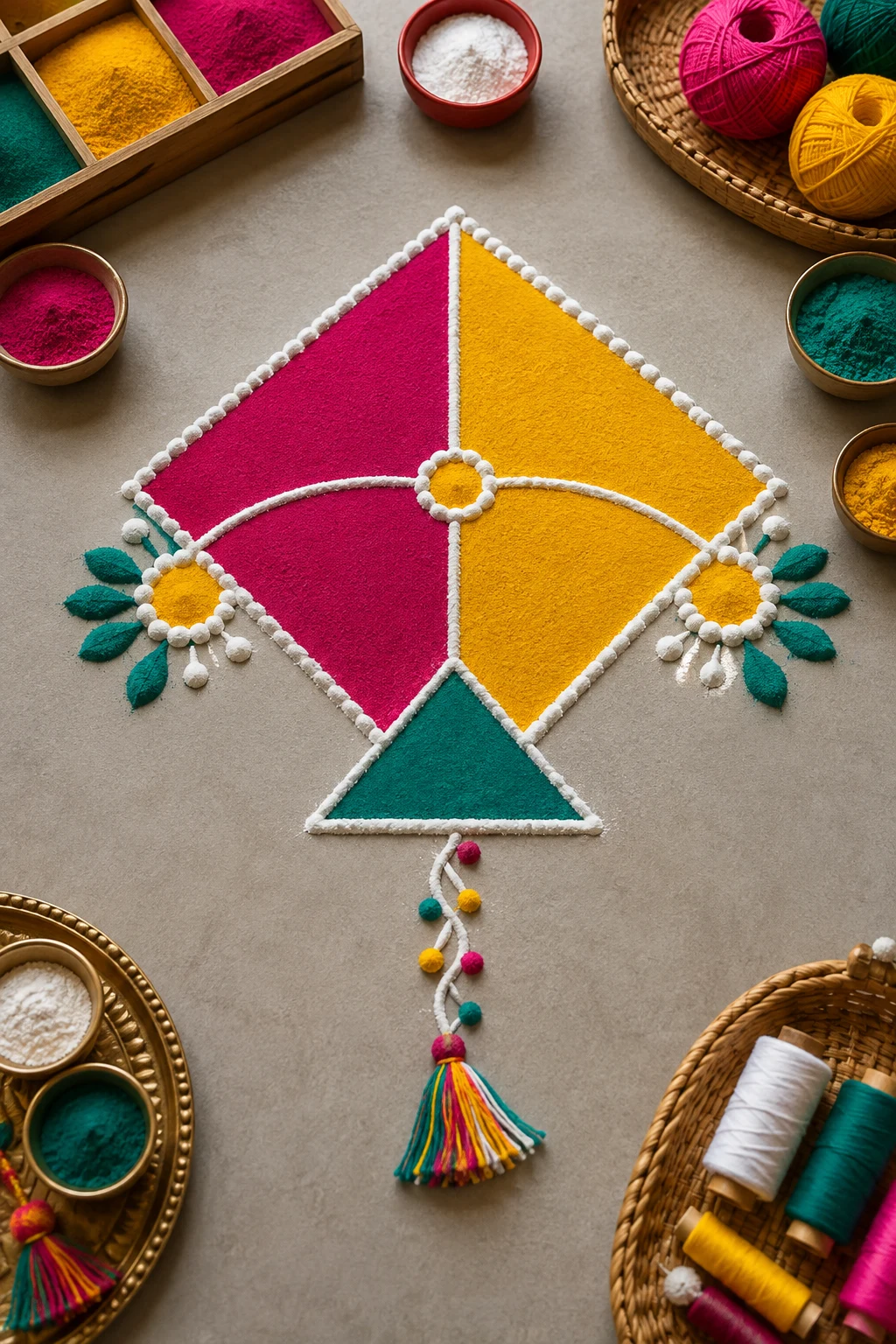
13. Sankranthi-Inspired Kite Rangoli
Give a traditional seasonal celebration a playful update with a kite-inspired rangoli. Arrange diamond-shaped kites around a central sun, adding curved strings and tiny floral accents.
Choose bright yellow, fuchsia, turquoise, green, and orange. Colored chalk is useful for lightly marking the kite shapes before you fill them with powder.
This concept works particularly well for new rangoli designs for Sankranthi because the kite motif connects naturally with the festive atmosphere while still feeling fresh.
The key to this look is bold silhouettes: make the kites large enough to read clearly without microscopic decoration.
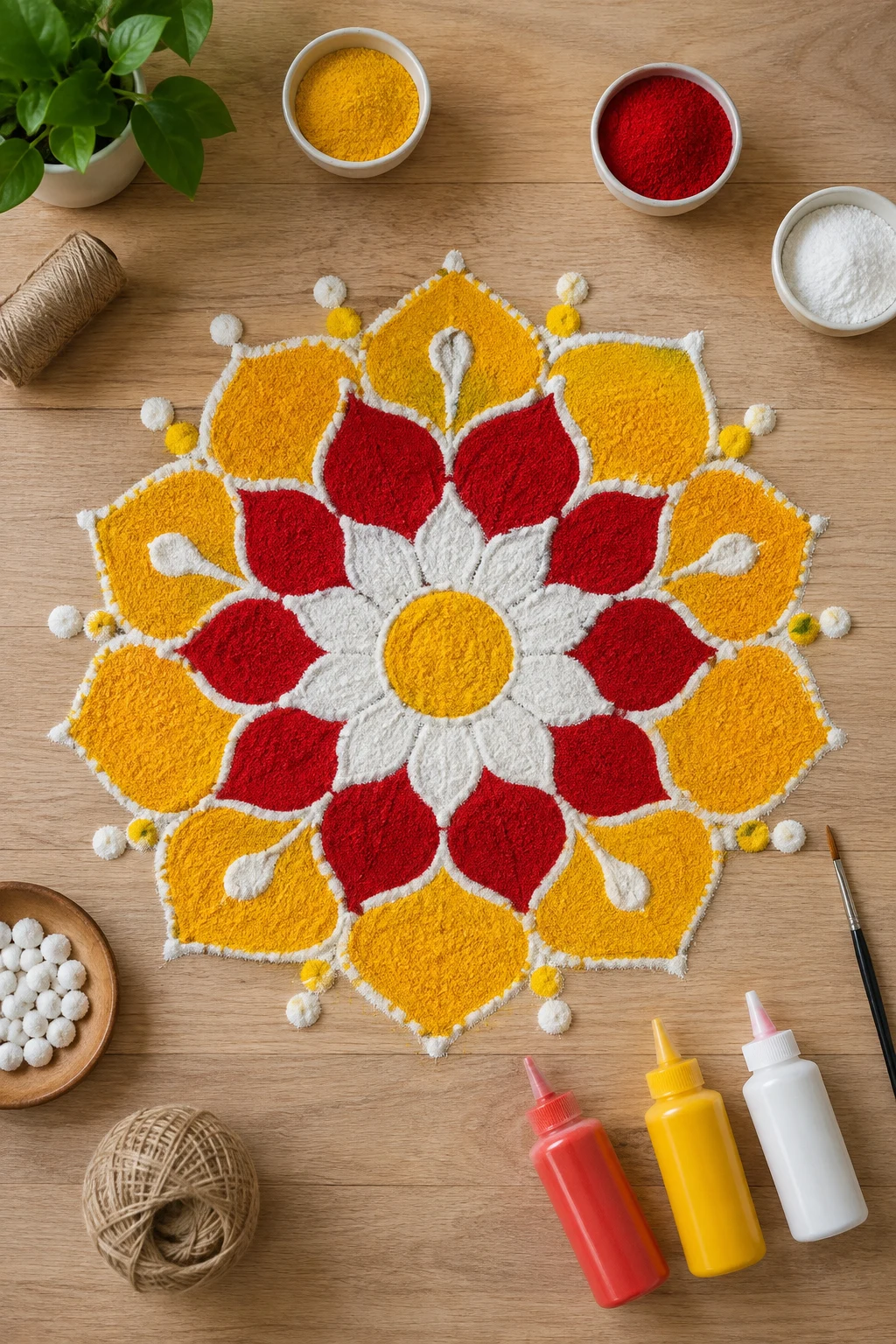
14. Three-Color Competition Rangoli
When designing modern rangoli designs for competition, complexity is not always your friend. Create a large symmetrical mandala using only three dominant colors, such as royal blue, white, and saffron.
Add thin outlines, layered petals, and repeated dots to make the design appear detailed without using dozens of colors. Fine rangoli powder gives you better control over narrow lines and small decorative sections.
This approach also makes the finished design easier to photograph because the limited palette produces a stronger visual identity.
The key to this look is precision over quantity: crisp edges and symmetry can make a simpler pattern outperform an overcrowded one.
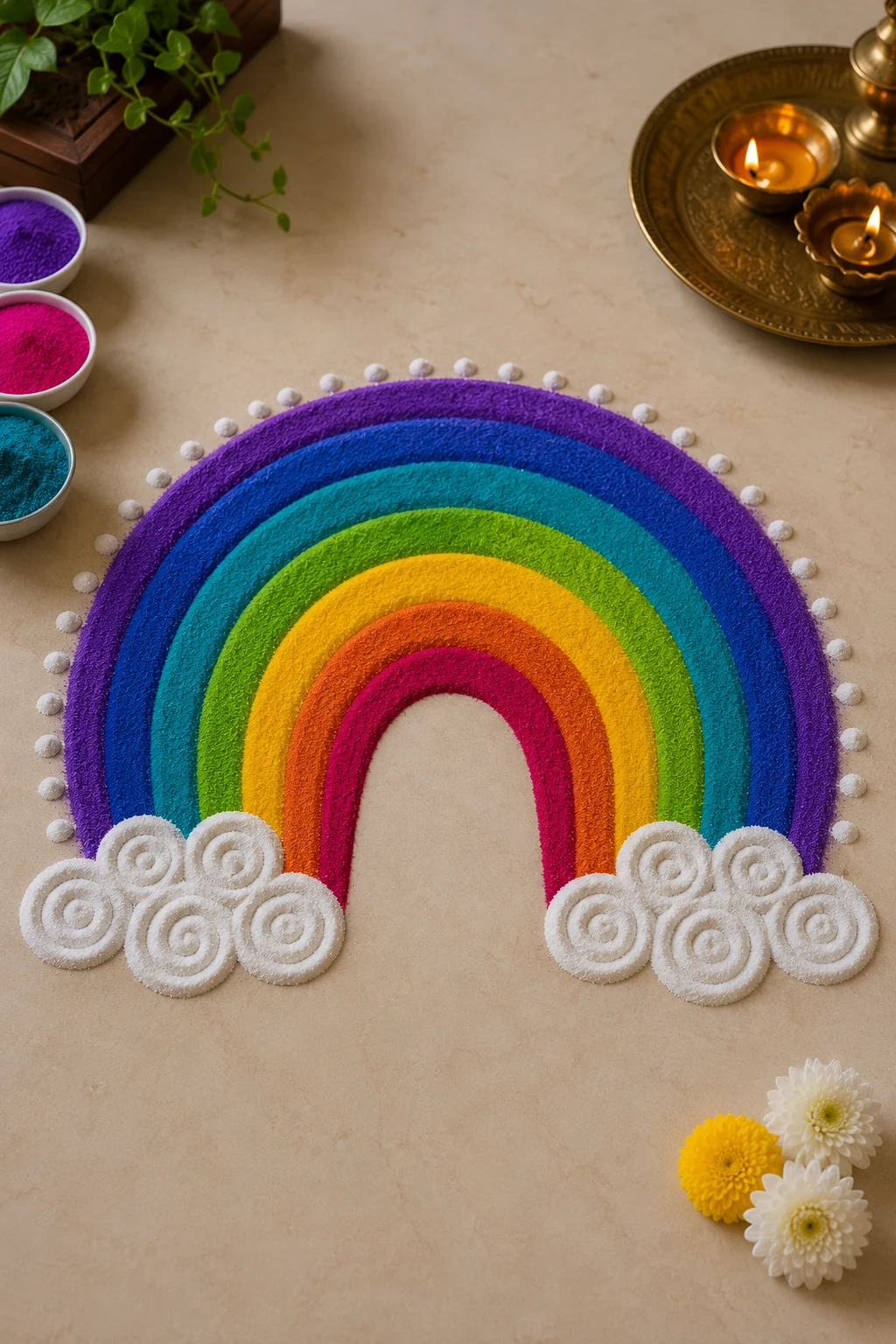
15. Contemporary Rainbow Arch
Finish with something cheerful: create a series of curved arches radiating from a small central circle. Each arch gets a different color, moving through pink, orange, yellow, green, blue, and violet.
Use bright rangoli powder and a round stencil to establish the central structure. Leave thin white spaces between each color band so the rainbow effect remains sharp rather than blending into one giant colorful blur.
This idea is playful enough for family celebrations but polished enough to fit a contemporary home.
The key to this look is clean separation between colors, which keeps the rainbow crisp and makes the pattern pop from a distance.
FAQ
What are the easiest modern rangoli designs for beginners?
Simple geometric patterns, lotus flowers, sunbursts, and petal circles are excellent starting points. They rely on repetition and symmetry rather than highly detailed freehand artwork.
How can I make modern rangoli designs last longer?
Work on a clean, dry surface, use quality rangoli powder, and avoid placing the design directly in a heavy-traffic pathway. For petal versions, choose fresh flowers and arrange them shortly before the celebration.
Why are modern rangoli designs popular for Diwali?
They offer a way to preserve the tradition of rangoli while matching contemporary homes and personal styles. Modern palettes, geometric patterns, mirrors, petals, and minimalist layouts also photograph beautifully for festive décor.
📚 You Might Also Like
- Free hand rangoli designs with colours: 15 Easy DIY
15 Free Hand Rangoli Designs With Colours for Beautiful DIY Decor Free hand rangoli designs with col…
The Bottom Line
The best modern rangoli designs do not need to cover an entire courtyard or require an art degree. A carefully planned lotus, geometric border, floral spiral, or three-color mandala can make a powerful statement with surprisingly little material. Choose your occasion first, narrow down your palette, sketch the structure, and then add decorative details. For Diwali, jewel tones and diyas are hard to beat; for a modern home, earthy neutrals or black and white can look stunning. And if one line goes wonky? Call it “organic design” and keep moving. That is practically an interior-design term now.
🛍️ Shop the Look — modern rangoli designs
Our handpicked Amazon picks curated specifically for modern rangoli designs:
As an Amazon Associate I earn from qualifying purchases.