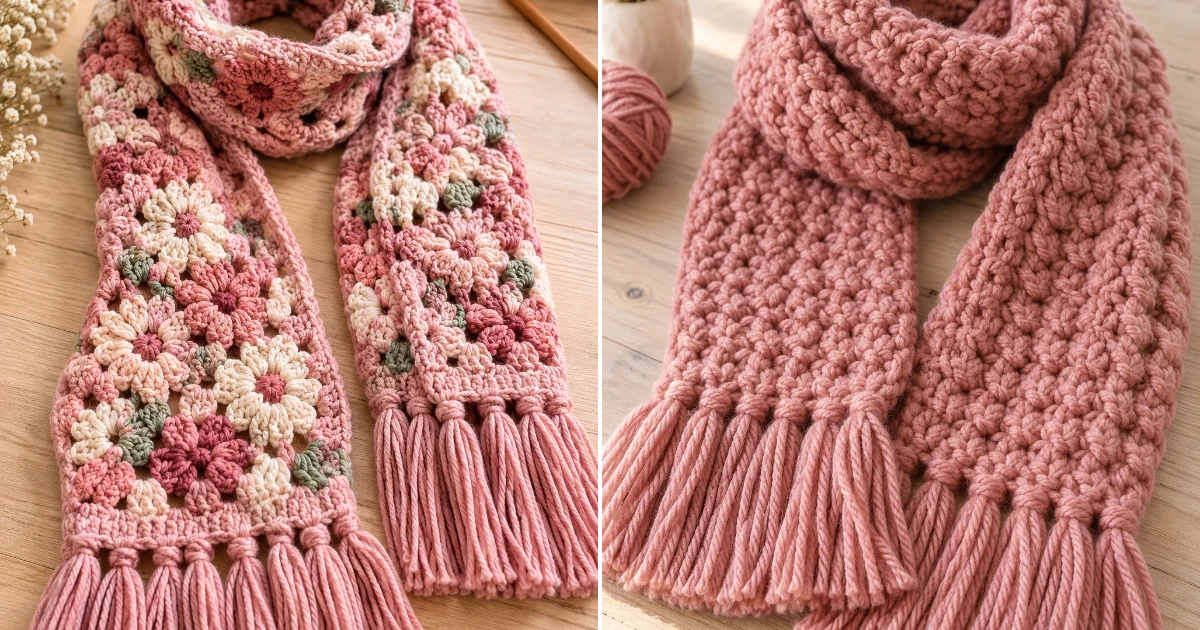
Scarf crochet are a creative way to make cozy, stylish accessories that match your wardrobe, express your personality, and make thoughtful handmade gifts. Whether you love chunky winter scarves, delicate lace designs, or colorful statement pieces, scarf crochet offers endless possibilities for every skill level. The best part? You can create something beautiful with a hook, your favorite yarn, and a little patience. From beginner-friendly rectangles to textured infinity scarves, these ideas combine practical techniques with wearable designs. You can even experiment with trending colors like burgundy, butter yellow, forest green, and chocolate brown to give your handmade accessories a modern feel. Grab your favorite crochet hook, choose a comfortable yarn, and discover 16 scarf crochet ideas worth adding to your next DIY project list.
1. The Classic Chunky Winter Scarf
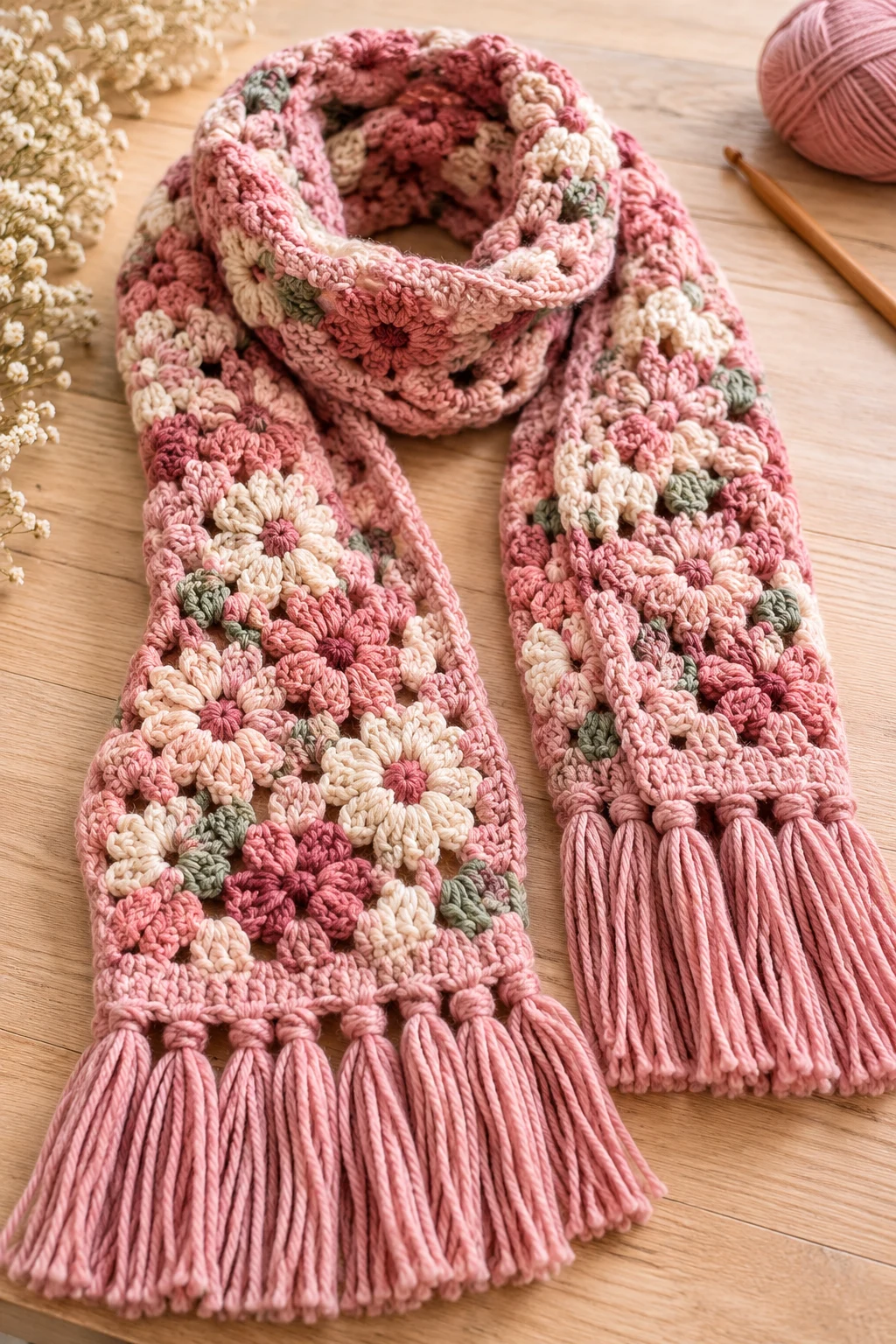
A chunky winter scarf is one of the easiest scarf crochet to make, especially when you want a warm accessory without complicated shaping. Choose bulky cream, oatmeal, or camel yarn for a timeless design that pairs beautifully with wool coats, denim jackets, and oversized sweaters.
Use a large 8–10 mm crochet hook and a simple half-double crochet stitch to build a thick, squishy fabric. A long rectangle measuring approximately 65–75 inches creates a classic drape, although you can adjust the length to suit your style.
For a polished finish, add short fringe in matching yarn or leave the ends clean and minimal.
The key to this look is choosing soft, bulky yarn and maintaining consistent stitches so your scarf feels plush without becoming stiff.
📺 Video tutorial: The Classic Chunky Winter Scarf
2. The Modern Ribbed Scarf Crochet Pattern
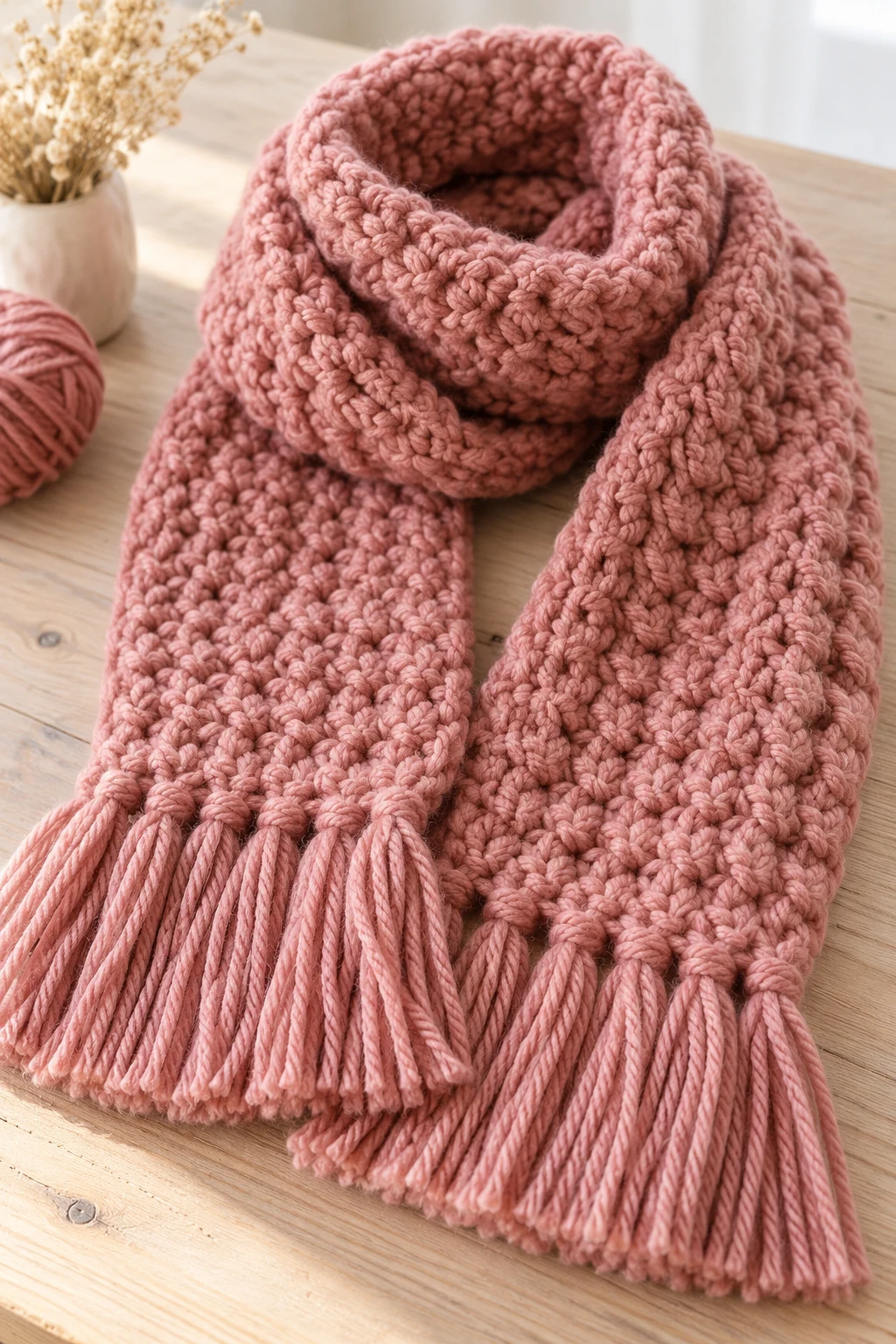
A ribbed scarf delivers a refined, almost knitted appearance while keeping your project firmly in crochet territory. This design looks particularly beautiful in chocolate brown, charcoal gray, deep burgundy, and classic black.
Try working half-double crochet stitches through the back loop only. This technique creates raised horizontal ridges that stretch gently and give the scarf an attractive, flexible texture.
A medium-weight wool-blend yarn is an excellent choice because it provides warmth without making the finished piece excessively heavy. Ribbing also works well for matching beanies and headbands.
The key to this scarf crochet technique is working every row consistently through the back loop and checking your width regularly to prevent accidental increases.
📺 Video tutorial: The Modern Ribbed Scarf Crochet Pattern
3. The Beginner-Friendly Striped Scarf
If you’re searching for a scarf crochet pattern beginner makers can complete confidently, start with bold stripes. This project uses basic stitches and simple color changes, making it ideal for learning without getting tangled in complicated instructions.
Combine mustard yellow, cream, and rust for a warm autumn palette, or choose baby blue and white for a fresh spring accessory. Single crochet creates a firm fabric, while double crochet produces a lighter scarf with drape.
Keep your stripes even by crocheting the same number of rows in each color. Carry unused yarn neatly along the edge when practical, or fasten off between sections for a cleaner finish.
The key to this look is limiting your palette to two or three coordinated colors and maintaining consistent stripe widths throughout the scarf.
📺 Video tutorial: The Beginner-Friendly Striped Scarf
4. The Elegant Lacy Scarf
A lacy scarf is perfect when you want something delicate enough for spring evenings, weddings, or dressing up a simple blouse. Ivory, dusty rose, sage green, and pale lavender all work beautifully for this romantic design.
Use lightweight cotton or a fine merino blend with a smaller crochet hook to create defined openwork. Shell stitches, chain spaces, and fan patterns add visual interest without requiring elaborate construction.
Look for a scarf crochet pattern free online that includes stitch diagrams if you prefer visual instructions. Before committing to the full project, crochet a small sample to check how the lace opens after blocking.
The key to this look is balancing open chain spaces with solid stitch sections so the finished scarf drapes elegantly instead of losing its shape.
📺 Video tutorial: The Elegant Lacy Scarf
5. The Oversized Infinity Scarf
An infinity scarf forms a continuous loop, making it a convenient option for busy mornings and chilly commutes. You can wrap it once for a relaxed drape or twice for extra warmth around your neck.
To make one, crochet a long rectangle and join its short ends securely. Alternatively, work in the round to create a seamless tube. A soft bulky acrylic yarn makes this project affordable, lightweight, and easy to care for.
For a modern look, choose ivory, slate gray, or muted olive. A textured stitch such as moss stitch gives the fabric depth without adding excessive bulk.
The key to this scarf crochet design is measuring the loop before joining it so you can wrap it comfortably without stretching the stitches.
📺 Video tutorial: The Oversized Infinity Scarf
6. The Colorful Granny Square Scarf
Granny squares aren’t just for blankets. Join them into a scarf for a playful accessory that celebrates color, vintage style, and handmade craftsmanship.
Choose a coordinated palette of lilac, peach, butter yellow, and mint green, or embrace a retro combination of orange, brown, and mustard. Crochet individual squares using DK-weight yarn, then arrange them in your preferred color sequence before joining them.
This project is particularly useful for using leftover yarn from previous crafts. You can also make each square in a different color combination for a eclectic appearance.
The key to this look is keeping the squares approximately the same size and arranging the colors before joining them to achieve a balanced design.
7. The Soft Mohair-Style Scarf
A fluffy scarf adds softness and a sophisticated finish to simple outfits. Think pale pink, powder blue, cream, or misty gray paired with a tailored coat or an oversized knit sweater.
Use a mohair-blend or brushed acrylic yarn to achieve a fuzzy halo. Because fuzzy fibers can hide individual stitches, choose a straightforward stitch pattern rather than complicated lacework.
Beginners may find this yarn challenging to unravel, so use a stitch marker every few rows and count your stitches carefully. A smooth, contrasting practice yarn can help you learn the pattern before switching to a fuzzy fiber.
The key to this technique is pairing textured yarn with simple stitches so the softness remains the star of the design.
8. The Modern Moss Stitch Scarf
Moss stitch creates a woven appearance using alternating single crochet stitches and chain spaces. The result looks intricate but requires only a small collection of basic crochet skills.
For a contemporary accessory, choose sage green, oatmeal, terracotta, or dusty blue. The compact texture works particularly well with medium-weight cotton or merino yarn, making this scarf suitable for transitional weather.
If you’re following a scarf crochet tutorial, check whether the starting chain and turning instructions match the particular moss stitch pattern. Small differences can affect the edges.
The key to this look is alternating stitches and chain spaces consistently to create a neat, fabric-like texture with a subtle handmade character.
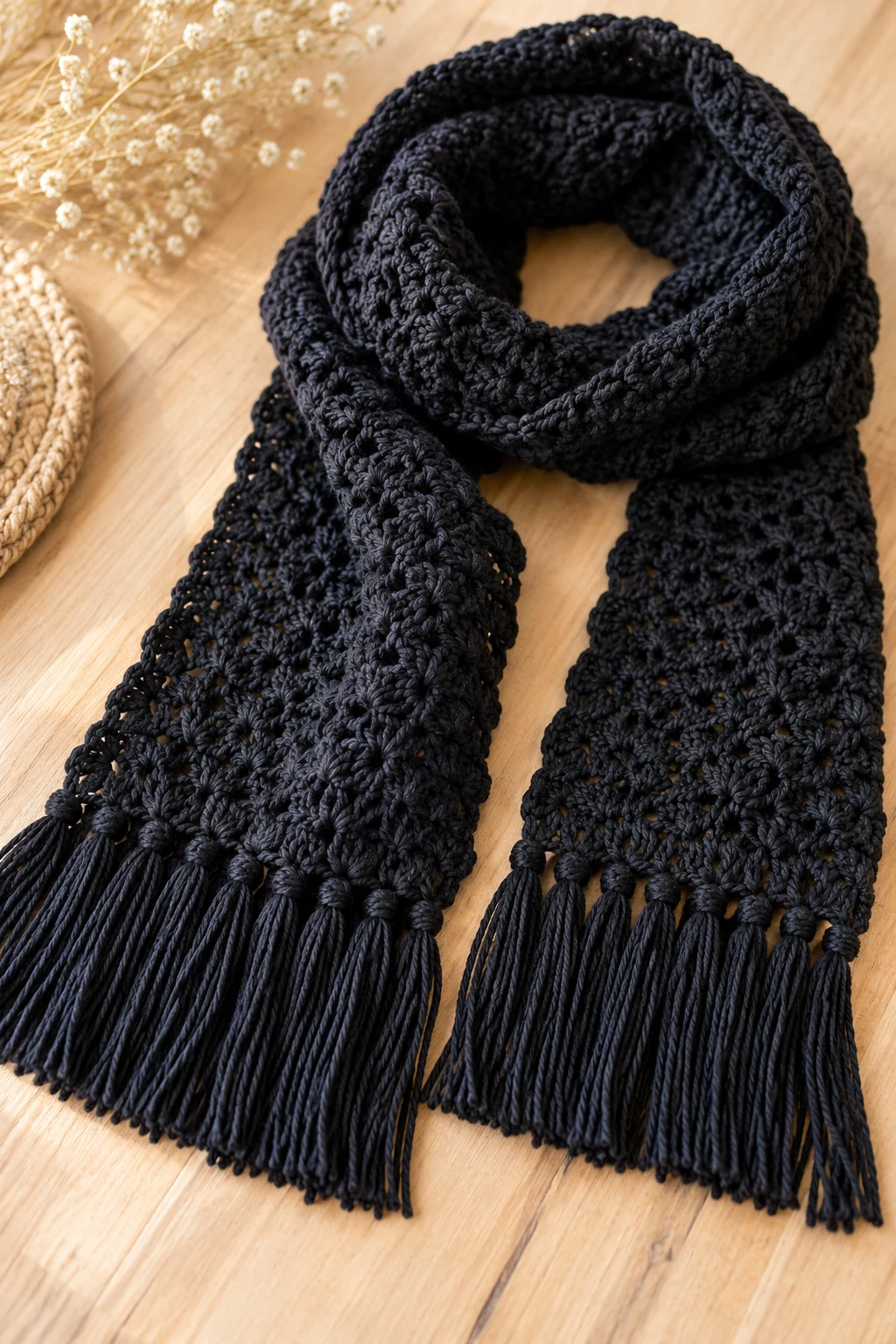
9. The Sophisticated Black Scarf
A black crochet scarf is a wardrobe staple that works with almost everything. It complements camel coats, gray blazers, leather jackets, and monochrome outfits while giving handmade accessories a sleek finish.
Instead of relying on color, introduce texture with ribbing, basket-weave stitches, or subtle raised rows. A soft black merino blend offers warmth and a refined appearance, while washable acrylic is practical for everyday wear.
Black yarn can make individual stitches difficult to see, especially in dim lighting. Use bright task lighting and place a pale towel beneath your project when counting stitches.
The key to this scarf crochet style is creating visual interest through texture and precise edges rather than adding extra colors or decorative details.
10. The Boho Fringe Scarf
For a relaxed, festival-inspired accessory, make a scarf with long fringe and earthy colors. Terracotta, sand, olive, and mustard create a beautiful bohemian palette that suits denim, suede jackets, and flowing dresses.
Begin with a simple rectangular scarf in double crochet or moss stitch. Cut equal lengths of matching or contrasting yarn and attach them along both short edges using a crochet hook or a fringe tool.
Keep the fringe length consistent, then trim the ends carefully for a tidy finish. You can also alternate two yarn colors for a striped fringe effect.
The key to this look is combining a relatively simple scarf body with evenly spaced fringe that adds movement without overwhelming the design.
11. The Gradient Ombre Scarf
An ombre scarf gradually transitions from one shade to another, creating a striking effect without complicated stitch patterns. Try cream fading into caramel, pale pink blending into burgundy, or icy blue deepening into navy.
The simplest approach uses a gradient yarn cake designed with gradual color changes. Alternatively, switch between two or three closely related yarn shades over several rows to create your own transition.
Choose an uncomplicated stitch, such as double crochet, so the color progression remains the focus. A long scarf gives the gradient enough space to develop naturally.
The key to this technique is blending neighboring shades gradually and avoiding abrupt color changes that interrupt the smooth transition.
12. The Lightweight Cotton Summer Scarf
Scarves aren’t exclusively for winter. A lightweight cotton design provides a stylish layer for cool summer evenings, air-conditioned offices, and spring travel.
Choose breathable cotton yarn in lemon yellow, coral, white, or sky blue. A loose mesh pattern or simple double crochet creates a fabric that feels lighter than a thick winter scarf.
Cotton has less elasticity than wool, so avoid crocheting too tightly. Measure the scarf as you work because cotton fabric may relax or change slightly after washing.
The key to this scarf crochet project is using breathable fibers and an open stitch pattern to create a comfortable accessory for warmer weather.
13. The Textured Basket-Weave Scarf
Basket-weave crochet creates a structured, woven appearance using groups of front-post and back-post double crochet stitches. The raised squares add depth and make even a single-color scarf look impressive.
Choose camel, forest green, navy, or burgundy worsted-weight yarn for a substantial winter accessory. The stitch pattern looks especially attractive in solid colors because the shadows emphasize the woven texture.
This technique requires some attention to stitch placement, so beginners may want to practice front-post and back-post stitches on a small swatch first. The fabric can also use more yarn than a basic double crochet scarf.
The key to this technique is alternating front-post and back-post stitch groups carefully to maintain crisp, repeating squares across every row.
14. The Two-Tone Reversible Scarf
A reversible scarf gives you two complementary looks in one handmade accessory. Combine cream with forest green, navy with gray, or dusty rose with burgundy for a sophisticated color-blocked design.
One option is to crochet a simple two-sided fabric using contrasting yarn colors and a stitch pattern that looks attractive from both sides. Another is to join two lightweight crocheted panels, making sure the seams remain comfortable.
Use two coordinating yarn skeins with similar thickness and care requirements. This helps the scarf maintain an even appearance and makes washing easier.
The key to this look is choosing a stitch pattern that looks neat on both sides and pairing colors that complement the same outfits.
15. The Beginner’s First Crochet Scarf
Your first scarf doesn’t need complicated stitches or expensive supplies. A straightforward rectangle made with double crochet is an excellent introduction to scarf crochet for beginners.
Choose a smooth medium-weight acrylic yarn, a compatible hook, and a simple pattern that specifies the starting chain and row count. Acrylic yarn is affordable and generally easy to wash, making it useful for practice pieces and everyday accessories.
Work a small sample before beginning. This helps you understand your tension and estimate how many stitches you’ll need to reach your desired width. Count the stitches at the end of each row to avoid a scarf that mysteriously becomes triangular.
The key to this technique is choosing an easy scarf crochet pattern beginner makers can repeat comfortably while practicing even tension and straight edges.
16. The Personalized Gift Scarf
A handmade scarf becomes especially meaningful when you choose colors and details for the recipient. Make a deep red scarf for someone who loves bold winter fashion, a soft lavender version for a friend who prefers pastels, or a neutral oatmeal scarf for someone with a minimalist wardrobe.
Add a contrasting border, initials on a small fabric label, or decorative tassels to personalize the finished piece. A practical scarf crochet kit containing yarn, a hook, and stitch markers can also make a thoughtful gift for someone who wants to learn the craft.
For a polished presentation, fold the scarf neatly and wrap it in kraft paper with a ribbon and a handwritten care card.
The key to this look is matching the yarn, color palette, and finishing details to the recipient’s personal style rather than following trends alone.
FAQ: Scarf Crochet Questions Answered
What is the easiest scarf crochet pattern for beginners?
A simple rectangular scarf made with single crochet or double crochet is one of the easiest options. Choose smooth, medium-weight yarn and a pattern with clear stitch counts so you can practice consistent tension.
How much yarn do you need for a crochet scarf?
Most adult scarves require approximately 400–800 yards of yarn, depending on the scarf’s length, width, stitch pattern, and yarn thickness. Check your chosen pattern’s yarn requirements and buy an extra skein if the color lot matters.
Why is my crochet scarf curling at the edges?
Curling often results from tight tension, certain stitch patterns, or an unsuitable starting chain. Try a larger hook, check your stitch count, and gently block the finished scarf if the yarn’s care instructions allow it.
📚 You Might Also Like
- Crochet clothes for winter: 20 Easy DIY Ideas for 2026Crochet clothes for winter are handmade garments and accessories created with yarn and crochet stitc…
- 18 Crochet Accessories Ideas to Make Your HandmadeCrochet accessories are handmade fashion and lifestyle items created with yarn and a crochet hook, a…
- Crochet tops for fall: 20 Perfect DIY Ideas for 2026Crochet tops for fall are versatile, handmade garments crafted from textured yarn weights like wool…
- Easy clothes to crochet: 20 Perfect DIY Ideas for 2026Discovering easy clothes to crochet is one of the most rewarding ways to transform a simple yarn cak…
- Crochet chunky sweater: 10 Top DIY Ideas for 2026A crochet chunky sweater is a handmade garment created with thick yarn and a crochet hook to produce…
The Bottom Line
Scarf crochet offers something for every maker, from a beginner’s first simple rectangle to a textured basket-weave statement piece. The best design depends on your skill level, the season, and how you want to wear your finished accessory. Start with affordable, smooth yarn if you’re learning, or experiment with gradient colors, fringe, and lace when you’re ready for something different. Remember to check your measurements, count your stitches, and choose fibers that suit the scarf’s purpose. With the right yarn and a little creativity, your next scarf crochet project can become a practical wardrobe favorite or a handmade gift someone will genuinely love.
🛍️ Shop the Look — Best Sellers for scarf crochet
Our handpicked Amazon best sellers curated specifically for scarf crochet:
As an Amazon Associate I earn from qualifying purchases.