
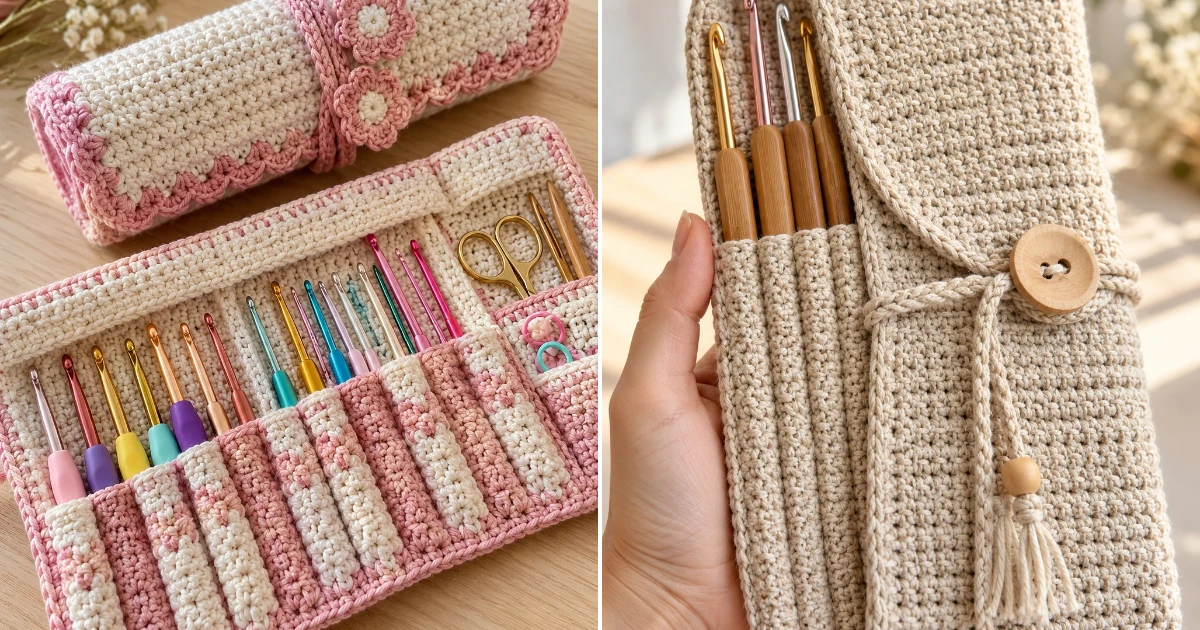
A crochet hook bag is a handmade or store-bought organizer designed to keep crochet hooks, yarn needles, stitch markers, scissors, and other crafting essentials neat and easy to carry. Whether you crochet at home, travel with your projects, or enjoy making thoughtful gifts for fellow crafters, the right crochet hook bag can make every crafting session enjoyable. From colorful roll-up pouches to elegant floral organizers and roomy project totes, there are countless ways to combine practical storage with your personal style. You can even crochet your own hook holder using leftover yarn and a beginner-friendly pattern. These 20 crochet hook bag ideas feature creative designs, useful techniques, and specific materials to help you find your next DIY project. Grab your favorite hook and prepare to organize your growing collection!
1. Classic Roll-Up Crochet Hook Bag
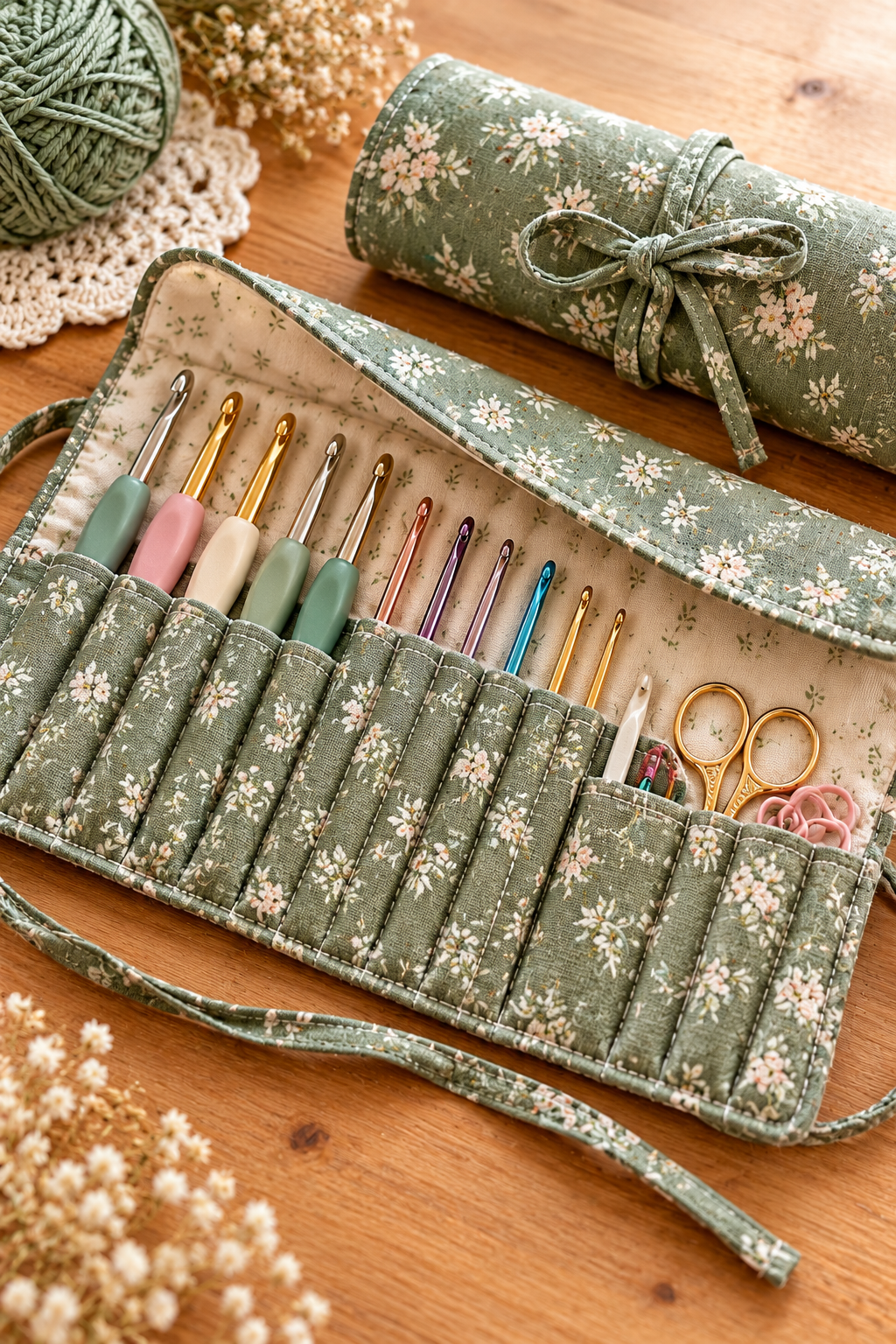
A classic roll-up crochet hook bag is a fantastic first project because it combines simple sewing with practical organization. Choose sturdy cotton fabric in sage green, dusty pink, or mustard yellow, then create narrow pockets that hold individual hooks. Add a matching fabric tie to secure the organizer when you roll it closed.
You can customize the pocket widths for ergonomic hooks, steel hooks, and specialty tools. A lightweight lining helps prevent snagging, while a small flap keeps hooks from sliding out when you carry the pouch.
The key to this look/technique is measuring each pocket against your longest hook before sewing the seams.
📺 Video tutorial: Classic Roll-Up Crochet Hook Bag
2. Granny Square Crochet Hook Bag
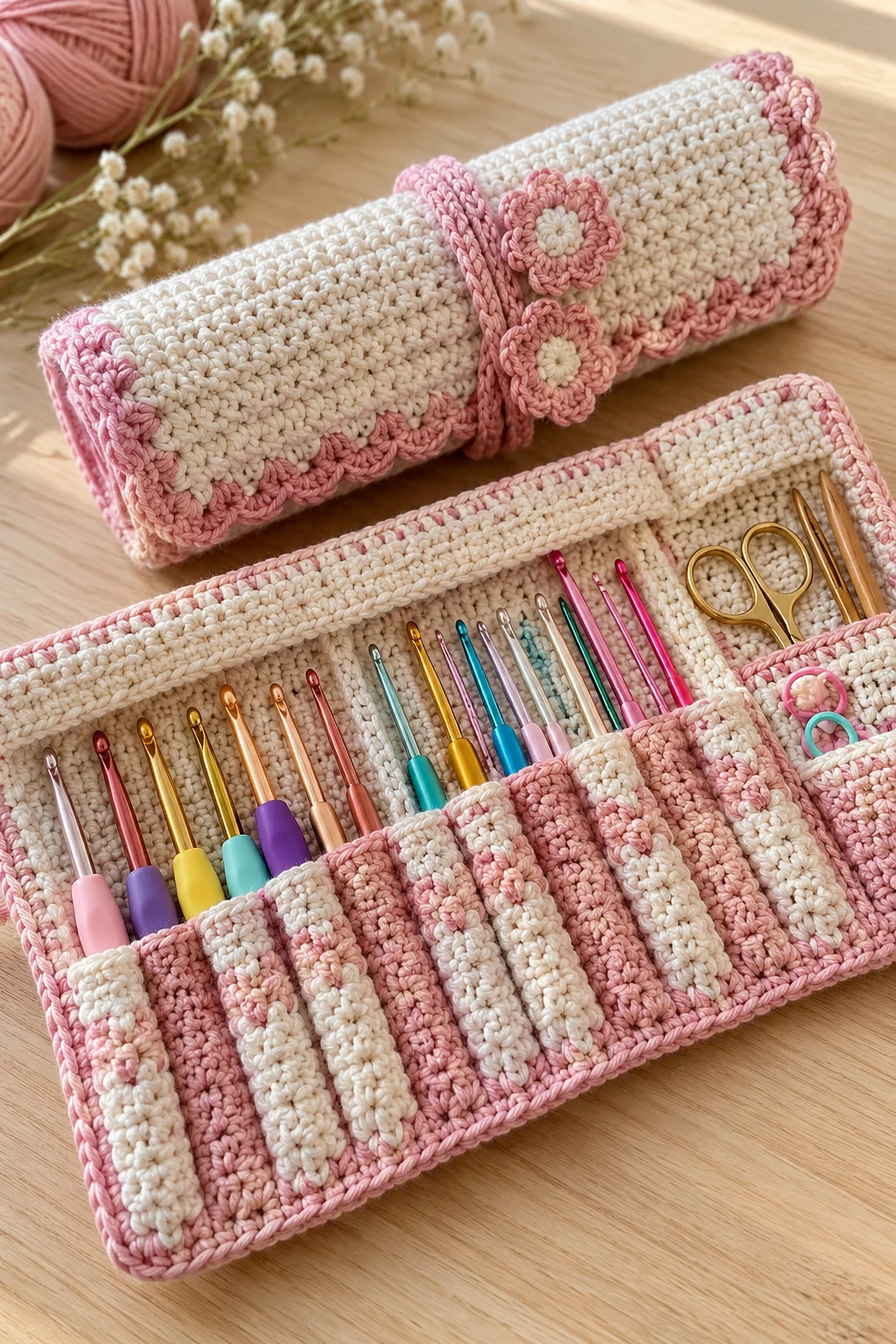
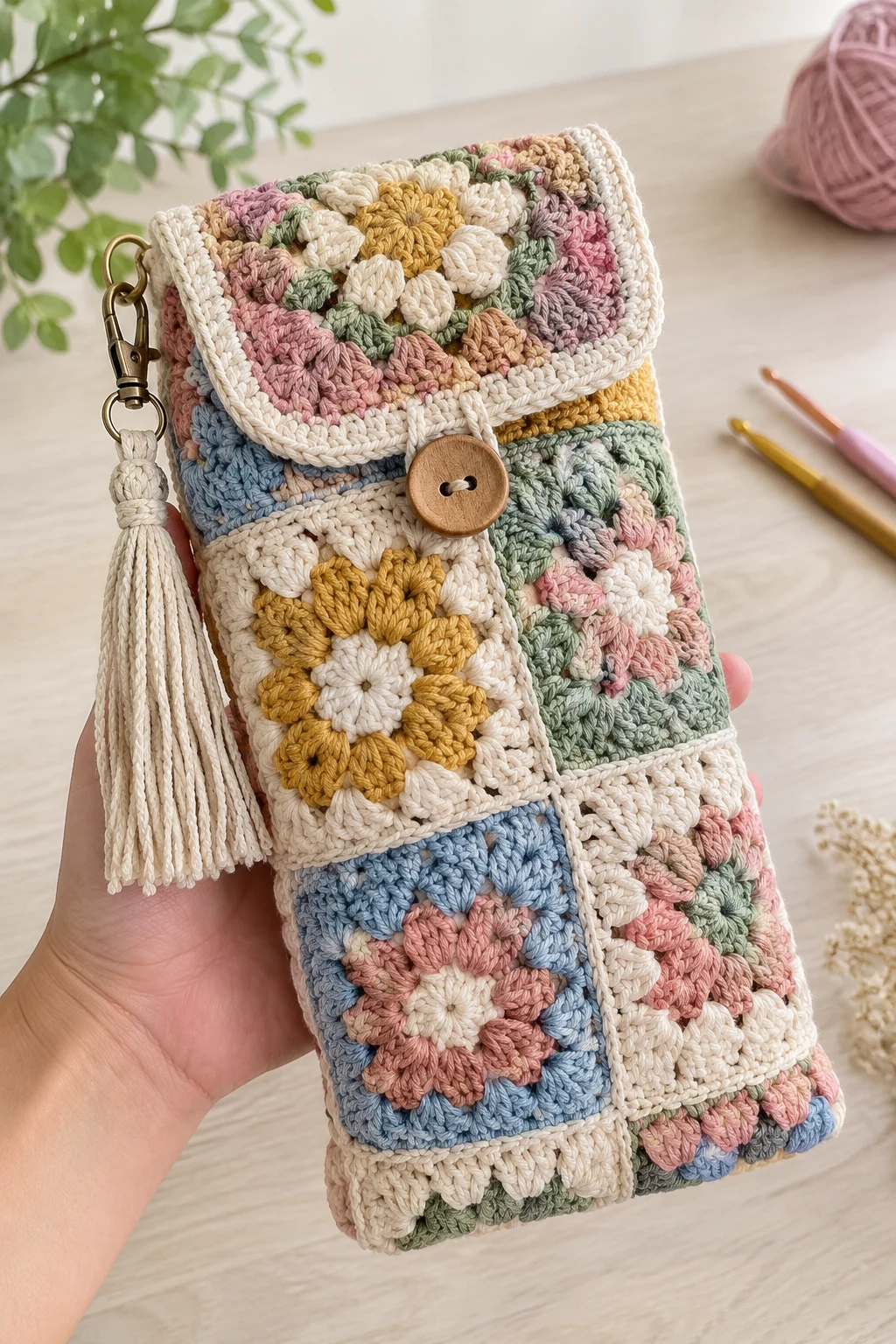
Turn your favorite granny square motif into a cheerful crochet hook bag with a nostalgic, handmade appearance. Combine lavender, cream, butter yellow, and pale blue squares for a soft vintage palette, or use jewel tones for a bolder accessory.
Join the squares into a rectangle, fold it into a pouch, and add a fabric lining to keep smaller supplies secure. A zipper or button closure makes the finished bag practical enough for weekly crochet groups.
The key to this look/technique is blocking your granny squares to consistent dimensions before joining them.
📺 Video tutorial: Granny Square Crochet Hook Bag
3. Floral Cottagecore Hook Pouch — crochet
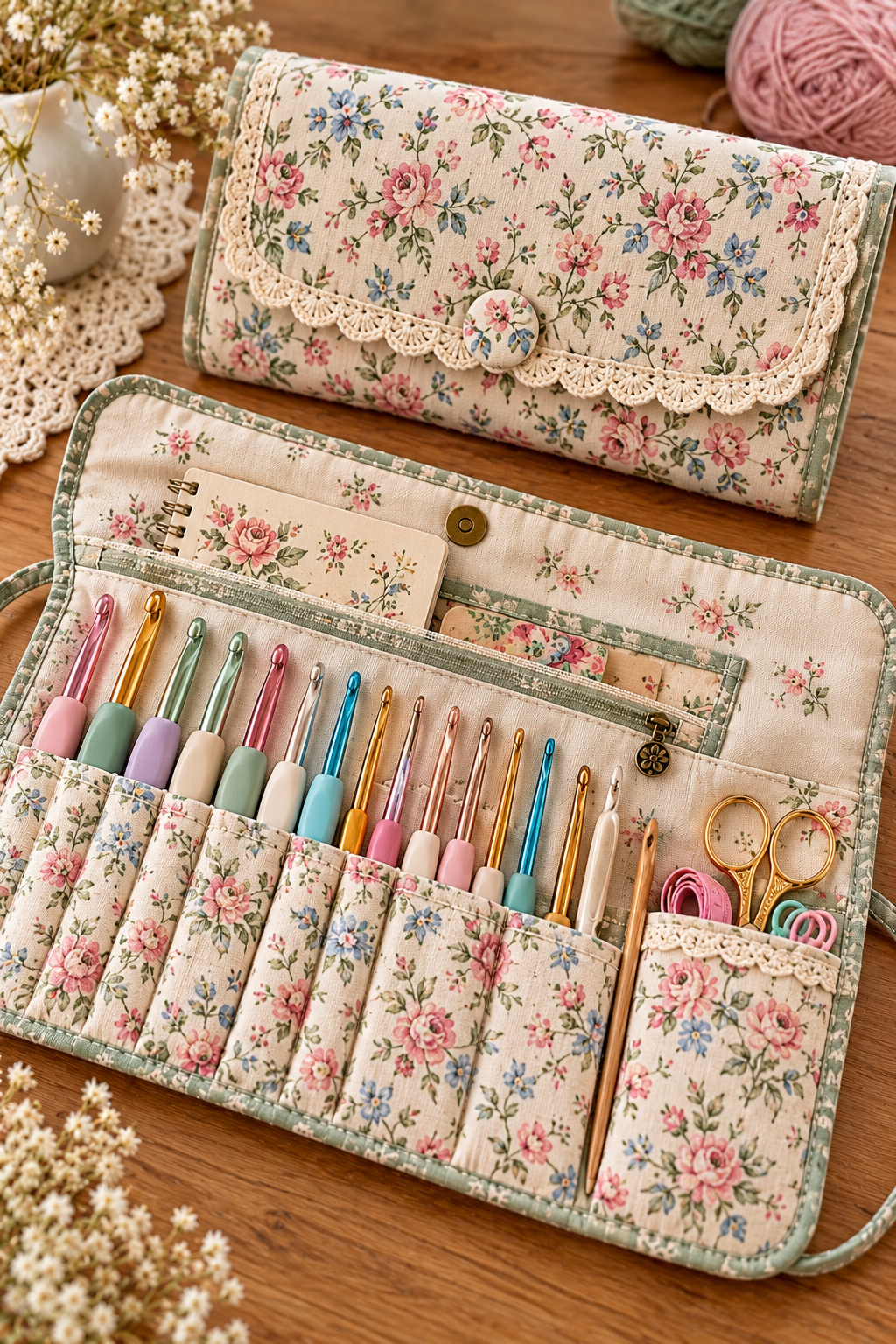
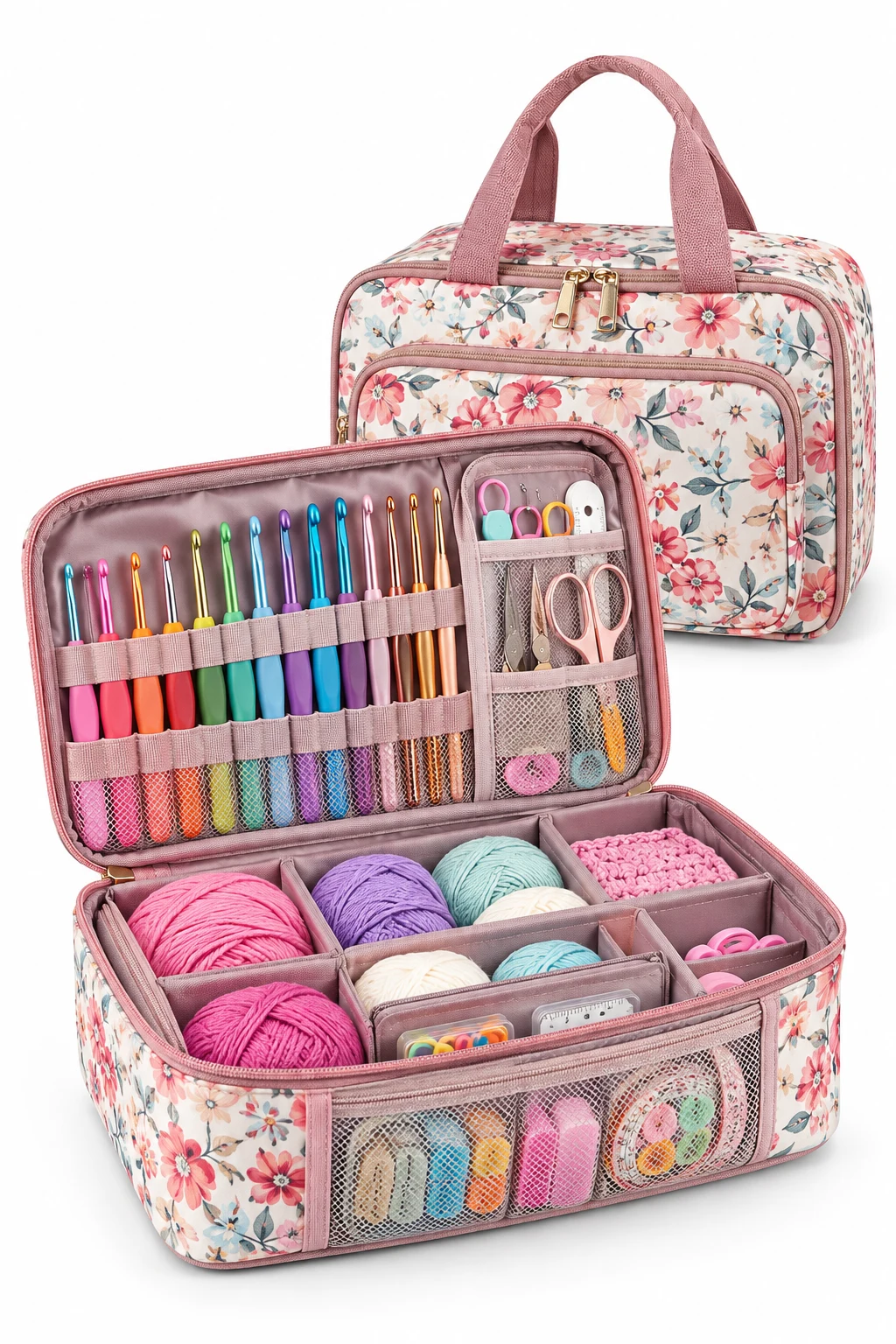
A floral crochet hook bag brings cottagecore charm to your crafting supplies. Select cotton fabric printed with tiny roses, bluebells, or wildflowers, then pair it with a cream lining and delicate scalloped trim. This style works especially well as a birthday present for someone who loves traditional crafts.
Inside, sew several pockets for hooks and reserve a wider compartment for a small notebook or printed pattern. A magnetic snap or fabric-covered button creates an attractive closure without adding unnecessary bulk.
The key to this look/technique is balancing the floral print with a plain lining so the finished pouch looks coordinated rather than crowded.
📺 Video tutorial: Floral Cottagecore Hook Pouch
4. Minimalist Linen Crochet Hook Bag
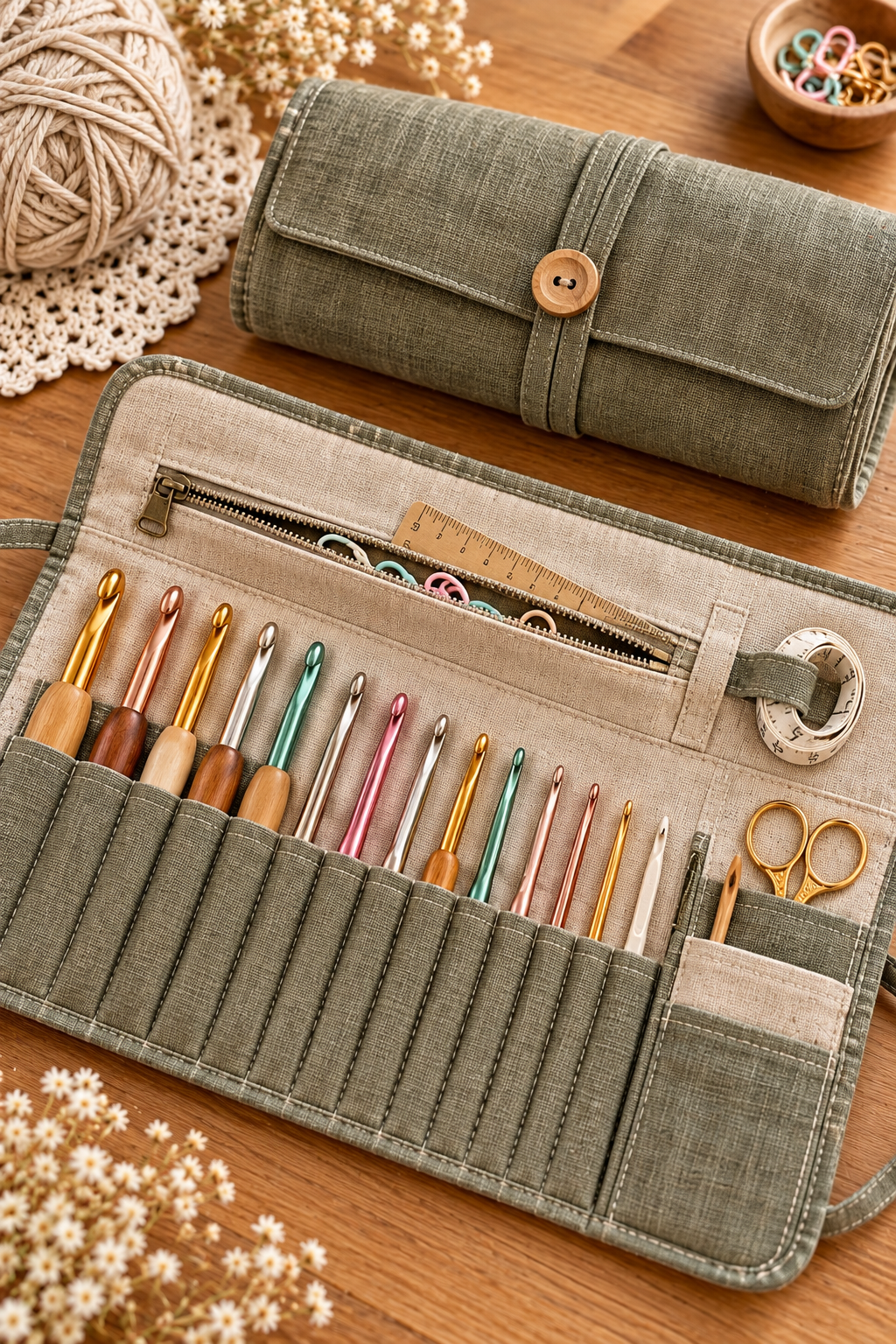
Prefer a clean, understated style? A linen crochet hook bag offers a beautiful alternative to bright prints. Natural flax, oatmeal, charcoal, and soft olive create a timeless palette that suits a modern crafting space.
Use medium-weight linen or a cotton-linen blend, reinforced pocket seams, and simple wooden buttons. Add a narrow loop for a measuring tape and a small zippered section for stitch markers. Linen can fray easily, so finish the raw edges with a zigzag stitch or suitable seam finish.
The key to this look/technique is choosing durable fabric and precise stitching instead of relying on decorative details.
📺 Video tutorial: Minimalist Linen Crochet Hook Bag
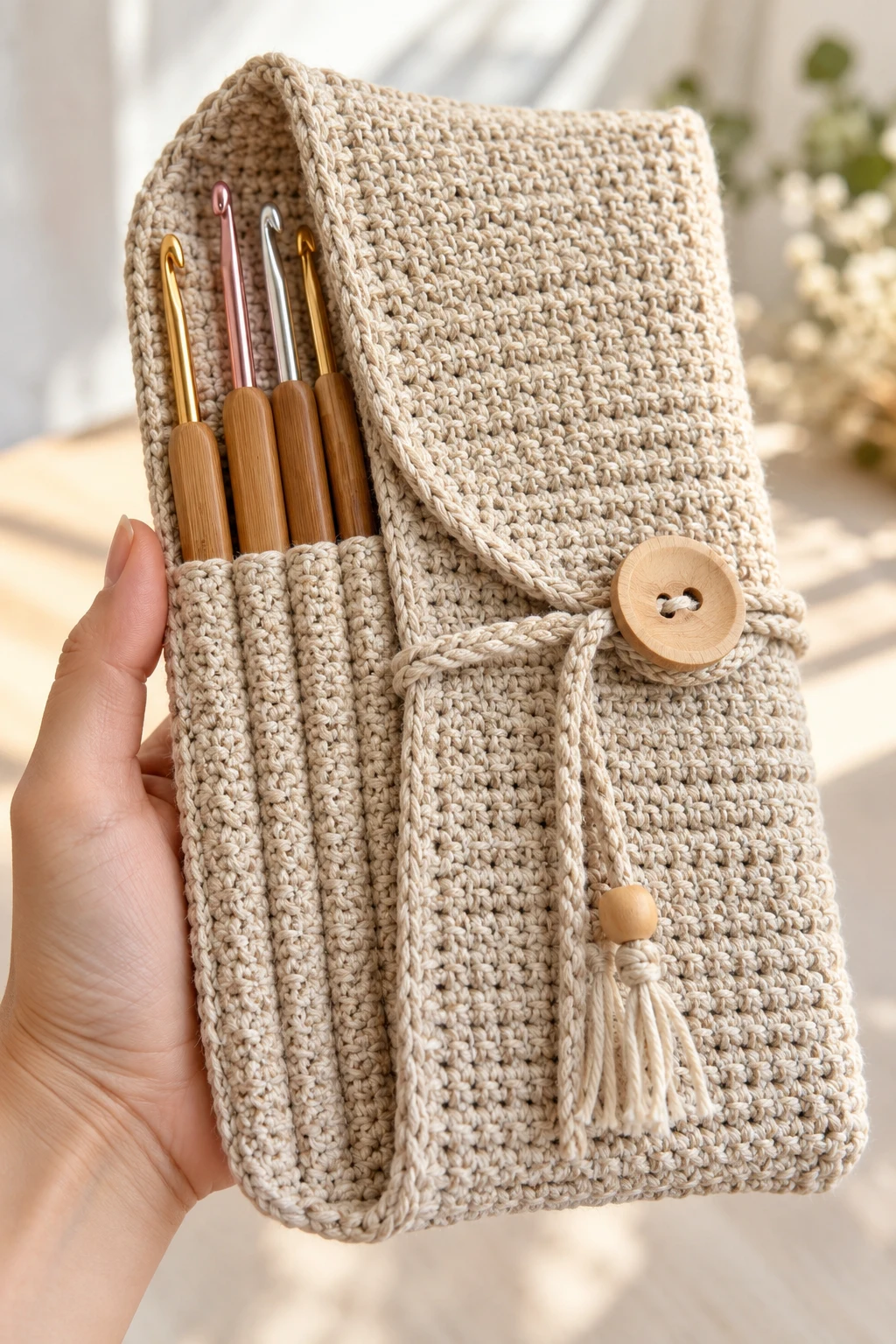
5. Zippered Crochet Needle Bag
A zippered crochet needle bag is ideal for crafters who want everything contained in one compact case. Create a rectangular pouch with a sturdy zipper, padded outer fabric, and an interior pocket panel for hooks of different sizes.
A small piece of interfacing gives the case structure, while a smooth cotton lining helps tools slide into their compartments. Use contrasting zipper tape in coral, teal, or burgundy to make the design stand out.
The key to this look/technique is installing the zipper before attaching the final lining so the inside seams remain neat.
📺 Video tutorial: Zippered Crochet Needle Bag
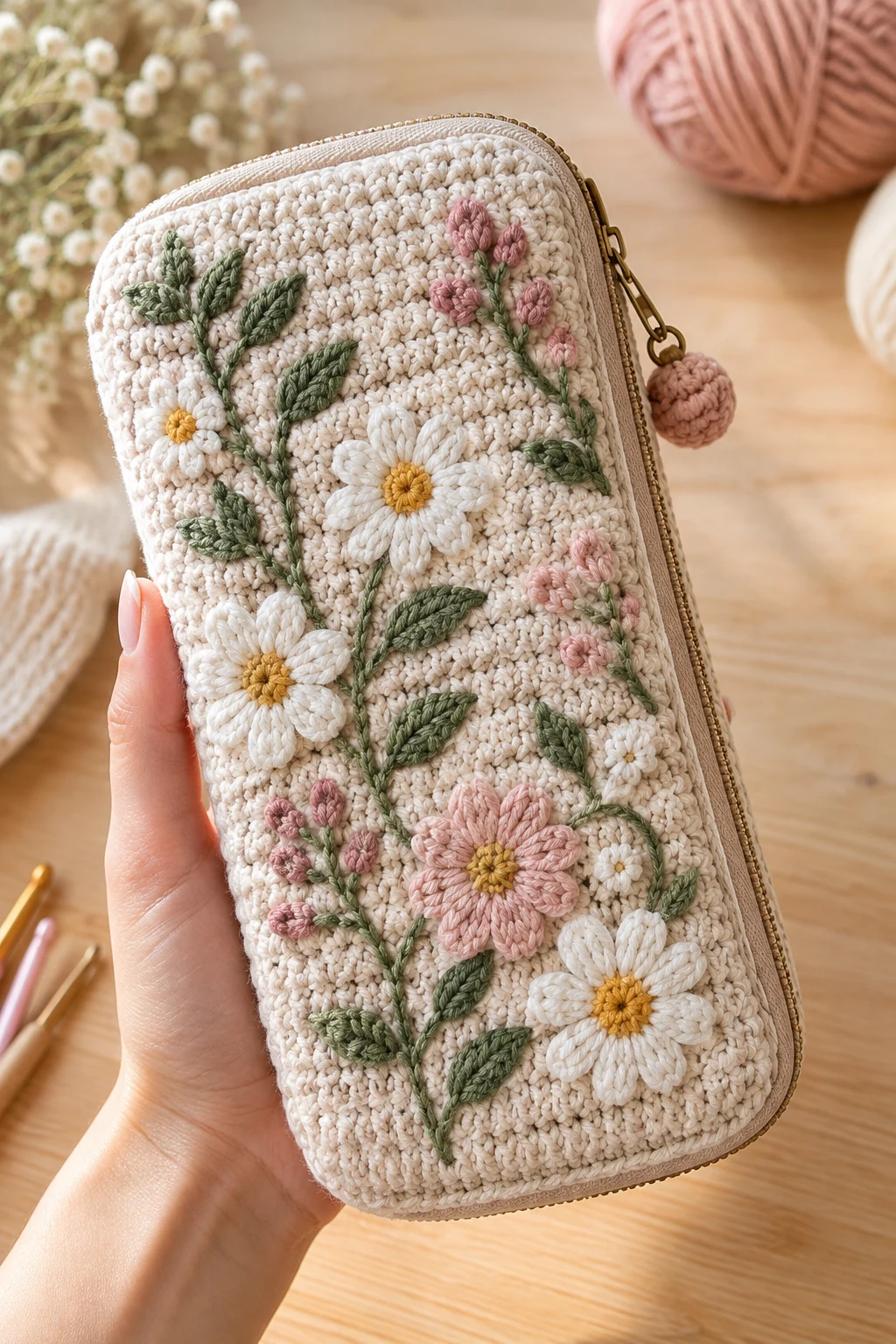
6. Chunky Yarn Crochet Hook Bag
If you love bold textures, make a crochet hook bag from chunky cotton cord or thick washable yarn. The oversized stitches create a tactile finish, and the project works up quickly compared with finer crochet fabric.
Use a firm stitch such as single crochet and consider a smaller hook than the yarn label recommends if you need tighter fabric. Because large stitches can leave gaps, add a fabric lining to prevent stitch markers and small accessories from escaping.
The key to this look/technique is maintaining dense stitches and adding structure where the yarn stretches.
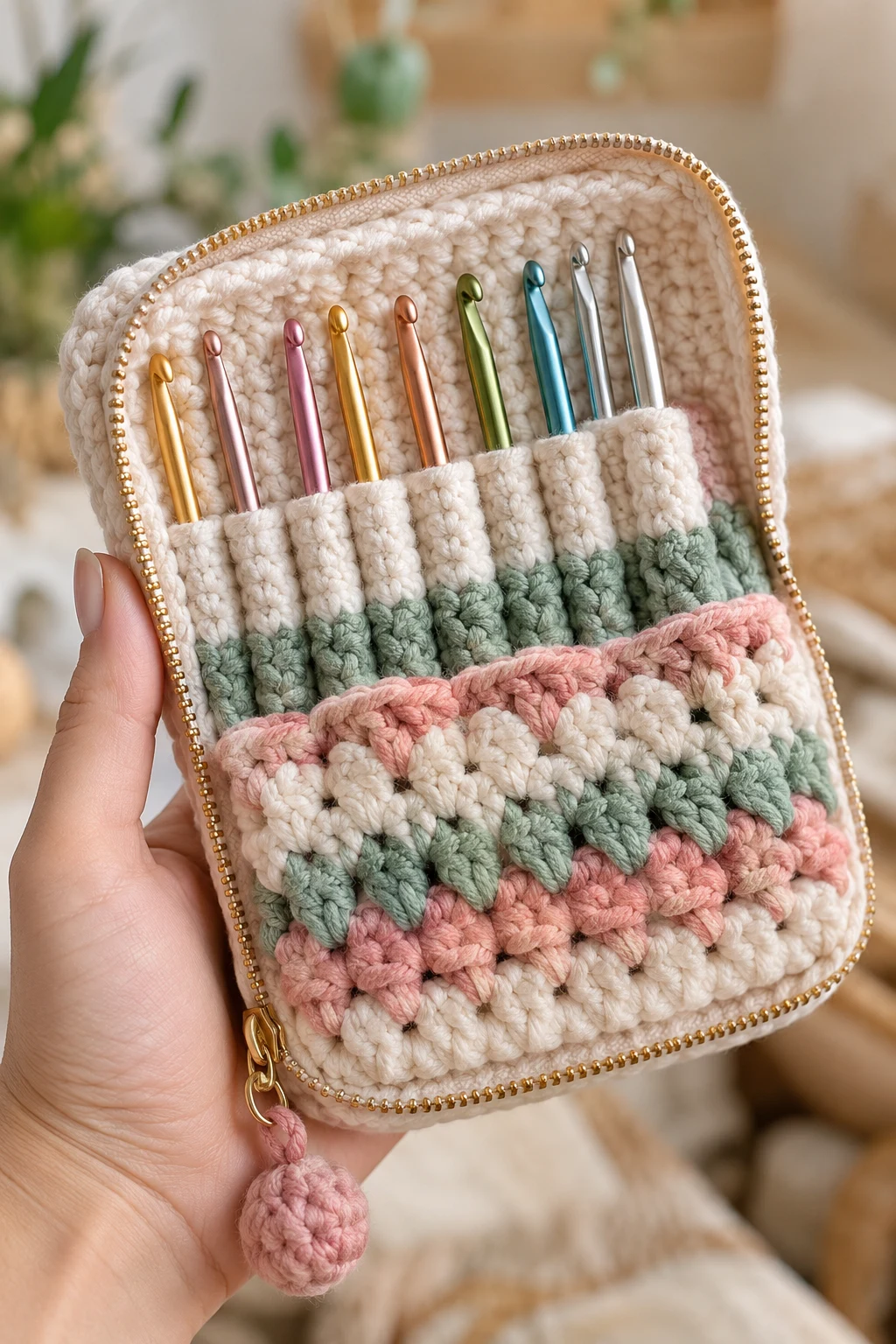
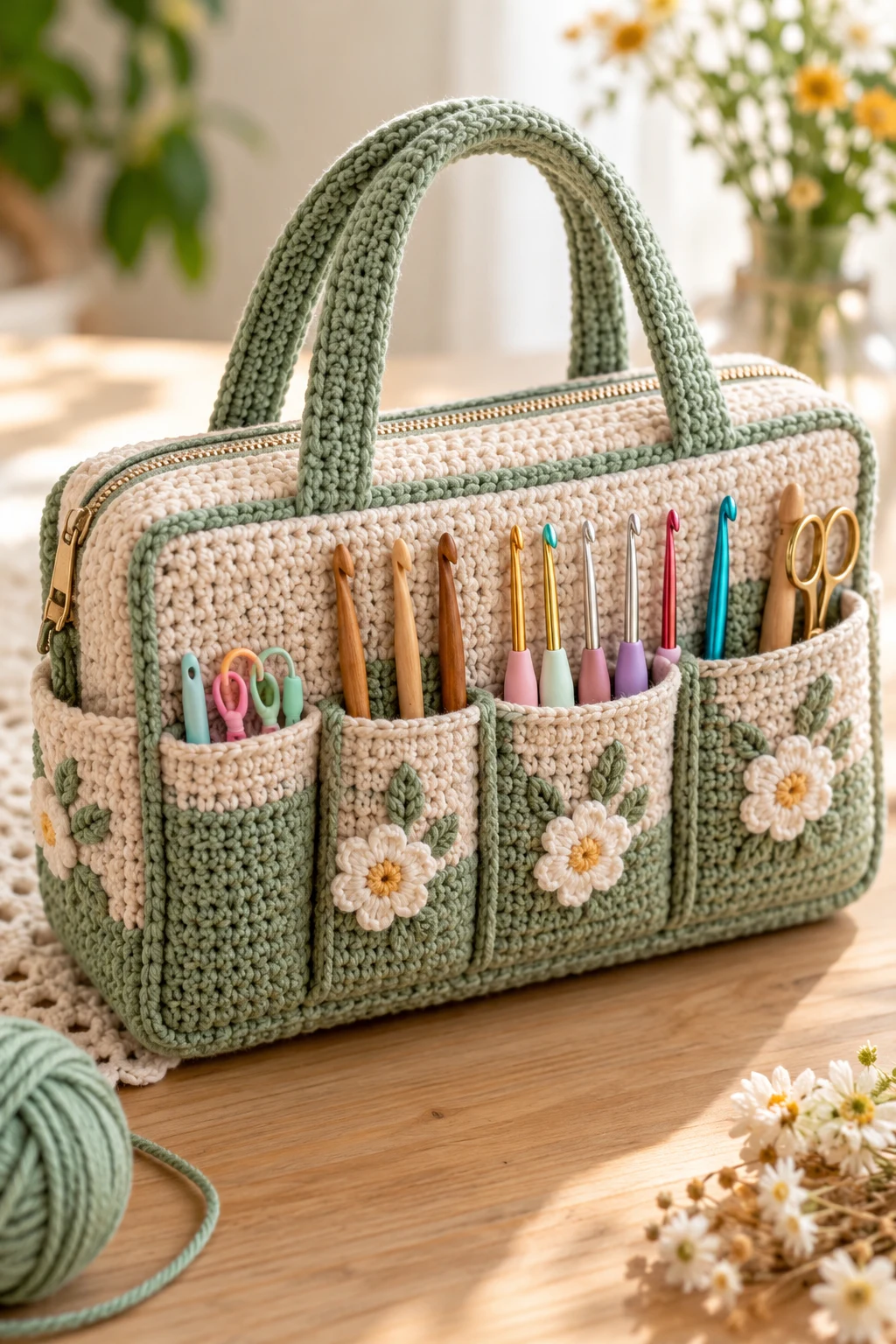
7. Travel-Friendly Crochet Hook Bag With Handles
For crochet sessions at a café, on a train, or during a weekend getaway, a handled organizer keeps your tools together. Start with a compact rectangular body and add two reinforced handles made from cotton webbing or crocheted straps.
Include an interior hook panel, a small zippered pocket, and enough room for scissors, a tape measure, and a few yarn needles. Keep the overall size manageable so you can place the bag inside a larger travel tote.
The key to this look/technique is reinforcing the handle attachment points with extra stitching or sturdy backing fabric.
📺 Video tutorial: Travel-Friendly Crochet Hook Bag With Handles
8. Drawstring Crochet Hook Bag
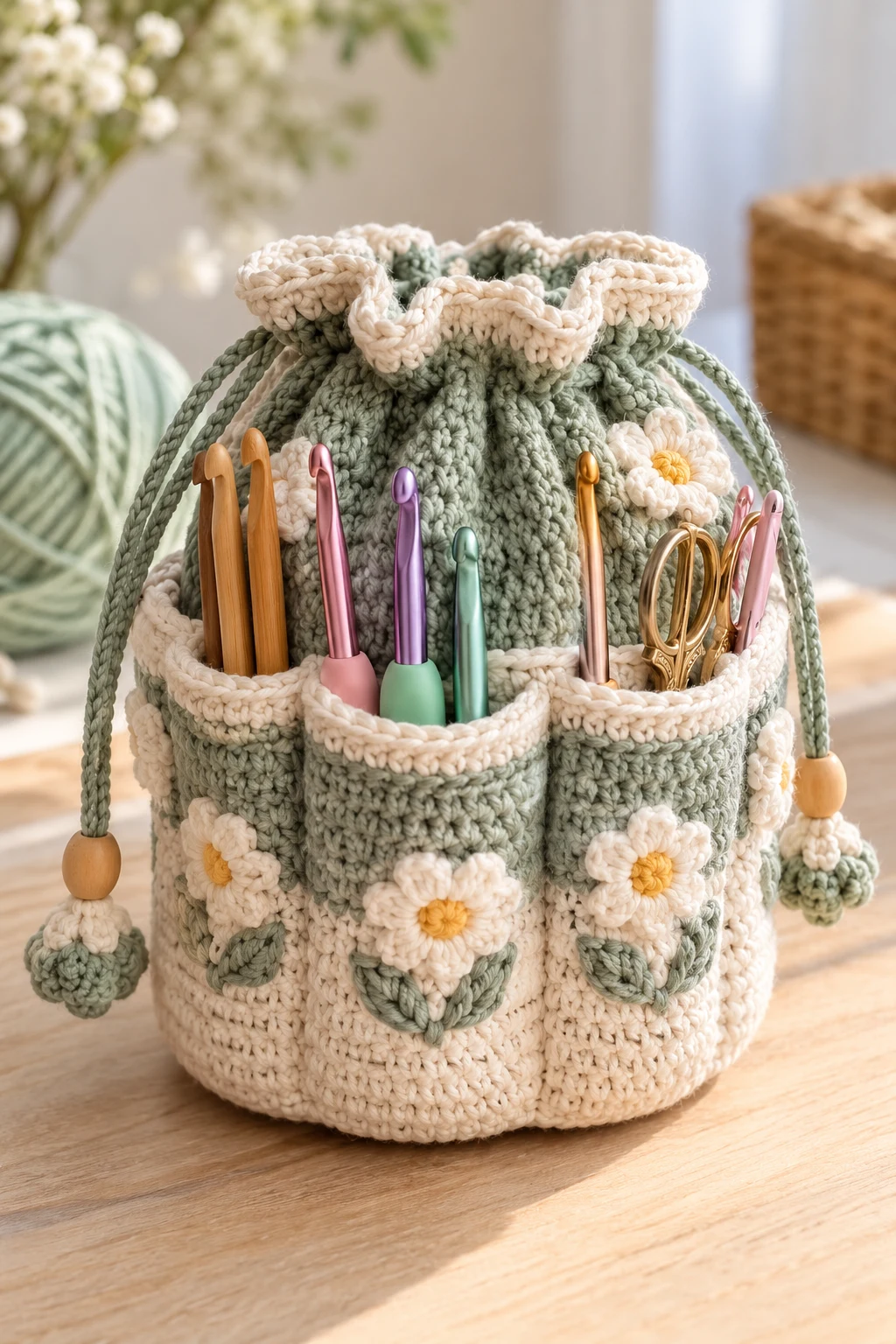
A drawstring crochet hook bag is a simple solution for keeping smaller tools together. Choose cotton canvas, lightweight denim, or a tightly crocheted fabric, then create a casing along the top for the drawstring.
You can divide the interior into sections or add a removable mini roll for longer hooks. A contrasting cord in mustard yellow or forest green adds a pop of color without complicating the construction.
The key to this look/technique is making the casing wide enough for the cord to move freely and securing the cord ends against fraying.
📺 Video tutorial: Drawstring Crochet Hook Bag
9. Vintage Patchwork Crochet Hook Bag
Patchwork makes every crochet hook bag unique because you can combine leftover fabric from previous sewing projects. Mix small geometric prints, gingham, and solid colors in rust, navy, cream, and sage for a vintage-inspired organizer.
Arrange your fabric pieces before sewing to check the color balance. Add lightweight batting between the outer fabric and lining for a softly padded finish that protects delicate hooks.
The key to this look/technique is using consistent seam allowances so the patchwork lies flat and the finished bag keeps its shape.
📺 Video tutorial: Vintage Patchwork Crochet Hook Bag
10. Crochet Hook Bag With Individual Elastic Loops
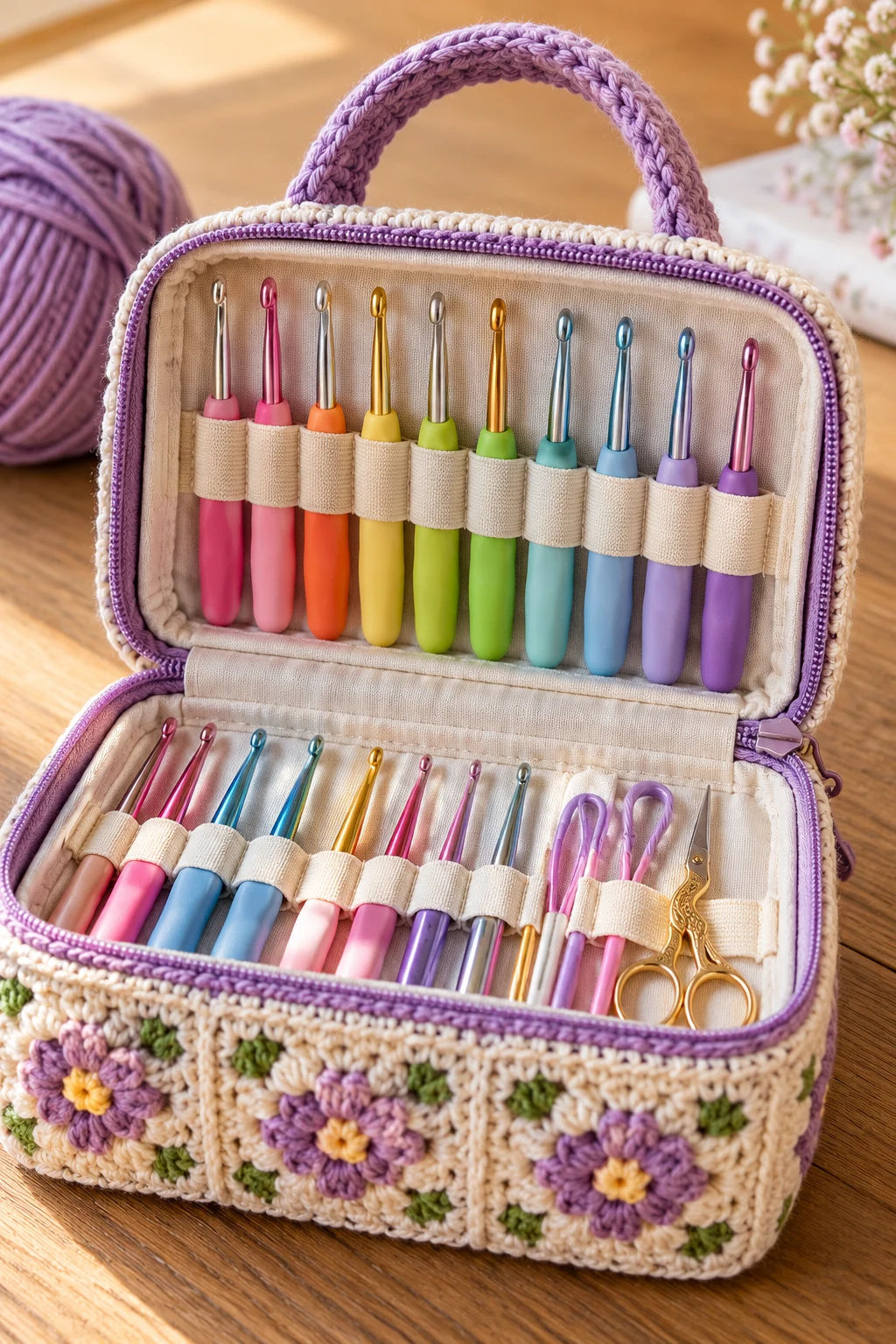
Elastic loops are excellent when you own hooks in many sizes and want to identify each one quickly. Sew elastic strips onto a rectangular fabric panel, spacing the loops according to the thickness of your tools.
Label the rows with small embroidered numbers or washable tags. You can then fold the panel into a compact case or attach it inside a larger crochet hook bag.
The key to this look/technique is testing each elastic loop with the actual hook before permanently stitching the elastic in place.
📺 Video tutorial: Crochet Hook Bag With Individual Elastic Loops
11. Boho Crochet Hook Bag With Tassels
A boho crochet hook bag combines functional storage with decorative texture. Work the pouch in terracotta, sand, and ivory yarn, then add tassels, fringe, or a small geometric motif to the front.
Keep the embellishments away from the zipper and interior pockets so they do not interfere with the tools. A simple lining is particularly useful when decorative stitches leave small openings.
The key to this look/technique is limiting fringe and tassels to the exterior while keeping the storage compartments smooth and practical.
📺 Video tutorial: Boho Crochet Hook Bag With Tassels
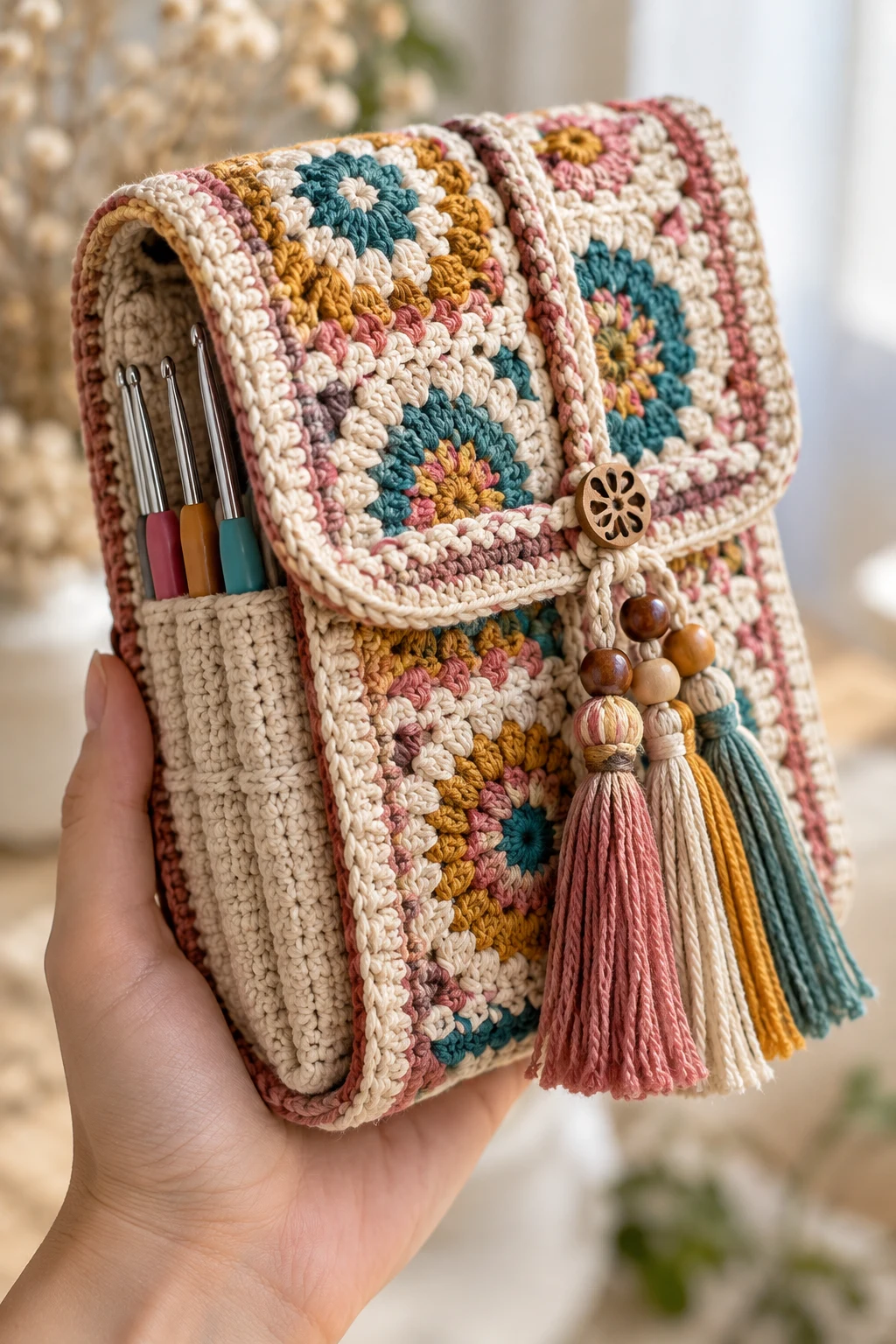
12. Floral Appliqué Crochet Hook Bag
Turn a plain pouch into a cheerful handmade accessory by attaching crocheted flowers, leaves, or tiny daisies. This is an excellent way to use leftover yarn from blankets and other projects.
Make the base in cream or pale sage, then add flowers in coral, lavender, and golden yellow. Stitch the appliqués securely to the exterior before attaching the lining, and avoid bulky embellishments where the bag folds.
The key to this look/technique is securing every appliqué firmly while keeping the pouch flexible enough to close easily.
📺 Video tutorial: Floral Appliqué Crochet Hook Bag
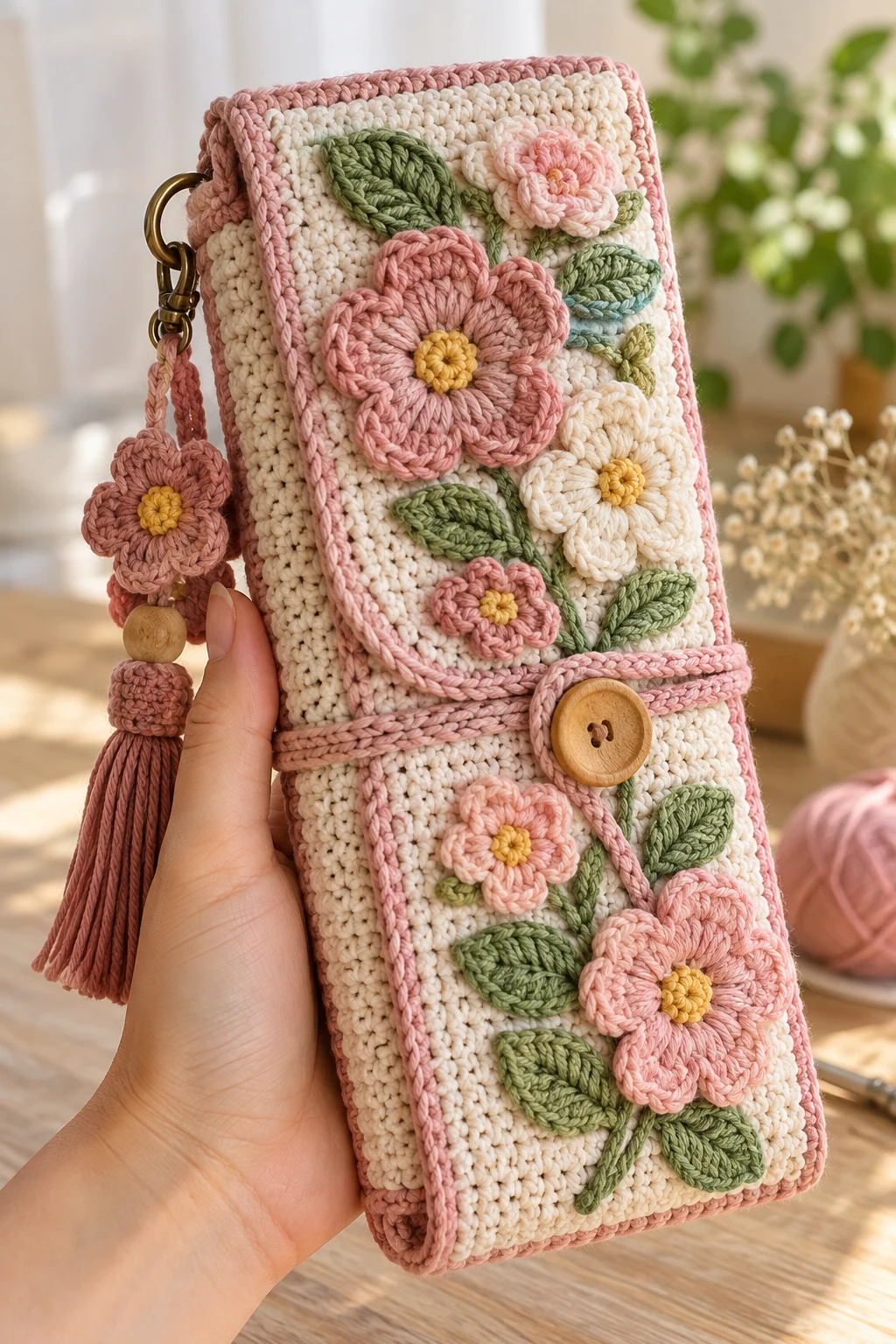
13. Compact Crochet Hook Bag for Beginners
Beginners do not need complicated construction to create a useful crochet hook bag. A basic rectangular case with three or four pockets, a folded flap, and a single button can hold the tools needed for learning new stitches.
Choose medium-weight cotton fabric and skip advanced features such as piping or multiple zippers. If you prefer crocheting the entire project, use a simple single-crochet rectangle and add a button loop.
The key to this look/technique is starting with a straightforward shape and adding compartments only after the basic case fits your tools.
📺 Video tutorial: Compact Crochet Hook Bag for Beginners
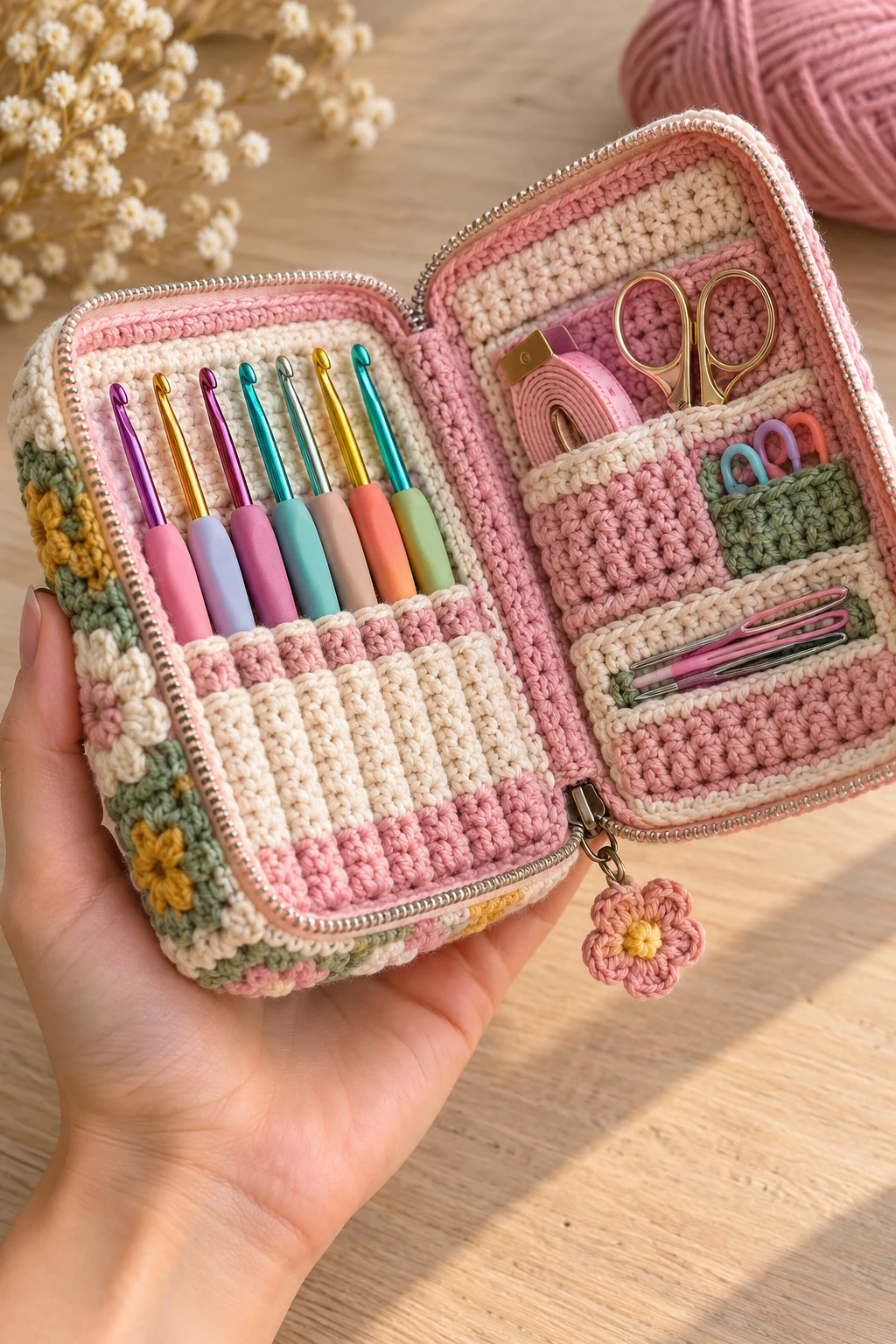
14. Waterproof-Lined Crochet Hook Bag
A water-resistant lining can be useful when you carry your crochet supplies in a backpack or travel tote. Choose a tightly woven outer fabric and a lightweight, washable lining designed for bags. Avoid bulky materials that make small pockets difficult to sew.
This design is particularly practical for outdoor crochet meetups, road trips, and craft fairs. Remember that a water-resistant lining does not automatically make the entire bag waterproof, especially around seams and closures.
The key to this look/technique is selecting compatible lining materials and finishing the seams carefully to reduce moisture exposure.
15. Crochet Hook Bag With a Matching Yarn Pocket
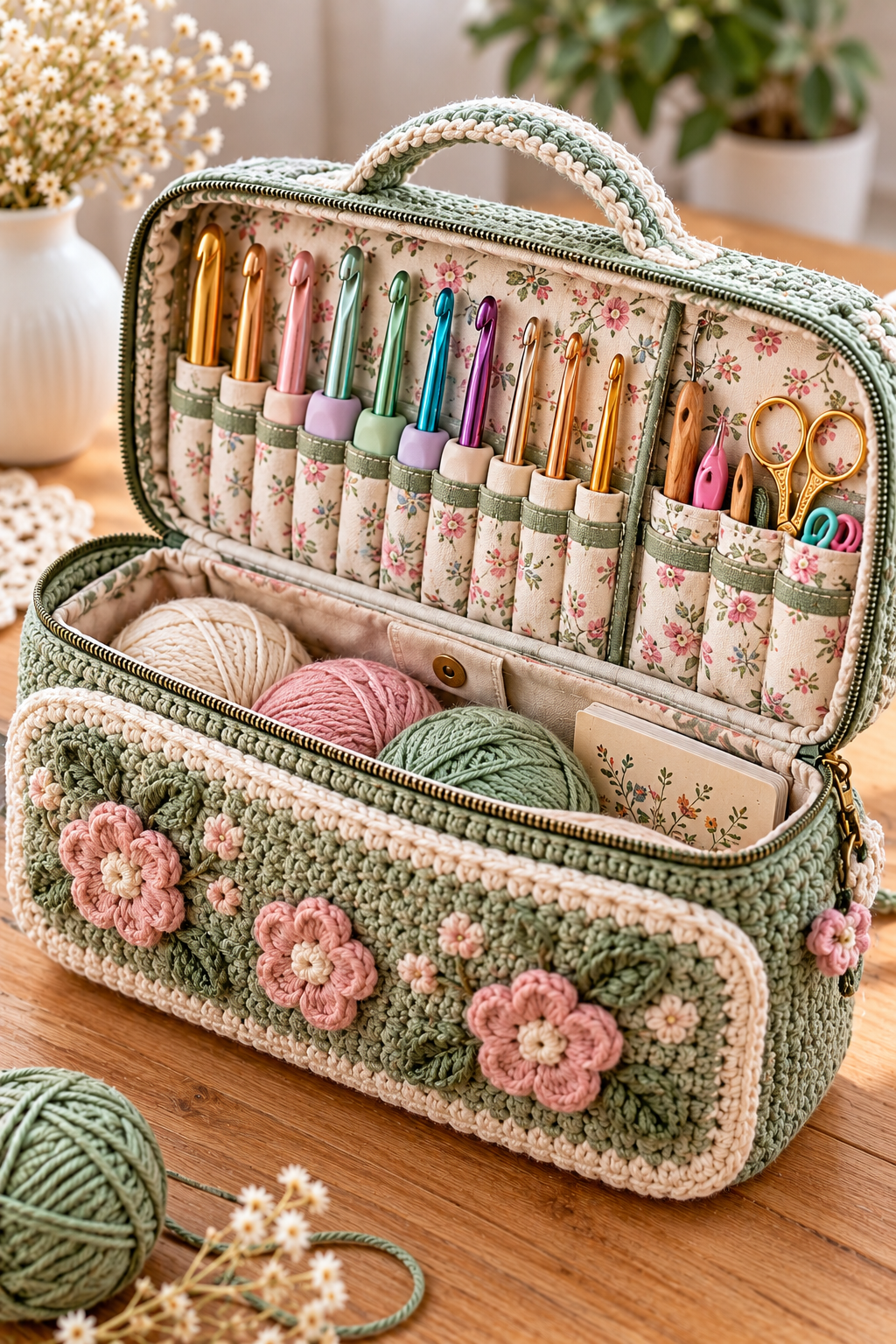
Why carry a hook case and a separate yarn pouch when you can combine them? Design a crochet hook bag with a dedicated outer pocket for a small yarn ball, a pattern card, and stitch markers.
Use a deep pocket with a secure snap or zipper so the yarn stays put while you travel. If you crochet the outer bag, consider a firm stitch pattern to prevent the weight of the yarn from stretching the body.
The key to this look/technique is separating the yarn compartment from the hooks so fibers do not tangle around your tools.
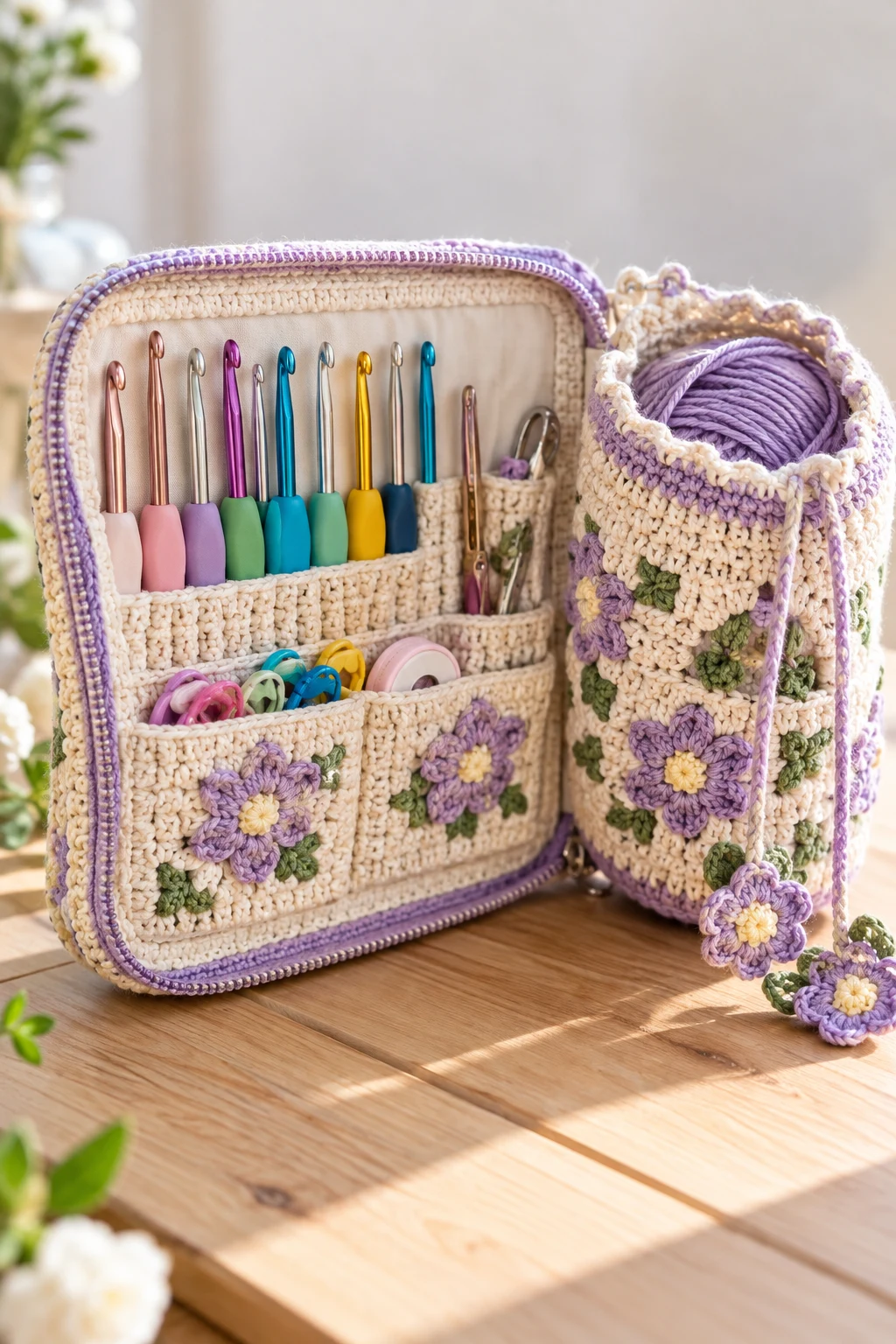
16. Elegant Quilted Crochet Hook Bag
Quilting adds softness and structure to a crochet hook bag, making it a lovely gift for experienced crocheters. Select dusty blue cotton, blush pink fabric, or a sophisticated black-and-cream print. Add thin batting and quilt the layers in straight lines or a diamond pattern.
Keep the quilting simple around narrow pockets to prevent the seams from becoming too thick. A metal zipper or coordinated fabric binding completes the polished appearance.
The key to this look/technique is using thin batting and testing the folded layers before sewing the pocket panel.
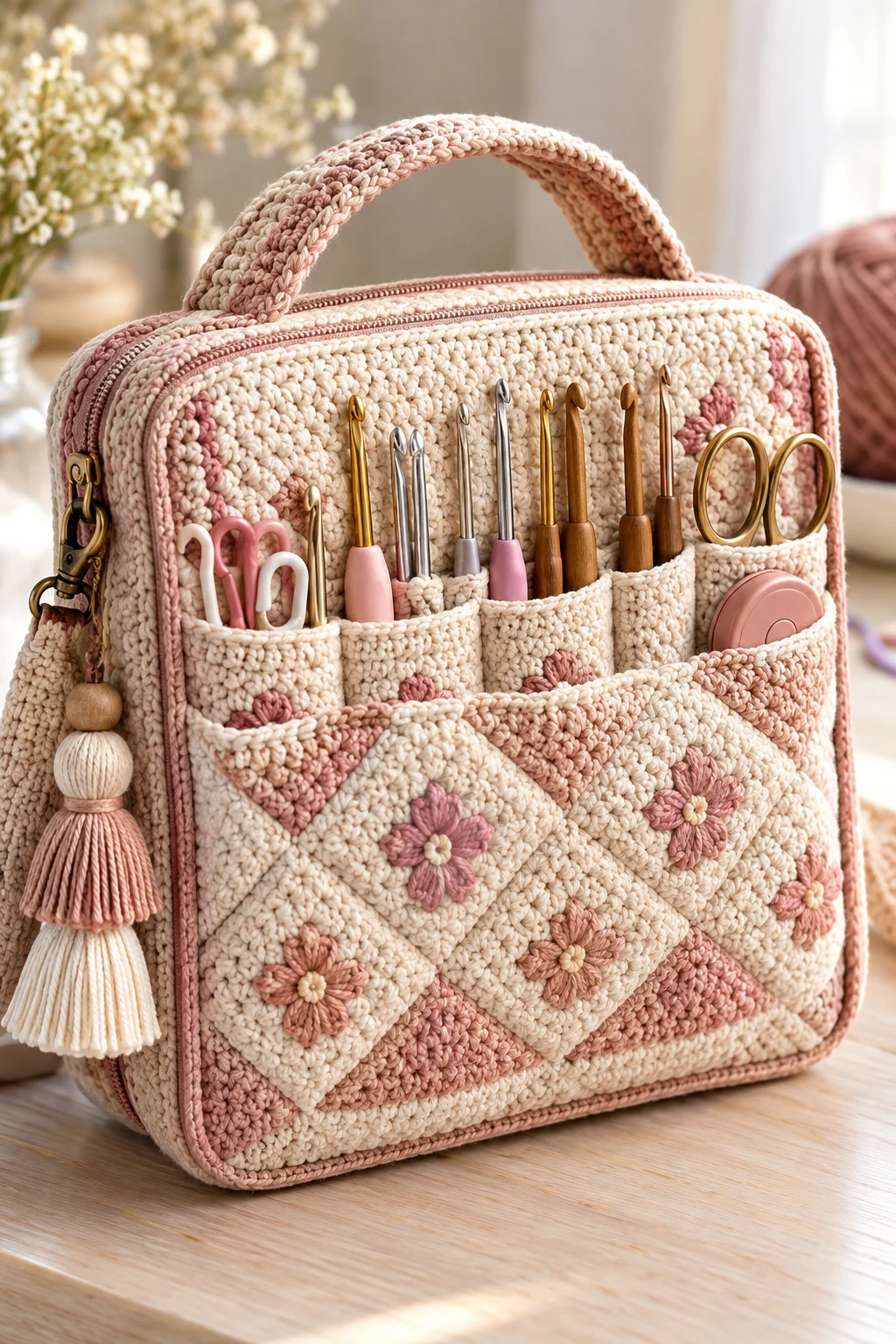
17. Personalized Crochet Hook Bag
Personalization transforms an ordinary organizer into a thoughtful handmade gift. Embroider initials, a first name, or a tiny ball-of-yarn motif on a canvas crochet hook bag. Navy thread on cream fabric creates a classic appearance, while white embroidery on dusty rose feels softer.
Add a small card listing the recipient’s favorite hook sizes or include a few useful accessories inside. If you use iron-on lettering, check that the fabric can tolerate the required heat.
The key to this look/technique is placing the embroidery where it remains visible after the bag folds or closes.
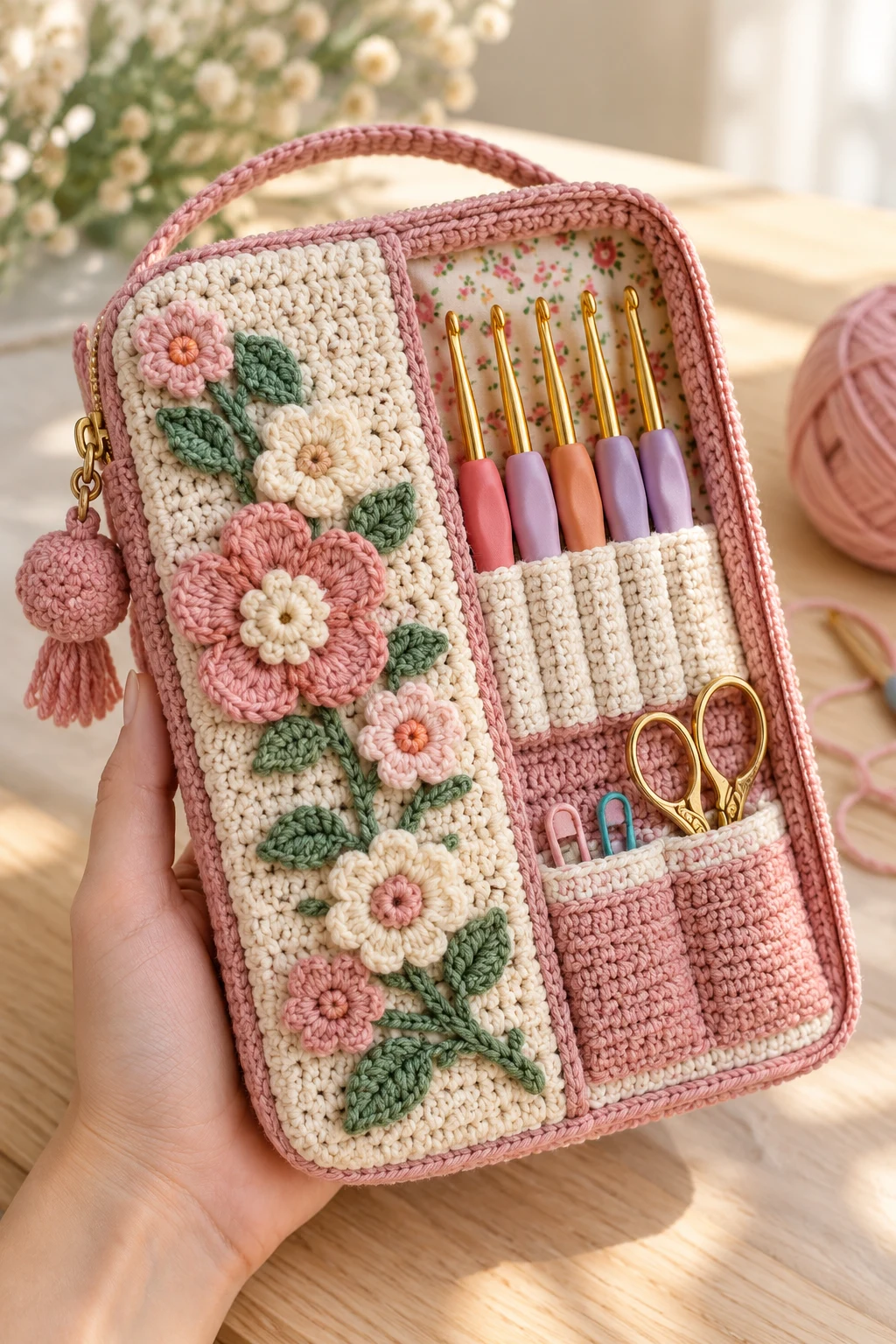
18. Oversized Crochet Hook Bag for Large Hooks
Crafters who use large ergonomic hooks or specialty tools need wider compartments than a standard needle case provides. Build a roomy organizer with deep pockets and a reinforced body, leaving enough space for thick handles and hook accessories.
When choosing a crochet hook size for bag construction, follow the yarn or pattern recommendation first, then make a gauge swatch. The best hook size depends on the yarn, desired firmness, and stitch pattern rather than the bag’s name alone.
The key to this look/technique is measuring your largest tools and testing your stitch tension before committing to the final dimensions.
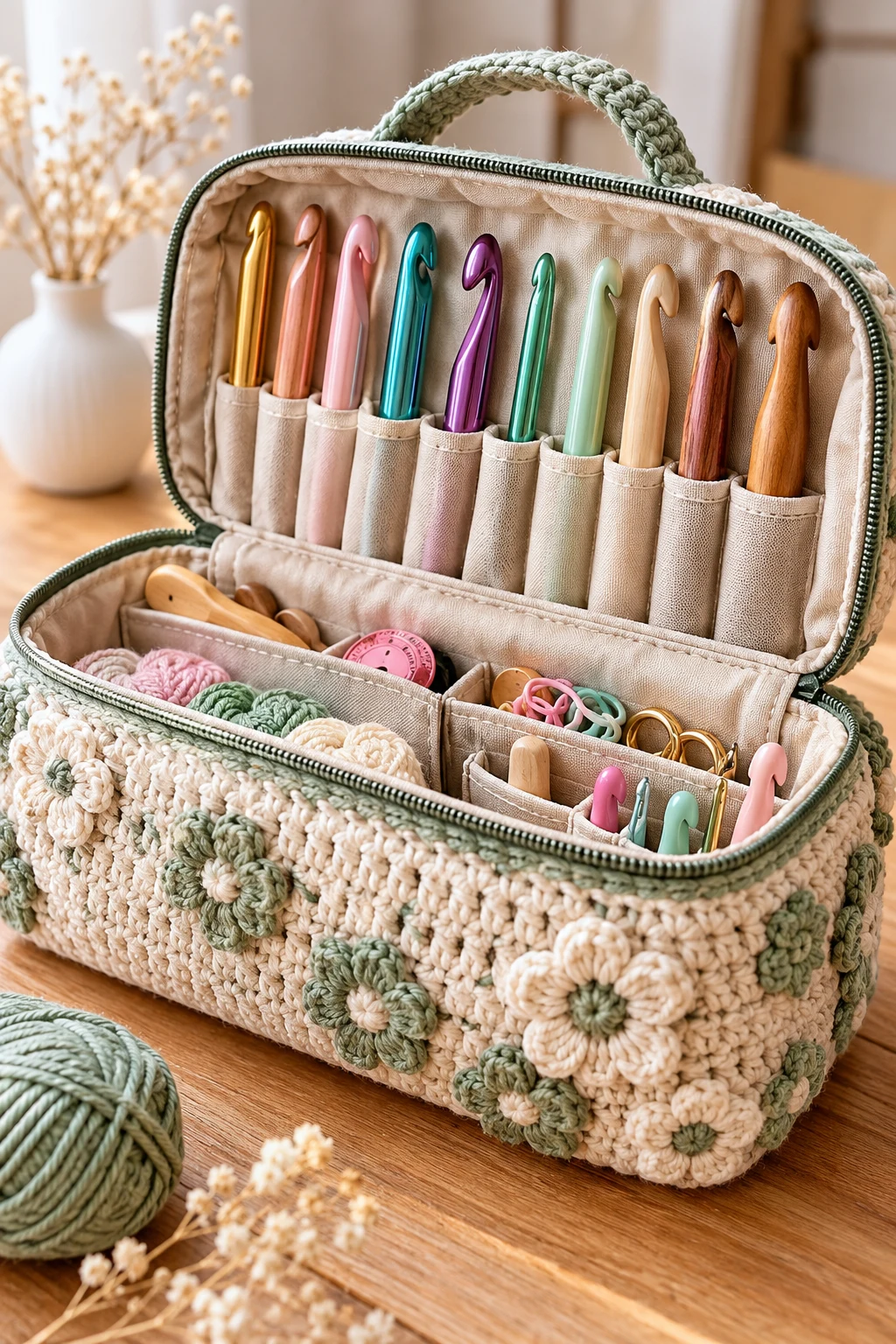
19. Free-Pattern-Inspired Crochet Hook Bag
A crochet hook bag pattern free of complicated shaping is a good starting point if you want to make your own organizer without investing in an elaborate design. Look for beginner patterns that explain the stitch count, finished measurements, pocket construction, and closure options.
You can also adapt a basic crochet needle bag pattern by adding a flap, a button loop, or a small fabric lining. Always check the pattern’s usage terms if you intend to sell finished bags made from it.
The key to this look/technique is choosing a pattern with clear measurements and adapting the pocket layout to your own tools.
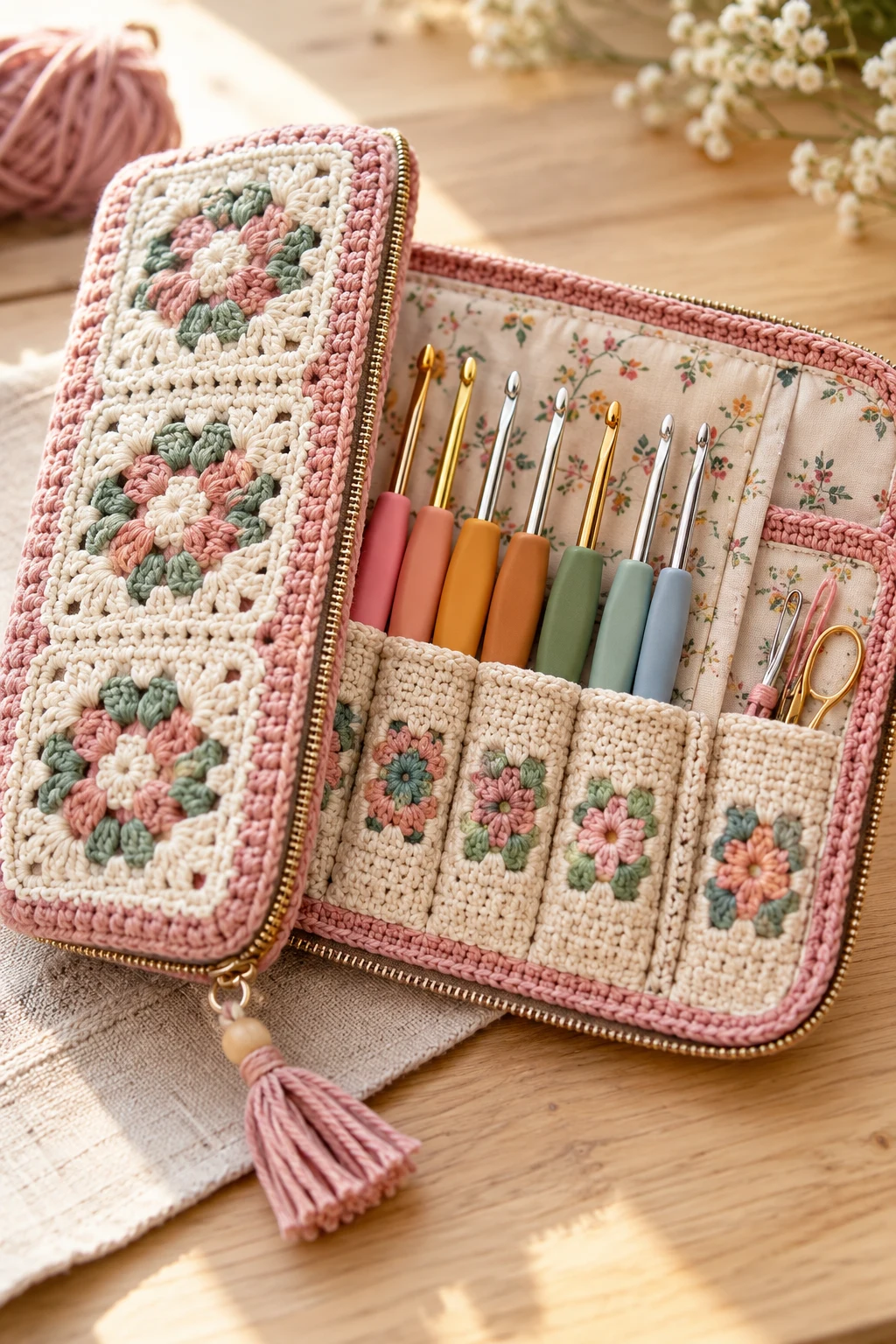
20. Reversible Crochet Hook Bag
A reversible crochet hook bag gives you two looks in one project. Pair a bold botanical print with a solid sage-green fabric, or combine navy gingham with mustard cotton. With careful construction, you can turn the bag inside out to reveal a completely different style.
Plan the pockets and closures before cutting the fabric, because reversible designs require neat finishing on both sides. A simple fold-over flap or tie closure works well when you want to avoid visible zipper tape.
The key to this look/technique is finishing both sides cleanly and keeping the pocket seams concealed between the layers.
FAQ: Crochet Hook Bag Ideas and Techniques
What is the best material for a crochet hook bag?
Medium-weight cotton, canvas, and tightly stitched cotton yarn are popular choices because they are durable and easy to customize. Add a lining or interfacing when you need extra structure or protection for small tools.
How do you make a crochet hook bag for beginners?
Start with a rectangular fabric pouch or crocheted panel, add several pockets sized for your hooks, and finish with a button, zipper, or drawstring. A simple crochet hook bag tutorial with clear measurements can help you avoid sizing mistakes.
Why should you line a crochet hook bag?
A lining helps prevent hooks, stitch markers, and yarn needles from slipping through stitch gaps or catching on loose fibers. It can also improve durability and give a handmade organizer a more finished appearance.
📚 You Might Also Like
- Brown crochet bag tutorial — Free PatternChic Everyday Crochet Shoulder Bag Pattern I am so excited to share this brown crochet bag tutorial…
- Star messenger bag crochet: 20 Easy DIY Ideas for 2026If you are looking to combine utility with whimsical geometry, crafting a star messenger bag crochet…
- Chunky crochet bag pattern free: 15 Gorgeous DIY IdeasFinding a reliable chunky crochet bag pattern free online can completely transform your weekend craf…
- Crochet bag white: 20 Easy DIY Ideas for 2026A crochet bag white design is a handmade accessory created with white or cream-colored yarn using cr…
- Crochet mesh bag pattern free: 15 Amazing DIY IdeasLooking for a charming handmade accessory that captures both playful whimsy and everyday utility? A…
The Bottom Line
The best crochet hook bag is one that matches your tools, crafting habits, and personal style. A simple roll-up case works beautifully for everyday organization, while a roomy travel bag can hold hooks, yarn, and patterns for crafting on the go. If you enjoy DIY projects, experiment with granny squares, patchwork, floral appliqués, or reversible fabrics to create something uniquely yours. Choose durable materials, measure your hooks before sewing, and reinforce areas that experience regular wear. Most importantly, make your crochet hook bag practical enough to use every day and pretty enough to make you smile whenever you reach for your favorite hook.
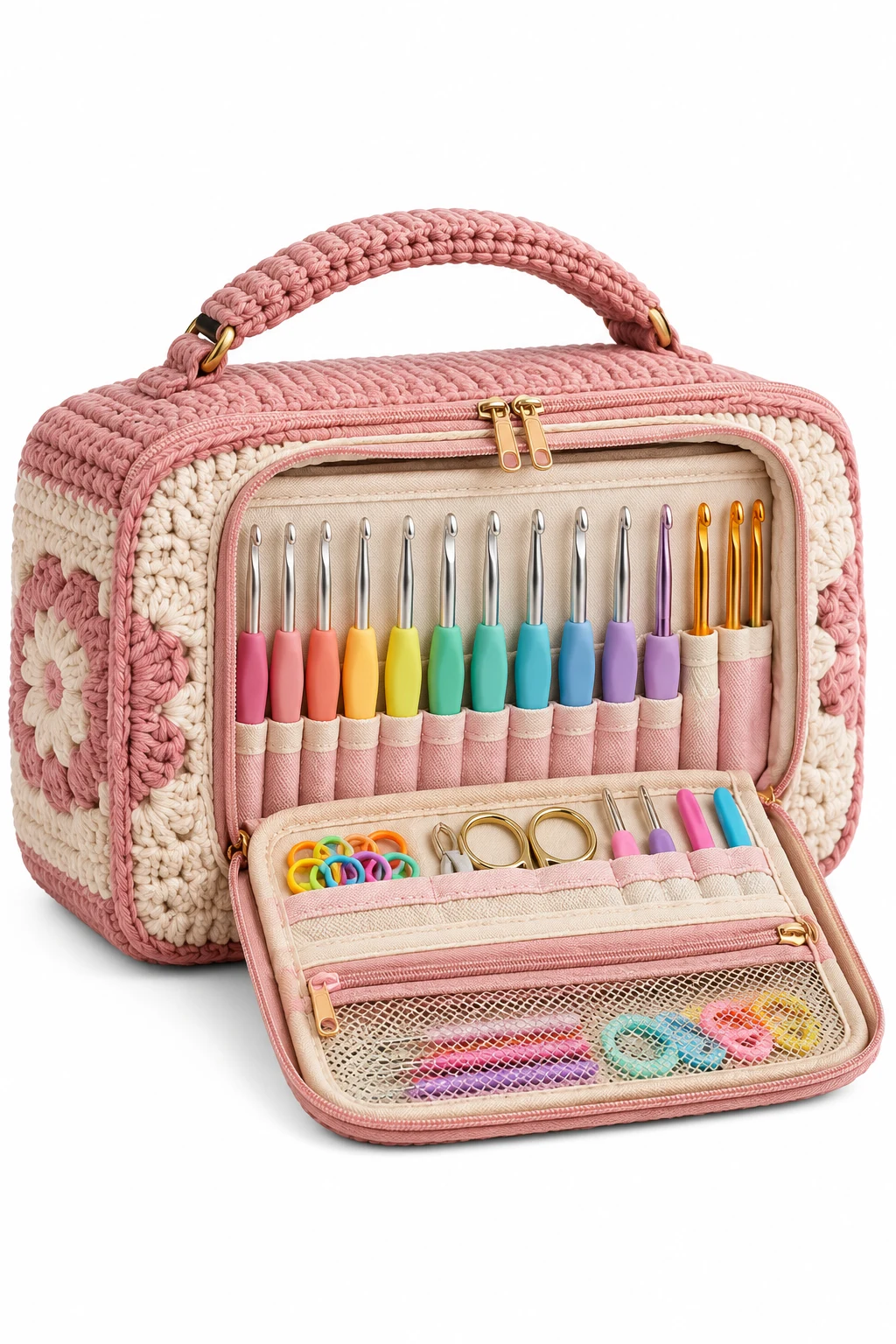
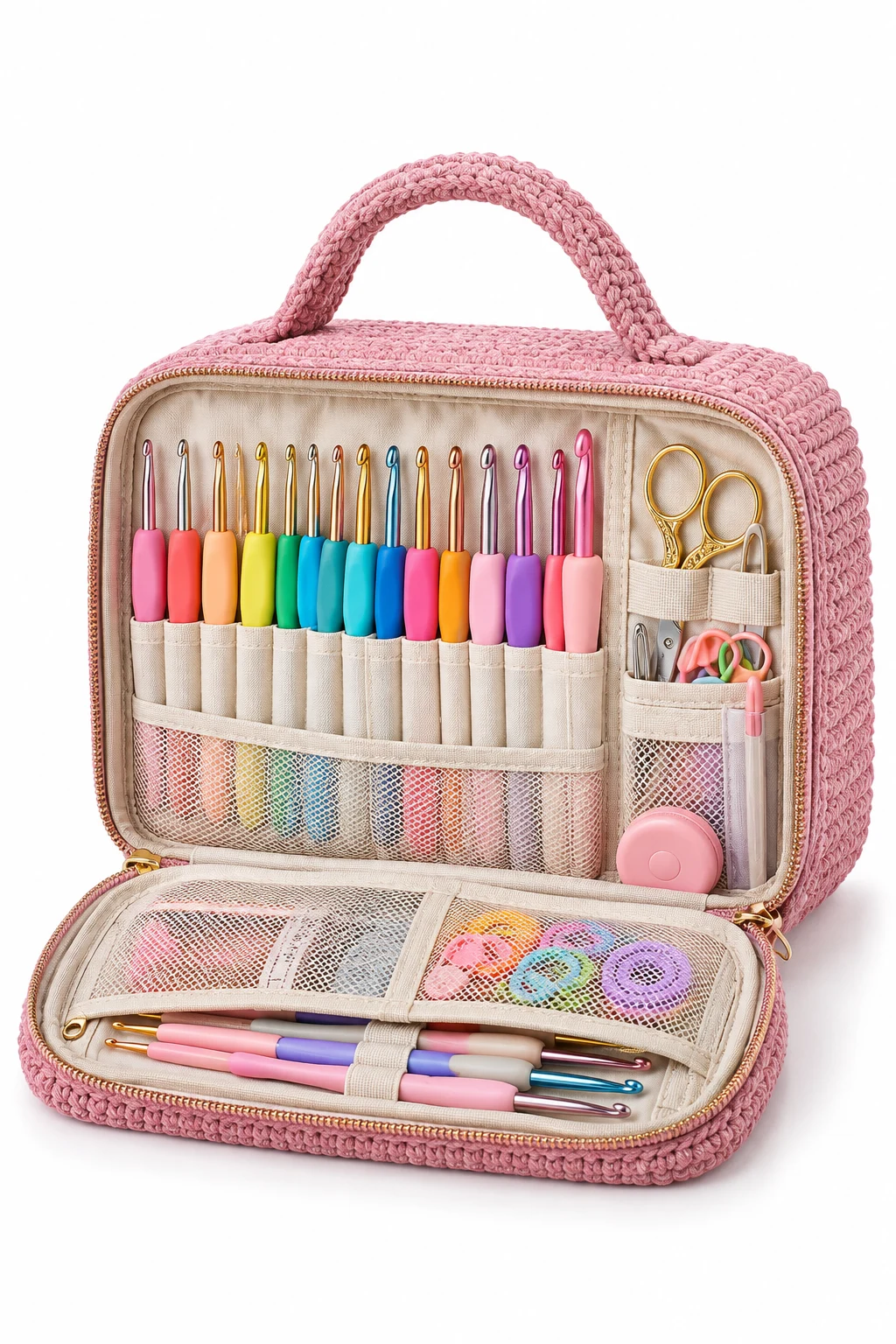
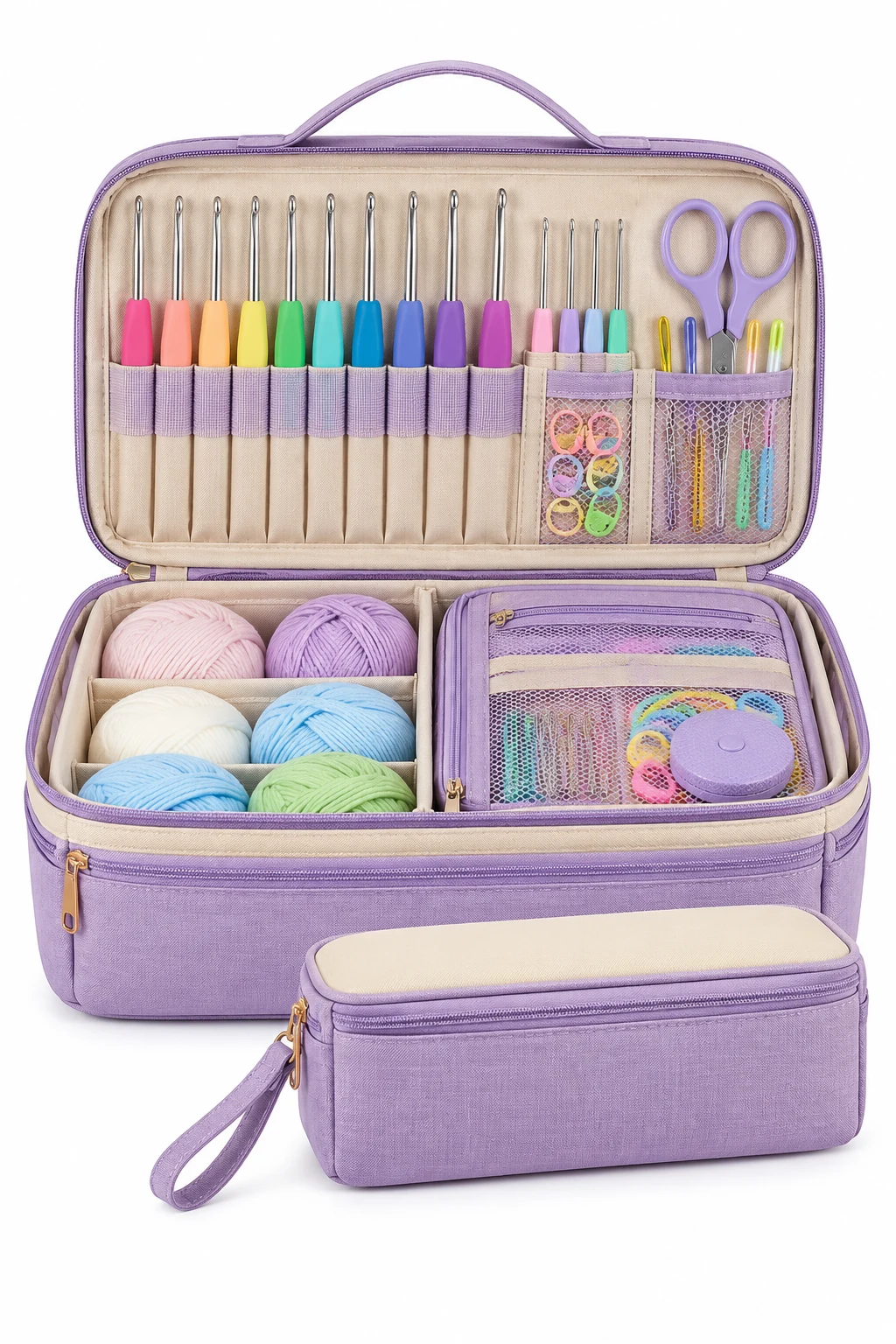
🛍️ Shop the Look — Best Sellers for crochet hook bag
Our handpicked Amazon best sellers curated specifically for crochet hook bag:
As an Amazon Associate I earn from qualifying purchases.