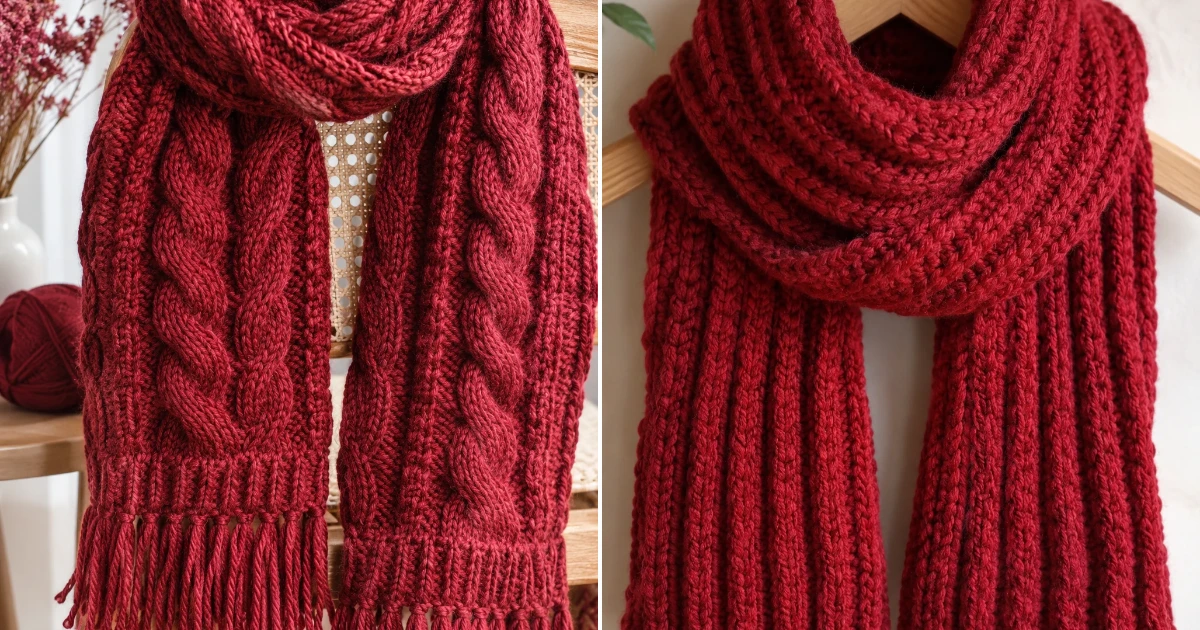
Scarf knitting patterns are step-by-step knitting designs that show you how to create handmade scarves using different stitches, yarn weights, colors, and techniques. Whether you’re picking up knitting needles for the first time or looking for a creative weekend project, the right scarf knitting patterns can turn a few skeins of yarn into something genuinely special. From chunky oversized scarves to delicate lace designs, there’s a style for every skill level, wardrobe, and season. The best part? You don’t need an elaborate setup or expensive supplies to get started. With comfortable needles, beautiful yarn, and a little patience, you can make scarves for yourself, thoughtful handmade gifts, or even your own winter accessories collection.
1. Chunky Ribbed Winter Scarf
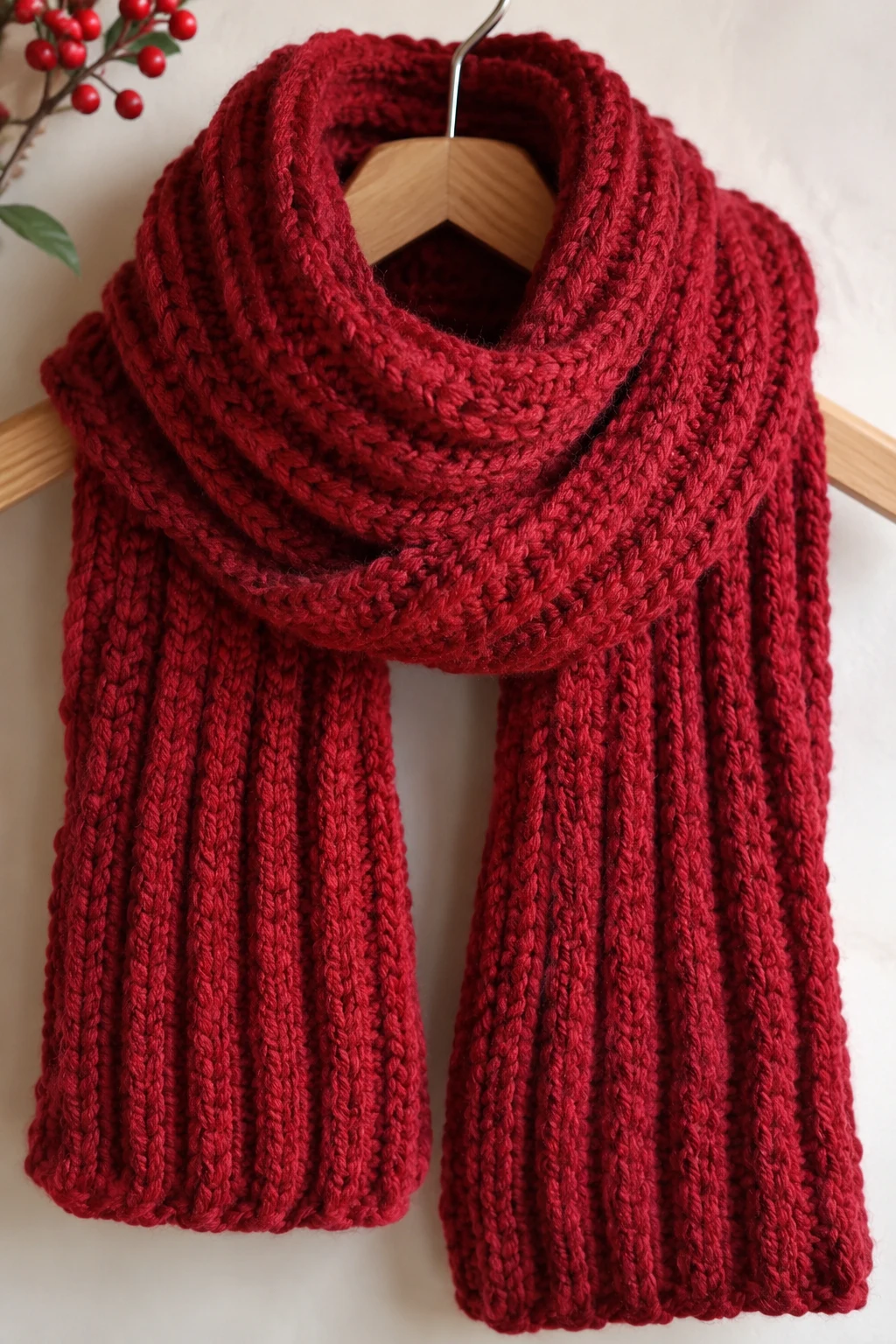
If you love cozy accessories that make a statement, a chunky ribbed scarf deserves a place at the top of your knitting project list. This design features thick, raised vertical columns created with alternating knit and purl stitches. Choose cream, oatmeal, charcoal gray, or chocolate brown for a timeless winter accessory that pairs beautifully with wool coats and oversized sweaters.
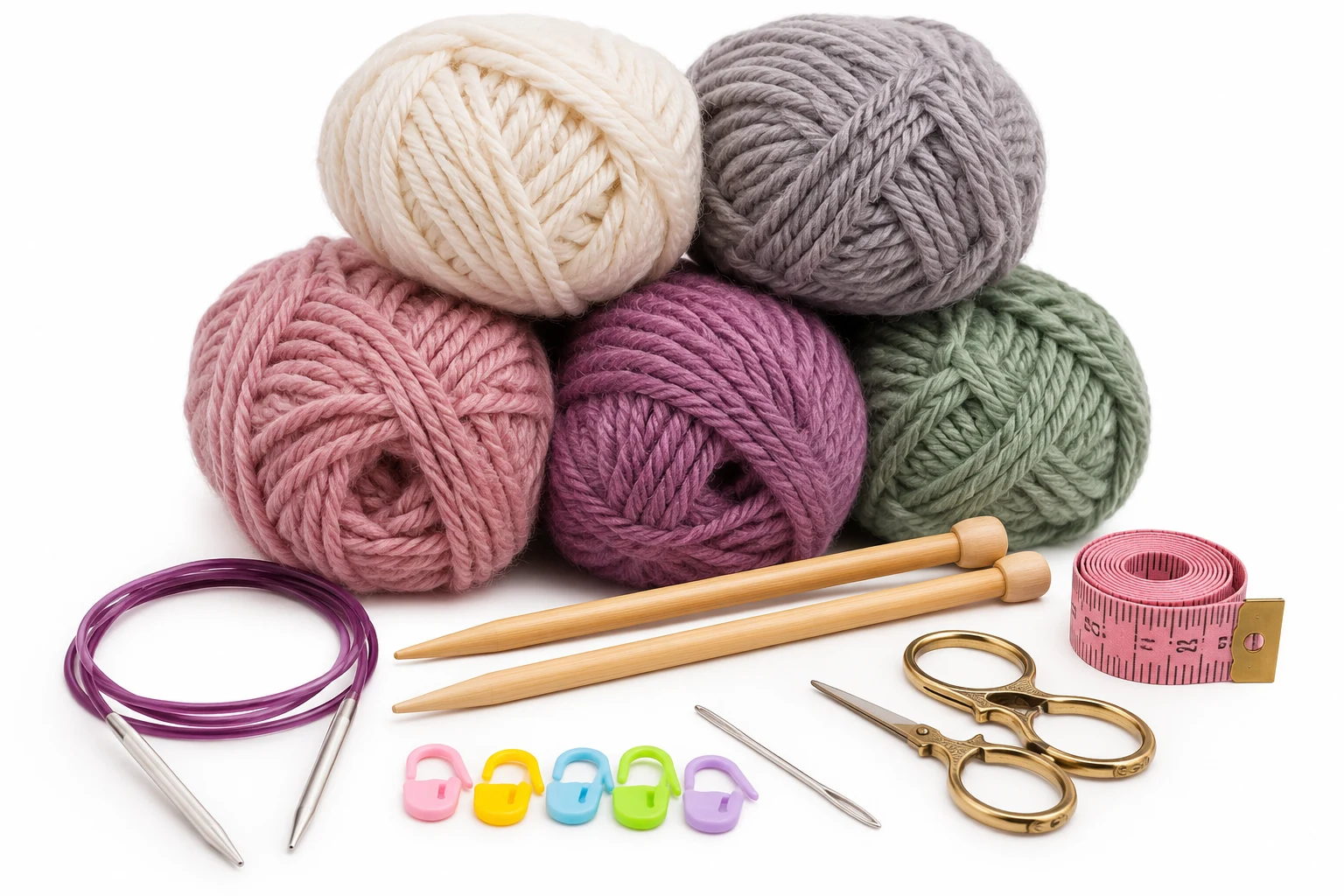
For this project, grab bulky-weight yarn, 8–10 mm knitting needles, and a pair of scissors. A simple knit-one, purl-one rib creates an attractive stretchy texture without complicated stitch combinations. It’s also a fantastic option for anyone exploring scarf knitting patterns for beginners.
Pro tip: Keep your tension relaxed so the thick stitches remain soft and flexible instead of stiff.
The key to this look is using bulky yarn with consistent ribbing to create a plush, stretchy texture.
📺 Video tutorial: Chunky Ribbed Winter Scarf
2. Classic Garter Stitch Scarf
Sometimes the simplest designs become the most wearable. A garter stitch scarf uses knit stitches on every row, creating distinctive horizontal ridges that look beautiful in almost any yarn color. It’s an especially good starting point if you’ve never knitted anything before.
Choose soft acrylic yarn, worsted-weight wool, or a beginner-friendly wool blend. A pair of 5 mm straight knitting needles works well for many worsted-weight yarns, although you should always check the yarn label. This is one of the easiest scarf knitting patterns free for beginners to explore because you only need to master one basic stitch.
Try dusty pink for a feminine accessory, forest green for autumn, or classic navy for everyday wear.
Pro tip: Add fringe to both ends for a polished boutique-style finish.
The key to this look is knitting every row consistently to produce the signature ridged garter stitch fabric.
📺 Video tutorial: Classic Garter Stitch Scarf
3. Oversized Blanket Scarf
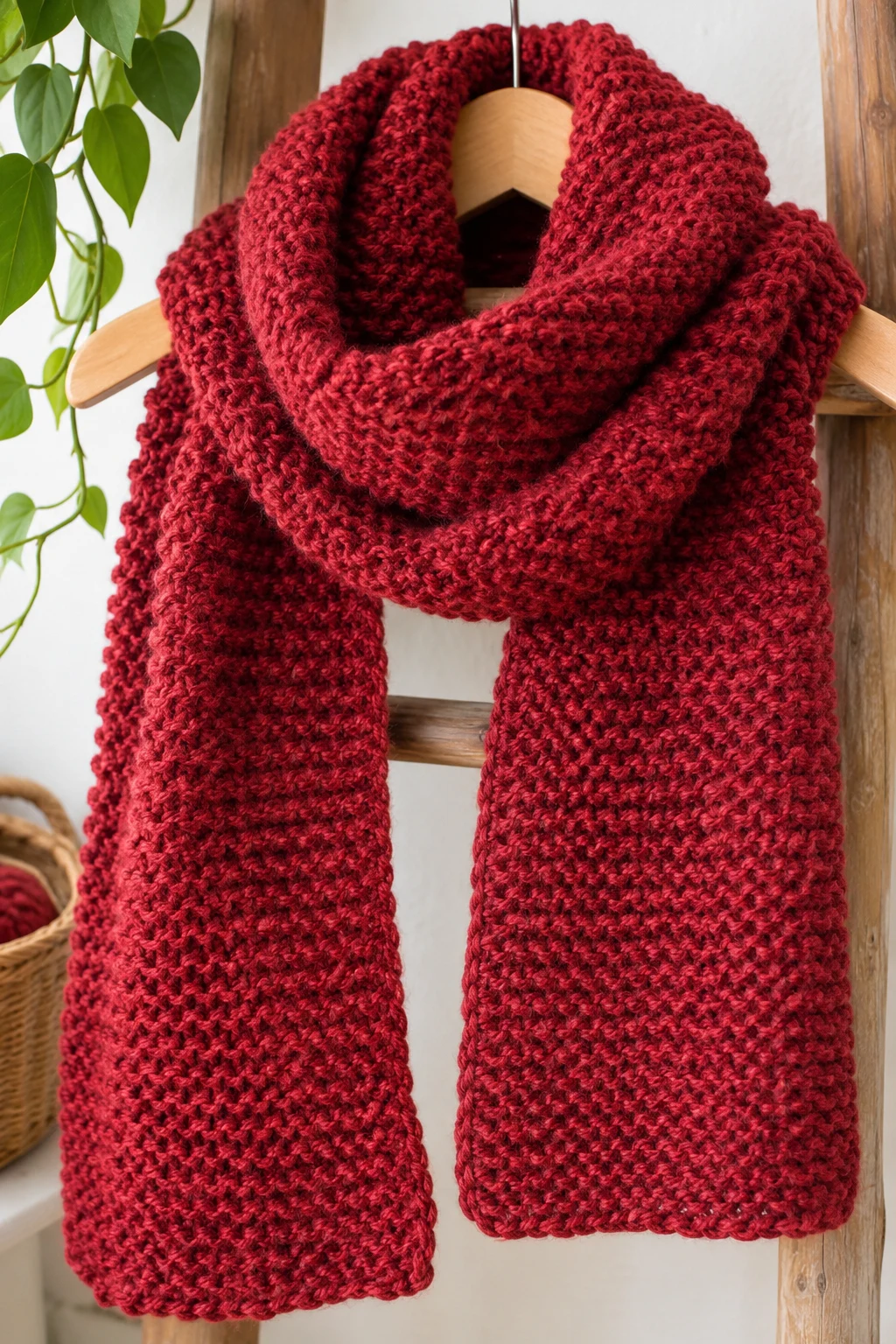
Why settle for an ordinary scarf when you can knit something that doubles as a cozy wrap? An oversized blanket scarf offers generous width and length, making it perfect for layering over jackets, sweaters, and long winter coats.
For this project, choose super bulky yarn, large circular knitting needles, and a simple stockinette or garter stitch pattern. Neutral shades such as camel, ivory, taupe, and warm gray create an expensive-looking finish without requiring complicated techniques.
Circular needles are particularly useful because they can hold a large number of stitches comfortably, even when you’re knitting back and forth rather than in the round.
Pro tip: Add a few rows of garter stitch along the edges to help prevent curling.
The key to this look is generous dimensions, soft bulky yarn, and a simple stitch that creates a beautiful drape.
📺 Video tutorial: Oversized Blanket Scarf
4. Beautiful Seed Stitch Scarf
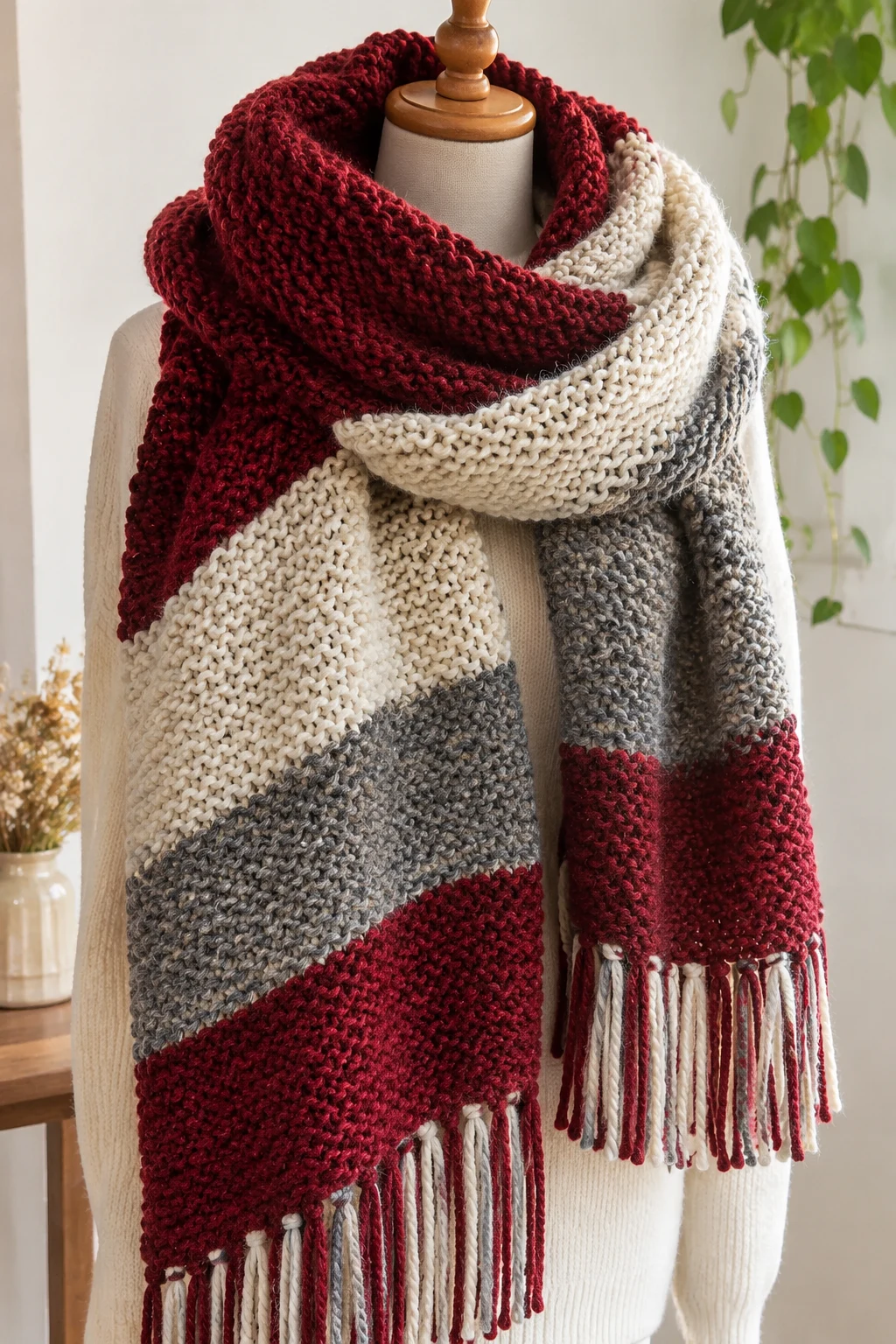
The seed stitch scarf is proof that texture doesn’t have to be complicated. This design alternates knit and purl stitches to create tiny raised bumps across the fabric. The result looks almost like delicate beads scattered across the scarf.
Use DK-weight yarn, 4–5 mm knitting needles, and a stitch marker if you need help keeping track of your rows. Sage green, dusty lavender, burgundy, and soft cream are particularly pretty choices.
Unlike stockinette stitch, seed stitch naturally creates a reversible texture, so both sides of your scarf look attractive. That makes it practical for everyday wear.
Pro tip: Use a smooth, solid-colored yarn to make every little stitch stand out.
The key to this look is alternating knit and purl stitches to create an evenly distributed, pebbled texture on both sides.
📺 Video tutorial: Beautiful Seed Stitch Scarf
5. Striped Color-Block Scarf
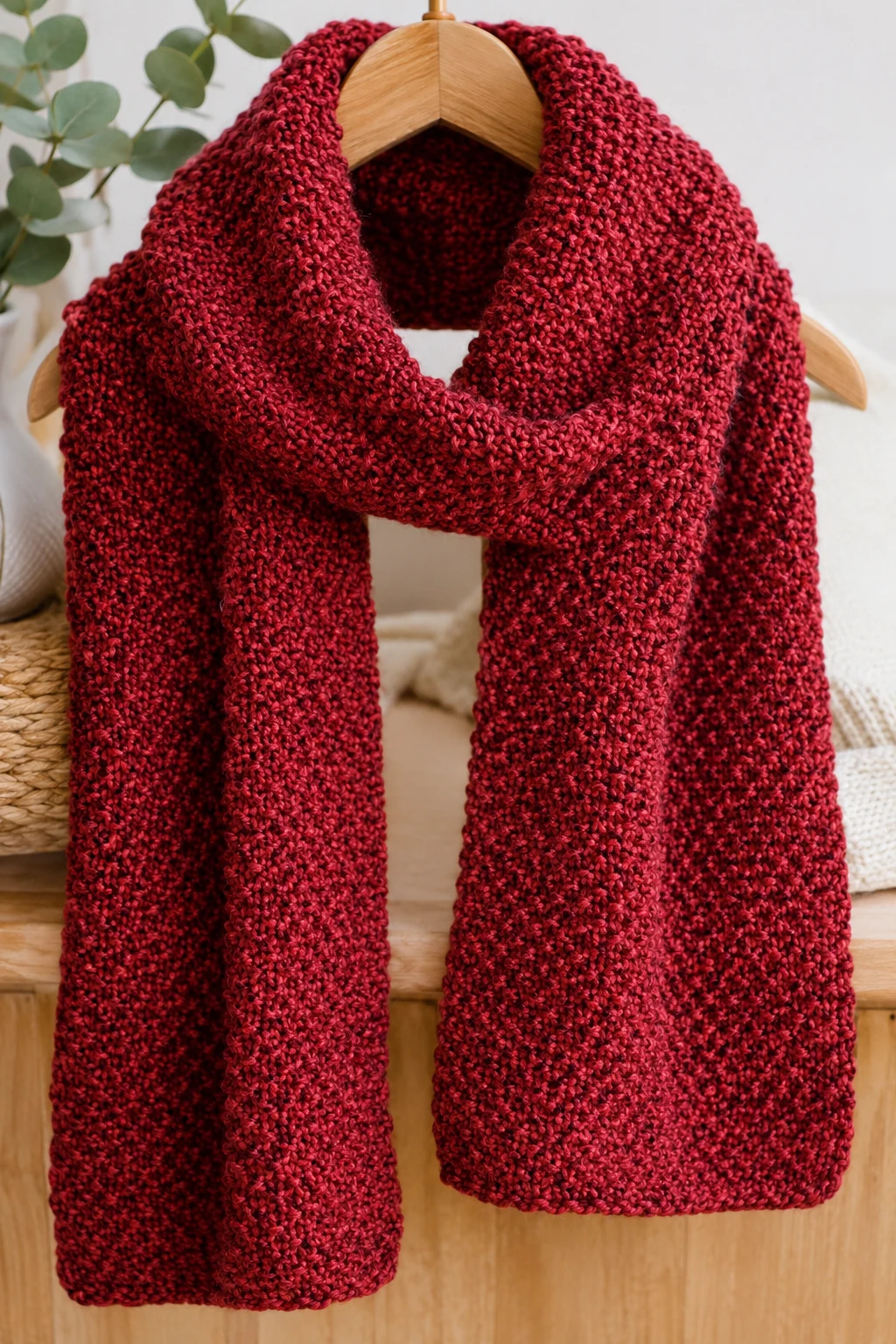
Can’t decide on just one yarn color? A striped scarf lets you combine several shades into one eye-catching accessory. Think mustard yellow with rust orange, burgundy with cream, or dusty blue with charcoal gray.
This project works beautifully with worsted-weight yarn, 5 mm knitting needles, and a basic garter or stockinette stitch. You can create evenly spaced stripes or experiment with wide color blocks for a modern design.
One clever approach is to use leftover yarn from previous projects. It’s an affordable way to create something colorful without buying an entire new yarn collection.
Pro tip: Change colors at the beginning of a row to keep the transitions clean and tidy.
The key to this look is combining complementary yarn colors with deliberate stripe widths and neat color changes.
📺 Video tutorial: Striped Color-Block Scarf
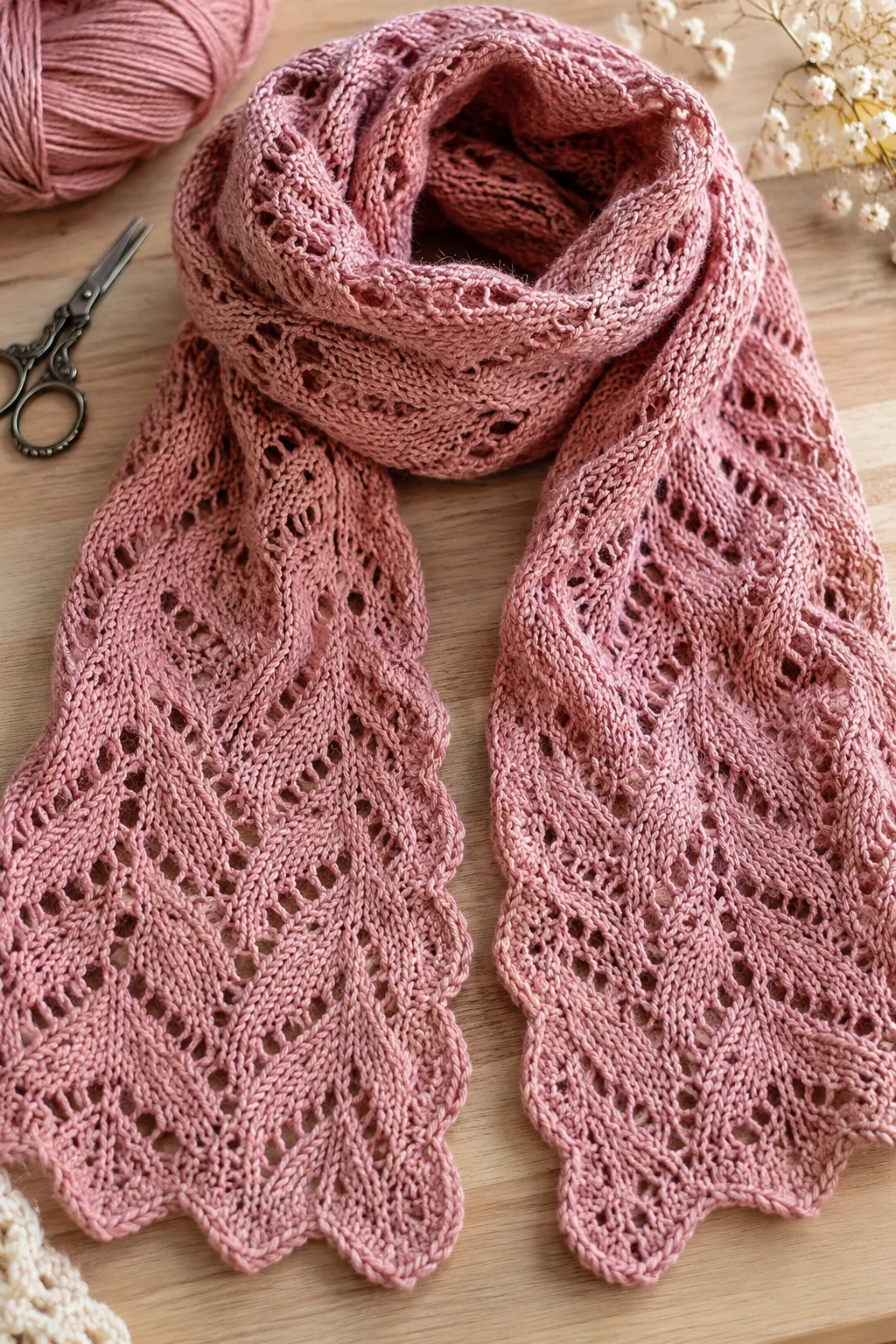
6. Elegant Lace Knitted Scarf
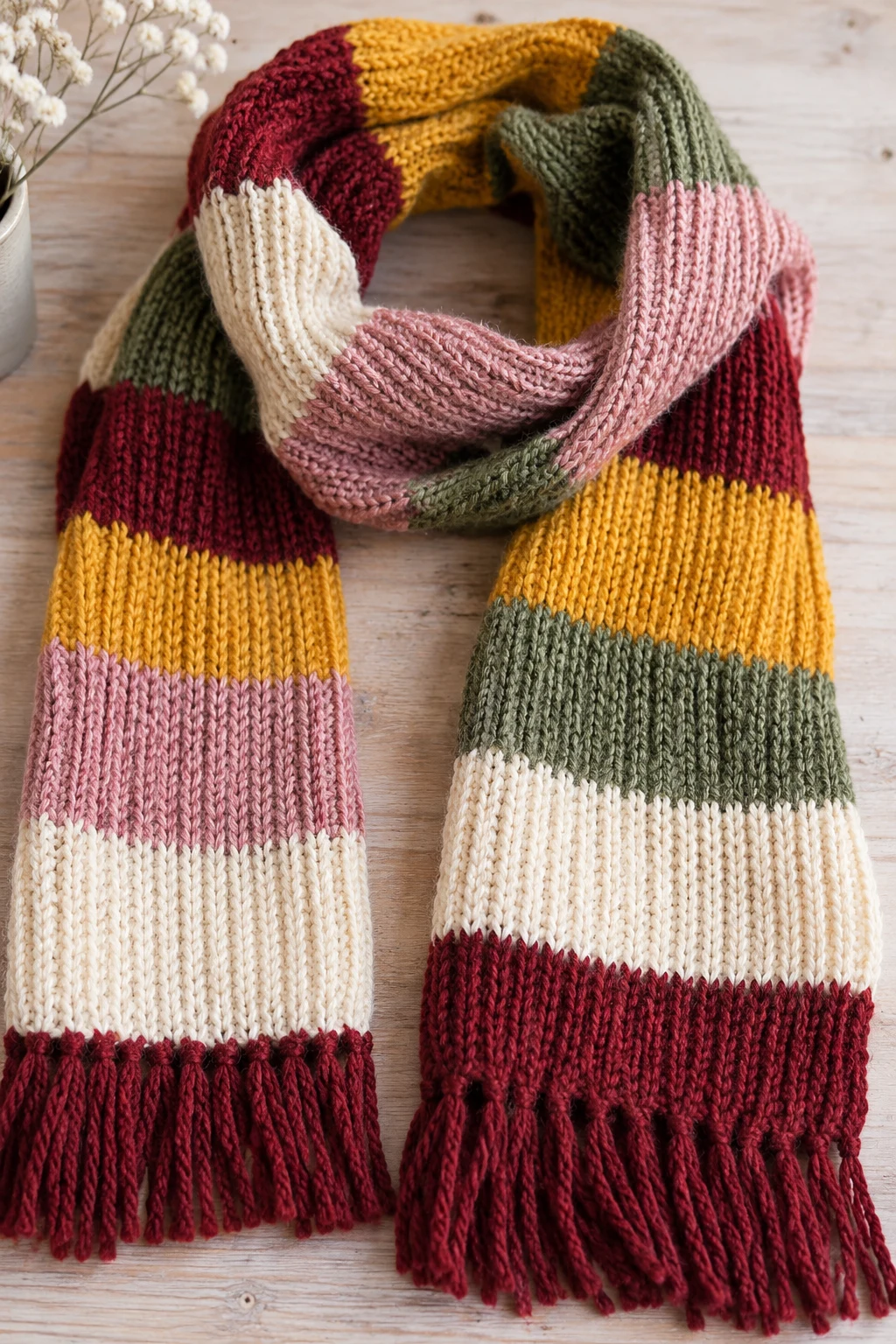
For something more delicate, try a lace scarf with beautiful openwork details. This design features small decorative holes created through yarn overs and decreases, producing patterns that resemble leaves, diamonds, or tiny flowers.
Choose lace-weight or fingering-weight yarn, 3–4 mm knitting needles, and a written lace stitch chart. Merino wool, alpaca blends, and cotton yarn can all create lovely results depending on the desired drape.
This design is particularly beautiful in ivory, champagne, pale blue, or blush pink. It works wonderfully as a spring accessory or a thoughtful handmade gift.
Lace knitting requires a little more concentration, so use stitch markers to separate pattern repeats.
Pro tip: Blocking your finished scarf helps open up the lacework and reveal its full design.
The key to this look is combining yarn overs and decreases to create delicate, symmetrical openwork patterns.
7. Reversible Fisherman’s Rib Scarf
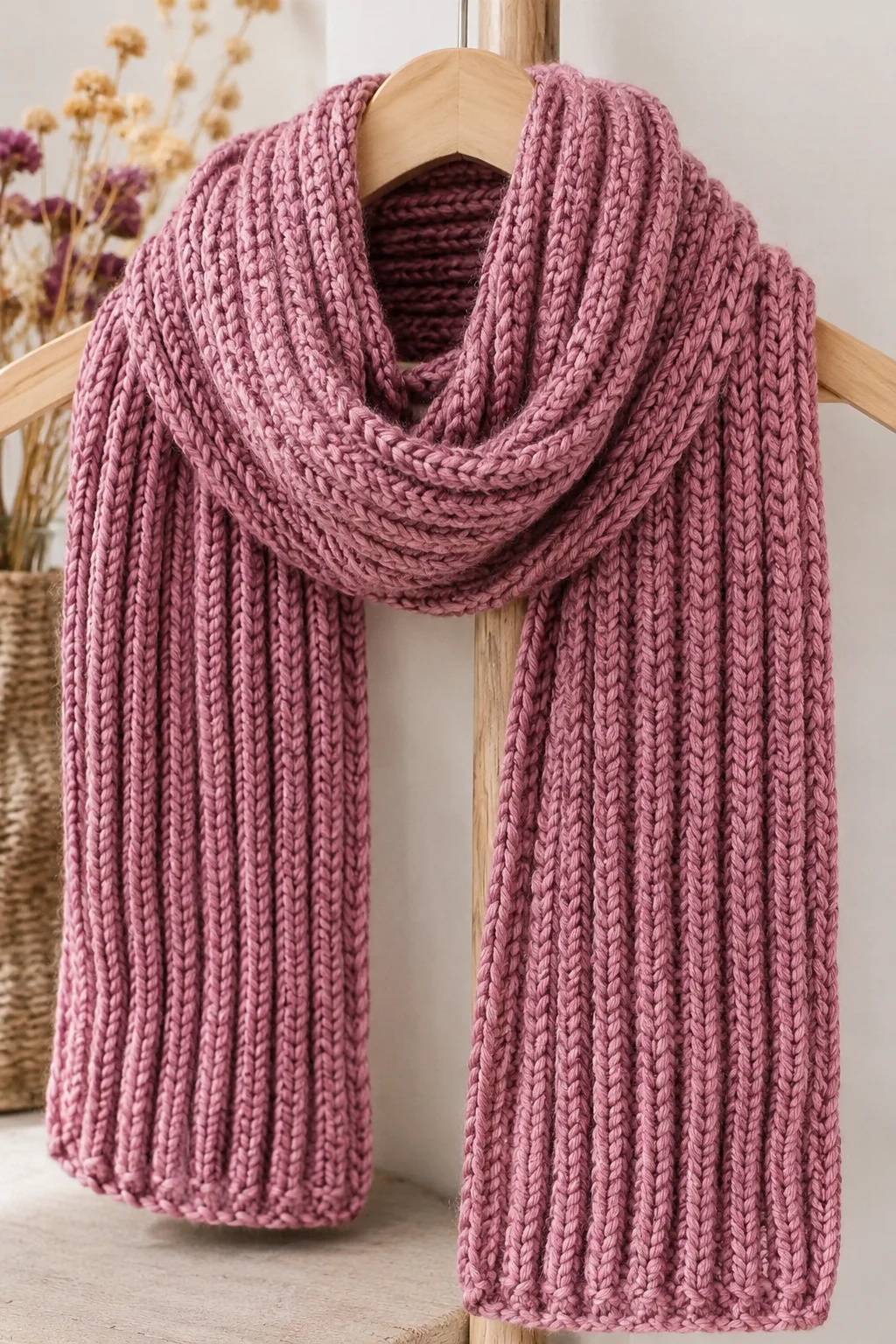
Want a scarf that looks equally beautiful on both sides? Fisherman’s rib is an excellent choice. This technique produces deep, plush vertical columns with an almost sculptural texture.
Use bulky wool yarn, 6–8 mm knitting needles, and a little patience while learning the stitch pattern. The fabric is thick, stretchy, and wonderfully warm, making it a great option for cold-weather accessories.
A deep navy or charcoal version looks especially handsome for men’s winter wardrobes. Alternatively, try warm oatmeal or soft ivory for a minimalist style.
If you’re browsing scarf knitting patterns for men, this design is a particularly versatile option because it looks sophisticated without feeling overly decorative.
Pro tip: Check your stitch gauge before starting because fisherman’s rib can use considerably more yarn than ordinary ribbing.
The key to this look is creating deep ribbed columns with a specialized rib technique for a thick, reversible finish.
8. Beginner Scarf with Fringe
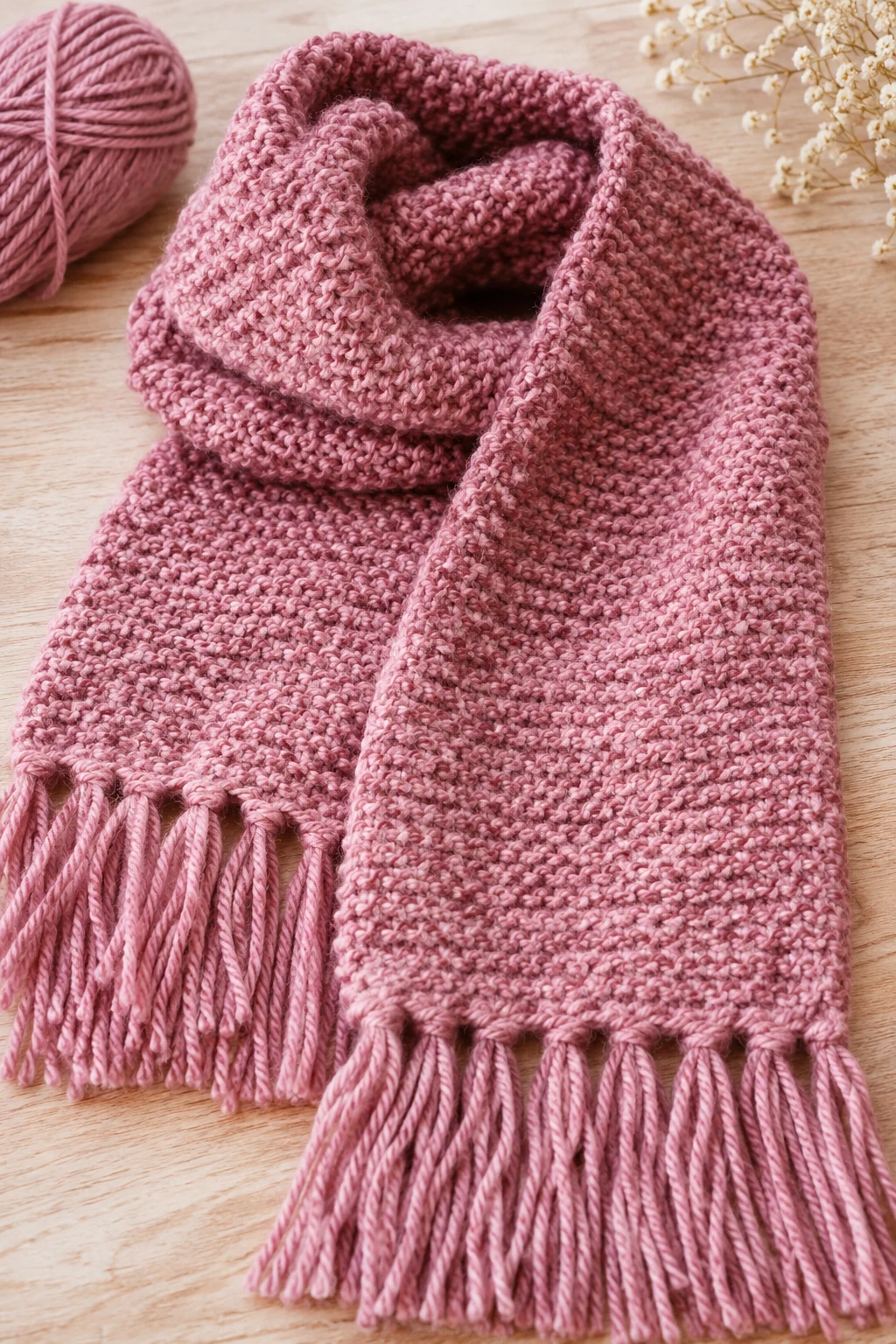
A fringe scarf is a wonderful project when you want a handmade accessory with a little extra personality. The main scarf can use a basic garter stitch, stockinette stitch, or simple ribbing, while long tassels add movement and decorative detail.
You’ll need medium-weight yarn, straight knitting needles, scissors, and a piece of cardboard to help measure your fringe evenly. Choose warm caramel, dusty rose, ivory, or classic black.
Pro tip: Make your fringe pieces slightly longer than you think necessary because you’ll fold them in half when attaching them.
The key to this look is a simple knitted rectangle finished with evenly spaced yarn tassels along both short edges.
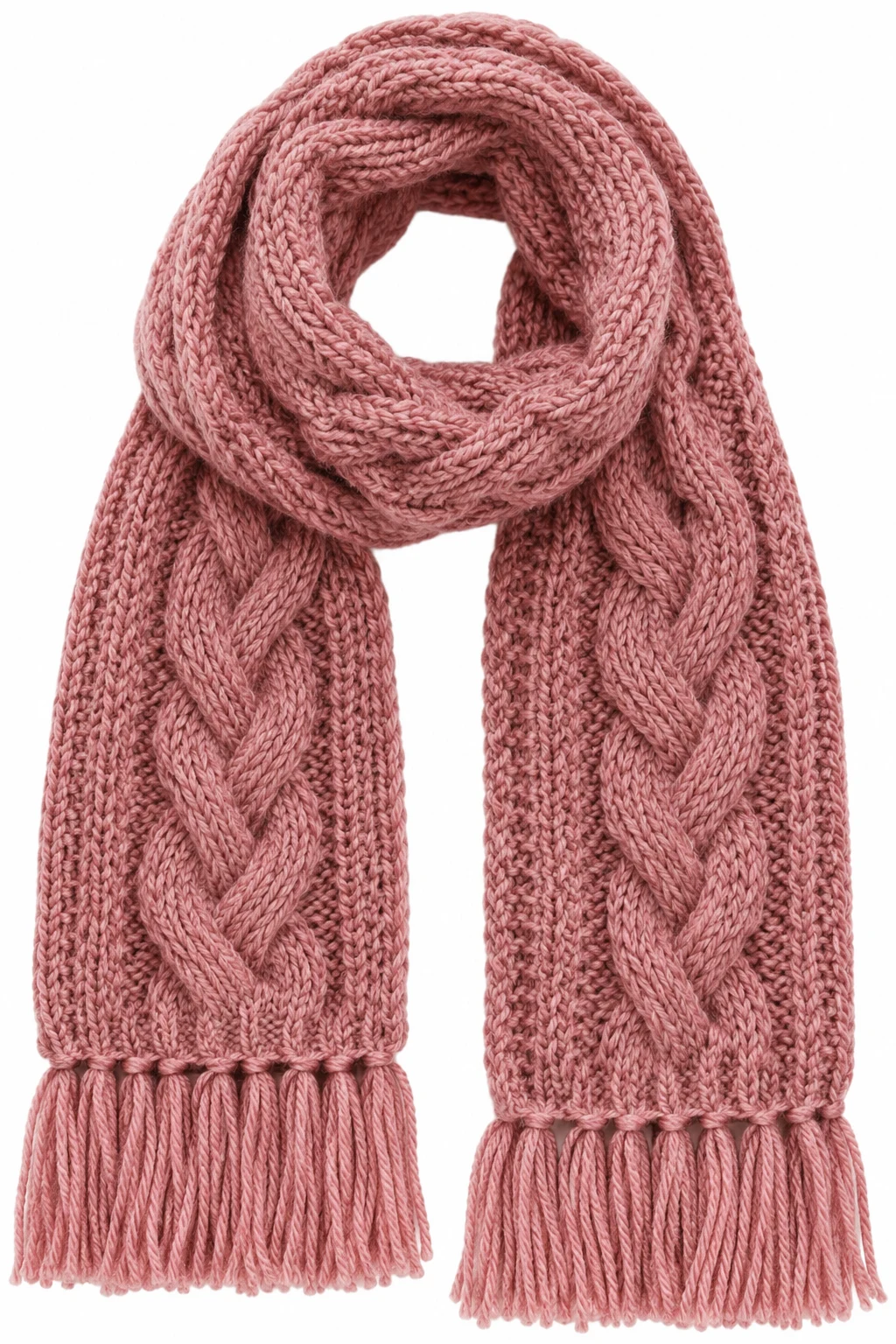
9. Cable Knit Braided Scarf
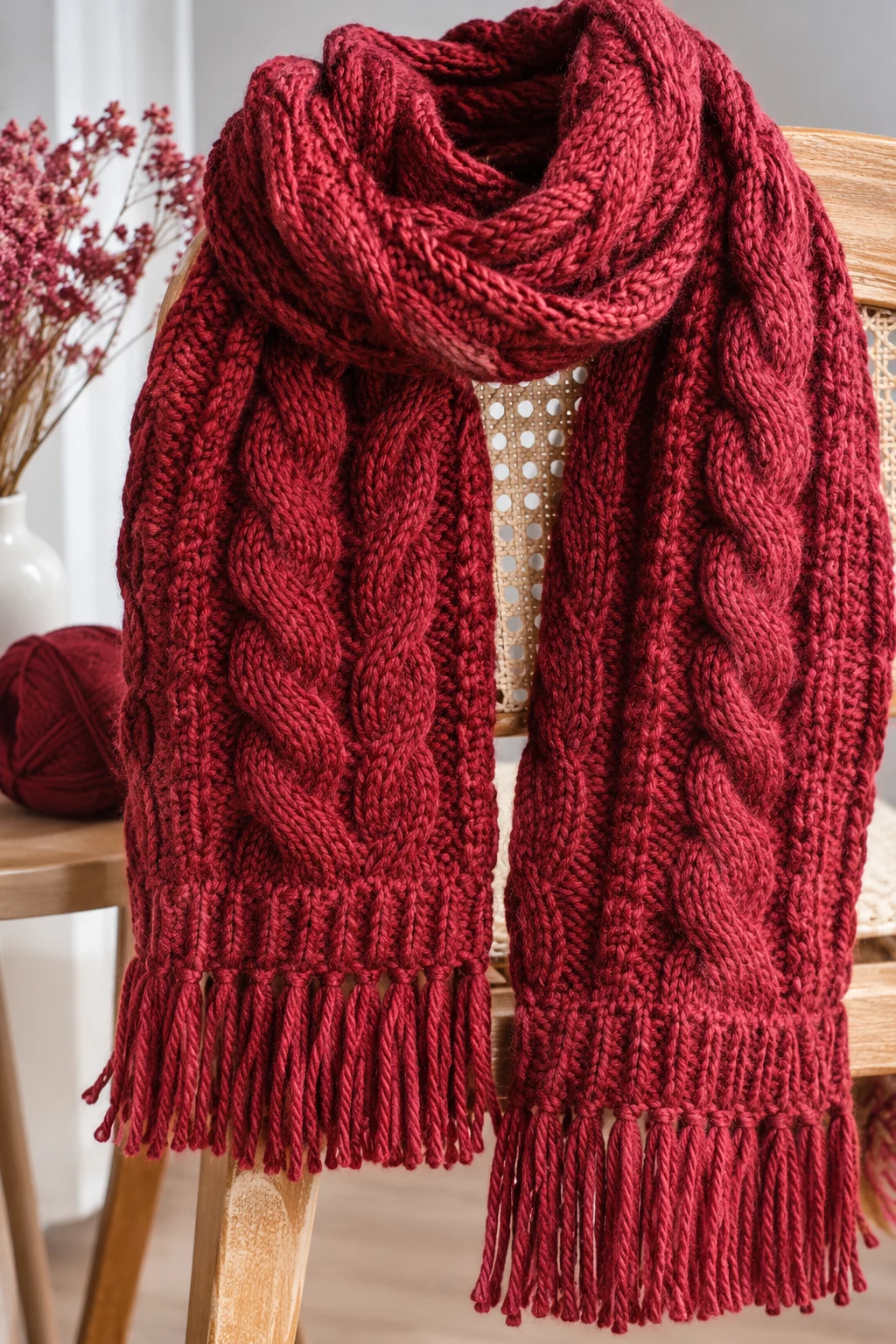
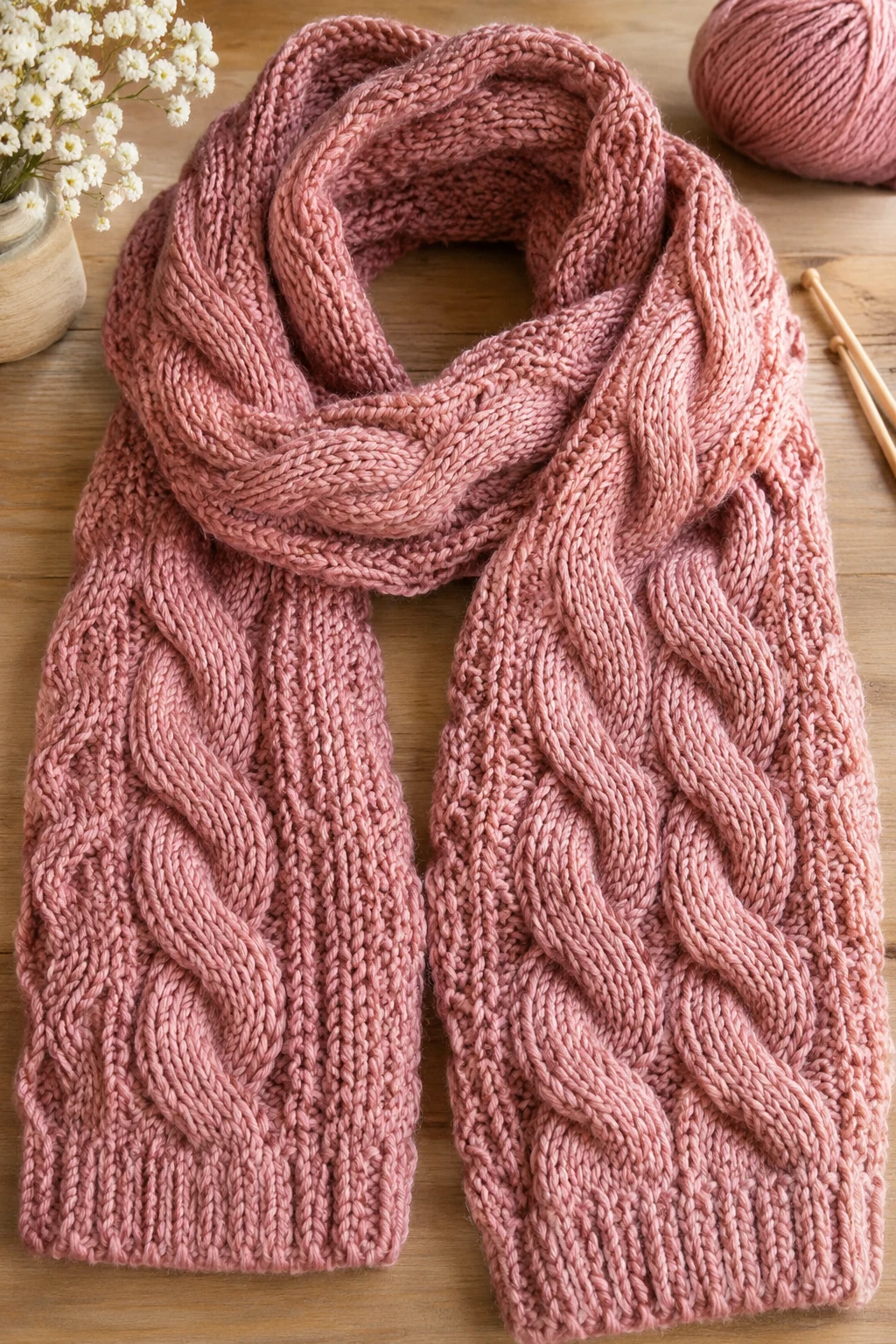
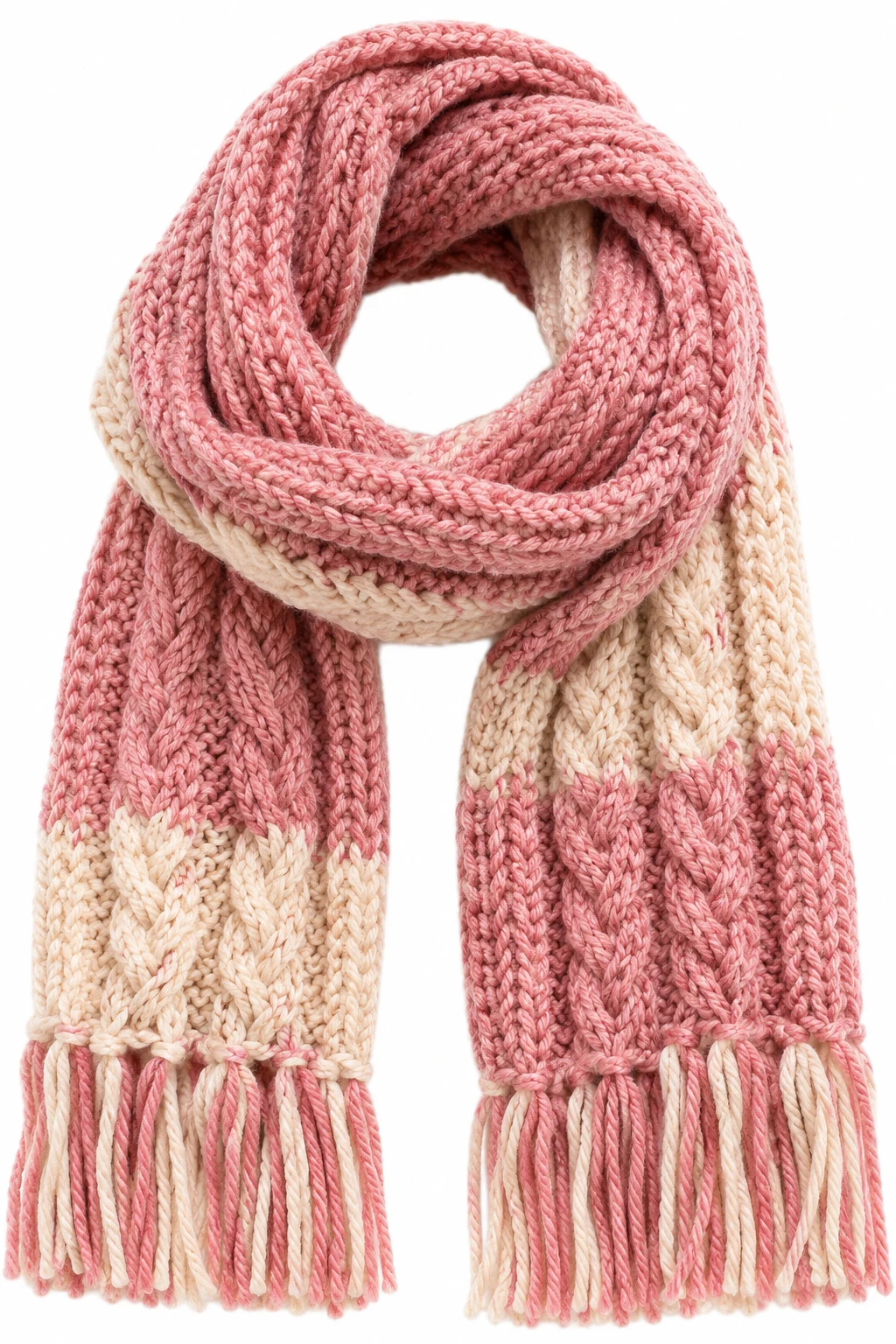
Cable knitting creates some of the prettiest textures in handmade accessories. This scarf features raised, twisting patterns that resemble braided ropes running along the length of the fabric.
For a traditional design, use aran-weight wool yarn, 5–6 mm knitting needles, and a small cable needle. Cream, oatmeal, heather gray, and deep forest green are beautiful color choices.
The technique involves temporarily holding stitches in front of or behind your work before knitting them in a different order. It sounds more complicated than it feels once you understand the process.
Cable designs are particularly popular in traditional autumn and winter knitwear, and they make lovely handmade Christmas presents.
Pro tip: Practice your cable repeat on a small swatch before beginning the full scarf.
The key to this look is crossing stitches in a consistent sequence to create raised braided patterns.
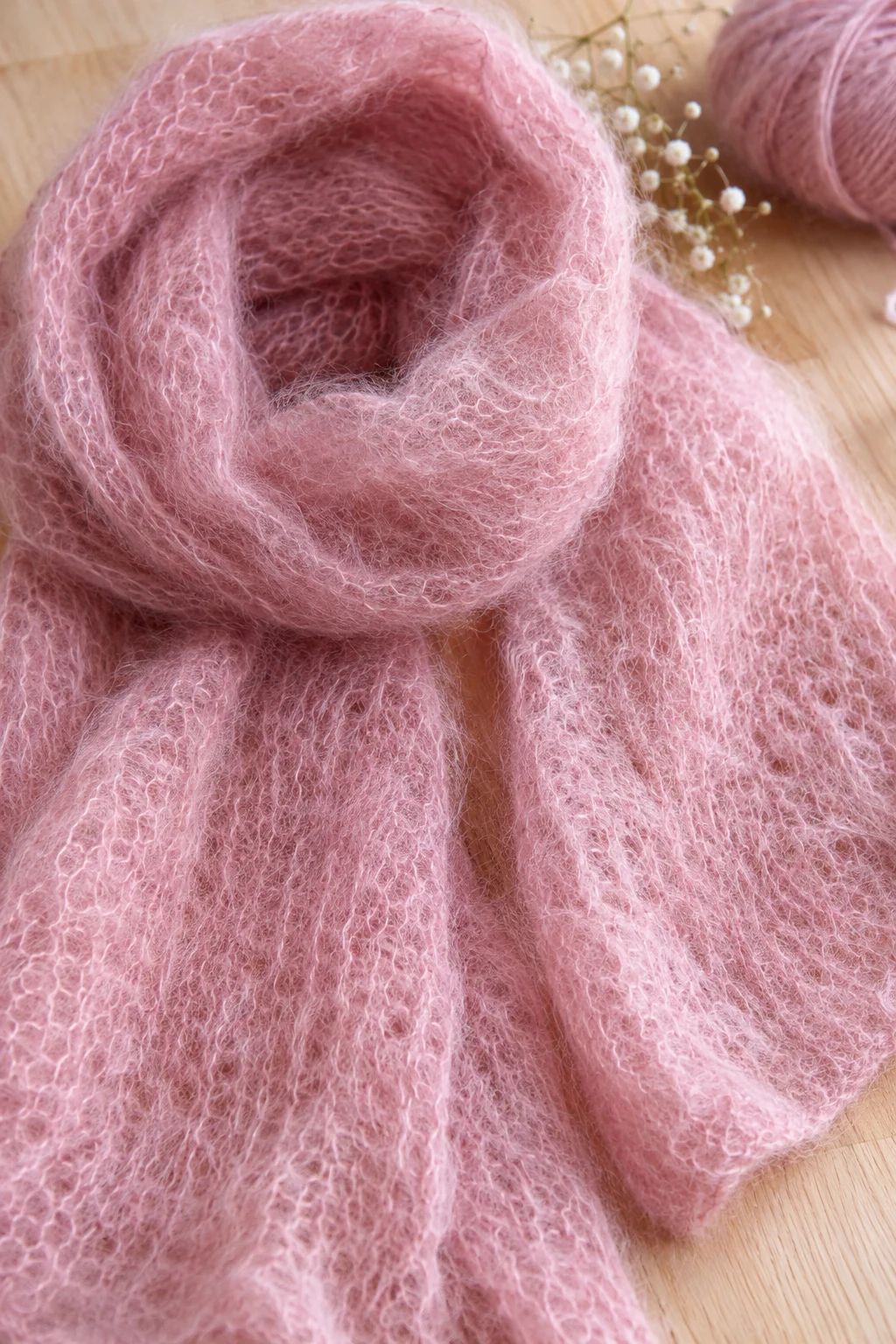
10. Soft Mohair Cloud Scarf
If you love soft, lightweight accessories, a mohair scarf is worth trying. Its fluffy texture creates an airy, cloud-like appearance that looks beautiful layered over simple outfits.
Choose mohair or mohair-silk blend yarn, larger knitting needles, and an uncomplicated stitch such as garter stitch. The larger needles allow the fabric to remain open and delicate rather than dense.
Color choices can completely change the mood. Pale pink feels romantic, powder blue looks fresh, and butter yellow adds a playful touch to neutral winter outfits.
Because fluffy yarn can make individual stitches difficult to see, this project is easier if you’ve already mastered basic knitting techniques.
Pro tip: Use good lighting while knitting because mohair fibers can make dropped stitches difficult to spot.
The key to this look is airy knitting with fluffy mohair yarn that creates a soft, lightweight halo.
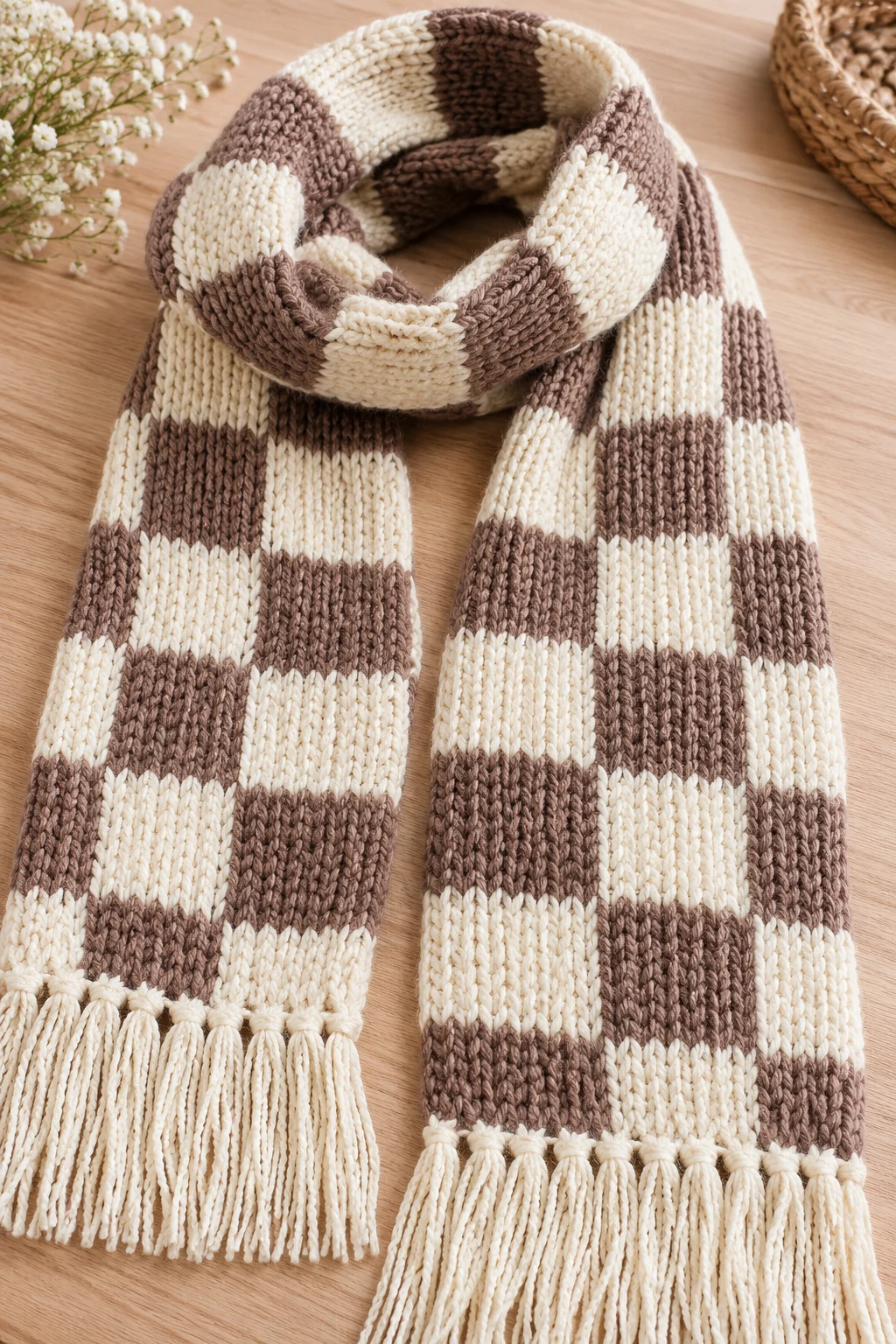
11. Two-Tone Checkerboard Scarf
For a scarf with a little more personality, try a checkerboard design. This pattern combines alternating blocks of two contrasting colors to create a graphic finish that feels modern and stylish.
Black and ivory create a timeless combination, while chocolate brown and beige offer a softer neutral look. You could even use lavender and butter yellow for a playful spring accessory.
Gather two complementary yarn colors, 5 mm knitting needles, and stitch markers to keep track of your blocks. You can make the squares using separate color sections or experiment with intarsia knitting for a cleaner color-blocked design.
Pro tip: Keep your color changes organized and avoid carrying long strands loosely across the back of the scarf.
The key to this look is alternating contrasting color blocks in a consistent grid to create a recognizable checkerboard effect.
12. Personalized Initial Knitted Scarf
Want to make a scarf that feels truly personal? Add an initial, name, or small decorative motif to a classic knitted design. It’s a thoughtful project for birthdays, holidays, anniversaries, and handmade Christmas gifts.
Start with worsted-weight yarn, straight knitting needles, and a simple base stitch. You can incorporate a letter using duplicate stitch embroidery after knitting the scarf or use a colorwork chart to knit the design directly into the fabric.
Cream yarn with a burgundy initial looks particularly elegant, while navy with a white monogram creates a classic gift for men.
If you’re collecting scarf knitting patterns for women, this idea also works beautifully with delicate initials, pastel colors, or small floral motifs.
Pro tip: Print a simple letter chart and mark each completed row to keep your monogram centered.
The key to this look is adding a carefully positioned monogram to a simple scarf for a personalized, gift-worthy finish.
Frequently Asked Questions About Scarf Knitting Patterns
What are the easiest scarf knitting patterns for beginners?
Garter stitch, basic ribbing, and simple stockinette scarves are excellent beginner options. They use basic stitches, require minimal supplies, and help new knitters develop consistent tension.
How much yarn do I need to knit a scarf?
Most standard adult scarves require approximately 200–400 grams of yarn, depending on the yarn weight, stitch pattern, and finished dimensions. Chunky and oversized designs may require more, so check your pattern’s recommended yardage.
Why should you block a knitted scarf?
Blocking helps even out stitches, improve the finished shape, and open up textured or lace patterns. It can make a handmade scarf look much more polished, especially when using natural fibers such as wool.
The Bottom Line
The best scarf knitting patterns are the ones that make you excited to pick up your needles and start creating. From beginner-friendly garter stitch designs to beautiful cable knits and fluffy mohair accessories, these 12 ideas offer something for every knitting skill level. Start with an easy pattern if you’re new to knitting, or challenge yourself with lace and colorwork if you already have some experience. Choose yarn colors that complement your wardrobe, experiment with different textures, and don’t be afraid to personalize your finished pieces. Your next favorite winter accessory might just come from a few skeins of yarn and a free afternoon!
📚 You Might Also Like
- Knitting scarf: 12 Best DIY Ideas for 2026A knitting scarf is a handmade fabric accessory created by using knitting needles and yarn to produc…
- Knitting inspiration: 16 Stunning DIY Ideas for 2026Knitting inspiration is the collection of creative ideas, patterns, colors, and techniques that help…
- Scarf crochet: 20 Perfect DIY Ideas for 2026Scarf crochet projects are handcrafted winter accessories made by looping yarn with a hooked needle…
- Knitting Tutorials: 15 Amazing DIY Ideas for 2026Knitting Tutorials are step-by-step guides that teach you how to create beautiful handmade using yar…
- Crochet Backpack Patterns: 15 Easy DIY Ideas for 2026Crochet Backpack Patterns are step-by-step designs that help you create handmade backpacks using y…
🛍️ Shop the Look — Best Sellers for scarf knitting patterns
Our handpicked Amazon best sellers curated specifically for scarf knitting patterns:
As an Amazon Associate I earn from qualifying purchases.